
The Plastic Problem Has Moved Inside the Human Body
Plastic was once sold as one of civilization’s great modern conveniences. It was lightweight, inexpensive, durable, moldable, and nearly impossible to destroy. Those qualities changed manufacturing, transportation, medicine, food storage, clothing, construction, and consumer culture. Yet the same durability that made plastic revolutionary also created a biological problem that now reaches far beyond beaches and landfills. Plastic does not simply disappear when discarded. It breaks into smaller pieces, then smaller pieces again, until many fragments become too small to see.
Scientists now call those fragments microplastics and nanoplastics. Microplastics generally measure less than five millimeters, while nanoplastics are much smaller. The exact definition of nanoplastics still varies between researchers. Their tiny size matters because smaller particles behave differently inside living systems. A large fragment may pass through the digestive tract without much interaction. A nanoscale particle can potentially interact with cells, proteins, membranes, and biological barriers in far more intimate ways.
The central concern is no longer whether humans encounter plastic. Modern people breathe it, swallow it, touch it, drink it, and live among it every day. Researchers have detected plastic particles in blood, lungs, liver, kidneys, placenta, reproductive tissues, arteries, and brain tissue. Plastic has also been reported in urine, stool, breast milk, and semen. These discoveries do not prove that every detected particle causes disease. However, they show that the boundary between environmental pollution and internal biology has become increasingly difficult to define.
This is what makes the microplastics issue so important. The problem is not merely that tiny pieces of plastic are present inside the human body. The greater concern involves what those particles may do after they arrive. Scientists are investigating inflammation, oxidative stress, mitochondrial injury, altered immune signaling, vascular damage, and possible interference with organ function. Research is still developing, but the pattern deserves careful attention. The plastic age may have created a new form of chronic environmental exposure that modern physiology never evolved to manage.
Where Microplastics Really Come From
Microplastics come from far more than plastic bottles floating in the ocean. They originate from an enormous web of products that surround everyday life. Synthetic clothing sheds microscopic fibers during washing, drying, and normal wear. Vehicle tires release polymer-containing particles during braking and road friction. Plastic food containers experience scratching, heat, and repeated washing. Carpeting, furniture, packaging, paint, and household materials gradually release additional fragments into indoor air and dust.
Food represents another major source of exposure. Plastic packaging surrounds much of the modern food supply. Manufacturing equipment may also contain plastic components that contact food during processing. Hot meals often sit inside plastic containers for extended periods. Beverages may remain in plastic bottles during storage, transportation, and exposure to heat. Every step creates another opportunity for microscopic particles or chemical compounds to migrate into what we eventually eat or drink.
Drinking water adds another layer. Researchers have identified microplastics in both bottled water and tap water. Bottled water can accumulate particles from packaging, manufacturing, and repeated movement. Tap water may collect particles from environmental contamination, plumbing materials, and treatment systems. The amount varies widely by location and analytical method. Still, water exposure matters because people consume it repeatedly every day.
Indoor air may be one of the least appreciated exposure routes. Homes contain synthetic carpets, upholstery, curtains, bedding, clothing, and furniture. Those materials continuously shed tiny fibers that become part of household dust. Movement, vacuuming, HVAC systems, and human activity can redistribute those particles into the air. People inhale some of them and swallow others after respiratory clearance. This makes microplastic exposure a constant environmental background rather than an occasional event.
The problem becomes larger when exposure continues year after year. One plastic bottle may not matter much by itself. One takeout container may contribute very little. Yet daily repetition changes the equation. Thousands of meals, bottles, dust exposures, clothing fibers, and packaged foods accumulate over decades. That repeated exposure is one reason scientists are now asking whether tissue burden can gradually increase with age.
How Plastic Gets From the Environment Into the Body
The gastrointestinal tract represents one major gateway. Food and water carry particles into the digestive system, where most larger particles likely remain inside the intestinal lumen. Many eventually leave through stool. This is an important protective mechanism because the gut separates the external world from the bloodstream. However, extremely small particles may behave differently.
The intestinal lining is only one cell layer thick in many areas. Tight junctions help regulate movement between those cells. Mucus adds another protective layer, while immune cells patrol beneath the surface. This system allows nutrients to pass while blocking harmful organisms and larger foreign material. Tiny particles may still interact with the epithelial surface, particularly when they reach microscopic or nanoscale dimensions.
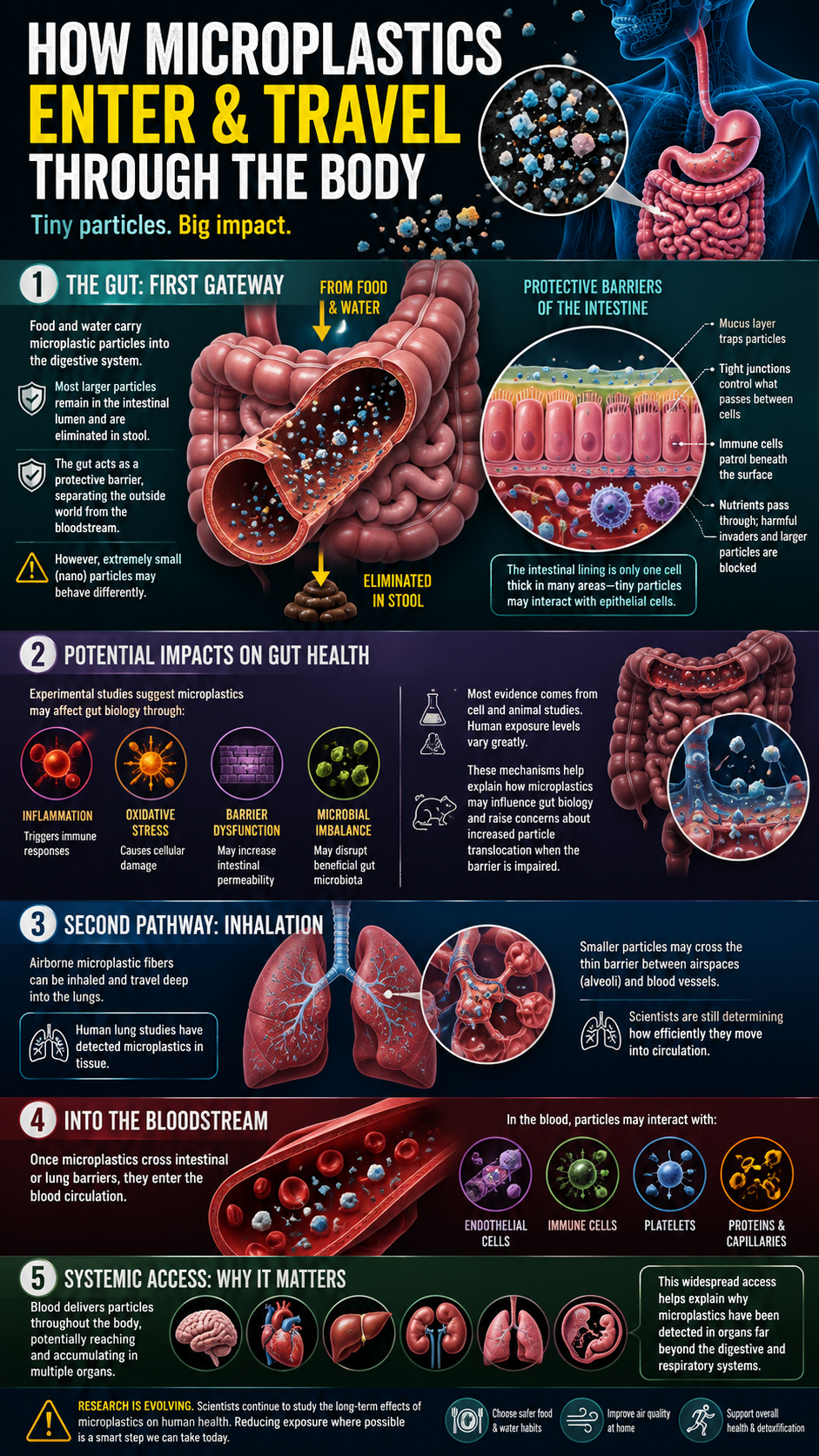
Experimental research suggests some microplastics can influence intestinal inflammation, oxidative stress, barrier function, and microbial balance. Those findings come primarily from cell and animal studies. Human exposure levels can differ greatly from experimental doses. Still, these mechanisms provide a reasonable explanation for how plastic particles might influence gut biology. They also raise important questions about whether impaired intestinal barrier function could increase particle translocation.
Inhalation creates a second major pathway. Airborne microplastic fibers can enter the respiratory tract and reach deeper lung regions. Human lung tissue studies have already reported microplastic particles. Smaller particles may interact with the thin barriers that separate airspaces from blood vessels. Scientists are still determining how efficiently these particles move from the lungs into circulation. Even so, inhalation clearly deserves a place beside ingestion in the exposure discussion.
Once particles enter circulation, the problem changes dramatically. Blood provides access to nearly every organ. Circulating particles may encounter endothelial cells, immune cells, platelets, proteins, and capillary networks. This systemic access helps explain why investigators have detected plastics in organs far beyond the digestive tract.
Blood Turns Microplastics Into a Whole-Body Problem
Blood is more than a transportation system. It is also a highly active biological environment filled with proteins, immune cells, hormones, nutrients, and signaling molecules. Foreign particles entering this environment do not remain chemically isolated. Proteins can coat their surfaces, which may change how the immune system recognizes them.
Smaller particles become especially concerning because their surface area rises sharply relative to their mass. This gives them more opportunity to interact with cells and biological molecules. Nanoplastics may therefore act very differently from larger microplastic fragments. Researchers are now studying whether this increased surface interaction contributes to inflammation, oxidative stress, or cellular dysfunction.
Macrophages represent one important part of this response. These immune cells patrol tissues and engulf material that does not belong. They normally remove microbes, damaged cells, and debris. Persistent synthetic particles could create a different challenge. If macrophages repeatedly encounter material that cannot be easily degraded, inflammatory signaling may continue longer than it would after ordinary biological debris.
This possibility does not automatically mean disease will result. Human bodies encounter foreign particles every day. Many are removed without lasting harm. The real concern is chronic exposure combined with limited clearance. If particles enter faster than the body removes them, accumulation becomes biologically plausible. That question has become especially important after researchers reported higher plastic concentrations in more recent human tissue samples.
The Liver and Kidneys May Face a New Type of Environmental Load
The liver is one of the first organs scientists would expect to encounter circulating particles. Blood from the digestive tract flows directly toward it. The liver processes nutrients, hormones, drugs, toxins, and metabolic waste. It also contains specialized immune cells that capture foreign material.
Researchers have now detected microplastics and nanoplastics in human liver tissue. One important 2025 study examined liver, kidney, and brain samples from deceased individuals. Investigators used multiple analytical methods to identify polymer material. Polyethylene appeared prominently across the tissues they examined. These findings suggest that some plastic particles can reach organs involved in metabolism and filtration.
The kidneys also deserve attention because they continuously filter blood. Their microscopic vascular network processes huge amounts of plasma each day. This places kidney tissue in close contact with circulating particles and environmental compounds. Plastic particles have been reported in kidney tissue and urine, though the clinical consequences remain uncertain.
Detection alone should not be confused with damage. An organ can contain foreign material without experiencing major dysfunction. However, repeated exposure raises additional questions. Scientists need to know whether particles remain trapped, gradually leave, or accumulate over time. They also need to determine whether certain sizes or polymers produce stronger inflammatory effects.
The liver and kidneys already manage enormous physiological workloads. They process endogenous waste, dietary compounds, medications, pollutants, and metabolic byproducts. Adding persistent synthetic particles creates another variable. Whether that added burden becomes clinically important is still under investigation. Yet the possibility becomes more concerning when microplastics appear in organs with critical roles in detoxification, filtration, and immune surveillance.
Plastic in the Brain Changed the Conversation
The brain is protected by one of the body’s most selective barriers. The blood-brain barrier carefully regulates which substances can move from circulation into neural tissue. This system protects neurons from unstable chemical conditions in the bloodstream. For that reason, researchers were especially concerned when plastic particles appeared in brain samples.
A 2025 study published in Nature Medicine examined postmortem brain, liver, and kidney tissue. Researchers found measurable microplastics and nanoplastics in all three organs. Brain tissue showed higher concentrations than liver or kidney tissue. Polyethylene was the dominant polymer, and many particles appeared as nanoscale fragments.
The study also compared older and newer tissue collections. Brain and liver samples from 2024 contained more measured plastic than samples from 2016. That finding raises the possibility that tissue burden may increase as environmental exposure increases. It does not prove that individual people accumulate plastic steadily throughout life. However, it gives researchers another reason to investigate long-term exposure.
Scientists have also challenged aspects of brain microplastic measurement. Lipid-rich tissue creates technical complications. Laboratories themselves contain plastic equipment and airborne fibers that can contaminate samples. These concerns are valid and should improve future research. Strong science requires better controls, repeated findings, and independent confirmation.
Even with those limitations, the broader question remains serious. If nanoscale particles can cross barriers designed to protect the brain, their biological effects deserve investigation. Researchers must determine whether those particles trigger inflammation, oxidative stress, vascular dysfunction, or altered cellular behavior. Nobody should claim that microplastics cause dementia based on current evidence. Yet dismissing the findings would be equally premature.
What Microplastics May Be Doing to Human Cells
The most consistent mechanistic concern involves oxidative stress. Cells naturally produce reactive oxygen species during metabolism. Under normal circumstances, antioxidant systems keep those molecules under control. Problems begin when reactive oxygen species rise beyond the capacity of cellular defenses.
Experimental microplastic research has repeatedly reported increased oxidative stress under certain conditions. Excess reactive oxygen species can damage cell membranes, proteins, mitochondria, and DNA. These changes can also amplify inflammatory signaling. When oxidative stress and inflammation reinforce each other, tissue injury may become more persistent.
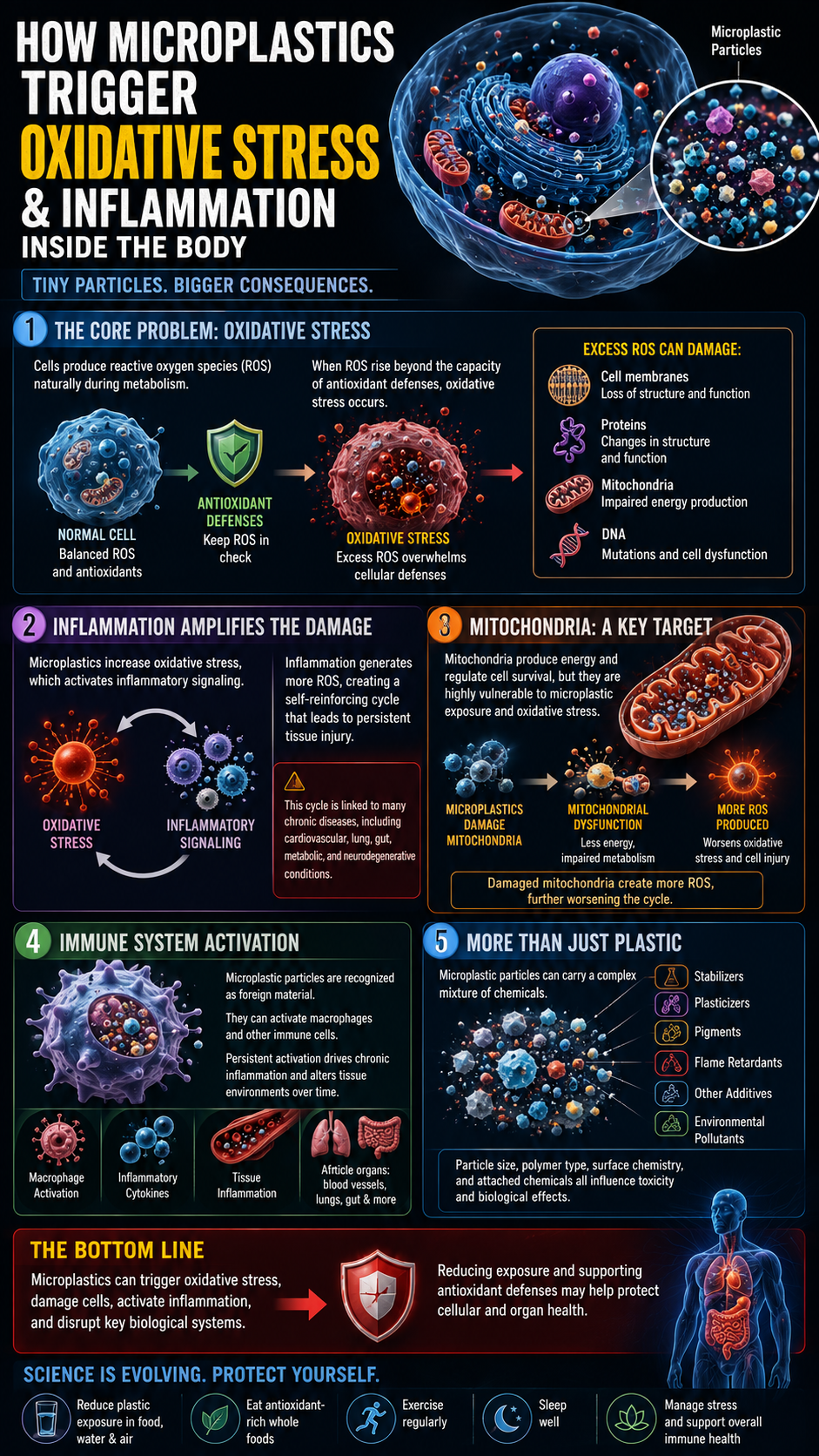
Mitochondria may be particularly vulnerable. These cellular structures produce energy, regulate metabolism, and influence cell survival. Research models have linked some microplastic exposures with mitochondrial dysfunction. Damaged mitochondria can generate even more oxidative stress, creating a potentially self-reinforcing cycle.
The immune system adds another layer. Foreign particles can activate macrophages and inflammatory pathways. Persistent immune activation may alter tissue environments over time. This possibility becomes important in organs already affected by chronic inflammation, including blood vessels, lungs, and the gastrointestinal tract.
Plastic particles may also carry more than polymer material. Many plastics contain stabilizers, plasticizers, pigments, flame retardants, and other additives. Environmental particles can also attract chemicals onto their surfaces. This creates a complicated toxicological package where particle size, polymer type, surface chemistry, and attached compounds may all influence biological effects.
The Artery Plaque Discovery May Be the Most Important Clue Yet
One of the most striking human studies appeared in the New England Journal of Medicine during 2024. Researchers analyzed carotid artery plaque removed from patients undergoing surgery for advanced arterial disease. Their goal was to determine whether microplastics and nanoplastics existed inside atherosclerotic lesions.
Polyethylene was detected in plaques from 150 of 257 patients who completed follow-up. That represented 58.4 percent of the group. Polyvinyl chloride appeared in a smaller subset. Electron microscopy also revealed foreign-looking particles among plaque debris and immune cells.
Researchers then followed the patients for roughly three years. People with detectable plastics experienced more heart attacks, strokes, or deaths from any cause. The adjusted hazard ratio reached 4.53. This means the association remained substantial even after statistical adjustments.
The study does not prove plastic caused those cardiovascular events. Observational research cannot establish direct causation. Patients with higher plastic burdens may differ in diet, environment, occupation, socioeconomic status, or other health factors. Researchers also raised legitimate concerns about contamination from plastic materials used during surgery or laboratory processing.
Even with those limitations, the finding matters. Atherosclerotic plaque is already a biologically active environment filled with macrophages, oxidized lipids, inflammatory molecules, calcium, and cellular debris. Persistent foreign particles inside that environment could plausibly influence local inflammation. Future studies must determine whether plastic is merely present or actually contributes to plaque instability.
Chronic Inflammation May Connect Microplastics With Disease
Chronic inflammation sits at the center of many modern diseases. Cardiovascular disease, insulin resistance, fatty liver disease, autoimmune dysfunction, and neurodegenerative conditions all involve inflammatory pathways. Microplastics may potentially contribute to this burden by creating persistent immune stimulation.
The body handles most short-term threats efficiently. A temporary infection triggers inflammation, then resolution follows. Persistent particles present a different challenge because they may remain present for longer periods. If immune cells repeatedly encounter material they cannot degrade, low-grade inflammatory signaling could continue.
Experimental studies support this possibility. Scientists have reported inflammatory cytokine changes after exposure to certain microplastics. Oxidative stress often appears alongside those changes. Mitochondrial dysfunction and altered cell signaling also appear in some models.
However, dose remains critically important. Laboratory experiments may expose cells to concentrations much higher than typical human exposure. Different polymers also behave differently. This means researchers cannot simply translate laboratory toxicity into guaranteed human disease.
The stronger conclusion is more measured. Microplastics possess several biological characteristics that justify concern. Human exposure appears widespread. Particles have reached internal tissues. Mechanisms for inflammation and oxidative injury are plausible. What remains uncertain is how much exposure creates meaningful disease risk.
The Gut May Be the First Place to Reduce the Burden
Reducing exposure should begin where daily contact is easiest to control. The kitchen represents one of the highest-value targets because food and plastic interact frequently there. Heat, abrasion, and repeated use can increase particle release from certain food-contact materials.
Avoid routinely heating food in plastic containers. Glass, ceramic, and stainless steel provide better options for reheating. Hot, oily, and acidic foods deserve particular attention because they can interact more aggressively with packaging materials.
Storage habits also matter. Replacing heavily scratched plastic containers can reduce another source of particle shedding. Frequently used containers deserve priority. There is no need to throw away every plastic item immediately. Gradual replacement creates meaningful exposure reduction without unnecessary waste.
Takeout meals present another overlooked source. Hot food may sit inside plastic for long periods after preparation. Transferring meals into glass or ceramic after returning home reduces contact time. Small changes repeated many times can create a much larger effect than occasional extreme detoxification efforts.
Food packaging also deserves consideration. Minimally processed foods often involve less plastic contact than heavily packaged convenience foods. Preparing more meals at home can reduce packaging exposure while improving nutritional quality. This strategy supports metabolic health at the same time.
Change the Way You Drink Water
Water is consumed every day, which makes it one of the most important exposure patterns to address. Reducing dependence on disposable plastic bottles offers a practical starting point. Glass and stainless-steel containers provide durable alternatives.
Home water filtration can reduce particulate exposure, although filtration systems vary greatly. Reverse osmosis can remove many small contaminants, including some particulate material. High-quality multi-stage systems may also provide benefits. Independent testing matters more than marketing language.
Heat should also be considered. Avoid storing plastic water bottles in hot vehicles or direct sunlight for prolonged periods. Higher temperatures can accelerate material breakdown and chemical migration. Repeated heat exposure creates another unnecessary source of plastic contact.
Filtered water stored in glass or stainless steel offers a simple long-term strategy. This does not guarantee complete microplastic avoidance. Nothing realistically can. It simply lowers one repeated daily exposure.
Consistency matters more than perfection. A person who stops drinking several plastic bottles every day may eliminate thousands of plastic-contact events each year. That type of reduction has far more practical value than occasional short-term cleanses.
Improve Indoor Air and Household Dust Control
Many people focus only on food and water while ignoring the air they breathe. Synthetic fibers accumulate in household dust and may become airborne through movement. Carpeting, upholstery, clothing, bedding, and curtains all contribute to indoor particle burden.
HEPA vacuuming can reduce airborne and settled particulate matter. Wet dusting works better than dry dusting because it traps particles instead of redistributing them. HVAC filtration can also help when systems support high-efficiency filters.
Natural fiber choices can reduce synthetic shedding over time. Cotton, linen, hemp, and wool provide alternatives for some clothing and household textiles. Nobody needs to replace an entire wardrobe overnight. Targeting heavily used synthetic items first creates a more practical strategy.
Ventilation may also help when outdoor air quality remains good. Fresh airflow can reduce indoor pollutant concentration. This strategy benefits more than microplastic exposure because indoor air also contains volatile compounds, allergens, smoke residues, and other particles.
Household exposure reduction works best through repeated habits. Cleaning floors, controlling dust, filtering air, and reducing unnecessary synthetic materials all lower the overall particulate environment. These steps require no complicated equipment beyond what many households already use.
Support the Body’s Natural Elimination Systems
No proven supplement currently removes microplastics from human brain tissue, arteries, liver, or kidneys. Products claiming to selectively detox plastic should therefore be viewed with caution. The evidence does not support those promises.
The body still has natural elimination systems worth supporting. The gastrointestinal tract removes many ingested particles through stool. Regular bowel movements therefore play an obvious role in limiting retention. Adequate hydration, appropriate fiber intake, and healthy intestinal motility support that process.
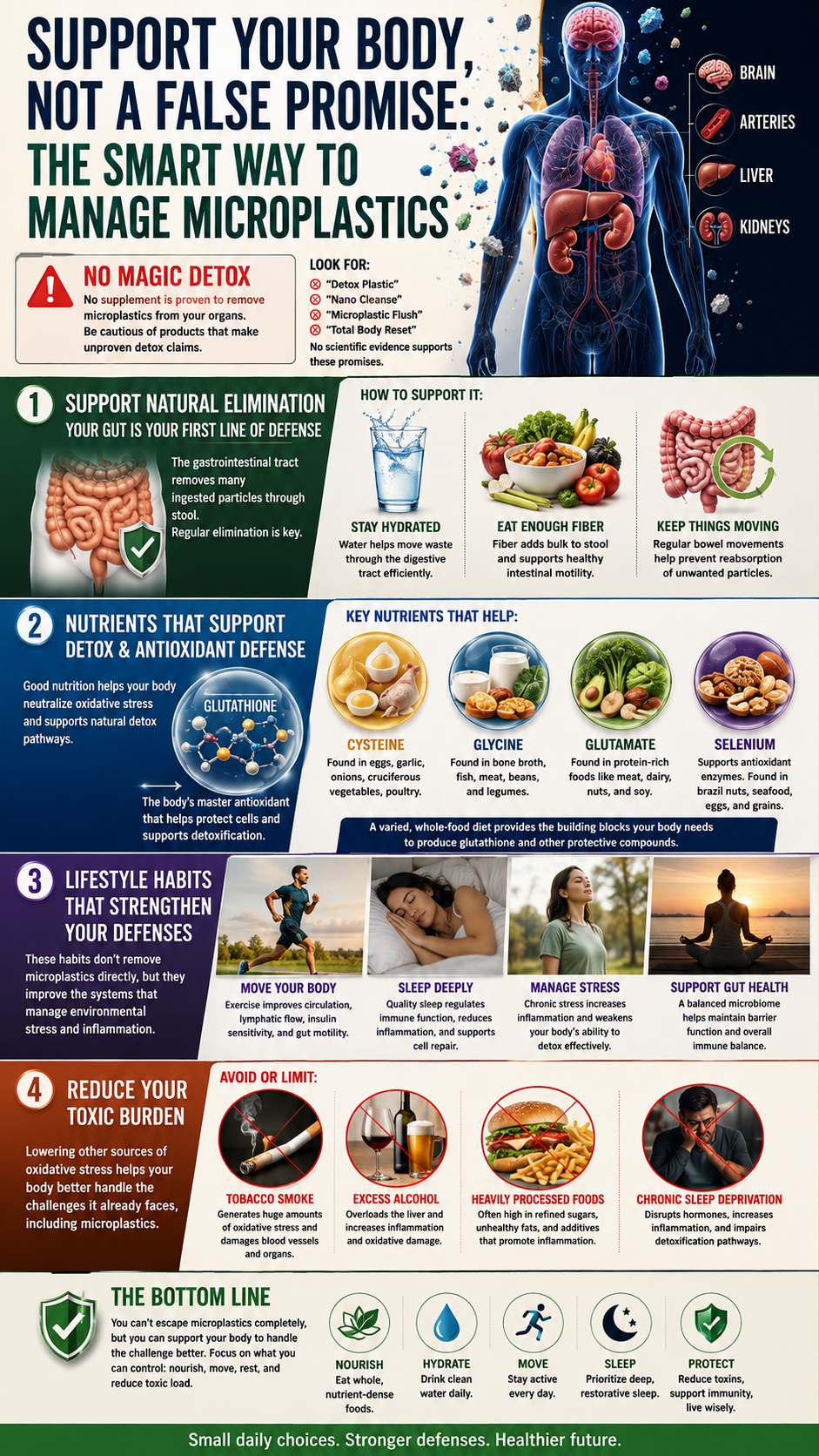
Nutrient status also matters for general detoxification and antioxidant defense. Glutathione represents one of the body’s major endogenous antioxidants. Amino acids such as cysteine, glycine, and glutamate help support its production. Selenium and other micronutrients assist related enzymatic systems.
Exercise supports circulation, lymphatic movement, insulin sensitivity, and intestinal motility. Sleep helps regulate immune function and inflammatory signaling. These strategies do not specifically remove plastic, but they improve the physiological systems responsible for managing environmental stress.
Reducing other toxic exposures can also lower the total burden. Tobacco smoke, excessive alcohol, heavily processed foods, and chronic sleep deprivation all increase oxidative stress. Lowering those inputs may help the body manage additional environmental challenges more effectively.
Protect the Cardiovascular System While Research Continues
The carotid plaque study makes cardiovascular protection especially important. Even if microplastics eventually prove to be only one contributor, vascular health remains central to long-term survival. Fortunately, many well-established strategies already reduce cardiovascular risk.
Insulin sensitivity deserves particular attention. Chronic glucose elevation and insulin resistance damage vascular tissue and increase oxidative stress. Keeping blood sugar stable through diet, movement, sleep, and healthy body composition supports endothelial health.
Blood pressure matters just as much. Persistent hypertension creates mechanical stress against artery walls. Over time, that stress can accelerate vascular damage and plaque development. Regular exercise, mineral balance, stress management, and appropriate medical evaluation remain important.
Smoking dramatically increases vascular inflammation and oxidative injury. Avoiding tobacco therefore reduces a major competing source of cardiovascular stress. This becomes especially relevant if environmental particles also contribute to endothelial dysfunction.
The broader lesson is simple. Microplastics should expand the cardiovascular conversation rather than replace established risk factors. The body does not separate environmental exposures from metabolic dysfunction. These influences interact inside the same tissues.
Reduce Incoming Exposure Before Chasing Detoxification
People often become fascinated with detoxification while leaving major exposures unchanged. That approach rarely makes sense. Reducing the incoming burden should come first because every avoided exposure lowers the amount the body must manage.
Start with the highest-frequency sources. Change how food gets heated and stored. Improve drinking water habits. Reduce bottled beverages. Control household dust. Replace scratched food containers. Limit unnecessary single-use packaging.
Then strengthen the systems that handle environmental stress. Support healthy bowel movements, antioxidant defenses, sleep, exercise, circulation, and metabolic health. These measures improve resilience without making claims the science cannot support.
Microplastic exposure cannot be eliminated completely. Modern environments contain too much plastic for that goal to be realistic. Exposure reduction should therefore focus on meaningful percentages.
A person who cuts daily plastic contact substantially has changed the biological equation. Repeating those changes over many years may ultimately matter far more than short-term detox programs.
The Plastic Age Has Become a Human Biology Problem
The most important lesson from microplastic research is not that plastic has suddenly become poisonous. The deeper lesson is that industrial materials can eventually become biological exposures. What begins in packaging, roads, textiles, and household products can eventually appear inside blood and tissues.
Scientists have now reported microplastics in organs throughout the body. They have found particles in reproductive tissues and placenta. Researchers have detected them in liver, kidney, lung, and brain tissue. Most provocatively, polymer material has appeared inside human arterial plaque.
Many questions remain unanswered. Researchers still need better standardized testing. Long-term studies must connect exposure with disease outcomes. Scientists also need to identify safe thresholds, dangerous particle sizes, and high-risk polymers.
Yet uncertainty should not automatically create complacency. Waiting for complete certainty may take decades. Sensible exposure reduction already offers low-risk benefits.
The plastic era transformed modern life because durability seemed like an advantage. Today, that same durability may be creating a new environmental challenge inside human biology. The particles we cannot see may ultimately matter more than the plastic objects we can.
The smartest response is not fear. It is awareness, exposure reduction, better research, and stronger biological resilience. Those steps give people meaningful control while science continues answering the larger question.
Microplastics began as an environmental pollution problem. They have now become a human health investigation. The next chapter will determine how much that distinction matters.