
THE CARDIOVASCULAR RISK HIDING IN PLAIN SIGHT
A person can exercise regularly, maintain a healthy weight, and watch every bite of food. Their cholesterol panel may even appear reassuring. LDL cholesterol might look acceptable, triglycerides may remain low, and HDL cholesterol could appear favorable. Yet cardiovascular disease can still develop beneath that seemingly healthy surface. One overlooked reason is a particle called lipoprotein(a), usually abbreviated as Lp(a). Unlike many familiar cardiovascular markers, Lp(a) remains heavily influenced by genetics. That makes it especially important for people with unexplained or premature cardiovascular disease in their families.
For decades, routine cardiovascular screening centered heavily on total cholesterol, LDL cholesterol, HDL cholesterol, and triglycerides. Those measurements provide useful information, but they cannot describe every pathway driving cardiovascular disease. Lipoprotein(a) represents one of those missing pieces. Elevated Lp(a) can increase cardiovascular risk even when a conventional lipid panel appears relatively normal. Consequently, someone may leave an annual examination believing their cardiovascular risk looks excellent without ever measuring this inherited factor.
The story becomes more concerning because most people with elevated Lp(a) feel perfectly healthy. High Lp(a) does not usually produce an obvious warning symptom. There is no distinctive headache, pain, fatigue pattern, or digestive complaint announcing its presence. Its importance emerges from what the particle can contribute to inside arteries over many years. Understanding that process requires looking beyond the cholesterol number and examining the particle carrying it.
What Is Lipoprotein(a)?
Lipoprotein(a) resembles an LDL particle, but it carries an important additional protein called apolipoprotein(a). That added protein changes the particle’s biological behavior. The structure helps explain why researchers associate elevated Lp(a) with atherosclerotic cardiovascular disease and calcific aortic valve disease.
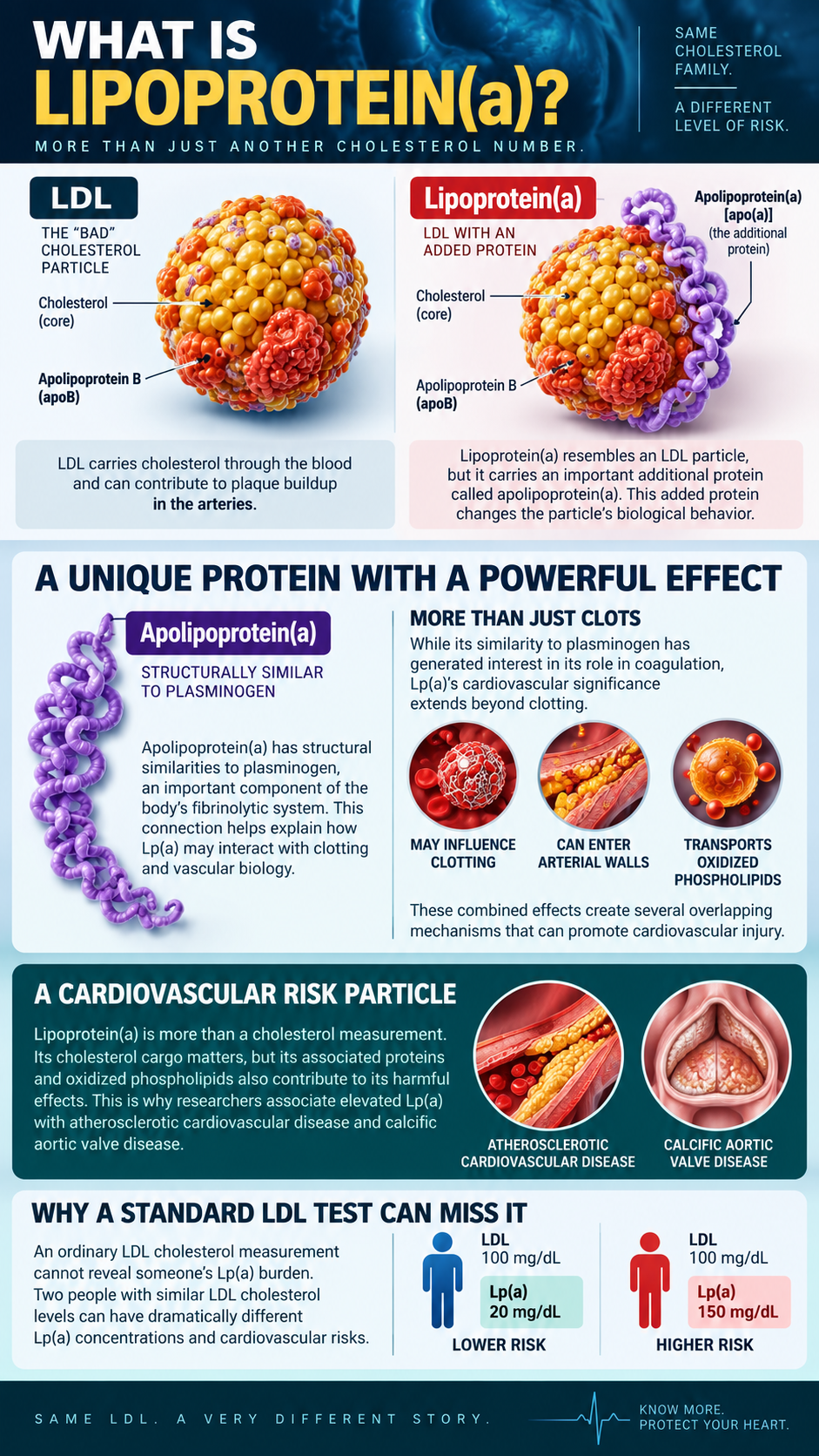
Apolipoprotein(a) has structural similarities to plasminogen, an important component of the body’s fibrinolytic system. This connection has generated considerable interest in how Lp(a) may interact with clotting and vascular biology. However, Lp(a)’s cardiovascular significance extends beyond coagulation. The particle can enter arterial walls, carry cholesterol, and transport oxidized phospholipids. Those characteristics create several overlapping mechanisms capable of promoting cardiovascular injury.
Rather than viewing Lp(a) as simply another cholesterol measurement, it makes more sense to view it as a cardiovascular risk particle. Its cholesterol cargo matters, but its associated proteins and oxidized phospholipids also matter. This distinction explains why an ordinary LDL cholesterol measurement cannot reveal someone’s Lp(a) burden. Two people with similar LDL cholesterol levels can carry dramatically different Lp(a) concentrations and cardiovascular risks.
Where Elevated Lp(a) Comes From
Genetics provides the dominant explanation for differences in Lp(a) between individuals. The LPA gene strongly influences how much apolipoprotein(a) the liver produces. Genetic variation also affects the size of apolipoprotein(a), which relates inversely to circulating Lp(a) concentrations. Consequently, elevated Lp(a) frequently travels through families.
This genetic influence separates Lp(a) from triglycerides and many other metabolic markers. Losing weight may dramatically improve triglycerides. Reducing refined carbohydrates can improve glucose regulation and several lipid measurements. Exercise can improve insulin sensitivity and cardiovascular fitness. Those interventions remain tremendously valuable, yet they often produce relatively modest changes in genetically elevated Lp(a).
That reality does not make lifestyle irrelevant. It changes the objective. Someone may not dramatically reduce the inherited Lp(a) concentration through lifestyle alone. However, that person can often improve the cardiovascular environment surrounding the particle. Blood pressure, insulin resistance, smoking, inflammation, metabolic health, and other lipoproteins still influence total cardiovascular risk.
This distinction matters enormously. Genetics may load the cardiovascular gun, but the surrounding metabolic environment influences the consequences. Elevated Lp(a) should therefore prompt a broader assessment rather than fatalism. Knowing the number creates an opportunity to identify and control other modifiable cardiovascular risks earlier.
Why Lipoprotein(a) Can Become Dangerous
The arterial wall constantly responds to mechanical forces, circulating lipoproteins, inflammatory signals, and metabolic conditions. When apoB-containing particles enter and remain within that wall, atherosclerosis can begin. Lp(a) belongs to this family of apoB-containing particles. Elevated concentrations therefore increase the number of potentially atherogenic particles circulating through the vascular system.
Lp(a) also carries oxidized phospholipids particularly efficiently. These molecules can stimulate inflammatory signaling within vascular tissues. Macrophages and other immune cells participate in the resulting response. Over time, cholesterol deposition and inflammation can contribute to plaque development. The artery gradually becomes a site of biological remodeling rather than a passive pipe accumulating cholesterol.
That distinction changes how cardiovascular disease should be understood. Atherosclerosis involves lipid retention, inflammation, immune activity, endothelial dysfunction, and plaque remodeling. Lp(a) intersects with several of these processes. Its potential danger therefore comes from more than simply raising a cholesterol laboratory value.
The Connection Between Lp(a), Plaque, and Heart Attack
Atherosclerotic plaque develops gradually. ApoB-containing particles become trapped within the arterial wall, where they can undergo modification. Immune cells respond to these retained lipoproteins and participate in plaque formation. Smooth muscle cells, extracellular matrix, cholesterol, and inflammatory components gradually reshape the vessel wall.
Elevated Lp(a) adds another contributor to that process. Higher concentrations increase lifetime exposure to an atherogenic particle carrying oxidized phospholipids. Genetic studies provide especially important evidence because lifelong genetically elevated Lp(a) associates with cardiovascular disease. These findings support a causal role rather than a simple statistical association.
Plaque becomes clinically dangerous when disease restricts blood flow or an unstable lesion triggers thrombosis. A clot forming over a disrupted coronary plaque can suddenly obstruct blood flow to heart muscle. Similar processes in cerebral circulation can contribute to ischemic stroke. Therefore, cardiovascular risk reflects both decades of plaque development and the possibility of an acute event.
Lipoprotein(a) and Calcification of the Aortic Valve
Lp(a)’s significance extends beyond coronary arteries. Elevated concentrations also associate strongly with calcific aortic valve disease. The aortic valve controls blood leaving the heart and entering the body’s largest artery. Healthy valve leaflets remain flexible enough to open and close efficiently with every heartbeat.
Calcific aortic valve disease progressively stiffens these leaflets. As calcification advances, the valve opening can narrow and create aortic stenosis. The heart must then generate greater pressure to push blood through the restricted opening. Severe disease can eventually produce breathlessness, chest discomfort, fainting, heart failure, and other serious complications.
Research suggests Lp(a) and its oxidized phospholipid cargo participate in pathways related to valve inflammation and mineralization. This relationship provides another reason Lp(a) deserves attention beyond ordinary cholesterol discussions. Someone with elevated Lp(a) may face increased lifetime risk involving both arteries and the aortic valve.
Why Routine Cholesterol Testing Can Miss the Problem
A standard lipid panel does not directly measure Lp(a). This limitation creates a major blind spot. Someone can have apparently favorable cholesterol results while carrying substantially elevated Lp(a). Unless a clinician orders the test specifically, the inherited risk may remain invisible.
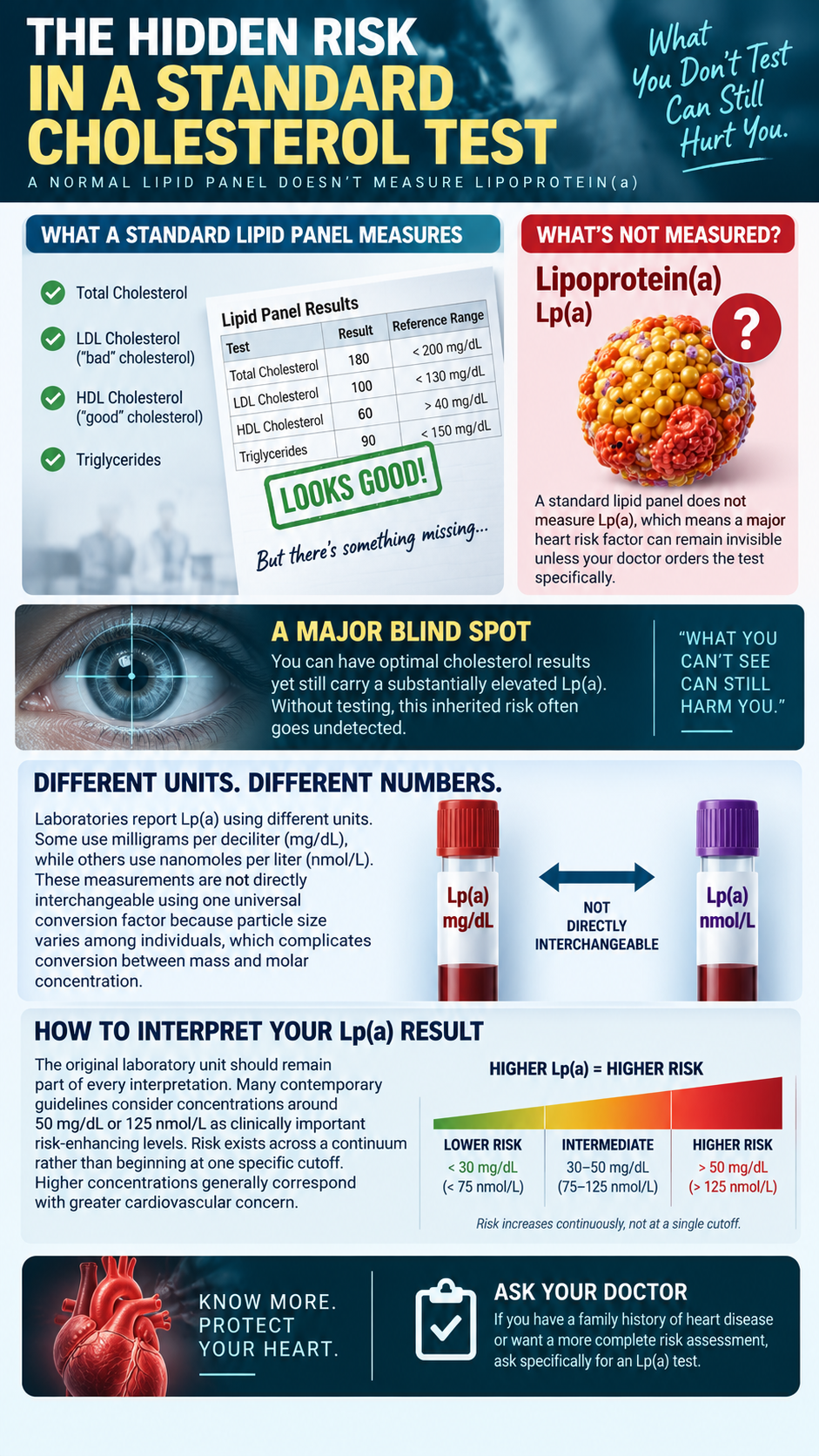
Testing also requires careful interpretation because laboratories report Lp(a) using different units. Some laboratories use milligrams per deciliter, while others use nanomoles per liter. These measurements are not directly interchangeable using one universal conversion factor. Particle size varies among individuals, which complicates conversion between mass and molar concentration.
For that reason, the original laboratory unit should remain part of every interpretation. Many contemporary guidelines consider concentrations around 125 nmol/L or 50 mg/dL as clinically important risk-enhancing levels. Risk exists across a continuum rather than beginning at one magical cutoff. Higher concentrations generally correspond with greater cardiovascular concern.
Who Should Pay Particular Attention?
Lp(a) becomes especially relevant when cardiovascular disease seems disproportionate to traditional risk factors. Premature coronary disease in a parent, sibling, or close relative deserves attention. The same applies to unexplained heart attacks, strokes, or significant arterial disease occurring relatively early in life.
Familial hypercholesterolemia provides another important context. People with markedly elevated LDL cholesterol may also carry high Lp(a), creating overlapping inherited risks. Aortic valve calcification or stenosis can also raise the question. Measuring Lp(a) can help reveal whether an inherited lipoprotein pattern contributes to the broader cardiovascular picture.
Increasingly, major cardiovascular organizations support measuring Lp(a) at least once during adulthood. Because genetic factors dominate concentrations, the measurement often remains relatively stable. Certain medical conditions can alter values, however, so interpretation still belongs within the person’s complete health picture.
BUILDING A MORE INTELLIGENT RESPONSE TO ELEVATED Lp(a)
Discovering elevated Lp(a) should not create panic. It should create precision. The number identifies an inherited risk factor, but it does not predict an inevitable heart attack. Cardiovascular disease develops through interacting influences involving lipoproteins, blood pressure, glucose metabolism, smoking, inflammation, kidney function, genetics, and lifestyle.
The goal therefore extends beyond chasing one laboratory marker downward. A more useful strategy reduces the overall burden placed upon arteries and the heart. Someone with elevated Lp(a) has an especially strong reason to optimize every modifiable cardiovascular factor. That approach respects the genetic reality without surrendering to it.
Start With Better Cardiovascular Intelligence
Knowledge begins with measuring the right variables. Lp(a) should be considered alongside a broader cardiovascular assessment rather than interpreted alone. ApoB can provide valuable information about the total concentration of atherogenic lipoprotein particles. A standard lipid panel remains useful, while blood pressure and metabolic markers add important context.
Glucose regulation deserves particular attention because insulin resistance often travels silently for years. Fasting glucose alone may not reveal the entire metabolic picture. Hemoglobin A1c, fasting insulin, triglycerides, waist circumference, and other appropriate measurements can provide additional insight. The objective is to identify modifiable pressures that could amplify inherited cardiovascular susceptibility.
Family history also deserves far more attention than it often receives. A heart attack at an unusually young age provides different information than coronary disease appearing very late in life. Patterns involving siblings, parents, and grandparents can reveal inherited cardiovascular vulnerability. When elevated Lp(a) accompanies such history, the finding becomes particularly meaningful.
Reduce the Atherogenic Particle Burden
Lp(a) represents only one apoB-containing particle circulating through the bloodstream. LDL particles, remnant lipoproteins, and other atherogenic particles also contribute to plaque formation. Therefore, reducing the overall apoB particle burden becomes especially important when Lp(a) remains genetically elevated.
Nutrition can support that objective, although individual responses vary considerably. Minimally processed foods generally provide a stronger foundation than diets dominated by refined carbohydrates and ultra-processed products. Adequate protein, fiber-rich whole foods, and appropriate dietary fats can support metabolic health. The precise diet should account for insulin sensitivity, triglycerides, LDL response, body composition, and personal medical circumstances.
This is also where ideology becomes dangerous. No single diet guarantees protection from cardiovascular disease. Some people experience substantial LDL and apoB increases on very high saturated-fat diets. Others improve dramatically when weight loss and carbohydrate restriction correct severe metabolic dysfunction. Laboratory follow-up should determine whether a nutritional strategy actually improves the individual’s cardiovascular risk profile.
Improve Insulin Sensitivity and Metabolic Health
Insulin resistance does not necessarily cause genetically elevated Lp(a), but it can worsen the cardiovascular environment surrounding it. Hyperglycemia, hypertension, abdominal obesity, elevated triglycerides, and metabolic dysfunction can create additional vascular stress. Combining these factors with high Lp(a) can produce a far less favorable risk profile.
Daily movement provides one of the most accessible interventions. Walking after meals can improve post-meal glucose handling. Resistance training helps maintain muscle, which serves as an important destination for circulating glucose. Aerobic exercise improves cardiovascular fitness, endothelial function, and insulin sensitivity. Consistency matters more than pursuing an extreme exercise program that cannot be sustained.
Sleep deserves equal respect. Chronic sleep restriction can impair insulin sensitivity, appetite regulation, blood pressure, and autonomic balance. Adults should create a consistent sleep schedule and protect adequate sleep opportunity. Treating significant sleep disorders, including suspected sleep apnea, may also improve several cardiovascular risk factors.
Create a Less Hostile Environment Inside the Arteries
Smoking remains one of the most destructive modifiable cardiovascular exposures. Tobacco smoke damages vascular function, promotes oxidative stress, and increases thrombotic risk. For someone with elevated Lp(a), continued smoking adds an avoidable burden to an already elevated inherited risk.
Blood pressure deserves the same seriousness. Repeated mechanical stress against arterial walls can accelerate vascular injury over decades. Home blood-pressure monitoring provides useful information because a single office reading may not represent everyday pressure. Consistently abnormal readings deserve appropriate evaluation rather than dismissal.
Food quality also influences the vascular environment. A diet centered on minimally processed foods can improve several metabolic risk factors simultaneously. Vegetables, appropriate fruits, quality proteins, healthy fats, and other nutrient-dense foods can form the foundation. Individual tolerance and metabolic response should determine the final composition rather than dietary dogma.
Address Oxidative Stress Without Chasing Miracle Supplements
The relationship between Lp(a) and oxidized phospholipids has understandably generated interest in antioxidants. However, biological oxidation cannot be reduced to taking a handful of supplements. The body’s redox systems depend on nutrition, mitochondrial function, metabolic health, exercise, sleep, environmental exposures, and endogenous antioxidant defenses.
Whole foods provide compounds that participate in these systems without pretending to neutralize cardiovascular risk overnight. Colorful plant foods contain polyphenols and other bioactive compounds. Adequate protein supplies amino acids required for endogenous antioxidant pathways. Regular exercise also strengthens adaptive antioxidant defenses when recovery remains adequate.
Supplements require more caution. A product can improve a biomarker without proving that it prevents heart attacks. Niacin, for example, can lower Lp(a) modestly in some individuals. Yet outcome trials have not established routine niacin therapy as an effective solution for reducing cardiovascular events through this mechanism. Biomarker improvement and clinical benefit are not automatically equivalent.
What Can Actually Lower Lipoprotein(a)?
Lifestyle changes usually have limited effects on genetically determined Lp(a) concentrations. That fact should be stated clearly. Lifestyle still matters enormously because cardiovascular risk includes far more than Lp(a). However, promising therapies specifically targeting Lp(a) have become an important area of cardiovascular research.
Several investigational treatments target production of apolipoprotein(a) using RNA-based technologies. These approaches can produce dramatic reductions in Lp(a) during clinical studies. The crucial question is whether lowering Lp(a) translates into fewer heart attacks, strokes, and other cardiovascular events. Outcome evidence ultimately matters more than the percentage change on a laboratory report.
Existing lipid-lowering therapies also deserve individualized discussion when cardiovascular risk warrants treatment. Some therapies can modestly reduce Lp(a), while others primarily lower LDL or apoB. Their greatest value may involve reducing the total atherogenic burden surrounding genetically elevated Lp(a). Decisions should account for overall risk, existing disease, imaging findings, laboratory results, and personal circumstances.
Practical Changes Begin at Home
A sophisticated cardiovascular strategy does not require turning everyday life into a medical experiment. It begins by making the home environment support metabolic and vascular health. Meals should emphasize nutrient density and minimize dependence on refined sugars, industrial snacks, and ultra-processed foods. Grocery choices become cardiovascular decisions long before food reaches the dinner table.
Movement should become part of the architecture of each day. Walking after meals offers an easy starting point for many people. Strength training several times weekly can preserve muscle and improve glucose disposal. Aerobic conditioning supports heart function and vascular fitness. A sustainable combination provides greater long-term value than occasional periods of extreme exercise.

Sleep should receive a protected window rather than whatever time remains after everything else. A dark bedroom, consistent bedtime, reduced late-night stimulation, and appropriate morning light exposure can support circadian regulation. Persistent snoring, witnessed breathing pauses, or excessive daytime sleepiness warrant further evaluation. Improving sleep can influence blood pressure, glucose control, appetite, and cardiovascular physiology simultaneously.
Home blood-pressure measurements can reveal another hidden cardiovascular burden. Measurements should occur under consistent conditions with an appropriately sized cuff. Trends matter more than isolated numbers. Anyone repeatedly seeing elevated readings should discuss those findings with an appropriate healthcare professional.
Finally, smoking cessation represents one of the highest-value actions available. No supplement compensates for regular tobacco exposure. Likewise, maintaining healthy body composition, controlling glucose, and addressing excessive alcohol intake can reduce additional cardiovascular pressures. These actions may not erase genetically elevated Lp(a), but they can substantially change the environment in which that genetic risk operates.
The Real Lesson of Lipoprotein(a)
The most important lesson from Lp(a) is not that cholesterol testing has no value. The lesson is that cardiovascular biology cannot be summarized by four numbers on a standard lipid panel. Atherosclerosis develops through interacting particles, genes, metabolic signals, inflammation, vascular stress, and decades of cumulative exposure.
Lp(a) illustrates that complexity perfectly. Its concentration largely reflects inherited biology, yet its consequences unfold within an environment influenced by everyday choices. Genetics establishes susceptibility. Blood pressure, smoking, insulin resistance, apoB burden, activity, sleep, and other factors help shape the eventual outcome.
That understanding replaces fear with useful information. A high Lp(a) result should trigger a deeper cardiovascular conversation, not a sense of inevitability. Testing can reveal risk years before symptoms appear. Earlier knowledge creates more time to control the factors that remain changeable.
Perhaps the greatest danger surrounding lipoprotein(a) is therefore not the particle alone. It is remaining unaware that the particle exists. Someone cannot respond intelligently to a cardiovascular risk factor that nobody has measured.
A simple blood test can expose that hidden inheritance. What happens afterward requires a broader view of cardiovascular health. The goal is not merely lowering one number. The goal is building an internal environment where arteries face fewer atherogenic particles, less metabolic stress, and fewer avoidable insults.
That is the more mature way to think about cardiovascular prevention. Measure what matters, understand where the risk originates, and identify what can actually change. Lipoprotein(a) may be inherited, but the rest of the cardiovascular story is not written by a single gene.