When an Essential Nutrient Becomes a Thyroid Problem
Few nutrients carry as much contradiction as iodine. Your thyroid cannot function normally without it, yet more iodine does not guarantee better thyroid health. That paradox has created enormous confusion around iodine supplementation, thyroid disorders, and Hashimoto’s disease. Some people fear iodine and avoid it almost completely. Others consume concentrated iodine supplements believing that larger doses will automatically stimulate a sluggish thyroid. Both approaches can miss the larger biological picture. The thyroid requires iodine, but it also requires balance, adequate supporting nutrients, healthy regulatory mechanisms, and appropriate immune control. When those systems falter, iodine can shift from essential raw material into a source of physiological stress.
Understanding iodine therefore requires moving beyond the question, “Is iodine good or bad?” That question oversimplifies thyroid physiology. A better question asks whether the thyroid can properly acquire, process, regulate, and use iodine. It also asks whether inflammation, autoimmunity, nutritional deficiencies, medications, or environmental exposures have altered that process. Thyroid dysfunction rarely develops because one isolated nutrient suddenly stopped behaving correctly. Instead, several biological systems often intersect until the gland loses its ability to maintain equilibrium.
Why Your Thyroid Needs Iodine
Iodine sits at the center of thyroid hormone production. The thyroid actively concentrates iodide from the bloodstream through the sodium-iodide symporter. Thyroid cells then use thyroid peroxidase and hydrogen peroxide during hormone synthesis. Iodine ultimately becomes incorporated into thyroglobulin, a large protein that serves as the framework for thyroid hormones. This process produces thyroxine, commonly called T4, and triiodothyronine, known as T3. T4 contains four iodine atoms, while T3 contains three.
Those hormones influence metabolism throughout the body. Thyroid signaling affects heat production, cardiovascular function, gastrointestinal activity, neurological development, and energy expenditure. It also influences lipid metabolism and many aspects of reproductive physiology. Consequently, insufficient thyroid hormone can produce symptoms far beyond the neck. Fatigue, cold intolerance, constipation, dry skin, slowed thinking, and weight changes can accompany hypothyroidism. Menstrual disturbances and changes in cholesterol can also occur.
Severe iodine deficiency can impair hormone production enough to increase thyroid-stimulating hormone, or TSH. The pituitary releases TSH to push the thyroid toward greater hormone production. Persistent stimulation can enlarge the gland and contribute to goiter. During pregnancy and early childhood, severe iodine deficiency carries additional consequences because thyroid hormones support neurological development. Iodine therefore deserves its reputation as an essential nutrient.
Yet essential does not mean unlimited.
The Thyroid Lives by a Goldilocks Principle
Human physiology depends heavily on concentration and context. Water sustains life, yet extreme water intake can become dangerous. Iron prevents deficiency anemia, yet excessive iron can damage tissues. Iodine follows the same principle. Too little can compromise thyroid hormone synthesis, while excessive exposure can disturb thyroid regulation in susceptible individuals.
The thyroid possesses protective mechanisms against sudden iodine overload. One important response is called the acute Wolff-Chaikoff effect. When iodine availability rises sharply, thyroid hormone synthesis can temporarily decrease. This response helps protect the gland from producing excessive amounts of hormone. A healthy thyroid usually adapts and resumes appropriate hormone production after several days.
Problems can emerge when that adaptation fails. Susceptible individuals may develop iodine-associated hypothyroidism after high iodine exposure. Other people can develop excessive hormone production, particularly when autonomous thyroid tissue already exists. This phenomenon is commonly called the Jod-Basedow effect. Therefore, iodine can potentially contribute to opposite thyroid outcomes depending on the underlying gland.
That biological reality should immediately challenge indiscriminate supplementation. A person with low iodine intake does not occupy the same physiological landscape as someone with Hashimoto’s thyroiditis. Neither resembles someone with multinodular goiter or autonomous thyroid nodules. Treating every thyroid complaint with the same iodine strategy ignores these differences.
How Iodine Deficiency Became a Public Health Problem
Iodine deficiency has deep geographical roots. Iodine concentrations in soil vary considerably, especially in regions affected by historical glaciation, flooding, and erosion. Populations living far from marine food sources historically faced greater risks of deficiency. Entire geographic regions once became known as “goiter belts” because enlarged thyroid glands occurred frequently.
Public health officials responded through salt iodization. In the United States, iodized salt became available during the 1920s. The strategy dramatically improved iodine intake and reduced iodine-deficiency goiter. Similar programs eventually expanded internationally. This represents one of nutrition policy’s significant public health successes.
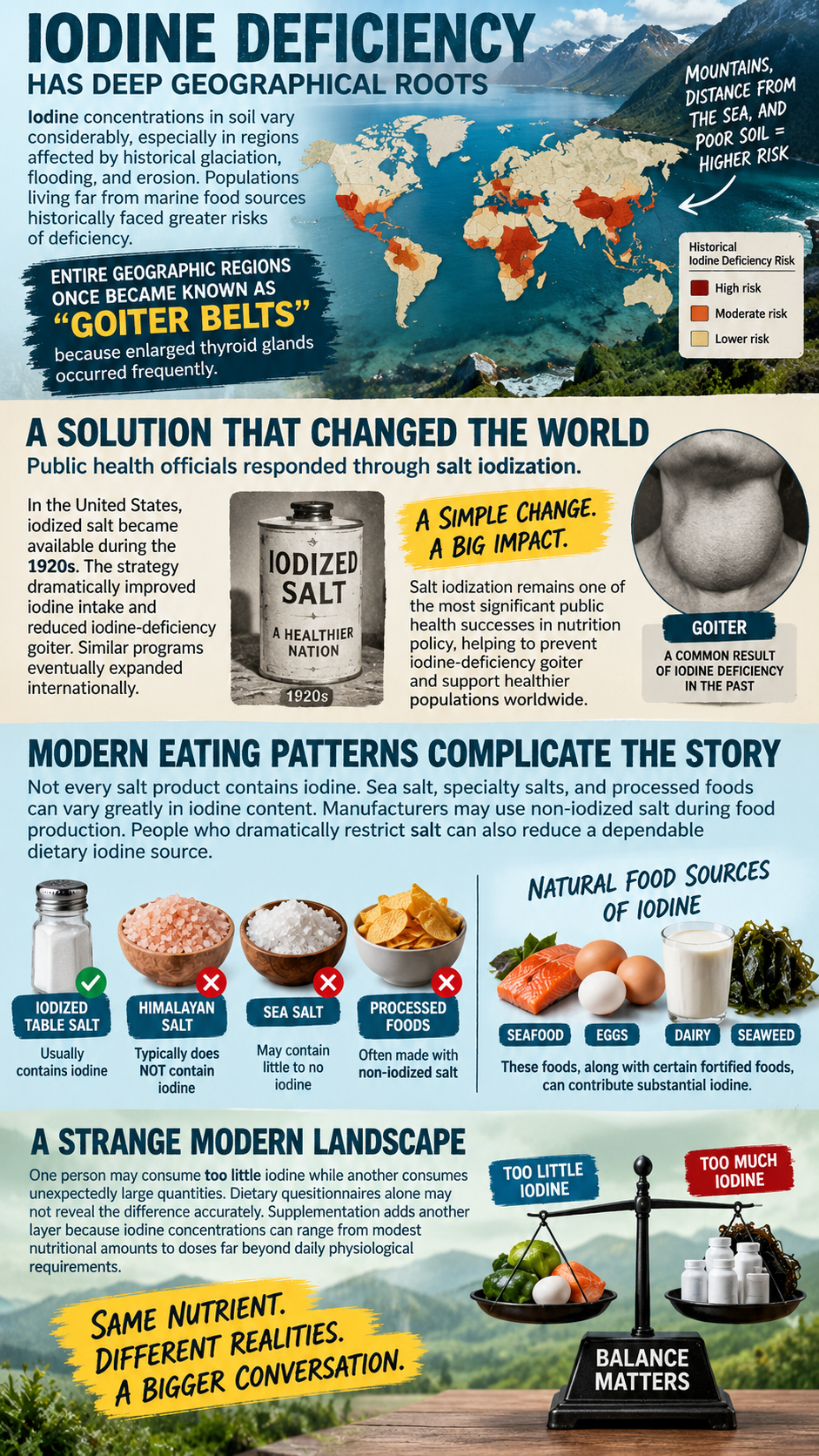
Modern eating patterns, however, complicate the story. Not every salt product contains iodine. Sea salt, specialty salts, and processed foods can vary greatly in iodine content. Manufacturers may use non-iodized salt during food production. People who dramatically restrict salt can also reduce a dependable dietary iodine source. Meanwhile, dairy products, eggs, seafood, seaweed, and certain fortified foods can contribute substantial iodine.
That creates a strange modern landscape. One person may consume too little iodine while another consumes unexpectedly large quantities. Dietary questionnaires alone may not reveal the difference accurately. Supplementation adds another layer because iodine concentrations can range from modest nutritional amounts to doses far beyond daily physiological requirements.
The Supplement Trap: More Is Not Automatically Better
Iodine became popular within certain wellness communities because the logic appears straightforward. The thyroid requires iodine. Therefore, hypothyroidism must mean the thyroid needs more iodine. That reasoning sounds convincing until actual thyroid physiology enters the conversation.
Hypothyroidism has many causes. Hashimoto’s thyroiditis represents a major cause in iodine-sufficient regions. Thyroid surgery, radioactive iodine treatment, medications, congenital conditions, pituitary disorders, and severe nutritional deficiencies can also alter thyroid function. Simply adding iodine cannot correct every one of these mechanisms.
Large iodine doses may become particularly problematic when someone already receives sufficient iodine. Seaweed concentrates can contain highly variable amounts. Kelp supplements may also deliver iodine concentrations that greatly exceed expected dietary exposure. Combining iodized salt, iodine-rich foods, multivitamins, thyroid formulas, and standalone iodine can further increase total intake.
The mistake involves treating a nutrient as though it were a drug with a predictable dose-response relationship. Biological systems rarely work that way. Nutrients interact with enzymes, transporters, antioxidants, hormones, and feedback loops. Effective thyroid support therefore requires understanding the environment surrounding iodine rather than obsessing over iodine alone.
Iodine, Oxidative Stress, and the Thyroid
One overlooked part of thyroid physiology involves hydrogen peroxide. The thyroid uses this reactive molecule during hormone synthesis. Hydrogen peroxide helps facilitate iodine oxidation and its incorporation into thyroglobulin. That process is normal, controlled, and necessary.
However, reactive chemistry requires antioxidant protection. Thyroid cells possess defensive systems designed to limit oxidative damage. Selenium-dependent enzymes play important roles within this antioxidant network. Selenium also supports enzymes involved in thyroid hormone metabolism. Consequently, iodine metabolism and selenium biology intersect in meaningful ways.
This does not mean everyone taking iodine should automatically consume large selenium doses. Excessive selenium can also cause toxicity. Instead, the relationship demonstrates why isolated nutrient thinking can become misleading. A thyroid exposed to abundant iodine does not operate independently from its antioxidant capacity.
Experimental and observational research has also explored connections between high iodine exposure and thyroid autoimmunity. The relationship remains complex because genetics, baseline iodine status, selenium status, and population characteristics matter. Researchers have proposed several mechanisms, including altered thyroglobulin immunogenicity and increased oxidative stress. These mechanisms provide biological plausibility, but they do not prove that iodine alone causes Hashimoto’s disease.
Hashimoto’s Changes the Iodine Conversation
Hashimoto’s thyroiditis is an autoimmune disorder in which immune activity targets thyroid tissue. Many patients demonstrate antibodies against thyroid peroxidase, thyroglobulin, or both. Over time, inflammation can impair the gland’s ability to maintain adequate thyroid hormone production.
Iodine becomes more complicated in this environment. Population studies have found changes in autoimmune thyroid disease after major shifts in iodine intake. However, individual responses differ considerably. Adequate iodine remains necessary, while chronically excessive iodine may increase autoimmune thyroid risk in susceptible populations.
That distinction matters because fear can become as misleading as enthusiasm. Eliminating iodine entirely does not represent a rational solution for Hashimoto’s. The body still requires iodine for thyroid hormone synthesis and other physiological functions. Likewise, aggressively increasing iodine without evaluating thyroid status can create unnecessary risk.
The deeper problem is not that iodine suddenly becomes poisonous. The problem involves loss of physiological tolerance and regulation within a vulnerable thyroid environment. Autoimmune activity, oxidative stress, genetics, nutrient status, and iodine exposure can intersect. That intersection deserves investigation rather than simplistic rules.
Environmental Exposures Add Another Layer
Iodine also belongs to the halogen family of elements. Fluorine, chlorine, bromine, and iodine share chemical characteristics, although their biological effects differ substantially. This similarity has fueled claims that environmental halogens universally “block iodine.” Reality requires more precision.
Perchlorate provides one well-established example of interference. It can competitively inhibit the sodium-iodide symporter and reduce iodide uptake into the thyroid. Thiocyanate can also interfere with iodide transport. Cigarette smoke represents an important source of thiocyanate exposure, creating another connection between environmental exposure and thyroid physiology.
Bromide and fluoride have also received considerable attention in alternative health discussions. Their thyroid effects depend heavily on dose and exposure conditions. Sweeping claims that ordinary exposures universally displace iodine throughout the body exceed available evidence. Still, environmental thyroid disruptors deserve serious investigation because several chemicals can influence thyroid hormone synthesis, transport, metabolism, or signaling.
This broader perspective changes the conversation. A thyroid problem may involve much more than iodine intake. Nutritional status, environmental exposures, immune activity, medication use, smoking, pregnancy, and glandular disease can alter iodine requirements or thyroid responses.
What Thyroid Dysfunction Does to the Rest of the Body
The thyroid may be small, but thyroid hormones communicate with tissues throughout the body. When hormone production falls significantly, metabolism slows across multiple systems. The heart may beat more slowly, gastrointestinal motility can decline, and LDL cholesterol can rise. Skin may become dry, muscles may ache, and cognitive performance can feel sluggish.
Energy production also changes because thyroid hormones influence mitochondrial activity and metabolic rate. People often describe persistent fatigue, reduced exercise tolerance, cold sensitivity, or unexplained changes in body weight. These symptoms are not specific to thyroid disease, but they become meaningful when combined with appropriate laboratory and clinical findings.
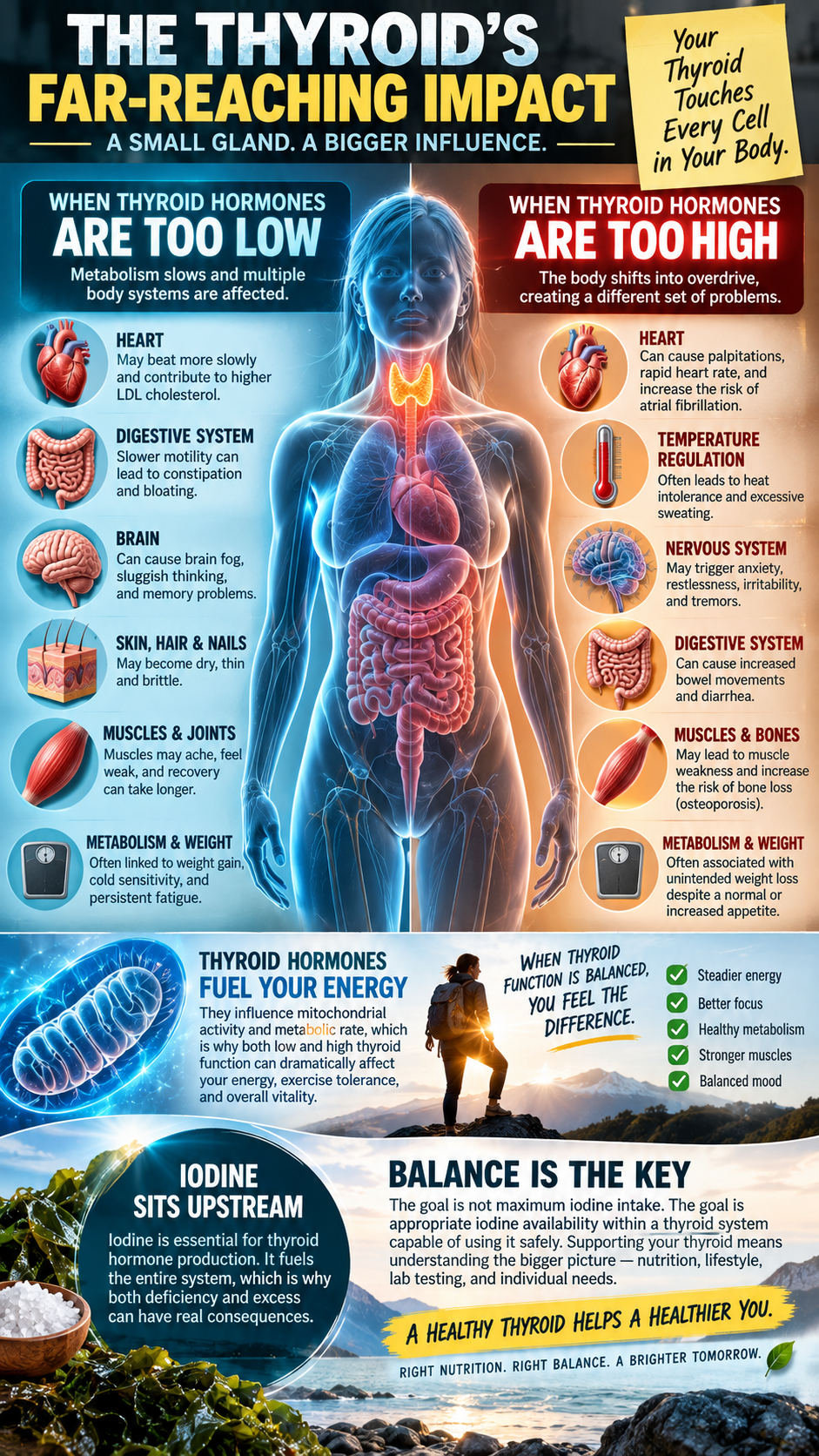
Excess thyroid hormone creates a different pattern. Palpitations, heat intolerance, tremor, anxiety, increased bowel movements, muscle weakness, and unintended weight loss can develop. Persistent hyperthyroidism can also increase risks involving atrial fibrillation and bone loss. Therefore, both inadequate and excessive thyroid activity deserve careful attention.
Iodine sits upstream of this enormous physiological network. That makes iodine essential, but it also explains why careless manipulation can have consequences. The goal should never be maximum iodine intake. The goal should be appropriate iodine availability within a thyroid system capable of using it safely.
The Real Problem Is Loss of Balance
The iodine debate often becomes polarized because people want a single villain or a single cure. Human physiology rarely offers either. Iodine deficiency remains a legitimate health problem, especially in vulnerable populations and certain dietary patterns. Excessive iodine exposure can also disturb thyroid function, particularly in susceptible individuals.
The deeper issue is biological context. Does the person have adequate iodine intake? Is autoimmune thyroid disease present? Are thyroid nodules involved? Does the diet provide sufficient selenium and other essential nutrients? Are medications affecting thyroid function? Could smoking, perchlorate exposure, pregnancy, or gastrointestinal problems change nutritional requirements?
Those questions move thyroid care away from guesswork. They also reveal why symptoms alone cannot determine whether someone needs iodine. Fatigue does not prove iodine deficiency. Weight gain does not establish hypothyroidism. Hair loss does not identify a single thyroid mechanism.
A struggling thyroid deserves investigation before intervention. Iodine should neither be feared nor worshiped. It should be understood as one essential component inside a remarkably complex endocrine system.
That understanding creates the foundation for a better strategy. Part 2 will examine how to evaluate iodine status more intelligently, which thyroid markers deserve attention, and where food fits into the picture. It will also explore practical steps that can support thyroid function at home without blindly escalating iodine intake. The objective is not simply to feed the thyroid more iodine. The objective is to create the conditions in which the thyroid can regulate, produce, convert, and signal appropriately.
Creating the Environment a Healthy Thyroid Needs
Understanding iodine changes the question we should ask about thyroid health. Instead of immediately asking how much iodine someone should take, we should investigate why the thyroid struggles. That distinction matters because iodine cannot repair every mechanism behind thyroid dysfunction. Sometimes inadequate iodine limits thyroid hormone production, while excessive iodine creates problems in other people. Autoimmunity, nutrient deficiencies, medications, environmental exposures, metabolic dysfunction, and structural thyroid disease can also contribute. Supporting thyroid function therefore requires restoring the biological environment surrounding the gland rather than chasing one nutrient.
This wider perspective also changes what people can begin doing at home. Supporting thyroid physiology does not require filling a cabinet with supplements or following an extreme detoxification program. Much of the foundation begins with food quality, iodine awareness, adequate nutrition, sleep, movement, and thoughtful monitoring. Those actions appear simple, yet they address something aggressive supplementation often ignores. The thyroid operates within an interconnected endocrine, immune, neurological, and metabolic system, and disturbances within those systems can influence thyroid function.
First, Find Out Where Your Iodine Is Coming From
One of the most useful actions someone can take at home costs absolutely nothing. Walk through the kitchen, pantry, refrigerator, and supplement cabinet and identify every significant iodine source. Many people begin iodine supplements without understanding how much they already consume. Others eliminate iodine after hearing that it can worsen Hashimoto’s disease. Both strategies can create problems because they begin with assumptions instead of investigating actual exposure.
Start with the salt used at home because salt labels can reveal an important nutritional blind spot. Many people abandoned iodized table salt years ago for sea salt, Himalayan salt, or specialty mineral salts. Those products may contain trace minerals, but they do not necessarily provide dependable iodine concentrations. Someone who also avoids seafood, eggs, dairy, and iodine-containing supplements may unknowingly consume relatively little iodine. A seemingly healthy dietary change can therefore remove a nutrient source that previously supplied consistent amounts.
Food intake deserves the same investigation. Seafood, eggs, dairy foods, iodized salt, seaweed, and certain fortified products can contribute meaningful iodine. Someone eating seafood several times weekly has a different iodine profile from someone following a highly restrictive diet. Plant-based diets can also vary tremendously depending on seaweed consumption, fortified foods, and salt choices. Rather than labeling one diet good or bad, examine whether that diet consistently supplies the nutrients thyroid physiology requires.
Finally, examine every supplement label carefully. Multivitamins, prenatal formulas, kelp capsules, thyroid products, seaweed powders, and standalone iodine drops may contain iodine. Several products can quietly overlap until total intake becomes far greater than expected. This home audit often reveals that the question is not simply whether someone consumes iodine. The more useful question involves how much arrives from all sources combined and whether that exposure matches physiological needs.
The Tiny Measurement Difference That Can Create a Huge Problem
Supplement labels become particularly important because micrograms and milligrams look deceptively similar. Most nonpregnant adults need approximately 150 micrograms of iodine daily, although individual circumstances and life stages matter. Pregnancy and lactation increase iodine requirements because thyroid hormone production and infant development place additional demands on iodine availability. These requirements remain measured in micrograms rather than large supplemental doses.
One milligram equals 1,000 micrograms, making the distinction enormously important. A product containing several milligrams can provide many times ordinary daily nutritional requirements. That does not mean every milligram dose automatically causes harm, because higher iodine doses have specific medical applications. However, therapeutic exposure should not be confused with routine nutritional replacement. Someone should understand that difference before consuming concentrated iodine simply because fatigue, weight gain, or cold hands suggest a thyroid problem.
Seaweed adds another layer of unpredictability because iodine concentrations can vary substantially among species and products. Kelp can contain especially large amounts, making frequent consumption capable of dramatically increasing iodine exposure. Seaweed capsules and powders can make that exposure even easier to overlook. Treating concentrated kelp like an ordinary green vegetable ignores its unusual iodine content and creates another pathway toward accidental excess.
Iodine Cannot Work Alone
Thyroid hormone production requires more than iodine, and this is where simplistic thyroid protocols often collapse. Selenium deserves particular attention because several enzymes involved in thyroid physiology contain selenium. Deiodinase enzymes participate in activating and deactivating thyroid hormones, while other selenoproteins contribute to antioxidant defense. These functions become especially important because thyroid hormone synthesis naturally involves oxidative chemistry.
Hydrogen peroxide participates in the biochemical process that allows iodine to become incorporated into thyroid hormone precursors. The thyroid therefore generates reactive molecules while manufacturing hormones, but healthy tissue also maintains systems that control those molecules. Selenium-dependent antioxidant enzymes contribute to that protective network. When nutritional status becomes inadequate, the environment surrounding thyroid hormone production can become less favorable. This relationship helps explain why iodine should never be viewed independently from the nutrients that help the thyroid process it.
Selenium supplementation still requires restraint because excessive intake can cause toxicity. Food can provide a useful foundation through seafood, eggs, meats, and other nutrient-dense foods. Brazil nuts contain substantial selenium, but their concentration varies considerably between individual nuts and growing regions. Eating large quantities every day can therefore transform a seemingly healthy habit into excessive exposure. Nutritional sufficiency remains the target, not the highest dose someone can tolerate.
Iron, Protein, and the Nutrients That Rarely Get the Headlines
Iron represents another frequently overlooked part of thyroid physiology. Thyroid peroxidase, an enzyme involved in thyroid hormone synthesis, depends on iron-containing heme. Significant iron deficiency may therefore create another obstacle in someone already struggling with thyroid-related symptoms. Menstruating women, people with gastrointestinal disorders, frequent blood donors, and those following restrictive diets may deserve particular attention to iron status.
Protein also provides amino acids required throughout endocrine physiology, including tyrosine used within thyroid hormone structure. That fact does not mean isolated tyrosine supplements cure hypothyroidism. It demonstrates that thyroid function depends on adequate overall nutrition. Zinc, vitamin A, B vitamins, magnesium, and other nutrients also participate in metabolic processes surrounding thyroid signaling and energy production.
This is where food quality becomes a practical thyroid intervention at home. Meals should emphasize nutrient-dense whole foods, sufficient protein, healthy fats, and adequate overall energy. Someone who constantly under-eats while swallowing increasingly complicated thyroid supplements may be working against basic physiology. The body cannot manufacture, convert, transport, and respond to hormones optimally when nutritional resources remain chronically inadequate.
Hashimoto’s Requires More Precision, Not More Iodine
Hashimoto’s thyroiditis changes the conversation because the immune system has become involved. The thyroid still requires iodine, so eliminating iodine completely does not represent a universal answer. However, excessive iodine exposure can present problems in susceptible thyroids, and research has associated high iodine intake with autoimmune thyroid dysfunction under certain circumstances. Genetics, baseline iodine status, selenium availability, and other factors influence that relationship.
Someone with Hashimoto’s should therefore resist the temptation to use iodine as an unrestricted thyroid stimulant. Persistent fatigue does not prove that more iodine is required, and increasing the dose does not necessarily improve thyroid hormone production. An inflamed autoimmune thyroid may respond differently from an iodine-deficient thyroid. Treating those conditions identically ignores the mechanism producing the dysfunction.
Appropriate thyroid evaluation becomes particularly valuable in this situation. TSH and free T4 provide important information, while thyroid peroxidase and thyroglobulin antibodies can help identify autoimmune thyroid disease when clinically appropriate. Other testing may become useful depending on symptoms, medications, pregnancy status, and structural thyroid findings. Laboratory values should never replace the clinical picture, but neither should symptoms alone determine iodine supplementation.
Reduce the Everyday Burdens That Can Complicate Thyroid Physiology
The home environment deserves attention because several exposures can influence thyroid pathways. Cigarette smoke increases thiocyanate exposure, and thiocyanate can interfere with iodide transport into the thyroid. Avoiding smoking and secondhand smoke therefore provides another reason to protect thyroid and whole-body health. This action also benefits cardiovascular, pulmonary, neurological, and cancer risk far beyond the thyroid.
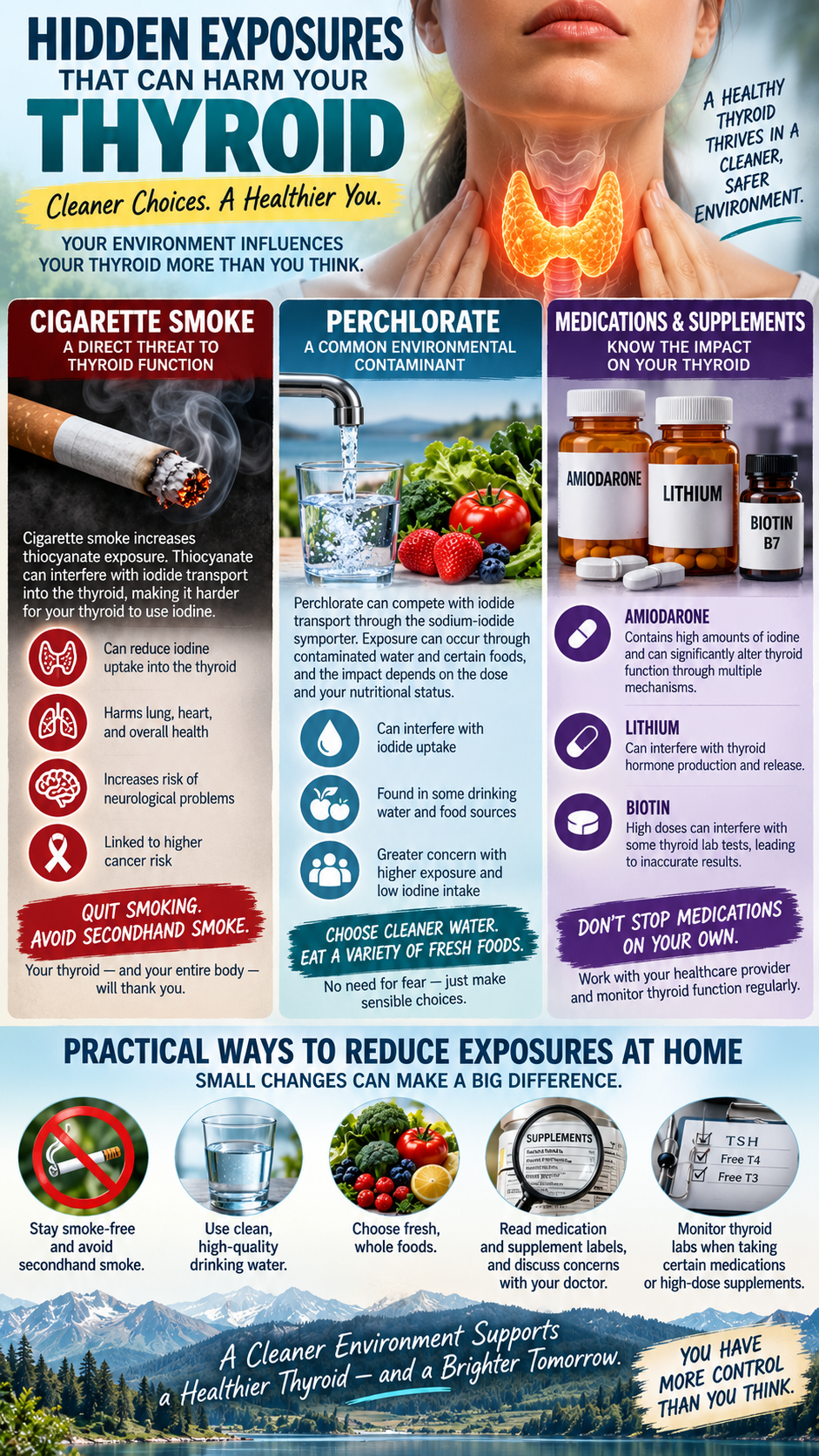
Perchlorate provides another example because it can compete with iodide transport through the sodium-iodide symporter. Exposure can occur through contaminated food or water, although the significance varies with dose and nutritional status. This does not justify fearing every glass of water or purchasing elaborate detoxification products. It supports sensible attention to drinking-water quality, nutrition, and unnecessary environmental exposure.
Medication and supplement use also deserves review. Amiodarone can substantially alter thyroid physiology through its iodine content and additional effects on the gland. Lithium can interfere with thyroid function through different mechanisms. Neither medication should be stopped without appropriate medical guidance, but people taking them should understand why thyroid monitoring matters. Biotin deserves attention as well because high supplemental doses can interfere with some thyroid laboratory tests and create misleading results.
Stop Starving a Body You Are Asking to Heal
Extreme dieting deserves a place in every serious thyroid conversation because chronic energy restriction can alter thyroid hormone metabolism. People struggling with unexplained weight gain often respond by repeatedly cutting calories. When weight loss slows, calories fall further, meals disappear, and exercise intensity increases. Eventually, fatigue worsens while the person becomes convinced that the thyroid needs another supplement.
Severe calorie restriction can reduce circulating T3 as the body adapts to lower energy availability. That response does not necessarily mean the thyroid gland has permanently failed. The body may instead be adjusting metabolism to match the energy entering the system. Repeated crash dieting can therefore complicate both symptoms and laboratory interpretation.
A more intelligent home approach provides adequate nourishment while improving food quality. Protein should appear consistently, while whole-food sources of minerals and vitamins should replace nutrient-poor processed foods whenever practical. Energy intake should support healthy physiology rather than repeatedly signal scarcity. Thyroid health cannot be separated from the body’s perception of whether adequate resources exist.
Learn to Read the Signals Your Body Is Sending
Tracking symptoms can become surprisingly useful when done without obsession. Energy levels, bowel regularity, resting heart rate, temperature tolerance, sleep quality, menstrual changes, and unexplained weight fluctuations can reveal patterns over several weeks. A simple journal often provides more useful information than trying to remember when symptoms began.
Changes should also be introduced carefully whenever possible. Starting iodine, selenium, a thyroid glandular, a restrictive diet, and three additional supplements simultaneously makes interpretation nearly impossible. If symptoms improve, nobody knows what produced the improvement. If symptoms worsen, identifying the responsible variable becomes equally difficult. Thoughtful changes create clearer feedback and reduce unnecessary experimentation.
Certain signals should prompt proper evaluation rather than another home remedy. Persistent palpitations, tremor, unexplained rapid weight loss, pronounced heat intolerance, or an unusually fast heart rate can accompany excessive thyroid activity. Increasing neck swelling, swallowing difficulty, persistent hoarseness, or a newly discovered neck mass also requires appropriate assessment. Home strategies work best when people understand where self-care ends and investigation should begin.
Give the Thyroid the Environment It Was Designed to Use
The most important lesson from the iodine debate reaches beyond iodine itself. The thyroid does not need nutritional warfare between deficiency and megadosing. It needs adequate raw materials, appropriate regulation, antioxidant protection, sufficient energy, healthy immune control, and freedom from unnecessary physiological burdens. Iodine remains essential within that environment, but it represents only one piece of a much larger system.
At home, meaningful change begins by understanding iodine sources, eating nutrient-dense foods, avoiding unnecessary high-dose supplementation, and supplying adequate protein and energy. Reducing smoking exposure, protecting sleep, remaining physically active, and investigating persistent symptoms further strengthen that foundation. These actions lack the drama of a miracle supplement, yet they align far more closely with normal physiology.
The thyroid should not be forced to work harder when the real problem involves the environment in which it must work. Supporting that environment requires discovering what is missing, identifying what exists in excess, and removing obstacles whenever possible. Sometimes iodine deficiency represents the missing piece. At other times, excessive iodine may become part of the problem.
That distinction changes everything. Iodine is neither the enemy nor the cure-all of thyroid health. It is an essential nutrient whose effects depend on dose, context, immune status, nutritional sufficiency, and the condition of the thyroid itself. Once we understand that relationship, the goal becomes much clearer: give the body what it genuinely needs, stop overwhelming it with what it does not need, and create the conditions in which normal thyroid physiology has the best opportunity to function.