
THE METABOLIC PROBLEM HIDING BEHIND “NORMAL” BLOOD SUGAR
There is a dangerous moment in human health when the laboratory report looks better than the person’s metabolism actually functions. Fasting glucose returns inside the reference range. Hemoglobin A1C remains below the threshold for prediabetes. Nothing appears urgent enough to earn a diagnosis. Yet beneath those reassuring numbers, the pancreas may already be working harder to control glucose. Insulin levels can rise as cells become progressively less responsive to insulin’s message. The body compensates, blood sugar remains controlled, and the underlying metabolic problem stays hidden.
This is one reason type 2 diabetes rarely begins when a laboratory finally identifies it. The diagnosis often represents a later chapter in a metabolic story that started years earlier. Before glucose climbs dramatically, insulin resistance can alter energy storage, appetite, liver metabolism, blood lipids, and fat distribution. Muscle cells can become less responsive to insulin. The liver may continue releasing glucose when it should slow production. Visceral fat can expand while inflammatory signaling increases. Meanwhile, the pancreas works harder to keep glucose from exposing the problem.
Understanding this earlier stage changes the entire conversation surrounding diabetes prevention. Instead of asking whether someone has crossed a diagnostic threshold, we can ask a more useful question. How hard must the body work to maintain seemingly normal blood sugar? That question shifts attention from disease detection toward metabolic function. It also reveals why fasting glucose and A1C sometimes provide only part of the picture.
Diabetes Does Not Begin With High Blood Sugar
Most people have learned to think about diabetes as a blood sugar disorder. That description captures the obvious manifestation, but it misses much of the underlying physiology. Type 2 diabetes usually involves both insulin resistance and declining pancreatic beta-cell function. Those processes can evolve long before persistent hyperglycemia becomes obvious. During the earlier stages, the body frequently compensates by producing more insulin.
Think of insulin as a metabolic instruction rather than merely a blood sugar hormone. After a meal, insulin helps direct nutrients toward tissues that can use or store them. Skeletal muscle responds by increasing glucose uptake. The liver reduces its own glucose output while managing incoming nutrients. Fat cells alter their storage and release of fatty acids. Healthy insulin signaling helps coordinate this entire metabolic orchestra.
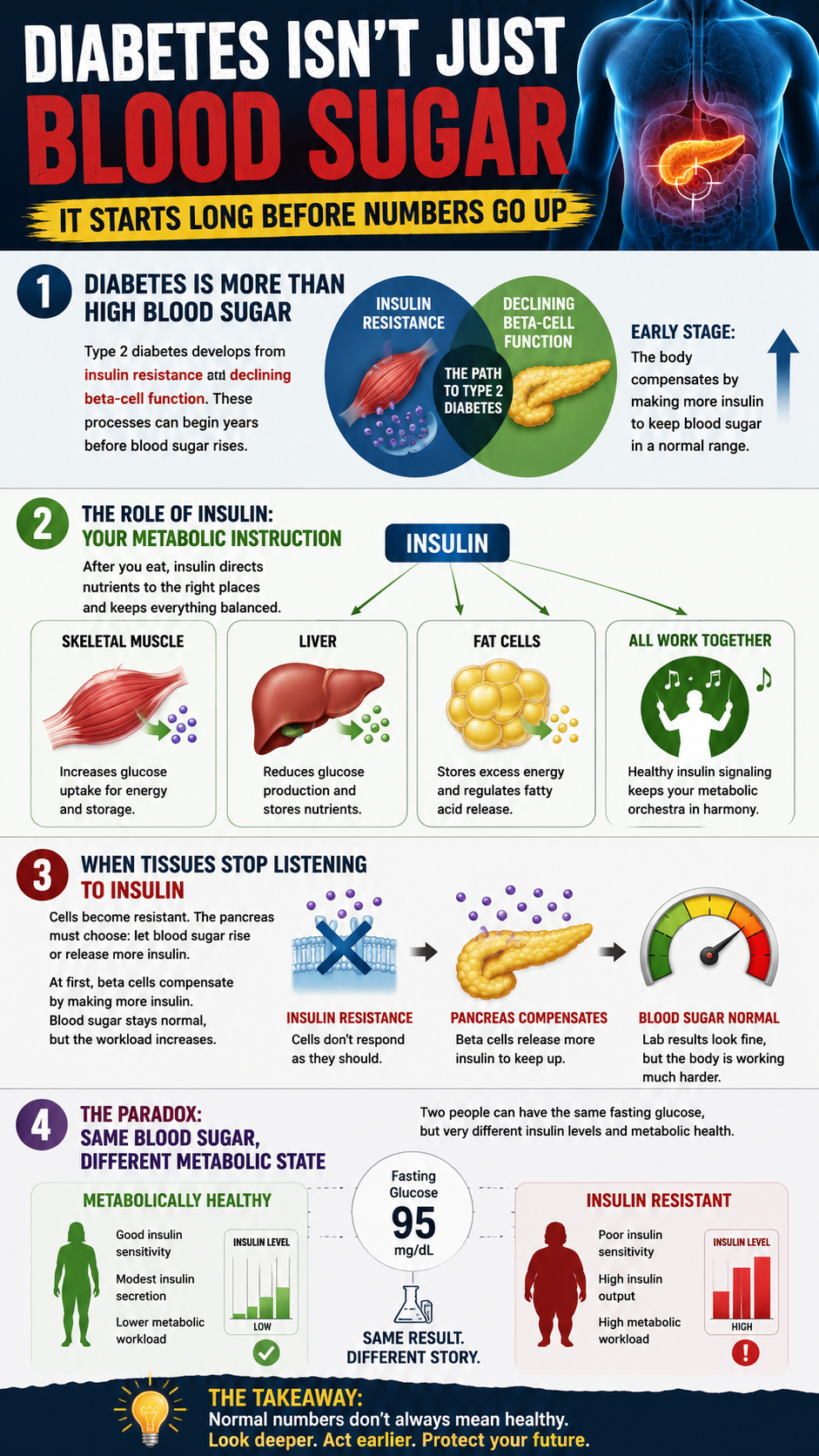
Trouble develops when tissues stop responding appropriately to insulin. The pancreas then faces a choice it never consciously makes. It can allow glucose to rise, or it can release more insulin. Early in the process, pancreatic beta cells often compensate remarkably well. More insulin produces enough signaling pressure to maintain acceptable glucose. The laboratory report therefore looks normal while the metabolic workload increases.
This compensation explains an important paradox. Two people can have identical fasting glucose while possessing very different metabolic states. One person may maintain that glucose with excellent insulin sensitivity and modest insulin secretion. Another may require substantially more insulin to achieve the same glucose concentration. Measuring glucose alone cannot distinguish those situations. The number shows the result, not necessarily the metabolic effort required to produce it.
Where Insulin Resistance Really Begins
Insulin resistance rarely has one single cause. It develops from interactions among genetics, body composition, diet, physical activity, sleep, medications, hormones, aging, and environmental factors. However, several pathways repeatedly appear in metabolic research. Excess visceral and ectopic fat play major roles. Chronic energy surplus can overwhelm the storage capacity of adipose tissue. Fatty acids and lipid intermediates then accumulate in organs poorly designed for excessive fat storage.
The liver becomes particularly important during this process. Excess liver fat can interfere with insulin signaling and disrupt normal glucose regulation. Normally, insulin tells the liver to reduce glucose production after eating. An insulin-resistant liver becomes less responsive to that instruction. Consequently, hepatic glucose output may remain unnecessarily elevated. The pancreas responds with additional insulin to maintain glucose control.
Skeletal muscle represents another major battleground. Muscle tissue accounts for a substantial portion of insulin-stimulated glucose disposal after meals. Physical inactivity reduces the repeated muscular demand that helps maintain metabolic flexibility. Low muscle mass further reduces available glucose-storage capacity. Over time, impaired muscle insulin sensitivity forces the body to rely increasingly on compensatory insulin secretion.
Adipose tissue also changes as insulin resistance progresses. Enlarged fat cells become metabolically stressed and release greater amounts of fatty acids into circulation. Altered adipokine and inflammatory signaling can further disrupt insulin responsiveness elsewhere. More fatty acids reach the liver, encouraging triglyceride production and ectopic fat accumulation. What started as an energy-storage problem can therefore become a whole-body metabolic disturbance.
Hyperinsulinemia: The Compensation That Can Hide the Problem
Elevated insulin deserves careful interpretation because insulin itself remains essential for survival. The problem is not that insulin exists. The concern arises when the body repeatedly requires excessive insulin exposure to accomplish ordinary metabolic tasks. That pattern may indicate compensation for declining insulin sensitivity.
During this compensatory phase, fasting glucose can remain surprisingly normal. A1C may also remain below the prediabetes threshold because average glucose has not risen enough. Meanwhile, insulin concentrations may increase after meals or during fasting. Standard screening rarely measures these responses directly. Therefore, a person can receive reassuring glucose results while several metabolic warning signs accumulate elsewhere.
Persistently elevated insulin commonly accompanies an environment favoring energy storage. Insulin suppresses lipolysis, helping prevent stored fat from being released while incoming energy remains available. This physiological function makes sense after eating. Problems arise when frequent energy intake and insulin resistance repeatedly create conditions favoring storage. Fat loss can become increasingly difficult despite substantial stored energy.
Hyperinsulinemia also interacts with appetite and energy regulation. Rapidly absorbed carbohydrates can produce large glucose and insulin responses in susceptible individuals. Some people then experience renewed hunger, cravings, or energy fluctuations several hours later. Those symptoms do not diagnose insulin resistance. However, they deserve attention when they accompany central weight gain, high triglycerides, fatty liver, or worsening glucose regulation.
The Belly Can Reveal What Blood Sugar Has Not
One of the earliest visible clues may appear around the waist rather than inside a laboratory report. Visceral fat surrounds internal organs and behaves differently from much subcutaneous fat. Excess visceral adiposity correlates strongly with insulin resistance, fatty liver, cardiovascular risk, and future type 2 diabetes. Waist circumference therefore provides valuable information that body weight alone cannot reveal.
A bathroom scale measures mass but says little about metabolic distribution. Someone can gain only several pounds while accumulating disproportionate abdominal fat. Another person can maintain a seemingly normal body mass index while carrying excessive visceral fat. This phenotype sometimes gets described as metabolically unhealthy normal weight. Appearance alone cannot guarantee insulin sensitivity.
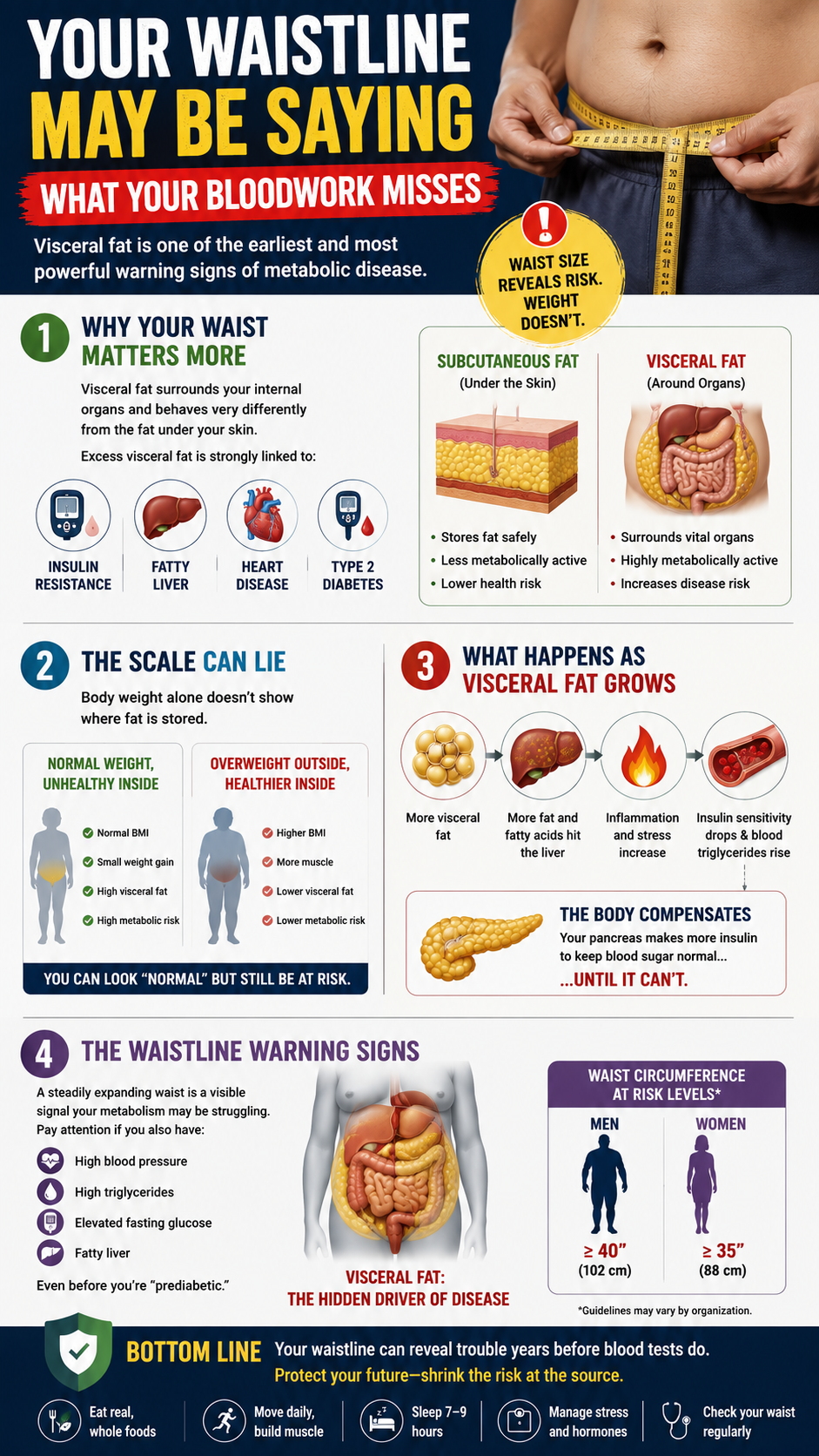
As visceral fat expands, fatty-acid delivery to the liver can increase. Inflammatory signaling can also intensify. Liver fat may rise, triglyceride production can accelerate, and insulin sensitivity can deteriorate further. These processes reinforce one another. More insulin resistance encourages greater compensatory insulin secretion, while worsening fat distribution creates additional metabolic stress.
Waist changes therefore deserve more attention than cosmetic culture allows. A steadily expanding abdomen can represent a visible metabolic signal. Pair that change with rising blood pressure, triglycerides, fasting glucose, or liver fat, and the picture becomes more concerning. The body may be communicating metabolic dysfunction before standard diabetes criteria identify it.
Your Triglycerides and HDL May Be Whispering the Same Warning
A routine lipid panel sometimes reveals clues that glucose testing misses. Insulin-resistant states commonly feature elevated triglycerides and lower HDL cholesterol. Liver metabolism plays a central role in this pattern. Increased fatty-acid delivery gives the liver more material for triglyceride synthesis. The liver packages those triglycerides into VLDL particles and sends them into circulation.
Researchers have therefore studied the triglyceride-to-HDL ratio as a practical surrogate associated with insulin resistance. The ratio cannot diagnose insulin resistance by itself. Thresholds vary among populations, sexes, and ethnic groups. Still, a worsening ratio can contribute useful information when interpreted alongside waist circumference and glucose markers.
This metabolic pattern also explains why focusing exclusively on total cholesterol misses important context. Metabolism operates through interconnected systems rather than isolated numbers. Triglycerides can rise while HDL falls and glucose remains relatively controlled. Liver fat may increase simultaneously. Blood pressure can creep upward during the same period.
These changes should encourage investigation rather than panic. No single abnormal marker proves that insulin resistance exists. However, multiple abnormalities moving in the same metabolic direction deserve attention. Patterns often reveal physiology more clearly than isolated values.
The Fatty Liver Connection
The liver may become one of insulin resistance’s earliest casualties. Metabolic dysfunction-associated steatotic liver disease develops when excess fat accumulates inside liver cells alongside metabolic dysfunction. Alcohol is not required for this process. Many people discover fatty liver accidentally during imaging performed for unrelated reasons.
A fatty liver does more than store unwanted fat. Hepatic insulin resistance can weaken insulin’s ability to suppress glucose production. Consequently, the liver may continue releasing glucose despite adequate circulating energy. The pancreas compensates by secreting more insulin. Higher insulin can then encourage additional nutrient storage under conditions of excess intake.
Liver enzymes cannot reliably exclude this problem. Some people with substantial hepatic steatosis maintain liver enzymes within laboratory reference ranges. Imaging and clinical context may therefore become important when suspicion remains high. Waist circumference, triglycerides, blood pressure, glucose trends, and other metabolic findings can strengthen that suspicion.
Ignoring fatty liver because glucose remains normal misses the interconnected nature of metabolism. The liver influences glucose, lipids, inflammation, and energy handling. When liver metabolism deteriorates, consequences can spread throughout the body. Fatty liver should therefore trigger questions about the entire metabolic environment.
What Insulin Resistance Does to the Body
Insulin resistance does not remain confined to blood sugar. The condition influences multiple organ systems because insulin signaling reaches far beyond glucose control. The liver changes its handling of glucose and fat. Skeletal muscle becomes less efficient at glucose uptake. Adipose tissue alters fatty-acid release and endocrine signaling.
The cardiovascular system also enters the picture. Insulin resistance commonly clusters with hypertension, high triglycerides, low HDL, visceral obesity, and dysglycemia. Together, these abnormalities increase cardiovascular risk. Waiting for diabetes before addressing them sacrifices valuable prevention time.
Pancreatic beta cells may eventually face the greatest burden. For years, they can compensate by increasing insulin production. Genetic susceptibility and metabolic stress influence how long that compensation lasts. Eventually, insulin secretion may become inadequate for the degree of insulin resistance. Glucose then begins escaping the previously successful compensation.
At first, abnormalities may appear after meals. Fasting glucose can remain acceptable because overnight regulation still works reasonably well. As hepatic insulin resistance and beta-cell dysfunction progress, fasting glucose can rise. A1C eventually follows the increasing average glucose exposure. Prediabetes then appears on paper, although the underlying metabolic process may have existed much longer.
The Bloodwork Warning Signs Worth Investigating
A1C and fasting glucose remain useful tests. They should not be discarded simply because they have limitations. Instead, they should become part of a broader metabolic investigation. Trends often matter more than isolated snapshots. A fasting glucose moving from 82 to 97 deserves different consideration than a stable value remaining near 82.
Fasting insulin can provide additional context, although no universally accepted diagnostic cutoff exists. Insulin assays vary among laboratories, making rigid interpretation problematic. HOMA-IR combines fasting glucose and fasting insulin into an estimated insulin-resistance index. Researchers frequently use it, while clinical interpretation still requires context.
An oral glucose tolerance test can reveal abnormalities missed during fasting. The test challenges the body with glucose and measures its response over time. Established two-hour glucose criteria can identify impaired glucose tolerance or diabetes. In selected settings, insulin measurements during the challenge may provide additional physiological information.
Triglycerides, HDL, waist circumference, blood pressure, and liver health add further pieces. None should become a standalone diagnosis. Together, however, they can reveal a metabolic trajectory. The goal is not creating disease labels where none exist. The goal is recognizing dysfunction while meaningful opportunities for reversal still remain.
The Metabolic Tipping Point
The transition from insulin resistance to prediabetes does not occur overnight. Instead, compensation gradually becomes less effective. Pancreatic beta cells must release increasing amounts of insulin to overcome resistant tissues. Eventually, their output cannot fully match the demand. Blood glucose then starts climbing beyond previous levels.
Post-meal glucose may deteriorate first because meals create the greatest immediate glucose challenge. Muscle tissue cannot absorb glucose as efficiently. The liver may fail to suppress glucose output appropriately. Meanwhile, pancreatic insulin secretion struggles to compensate quickly enough. Glucose therefore remains elevated longer after eating.
Fasting glucose can rise later as hepatic insulin resistance becomes more prominent. Overnight, the liver normally releases enough glucose to maintain energy availability. Insulin helps restrain excessive production. When the liver becomes resistant, that restraint weakens. Morning glucose may gradually climb.
This progression explains why metabolic prevention cannot begin at the diagnostic finish line. By then, several systems may already be struggling. Earlier intervention targets the environment driving insulin resistance. Improving that environment can reduce metabolic demand before glucose regulation deteriorates further.
Sleep: The Metabolic Variable Hiding in the Bedroom
Food receives most attention during discussions about insulin resistance. Sleep deserves a place beside it. Inadequate sleep can impair insulin sensitivity, alter appetite regulation, increase hunger, and influence food choices. Repeated sleep restriction therefore creates metabolic consequences far beyond morning fatigue.
Circadian disruption can compound the problem. Human metabolism follows daily biological rhythms that influence glucose tolerance and hormone secretion. Eating large meals late at night may produce different metabolic responses than eating earlier. Shift work creates additional challenges because activity, sleep, light exposure, and eating schedules become misaligned.
Sleep apnea deserves particular attention in people with central obesity or resistant hypertension. Repeated nighttime breathing interruptions create intermittent hypoxia and fragmented sleep. Those stresses can worsen sympathetic activation and metabolic regulation. Loud snoring and daytime sleepiness should therefore trigger appropriate evaluation.
Improving sleep does not require a miracle supplement. Consistent sleep schedules, dark bedrooms, cooler temperatures, reduced evening stimulation, and appropriate morning light exposure can help. Persistent insomnia or suspected apnea deserves professional evaluation rather than endless self-experimentation.
Muscle Is One of Your Largest Glucose Disposal Systems
Muscle represents one of the most powerful tools available for improving insulin sensitivity. After meals, skeletal muscle handles substantial amounts of glucose under insulin’s direction. Increasing muscular demand creates greater need for incoming fuel. Exercise also stimulates glucose uptake through pathways partly independent of insulin.
Resistance training adds another advantage by building or preserving metabolically active tissue. Greater muscle mass increases available storage capacity for glucose as glycogen. Stronger muscles also improve mobility and make daily activity easier. Those benefits become increasingly important with age.
Cardiovascular activity complements resistance training rather than replacing it. Walking, cycling, swimming, hiking, and interval training can improve cardiorespiratory fitness and insulin sensitivity. Consistency matters more than chasing exhausting workouts. A body that moves frequently receives repeated signals to use energy.
Sedentary time deserves attention even among people who exercise. One workout cannot completely erase an entire day spent sitting. Frequent movement breaks create additional muscular contractions throughout the day. Those contractions provide repeated opportunities for glucose disposal.
Food Quality Changes the Metabolic Conversation
The modern food environment makes overconsumption remarkably easy. Refined grains, sweetened beverages, desserts, and ultra-processed snacks deliver substantial energy with little satiety. Many combine refined carbohydrates and fats in combinations that encourage passive overeating. Frequent exposure can make energy balance increasingly difficult.
Reducing refined carbohydrates can lower large post-meal glucose demands for many insulin-resistant individuals. Eliminating sugar-sweetened beverages provides an especially practical starting point. Liquid sugar delivers glucose rapidly while producing weak satiety compared with whole foods. Removing it can substantially change daily carbohydrate exposure.
Protein supports satiety and helps preserve lean muscle during fat loss. Eggs, fish, poultry, meat, and other minimally processed protein sources can form meals around individual preferences. Appropriate plant foods can provide fiber, micronutrients, and additional satiety where tolerated. Dietary structure should still account for personal metabolic needs.
Healthy fats can contribute energy and satiety without producing large glucose excursions. However, adding unlimited fat to an already excessive energy intake will not magically reverse insulin resistance. Energy still matters. The goal is creating meals that support satiety while reducing excessive metabolic demand.
Stop Eating From Sunrise Until Bedtime
Modern eating patterns often extend across most waking hours. Breakfast begins early, snacks fill the gaps, and late-night eating finishes shortly before sleep. Each eating event requires another round of nutrient processing. For some people, reducing the daily eating window can simplify intake and improve metabolic control.
Intermittent fasting can take many forms. A basic overnight fasting period offers a conservative starting point. Some people progress toward clearly defined meals without constant snacking. Others use time-restricted eating under appropriate guidance. The method matters less than whether it safely improves metabolic health.
Fasting should never become a contest in deprivation. People using insulin or certain glucose-lowering medications require medical guidance because fasting can cause dangerous hypoglycemia. Pregnancy, eating disorders, underweight states, and several medical conditions also require individualized consideration. Metabolic therapy should remain intelligent rather than extreme.
The larger principle involves restoring periods without incoming calories. During those periods, insulin generally falls and stored fuels become more accessible. Combined with appropriate nutrition and activity, this pattern can help create conditions favoring improved metabolic flexibility.
The Ten-Minute Habit That Can Change Post-Meal Metabolism
One of the simplest strategies begins immediately after eating. Instead of sitting down after dinner, walk. Even relatively short periods of post-meal activity encourage contracting muscles to consume glucose. This reduces dependence on insulin-mediated glucose disposal.
Walking also requires no complicated equipment. Most people can begin with ten minutes after one or two meals. Speed should match physical capacity. Consistency creates the real advantage.
Over time, the habit can become part of family life rather than another health obligation. A short walk after dinner replaces sedentary time with movement. Stress often falls while daily step counts rise. Metabolic improvement becomes attached to something sustainable.
People with limited mobility can adapt the principle rather than abandoning it. Seated resistance exercises, light cycling, or other safe muscular activity may provide alternatives. The essential concept involves activating muscle after incoming nutrients arrive.
At Home: Rebuilding Insulin Sensitivity From the Ground Up
Begin by creating a metabolic baseline rather than guessing. Measure waist circumference under consistent conditions and record the result. Track body weight without allowing it to become the only measure of progress. Check blood pressure appropriately at home if equipment is available. Review glucose, A1C, triglycerides, HDL, and liver findings with a qualified healthcare professional.
Next, redesign the kitchen environment. Foods requiring constant willpower should not dominate countertops and cabinets. Replace sugar-sweetened beverages with water, sparkling water, or unsweetened alternatives. Build meals around minimally processed foods rather than packages engineered for effortless overeating. Create enough protein at each meal to support satiety and muscle.
Then establish movement after meals. Ten to twenty minutes provides a practical target for many adults. The exact duration matters less than consistency. Begin with the largest meal if three walks feel unrealistic. Once that behavior becomes automatic, expand movement throughout the day.
Add structured resistance training several times weekly. Major movement patterns should train the legs, hips, back, chest, shoulders, and arms. Beginners can use bodyweight exercises, resistance bands, or manageable weights. Progressive overload gradually gives muscles stronger reasons to adapt.
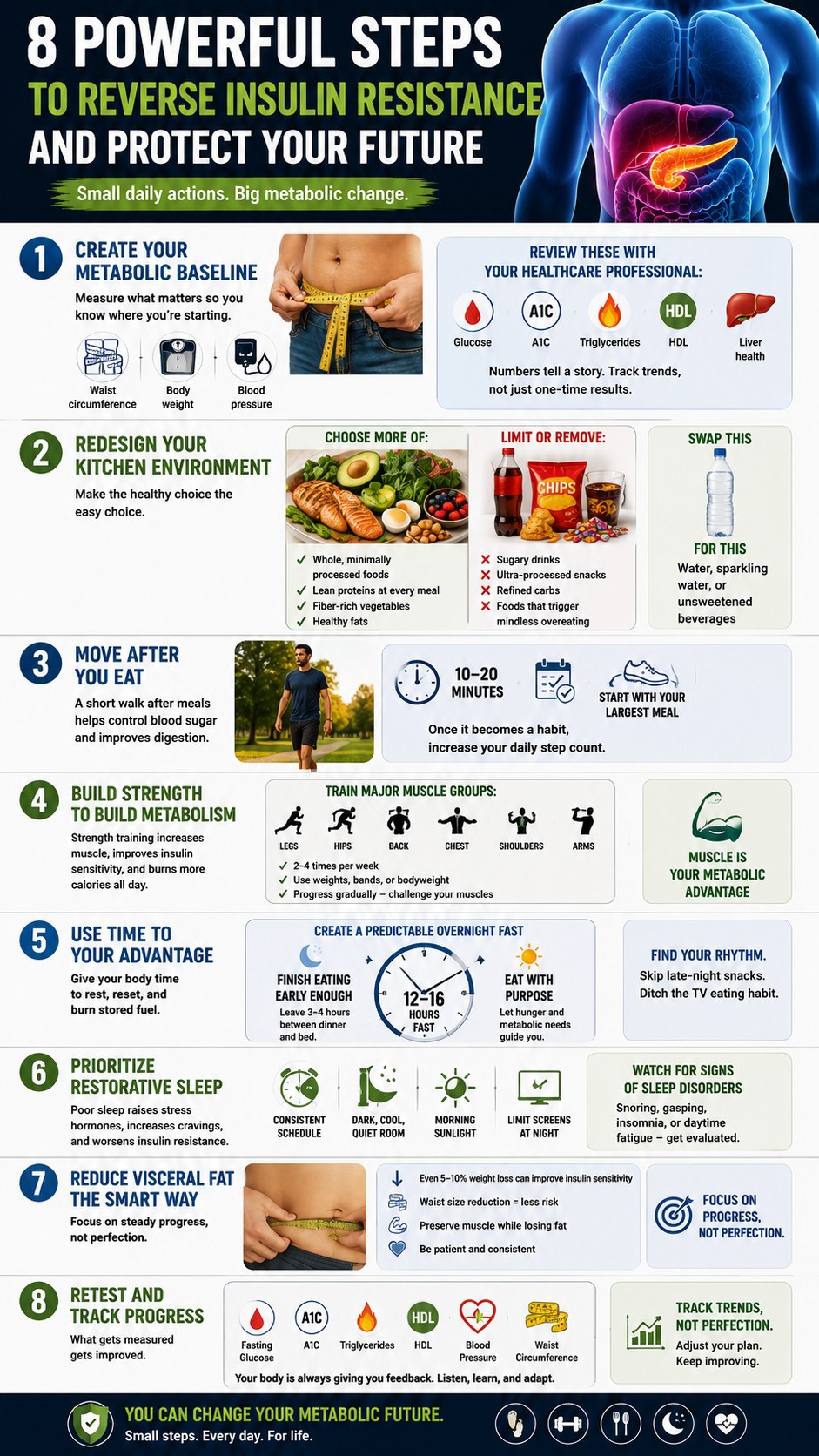
Create a predictable overnight fasting interval unless a medical condition makes fasting inappropriate. Finish the final meal several hours before bed when practical. Avoid turning evening television into an automatic eating cue. Let hunger and metabolic needs guide eating rather than habit alone.
Protect sleep with the same seriousness given to nutrition. Establish consistent bedtime and waking schedules. Seek morning outdoor light while reducing excessive bright light near bedtime. Keep the sleeping environment dark and comfortable. Investigate persistent snoring, gasping, insomnia, or severe daytime fatigue.
Reduce visceral fat gradually rather than chasing dramatic scale changes. Even modest weight loss can meaningfully improve insulin sensitivity in people carrying excess adiposity. Waist reduction may provide a particularly useful sign of improving central fat distribution. Muscle preservation should remain a priority during the process.
Finally, retest instead of assuming. Metabolic health should improve objectively, not merely feel better. Follow fasting glucose, A1C, triglycerides, HDL, blood pressure, waist circumference, and other appropriate markers. Selected individuals may benefit from fasting insulin or additional testing under professional guidance. Trends can show whether the strategy is changing underlying physiology.
Do Not Wait Until the Laboratory Calls You Prediabetic
The greatest misunderstanding surrounding insulin resistance is the belief that normal glucose guarantees normal metabolism. Sometimes it does. Sometimes normal glucose reflects a pancreas working harder to compensate for declining insulin sensitivity. The difference can matter enormously.
Years may separate early insulin resistance from diagnosable type 2 diabetes. During that interval, visceral fat can expand and liver fat can accumulate. Triglycerides may rise while HDL falls. Blood pressure can increase and metabolic flexibility can decline. Pancreatic beta cells continue carrying a growing workload.
Eventually, glucose begins revealing what compensation previously concealed. A1C crosses into the prediabetes range. Fasting glucose moves above the established threshold. The patient suddenly receives a diagnosis, yet the physiology did not suddenly appear. The laboratory simply became abnormal enough to name it.
That distinction creates hope because earlier metabolic dysfunction often remains highly modifiable. Muscle can become more insulin sensitive. Visceral fat can decrease. Liver fat can improve. Physical activity can increase glucose disposal. Better sleep can remove another source of metabolic stress.
The objective should therefore extend beyond preventing a diabetes diagnosis. The deeper goal involves restoring metabolic flexibility before pancreatic compensation begins failing. Healthy metabolism handles food efficiently, stores energy appropriately, and accesses stored fuel when needed. It maintains stable glucose without requiring extraordinary insulin output.
Bloodwork remains valuable, but bloodwork requires interpretation. Fasting glucose tells one part of the story. A1C adds another. Triglycerides, HDL, waist circumference, blood pressure, liver health, and glucose tolerance can reveal additional chapters. Fasting insulin may provide further context when interpreted carefully.
The most important question may never appear on a standard laboratory report. Instead of asking whether blood sugar has become high enough for concern, ask what the body must do to keep it normal. That question exposes the hidden years before diabetes. More importantly, it identifies the years when decisive lifestyle changes may carry their greatest power.
Diabetes prevention does not begin when A1C reaches 5.7 percent. It begins when we recognize the metabolic conditions pushing the body toward that number. The expanding waistline matters. The rising triglycerides matter. Fatty liver matters. Lost muscle matters. Poor sleep matters. Constant eating matters.
Your body rarely moves from health to disease without leaving clues along the way. Insulin resistance is one of those clues. Catching it early provides something no medication, procedure, or laboratory can manufacture later.
It provides time.
And when that time becomes an opportunity to move, build muscle, improve food quality, sleep deeply, reduce visceral fat, and restore metabolic flexibility, prevention becomes more than watching numbers.
It becomes the deliberate rebuilding of health.