
The Heart Attack That Began Years Before the First Symptom
The heart attack rarely begins when the chest pain starts. Its origins often stretch backward through years of metabolic dysfunction. During that time, the body quietly struggles with rising insulin, accumulating abdominal fat, and deteriorating blood vessel health. Meanwhile, traditional cholesterol measurements may reveal only part of the developing cardiovascular danger.
Consider a 54-year-old businessman who believes his annual physical confirms excellent health. His total cholesterol measures 190, and his fasting blood sugar remains within the laboratory’s normal range. His physician encourages him to exercise more, but nothing appears particularly alarming. Yet his waistline continues expanding, afternoon fatigue has become routine, and his blood pressure rises every year. Unknown to him, his cells have become increasingly resistant to insulin, forcing his pancreas to compensate.
This fictional scenario illustrates a problem that deserves greater attention in modern cardiovascular prevention. Heart disease involves far more than cholesterol circulating through the bloodstream. It develops through complex interactions among lipoproteins, insulin resistance, inflammation, blood pressure, and vascular injury. When these processes converge, coronary arteries can accumulate dangerous plaque long before someone experiences recognizable symptoms.
The real question extends beyond whether cholesterol is high. We must investigate the metabolic conditions that encourage cardiovascular disease to develop and progress. Understanding insulin resistance provides an essential starting point because it connects several major drivers of heart disease.
Insulin Resistance: The Metabolic Warning Sign Most People Never Recognize
Insulin functions as one of the body’s most important metabolic messengers. Produced by pancreatic beta cells, this hormone helps regulate how tissues use and store nutrients. After eating, insulin signals skeletal muscles to absorb glucose and encourages the liver to reduce glucose production. Healthy cells respond efficiently, allowing blood sugar to return toward its normal range.
Problems develop when muscle, liver, and fat cells become less responsive to insulin’s instructions. This condition, known as insulin resistance, forces the pancreas to release additional insulin to maintain glucose control. Initially, the compensation works remarkably well, keeping routine blood sugar measurements deceptively reassuring. However, elevated insulin concentrations can coexist with worsening metabolic dysfunction for years.
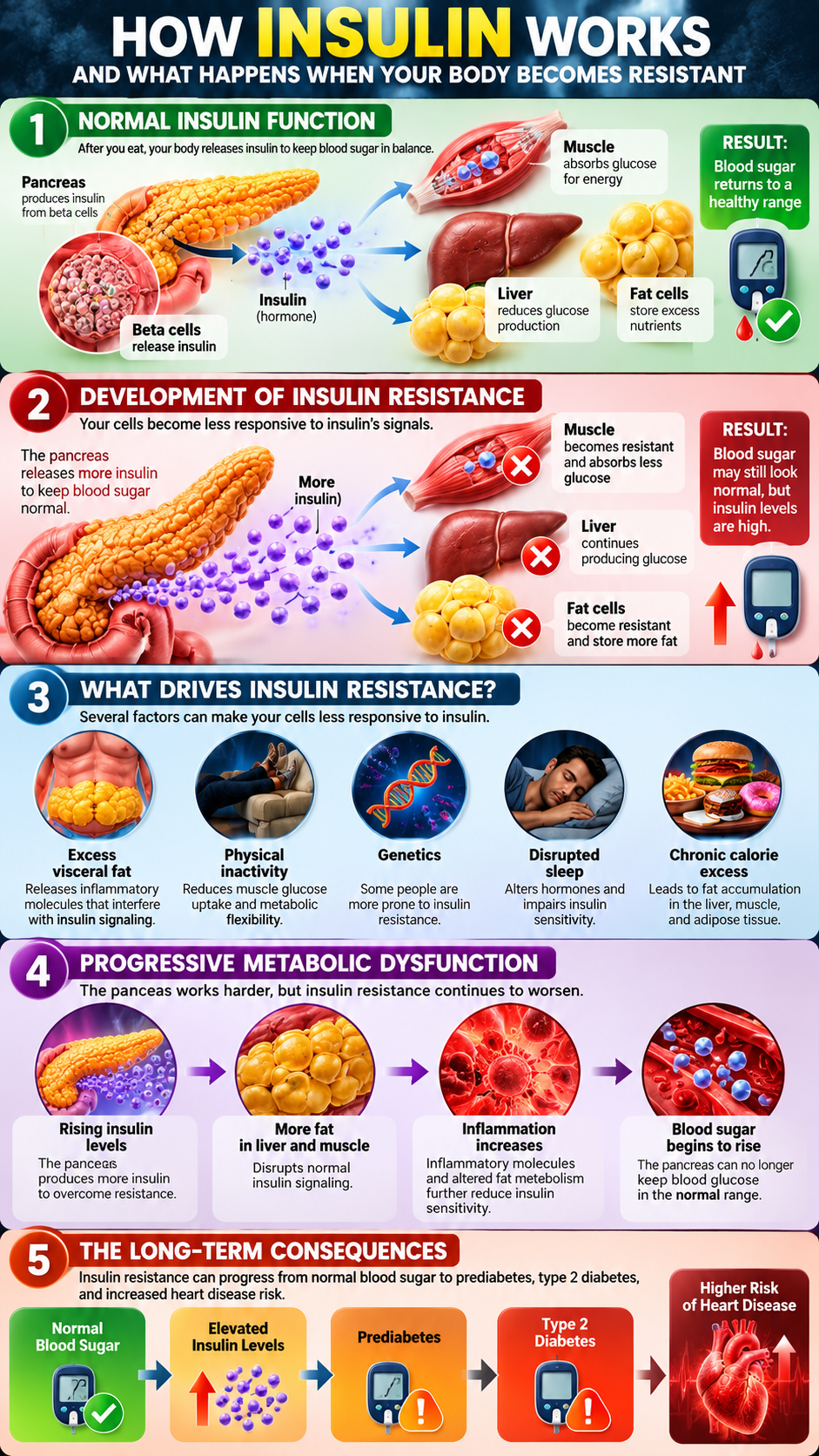
Several influences contribute to this process, including excess visceral fat, physical inactivity, genetics, and disrupted sleep. Chronic calorie excess and fat accumulation within metabolic tissues can interfere with normal insulin signaling. Inflammatory molecules and altered cellular lipid metabolism further weaken the body’s ability to respond appropriately. Consequently, the pancreas works harder while the underlying resistance continues developing.
Eventually, some individuals lose the ability to maintain normal blood glucose despite increasing insulin production. Prediabetes may emerge, followed by type 2 diabetes when pancreatic compensation becomes insufficient. Cardiovascular risk, however, can begin increasing well before either diagnosis appears. This makes insulin resistance an important warning sign rather than merely a preliminary stage of diabetes.
The Liver Connection: Where Insulin Resistance Changes Cholesterol Into a Greater Threat
The liver serves as the body’s central metabolic processing facility. It manages glucose production, processes fatty acids, and manufactures lipoproteins that transport fats throughout circulation. Under healthy conditions, insulin helps coordinate these activities according to the body’s nutritional needs. Insulin resistance disrupts that coordination, creating consequences that extend directly into cardiovascular health.
When fat tissue becomes insulin resistant, it releases more fatty acids into the bloodstream. Many of these fatty acids travel to the liver, where they contribute to triglyceride accumulation. The liver may respond by producing additional very-low-density lipoproteins, commonly called VLDL. These particles carry triglycerides into circulation, often contributing to the elevated triglyceride levels associated with metabolic dysfunction.
As triglyceride-rich particles increase, exchanges between circulating lipoproteins alter the composition of LDL and HDL. The resulting pattern often includes higher triglycerides, lower HDL cholesterol, and smaller, denser LDL particles. Physicians describe this combination as atherogenic dyslipidemia because it frequently accompanies increased cardiovascular risk. Surprisingly, LDL cholesterol concentration may remain relatively ordinary despite significant abnormalities in particle metabolism.
This distinction exposes an important limitation of relying exclusively on conventional cholesterol measurements. LDL cholesterol measures the cholesterol carried inside LDL particles, not their actual number. Apolipoprotein B, or ApoB, offers additional insight because each major atherogenic lipoprotein particle carries one ApoB molecule. Someone with insulin resistance may therefore have more artery-threatening particles than their LDL cholesterol result suggests.
Small LDL particles are not inherently the sole problem, nor are larger LDL particles harmless. The concentration and cumulative exposure to atherogenic particles remain central to plaque formation. Insulin resistance matters because it can increase particle burden while simultaneously worsening other cardiovascular risk factors.
Visceral Fat: The Inflammatory Organ Hidden Beneath the Waistline
Not all body fat carries the same metabolic consequences. Subcutaneous fat accumulates beneath the skin, while visceral fat surrounds organs deep within the abdominal cavity. Excess visceral fat can interfere with insulin signaling and increase cardiovascular risk, even without obvious obesity. Consequently, waist circumference sometimes reveals metabolic concerns that body weight and appearance fail to capture.
Visceral fat behaves like an active endocrine organ, releasing hormones, fatty acids, and inflammatory signaling molecules. As fat cells enlarge, immune cells increasingly infiltrate the surrounding tissue and amplify inflammatory activity. These changes can elevate substances such as interleukin-6 and tumor necrosis factor-alpha, which influence insulin signaling. The resulting inflammation may worsen metabolic dysfunction, creating a self-reinforcing cycle between excess abdominal fat and insulin resistance.
Fat accumulation also extends beyond the abdomen into organs that normally store relatively little fat. The liver becomes especially vulnerable, potentially developing metabolic dysfunction-associated steatotic liver disease, commonly called MASLD. Excess liver fat often accompanies increased triglyceride production, impaired glucose regulation, and greater cardiovascular risk. Meanwhile, abnormal fat deposition within skeletal muscle can further compromise insulin sensitivity and metabolic flexibility.
This explains why some seemingly lean individuals develop substantial metabolic problems despite maintaining an acceptable body mass index. Genetics, aging, muscle mass, and fat distribution all influence cardiovascular vulnerability. Assessing metabolic health therefore requires looking beyond weight alone to understand what happens inside the body.
Chronic Inflammation: How Metabolic Dysfunction Fuels Arterial Plaque
Inflammation normally protects the body against infection and tissue injury. However, persistent low-grade inflammation can contribute to cardiovascular disease when immune signaling remains chronically elevated. Insulin resistance frequently accompanies this inflammatory environment, particularly among individuals with excess visceral fat. Together, these abnormalities influence the behavior of blood vessels and the progression of atherosclerosis.
Inside coronary arteries, ApoB-containing lipoproteins can enter the arterial wall and become trapped within its underlying structures. Their retention activates immune responses that attract specialized white blood cells called macrophages. These cells absorb modified lipoproteins and may transform into cholesterol-laden foam cells, contributing to developing plaques. Over time, continued lipid accumulation and inflammation can enlarge these lesions and narrow coronary arteries.
Plaque danger involves more than the amount of arterial narrowing. Some plaques develop thin protective caps and large lipid-rich cores, increasing their vulnerability to rupture. When rupture exposes thrombogenic material, blood platelets can rapidly form a clot that obstructs circulation. This sudden interruption of oxygen delivery can damage heart muscle and trigger a heart attack.
Insulin resistance can intensify this process through abnormal lipid metabolism, oxidative stress, and impaired vascular signaling. Nevertheless, inflammation alone does not explain atherosclerosis, and cholesterol particles remain essential participants in plaque development. Recognizing both mechanisms produces a more complete understanding of cardiovascular disease than blaming either factor exclusively.
Endothelial Dysfunction: When the Arteries Lose Their Natural Protection
The endothelium forms a remarkably thin cellular lining inside every blood vessel. Despite its delicate structure, this tissue helps regulate circulation, clotting, inflammation, and vascular relaxation. Healthy endothelial cells release nitric oxide, a molecule that encourages arteries to relax and supports normal blood flow. Their performance depends on balanced metabolic signaling and protection against excessive oxidative stress.
Insulin normally participates in pathways that stimulate endothelial nitric oxide production. During insulin resistance, these protective pathways may become less responsive, compromising normal vascular function. Simultaneously, oxidative stress can reduce nitric oxide availability and encourage abnormal arterial constriction. These changes contribute to endothelial dysfunction, an important feature of early cardiovascular disease.
As endothelial health deteriorates, arteries may become less capable of adjusting efficiently to changing circulatory demands. Elevated blood pressure adds mechanical stress, while inflammatory signaling encourages further vascular injury. Over time, these interacting processes can accelerate atherosclerosis and increase cardiovascular vulnerability. The damage may develop silently, long before chest discomfort or exercise intolerance becomes apparent.
The Dangerous Illusion of Normal Blood Sugar
Perhaps the most deceptive feature of insulin resistance is its ability to remain hidden behind normal glucose measurements. During early metabolic dysfunction, the pancreas often compensates by releasing larger quantities of insulin. Blood glucose may therefore remain within normal limits while the body works increasingly hard to maintain that balance. A routine fasting glucose test cannot reveal every aspect of this compensatory process.
As insulin resistance progresses, the pancreas may eventually struggle to meet rising metabolic demands. Post-meal glucose elevations can become more pronounced, followed by increasing fasting glucose and hemoglobin A1c. Persistent hyperglycemia promotes oxidative stress and advanced glycation reactions that can damage vascular tissues. Diabetes further increases cardiovascular risk through its effects on lipoproteins, inflammation, kidney function, and arterial health.
Yet cardiovascular prevention should not wait until blood sugar reaches diabetic levels. Elevated triglycerides, abdominal adiposity, hypertension, and declining HDL cholesterol may reveal metabolic dysfunction much earlier. These abnormalities deserve attention even when conventional glucose testing appears reassuring.
Heart Disease Begins With a Network of Problems, Not One Laboratory Number
The relationship between insulin resistance and heart disease reveals a fundamental truth about human physiology. The pancreas, liver, muscles, fat tissue, and cardiovascular system operate through interconnected metabolic pathways. Dysfunction within one system can influence several others, producing consequences that accumulate over decades. Cardiovascular disease often reflects this convergence rather than a single isolated abnormality.
Cholesterol remains critically important because atherogenic lipoproteins contribute directly to plaque formation. However, insulin resistance can create conditions that amplify their cardiovascular effects through inflammation, hypertension, and abnormal lipid metabolism. Focusing exclusively on cholesterol risks overlooking important opportunities to improve metabolic health. Conversely, ignoring elevated LDL or ApoB because insulin resistance exists would leave another established danger unaddressed.
The encouraging reality is that metabolic dysfunction is not always an irreversible progression toward diabetes or heart disease. Insulin sensitivity, triglyceride metabolism, blood pressure, and vascular function can improve through appropriate interventions. Understanding these mechanisms creates an opportunity to address cardiovascular risk before irreversible injury occurs.
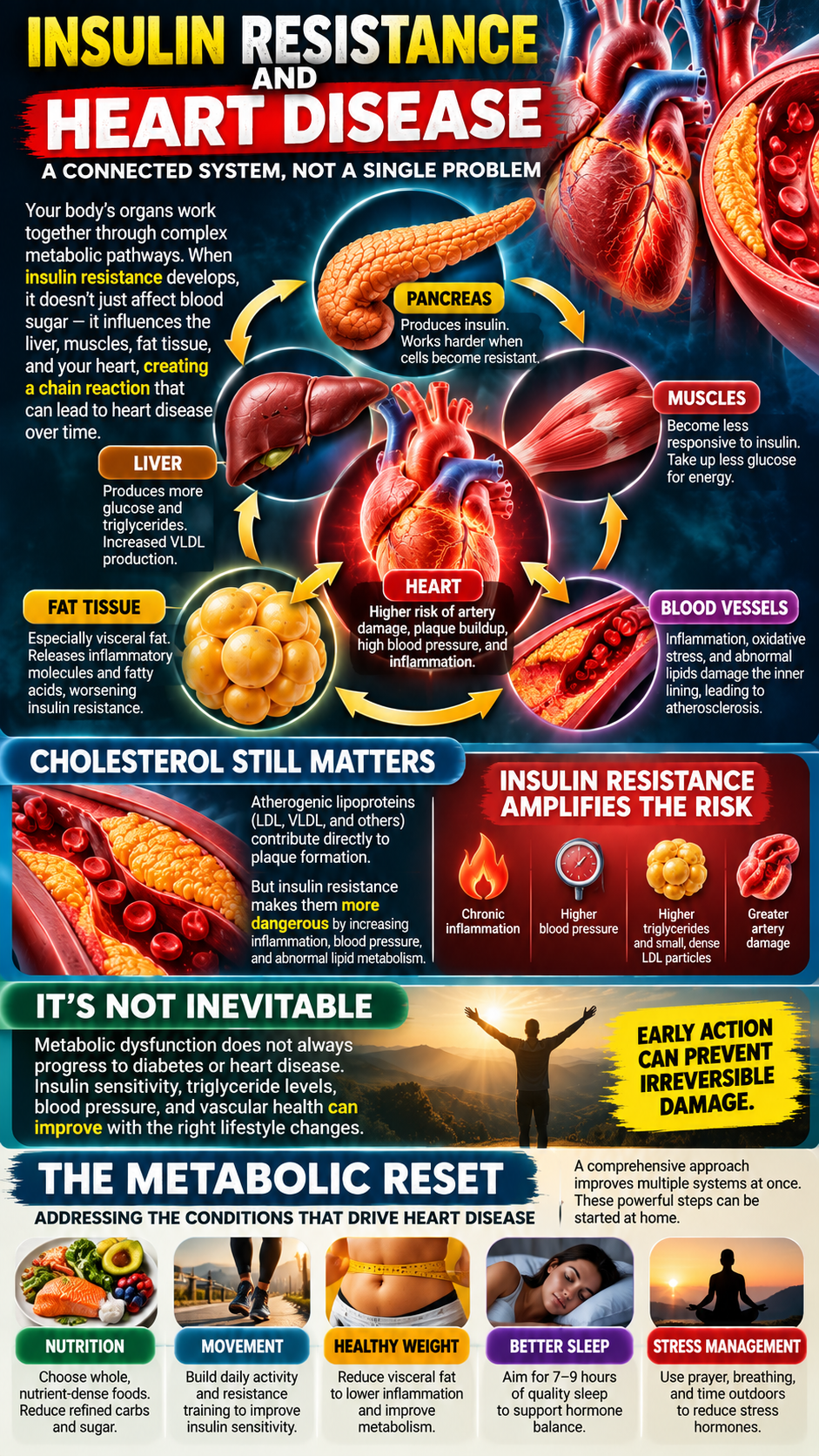
The greatest opportunity in cardiovascular prevention begins long before a cardiologist discovers a blocked artery. It begins when someone recognizes that their metabolism is struggling and decides to investigate the underlying causes. Insulin resistance, visceral fat accumulation, chronic inflammation, and abnormal cholesterol metabolism frequently develop together. Addressing these interconnected problems can improve cardiovascular health and reduce the conditions that accelerate arterial damage.
Unfortunately, many people approach heart disease prevention as though a single cholesterol measurement tells the entire story. They concentrate on avoiding cholesterol-rich foods while overlooking poor sleep, abdominal fat, physical inactivity, and unstable glucose regulation. Others pursue aggressive dietary restrictions without understanding how their nutritional choices influence insulin sensitivity or atherogenic lipoproteins. Neither approach adequately addresses the complex metabolic environment that contributes to cardiovascular disease.
A comprehensive functional approach examines how the body produces energy, processes nutrients, regulates inflammation, and maintains vascular health. Rather than searching for one miracle supplement or universal diet, the objective involves improving multiple biological systems simultaneously. Fortunately, several powerful interventions begin at home, requiring consistency more than expensive equipment or elaborate medical procedures.
Investigating the Hidden Warning Signs Before Cardiovascular Disease Advances
Meaningful metabolic improvement begins with understanding the abnormalities that deserve attention. Fasting glucose and hemoglobin A1c provide valuable information about blood sugar regulation, but neither directly measures insulin sensitivity. Fasting insulin may offer additional context in selected patients, although testing methods vary and universal diagnostic thresholds remain unavailable. Interpreting these measurements alongside waist circumference, blood pressure, and lipid patterns provides a more informative metabolic picture.
Triglycerides and HDL cholesterol deserve particular attention because their relationship frequently reflects underlying insulin resistance. Elevated triglycerides often accompany increased liver fat production and abnormal VLDL metabolism. Low HDL cholesterol commonly develops alongside these disturbances, creating the recognizable pattern of atherogenic dyslipidemia. The triglyceride-to-HDL ratio can provide a useful clue, although it cannot independently diagnose insulin resistance.
ApoB testing adds another dimension by estimating the number of circulating atherogenic lipoprotein particles. This measurement becomes particularly informative when triglycerides rise or LDL cholesterol appears inconsistent with other metabolic findings. Lipoprotein(a) testing can identify an additional inherited cardiovascular risk that lifestyle improvements may not substantially change. These measurements help distinguish metabolic dysfunction from other important contributors to arterial plaque.
Blood pressure, kidney function, and family history also belong in a thorough cardiovascular assessment. For selected adults, coronary artery calcium scoring can help clarify preventive treatment decisions when cardiovascular risk remains uncertain. No single test reveals everything, making individualized interpretation essential for meaningful prevention.
Reprogramming Your Nutrition to Improve Insulin Sensitivity
Every meal influences the hormonal environment responsible for regulating blood sugar, fat storage, and energy availability. Diets dominated by refined starches, sugary beverages, and highly processed foods can encourage excess calorie consumption and weight gain. Over time, accumulating visceral fat may worsen insulin sensitivity and increase triglyceride production. Improving food quality therefore represents one of the most practical opportunities for metabolic intervention.
Begin by replacing sweetened beverages, pastries, refined snacks, and frequently consumed ultra-processed foods with nutrient-dense alternatives. Emphasize vegetables, adequate protein, fiber-rich foods, and unsaturated fats from olive oil, avocado, fish, and seeds. These choices can improve dietary quality while supporting healthier blood pressure, glucose regulation, and lipid metabolism. Protein and dietary fiber also encourage satiety, making sustainable weight management easier.
Lower-carbohydrate eating patterns can improve glucose control and triglycerides for some individuals with insulin resistance. However, carbohydrate restriction should not automatically mean consuming unlimited saturated fat or eliminating every plant food. Excessive saturated fat intake can substantially increase LDL cholesterol and ApoB in susceptible individuals. A heart-conscious nutritional strategy must improve glucose metabolism without creating unnecessary lipoprotein-related risk.
Meal composition matters, but long-term consistency matters equally. A sustainable eating pattern should provide sufficient nutrients, support healthy body composition, and produce measurable metabolic improvements. The objective is not dietary perfection but a healthier physiological response to everyday food choices.
Activate Your Muscles: The Natural Glucose-Disposal System
Skeletal muscle plays an extraordinary role in maintaining metabolic health because it absorbs substantial amounts of circulating glucose. During physical activity, contracting muscles increase glucose uptake through pathways that operate partly independently of insulin. This mechanism allows exercise to improve blood sugar regulation even when insulin sensitivity remains impaired. Regular movement also supports mitochondrial function, cardiovascular fitness, and healthier body composition.
One practical intervention involves walking for ten to fifteen minutes after meals. Post-meal movement encourages skeletal muscles to use circulating glucose, potentially reducing the magnitude of glucose elevations. This habit also interrupts prolonged sitting, which contributes to poor metabolic health. Consistency across several daily meals can make walking a valuable addition to a broader prevention strategy.
Resistance training provides another important advantage by strengthening and preserving metabolically active muscle tissue. Exercises involving squats, resistance bands, bodyweight movements, or appropriately supervised weightlifting can improve muscular strength and insulin sensitivity. Aim gradually toward two or three resistance sessions weekly alongside regular aerobic exercise. Individuals with established heart disease should discuss appropriate exercise intensity with their healthcare team.
Reduce Visceral Fat and Restore Metabolic Flexibility
Excess visceral fat contributes to insulin resistance through increased fatty-acid release, inflammatory signaling, and altered hormone regulation. Reducing this abdominal fat can improve several cardiovascular risk factors simultaneously. Even modest weight reduction may lower triglycerides, improve blood pressure, and enhance glucose regulation. These benefits often emerge before someone reaches their ultimate weight goal.
For adults carrying excess body fat, sustained weight loss of approximately five to ten percent can produce meaningful metabolic improvements. Combining appropriate calorie intake with resistance training helps preserve muscle while reducing fat mass. Monitoring waist circumference alongside body weight provides additional insight into changing abdominal adiposity. However, metabolic health should never depend exclusively on the bathroom scale.
Maintaining muscle mass becomes especially important with aging because declining muscle tissue can reduce glucose-disposal capacity. A successful metabolic strategy therefore prioritizes fat reduction, muscular strength, and improved fitness rather than rapid weight loss alone.
Restore Sleep, Lower Stress, and Support Healthy Insulin Signaling
Sleep deprivation can impair insulin sensitivity, increase appetite, and disrupt hormones involved in energy regulation. Chronic sleep restriction also contributes to elevated blood pressure and makes healthy dietary decisions more difficult. Establishing consistent sleep schedules provides a practical foundation for improving metabolic health. Most adults should aim for approximately seven to nine hours of restorative sleep nightly.
Morning daylight exposure, regular physical activity, and reduced evening caffeine can support healthier circadian rhythms. Individuals experiencing loud snoring, nighttime breathing interruptions, or persistent daytime exhaustion should consider evaluation for sleep apnea. This condition frequently accompanies metabolic dysfunction and increases cardiovascular risk.
Psychological stress deserves attention because persistent sympathetic activation can influence blood pressure, sleep, and glucose regulation. Prayer, controlled breathing, outdoor activity, and meaningful relationships may help reduce stress-related physiological strain. These practices complement established cardiovascular prevention strategies rather than replacing medical evaluation or necessary treatment.
Intermittent Fasting: A Potential Tool, Not a Universal Solution
Intermittent fasting may help some individuals improve eating consistency, reduce unnecessary snacking, and manage overall calorie intake. Time-restricted eating can also support weight reduction and glucose regulation under appropriate circumstances. However, research has not established fasting as universally superior to other sustainable nutritional approaches. Its effectiveness depends on individual health, dietary quality, and long-term adherence.
A reasonable starting point involves maintaining a consistent overnight interval between dinner and breakfast. Avoiding habitual late-night eating may reduce unnecessary calorie consumption and support better sleep routines. More aggressive fasting requires additional caution, particularly for people using glucose-lowering medications or managing significant medical conditions.
Metabolic improvement should never depend on extreme deprivation. The most useful dietary schedule is one that supports adequate nutrition, healthy glucose regulation, and consistent daily functioning.
Build a Ninety-Day Heart Health Restoration Plan at Home
Meaningful cardiovascular improvement requires a structured plan rather than occasional bursts of motivation. During the first thirty days, concentrate on removing sugary beverages, improving meal quality, and establishing daily walking habits. Record baseline waist circumference, blood pressure, and relevant laboratory findings with professional guidance. These measurements create a reference point for evaluating progress rather than relying exclusively on subjective changes.

During the following thirty days, strengthen the routine through resistance exercise, consistent sleep, and appropriate dietary adjustments. Continue reducing highly processed foods while prioritizing nutrient density and adequate protein. Monitor energy levels, exercise tolerance, and waist circumference without expecting every measurement to change immediately. Sustainable improvements usually develop through repeated behaviors rather than dramatic short-term interventions.
The final thirty days should emphasize consistency and reassessment. Review blood pressure, body composition, and appropriate metabolic markers with a qualified healthcare professional. Improvements in triglycerides, glucose regulation, and waist circumference may indicate meaningful progress. Persistently elevated ApoB, hypertension, or other major cardiovascular risks require individualized attention, even when lifestyle changes produce benefits.
The Future of Heart Disease Prevention Begins With Metabolic Health
Heart disease prevention becomes more effective when we recognize the relationship between insulin resistance and cardiovascular damage. The liver, pancreas, muscles, adipose tissue, and arteries participate in an interconnected metabolic system. When that system deteriorates, abnormal lipoproteins, inflammation, hypertension, and impaired glucose regulation can reinforce one another. Addressing these abnormalities together offers greater insight than concentrating on cholesterol alone.
The encouraging reality is that many contributors to insulin resistance respond to sustained lifestyle changes. Better nutrition, regular exercise, healthy sleep, and reduced visceral fat can improve metabolic function and cardiovascular risk factors. Appropriate medical assessment remains essential because lifestyle improvements cannot eliminate every inherited or established cardiovascular danger.
Ultimately, protecting the heart requires understanding both the particles that build arterial plaque and the metabolic environment influencing their effects. Cholesterol deserves attention, but it should never overshadow insulin resistance, inflammation, or the broader cardiovascular picture. A healthier heart begins with a healthier metabolism, supported by informed decisions practiced consistently over time.