
The Silent Autoimmune Disease Hiding Behind “Normal” Thyroid Tests
Millions of people wake up every morning exhausted, overweight, inflamed, and mentally drained. They struggle to get out of bed despite sleeping through the night. Their hair becomes thinner with each passing year. Brain fog clouds their thoughts. Anxiety appears without explanation. Depression settles in despite a seemingly good life. Constipation becomes normal. Cholesterol levels climb. Weight gain accelerates. Yet after visiting their physician, they often hear the same reassuring phrase: “Your thyroid is normal.”
For many people, that statement marks the beginning of years of frustration. Symptoms continue worsening while blood work repeatedly appears acceptable. Additional medications are prescribed to manage isolated complaints. One medication addresses depression. Another targets cholesterol. A third attempts to improve sleep. Meanwhile, the real problem remains undetected. The immune system continues attacking thyroid tissue while conventional testing frequently misses the earliest signs of destruction.
Hashimoto’s Thyroiditis represents the most common cause of hypothyroidism in the developed world. Despite its prevalence, countless cases remain undiagnosed because modern healthcare often relies too heavily on a laboratory marker called Thyroid Stimulating Hormone, or TSH. While TSH has value, it was never designed to identify the root causes of thyroid dysfunction. More importantly, it cannot reveal whether the immune system is actively destroying the thyroid gland.
This misunderstanding has created a generation of patients who know they feel terrible yet repeatedly hear that everything looks fine. The problem is not that their symptoms are imaginary. The problem is that the wrong tests are being used to evaluate the condition. To understand why this happens, we must first understand what Hashimoto’s really is and why the thyroid is often the victim rather than the cause.
Hashimoto’s Is Not Really a Thyroid Disease
Most people believe Hashimoto’s is a disorder of the thyroid gland. That explanation sounds reasonable because the thyroid is where the damage occurs. However, the thyroid is not where the disease begins. Hashimoto’s is fundamentally an autoimmune disease. The thyroid simply becomes the target.
A healthy immune system performs one of the most remarkable jobs in the human body. It constantly distinguishes between what belongs and what does not. Bacteria, viruses, parasites, toxins, and abnormal cells become targets for destruction. Healthy tissues remain protected. This sophisticated recognition system allows the body to defend itself while maintaining internal balance.
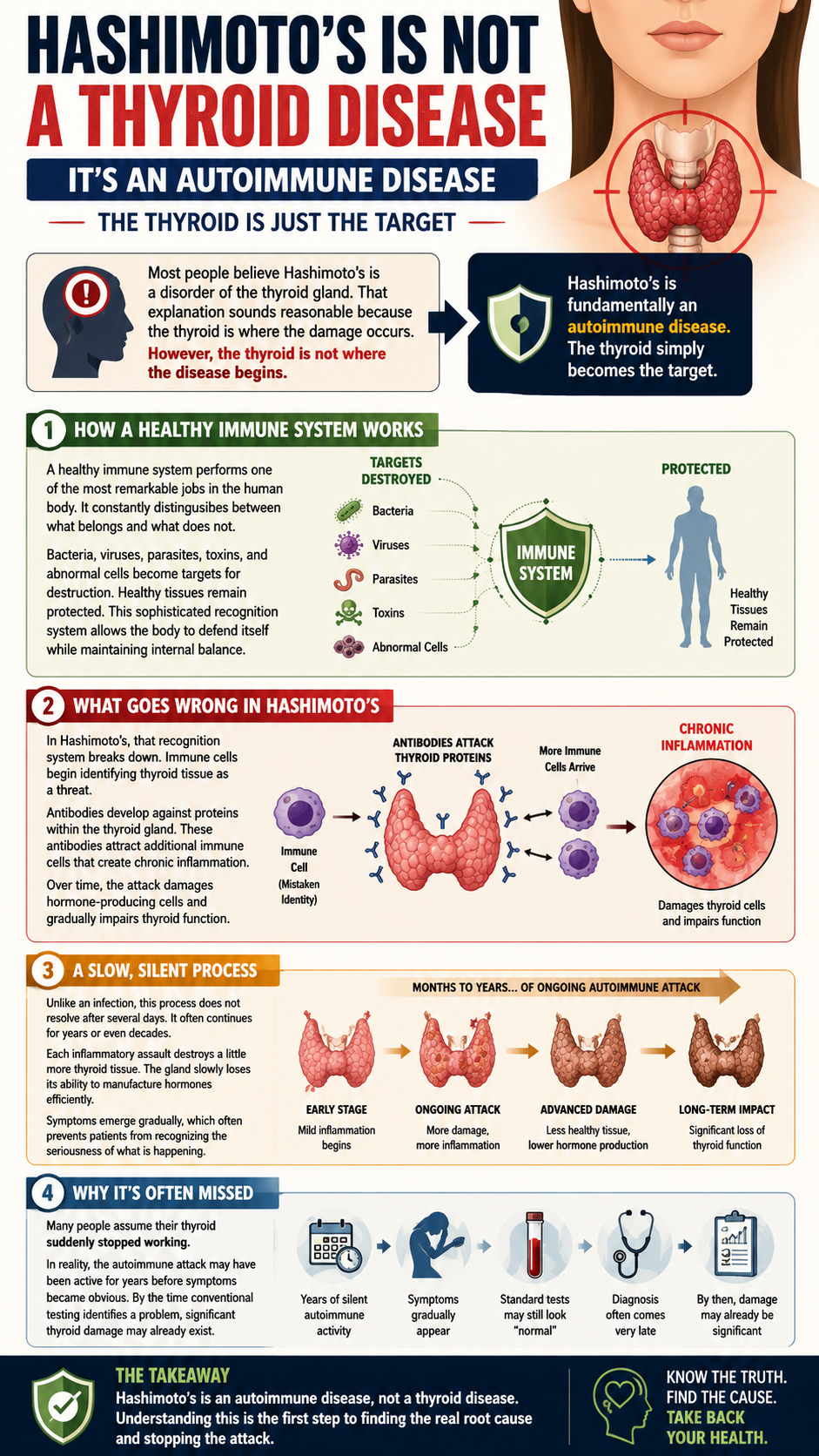
In Hashimoto’s, that recognition system breaks down. Immune cells begin identifying thyroid tissue as a threat. Antibodies develop against proteins within the thyroid gland. These antibodies attract additional immune cells that create chronic inflammation. Over time, the attack damages hormone-producing cells and gradually impairs thyroid function.
Unlike an infection, this process does not resolve after several days. It often continues for years or even decades. Each inflammatory assault destroys a little more thyroid tissue. The gland slowly loses its ability to manufacture hormones efficiently. Symptoms emerge gradually, which often prevents patients from recognizing the seriousness of what is happening.
Many people assume their thyroid suddenly stopped working. In reality, the autoimmune attack may have been active for years before symptoms became obvious. By the time conventional testing identifies a problem, significant thyroid damage may already exist.
Why the TSH Test Often Misses the Real Problem
To understand the limitations of conventional thyroid testing, it helps to understand what TSH actually measures. Contrary to popular belief, TSH is not a thyroid hormone. The pituitary gland, located within the brain, produces TSH. Its purpose is to send signals to the thyroid gland and instruct it to produce hormones.
Imagine a factory manager overseeing production. The manager sends instructions to workers throughout the building. Evaluating those instructions may provide some insight into operations. However, it reveals little about machinery breakdowns, worker performance, inventory shortages, or product quality. TSH functions much like that manager.
The test measures communication between the brain and the thyroid. It does not directly measure thyroid hormone activity inside tissues. It does not evaluate autoimmune activity. It does not determine whether hormones are converting properly. It does not assess receptor function. Most importantly, it does not reveal whether the immune system is actively destroying thyroid tissue.
Many patients with Hashimoto’s maintain normal TSH levels for years. During this period, antibodies continue attacking the gland. Inflammation continues spreading. Symptoms continue worsening. Yet conventional testing often fails to recognize the problem because TSH remains within laboratory reference ranges.
Reference ranges create another challenge. Laboratory ranges typically represent statistical averages rather than optimal physiology. Falling within a normal range does not necessarily indicate good health. It simply means the value resembles those found in the general population. Considering the widespread prevalence of chronic disease, that standard may be far from ideal.
This reality explains why so many patients experience classic thyroid symptoms despite normal TSH values. Their bodies are sending warning signals long before traditional testing catches up.
The Real Root-Cause Labs That Reveal Hashimoto’s
Functional medicine approaches thyroid health differently. Instead of asking whether TSH is normal, practitioners seek to understand why symptoms exist. This requires examining the entire thyroid system rather than a single marker.
One of the most important tests measures Thyroid Peroxidase Antibodies, commonly called TPO antibodies. Elevated TPO antibodies indicate that the immune system is attacking thyroid tissue. These antibodies often appear years before thyroid hormone levels become abnormal. In many cases, they provide the earliest warning sign that Hashimoto’s has begun.
Thyroglobulin antibodies offer another valuable clue. Some patients develop elevated thyroglobulin antibodies despite normal TPO antibodies. Testing both markers improves diagnostic accuracy and helps identify autoimmune activity that might otherwise remain hidden.
Free T4 measures the primary hormone produced by the thyroid gland. Free T3 measures the active hormone responsible for metabolism inside cells. While the thyroid produces large amounts of T4, tissues throughout the body must convert T4 into T3 before meaningful metabolic activity can occur. Conversion problems frequently explain persistent symptoms despite apparently normal thyroid production.
Reverse T3 provides additional insight. During periods of chronic stress, inflammation, infection, or toxicity, the body may convert T4 into Reverse T3 instead of active T3. Reverse T3 slows metabolism and reduces energy production. Patients often feel profoundly hypothyroid despite maintaining normal TSH levels.
When combined, these markers provide a far more accurate picture of thyroid health. More importantly, they help identify the underlying mechanisms responsible for symptoms.
The Real Origin of Hashimoto’s Thyroiditis
The most important question in thyroid healthcare is rarely asked. Instead of asking how to replace hormones, we should ask why the immune system started attacking the thyroid in the first place.
Genes contribute to susceptibility, but genetics alone do not explain the dramatic rise in autoimmune disease. Human DNA has changed very little over recent generations. Our environment, however, has changed dramatically. Modern lifestyles expose the immune system to challenges that previous generations rarely encountered.
Among the most significant contributors is intestinal permeability, often called leaky gut. The digestive tract forms a protective barrier between the outside world and the bloodstream. Under healthy conditions, this barrier carefully regulates what enters circulation. When damage occurs, unwanted particles pass through the intestinal lining and interact directly with the immune system.
Food proteins, bacterial fragments, toxins, and inflammatory compounds begin entering the bloodstream. The immune system responds aggressively. Chronic activation follows. Over time, immune confusion develops. The body loses tolerance toward its own tissues and begins attacking them.
Research continues demonstrating a strong connection between intestinal permeability and autoimmune disease. Many practitioners now view gut dysfunction as a foundational contributor to Hashimoto’s.
The Gluten Connection Nobody Should Ignore
Few dietary factors have received more attention in Hashimoto’s research than gluten. This focus exists for a good reason. Certain gluten proteins resemble proteins found within thyroid tissue. When the immune system reacts to gluten, it may mistakenly attack the thyroid as well.
Scientists refer to this phenomenon as molecular mimicry. The immune system becomes unable to distinguish between the dietary protein and the body’s own tissues. Each gluten exposure reinforces the autoimmune response. For susceptible individuals, this process may continue driving inflammation long after symptoms become noticeable.
Many patients report dramatic improvements after removing gluten completely. Energy increases. Brain fog diminishes. Digestive symptoms improve. Antibody levels often decline. While gluten is not the sole cause of Hashimoto’s, it frequently acts as a major trigger.
Ignoring this connection can make recovery significantly more difficult.
Hidden Infections and Environmental Toxins
The immune system rarely becomes confused without reason. Chronic infections represent one of the most overlooked contributors to autoimmune disease. Viruses such as Epstein-Barr, bacterial infections like Helicobacter pylori, fungal overgrowth, intestinal parasites, and tick-borne illnesses can maintain constant immune activation.
When the immune system remains on high alert for years, the likelihood of autoimmune dysfunction increases. Persistent infections create a state of chronic inflammation that disrupts immune regulation and promotes tissue damage.
Environmental toxins create another major burden. Modern life exposes individuals to heavy metals, pesticides, herbicides, plastics, industrial chemicals, and endocrine-disrupting compounds. Mercury, lead, arsenic, BPA, and PFAS chemicals can interfere with hormone production, immune balance, and cellular communication.
Unlike acute poisonings, these exposures often accumulate slowly over decades. Symptoms develop gradually, making the connection difficult to recognize. Yet the cumulative burden may contribute significantly to autoimmune activation and thyroid dysfunction.
What Hashimoto’s Does to the Brain
Many patients assume thyroid disease affects only energy levels and body weight. The reality is far more complex. Thyroid hormones play a crucial role in brain function. Every thought, memory, emotion, and decision depends upon adequate cellular energy.
When thyroid function declines, neurotransmitter production often changes. Serotonin, dopamine, and other brain chemicals become dysregulated. Concentration weakens. Memory suffers. Mental clarity fades. Anxiety increases. Depression becomes more common.
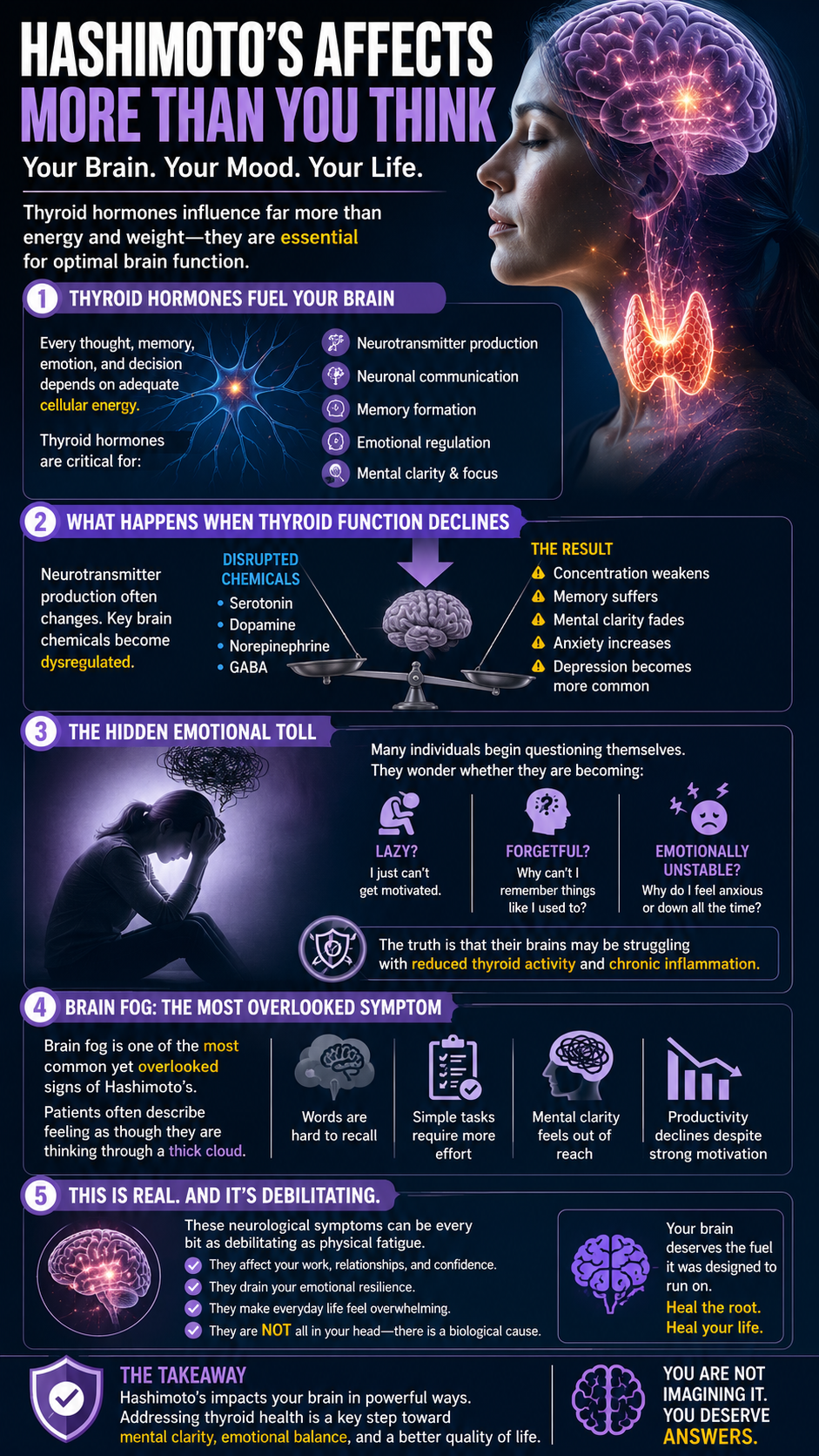
Many individuals begin questioning themselves. They wonder whether they are becoming lazy, forgetful, or emotionally unstable. The truth is that their brains may be struggling with reduced thyroid activity and chronic inflammation.
Brain fog remains one of the most common yet overlooked symptoms of Hashimoto’s. Patients often describe feeling as though they are thinking through a thick cloud. Words become difficult to recall. Simple tasks require greater effort. Productivity declines despite strong motivation.
These neurological symptoms can be every bit as debilitating as physical fatigue.
What Hashimoto’s Does to Metabolism and Weight
The thyroid serves as the master regulator of metabolism. Every cell depends upon thyroid hormones to determine how efficiently energy is produced and utilized.
When thyroid function declines, metabolism slows. Calories that once fueled activity become more likely to accumulate as body fat. Weight gain occurs despite unchanged eating habits. Fat loss becomes increasingly difficult. Exercise produces fewer results than expected.
Many patients blame themselves for lacking discipline. Friends and family often suggest eating less and exercising more. Unfortunately, these recommendations rarely address the underlying physiology. A sluggish thyroid creates metabolic obstacles that cannot always be overcome through willpower alone.
Insulin resistance frequently develops alongside thyroid dysfunction. Blood sugar becomes less stable. Cravings intensify. Inflammation increases. Fat storage accelerates. This combination creates a vicious cycle that contributes to ongoing weight gain and metabolic decline.
What Hashimoto’s Does to the Heart
The relationship between thyroid health and cardiovascular health remains profoundly underestimated. Thyroid hormones influence cholesterol metabolism, blood vessel function, circulation, and inflammatory pathways throughout the cardiovascular system.
As thyroid function declines, cholesterol often rises. Many patients receive cholesterol medications without anyone investigating thyroid health thoroughly. Elevated cholesterol may represent a symptom rather than the primary problem.
Inflammation further complicates the situation. Autoimmune activity increases oxidative stress and damages blood vessels over time. Poor thyroid function may also contribute to elevated homocysteine levels, reduced circulation, and impaired cardiovascular performance.
Protecting the thyroid often means protecting the heart as well.
The Steps You Can Take at Home to Begin Healing
The good news is that many of the factors driving Hashimoto’s can be addressed. While no single strategy works for everyone, several foundational principles consistently support recovery.
Healing begins by removing inflammatory triggers. Processed foods, refined sugars, artificial additives, and highly inflammatory oils often contribute to immune dysfunction. Replacing these products with nutrient-dense whole foods provides the body with the raw materials necessary for repair.
Gluten elimination deserves serious consideration. For many individuals with Hashimoto’s, complete removal becomes one of the most impactful dietary interventions available. Consistency matters because even occasional exposure may reactivate immune responses.
Improving gut health should become a major priority. Supporting digestion, restoring microbial balance, reducing food sensitivities, and strengthening the intestinal barrier can help calm immune activity. Since much of the immune system resides within the digestive tract, gut health often determines the success of recovery efforts.
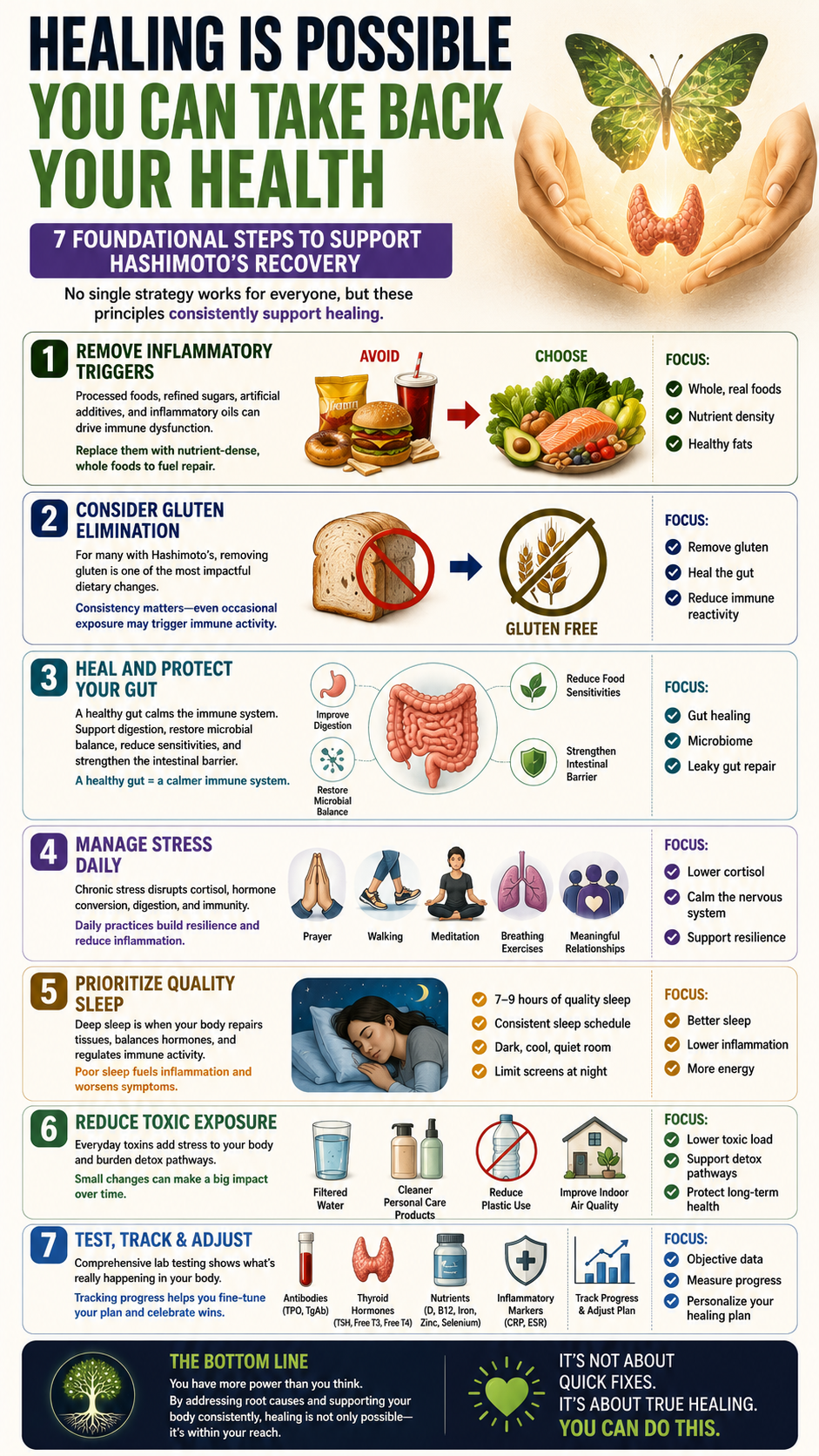
Stress management must also become part of the plan. Chronic stress alters cortisol production, impairs hormone conversion, weakens digestion, and promotes inflammation. Daily practices such as prayer, walking, meditation, breathing exercises, and meaningful relationships help improve resilience and reduce physiological stress.
Quality sleep remains essential. During deep sleep, the body repairs tissues, regulates hormones, and balances immune activity. Poor sleep amplifies inflammation and worsens nearly every symptom associated with Hashimoto’s.
Reducing toxic exposure provides another important opportunity for improvement. Filtered water, cleaner personal care products, reduced plastic use, and improved indoor air quality can lower the burden placed on detoxification pathways.
Finally, comprehensive laboratory testing allows patients to track progress objectively. Monitoring antibodies, thyroid hormones, nutrient levels, and inflammatory markers provides valuable feedback regarding the effectiveness of lifestyle interventions.
The Bottom Line: Stop Asking Whether TSH Is Normal
Hashimoto’s Thyroiditis is not simply a thyroid problem. It is an immune system problem with thyroid consequences. Focusing exclusively on TSH often causes practitioners and patients to miss the bigger picture. By the time TSH becomes abnormal, autoimmune destruction may have been progressing for years.
Real answers emerge when we investigate the entire system. Antibody testing, hormone conversion markers, nutrient assessments, gut health evaluations, infection screening, and toxin investigations reveal far more than a single laboratory value ever could.
The future of thyroid healthcare lies in understanding causes rather than chasing symptoms. A normal TSH does not guarantee a healthy thyroid. More importantly, it does not guarantee a healthy immune system. The most important question is not whether your thyroid numbers fall within a reference range. The most important question is why your immune system decided to attack your thyroid in the first place.
When that question gets answered, true healing can finally begin.