
The Chemical That Quietly Changed Modern Agriculture
Walk through any supermarket and every aisle tells a story of abundance. Shelves overflow with colorful fruits, vegetables, cereals, breads, snacks, and packaged meals. Modern agriculture created this remarkable supply, yet it also introduced an invisible companion that most consumers never consider. That companion is glyphosate. Few chemicals have reshaped farming as dramatically, and few have sparked as much scientific and public debate.
Glyphosate has become the world’s most widely used herbicide. Farmers spray it on millions of acres every year to control weeds and improve crop production. Consumers rarely see it, smell it, or taste it. Despite its invisible nature, measurable residues have been detected in many foods, water supplies, soil samples, and even human urine. Those findings have fueled ongoing discussions about whether chronic exposure contributes to long-term health problems.
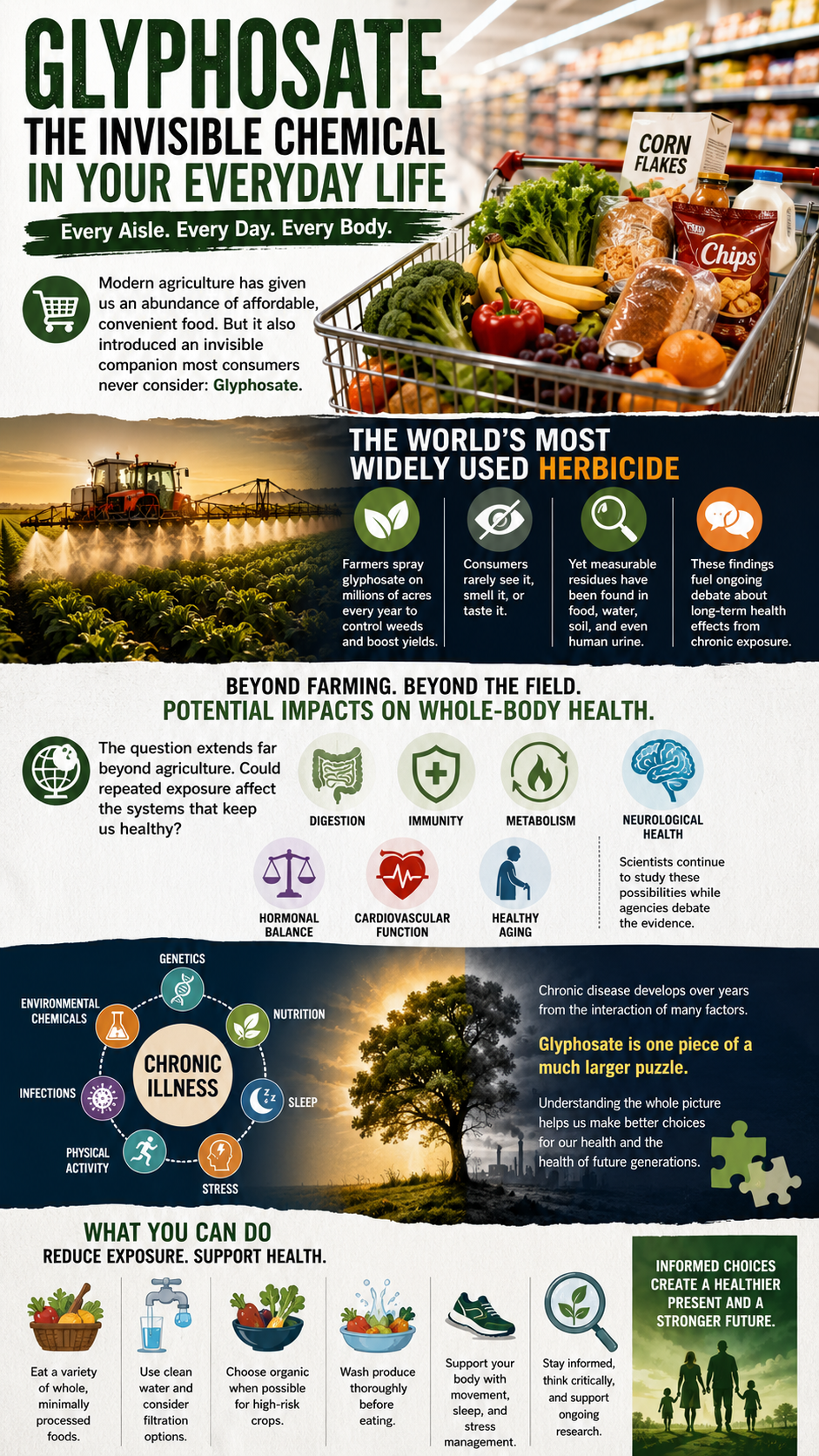
The question extends far beyond agriculture. People now wonder whether repeated exposure affects digestion, immunity, metabolism, neurological health, hormonal balance, cardiovascular function, and healthy aging. Researchers continue to investigate these possibilities, while regulatory agencies and scientific organizations sometimes reach different conclusions about the available evidence. Understanding that distinction remains essential because strong claims require strong evidence.
Instead of asking whether one chemical explains every chronic disease, a better question asks how continuous environmental exposure influences the body’s normal biological systems. Chronic illness rarely develops from one factor alone. Genetics, nutrition, sleep, stress, physical activity, infections, environmental chemicals, and aging all interact over many years. Glyphosate represents one possible environmental factor within that much larger picture.
Where Glyphosate Came From
Glyphosate first appeared during the 1970s after scientists discovered its remarkable ability to eliminate broadleaf weeds and grasses. Farmers quickly embraced the chemical because it simplified weed control and increased agricultural efficiency. The introduction of genetically engineered crops resistant to glyphosate dramatically expanded its use across the globe.
Today, farmers commonly apply glyphosate before planting, during crop growth on resistant plants, and sometimes shortly before harvest to dry certain crops evenly. This practice, known as pre-harvest desiccation, can increase the likelihood of detectable residues on harvested grain. Wheat, oats, barley, legumes, and other crops may receive these treatments depending on farming practices and regional regulations.
Agricultural success encouraged widespread adoption across continents. Homeowners also began using glyphosate in gardens, sidewalks, parks, and recreational areas. Landscapers incorporated it into routine maintenance schedules. Municipal agencies used it along roadsides and public spaces. Over time, exposure opportunities expanded far beyond commercial farming.
This dramatic increase explains why scientists now detect glyphosate in many environmental samples. Residues have appeared in surface water, rainfall, soil, dust, food products, and biological specimens. Detection alone does not establish harm because modern laboratory techniques identify chemicals at extremely low concentrations. Nevertheless, widespread detection demonstrates how extensively this herbicide circulates through modern ecosystems.
How Glyphosate Enters the Human Body
Food represents the primary source of exposure for most people. Grain products, processed foods, fruits, vegetables, and legumes may contain small glyphosate residues that remain after harvesting and processing. Regulatory agencies establish maximum residue limits designed to keep exposure below established safety thresholds, although researchers continue evaluating whether those thresholds adequately address lifetime exposure.
Drinking water may provide another exposure route in certain regions. Agricultural runoff can carry herbicides into streams, rivers, reservoirs, and groundwater. Water treatment removes many contaminants, yet effectiveness varies depending on treatment methods and local environmental conditions.
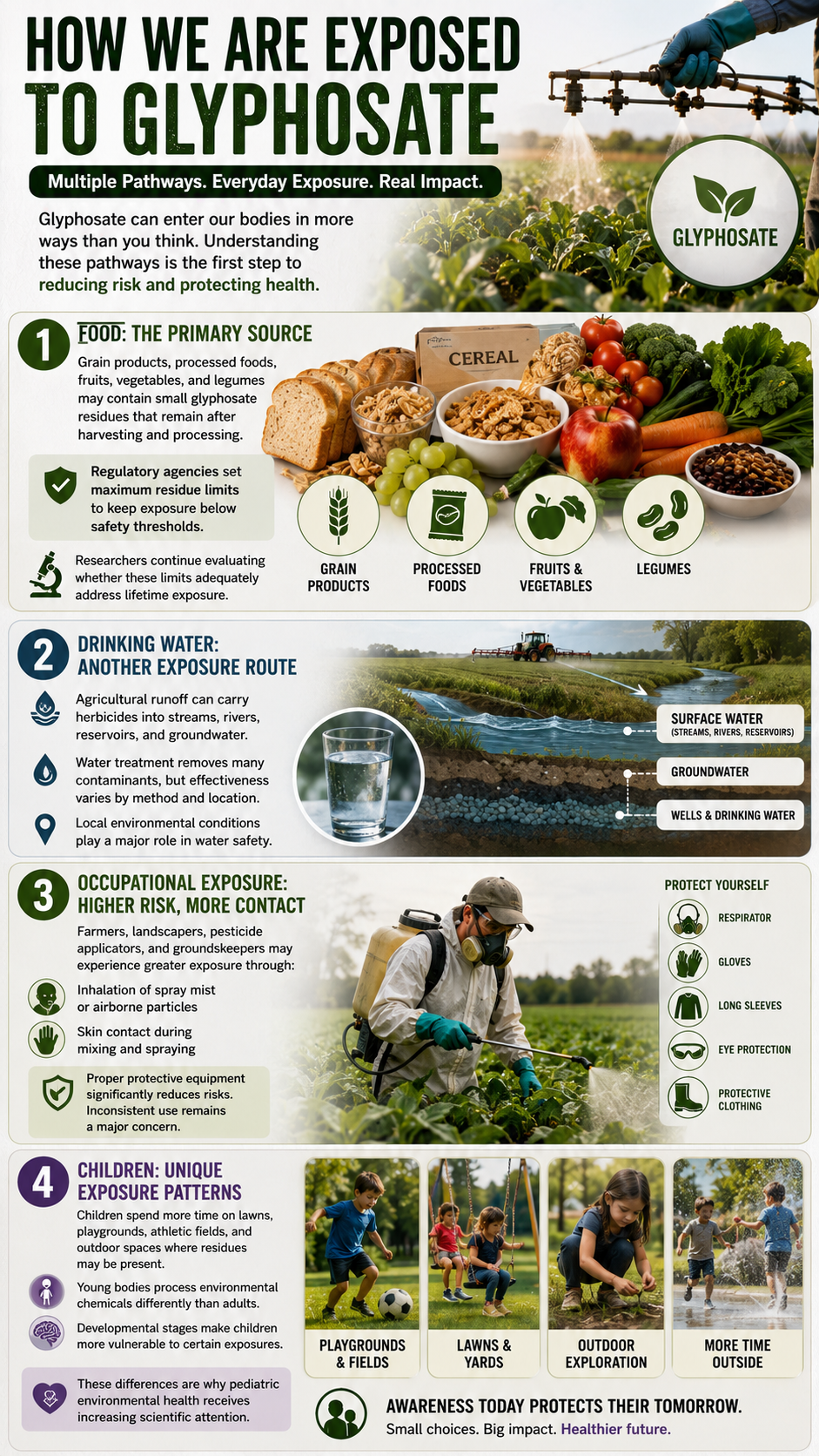
Occupational exposure affects agricultural workers more directly. Farmers, landscapers, pesticide applicators, and groundskeepers may experience greater contact through inhalation or skin exposure during mixing and spraying. Proper protective equipment significantly reduces these risks, yet inconsistent use remains a concern.
Children may experience unique exposure patterns because they spend more time on lawns, playgrounds, athletic fields, and outdoor spaces. Young bodies also process environmental chemicals differently than adults. These developmental differences explain why pediatric environmental health receives increasing scientific attention.
What Happens After Exposure?
Once glyphosate enters the body, absorption varies according to the route of exposure. Scientists believe oral absorption remains relatively limited compared with many other chemicals, while most absorbed glyphosate eventually leaves the body through urine. Even so, researchers continue studying whether repeated low-dose exposure produces biological effects that differ from short-term exposure.
Scientists increasingly examine chronic exposure rather than acute toxicity. Acute poisoning generally involves extremely high doses that differ greatly from everyday dietary exposure. Chronic exposure focuses on repeated contact over months or decades. This distinction matters because many chronic diseases develop slowly through cumulative biological changes.
Several laboratory studies suggest glyphosate may influence oxidative stress under certain experimental conditions. Oxidative stress occurs when reactive oxygen species exceed the body’s antioxidant defenses. Persistent oxidative stress can damage proteins, lipids, cellular membranes, and DNA. Many chronic diseases involve oxidative stress, although it represents one pathway among many rather than a disease itself.
Researchers also investigate inflammatory responses following exposure. Chronic inflammation differs from the short-term inflammation needed for healing. Low-grade inflammation can persist for years without obvious symptoms. Scientists continue exploring whether environmental chemicals contribute to this process alongside obesity, smoking, poor diet, physical inactivity, and other established risk factors.
The Gut Microbiome Under the Microscope
Interest in glyphosate increased dramatically after scientists recognized the enormous importance of the gut microbiome. Trillions of bacteria inhabit the digestive tract, producing vitamins, fermenting dietary fiber, supporting immune development, and helping maintain intestinal barrier function. Disturbances within this microbial ecosystem have been associated with numerous health conditions, although associations do not necessarily establish cause and effect.
Glyphosate targets an enzyme pathway called the shikimate pathway. Plants possess this pathway, explaining why the herbicide effectively eliminates weeds. Humans lack this pathway, which initially supported the conclusion that glyphosate posed limited direct toxicity to human cells. Some bacteria, however, do possess the shikimate pathway, leading researchers to investigate whether glyphosate could influence microbial populations inside the intestine.
Laboratory research suggests certain bacterial species appear more sensitive than others. If future human studies confirm meaningful microbiome alterations from real-world exposure levels, those findings could improve understanding of how environmental chemicals interact with digestive health. Current evidence remains an active area of research rather than a settled scientific conclusion.
Maintaining a diverse microbiome depends upon many lifestyle factors. Diet rich in fiber, regular physical activity, adequate sleep, stress management, and prudent antibiotic use appear far more influential than any single environmental exposure. Researchers therefore study glyphosate within this broader ecological framework instead of viewing it as an isolated cause.
Chronic Disease and Environmental Burden
Chronic illness rarely develops overnight. Most diseases emerge after years of interaction between genetics, lifestyle, environmental influences, and aging. Environmental scientists increasingly discuss the concept of cumulative burden. Instead of focusing on one chemical alone, they evaluate the combined effects of air pollution, heavy metals, persistent organic pollutants, endocrine-disrupting compounds, pesticides, and dietary patterns.
This broader perspective helps explain why modern health research emphasizes total exposure throughout life. Scientists call this cumulative lifetime exposure the exposome. Every meal, every breath, every drink, every medication, every infection, and every environmental contact contributes to that complex biological history.
Researchers continue examining whether glyphosate adds meaningfully to this cumulative burden. Some studies suggest possible associations with metabolic changes, immune responses, or oxidative stress. Other studies report limited biological effects at typical human exposure levels. Differences in study design, exposure assessment, and laboratory methods partly explain these varying conclusions.
Consumers often seek simple explanations for complicated diseases. Biology rarely provides such simplicity. Diabetes, cardiovascular disease, autoimmune disorders, neurodegenerative conditions, obesity, and many cancers involve numerous interacting mechanisms. No single environmental exposure explains every case.
Understanding the Scientific Debate
Few environmental chemicals have generated more discussion than glyphosate. Several regulatory agencies conclude that approved uses remain unlikely to create unacceptable risks when products follow labeled directions. Other organizations emphasize uncertainties surrounding long-term exposure and encourage additional research.
The debate extends beyond toxicology. Questions also involve agricultural practices, environmental sustainability, regulatory policy, food production, and public health priorities. These broader issues influence public perception as much as laboratory findings.
Scientific progress depends upon continuous testing rather than permanent certainty. New technologies allow researchers to measure lower exposure levels, identify subtle biological changes, and evaluate long-term health outcomes more accurately than previous generations could accomplish. Future evidence may strengthen, weaken, or refine current understanding.
Consumers benefit most from balanced interpretation instead of absolute conclusions. Remaining informed allows thoughtful decisions without unnecessary fear or false reassurance.
Practical Steps to Reduce Exposure at Home
People cannot eliminate every environmental exposure, yet they can meaningfully reduce unnecessary contact through practical habits. Washing fresh produce under running water removes dirt and some surface residues. Peeling certain fruits and vegetables may reduce additional surface contaminants, although peeling also removes valuable nutrients concentrated within the skin.
Choosing a varied diet limits repeated exposure from one food source while improving nutritional diversity. Different fruits, vegetables, whole foods, legumes, nuts, seeds, and quality protein sources provide a broader spectrum of vitamins, minerals, antioxidants, and phytochemicals that support normal cellular function.

When practical and affordable, some consumers choose organically produced foods for crops historically associated with higher pesticide use. Organic farming still permits certain pesticides, yet it generally restricts synthetic herbicides such as glyphosate. Personal food choices should remain realistic, sustainable, and consistent with overall nutritional quality.
Home water filtration may reduce certain contaminants depending upon the filtration technology used. Activated carbon, reverse osmosis, and other systems differ substantially in performance. Consumers should evaluate filtration systems according to independently verified testing rather than marketing claims alone.
Supporting overall health remains equally important. Regular physical activity, adequate hydration, sufficient sleep, maintaining healthy body weight, avoiding tobacco, limiting excessive alcohol intake, and consuming nutrient-dense foods strengthen physiological resilience regardless of environmental exposure levels.
Looking Beyond a Single Chemical
Modern health challenges rarely arise from isolated causes. Chronic diseases reflect decades of interaction among genetics, nutrition, physical activity, stress, sleep, infections, aging, environmental chemicals, and socioeconomic influences. Focusing exclusively on one factor risks overlooking numerous opportunities to improve health.
Environmental awareness nevertheless remains valuable. Understanding how chemicals move through agriculture, ecosystems, food production, and daily life encourages more informed consumer choices. Continued scientific investigation will refine current knowledge while guiding future public health recommendations.
Rather than viewing glyphosate as the sole explanation for chronic disease, it is more accurate to recognize it as one component within a much larger environmental landscape. Reducing unnecessary exposures where practical, eating a nutrient-rich diet, maintaining healthy lifestyle habits, and supporting ongoing scientific research together represent a balanced approach to protecting long-term health.
The story of glyphosate ultimately reflects a larger lesson about modern living. Human health depends upon countless interactions occurring every day inside and outside the body. Appreciating that complexity encourages thoughtful choices rooted in evidence, curiosity, and continual learning rather than fear alone.