
Intermittent fasting for women has been positioned as both a return to ancestral eating patterns and a scientifically validated method for improving metabolic health, yet the modern enthusiasm surrounding it has outpaced a careful examination of how it interacts with female physiology. Many women adopt fasting protocols with the expectation of improved energy, fat loss, and long-term health benefits, only to encounter outcomes that include persistent fatigue, hormonal irregularities, and resistance to weight loss. These outcomes are frequently attributed to poor adherence or insufficient discipline, but such explanations overlook the fundamental biological differences that govern how women respond to nutritional stressors.
A meaningful evaluation of intermittent fasting requires moving beyond simplified claims and examining the physiological mechanisms that determine whether fasting supports or disrupts metabolic health in women. This includes understanding where fasting originated, how it has been studied, and how its application in modern environments differs significantly from the conditions under which the human body evolved.
The Evolutionary Context of Fasting and Its Misapplication in Modern Life
Fasting was never originally a structured health intervention. It was a consequence of environmental unpredictability, where periods of food scarcity alternated with periods of abundance. During these intervals, the human body developed adaptive mechanisms that allowed for survival without immediate access to food, including the mobilization of stored energy, increased reliance on fatty acids and ketones, and temporary shifts in hormonal signaling that preserved essential functions.
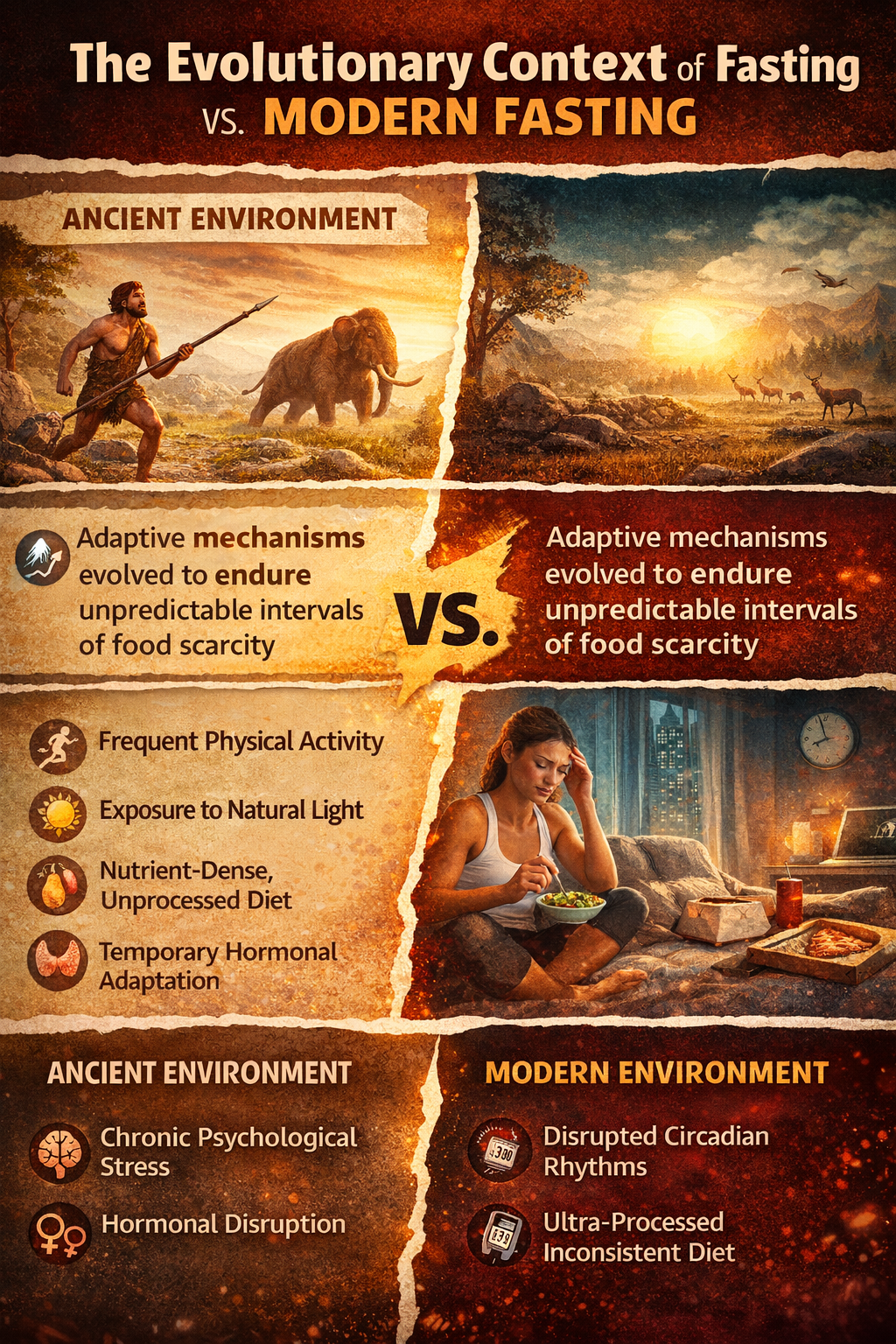
These adaptations were not designed to be activated continuously or in isolation from other environmental factors. Ancestral populations experienced fasting alongside consistent physical movement, exposure to natural light cycles, and the absence of chronic psychological stress. Nutrient intake, when food was available, was typically dense and unprocessed, providing the body with the necessary substrates to recover from periods of scarcity.
In contrast, modern fasting is often implemented as a daily, prolonged, and highly structured behavior within an environment characterized by chronic stress, disrupted circadian rhythms, and inconsistent nutritional quality. This shift in context alters the physiological response to fasting, particularly in women, whose metabolic systems are more tightly coupled to hormonal signaling related to reproduction and survival.
The Limitations of Research on Intermittent Fasting for Women
The scientific literature on intermittent fasting is frequently cited to support its benefits, yet a closer examination reveals significant limitations in its applicability to women. Many foundational studies have been conducted using male participants, animal models, or populations that do not reflect the hormonal variability present in premenopausal women. The cyclical nature of female hormones introduces fluctuations in metabolism, insulin sensitivity, and energy requirements that are rarely accounted for in study design.
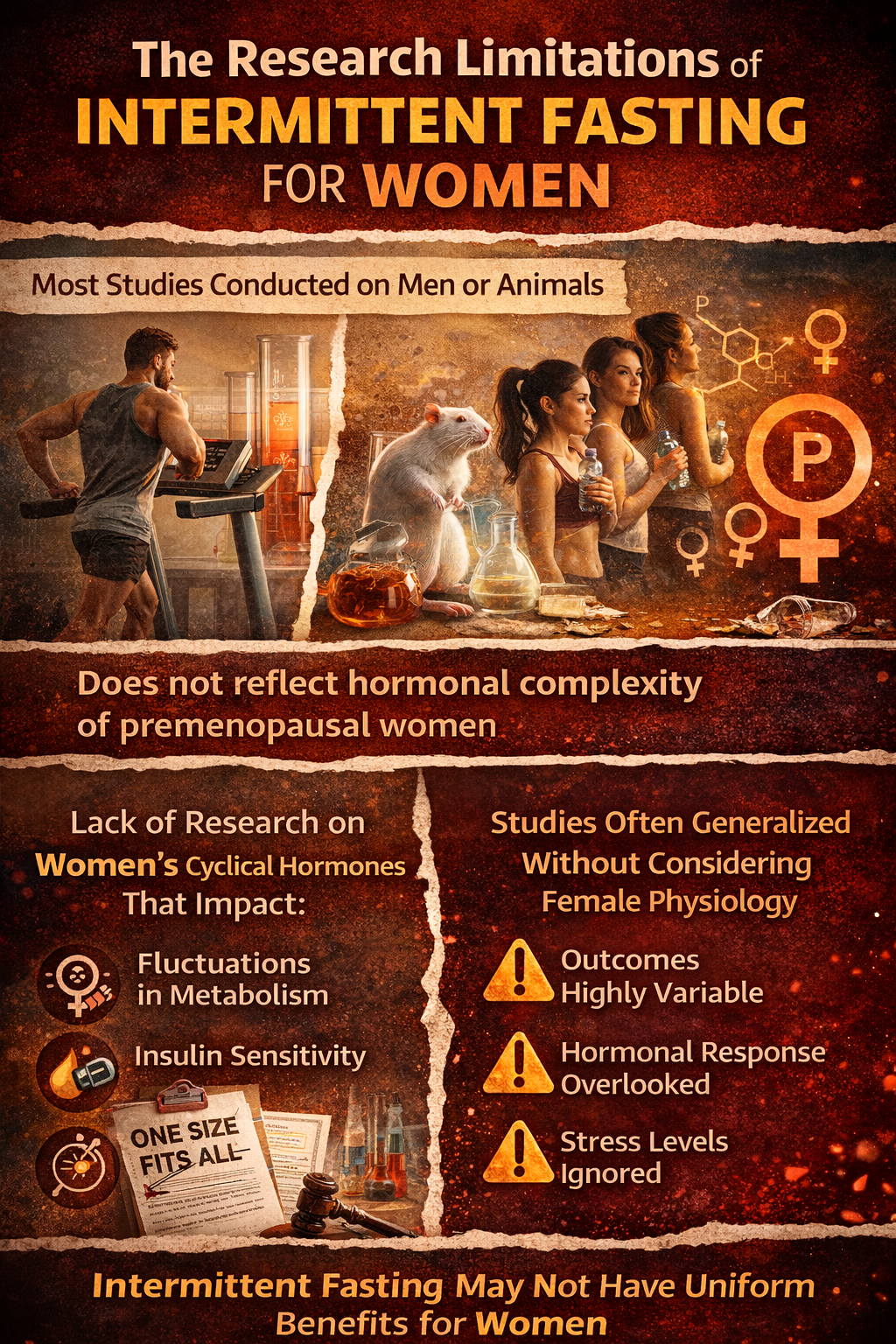
As a result, conclusions drawn from these studies are often generalized without sufficient consideration of sex-specific responses. This has led to a widespread assumption that intermittent fasting produces uniform benefits, when in reality the outcomes are highly dependent on individual physiological conditions, including hormonal status, stress levels, and metabolic resilience.
Energy Availability and the Female Endocrine System
The female body continuously monitors energy availability as part of its regulation of reproductive function. This process is coordinated through the hypothalamus, which integrates signals related to caloric intake, stress, and environmental conditions. When energy availability is perceived as insufficient, the hypothalamus reduces its signaling to the reproductive system in order to conserve resources.
Intermittent fasting, particularly when combined with reduced caloric intake or increased energy expenditure, can lower perceived energy availability. This does not require actual starvation; the body responds to signals rather than precise caloric calculations. When these signals indicate scarcity, the endocrine system adapts by prioritizing survival over reproduction, leading to alterations in estrogen and progesterone production.
These changes can manifest as irregular menstrual cycles, reduced fertility, or the absence of ovulation. Such outcomes are often interpreted as isolated issues, but they represent a coordinated physiological response to environmental input.
The Role of Cortisol in Fasting-Induced Stress
Cortisol is a central mediator of the body’s response to fasting. Its primary role is to maintain blood glucose levels during periods without food by stimulating the release of stored energy. In a balanced system, this response is temporary and regulated, allowing the body to transition between fed and fasted states without significant disruption.
However, when fasting is layered onto an already elevated stress baseline, cortisol levels may remain persistently high. Chronic elevation of cortisol affects multiple systems simultaneously, including insulin signaling, immune function, and sleep regulation. It also interferes with the hypothalamic-pituitary-gonadal axis, which governs reproductive hormone production.
In women, this interaction creates a feedback loop in which increased stress leads to hormonal disruption, which in turn affects energy levels, mood, and metabolic function. The addition of fasting can intensify this loop, particularly in individuals who are already experiencing stress-related dysregulation.
Thyroid Adaptation and Metabolic Rate
The thyroid gland responds to changes in energy availability by adjusting the rate at which energy is expended. During periods of reduced caloric intake or increased physiological stress, the body decreases the conversion of inactive thyroid hormone into its active form, resulting in a lower metabolic rate. This adaptation conserves energy but also reduces the body’s capacity for heat production, digestion, and cellular activity.
In the context of intermittent fasting, this response can become pronounced when fasting is frequent or combined with insufficient nutrient intake. Women may experience symptoms such as fatigue, cold sensitivity, slowed digestion, and difficulty losing weight, all of which reflect a reduction in metabolic output.
This adaptation is not indicative of dysfunction in the traditional sense. It represents the body’s attempt to align energy expenditure with perceived availability, demonstrating that metabolic changes are driven by environmental signals rather than simple caloric equations.
Variability in Response to Intermittent Fasting
The divergent responses observed among women practicing intermittent fasting can be explained by differences in metabolic resilience. Individuals with stable blood glucose levels, adequate nutrient intake, and balanced stress responses are more likely to tolerate fasting without adverse effects. In these cases, fasting may enhance metabolic efficiency and support the use of stored energy.
In contrast, individuals with underlying imbalances such as insulin resistance, chronic stress, or nutrient deficiencies may experience worsening of these conditions when fasting is introduced. The same intervention produces different outcomes because it interacts with the existing physiological state rather than acting as an independent variable.
This variability underscores the importance of context when evaluating the role of intermittent fasting in women’s health.
Practical Considerations for Implementing Fasting
A careful approach to intermittent fasting begins with establishing metabolic stability. This involves regular meal timing, sufficient protein intake, and the inclusion of nutrient-dense foods that support blood sugar regulation. Without this foundation, fasting is more likely to produce stress-related responses rather than metabolic benefits.
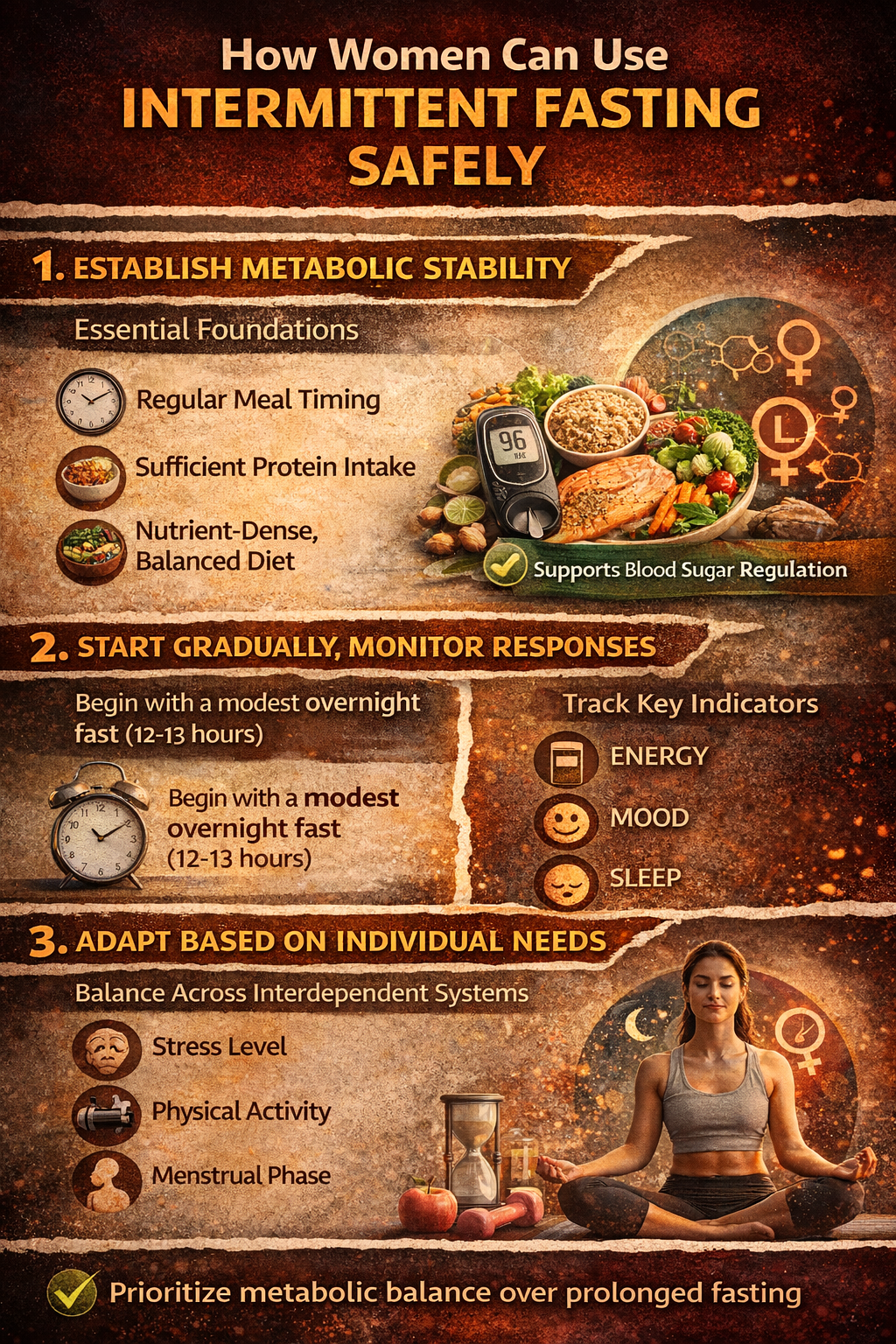
Once stability is achieved, fasting can be introduced gradually, starting with a modest overnight fast that aligns with natural circadian rhythms. Monitoring physiological responses is essential, including changes in energy, mood, sleep, and menstrual patterns. These indicators provide more meaningful feedback than adherence to a predetermined fasting schedule.
Adjustments should be made based on individual response, with consideration given to factors such as stress levels, physical activity, and phase of the menstrual cycle. The goal is not to maximize fasting duration but to maintain balance across systems that are interdependent.
Rethinking the Purpose of Intermittent Fasting
The emphasis on extending fasting windows often obscures the underlying objective, which is to improve metabolic flexibility. This refers to the ability of the body to transition efficiently between using glucose and fat as energy sources. Metabolic flexibility supports stable energy levels and reduces reliance on stress hormones for fuel regulation.
Fasting can contribute to this process when used appropriately, but it is not the only method. Nutritional quality, sleep, and stress management play equally important roles in determining metabolic outcomes. Focusing exclusively on fasting duration without addressing these factors limits its effectiveness and increases the likelihood of unintended consequences.
Conclusion
Intermittent fasting for women cannot be accurately characterized as either inherently beneficial or inherently harmful. Its effects are determined by the context in which it is applied, including the individual’s hormonal status, stress load, and overall metabolic health. The widespread promotion of fasting as a universal solution reflects a simplified understanding of complex biological systems, particularly those that govern female physiology.
A more precise approach recognizes that the body responds to patterns of input rather than isolated interventions. Fasting introduces a signal that can either support or disrupt metabolic processes depending on how it interacts with existing conditions. Understanding this interaction allows for a more informed application of fasting, one that prioritizes physiological alignment over adherence to generalized protocols.
For women seeking to improve metabolic health, the focus should remain on creating an internal environment that supports stability, resilience, and adaptability. Intermittent fasting may play a role in this process, but only when it is integrated into a broader framework that respects the complexity of the systems it influences.