
The Illness That Medicine Still Cannot Fully Explain
Few diagnoses create as much controversy as chronic Lyme disease. Mention the term in certain medical circles and the debate begins immediately. One side argues that Lyme disease resolves after proper treatment and that lingering symptoms represent something else entirely. Another side believes persistent infection remains hidden within the body, continuing to drive inflammation and illness long after a tick bite occurs. Caught in the middle are millions of people who wake up every day exhausted, mentally foggy, achy, anxious, and desperate for answers.
The story often begins the same way. A previously healthy person notices unusual fatigue. Joint pain appears without injury. Brain fog develops unexpectedly. Sleep becomes restless. Strange neurological symptoms emerge. As months pass, symptoms multiply rather than improve. Medical testing frequently comes back normal. Specialists struggle to identify a cause. Frustration grows as patients begin hearing explanations centered around stress, anxiety, depression, aging, or psychosomatic illness.
What makes this situation so troubling is that these symptoms are not imagined. The pain is real. The fatigue is real. The memory problems are real. The anxiety is real. Something inside the body has changed, yet many patients receive little explanation for why these symptoms continue. To understand what may be happening, we must first understand what Lyme disease actually does to the human body and why its effects can extend far beyond the initial infection.
Lyme Disease Is More Than a Tick Bite
Lyme disease originates from infection with the bacterium Borrelia burgdorferi. Unlike many common bacteria, Borrelia belongs to a family known as spirochetes. These organisms possess a corkscrew shape that allows them to move through tissues with remarkable efficiency. Once introduced through the bite of an infected tick, Borrelia can travel throughout the body, reaching locations that many pathogens never access.
The organism demonstrates an unusual ability to penetrate connective tissue, nerves, joints, muscles, and even brain tissue. This widespread migration helps explain why Lyme disease can create such diverse symptoms. One patient may experience severe arthritis. Another may struggle with neurological dysfunction. Someone else may develop cardiovascular symptoms. Although the manifestations differ, the underlying infection often shares the same origin.
Early symptoms frequently resemble the flu. Fatigue, fever, headaches, muscle aches, and swollen lymph nodes commonly appear within days or weeks after exposure. Unfortunately, many individuals never develop the classic bull’s-eye rash often associated with Lyme disease. Others never realize a tick bite occurred. As a result, early diagnosis is frequently missed, allowing the infection and immune response to become more deeply established.
As the disease progresses, inflammation spreads throughout multiple organ systems. Energy production begins declining. Hormonal regulation becomes disrupted. Neurological function may become impaired. The immune system shifts into a prolonged defensive state. Over time, the effects reach nearly every aspect of human physiology.
What Chronic Lyme Disease Does to the Body
One reason chronic Lyme symptoms appear so confusing is because the illness rarely targets a single organ system. Instead, it creates widespread dysfunction that affects communication between multiple systems simultaneously. The result resembles a domino effect. Once enough systems become impaired, the body struggles to maintain normal function.
Inflammation serves as one of the primary drivers of this process. During infection, the immune system releases chemical messengers designed to protect the body. Those inflammatory compounds help destroy pathogens and coordinate immune responses. Problems develop when inflammation remains elevated for months or years. Chronic inflammation damages tissues, disrupts hormone signaling, impairs energy production, and alters nervous system function.
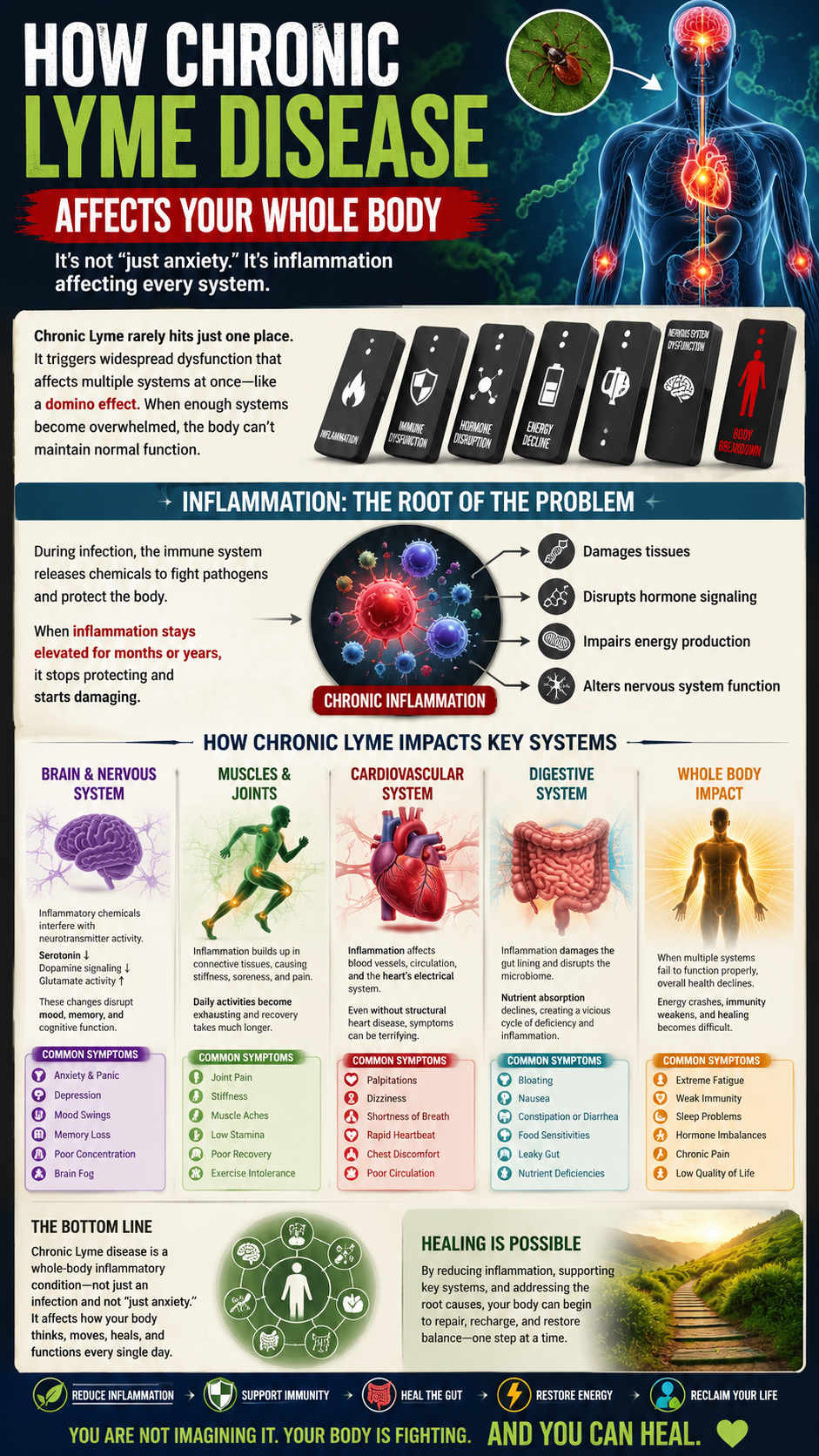
Inside the brain, inflammatory chemicals interfere with neurotransmitter activity. Serotonin production may decline. Dopamine signaling may become impaired. Glutamate activity may increase. These changes contribute to anxiety, depression, mood swings, memory loss, poor concentration, and cognitive dysfunction. Many patients describe the sensation as feeling disconnected from themselves or trapped behind a mental curtain.
Muscles and joints often become secondary targets. Inflammatory compounds accumulate within connective tissues, creating stiffness, soreness, and pain. Everyday activities become exhausting. Exercise tolerance declines dramatically. Recovery after physical exertion becomes prolonged. Individuals who once thrived in active lifestyles may suddenly struggle with basic daily tasks.
The cardiovascular system can also suffer. Inflammation may affect blood vessels, circulation, and electrical conduction pathways within the heart. Patients sometimes experience palpitations, dizziness, shortness of breath, or episodes of rapid heartbeat. While these symptoms may not always indicate structural heart disease, they create significant anxiety and reduce quality of life.
Digestive function frequently deteriorates as well. Chronic inflammation alters the gut microbiome, damages the intestinal lining, and impairs nutrient absorption. As digestive health declines, the body struggles to obtain the nutrients required for healing and recovery. This creates a vicious cycle in which inflammation worsens nutritional deficiencies and nutritional deficiencies worsen inflammation.
Why Chronic Lyme Often Looks Like Anxiety
Perhaps no aspect of chronic Lyme disease generates more confusion than its overlap with anxiety disorders. Patients frequently experience panic attacks, nervousness, emotional instability, insomnia, and overwhelming stress. Those symptoms often lead healthcare providers to conclude that anxiety represents the primary problem. Yet emerging research suggests that anxiety may be a consequence rather than a cause.
The brain depends on precise communication between billions of neurons. Inflammation disrupts that communication. When inflammatory molecules cross the blood-brain barrier, they influence neurotransmitter production and alter brain function. Areas responsible for emotional regulation become particularly vulnerable. As inflammation rises, anxiety often rises alongside it.
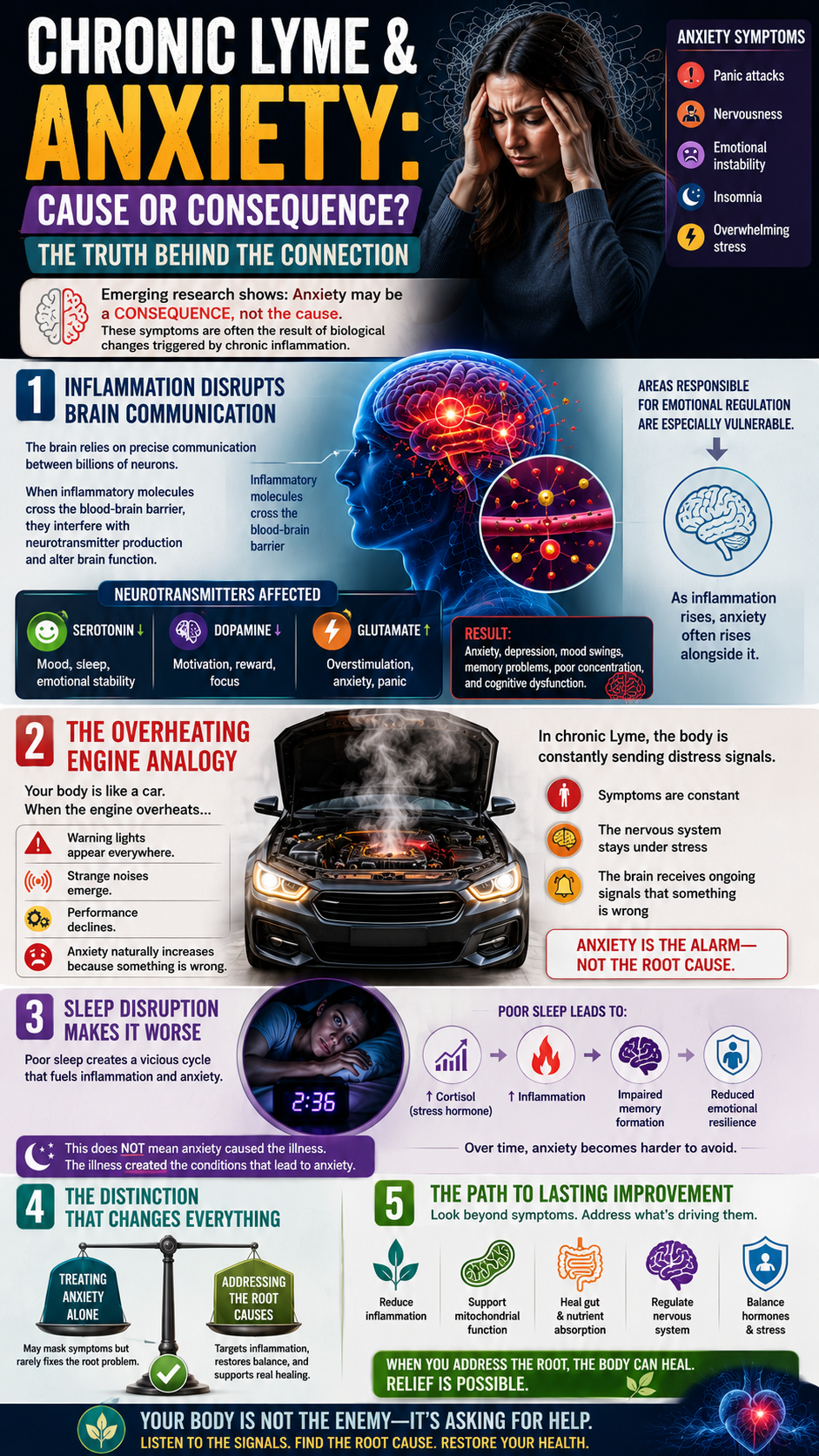
Imagine driving a car with an engine that constantly overheats. Warning lights appear everywhere. Strange noises emerge. Performance declines. Anxiety would naturally increase because the vehicle is malfunctioning. Chronic Lyme patients often experience a similar phenomenon. Their bodies generate symptoms continuously. Their nervous systems remain under constant stress. Their brains receive ongoing signals that something is wrong.
Sleep disruption further compounds the problem. Poor sleep elevates cortisol levels, increases inflammation, impairs memory formation, and reduces emotional resilience. After months or years of inadequate sleep, anxiety frequently becomes unavoidable. This does not mean anxiety caused the illness. Rather, the illness may have created the conditions that produced anxiety.
Understanding this distinction is critical. Treating anxiety alone rarely resolves the underlying physiological dysfunction. Lasting improvement often requires addressing the inflammatory and metabolic factors contributing to nervous system distress.
The Hidden Role of Co-Infections
Many people assume Lyme disease represents a single infection. In reality, ticks often carry multiple pathogens simultaneously. These additional infections may dramatically increase symptom severity and complicate recovery.
Babesia represents one of the most common co-infections. Unlike Borrelia, Babesia behaves more like malaria. The organism infects red blood cells and interferes with oxygen delivery throughout the body. Fatigue, shortness of breath, night sweats, dizziness, and exercise intolerance frequently accompany Babesia infections.
Bartonella presents another challenge. Researchers increasingly associate Bartonella with neurological symptoms, anxiety, irritability, nerve pain, insomnia, and cognitive dysfunction. Patients often experience symptoms that appear disproportionate to standard laboratory findings.
Ehrlichia and Anaplasma create additional inflammatory burdens. These organisms affect white blood cells and immune function, further complicating the body’s ability to recover. When multiple infections coexist, symptoms often become more severe and treatment becomes more complex.
The presence of co-infections may help explain why some individuals recover quickly while others remain ill for years. Two people may receive the same Lyme diagnosis while carrying vastly different infectious burdens beneath the surface.
The Connection Between Mold Toxicity and Chronic Lyme
One of the most overlooked contributors to chronic illness involves environmental mold exposure. Water-damaged buildings frequently harbor mold species capable of producing toxic compounds known as mycotoxins. These toxins place tremendous stress on the immune system and nervous system.
For patients already struggling with Lyme disease, mold exposure can act like gasoline poured onto a fire. The immune system becomes overwhelmed by competing threats. Detoxification pathways become overloaded. Inflammation accelerates. Neurological symptoms often worsen significantly.
Mycotoxins readily cross the blood-brain barrier. Once inside the brain, they contribute to neuroinflammation, cognitive dysfunction, anxiety, and fatigue. Patients frequently report worsening symptoms when spending time in certain buildings and improvement when removed from those environments.
Many individuals suffering from chronic Lyme unknowingly live or work in mold-contaminated environments. Until that exposure is identified and corrected, meaningful recovery may remain difficult.
How Heavy Metals Contribute to Chronic Symptoms
Heavy metal accumulation represents another frequently overlooked factor. Mercury, lead, cadmium, aluminum, and arsenic can interfere with numerous biological processes. These metals impair mitochondrial function, increase oxidative stress, disrupt hormone production, and weaken immune defenses.
Mitochondria serve as the energy factories within cells. When heavy metals damage mitochondria, cellular energy production declines. Fatigue develops. Brain function deteriorates. Muscles weaken. Recovery slows dramatically. Many symptoms commonly attributed to chronic Lyme overlap with symptoms associated with heavy metal toxicity.
The immune system also suffers. Heavy metals impair white blood cell activity and promote chronic inflammation. As toxic burden increases, the body’s ability to manage infections decreases. Patients often become trapped in a cycle where infection and toxicity reinforce one another.
Addressing toxic burden frequently becomes an essential component of comprehensive recovery strategies. Without reducing toxic stress, the body may struggle to regain normal physiological function.
Mitochondrial Dysfunction: The Missing Piece of the Puzzle
Every cell in the human body relies upon mitochondria to generate energy. These microscopic structures convert nutrients into ATP, the molecule that powers nearly every biological process. When mitochondrial function declines, symptoms emerge throughout the entire body.
Chronic infections, inflammation, toxins, poor sleep, nutritional deficiencies, and stress all damage mitochondria. Over time, ATP production decreases. Cells begin operating with an energy deficit. Fatigue becomes overwhelming. Brain fog intensifies. Exercise tolerance plummets. Healing slows.
Many chronic Lyme patients describe feeling as though their internal batteries never recharge. That description reflects the reality of mitochondrial dysfunction. The body simply cannot produce sufficient energy to meet physiological demands.
Restoring mitochondrial health often requires a comprehensive approach. Nutritional support, inflammation reduction, detoxification, restorative sleep, and targeted supplementation may all contribute to improved cellular energy production. When mitochondria recover, symptoms frequently improve across multiple organ systems.
The Gut Connection Nobody Talks About
The gut contains approximately seventy percent of the immune system. This fact alone highlights the importance of digestive health in chronic illness. Unfortunately, many chronic Lyme sufferers develop significant gastrointestinal dysfunction.
Inflammation damages the intestinal lining, increasing permeability. This phenomenon, commonly called leaky gut, allows partially digested food particles, toxins, and microbial fragments to enter circulation. The immune system responds aggressively, creating additional inflammation throughout the body.
Gut microbiome imbalances further complicate recovery. Beneficial bacteria decline while opportunistic organisms gain ground. Digestive efficiency decreases. Nutrient absorption becomes impaired. The body loses access to many of the building blocks required for repair and regeneration.
Brain function also suffers. The gut and brain communicate continuously through the gut-brain axis. When digestive health deteriorates, neurotransmitter production often declines. Mood disturbances, anxiety, and cognitive dysfunction frequently follow.
Improving gut health may not eliminate every chronic Lyme symptom, but it often represents one of the most important steps toward recovery.
What You Can Do at Home to Support Recovery
Recovery begins by reducing inflammation wherever possible. Food choices profoundly influence inflammatory activity. Many patients benefit from eliminating processed foods, refined sugars, industrial seed oils, artificial additives, and excessive alcohol consumption. Nutrient-dense whole foods provide the foundation for healing because they supply essential vitamins, minerals, antioxidants, and amino acids.
Sleep must become a priority. During deep sleep, the brain removes metabolic waste, repairs neural connections, and regulates inflammatory activity. Consistent sleep schedules, reduced evening screen exposure, and optimized sleep environments often produce significant improvements in recovery capacity.
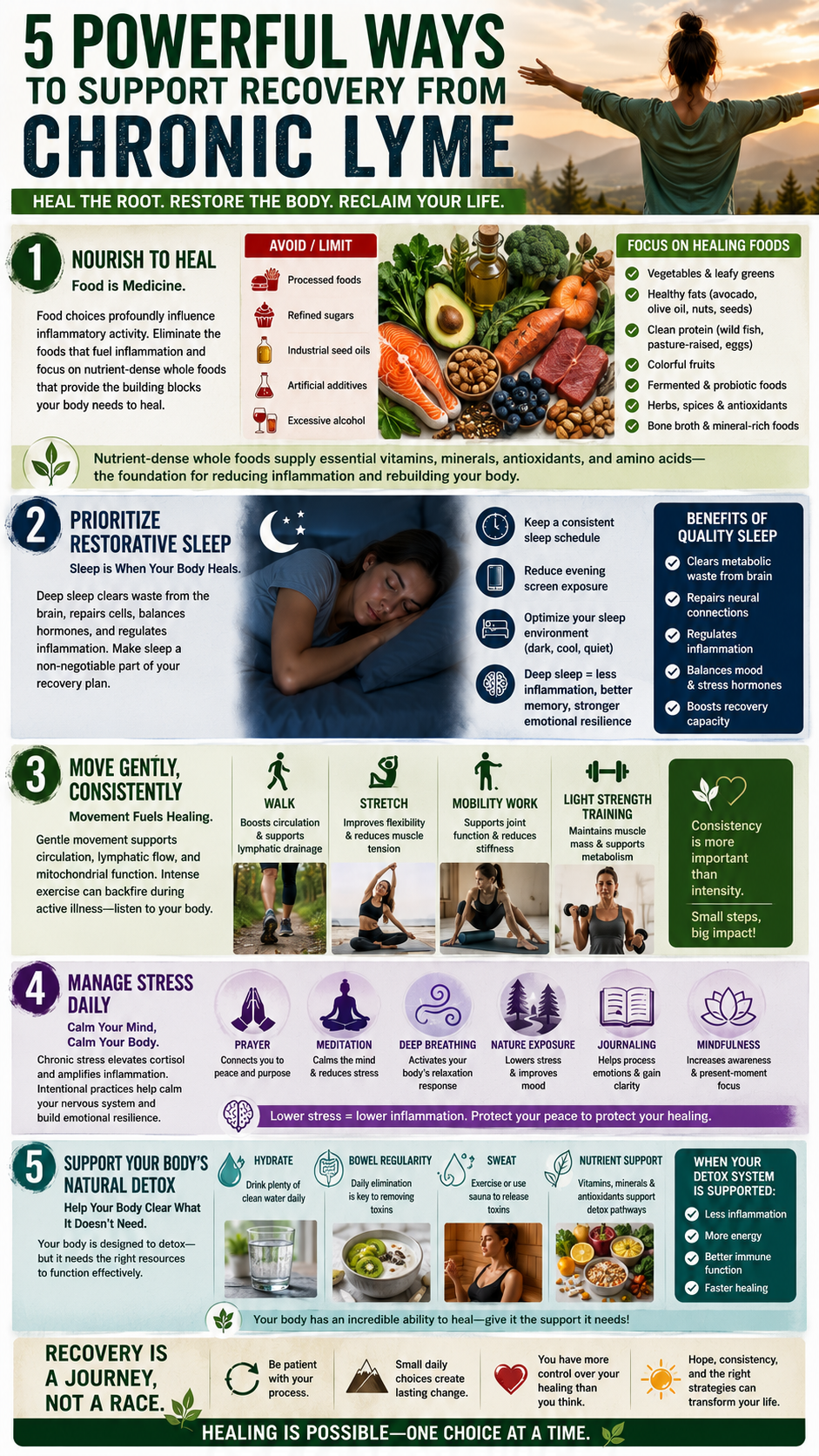
Gentle movement supports circulation, lymphatic drainage, and mitochondrial function. Intense exercise frequently worsens symptoms during periods of active illness. Walking, stretching, mobility work, and light resistance training often provide better results while minimizing physiological stress.
Stress management also matters. Chronic stress elevates cortisol and amplifies inflammation. Practices such as prayer, meditation, deep breathing, nature exposure, journaling, and mindfulness may help calm the nervous system and improve resilience.
Supporting detoxification pathways can further assist recovery. Adequate hydration, regular bowel movements, sweating through exercise or sauna use, and sufficient nutrient intake all contribute to effective toxin elimination. The body possesses remarkable detoxification systems when provided with the resources required to function properly.
The Real Question We Should Be Asking
The debate surrounding chronic Lyme disease often focuses on whether persistent infection exists. While that question remains important, it may not be the most useful one. Patients care less about winning scientific arguments and more about regaining their health.
A more productive question asks why symptoms persist. What factors continue driving inflammation? What disrupts immune regulation? What impairs mitochondrial function? What toxic exposures remain unresolved? What barriers prevent healing?
For some individuals, persistent infection may play a central role. For others, immune dysfunction, mold exposure, heavy metals, gut damage, or mitochondrial impairment may drive ongoing symptoms. Most likely, many patients experience a combination of these factors simultaneously.
Conclusion: Chronic Lyme Is More Than a Diagnosis
Chronic Lyme disease represents far more than a lingering infection. It often reflects a complex web of inflammation, immune dysregulation, neurological dysfunction, toxic burden, mitochondrial damage, hormonal imbalance, and digestive compromise. Reducing the condition to anxiety alone ignores the profound physiological changes many patients experience.
Symptoms such as fatigue, brain fog, anxiety, pain, insomnia, and cognitive dysfunction should never be dismissed simply because standard testing fails to provide clear answers. The body communicates through symptoms. Those signals deserve investigation rather than dismissal.
True healing requires looking beyond labels and examining the deeper mechanisms driving illness. When inflammation decreases, mitochondrial function improves, toxins are removed, gut health is restored, and the nervous system regains balance, recovery often becomes possible. The path may not be simple, but understanding the root causes behind chronic Lyme symptoms provides a far better roadmap than assuming the problem exists only in someone’s mind.
The future of chronic Lyme care will likely move beyond arguments about infection and toward a broader understanding of whole-body dysfunction. Patients deserve nothing less. They deserve curiosity, comprehensive investigation, and a healthcare approach focused on discovering why the body remains stuck in illness. Only then can the journey toward genuine healing truly begin.