
One of the most common health complaints people experience today is persistent fatigue. Millions of individuals wake up every morning feeling as though they never truly rested. They drag themselves through the day with low energy, brain fog, and difficulty concentrating, often relying on caffeine, energy drinks, or sugar just to stay alert.
This experience has become so widespread that questions like:
“Why am I always tired?”
“What causes chronic fatigue?”
“Why do I wake up exhausted?”
“What supplements help with energy?”
are now some of the most frequently searched health questions online.
What makes this issue even more frustrating is that many people seek medical help, undergo lab testing, and are told that everything appears “normal.” Despite this reassurance, the exhaustion remains. People often feel dismissed or confused, unsure why their body feels so depleted when no obvious disease has been identified.
Fatigue is not simply about being busy or getting older. In many cases, it is the body’s way of signaling that its energy systems are under stress. The modern environment places enormous demands on the human body—chronic stress, disrupted sleep, processed foods, toxins, and constant stimulation.
Over time, these pressures can overwhelm the body’s ability to produce and manage energy efficiently.
Understanding the deeper causes of fatigue is the first step toward restoring vitality, mental clarity, and resilience.
What Is Chronic Fatigue?
Fatigue occurs when the body’s ability to produce, regulate, and distribute energy becomes impaired. At the cellular level, energy is produced by tiny structures called mitochondria, often referred to as the “power plants” of the cell.
Mitochondria convert oxygen and nutrients into a molecule called ATP (adenosine triphosphate), which fuels nearly every biological process in the body. Every heartbeat, every nerve signal, every muscle contraction, and every thought requires ATP.
When mitochondria function efficiently, cells generate adequate energy to sustain physical activity, mental focus, immune function, and tissue repair.
However, when mitochondrial function becomes compromised, energy production slows down. This creates a ripple effect throughout the body.
Instead of producing abundant energy, the body begins operating in low-power mode.
Chronic fatigue often includes symptoms such as:
• persistent exhaustion even after rest
• mental fog or difficulty concentrating
• reduced motivation
• muscle weakness or heaviness
• headaches or dizziness
• poor exercise tolerance
• increased sensitivity to stress
These symptoms reflect a deeper issue: the body is struggling to generate enough energy to meet daily demands.
Why Am I Always Tired?
Persistent fatigue rarely has a single cause. Instead, it usually develops when multiple stressors combine to overwhelm the body’s recovery systems.
Chronic Stress
Chronic psychological stress places continuous demands on the nervous system and adrenal glands. When stress hormones such as cortisol remain elevated for long periods, the body shifts into survival mode.
In survival mode, the body prioritizes immediate survival rather than long-term repair. Energy is diverted away from healing and restoration, leaving people feeling physically and mentally drained.
Poor Sleep Quality
Sleep is when the brain and body restore themselves. During deep sleep, tissues repair, hormones rebalance, and the brain clears metabolic waste.
Even if someone spends eight hours in bed, poor sleep quality can prevent the brain from completing these restorative processes.
Nutritional Deficiencies
Energy production requires essential nutrients including:
• B vitamins
• magnesium
• iron
• amino acids
• healthy fats
Without these nutrients, the mitochondria cannot produce ATP efficiently.
Blood Sugar Instability
Many people experience dramatic spikes and crashes in blood sugar due to high-carbohydrate diets or irregular eating patterns.
These fluctuations trigger the release of stress hormones such as adrenaline and cortisol, which can lead to fatigue, irritability, and brain fog.
Environmental Toxins
Exposure to heavy metals, pesticides, plastics, and industrial chemicals places stress on the body’s detoxification systems.
These toxins may interfere with mitochondrial function and increase inflammation, both of which contribute to chronic fatigue.
Why Do I Wake Up Exhausted?
Waking up tired despite sleeping for several hours often indicates that the body is not entering the deep restorative stages of sleep.
One major cause is circadian rhythm disruption. The body follows a natural internal clock that regulates sleep, hormone release, digestion, and energy production.
Late-night screen exposure, irregular sleep schedules, and artificial lighting can interfere with this biological clock.
Another common factor is elevated nighttime cortisol levels. When stress hormones remain high at night, the brain struggles to relax enough to enter deep sleep.
Sleep disorders such as sleep apnea can also interrupt oxygen delivery to the brain, preventing restorative sleep cycles.
When the brain never fully enters deep sleep, people wake up feeling as tired as when they went to bed.

Burnout and the Modern Energy Crisis
Burnout represents a deeper stage of fatigue caused by prolonged physical and emotional stress.
Modern life exposes people to constant stimulation:
• emails
• work demands
• financial pressures
• social media
• nonstop information
The brain rarely has time to completely rest.
Over time, this constant pressure can disrupt the hypothalamic–pituitary–adrenal (HPA) axis, the system responsible for regulating stress hormones.
When this system becomes dysregulated, individuals may experience:
• Persistent fatigue
• Mood swings
• Difficulty concentrating
• Loss of motivation
• Emotional exhaustion
Burnout is not simply mental—it affects the entire body.
Natural Strategies to Restore Energy
Because fatigue often involves multiple body systems, improving energy requires a whole-body approach.
Support the Nervous System
Breathing exercises, meditation, and spending time in nature help calm the nervous system and reduce stress hormone levels.
Improve Sleep Quality
Consistent sleep schedules and limiting nighttime light exposure can restore circadian rhythms.
Stabilize Blood Sugar
Balanced meals containing protein, healthy fats, and fiber help prevent energy crashes.
Support Gut Health
The gut microbiome influences nutrient absorption and neurotransmitter balance.
Reduce Toxic Exposure
Choosing whole foods, filtered water, and minimizing chemical exposure can support detoxification.
What Supplements Help With Energy?
Certain nutrients can support mitochondrial function and energy metabolism.
Helpful nutrients may include:
• CoQ10 – supports mitochondrial energy production
• Magnesium – required for hundreds of cellular reactions
• B vitamins – convert food into energy
• Omega-3 fatty acids – reduce inflammation and support brain function
Supplements work best when combined with lifestyle changes that support sleep, stress management, and proper nutrition.
Restoring Energy and Vitality
Chronic fatigue is rarely random. It is often the body’s signal that something deeper is out of balance.
Instead of masking exhaustion with stimulants, the goal should be to understand what may be interfering with the body’s energy systems.
When underlying stressors—poor sleep, nutritional deficiencies, blood sugar instability, nervous system imbalance, and toxin exposure—are addressed, many people begin to notice improvements in energy, mental clarity, and resilience.
The body possesses an extraordinary ability to heal and restore balance when given the right conditions.
By supporting the systems responsible for producing and managing energy, it is possible to move from exhaustion and burnout toward vitality and renewed strength.
7-Day Energy Reset Protocol
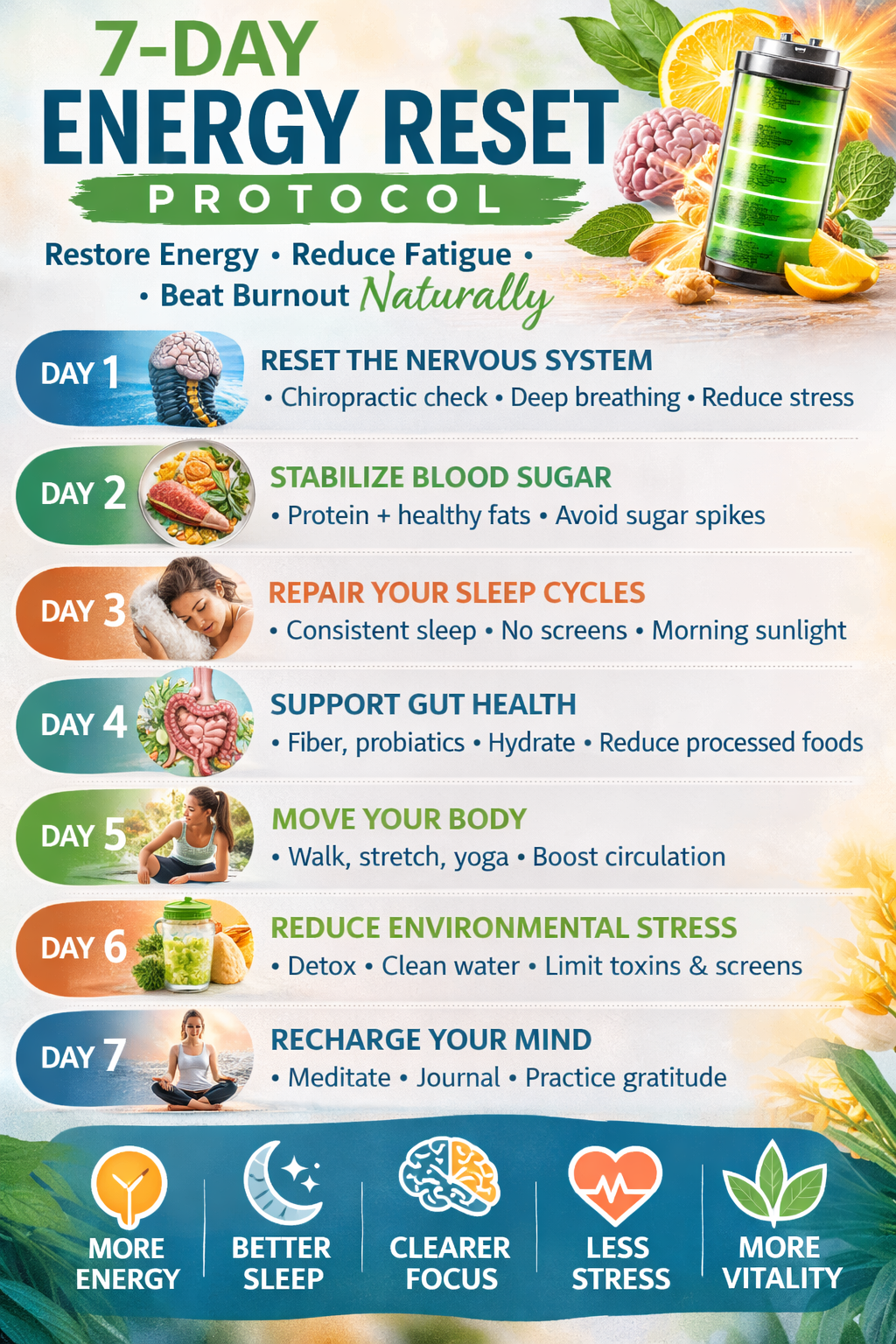
A Natural Plan to Restore Energy, Reduce Fatigue, and Recover from Burnout
Chronic fatigue rarely happens overnight. In most cases, it develops gradually as the body becomes overwhelmed by stress, poor sleep, nutritional deficiencies, blood sugar instability, and environmental stressors. When these pressures accumulate, the body’s energy systems—particularly the mitochondria, nervous system, and hormonal networks—begin to slow down.
The goal of a short-term reset is not to magically eliminate fatigue in a week. Instead, it is designed to interrupt the cycle of exhaustion and give the body the conditions it needs to start restoring energy naturally.
This seven-day protocol focuses on the key systems responsible for energy production: the nervous system, sleep cycles, metabolism, digestion, and cellular energy.
Day 1 – Reset the Nervous System
Energy production begins with the nervous system. The brain controls every organ in the body, including the adrenal glands, thyroid, digestive system, and mitochondria. When the nervous system is under constant stress, the body shifts into survival mode, which often leads to fatigue.
One overlooked contributor to nervous system stress is spinal misalignment, sometimes called subluxation. The spine protects the spinal cord and nerve pathways that allow the brain to communicate with the body. When vertebrae shift out of alignment, they can create irritation or pressure along these nerve pathways.
The upper cervical spine—located near the base of the skull—is particularly important because it is closely connected to the brainstem and vagus nerve. The vagus nerve regulates the parasympathetic nervous system, which controls rest, digestion, and recovery.
Having the spine evaluated and corrected using structural chiropractic techniques can help restore proper communication between the brain and body. When nerve signaling improves, the body often becomes better able to regulate stress hormones, digestion, and energy production.
Resetting the nervous system creates the foundation for the rest of the energy reset.
Day 2 – Stabilize Blood Sugar
Blood sugar fluctuations are one of the most common hidden causes of fatigue. When blood glucose rises rapidly after high-sugar or high-carbohydrate meals, the body releases insulin to lower it. If blood sugar drops too quickly, the body releases stress hormones such as adrenaline and cortisol to correct the crash.
These fluctuations can create the familiar cycle of energy spikes followed by exhaustion.
On day two, focus on stabilizing blood sugar with balanced meals that include:
• high-quality protein
• healthy fats
• fiber-rich carbohydrates
Avoid sugary drinks, pastries, and ultra-processed foods that cause rapid glucose spikes. Eating every 4–5 hours can help maintain stable energy throughout the day.
When blood sugar remains steady, the body no longer needs to trigger stress hormones, allowing energy levels to stabilize.
Day 3 – Repair Sleep Cycles
Sleep is the body’s most powerful energy-restoration system. During deep sleep, the brain clears toxins, the immune system repairs tissues, and hormones that regulate energy metabolism are balanced.
Many people with chronic fatigue are not lacking sleep hours—they are lacking restorative sleep quality.
To reset sleep cycles:
• maintain a consistent sleep schedule
• reduce screen exposure before bed
• dim lights in the evening
• avoid caffeine late in the day
Morning sunlight exposure is also extremely important. Natural light helps regulate the brain’s circadian clock, which controls sleep hormones like melatonin.
When sleep quality improves, the body gains the opportunity to restore energy at the cellular level.
Day 4 – Support the Gut–Energy Connection
The digestive system plays a major role in energy production because it determines how efficiently nutrients are absorbed. Even the best diet cannot support energy if the body cannot absorb vitamins, minerals, and amino acids.
The gut microbiome also influences inflammation, neurotransmitter production, and metabolic health.
On day four, support gut health by focusing on:
• fiber-rich vegetables
• fermented foods such as sauerkraut or kimchi
• adequate hydration
• reducing processed foods and sugar
Improving digestive health helps the body absorb the nutrients required for mitochondrial energy production.
Day 5 – Move the Body
Although it may seem counterintuitive, gentle movement actually increases energy.
Physical activity improves circulation, increases oxygen delivery to cells, and stimulates mitochondrial activity. It also helps regulate stress hormones and improve sleep quality.
Day five focuses on light movement rather than intense workouts.
Helpful activities include:
• walking in nature
• yoga or stretching
• cycling
• light strength training
Even 20–30 minutes of daily movement can significantly improve energy levels over time.
Day 6 – Reduce Environmental Stressors
Environmental stress can quietly drain the body’s energy systems. Exposure to chemicals, heavy metals, processed foods, and constant digital stimulation places a burden on detoxification pathways.
On day six, focus on reducing unnecessary stressors:
• drink filtered water
• choose whole foods over processed foods
• reduce exposure to plastics and chemicals
• limit social media and digital overload
These changes reduce inflammatory stress on the body and allow energy systems to recover.
Day 7 – Recharge the Mind and Brain
The final step focuses on mental recovery. Chronic mental stress drains energy just as much as physical stress.
Practices that calm the mind help retrain the brain to shift out of constant stress mode.
Helpful techniques include:
• meditation or prayer
• gratitude journaling
• breathing exercises
• quiet time in nature
These practices activate the parasympathetic nervous system and help the brain regulate stress responses.
Over time, this shift allows the body to conserve and restore energy more effectively.
What Happens After the Reset?
A seven-day reset is meant to interrupt the cycle of exhaustion and help the body begin restoring balance.
Many people notice improvements in:
• sleep quality
• mental clarity
• stress resilience
• daytime energy
However, lasting energy restoration comes from maintaining these habits consistently.
When the nervous system, metabolism, sleep cycles, and digestion work together properly, the body regains its natural ability to produce and sustain energy.
The result is not just less fatigue—but a return to vitality, clarity, and resilience.