The Cancer Conversation Most Patients Never Hear
Cancer changes lives in a single moment. One phone call, one scan, or one biopsy can instantly divide life into before and after. Fear enters the room quickly. Families panic. Patients lose sleep. Questions become drowned by urgency. Most people immediately place complete trust in the medical system because survival becomes the only thing that matters emotionally. That emotional intensity often prevents patients from asking deeper questions about what cancer truly is, why it develops, and what chemotherapy actually does inside the body.
Modern oncology usually follows a predictable script. Physicians identify a tumor, classify its stage, recommend chemotherapy, radiation, surgery, immunotherapy, or combinations of each, then move aggressively toward treatment. In many situations, immediate intervention becomes medically necessary because certain cancers spread rapidly and threaten survival. Chemotherapy has absolutely saved lives. Some aggressive leukemias, lymphomas, and fast-growing tumors respond remarkably well to treatment. Denying those outcomes would be dishonest and irresponsible.

At the same time, another reality exists beneath the surface of conventional cancer care. Most patients never hear detailed conversations regarding chronic inflammation, toxic overload, insulin resistance, mitochondrial dysfunction, gut permeability, nutrient depletion, circadian rhythm disruption, immune collapse, or environmental toxicity. Mainstream medicine often treats cancer like an isolated tumor rather than a systemic breakdown involving the entire terrain of the human body. Functional medicine approaches cancer from a radically different perspective because it asks a question many conventional systems ignore completely. Why did the body allow cancerous cells to thrive in the first place?
That question changes everything about the conversation.
Conventional oncology largely focuses on destroying cancer cells. Functional medicine focuses on understanding the environment allowing those cancer cells to survive, grow, and spread. Tumors rarely appear inside healthy physiological terrain operating with balanced immunity, proper detoxification, stable blood sugar, strong mitochondrial function, restorative sleep, and low inflammatory burden. Cancer usually develops after years, sometimes decades, of accumulating biological stress that gradually weakens cellular communication and immune defense mechanisms.
Patients deserve honest conversations about chemotherapy rather than emotionally driven slogans. Some people call chemotherapy pure poison. Others treat chemotherapy like unquestionable salvation. Neither position reflects the full complexity of cancer biology. Chemotherapy can absolutely help save lives in certain situations. Yet chemotherapy also creates profound collateral damage because the drugs cannot distinguish perfectly between cancerous cells and healthy tissue. The body often emerges weakened, inflamed, metabolically damaged, and physiologically exhausted after treatment ends.
Functional medicine does not reject conventional oncology blindly. Integrative cancer support instead focuses on helping patients strengthen their physiology during treatment while reducing inflammation, improving detoxification, restoring nutrient reserves, stabilizing blood sugar, protecting mitochondria, and rebuilding immune resilience simultaneously. That approach creates a more complete strategy because it supports the body rather than attacking disease alone.
Why Cancer Rates Continue Rising Despite Medical Advancements
Cancer rates continue increasing across the world despite billions spent on pharmaceutical research and technological innovation. That reality alone should force society to examine deeper causes driving chronic disease. Most people assume cancer develops randomly because of unfortunate genetics or bad luck. Functional medicine strongly challenges that belief because genes rarely explain the explosive rise in chronic illness occurring throughout modern civilization.
The human body evolved within natural environments containing sunlight exposure, mineral-rich food, physical movement, clean water, and manageable stress patterns. Modern life now exposes the body to constant toxic and metabolic stress from nearly every direction imaginable. Processed foods dominate grocery store shelves. Industrial seed oils saturate restaurant meals. Plastics contaminate water supplies. Heavy metals accumulate inside tissues silently. Pesticides coat produce continuously. Artificial light disrupts circadian rhythms nightly. Sleep deprivation weakens immune surveillance repeatedly. Chronic psychological stress elevates cortisol constantly.
Then physicians wonder why cancer rates continue climbing.
Functional medicine recognizes cancer as a metabolic and inflammatory disease process deeply connected to environmental stress and cellular dysfunction. Chronic inflammation damages tissue continuously while weakening immune surveillance mechanisms. Mitochondrial dysfunction impairs energy production inside cells. Insulin resistance creates abnormal growth signaling pathways encouraging cellular proliferation. Toxic overload overwhelms detoxification systems gradually. Gut permeability increases systemic inflammation and immune dysregulation. Nutrient depletion weakens DNA repair mechanisms and antioxidant protection.
The body compensates remarkably well for years under chronic stress. Eventually, compensation mechanisms begin failing. Symptoms usually appear long before cancer develops visibly. Fatigue, digestive dysfunction, autoimmune disease, hormonal imbalance, anxiety, brain fog, obesity, insomnia, and metabolic syndrome often represent warning signs that physiology is deteriorating underneath. Conventional medicine frequently treats these symptoms independently through medications without addressing the deeper terrain collapse occurring throughout the body.
Cancer rarely appears overnight. Most tumors represent the visible endpoint of years of accumulated physiological breakdown.
What Chemotherapy Really Does Inside the Body
Chemotherapy drugs target rapidly dividing cells because cancer reproduces aggressively. Unfortunately, many healthy tissues also divide rapidly throughout the body. That biological reality explains why chemotherapy damages multiple organ systems simultaneously and creates severe side effects extending far beyond the tumor itself.
The digestive tract usually suffers immediately during treatment because intestinal cells regenerate constantly. Many patients develop nausea, vomiting, diarrhea, constipation, ulcers, bloating, severe food sensitivities, and microbiome disruption. Chemotherapy often damages the intestinal lining significantly, increasing gut permeability and allowing inflammatory compounds to enter circulation more easily. Chronic inflammation rises further while nutrient absorption declines sharply.
Bone marrow suppression creates another devastating consequence of chemotherapy. White blood cell production decreases substantially, weakening immune defenses and increasing infection risk. Red blood cell production often declines simultaneously, causing profound fatigue, dizziness, weakness, and impaired oxygen delivery throughout tissues. Platelet counts may also decrease, increasing bruising and bleeding tendencies.
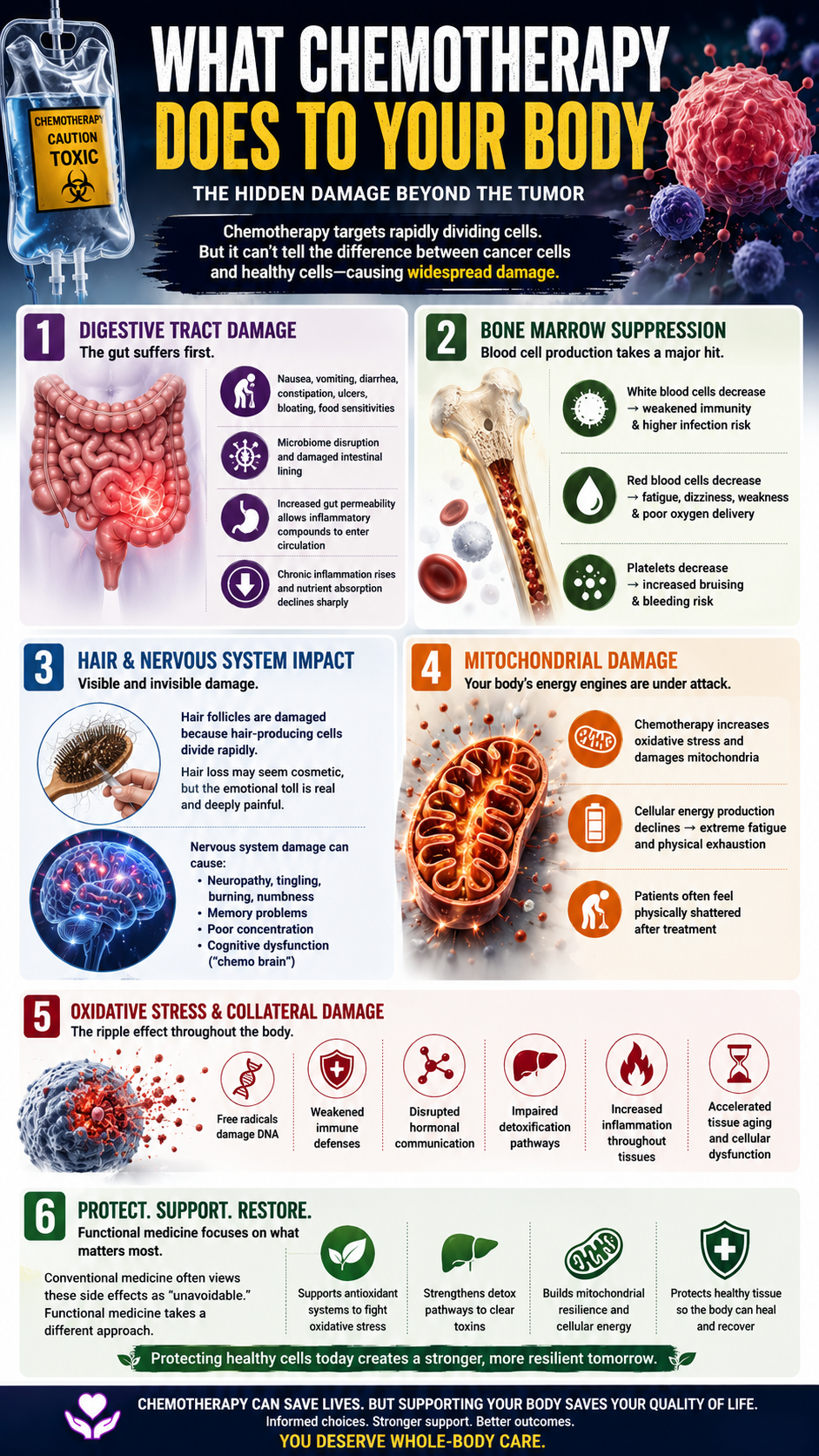
Hair follicles become damaged because hair-producing cells divide rapidly as well. While hair loss may appear cosmetic to outsiders, many patients experience deep emotional trauma from watching their physical identity deteriorate throughout treatment. Chemotherapy also damages nervous system tissue frequently, causing neuropathy, tingling, burning sensations, numbness, memory problems, concentration difficulties, and cognitive dysfunction commonly called chemo brain.
Functional medicine pays particularly close attention to mitochondrial damage during chemotherapy. Mitochondria function as the energy-producing engines inside every cell. Chemotherapy dramatically increases oxidative stress, damaging mitochondria throughout the body and impairing cellular energy production severely. Patients often describe feeling physically shattered after treatment because their energy systems become profoundly compromised.
Oxidative stress accelerates tissue aging and cellular dysfunction simultaneously. Free radicals damage DNA, weaken immune defenses, disrupt hormonal communication, impair detoxification pathways, and increase inflammatory stress throughout tissues. Conventional medicine often treats these consequences as unavoidable collateral damage. Functional medicine aggressively supports antioxidant systems, detoxification pathways, and mitochondrial resilience because protecting healthy tissue matters tremendously during treatment.
The Mainstream Oncology Model Versus the Functional Medicine Model
Conventional oncology primarily measures success through tumor reduction, imaging results, remission statistics, and survival timelines. That model absolutely produces lifesaving outcomes in certain situations, especially during aggressive cancers requiring immediate intervention. Functional medicine does not deny the value of emergency treatment when medically necessary.
However, integrative practitioners recognize that destroying tumors alone does not automatically restore health.
Many cancer survivors complete chemotherapy only to face chronic exhaustion, digestive collapse, hormonal dysfunction, autoimmune disease, depression, metabolic syndrome, neurological damage, and recurrence risk years later. Mainstream medicine frequently declares patients cancer-free while their physiology remains deeply damaged underneath.
Functional medicine approaches cancer differently because it views the body as an interconnected ecosystem rather than isolated organs operating independently. Tumors represent symptoms of deeper dysfunction occurring throughout the terrain of the body. Therefore, functional medicine focuses not only on attacking abnormal cells but also on rebuilding the internal environment supporting long-term resilience, immune surveillance, and metabolic stability.
Conventional medicine often treats the body like a battlefield requiring aggressive attack strategies. Functional medicine treats the body like soil requiring restoration. Healthy soil rarely grows aggressive weeds. Damaged soil allows dysfunction to spread continuously. That metaphor explains why integrative cancer support focuses heavily on inflammation reduction, detoxification, blood sugar stabilization, immune strengthening, gut healing, nervous system regulation, and nutrient restoration.
True healing requires rebuilding the terrain beneath the disease.
Sugar, Insulin Resistance, and Cancer Metabolism
One of the most controversial topics in modern oncology involves the relationship between sugar metabolism and cancer growth. Functional medicine recognizes that many cancer cells depend heavily upon glucose for fuel. This metabolic phenomenon, known as the Warburg effect, describes how cancer frequently relies on sugar fermentation despite oxygen availability.
Insulin also functions as a powerful growth hormone throughout the body.
Chronically elevated insulin levels may stimulate abnormal cellular proliferation while increasing inflammatory stress simultaneously. Processed carbohydrates, refined sugar, soda, ultra-processed foods, and industrial seed oils contribute heavily to insulin resistance throughout modern populations.
Many cancer patients receive little meaningful nutritional guidance during chemotherapy beyond maintaining calories and preventing excessive weight loss. Some hospitals continue serving sugary desserts, processed snacks, soda, and refined carbohydrates despite growing evidence linking metabolic dysfunction with cancer progression and inflammation.
Functional medicine focuses aggressively on blood sugar stabilization because metabolic health influences mitochondrial function, inflammation, immune resilience, detoxification, and cellular signaling profoundly. Protein-rich meals containing healthy fats and fiber help regulate glucose levels more effectively than processed convenience foods loaded with sugar and industrial oils.
Grass-fed meats, pasture-raised eggs, wild fish, avocados, olive oil, cruciferous vegetables, berries, herbs, nuts, seeds, and mineral-rich foods provide stable energy while supporting detoxification and reducing inflammatory burden simultaneously. Functional medicine never claims nutrition alone universally cures aggressive cancers. However, metabolic support may improve treatment resilience, strengthen immune function, reduce inflammatory stress, and enhance recovery significantly.
The body heals more effectively when physiology receives proper fuel.
Chronic Inflammation Fuels Cancer Growth Continuously
Inflammation acts like gasoline poured onto damaged biological terrain. Acute inflammation helps the body heal temporary injuries and infections. Chronic inflammation creates ongoing tissue destruction weakening immune surveillance continuously over time.
Functional medicine identifies chronic inflammation as one of the greatest drivers behind modern cancer development.
Industrial seed oils contribute heavily to inflammatory overload. Soybean oil, canola oil, sunflower oil, corn oil, and cottonseed oil now saturate processed foods throughout modern diets. These unstable fats oxidize easily during cooking and may damage cellular membranes significantly.
Environmental toxins worsen inflammatory stress dramatically. Pesticides, herbicides, plastics, mold toxins, heavy metals, air pollution, synthetic fragrances, and industrial chemicals accumulate gradually inside tissues over decades. Detoxification systems eventually struggle handling continuous toxic exposure. Oxidative stress rises steadily while mitochondrial efficiency declines.
Gut dysfunction compounds the problem even further. Leaky gut syndrome allows bacterial toxins and inflammatory compounds to enter circulation repeatedly. The immune system remains chronically activated. Many patients already suffer obesity, diabetes, autoimmune disease, hormonal imbalance, or digestive dysfunction years before cancer diagnosis appears.
Functional medicine aggressively reduces inflammatory burden through dietary modification, detoxification support, sleep restoration, stress reduction, gut healing, nervous system regulation, and metabolic stabilization.
The body cannot heal efficiently while inflammation remains chronically elevated.
The Gut Microbiome’s Massive Role in Cancer Recovery
The gut microbiome influences immunity, detoxification, inflammation, neurotransmitter production, estrogen metabolism, and nutrient absorption continuously. Chemotherapy frequently destroys beneficial bacteria while damaging intestinal integrity severely.
Research increasingly suggests microbiome health may influence chemotherapy response itself. Certain bacterial strains appear to support immune resilience more effectively during treatment. Dysbiosis, or microbial imbalance, may worsen inflammation while impairing recovery and increasing side effects.
Functional medicine prioritizes gut restoration aggressively because immune strength depends heavily upon intestinal health.
Many patients benefit from removing inflammatory foods temporarily during recovery. Refined sugar, industrial oils, artificial additives, processed foods, and excessive alcohol may worsen inflammatory stress substantially. Fermented foods may support microbial diversity when tolerated properly. Bone broth provides amino acids supporting intestinal repair and connective tissue healing.
Digestive function also requires serious attention during treatment. Chemotherapy frequently reduces stomach acid production and enzyme activity. Patients may struggle digesting protein and absorbing nutrients effectively. Functional medicine recognizes healing becomes nearly impossible if the body cannot absorb the raw materials required for cellular repair.
The gut functions as the foundation of immune resilience and metabolic recovery throughout cancer treatment.
Emotional Trauma, Chronic Stress, and Cancer Physiology
Cancer affects far more than physical tissue alone. Emotional trauma, fear, grief, hopelessness, anxiety, and chronic stress influence physiology profoundly throughout the body. Elevated cortisol suppresses immune defenses continuously while increasing inflammation, blood sugar dysfunction, digestive impairment, and sleep disruption simultaneously.
Functional medicine recognizes the deep connection between emotional health and physical resilience.
Many patients feel emotionally abandoned within conventional oncology settings focused heavily upon pharmaceutical timelines and scan results. Fear dominates most cancer conversations. Patients often feel powerless while navigating endless appointments, financial pressure, side effects, and uncertainty regarding survival.
Integrative functional support frequently includes counseling, meditation, prayer, breathwork, nervous system regulation, social support, gratitude practices, trauma healing, and spiritual connection because healing requires more than pharmaceutical intervention alone.
The nervous system influences every organ system continuously. Calming chronic fight-or-flight physiology may improve digestion, sleep quality, immune resilience, hormonal balance, and inflammatory regulation simultaneously.
The body heals more effectively when fear no longer controls physiology constantly.
Actionable Functional Medicine Steps Patients Can Take at Home
Patients often feel helpless after diagnosis. Functional medicine encourages active participation because lifestyle factors strongly influence physiology during treatment and recovery.
Nutrition should focus heavily on anti-inflammatory whole foods supporting stable blood sugar and nutrient density. Clean protein sources help preserve muscle mass while supporting detoxification pathways. Healthy fats provide stable energy while reducing inflammatory stress. Colorful vegetables and herbs supply antioxidants protecting healthy tissue from oxidative damage.
Patients should minimize refined sugar, processed foods, industrial seed oils, artificial additives, and excessive alcohol whenever possible. Filtered water reduces toxic exposure from contaminants commonly found in municipal water systems.
Sleep restoration deserves major attention during recovery. Consistent sleep schedules, morning sunlight exposure, reduced nighttime blue light, and dark sleeping environments help regulate melatonin and cortisol rhythms naturally. Melatonin itself possesses antioxidant and immune-supportive properties important during cancer recovery.

Movement also matters profoundly during treatment. Gentle walking improves lymphatic circulation, insulin sensitivity, mitochondrial function, mood stability, and detoxification simultaneously. Patients should remain physically active within their medical limitations whenever appropriate.
Stress reduction techniques may influence recovery significantly. Prayer, meditation, journaling, counseling, breathwork, gratitude practices, emotional release work, and nervous system regulation help reduce cortisol overload while improving emotional resilience.
Environmental toxin reduction creates additional benefit during healing. Patients should reduce exposure to plastics, pesticides, synthetic fragrances, mold, cigarette smoke, harsh cleaners, and heavy chemical exposure whenever possible.
Every small improvement strengthens physiological terrain gradually over time.
The Future of Cancer Care Must Change
Integrative functional cancer support does not mean blindly rejecting chemotherapy or promising unrealistic miracle cures. Functional medicine recognizes aggressive cancers sometimes require aggressive intervention. At the same time, patients deserve comprehensive support protecting healthy tissue while rebuilding resilience simultaneously.
The body possesses remarkable healing intelligence when inflammation decreases, detoxification improves, nutrient reserves strengthen, blood sugar stabilizes, sleep normalizes, and emotional stress becomes manageable.
Patients deserve empowerment rather than helplessness. They deserve practitioners willing to investigate why cancer developed initially instead of focusing exclusively on tumor destruction. Functional medicine recognizes lasting health requires more than attacking disease aggressively. The internal terrain supporting life itself must also receive restoration.
The future of oncology must evolve beyond isolated pharmaceutical warfare toward comprehensive physiological rebuilding. Chemotherapy may sometimes become necessary, but the body still requires nourishment, detoxification, protection, emotional support, and metabolic restoration throughout the battle.
Real healing begins when medicine stops treating the body like a battlefield and starts understanding it as an interconnected living system worthy of restoration, support, and respect.