
The Question Few People Are Asking
Most conversations about vaccines focus on effectiveness, public policy, or infectious disease prevention. Almost nobody discusses a more fundamental biological question: What happens when the immune system receives repeated stimulation in a body that already struggles with inflammation, toxic burden, nutrient deficiencies, digestive dysfunction, and impaired detoxification pathways? That question sits at the center of a growing debate involving vaccine adjuvants, neuroinflammation, and chronic neurological symptoms. The controversy often becomes emotional before it becomes scientific. One side insists there is no possibility of concern, while another side attributes every neurological symptom to vaccination. Neither position reflects the complexity of human physiology. The human body operates through interconnected systems, and any meaningful discussion must begin there. When examining vaccine adjuvants and brain inflammation, the real issue is not simply the injection itself. The larger concern involves how the immune system, nervous system, detoxification organs, and inflammatory pathways respond when additional immune stimulation enters an already overloaded biological environment.
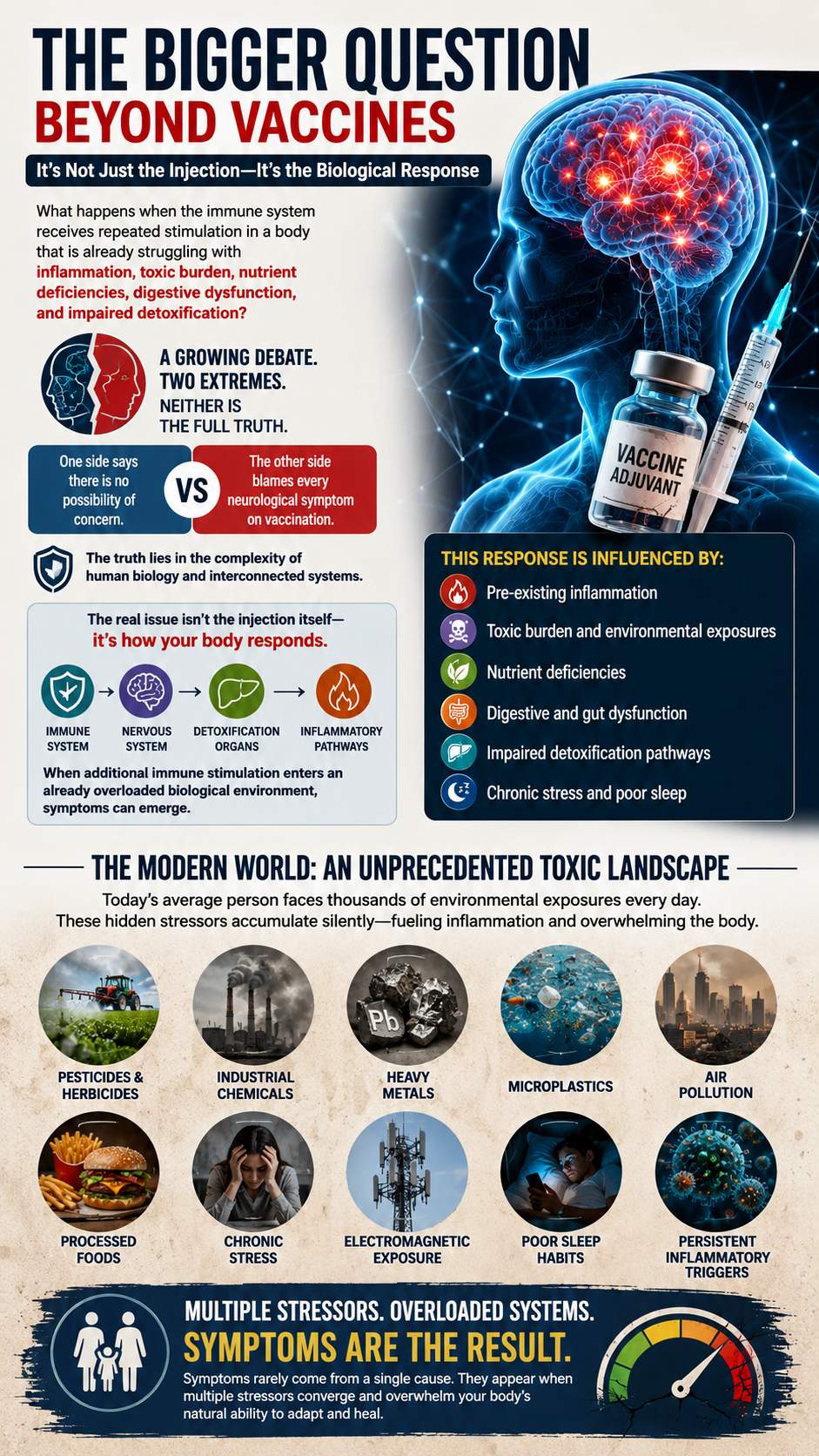
The modern world has created an unprecedented toxic landscape. Today’s average person encounters pesticides, herbicides, industrial chemicals, heavy metals, microplastics, air pollution, processed foods, chronic stress, electromagnetic exposure, poor sleep habits, and persistent inflammatory triggers every day. Unlike previous generations, modern humans accumulate thousands of environmental exposures before reaching adulthood. Against this backdrop, many individuals already possess activated inflammatory pathways long before receiving any medical intervention. Functional medicine recognizes this reality because symptoms rarely emerge from a single cause. Instead, symptoms arise when multiple stressors converge and overwhelm the body’s adaptive capacity. Understanding vaccine adjuvants requires understanding this broader context. Without that framework, the discussion becomes oversimplified and disconnected from biological reality.
Understanding What Vaccine Adjuvants Actually Do
An adjuvant is a substance designed to increase immune system activation. Manufacturers include adjuvants because antigens alone often fail to produce a strong enough immune response. Aluminum salts remain the most widely used adjuvants in traditional vaccines. Their purpose involves stimulating immune recognition and enhancing antibody production. Scientists developed these compounds to make vaccines more effective while reducing the amount of antigen required. From a pharmaceutical perspective, the strategy appears logical. A stronger immune response generally creates stronger immune memory.
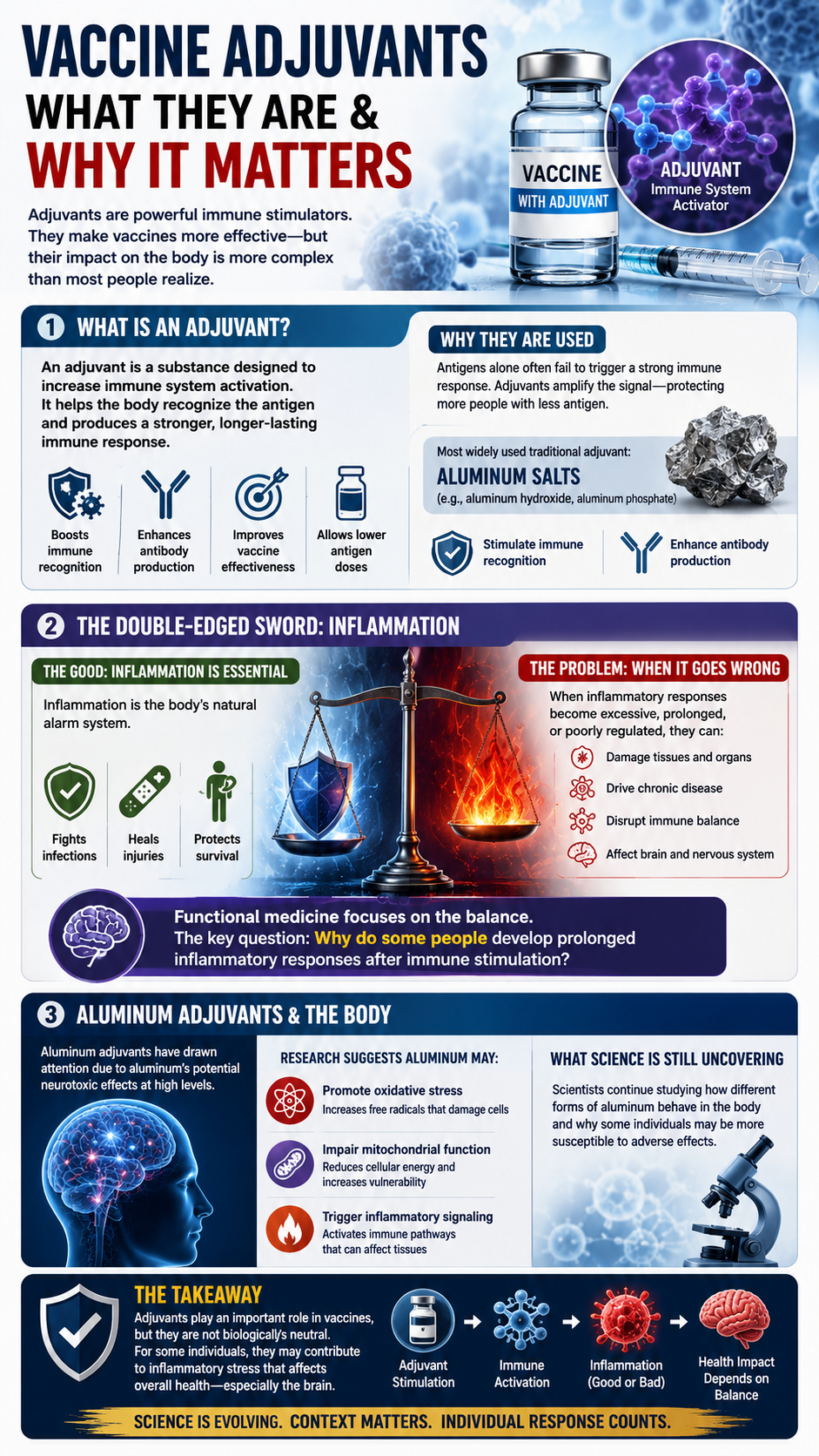
Problems arise when people misunderstand the role of adjuvants. These substances do not function as passive ingredients. Instead, they deliberately provoke immune activation. The desired effect involves inflammation. That fact surprises many people because inflammation often carries a negative connotation. Yet inflammation serves as the body’s natural alarm system. Without inflammation, humans could not fight infections, heal injuries, or survive environmental threats. The challenge emerges when inflammatory responses become excessive, prolonged, or poorly regulated. Functional medicine focuses heavily on this distinction because chronic inflammation drives many modern diseases. Therefore, the question becomes whether certain individuals experience prolonged inflammatory responses after immune stimulation and what biological factors influence that response.
Aluminum adjuvants have attracted particular attention because aluminum possesses known neurotoxic properties at sufficient concentrations. Research has demonstrated that aluminum can promote oxidative stress, mitochondrial dysfunction, and inflammatory signaling under certain conditions. Scientists continue investigating how different forms of aluminum behave within biological tissues and whether specific individuals possess greater susceptibility to adverse effects. While important questions remain unanswered, the broader literature consistently demonstrates that excessive aluminum accumulation can disrupt normal cellular function. This observation becomes especially relevant when discussing brain health because nervous tissue remains highly vulnerable to oxidative damage.
The Real Problem: Chronic Neuroinflammation
Most people focus on toxins themselves. Functional medicine focuses on the inflammation those toxins create. The true danger often lies not in the exposure but in the biological response that follows. Neuroinflammation refers to inflammation occurring within the central nervous system. This process involves activation of specialized immune cells called microglia. These cells act as the brain’s security force. Under healthy conditions, microglia remove damaged tissue, eliminate waste products, protect neurons, and maintain neurological function. Problems begin when these cells remain activated for extended periods.
Activated microglia release inflammatory cytokines, reactive oxygen species, excitatory neurotransmitters, and various signaling molecules. Initially, these compounds serve protective functions. Over time, however, chronic exposure can damage surrounding neurons, impair mitochondrial function, disrupt neurotransmitter balance, and interfere with cellular communication. Researchers have linked persistent microglial activation to cognitive decline, memory impairment, mood disorders, neurodegenerative disease, chronic fatigue, and numerous neurological symptoms. The body essentially becomes trapped in a state of perpetual alarm.
Imagine a neighborhood where emergency sirens never stop. Residents eventually become exhausted, stressed, and dysfunctional. A similar process occurs inside the brain during chronic neuroinflammation. The nervous system loses its ability to distinguish between immediate threats and background noise. Concentration declines. Memory suffers. Mood becomes unstable. Energy production falls. Recovery mechanisms weaken. Patients frequently describe brain fog, mental fatigue, headaches, poor focus, irritability, anxiety, and disrupted sleep. These symptoms often appear unrelated until viewed through the lens of neuroinflammation.
Where Brain Inflammation Really Comes From
Many people assume brain inflammation begins inside the brain. In reality, it often begins elsewhere. The digestive tract serves as one of the most common origins. Modern diets contain excessive sugar, refined carbohydrates, processed oils, artificial additives, and inflammatory compounds. These substances damage the intestinal barrier over time. Once that barrier becomes compromised, bacterial fragments and food-derived antigens enter circulation more easily. The immune system responds aggressively. Systemic inflammation rises. Eventually, inflammatory signals reach the brain and activate microglia.
Environmental toxins represent another major contributor. Heavy metals such as mercury, lead, cadmium, and arsenic can disrupt cellular metabolism and increase oxidative stress. Agricultural chemicals create additional burdens. Air pollution introduces microscopic particles capable of crossing biological barriers. Mold toxins further complicate the picture by stimulating immune responses and impairing mitochondrial function. Each exposure contributes to the body’s cumulative inflammatory burden. Rarely does a single toxin cause illness. More commonly, illness emerges when multiple exposures accumulate faster than the body can eliminate them.
Chronic psychological stress creates another overlooked source of neuroinflammation. Elevated cortisol initially helps the body adapt to challenges. Prolonged cortisol elevation eventually weakens resilience and promotes inflammatory signaling. Modern lifestyles expose people to continuous stress through financial pressures, information overload, social isolation, poor sleep habits, and excessive work demands. These factors alter immune regulation and increase vulnerability to inflammatory disorders. Consequently, many individuals enter adulthood with nervous systems already operating under significant strain.
How Brain Inflammation Damages the Body
Neuroinflammation rarely remains confined to the brain. Instead, it influences virtually every physiological system. One of the earliest consequences involves mitochondrial dysfunction. Mitochondria generate cellular energy through ATP production. Inflammatory compounds impair this process, reducing energy availability throughout the body. Patients often experience profound fatigue despite adequate sleep. They wake exhausted, struggle through the day, and rely increasingly on caffeine or stimulants.
Hormonal dysfunction frequently follows. The brain regulates thyroid hormones, adrenal hormones, reproductive hormones, appetite hormones, and metabolic signaling pathways. Inflammation disrupts these communication networks. Thyroid function may decline. Cortisol rhythms become abnormal. Insulin resistance develops more easily. Weight gain often accelerates despite dietary efforts. Patients become frustrated because traditional interventions fail to address the underlying inflammatory driver.
Cognitive performance also deteriorates. Neurotransmitter production depends upon healthy neurons, adequate nutrients, and balanced inflammatory signaling. Chronic inflammation interferes with serotonin, dopamine, acetylcholine, and GABA pathways. As a result, mood disorders become more common. Anxiety increases. Depression becomes harder to resolve. Memory lapses occur more frequently. Mental sharpness fades. Many patients describe feeling disconnected from their former selves. They know something has changed, yet standard laboratory testing often fails to identify the root cause.
Why Detoxification Matters
Detoxification represents one of the most misunderstood concepts in modern health. Many marketing campaigns portray detoxification as a short-term event involving juices, teas, or supplements. Biology tells a different story. Detoxification occurs every second of every day. The liver transforms toxins into excretable compounds. The kidneys filter waste from the bloodstream. The intestines eliminate metabolic byproducts. The skin removes substances through sweat. The lungs expel volatile compounds. These systems work continuously to maintain internal balance.
Problems arise when toxic exposure exceeds elimination capacity. Imagine pouring water into a sink faster than the drain can remove it. Eventually, overflow occurs. The same principle applies to human physiology. When toxic burden accumulates faster than detoxification pathways can function, symptoms emerge. Brain inflammation often represents one consequence of this imbalance. Therefore, functional medicine focuses on improving elimination capacity rather than simply avoiding exposure. Both strategies matter, but elimination remains essential.
Glutathione serves as a cornerstone of detoxification. Often called the master antioxidant, glutathione neutralizes free radicals and supports toxin removal. Chronic inflammation rapidly depletes glutathione reserves. Nutrient deficiencies further impair production. Individuals experiencing brain inflammation frequently benefit from strategies that enhance endogenous glutathione synthesis. Adequate protein intake, sulfur-containing foods, quality sleep, regular movement, and targeted nutritional support all contribute to healthier glutathione status.
Functional Detox Pathways You Can Support at Home
Recovery from chronic neuroinflammation begins by reducing incoming inflammatory signals while strengthening natural detoxification mechanisms. Nutrition provides the foundation. Processed foods promote oxidative stress and immune activation. Whole foods provide antioxidants, minerals, amino acids, and phytonutrients required for repair. Eliminating refined sugars and industrial seed oils often produces noticeable improvements in energy, cognition, and inflammatory markers.
Sleep represents another powerful intervention. During deep sleep, the glymphatic system becomes highly active. This specialized waste-removal network helps clear inflammatory proteins and metabolic debris from the brain. Poor sleep dramatically reduces this process. Consistent sleep schedules, dark sleeping environments, reduced evening screen exposure, and stress management techniques support neurological recovery. Few interventions offer greater benefits than restorative sleep.
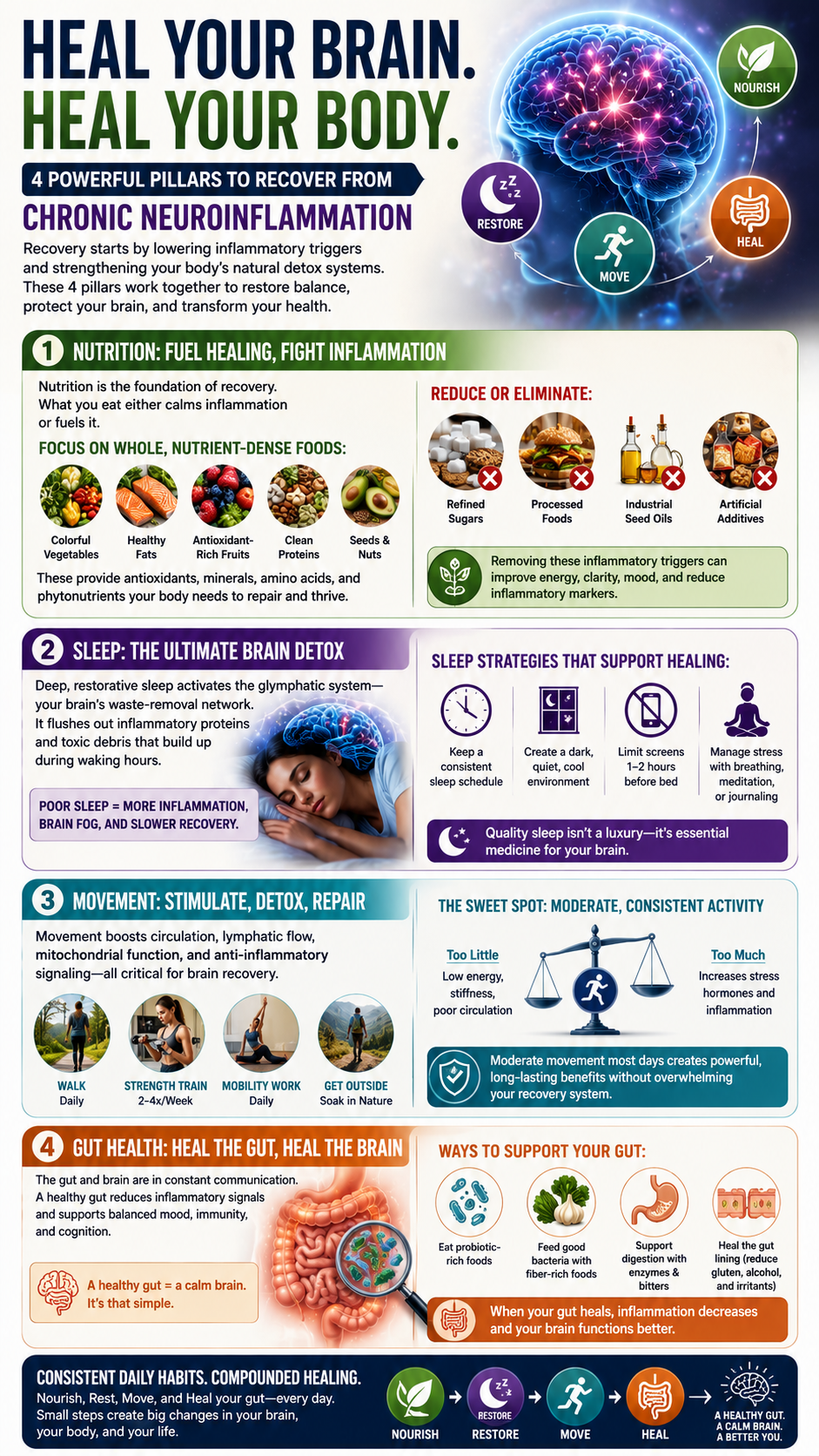
Movement also plays a crucial role. Exercise stimulates circulation, improves lymphatic drainage, enhances mitochondrial function, and promotes anti-inflammatory signaling. Moderate activity generally produces the greatest benefits. Excessive exercise can increase inflammation in susceptible individuals. Walking, resistance training, mobility work, and outdoor activity create powerful physiological advantages without overwhelming recovery systems.
Digestive health deserves equal attention. The gut and brain communicate continuously through immune, hormonal, and neurological pathways. Supporting beneficial microbial populations, improving digestion, and restoring intestinal integrity often reduce inflammatory signaling reaching the brain. Many patients notice cognitive improvements after addressing gastrointestinal dysfunction because the gut-brain axis influences nearly every aspect of neurological health.
A New Perspective on Brain Health
The conversation surrounding vaccine adjuvants and brain inflammation should not revolve around fear. Instead, it should encourage a deeper understanding of human biology. The body functions as an interconnected system. Immune activation, toxic burden, gut health, mitochondrial function, nutrient status, sleep quality, and stress resilience all influence neurological outcomes. Focusing exclusively on one exposure misses the larger story.
Brain inflammation rarely develops overnight. Years of accumulated stressors typically create the conditions that allow dysfunction to emerge. Vaccine adjuvants represent one piece of a much larger puzzle involving environmental toxicity, chronic inflammation, metabolic dysfunction, and impaired detoxification capacity. Recognizing this complexity allows individuals to pursue meaningful solutions rather than simplistic explanations.
The encouraging reality is that the brain possesses remarkable regenerative potential. Neuroplasticity allows adaptation. Mitochondria can recover. Inflammatory pathways can calm. Detoxification systems can improve. Gut integrity can be restored. Recovery often begins when individuals identify and remove sources of chronic stress while supporting the body’s innate healing mechanisms. That systems-based approach remains the foundation of functional medicine and offers the most comprehensive path toward long-term neurological health.