
The Diagnosis That Changes Everything—Or Does It?
Few diagnoses carry the quiet weight of high blood pressure, yet it is handed out with remarkable frequency and surprisingly little explanation. A patient sits down, a cuff tightens around the arm, and within seconds a number appears that can alter the course of their life. That number often leads directly to a prescription and a statement that sounds definitive: this is something you will likely deal with forever. What is rarely discussed in that moment is whether the body has truly lost its ability to regulate itself or whether it is responding intelligently to underlying stressors that have gone unaddressed for years. The framing of hypertension as a lifelong disease rather than a reversible physiological response has shaped the expectations of both patients and practitioners, creating a system where dependency becomes normalized before causation is ever explored.
The absence of curiosity around root cause is one of the most significant gaps in how high blood pressure is managed today. When a number becomes the focus, the story behind that number is often ignored. This leads to a cycle in which patients are treated based on readings rather than reasons, and the deeper imbalances driving those readings continue to progress quietly beneath the surface. Over time, this approach reinforces the belief that the condition itself is permanent, when in reality it may be the lifestyle and environmental inputs that have remained unchanged.
Understanding Blood Pressure Beyond the Numbers
Blood pressure is a dynamic measurement, not a static disease. It reflects the interaction between the heart, blood vessels, kidneys, nervous system, and hormonal pathways, all of which are constantly adjusting to internal and external conditions. The force exerted by blood against arterial walls is influenced by vascular elasticity, blood viscosity, fluid volume, and the signaling mechanisms that regulate contraction and relaxation. When pressure rises, it is often because the body is attempting to maintain adequate circulation in the face of resistance or imbalance.
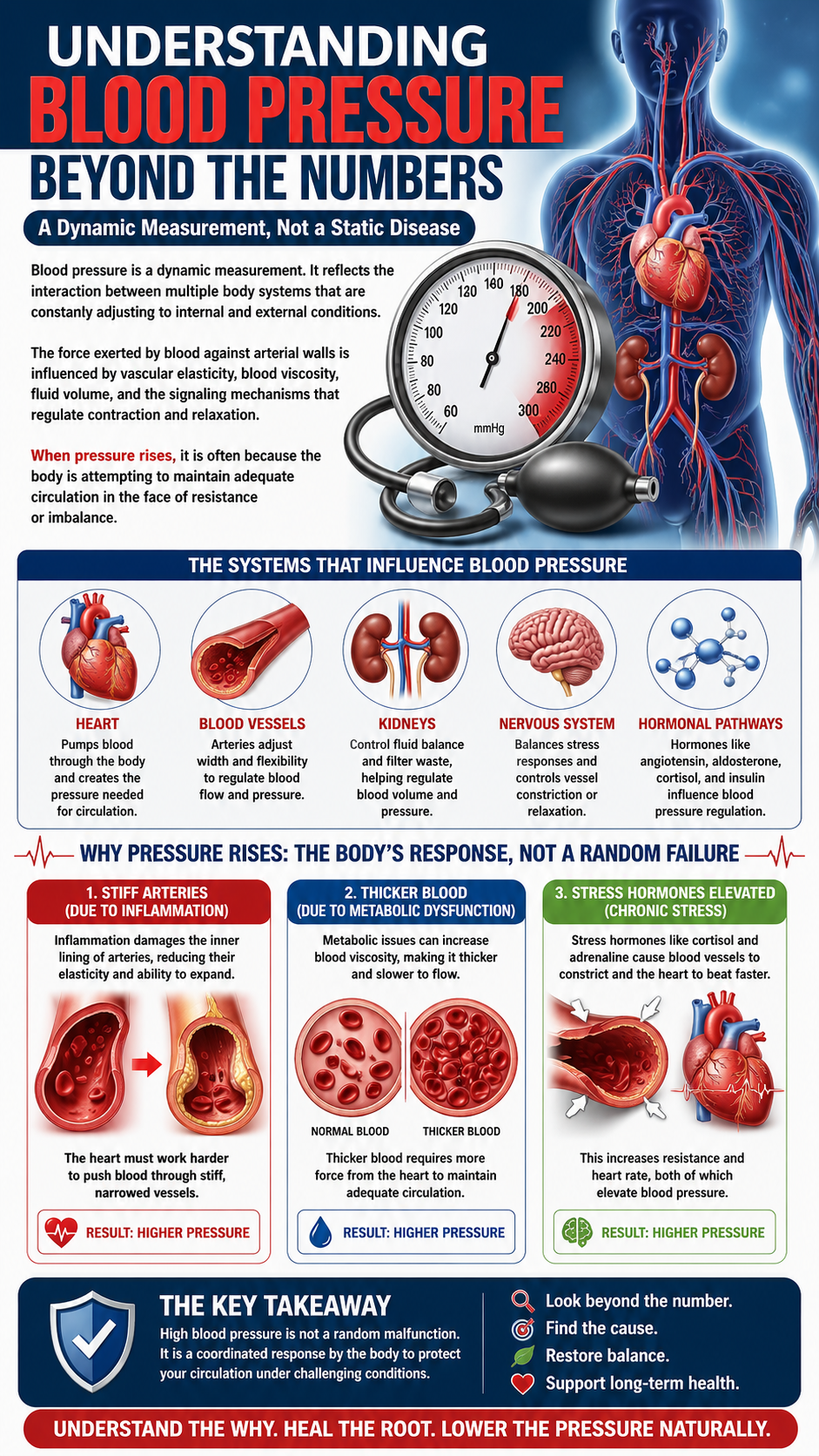
To understand hypertension properly, one must move beyond the simplistic view of high numbers. If arteries have become stiff due to inflammation, the heart must work harder to push blood through them. When blood has become thicker due to metabolic dysfunction, greater force is required to maintain flow. If stress hormones are elevated, they constrict vessels and increase heart rate, both of which elevate pressure. These are not random malfunctions but coordinated responses designed to preserve function under less-than-ideal conditions.
The Pharmaceutical Paradigm: Control Without Context
Modern medicine has developed a wide range of medications aimed at lowering blood pressure, each targeting a different aspect of cardiovascular physiology. These drugs can relax blood vessels, reduce heart rate, alter fluid balance, or block specific hormonal pathways. In many cases, they succeed in lowering the number on a blood pressure monitor, which is often considered the primary goal of treatment. However, lowering the number does not necessarily mean that the underlying problem has been resolved.
The limitation of this approach lies in its narrow focus. By concentrating on the symptom rather than the cause, it creates a scenario in which the visible issue is managed while the invisible drivers continue to operate. Inflammation, insulin resistance, nervous system imbalance, and toxic exposure are not corrected by medication alone. Instead, they persist, often worsening over time. This leads to a gradual escalation in treatment, with additional medications or higher doses required to maintain control. The result is not true healing but a form of managed stability that depends on continuous intervention.
The Lifelong Prescription Myth
The idea that blood pressure medication must be taken for life is deeply ingrained in modern healthcare, yet it is not universally true. This belief is rooted in a model that assumes chronic conditions are inherently progressive and irreversible. While this may be the case in certain situations, it does not account for the role of modifiable factors that contribute to disease development. When those factors are addressed, the trajectory of the condition can change significantly.
Many individuals are never given the opportunity to explore whether their blood pressure can improve through lifestyle and environmental changes. Instead, they are placed on medication early in the process, which can create a sense of dependency and reduce motivation to investigate alternative approaches. This does not mean that medication has no place in treatment, but it does mean that it should not be viewed as the only option or the final answer. The body has an inherent capacity to adapt and recover when the conditions that created dysfunction are removed.
The Hidden Origins of Hypertension
To understand how blood pressure can be lowered naturally, it is essential to identify the factors that drive it upward. One of the most significant contributors is chronic inflammation, which affects the inner lining of blood vessels and impairs their ability to relax. This inflammation is often the result of dietary patterns that include processed foods, refined sugars, and unhealthy fats, as well as environmental exposures that introduce toxins into the body. Over time, this inflammatory state leads to vascular stiffness and increased resistance, forcing the heart to generate more pressure.
Insulin resistance is another major factor, particularly in populations consuming high levels of carbohydrates and sugar. Elevated insulin levels promote sodium retention and increase blood volume, both of which contribute to higher pressure. Additionally, insulin influences the structure of blood vessels, leading to thickening and reduced flexibility. This creates a cycle in which metabolic dysfunction and hypertension reinforce each other.
The nervous system also plays a crucial role, especially in individuals experiencing chronic stress. When the body remains in a state of heightened alertness, it continuously releases hormones that constrict blood vessels and elevate heart rate. This state, known as sympathetic dominance, becomes the default mode for many people, preventing the body from entering the restorative parasympathetic state necessary for healing. Without addressing this imbalance, efforts to lower blood pressure may be limited in their effectiveness.
What Elevated Blood Pressure Is Doing to the Body
The long-term effects of high blood pressure extend far beyond the numbers recorded on a monitor. The constant force exerted against arterial walls leads to micro-damage, which the body attempts to repair through the deposition of cholesterol and calcium. This process results in the formation of plaques that narrow the arteries and reduce their flexibility, increasing the risk of cardiovascular events. The heart, forced to pump against this resistance, undergoes structural changes that can eventually impair its function.

The kidneys, which rely on precise pressure regulation to filter blood effectively, are also affected. Prolonged hypertension can damage the delicate structures within the kidneys, leading to reduced filtration capacity and further contributing to fluid imbalance. The brain is equally vulnerable, as weakened blood vessels increase the risk of stroke and reduced blood flow can impair cognitive function. These outcomes highlight the importance of addressing the root causes of hypertension rather than simply managing its symptoms.
The Possibility of Natural Lowering
Natural lowering of blood pressure is not a matter of chance but of strategy. It involves identifying and removing the factors that force the body to maintain elevated pressure. When these factors are addressed, the body often responds by recalibrating its systems and returning to a more balanced state. This process requires a comprehensive approach that considers diet, lifestyle, and environmental influences.
It is important to recognize that natural lowering does not mean abandoning medical care. Instead, it involves working alongside healthcare providers to create a plan that supports the body’s ability to heal. This may include gradual adjustments to medication as improvements are observed, ensuring that changes are made safely and effectively. The goal is not to reject conventional treatment but to expand the approach to include strategies that address the underlying causes of hypertension.
Rebuilding the Foundation: Actionable Steps for Restoration
Diet is one of the most powerful tools for influencing blood pressure, as it directly affects inflammation, insulin levels, and vascular health. Transitioning to a diet based on whole, unprocessed foods can reduce inflammatory markers and improve metabolic function. Eliminating refined sugars and excessive carbohydrates helps stabilize insulin levels, while incorporating healthy fats supports cellular integrity. Adequate protein intake is essential for tissue repair, and proper hydration ensures that blood maintains optimal viscosity.
Restoring mineral balance is another critical step, as nutrients such as magnesium and potassium play key roles in regulating vascular tone and fluid balance. Magnesium supports the relaxation of blood vessels and is often deficient in modern diets, making supplementation a valuable consideration. Potassium helps counteract the effects of sodium and supports proper nerve function, contributing to stable blood pressure levels.
Physical activity enhances cardiovascular health by improving vascular elasticity and metabolic efficiency. Regular movement, whether through walking, resistance training, or moderate aerobic exercise, provides significant benefits when performed consistently. The emphasis should be on sustainability rather than intensity, as excessive exertion can increase stress hormones in individuals who are already under significant strain.

Stress management is essential for restoring balance to the nervous system. Practices such as deep breathing, meditation, and spending time in natural environments help shift the body from a state of constant alertness to one of relaxation and recovery. Sleep plays a crucial role in this process, as it is during rest that the body performs many of its regulatory functions. Establishing a consistent sleep routine and creating an environment conducive to rest can significantly impact overall health.
Reducing exposure to environmental toxins supports the body’s natural detoxification processes. This includes choosing clean water sources, minimizing the use of plastics, and selecting personal care products free from harmful chemicals. Supporting the liver and kidneys through proper nutrition and hydration enhances their ability to eliminate toxins, reducing the burden on the body’s regulatory systems.
Monitoring progress through regular blood pressure measurements provides valuable insight into how lifestyle changes are affecting the body. Tracking trends over time allows individuals to see the impact of their efforts and make adjustments as needed. This information can also guide healthcare providers in making decisions about medication, ensuring that any changes are made safely.
Rethinking Dependency and Empowering Change
The concept of lifelong dependency on blood pressure medication is not an absolute truth but a reflection of a system that prioritizes symptom management over root cause resolution. By shifting the focus to the factors that drive hypertension, it becomes possible to create a pathway toward improved health and reduced reliance on medication. This requires a proactive approach, as well as a willingness to challenge assumptions and explore new possibilities.
The body is not inherently flawed, and it does not lose its ability to regulate itself without reason. When given the right conditions, it can adapt and recover in ways that are often underestimated. High blood pressure is a signal that something within the system needs attention, and by addressing that signal at its source, it is possible to move beyond management and toward true restoration.