The Silent Hormone Crisis Affecting Millions of Women
For more than half a century, the birth control pill has carried an image of freedom, convenience, and modern medical progress. Physicians prescribe it to teenage girls for acne, painful periods, irregular cycles, ovarian cysts, heavy bleeding, and mood swings. Millions of women take hormonal contraceptives believing they regulate hormones and improve long-term health. Pharmaceutical advertising continues reinforcing that message through television commercials, online campaigns, and medical marketing. Most women never hear the deeper biological story hiding beneath those polished promises.
The birth control pill does not regulate hormones in the way most people believe. Instead, it suppresses the body’s natural hormone communication system and replaces it with synthetic chemical signals. That distinction changes the entire conversation surrounding women’s health. A healthy menstrual cycle reflects proper communication between the brain, ovaries, adrenal glands, thyroid, liver, gut, and nervous system. Ovulation affects nearly every system inside the body, including metabolism, cardiovascular health, brain chemistry, bone density, immune function, fertility, and mood stability. Hormonal contraceptives interrupt that rhythm artificially.
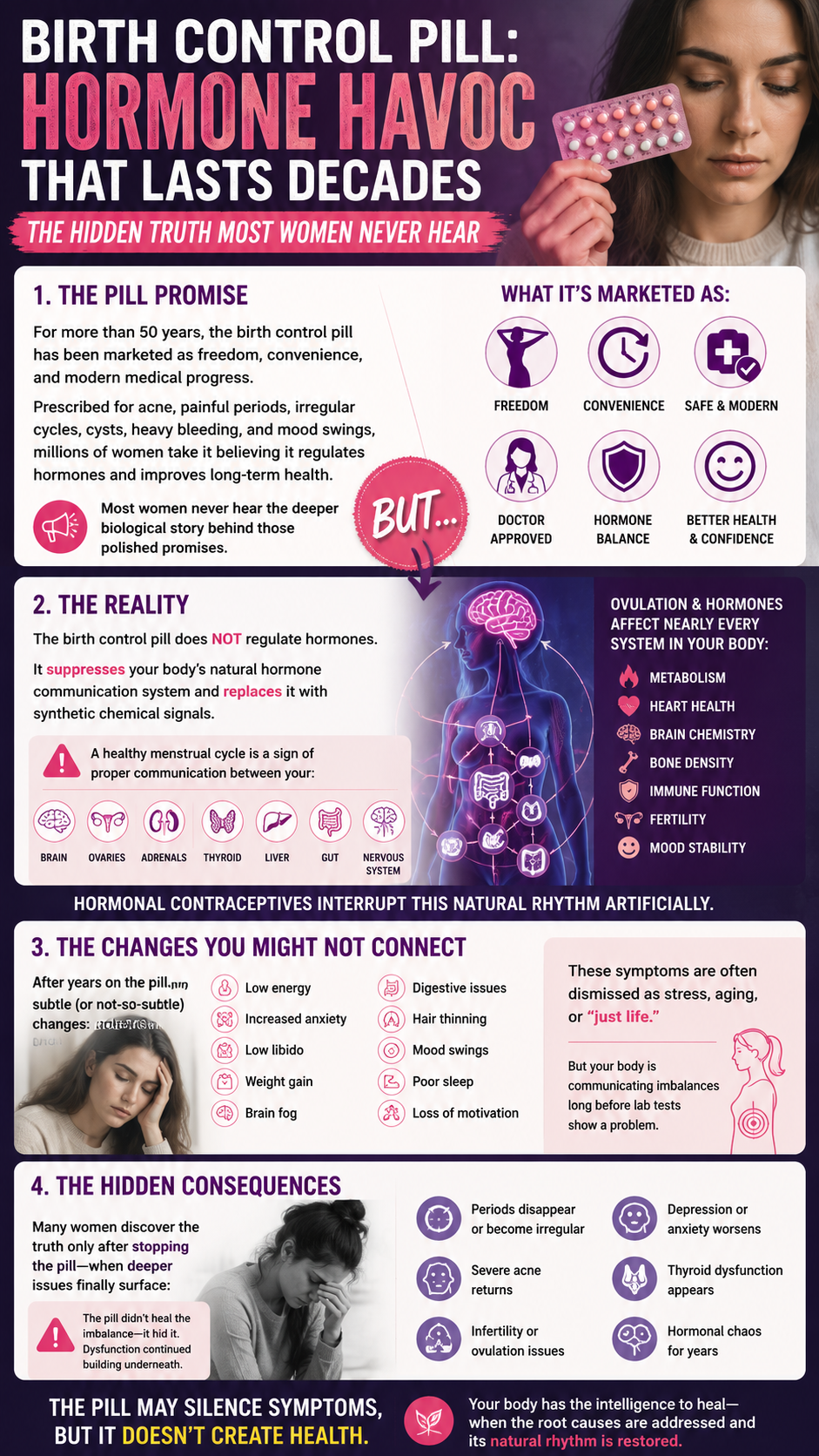
Many women sense something changes after several years on the pill, even if they cannot explain it clearly. Energy levels decline gradually. Anxiety increases quietly. Libido fades slowly. Weight becomes more difficult to manage. Brain fog appears unexpectedly. Digestion worsens progressively. Hair thins without explanation. Physicians often dismiss these symptoms as stress, aging, or unrelated health problems. Functional medicine approaches the issue differently because symptoms rarely appear randomly. The body communicates dysfunction long before laboratory markers become abnormal.
Women often discover the real consequences after stopping hormonal birth control years later. Menstrual cycles disappear completely. Severe acne erupts suddenly. Infertility appears unexpectedly. Depression worsens dramatically. Thyroid dysfunction surfaces without warning. In many cases, the original hormonal imbalance never healed underneath the chemical suppression. The pill simply silenced the warning signs while deeper dysfunction continued developing for years beneath the surface.
Where the Hormone Problem Really Begins
The modern hormone crisis did not begin solely with birth control pills. The deeper problem started when medicine shifted away from investigating root causes and embraced symptom suppression as primary healthcare. Functional medicine recognizes that hormones rarely malfunction without an underlying reason. Hormonal symptoms often reflect inflammation, nutrient depletion, blood sugar instability, toxic overload, gut dysfunction, chronic stress, liver congestion, or nervous system imbalance. Conventional medicine frequently ignores those foundational drivers completely.
When a teenage girl develops painful periods, mainstream medicine often prescribes hormonal contraceptives immediately. Very few physicians investigate inflammatory food sensitivities, magnesium deficiency, insulin resistance, thyroid dysfunction, pesticide exposure, or gut permeability. The body receives a synthetic hormone prescription instead of a complete physiological evaluation. That prescription may continue for ten or twenty years without anyone asking why symptoms appeared initially.
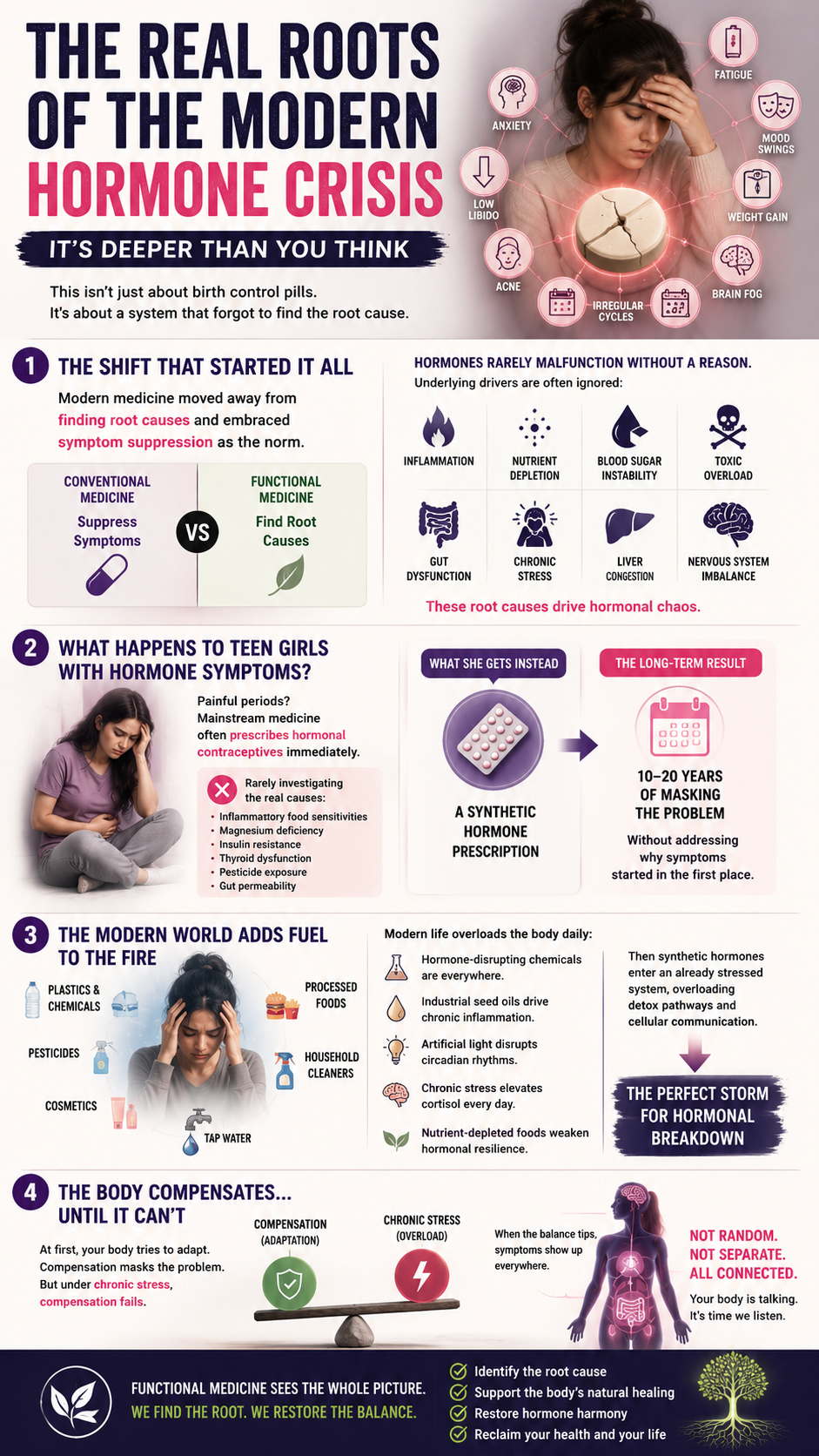
Modern environmental conditions worsen this crisis dramatically. Women now encounter hormone-disrupting chemicals through plastics, cosmetics, pesticides, tap water, processed foods, and household cleaners every day. Industrial seed oils drive chronic inflammation aggressively. Artificial lighting disrupts circadian rhythms continuously. Chronic psychological stress elevates cortisol daily. Nutrient-depleted foods weaken hormonal resilience further. Then synthetic hormones enter an already stressed endocrine system, creating additional burden on detoxification pathways and cellular communication.
The body compensates remarkably well for a period of time. Eventually, compensation mechanisms begin failing under chronic stress. Symptoms then emerge throughout multiple body systems simultaneously. Functional medicine recognizes those symptoms as interconnected signals instead of isolated medical problems requiring separate medications.
How Synthetic Hormones Disrupt Natural Hormone Communication
Many women believe birth control pills affect only fertility and menstruation. Hormones, however, influence every organ system throughout the human body. Synthetic hormones alter neurological signaling, liver detoxification, thyroid activity, gut bacteria, immune responses, blood sugar regulation, vascular health, and brain chemistry simultaneously. The endocrine system functions as one interconnected communication network. Disrupting one hormonal pathway inevitably affects the entire system.
Synthetic estrogens and progestins differ structurally from natural human hormones. Those structural differences matter significantly because the body responds differently to synthetic compounds than to bioidentical hormones produced naturally through ovulation. Natural progesterone calms the nervous system, protects brain tissue, reduces inflammation, supports sleep quality, and balances estrogen activity. Many synthetic progestins fail to produce those same protective effects. Some synthetic compounds may even worsen depression, anxiety, insulin resistance, and inflammatory stress.
Functional medicine understands that pharmaceutical chemistry attempts to imitate biology but can never fully replicate the body’s intricate hormonal intelligence. The liver must process every synthetic hormone repeatedly through detoxification pathways. At the same time, the liver already handles medications, alcohol, environmental toxins, pesticides, preservatives, and metabolic waste products continuously. Over time, hormonal contraceptives can overwhelm detoxification capacity significantly. Estrogen metabolites may accumulate improperly, creating inflammatory stress throughout tissues and organs.
Women often experience symptoms associated with estrogen dominance despite taking medications intended to “balance hormones.” Breast tenderness, migraines, mood swings, water retention, fibroids, heavy bleeding, and stubborn weight gain commonly appear. Conventional medicine frequently treats those symptoms separately without recognizing the underlying hormonal disruption developing underneath.
The Birth Control Pill and Chronic Inflammation
Inflammation drives nearly every chronic disease affecting modern society today. Functional medicine identifies inflammation as a foundational cause of hormonal dysfunction, autoimmune disease, cardiovascular disease, thyroid disorders, metabolic syndrome, infertility, depression, and neurodegenerative decline. Hormonal contraceptives may contribute to inflammatory stress through several biological mechanisms.
Synthetic hormones can increase oxidative stress inside cells gradually over time. Oxidative stress damages mitochondria, disrupts energy production, accelerates tissue aging, and weakens cellular repair mechanisms. Inflammatory cytokines may rise progressively, creating low-grade chronic inflammation throughout the body. Blood clotting factors may increase as well, helping explain the elevated stroke and clotting risks associated with hormonal contraceptive use.
Women rarely connect chronic inflammation to hormonal birth control because symptoms often develop slowly across several years. Migraines may emerge gradually. Joint pain may appear unexpectedly. Autoimmune conditions may surface later in life. Fatigue often worsens progressively until daily function becomes difficult. Physicians frequently treat each symptom independently without recognizing the inflammatory pattern underneath the surface.
Inflammation also interferes with insulin signaling significantly. Insulin resistance now affects millions of women globally and contributes to weight gain, ovarian dysfunction, acne, androgen excess, and metabolic disease. Many women notice increasing abdominal fat accumulation while taking hormonal contraceptives despite exercising regularly and restricting calories. Mainstream medicine often blames aging or poor discipline. Functional medicine instead investigates inflammatory stress, insulin dysfunction, and hormonal disruption simultaneously.
Nutrient Depletion Caused by Long-Term Birth Control Use
Very few women receive warnings regarding nutrient depletion before starting hormonal contraceptives. Yet nutrient depletion represents one of the most overlooked consequences of long-term birth control use. The body requires vitamins and minerals constantly to metabolize synthetic hormones and maintain healthy cellular function. Over time, hormonal contraceptives can drain essential nutrient reserves profoundly.
Magnesium depletion affects hundreds of biochemical reactions involving sleep, nervous system regulation, blood sugar balance, cardiovascular function, muscle relaxation, and energy production. Women deficient in magnesium commonly experience anxiety, insomnia, migraines, muscle tension, palpitations, constipation, and chronic fatigue. Hormonal birth control may lower magnesium levels significantly after years of continuous use.
Zinc depletion creates additional hormonal problems because zinc supports thyroid conversion, fertility, immune function, wound healing, skin health, and hormone production. Low zinc levels often contribute to acne, hair thinning, weakened immunity, poor stress tolerance, and impaired ovulation. Selenium depletion may impair thyroid protection and increase oxidative stress throughout tissues.
B vitamin deficiencies commonly appear during long-term hormonal contraceptive use as well. Vitamin B6 supports neurotransmitter production and progesterone balance. Folate and vitamin B12 regulate methylation, detoxification, neurological health, and red blood cell production. Deficiencies can contribute to depression, fatigue, brain fog, irritability, and elevated homocysteine levels.
Most women never connect these symptoms to birth control pills because conventional medicine rarely discusses nutrient depletion openly. Instead, many women receive additional medications for anxiety, insomnia, acid reflux, depression, headaches, or fatigue while the underlying deficiencies continue worsening silently beneath the surface.
The Gut-Hormone Connection Most Doctors Ignore
The gut and hormonal system maintain constant communication through the immune system, nervous system, and endocrine pathways. Functional medicine often describes the gut as the foundation of health because gut function influences inflammation, neurotransmitter production, detoxification, immunity, and estrogen metabolism directly. Hormonal contraceptives may disrupt gut health profoundly over time.
Research increasingly shows that birth control pills can alter the gut microbiome significantly. Beneficial bacterial diversity may decline while inflammatory microbes increase gradually. Intestinal permeability, commonly called leaky gut syndrome, may worsen substantially. When the intestinal lining becomes damaged, food proteins, bacterial toxins, and inflammatory compounds enter circulation more easily. The immune system responds aggressively, creating systemic inflammation throughout the body.
Women often notice worsening digestive symptoms during hormonal contraceptive use. Bloating, constipation, reflux, IBS symptoms, food sensitivities, yeast overgrowth, and abdominal discomfort commonly appear. Conventional medicine rarely connects those symptoms to hormonal suppression. Functional medicine recognizes the relationship immediately because gut dysfunction and hormone imbalance frequently develop together.
The gut also plays a major role in estrogen detoxification. Specific gut bacteria help eliminate excess estrogen from the body efficiently. When microbial imbalance develops, estrogen metabolites may recirculate repeatedly instead of leaving through normal detoxification pathways. Women may then experience breast tenderness, heavy bleeding, fibroids, mood swings, migraines, and water retention associated with estrogen dominance.
Healing hormones without addressing gut health rarely produces lasting improvement because inflammation continues disrupting hormonal communication underneath.
How the Birth Control Pill Impacts Brain Chemistry and Mental Health
Many women describe profound emotional changes after beginning hormonal birth control. Some experience increasing anxiety, panic attacks, irritability, or depression. Others report emotional numbness, reduced motivation, lower libido, or diminished attraction toward their partners. Conventional medicine often dismisses these experiences despite growing evidence connecting hormonal contraception to neurological and psychological changes.
Estrogen and progesterone interact closely with serotonin, dopamine, GABA, and cortisol pathways inside the brain. Synthetic hormones alter those interactions continuously. Natural progesterone supports calming neurological effects through GABA receptor modulation. Many synthetic progestins fail to produce those protective effects and may instead increase neurological stress responses.
Brain inflammation may increase simultaneously through oxidative stress and nutrient depletion. Functional medicine recognizes that chronic inflammation strongly influences mood disorders, anxiety, cognitive decline, and emotional instability. The brain responds quickly to inflammatory stress, blood sugar dysfunction, toxic overload, and nutrient deficiencies. Hormonal contraceptives may influence all four areas simultaneously.
Teenage girls remain especially vulnerable because the adolescent brain continues developing actively during those years. Hormonal manipulation during critical developmental periods may influence emotional regulation, stress resilience, and neurological adaptation more profoundly than most people realize. Women deserve honest conversations regarding these potential risks rather than blanket reassurances dismissing their lived experiences.
Why Fertility Problems Often Appear After Stopping the Pill
One of the most common misconceptions surrounding hormonal contraception involves fertility recovery. Many women hear that fertility returns immediately after discontinuing the pill. While some women conceive quickly, others struggle with infertility, missing cycles, ovarian dysfunction, and severe hormonal imbalance for years afterward.
Functional medicine frequently sees women whose underlying hormonal dysfunction remained hidden during contraceptive use. The pill did not heal irregular periods, insulin resistance, thyroid dysfunction, chronic inflammation, or adrenal stress. Instead, hormonal suppression concealed those symptoms temporarily. Once the pill disappears, the original dysfunction often returns more aggressively than before.
Post-birth-control syndrome now affects countless women worldwide. Symptoms commonly include missing periods, infertility, cystic acne, hair loss, severe PMS, estrogen dominance, chronic fatigue, anxiety, and thyroid dysfunction. The endocrine system may require significant support during recovery because years of suppression disrupt communication between the hypothalamus, pituitary gland, ovaries, thyroid, adrenal glands, liver, and nervous system.
Functional medicine focuses on restoring physiological function rather than suppressing symptoms again through additional medications. Healing hormonal pathways requires patience because the endocrine system operates through feedback loops and biological rhythms rather than instant reactions.
The Functional Medicine Natural Reset for Hormonal Recovery
Healing from hormonal contraceptive damage requires far more than simply stopping the pill. Functional medicine focuses on rebuilding physiology systematically by reducing inflammation, replenishing nutrients, improving detoxification, healing the gut, balancing blood sugar, and restoring nervous system resilience. The goal involves rebuilding natural ovulation and healthy hormonal communication rather than masking symptoms again.
Blood sugar stabilization becomes essential during hormonal recovery because insulin strongly influences ovarian function and inflammatory pathways. Processed carbohydrates, refined sugar, industrial seed oils, soda, and ultra-processed foods drive insulin resistance aggressively. Women healing hormonally should prioritize protein-rich meals containing healthy fats and fiber. Grass-fed meats, pasture-raised eggs, wild fish, avocados, olive oil, vegetables, berries, and mineral-rich foods provide stable fuel for hormone production.
Nutrient restoration also plays a major role in recovery. Magnesium glycinate supports nervous system repair and sleep quality. Zinc helps restore ovulation, thyroid function, and skin health. Selenium protects thyroid tissue and reduces oxidative stress. Omega-3 fats lower inflammation throughout the body. Methylated B vitamins support detoxification and neurotransmitter balance. Functional medicine emphasizes nutrient-dense whole foods because the body rebuilds hormones from raw biological materials.
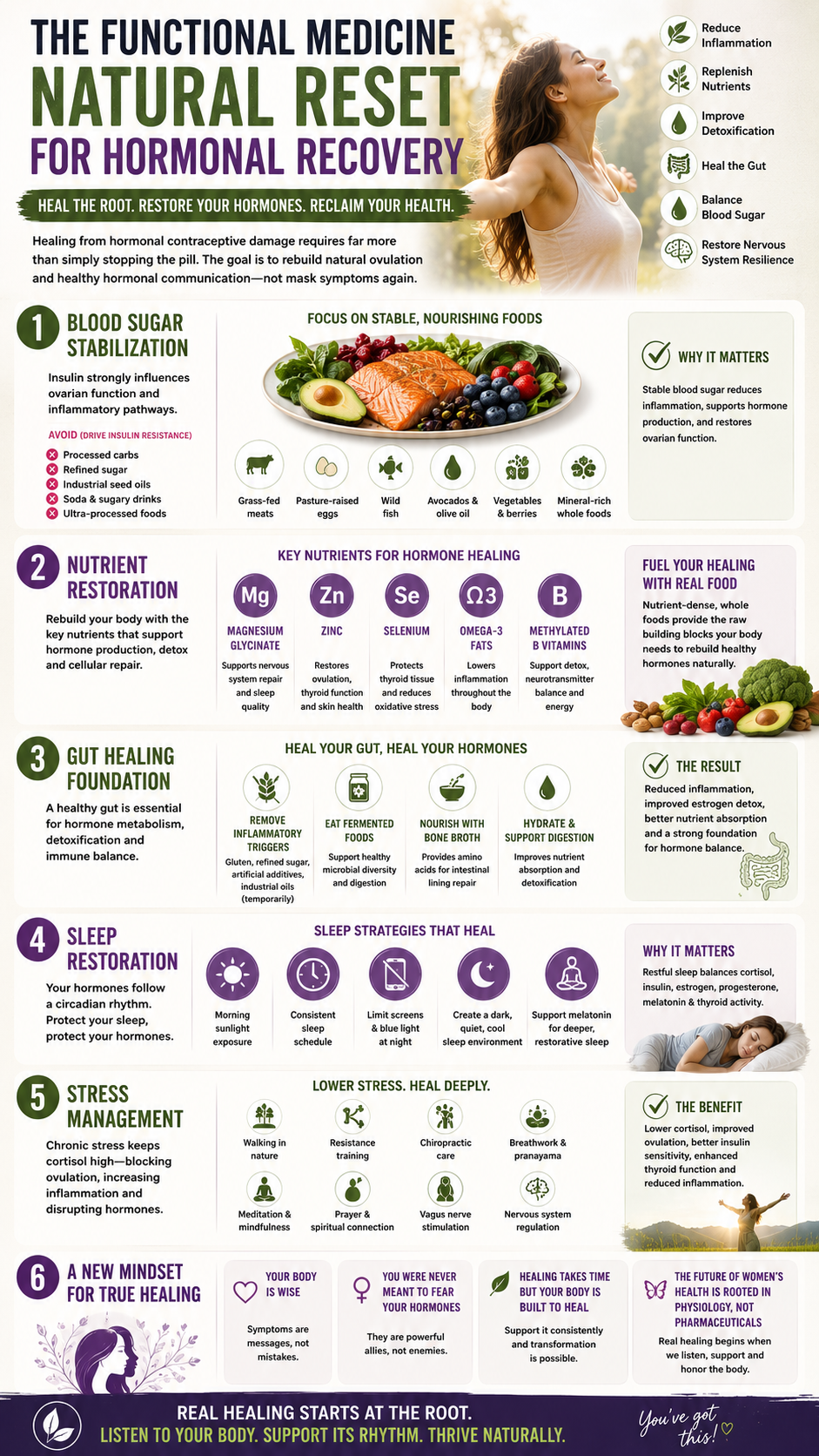
Gut healing remains equally important because chronic intestinal inflammation disrupts hormone metabolism continuously. Many women benefit from removing inflammatory foods such as gluten, refined sugar, artificial additives, and industrial oils temporarily. Fermented foods support microbial diversity naturally while bone broth provides amino acids supporting intestinal repair. Proper hydration and digestive support improve nutrient absorption and detoxification simultaneously.
Sleep restoration influences every hormonal pathway inside the body. The endocrine system follows circadian rhythms carefully. Artificial light exposure, poor sleep quality, and nighttime screen use disrupt cortisol, insulin, estrogen, progesterone, melatonin, and thyroid activity simultaneously. Women recovering hormonally should prioritize morning sunlight exposure, consistent sleep schedules, and reduced nighttime blue light exposure.
Stress management cannot remain optional during hormone healing because chronic stress elevates cortisol continuously. Elevated cortisol suppresses ovulation, worsens insulin resistance, impairs thyroid conversion, and increases inflammation throughout the body. Functional medicine often incorporates walking, resistance training, chiropractic care, breathwork, prayer, meditation, vagus nerve stimulation, and nervous system regulation techniques into recovery protocols.
The body possesses remarkable healing capacity when foundational physiology receives proper support consistently over time. Women were never designed to fear their hormones or silence them indefinitely. The female body operates through intricate intelligence developed over thousands of years. Symptoms often represent biological messages asking for attention rather than inconveniences requiring suppression.
The future of women’s health must move beyond pharmaceutical masking and return toward physiological understanding. Functional medicine recognizes that symptom suppression alone can never create vibrant health. Real healing begins when the body’s signals receive respect instead of silence.