
The Age on Your Birth Certificate May Be the Least Important Number
Two people can turn sixty during the same week and carry dramatically different bodies into that birthday. One climbs stairs easily, maintains strong muscles, thinks clearly, sleeps deeply, and recovers quickly after exercise. The other struggles with fatigue, abdominal weight gain, weakness, poor sleep, brain fog, and rising blood sugar. Their chronological ages are nearly identical, yet their physiological conditions appear separated by decades. That contrast exposes an uncomfortable truth about aging. The number of years you have lived does not reveal how well your body has survived them.
Chronological age measures elapsed time from birth. It tells us when someone entered the world and how many birthdays followed. However, it cannot measure insulin sensitivity, mitochondrial health, muscle strength, vascular function, inflammatory burden, or neurological resilience. A calendar cannot reveal whether someone has spent thirty years sedentary or remained physically active. Neither can it show decades of smoking, chronic sleep deprivation, severe metabolic dysfunction, or excellent health habits. Chronological age tells us how much time has passed, but biological age tries to describe what that time has done.
Biological age has therefore become one of the most compelling subjects in longevity science. Researchers now study patterns within DNA, blood chemistry, proteins, metabolites, immune cells, organ function, body composition, and physical performance. Sophisticated algorithms compare these measurements with patterns found among large groups of people. The goal involves estimating whether the body appears biologically older or younger than expected. Some newer methods go further by attempting to calculate how quickly aging is occurring.
The idea sounds revolutionary because it challenges the belief that aging happens at one predetermined speed. Yet biological-age science remains far more complicated than many commercial advertisements suggest. There is no universally accepted biological-age test that measures every dimension of aging. Different clocks examine different signals and can produce different results from the same person. The real opportunity may therefore lie somewhere deeper than obtaining a fascinating number. We should ask what biological forces are making someone age faster and whether those forces can change.
Chronological Age Measures Time, Not Physiological Condition
Imagine two houses built during the same year. One receives constant maintenance, proper ventilation, careful repairs, and protection from moisture. The second develops leaks, mold, structural stress, neglected wiring, and foundation problems. Fifty years later, both structures remain exactly fifty years old. Their chronological ages match perfectly, while their functional conditions differ dramatically.
Human physiology follows a similar principle, although the body is vastly more complex. Genetics establishes part of our biological foundation, while daily exposures continually modify our internal environment. Nutrition, sleep, exercise, psychological stress, smoking, infections, metabolic health, toxins, hormones, medications, and relationships all influence physiology. Their effects accumulate across years and eventually shape the way someone experiences aging.
This explains why two people with identical birthdays can possess very different health trajectories. One person may retain excellent cardiovascular fitness but lose substantial muscle mass. Another can preserve strength while developing severe insulin resistance. Someone else may maintain normal glucose levels while experiencing declining neurological or vascular health. Aging does not strike every organ at exactly the same rate.
That reality creates the first major problem with the idea of one biological-age number. The body does not possess one universal aging dial. It contains multiple interconnected systems that influence each other continuously. Metabolism affects blood vessels, while skeletal muscle influences glucose control. Sleep affects hormones, immune regulation, appetite, and cognitive function. When several systems deteriorate simultaneously, biological aging can accelerate across the entire organism.
What Is Actually Aging Inside the Human Body?
Aging begins long before someone notices wrinkles or gray hair. Changes occur inside cells decades before outward signs become obvious. DNA accumulates damage while mechanisms responsible for genomic maintenance gradually change. Epigenetic patterns shift, influencing how cells regulate gene activity. Damaged proteins accumulate when cellular recycling becomes less efficient. Mitochondria can lose function while cellular energy production becomes less adaptable.
Scientists have grouped many of these processes into what they call the hallmarks of aging. These include genomic instability, telomere attrition, epigenetic alterations, and loss of protein maintenance. Other hallmarks involve mitochondrial dysfunction, cellular senescence, altered nutrient sensing, and stem-cell exhaustion. Researchers also recognize chronic inflammation, impaired cellular recycling, disrupted communication, and changes within the microbiome. These processes rarely occur independently because each one can intensify another.
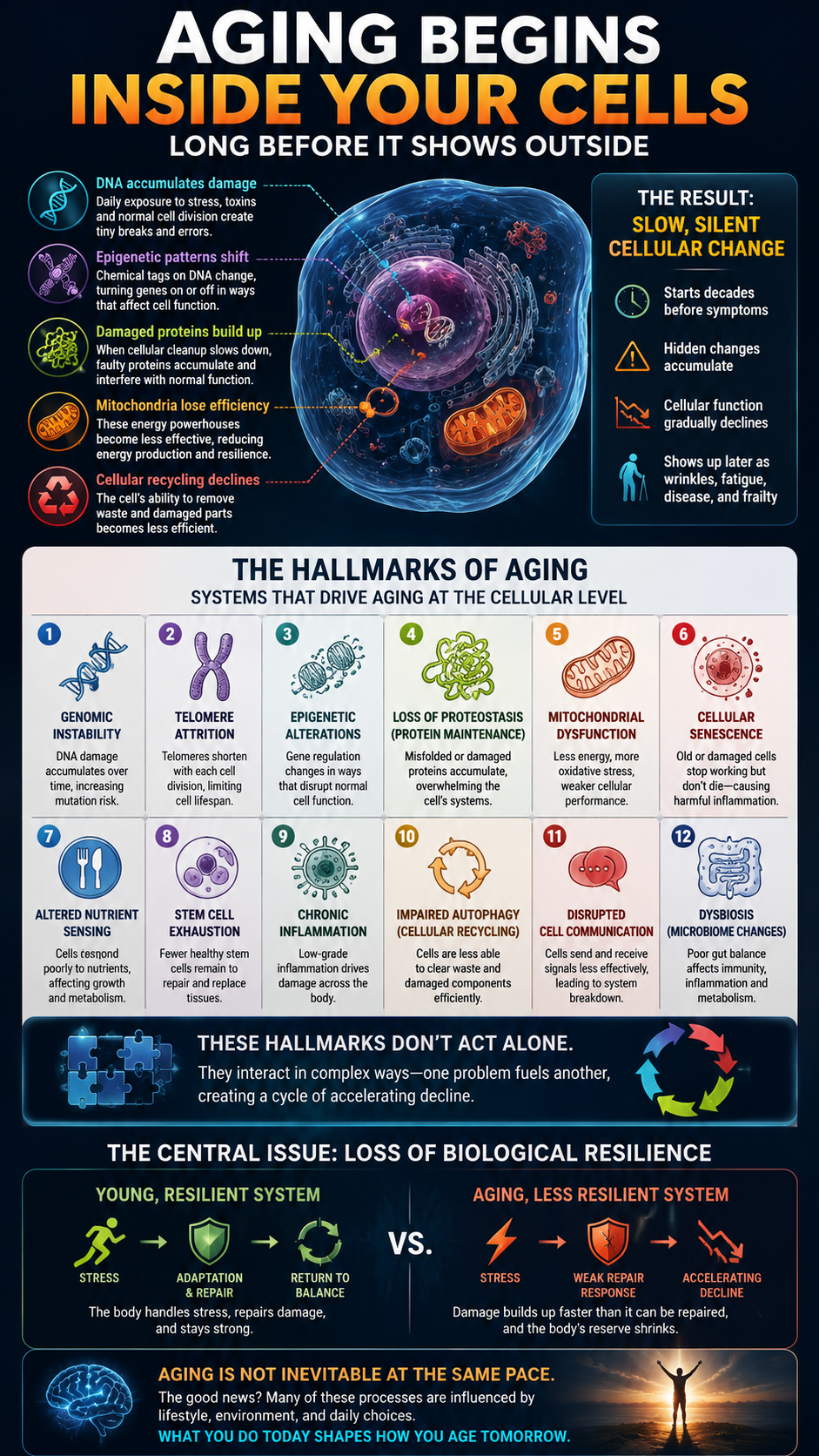
Cellular senescence provides an important example. Senescent cells no longer behave like healthy, functioning cells, yet they can remain metabolically active. Some release inflammatory molecules that influence surrounding tissues. When these cells accumulate, the local environment can become increasingly dysfunctional. Aging therefore involves more than damaged cells. It can also involve altered communication between damaged cells and otherwise healthy tissues.
Mitochondrial dysfunction creates another chain reaction. Mitochondria help convert nutrients into usable cellular energy while coordinating many additional functions. When mitochondrial performance declines, tissues may become less efficient and less adaptable. Poor mitochondrial function can also alter oxidative signaling and metabolic regulation. Over time, those changes can affect muscle, brain, heart, liver, and immune function.
The central problem involves losing biological resilience. Healthy systems experience stress, respond appropriately, repair damage, and return toward balance. Aging systems become less capable of completing that cycle. Damage accumulates faster while repair becomes slower or less complete. Eventually, the body’s reserve begins shrinking.
The Real Problem: Accelerated Aging Is Often Built Over Decades
Many people imagine aging as something that suddenly begins after fifty or sixty. In reality, accelerated biological aging can develop much earlier. The process often begins quietly through repeated metabolic, inflammatory, neurological, and environmental stress. Each individual exposure may appear insignificant during a single day. The cumulative effect across twenty or thirty years can become enormous.
Modern lifestyles create a unique environment for these pressures. Refined foods provide concentrated energy with little metabolic effort. Sedentary living removes the physical challenges that once stimulated muscle and mitochondria. Artificial light extends the day while reducing natural circadian signals. Chronic psychological stimulation keeps many people mentally activated from morning until bedtime.
Sleep often deteriorates at the same time. Someone may spend years sleeping five or six fragmented hours each night. Glucose regulation becomes less efficient while appetite signaling shifts. Exercise becomes harder because energy declines. Weight increases, breathing during sleep worsens, and sleep quality falls even further.
These problems rarely remain isolated. Metabolic dysfunction promotes visceral fat accumulation, which can increase inflammatory signaling. Chronic inflammation can impair insulin action and vascular health. Weakening muscles reduce glucose disposal and physical capacity. Poor fitness then makes movement increasingly difficult, feeding the cycle again.
Accelerated aging therefore develops through interconnected feedback loops. One problem strengthens another until the body begins behaving older than its chronological age suggests. The damage rarely comes from one villain. It comes from systems losing their ability to compensate.
Insulin Resistance May Be Aging the Body Before Diabetes Appears
One of the most overlooked drivers of accelerated aging involves impaired metabolic regulation. Insulin resistance often develops long before someone receives a diabetes diagnosis. During early stages, the pancreas compensates by producing larger amounts of insulin. Blood glucose may therefore remain within a conventional reference range for years. The numbers look reassuring while the metabolic machinery works increasingly harder.
Persistent insulin resistance affects far more than blood sugar. Elevated insulin can promote fat storage and make access to stored energy more difficult. Visceral fat begins accumulating around abdominal organs. Triglycerides may rise while HDL patterns change. Fat can accumulate within the liver, further worsening metabolic regulation.
The vascular system also pays a price. Chronically elevated glucose increases glycation and can damage proteins throughout the body. Endothelial function may decline while arterial stiffness increases. Hypertension often appears alongside insulin resistance and abdominal obesity. These changes can move cardiovascular physiology toward an older biological profile.
Muscle plays an important role because skeletal muscle serves as a major destination for circulating glucose. Losing muscle reduces one of the body’s largest glucose-disposal systems. Physical inactivity compounds that problem by reducing muscular demand. The resulting metabolic environment can make someone chronologically young while biologically deteriorating.
Chronic Inflammation Can Turn Aging Into a Smoldering Fire
Inflammation is not inherently harmful. It protects against infection, coordinates tissue repair, and participates in adaptation after exercise. Without inflammation, survival would become impossible. The problem begins when inflammatory signaling remains elevated long after the original trigger should have disappeared.
Researchers often describe persistent age-related inflammation as inflammaging. Chronic inflammatory signaling can influence blood vessels, insulin sensitivity, brain function, immune regulation, and skeletal muscle. Yet inflammation should not simply be suppressed without understanding its source. An elevated inflammatory signal often tells us that something continues provoking the system.
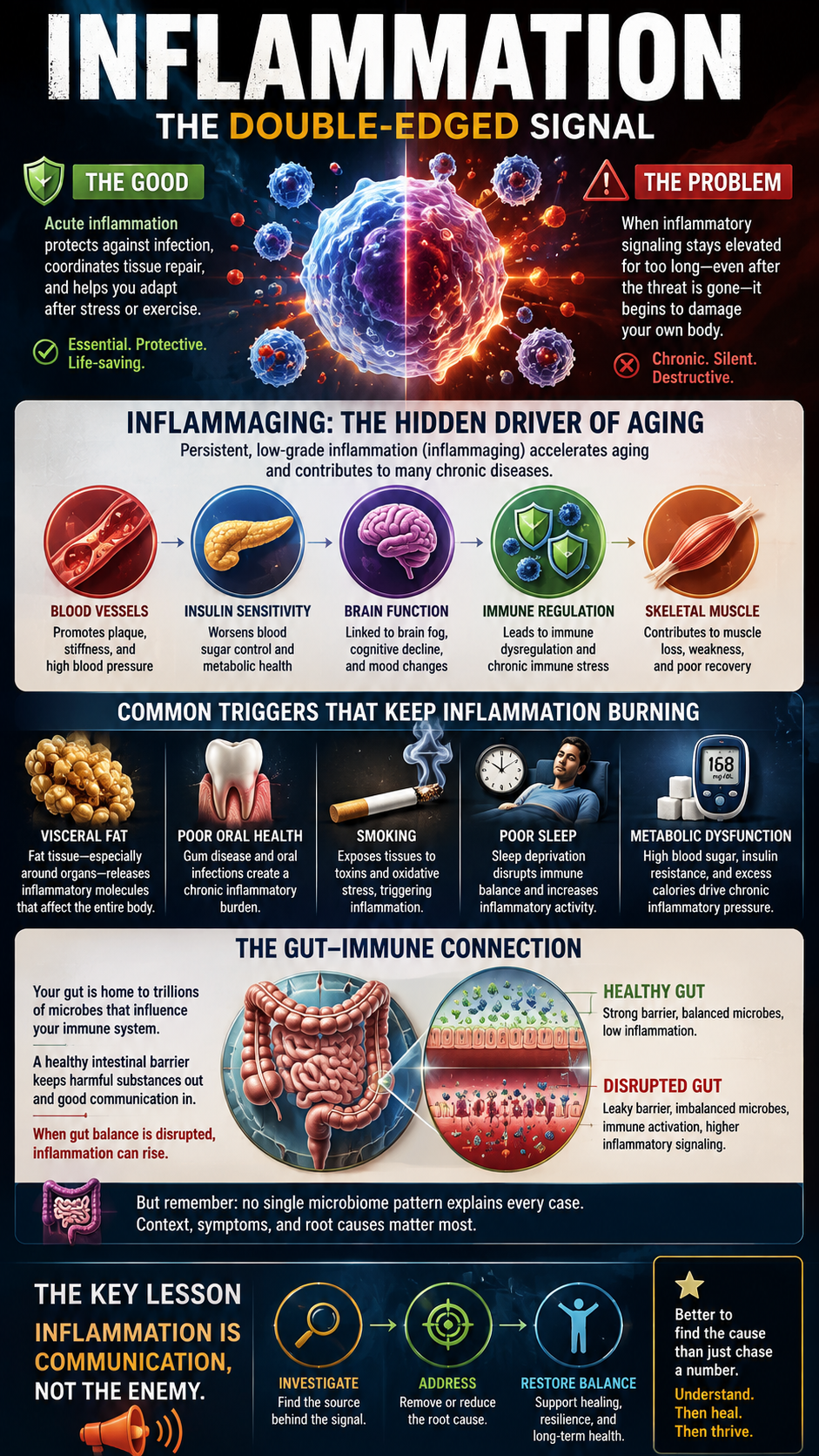
Visceral fat can generate inflammatory molecules that affect tissues throughout the body. Poor periodontal health provides another chronic inflammatory burden. Smoking exposes tissues to repeated chemical injury. Sleep deprivation can disturb immune regulation, while metabolic dysfunction creates additional inflammatory pressure.
Gut disturbances may also influence immune signaling in certain individuals. The intestinal barrier separates an enormous microbial ecosystem from the internal environment. When digestive function changes, microbial composition and immune activity can change with it. However, no single microbiome pattern explains every case of accelerated aging.
The important lesson involves investigation rather than suppression. Inflammation functions as biological communication. Something may be injuring tissue, disrupting metabolism, or stimulating immune activity. Finding the source provides more value than simply chasing a laboratory marker.
The Epigenetic Clock Changed How Scientists Think About Aging
Human DNA contains the genetic instructions required to build and operate the body. However, genes do not function like permanent switches frozen from birth. Cells continuously regulate which genes become more or less active. Epigenetic mechanisms help guide that regulation throughout life.
DNA methylation represents one of the most studied epigenetic processes. Small chemical groups attach to specific locations along DNA and influence gene regulation. Scientists discovered that certain methylation patterns change predictably with age. Those patterns became so consistent that researchers could estimate chronological age from a blood or tissue sample.
Early epigenetic clocks transformed aging science. The Horvath clock became particularly influential because it worked across many tissue types. Other clocks used different methylation patterns and populations. Researchers suddenly possessed molecular tools capable of estimating age from biological information.
A major problem soon became obvious. Predicting someone’s chronological age does not necessarily reveal biological health. A molecular clock could correctly identify someone as sixty while providing little information about disease risk. Scientists therefore began creating second-generation clocks designed around more meaningful outcomes.
PhenoAge and GrimAge Attempt to Measure More Than Birthdays
PhenoAge represented an important shift because it combined aging-related clinical information with DNA methylation patterns. The goal involved capturing physiological deterioration rather than merely predicting chronological age. GrimAge pushed the concept further by incorporating methylation-based surrogates linked with smoking and specific plasma proteins. Its construction focused strongly on mortality-related risk.
These clocks demonstrate why the phrase “biological age” can become confusing. Each model answers a slightly different question. One clock may reflect chronological aging patterns, while another emphasizes mortality risk. A third might capture metabolic deterioration or inflammatory burden more strongly.
Consequently, someone can receive different biological ages from different testing systems. One report may estimate a biological age of forty-eight, while another estimates fifty-five. That discrepancy does not automatically mean either laboratory failed. The algorithms may simply measure different dimensions of aging.
Consumers should therefore resist treating biological age as an absolute truth. The number represents a statistical estimate built from selected biological data. It can provide useful information, but it cannot summarize every organ, pathway, and physiological system. A single score should begin deeper investigation rather than end it.
DunedinPACE Asks a More Important Question
Traditional biological-age clocks function somewhat like odometers. They attempt to estimate how much aging-related change has accumulated. Researchers eventually asked whether we could measure aging velocity instead. That question led to the development of pace-of-aging measurements.
DunedinPACE emerged from longitudinal research that followed individuals across many years. Scientists repeatedly measured physiological changes rather than examining one isolated moment. They then identified DNA methylation patterns associated with the speed of those changes. The resulting model attempts to estimate how quickly someone is aging biologically.
This distinction could become extremely important. Two people may possess similar biological-age estimates while traveling in opposite directions. One could be improving metabolic health, building muscle, and restoring sleep. The other might be gaining visceral fat, losing strength, and developing hypertension.
A snapshot cannot always distinguish those trajectories. A measure of aging pace may provide additional information about direction. Longitudinal testing also helps reveal whether an intervention appears to change the underlying pattern. The future of longevity science will likely emphasize movement over time rather than one impressive score.
Your Organs May Not Be Aging at the Same Speed
The idea of one biological age becomes increasingly questionable when scientists examine individual organs. Evidence suggests that organs can show different aging patterns within the same person. Someone might demonstrate relatively healthy cardiovascular function while exhibiting accelerated metabolic aging. Another person may preserve excellent metabolic health while losing neurological or muscular function.
This concept could fundamentally change preventive medicine. Instead of telling someone that their biological age equals fifty-eight, future assessments may identify several distinct aging profiles. The heart could show one trajectory while the kidneys show another. Brain aging might differ from immune aging or liver aging.
Such distinctions matter because diseases emerge from specific systems. Accelerated vascular aging increases cardiovascular vulnerability. Declining muscle function raises frailty risk. Metabolic deterioration influences diabetes, fatty liver, and vascular disease. Neurological changes may affect cognition long before obvious impairment appears.
Organ-specific aging also explains why generic longevity programs often fail. One person may need aggressive metabolic intervention while another requires muscle preservation or cardiovascular rehabilitation. Applying the same supplement stack to everyone ignores biological individuality. Longevity becomes more useful when it identifies the system losing resilience first.
Muscle May Be the Most Underrated Biological-Age Marker
The longevity industry often focuses on exotic tests while ignoring a massive organ visible beneath the skin. Skeletal muscle influences glucose disposal, insulin sensitivity, mobility, balance, metabolism, and physical independence. Losing muscle changes nearly every aspect of aging.
Muscle naturally tends to decline with advancing age, especially without resistance training. Sedentary behavior accelerates that process because the body conserves resources it no longer needs. If muscles rarely face meaningful resistance, the physiological demand for maintaining them decreases. Decades of inactivity can therefore create profound weakness.
Protein intake also matters because muscle requires amino acids for maintenance and repair. Aggressive calorie restriction can accelerate lean-tissue loss when poorly designed. Illness, immobilization, and hospitalization can remove muscle rapidly. Recovering that tissue becomes harder as age and frailty progress.
Strength may therefore tell us more about functional aging than many laboratory tests. Grip strength, walking speed, balance, and the ability to rise from the floor reveal integrated neurological and muscular performance. These abilities determine whether someone remains independent in later life. A flattering methylation score means little if everyday physical function continues declining.
Cardiorespiratory Fitness Reflects Biological Reserve
Another powerful measure of aging involves the body’s ability to deliver and use oxygen. Cardiorespiratory fitness integrates heart function, lung function, circulation, muscle metabolism, and mitochondrial capacity. This makes it one of the strongest functional measurements available.
A person with poor aerobic fitness may become winded after climbing one staircase. Another person twenty years older may climb several flights without difficulty. Chronological age would predict one thing, while physiological capacity tells another story. Fitness captures what the body can actually accomplish under demand.
VO2 max represents one formal measurement of aerobic capacity, although simpler field tests can provide useful information. Walking speed, exercise tolerance, and recovery heart rate also reveal meaningful patterns. Declining capacity often appears gradually, which allows people to normalize deterioration.
The body adapts specifically to the demands placed upon it. Avoid cardiovascular challenge and cardiovascular capacity declines. Create appropriate challenge and the system can adapt. That adaptability represents biological resilience in action.
Sleep Can Accelerate Aging Quietly
Sleep rarely receives the attention given to diet or exercise, yet it influences almost every major system involved in aging. Poor sleep affects glucose regulation, appetite signaling, immune activity, vascular function, cognition, and emotional stability. Chronic sleep deprivation also makes healthy behaviors harder to sustain.
Circadian disruption compounds the problem. Human physiology evolved around predictable cycles of daylight and darkness. Artificial lighting now extends daytime signals late into the evening. Meanwhile, many people receive very little bright outdoor light after waking.
This mismatch can disturb melatonin timing, sleep quality, and metabolic regulation. Shift work creates an even stronger disruption because eating and sleeping occur against normal circadian signals. Over time, that pattern can place additional stress on metabolic and cardiovascular systems.
Sleep apnea deserves particular attention because it often remains undiagnosed. Repeated breathing interruptions fragment sleep and alter oxygen levels throughout the night. Someone can spend eight hours in bed while receiving poor restorative sleep. Ignoring sleep apnea while investing heavily in longevity supplements reverses sensible priorities.
Mitochondrial Decline Can Make the Body Feel Old
Mitochondria influence much more than energy production. These cellular structures regulate oxidative signaling, calcium balance, metabolic adaptation, and programmed cell death. Their function changes with inactivity, illness, metabolic dysfunction, and aging.
Skeletal muscle contains large numbers of mitochondria because movement demands enormous amounts of energy. Regular exercise stimulates mitochondrial adaptation and increases energetic capacity. Sedentary behavior removes that stimulus, allowing mitochondrial function to decline. The resulting loss of capacity can make ordinary activities increasingly exhausting.
Metabolic dysfunction creates additional strain because mitochondria must process a constant oversupply of nutrients. Excess energy can overwhelm normal metabolic flexibility. Fat begins accumulating in tissues poorly designed for long-term storage. Liver, muscle, and other organs become increasingly metabolically stressed.
This helps explain why exercise appears repeatedly throughout longevity research. Movement challenges mitochondria while improving glucose handling and cardiovascular function. Resistance training stimulates muscle while aerobic training expands endurance capacity. The combination targets several aging pathways simultaneously.
The Gut, Immune System, and Biological Aging Are Connected
The gastrointestinal tract contains trillions of microorganisms that interact with human physiology. These organisms participate in nutrient metabolism, immune signaling, and production of numerous metabolites. Their composition changes throughout life, although no universal youthful microbiome exists.
Diet strongly influences microbial ecology. Highly processed foods create a different intestinal environment than diverse whole foods. Medications, infections, geography, age, and environmental exposures also alter microbial populations. These influences make simplistic microbiome scoring difficult.
Intestinal barrier function also matters because the digestive tract constantly manages contact with microbes and food-derived compounds. Immune cells must distinguish harmless material from genuine threats. Disturbances within that system can influence inflammatory signaling.
However, the microbiome should not become another longevity obsession divorced from symptoms and physiology. Stool tests cannot explain every health problem. Probiotics cannot repair every gastrointestinal disorder. Good investigation begins with digestive function, symptoms, diet, medications, infections, and individual history.
Biological Age Should Become a Dashboard, Not a Single Score
The most useful way to think about biological aging may involve multiple dimensions rather than one number. Metabolic health represents one dimension. Cardiovascular fitness represents another. Muscle strength, inflammatory burden, body composition, sleep quality, and cognitive performance add additional layers.
Laboratory testing can strengthen that picture. Fasting glucose and hemoglobin A1c provide metabolic information, while fasting insulin may reveal earlier dysfunction. Triglycerides, HDL, blood pressure, waist circumference, and body composition add context. Liver and kidney markers help reveal organ stress.
Physical measurements should receive equal importance. Strength, walking speed, balance, and aerobic capacity describe the body’s real-world function. Tracking these values across time helps reveal whether someone is becoming more resilient. A laboratory report should never replace observable performance.
Epigenetic testing can then become one additional layer. Used correctly, it may identify aging patterns that conventional measurements miss. Used poorly, it can become an expensive vanity score. The goal involves discovering trends across multiple systems.
What Biological-Age Tests Still Cannot Tell You
Even the most advanced biological-age test cannot identify every cause behind an unfavorable result. A clock may indicate accelerated aging without explaining whether poor sleep, metabolic dysfunction, smoking, inflammation, or another factor created it. The test shows a pattern rather than a complete mechanism.
Population differences also matter. Algorithms developed within one population may not perform identically across every ethnic, socioeconomic, or geographic group. Age distributions and health histories can influence model performance. Sampling methods and laboratory techniques introduce additional variability.
Timing can affect certain biomarkers as well. Acute illness, major stress, exercise, and other short-term events may influence biological measurements. Repeating tests under standardized conditions can improve interpretability. One abnormal result should therefore prompt context rather than panic.
The strongest evidence comes from convergence. If epigenetic age, metabolic health, fitness, body composition, sleep, and inflammatory markers all worsen together, the signal becomes much stronger. When several measures improve together, the case for genuine physiological progress also becomes more convincing.
Can Biological Aging Actually Be Reversed?
The word “reversal” attracts enormous attention because it promises something humans have pursued for centuries. Certain biomarkers associated with biological aging can move toward younger patterns after interventions. That finding deserves serious scientific interest. However, changing a clock does not prove that every tissue became younger.
Aging contains many dimensions. Epigenetic changes represent one layer, while mitochondrial function represents another. Muscle strength, immune regulation, vascular health, and metabolic flexibility each contribute independently. Reversing one marker cannot guarantee reversal across the entire organism.
A better phrase may be biological rejuvenation when multiple systems improve together. Someone who loses visceral fat, gains muscle, restores insulin sensitivity, improves sleep, and increases cardiovascular fitness has changed physiology meaningfully. If aging biomarkers improve simultaneously, the evidence becomes stronger.
The goal should therefore involve improving biological function rather than chasing a younger number. Healthspan matters more than a certificate declaring someone biologically thirty-eight. The real victory involves remaining capable, energetic, metabolically healthy, and independent for decades.
At-Home Steps to Slow Accelerated Biological Aging
The most powerful longevity interventions rarely begin inside a laboratory. They begin with daily behaviors repeated often enough to change biology. Start with movement because physical activity influences metabolism, mitochondria, muscle, blood vessels, and brain function simultaneously. Walk every day and reduce long periods of uninterrupted sitting whenever possible.
Resistance training should become a lifelong priority. Strong muscles protect glucose regulation, mobility, balance, and independence. Train the major muscle groups several times weekly using appropriate resistance. Progress gradually as strength improves while preserving proper technique and recovery.
Nutrition should reduce metabolic stress rather than create another source of confusion. Build meals around nutrient-dense whole foods and adequate protein. Reduce refined sugars, highly processed foods, and constant snacking when appropriate. Carbohydrate intake should reflect individual activity levels, metabolic health, and tolerance.
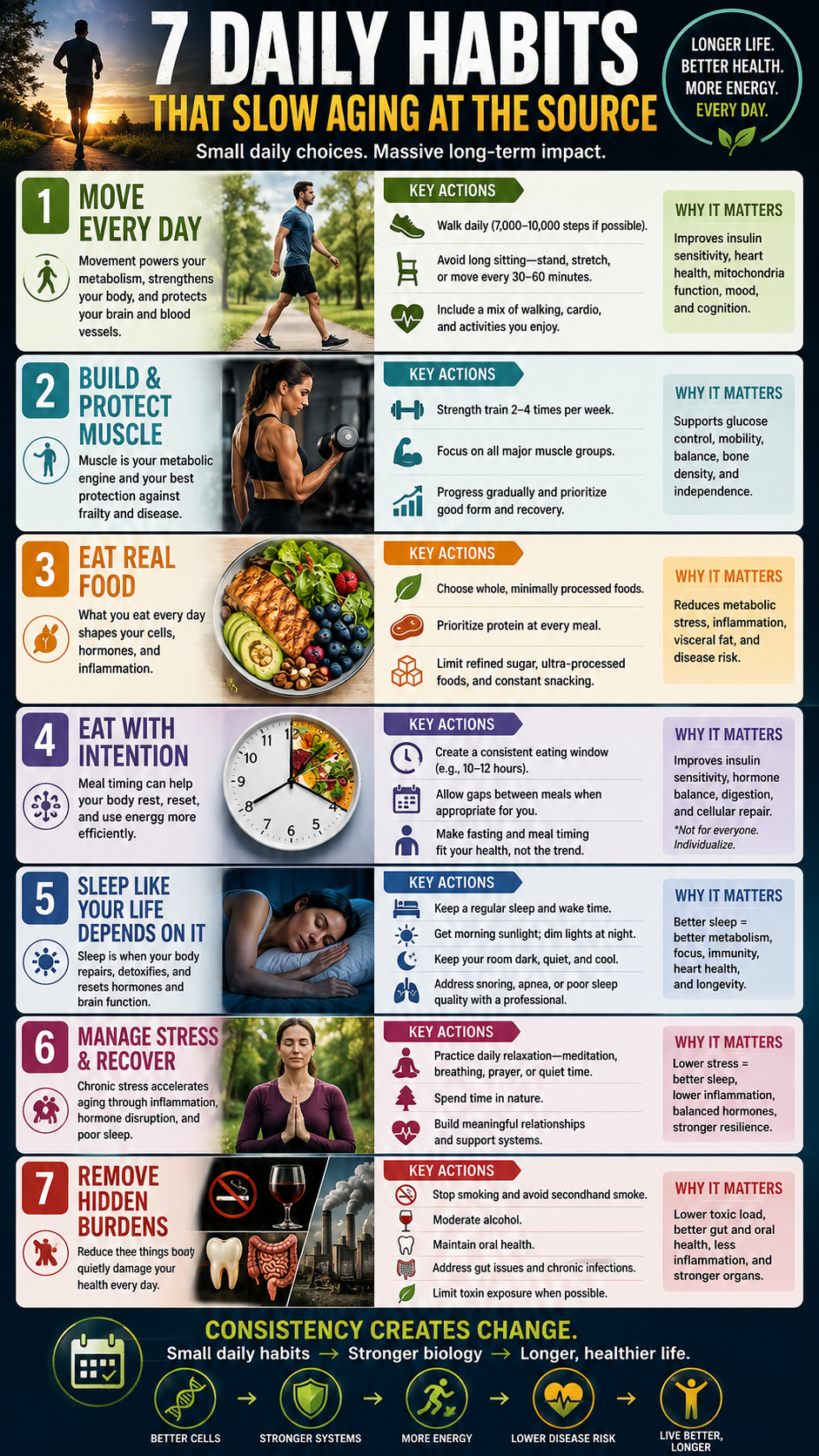
Meal timing can also influence metabolic regulation. Defined eating windows may help some people reduce constant nutrient exposure. Longer fasting should remain individualized because it is inappropriate for certain medical conditions and life stages. Preserving muscle, sleep, and energy should remain more important than winning a fasting contest.
Sleep deserves equal priority. Maintain regular sleep and wake times whenever possible. Obtain outdoor light soon after waking and reduce bright artificial light late at night. Keep the bedroom dark, quiet, and comfortably cool.
Persistent snoring or excessive daytime fatigue should prompt deeper investigation. Sleep-disordered breathing can sabotage metabolic and cardiovascular health despite excellent nutrition. Restorative sleep must become part of every serious longevity strategy.
Stress recovery also matters because chronic sympathetic activation can disturb sleep, blood pressure, appetite, and recovery. Build deliberate periods of relaxation into everyday life. Prayer, meditation, breathing exercises, outdoor time, and meaningful relationships can provide valuable physiological recovery.
Finally, reduce avoidable biological burdens. Stop smoking, moderate alcohol, maintain oral health, and address persistent gastrointestinal symptoms. Evaluate environmental exposures when history suggests meaningful risk. The goal involves removing chronic stressors while preserving adaptive challenges.
Measure Whether Your Biology Is Moving in the Right Direction
Improvement should become measurable whenever possible. Track waist circumference, blood pressure, strength, walking capacity, and body composition across time. Observe whether sleep quality and daily energy improve. Monitor metabolic markers at clinically appropriate intervals.
A biological-age test can add another dimension when interpreted responsibly. Repeat testing under similar conditions if trend analysis is the goal. Do not celebrate a lower biological age while ignoring declining muscle or worsening glucose. Every measurement belongs within the larger physiological picture.
Progress should appear across multiple systems. Strength should improve as muscle develops. Insulin sensitivity should improve as metabolic health recovers. Resting blood pressure and cardiovascular capacity should move favorably when circulation strengthens.
The direction matters more than perfection. Human physiology continually changes throughout life. The important question involves whether those changes move toward resilience or deterioration. Longevity becomes an active process when someone repeatedly measures and adjusts that trajectory.
Stop Asking Only How Old You Are
Chronological age will never stop moving forward. No laboratory can reverse a birthday, and no supplement can remove years from a birth certificate. Yet chronological age represents only one dimension of aging.
Biological age asks a far richer question. How well have your cells, tissues, organs, and physiological systems tolerated the years you have lived? Have they maintained resilience, or have metabolic and inflammatory pressures accelerated deterioration? Which systems are aging fastest?
That final question may eventually become the foundation of true preventive longevity care. Instead of waiting for diabetes, cardiovascular disease, frailty, or cognitive decline, we could identify the systems moving toward dysfunction earlier. Intervention could then begin before failure becomes obvious.
The greatest promise of biological-age science therefore has little to do with vanity. It is not about telling a sixty-year-old that they are really forty-eight. It is about identifying the trajectory before the destination becomes unavoidable.
Your birth certificate records when your life began. It cannot measure your mitochondrial capacity, muscle strength, insulin sensitivity, vascular function, or biological resilience. Those systems write another story every day.
The calendar will continue counting regardless of what you do. Biology, however, responds continuously to its environment. Movement changes it, sleep changes it, nutrition changes it, and chronic stress changes it. Metabolic health changes it, while strength and fitness change it again.
The most important question is therefore not simply how old you are.
It is whether your body is becoming more resilient or less resilient with every passing year.
That is the difference between merely getting older and understanding how you are aging.