
The Hidden Causes of Dizziness, Unsteadiness, and Poor Balance
Imagine waking up one morning, stepping out of bed, and suddenly feeling as though the floor has shifted beneath your feet. You reach for the nightstand to steady yourself, waiting for the strange sensation to disappear. Your vision seems normal, your legs feel strong, and nothing around you is moving. Yet something inside your body insists that you are losing your balance. Perhaps the sensation lasts only a few seconds, or maybe it follows you throughout the day, making ordinary activities like walking, driving, or climbing stairs increasingly uncomfortable.
For millions of Americans, this experience begins a frustrating journey through the healthcare system. Their physician examines their ears, prescribes medication for dizziness, or refers them to an ear, nose, and throat specialist. Some undergo vestibular testing, hearing evaluations, or imaging studies, only to discover that their inner ears appear perfectly normal. Others receive a diagnosis of vertigo without understanding what is actually causing their symptoms. When the prescribed medication fails to provide lasting relief, they begin wondering whether something important has been overlooked.
The problem is that balance is far more complicated than most people realize. Although the inner ear plays a critical role in maintaining equilibrium, it represents only one component of an extraordinarily sophisticated neurological system. Your brain must constantly interpret information from your eyes, spinal joints, muscles, feet, peripheral nerves, and vestibular organs. Your cardiovascular system must simultaneously maintain adequate circulation, while your metabolic systems provide the energy and nutrients necessary for neurological function.
When even one component begins malfunctioning, the resulting confusion can produce dizziness, instability, disorientation, or an increased risk of falling. Understanding these connections reveals an important truth about balance disorders: the location where symptoms appear does not always reveal where the underlying problem originates.
Your Brain, Not Your Inner Ear, Is the Master Coordinator of Balance
Most people assume that their sense of balance comes entirely from structures buried deep inside their ears. While the vestibular organs detect head movement and orientation relative to gravity, they cannot independently maintain upright posture. Instead, they provide information to the brain, which integrates multiple sensory signals before coordinating the muscular responses necessary for stability.
Three primary sensory systems participate in this process. The vestibular system detects rotational and linear movements of the head. The visual system helps establish your position relative to surrounding objects and environmental movement. The proprioceptive system communicates information about the position of your joints, muscles, and limbs, allowing your brain to understand where your body exists in space without requiring constant visual attention.
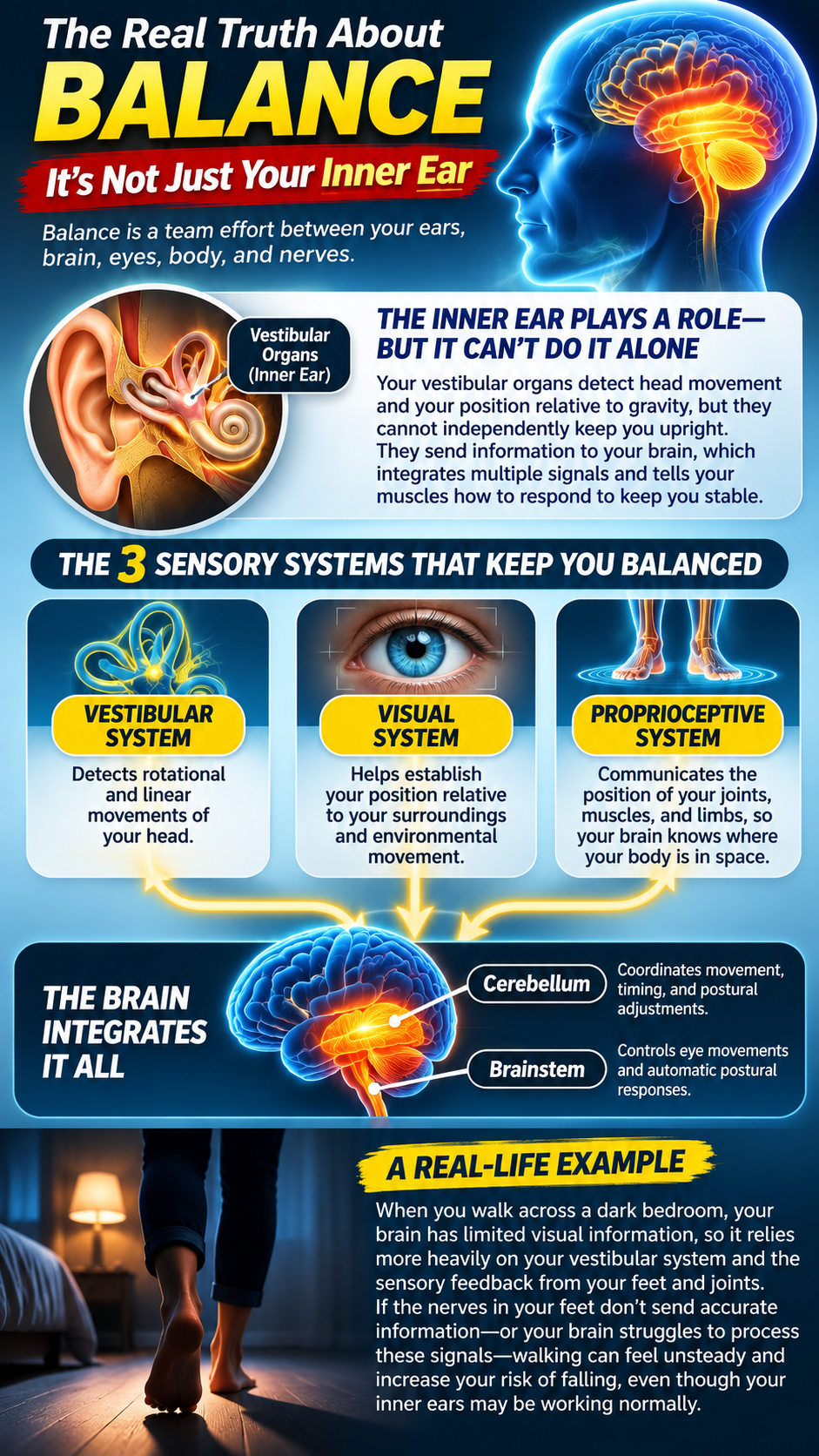
These systems communicate with specialized neurological structures, particularly the cerebellum and brainstem. The cerebellum helps coordinate movement, timing, and postural adjustments, while brainstem pathways contribute to eye movement control and automatic postural responses. Together, these networks continuously compare incoming sensory information and generate corrective movements that prevent falls.
Consider what happens when you walk across a dark bedroom. With limited visual information, your nervous system must rely more heavily on proprioceptive and vestibular signals. If the nerves in your feet cannot accurately detect the floor, or your brain struggles to interpret the information arriving from your body, walking becomes significantly more difficult. This explains why some people experience their greatest balance difficulties at night, even though their inner ears may function normally.
The Cervical Spine: A Missing Piece of the Balance Puzzle
One of the most frequently overlooked contributors to balance involves the cervical spine. Your neck does considerably more than support your head and allow you to look in different directions. It contains a sophisticated network of sensory receptors that constantly communicate information about head position, muscle tension, and joint movement to the central nervous system.
Deep cervical muscles contain exceptionally high concentrations of muscle spindles, specialized receptors responsible for detecting changes in muscle length and movement. These receptors provide the brain with proprioceptive information that helps distinguish movement of the head from movement of the entire body. This information must coordinate with signals from the eyes and vestibular organs to maintain accurate spatial awareness.
Imagine three musicians performing together, each following a slightly different rhythm. Although every musician may be playing correctly, the resulting performance becomes disorganized because their timing no longer matches. A similar sensory mismatch may occur when cervical proprioceptive information conflicts with visual or vestibular signals. Researchers have investigated whether altered cervical sensory input contributes to dizziness and postural instability in certain patients.
This proposed condition is commonly called cervicogenic dizziness. Individuals may experience unsteadiness, disorientation, or a floating sensation associated with neck pain, stiffness, or restricted movement. Some report symptoms following whiplash injuries, prolonged postural strain, or cervical musculoskeletal dysfunction. Unlike classic positional vertigo, the sensation may not involve the room spinning around them.
However, cervicogenic dizziness remains clinically challenging because no single definitive diagnostic test exists. Neck pain and dizziness can occur together for unrelated reasons, and potentially serious neurological or vascular conditions must first be excluded. Evidence suggests that selected patients may benefit from cervical rehabilitation and manual therapy, but spinal dysfunction should never be assumed to explain unexplained dizziness without an appropriate examination.
Peripheral Neuropathy: When Your Feet Stop Talking to Your Brain
Your feet are among the body’s most important sensory organs for maintaining stability. Every time you stand or walk, specialized receptors detect pressure, vibration, joint position, and changes in contact with the ground. Peripheral nerves carry this information toward the spinal cord and brain, allowing your nervous system to calculate how your weight is distributed and when corrective movements become necessary.
When these nerves become damaged, the brain may receive incomplete or distorted information. This condition, known as peripheral neuropathy, can create substantial balance difficulties even when muscle strength remains relatively normal. Patients frequently describe feeling unstable on uneven surfaces, struggling to walk in darkness, or needing to watch their feet to maintain confidence.
Diabetes represents one of the leading causes of peripheral neuropathy, but numerous other conditions can damage sensory nerves. Vitamin B12 deficiency, excessive alcohol consumption, autoimmune disorders, certain medications, and some thyroid or metabolic conditions may contribute. In other cases, clinicians cannot immediately identify a specific cause, requiring further neurological investigation.
The connection between neuropathy and balance becomes especially important among older adults. Someone may receive repeated evaluations for inner-ear dysfunction while the underlying problem involves reduced sensation in the feet. A neurological examination assessing vibration, position sense, reflexes, and gait can help identify sensory deficits. Addressing the underlying cause, when possible, and incorporating targeted balance rehabilitation may improve function and reduce fall risk.
Blood Pressure and Circulation: When the Brain Isn’t Getting What It Needs
Not every sensation described as dizziness represents a problem with spatial orientation. Some individuals experience lightheadedness, weakness, dimming vision, or the feeling that they might faint. These symptoms may reflect temporary reductions in blood flow to the brain rather than a malfunction of the vestibular system.
Consider what happens when you suddenly stand after sitting for an extended period. Gravity pulls blood toward the lower extremities, briefly reducing the amount returning to the heart. Under normal circumstances, the autonomic nervous system responds by adjusting heart rate and blood vessel tone to preserve circulation to the brain. When this response becomes inadequate, blood pressure may fall enough to produce dizziness or near-fainting.
This phenomenon, called orthostatic hypotension, can develop from dehydration, blood loss, autonomic nervous system disorders, or medication effects. Certain cardiovascular conditions can produce similar symptoms, including abnormal heart rhythms that temporarily reduce effective circulation. These problems may be particularly important when dizziness occurs during exertion, follows sudden standing, or accompanies palpitations.
A careful assessment of symptom timing can help distinguish cardiovascular lightheadedness from vestibular vertigo. Measuring blood pressure while lying down and standing may reveal orthostatic changes, while additional cardiac testing may be necessary when symptoms suggest an arrhythmia. Persistent or unexplained fainting requires medical evaluation because some cardiovascular causes can become life-threatening.
Blood Sugar, Vitamin Deficiencies, and Metabolic Imbalances
The nervous system depends on a continuous supply of energy and essential nutrients. When metabolic disturbances interfere with neurological signaling, patients may experience dizziness, weakness, confusion, or impaired coordination. These symptoms can resemble vestibular problems even though the underlying mechanisms are entirely different.
Blood glucose disturbances illustrate this connection. Hypoglycemia can produce shakiness, sweating, rapid heartbeat, lightheadedness, and difficulty concentrating. Severe episodes can interfere with normal brain function and may cause seizures or loss of consciousness. Chronic hyperglycemia, meanwhile, can damage peripheral nerves over time, contributing to sensory loss and instability.
Vitamin B12 deficiency represents another important neurological concern. B12 supports normal nerve function and myelin maintenance, and deficiency can affect peripheral nerves and spinal cord pathways responsible for position sense. Patients may develop numbness, tingling, walking difficulties, or impaired balance, sometimes before obvious anemia appears.
Thyroid disorders, anemia, electrolyte disturbances, and other nutritional deficiencies may also contribute to dizziness or weakness. The appropriate laboratory evaluation depends on the patient’s history and examination rather than a universal testing panel. Identifying and correcting a documented metabolic abnormality can improve symptoms and, in some cases, prevent progressive neurological injury.
The Difference Between Vertigo, Dizziness, and Neurological Instability
One of the most important steps in evaluating balance problems involves understanding exactly what the patient means by dizziness. The term can describe spinning, floating, faintness, rocking, visual disorientation, or difficulty walking. These sensations overlap, but their triggers, duration, and accompanying symptoms often provide valuable diagnostic clues.
True vertigo involves a false sensation of movement, commonly described as spinning or tilting. Benign paroxysmal positional vertigo, or BPPV, frequently causes brief spinning episodes when someone rolls over in bed or changes head position. It occurs when tiny calcium carbonate particles become displaced within the vestibular system, and appropriate repositioning maneuvers can often provide substantial relief.
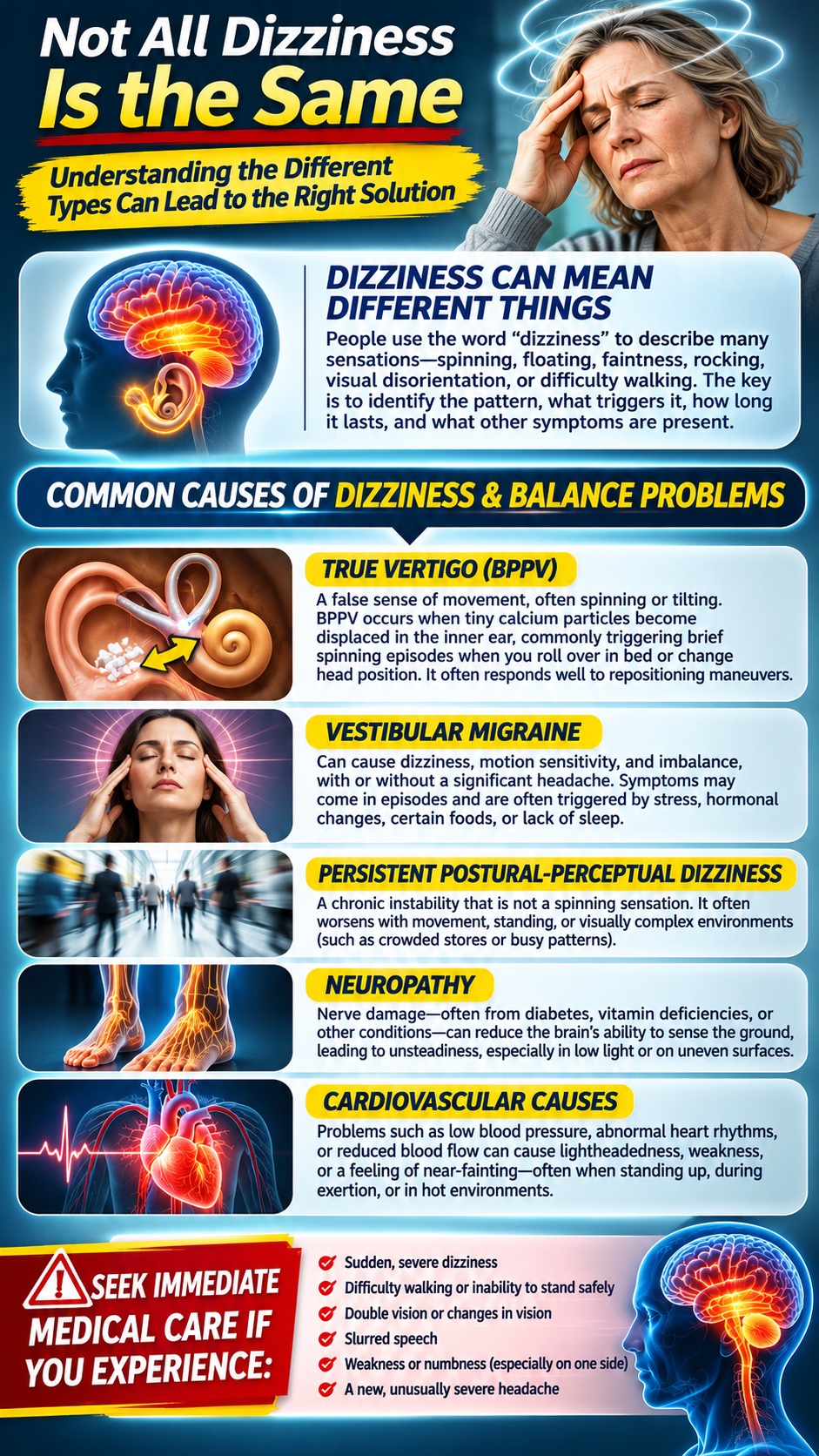
Other conditions create different patterns. Vestibular migraine may produce dizziness without a prominent headache, while persistent postural-perceptual dizziness can cause chronic non-spinning instability worsened by movement or visually complex environments. Neuropathy may produce unsteadiness without spinning, and cardiovascular disorders may create lightheadedness or near-fainting.
Sudden dizziness accompanied by severe difficulty walking, double vision, slurred speech, weakness, numbness, or an unusually severe headache requires emergency evaluation. A stroke affecting the cerebellum or brainstem can sometimes resemble an inner-ear disorder, particularly early in its presentation. New, continuous, severe dizziness with inability to stand or walk safely also warrants urgent assessment, even without other obvious neurological symptoms.
The Bigger Picture: Balance Is a Whole-Body Function
The remarkable complexity of human balance reveals why focusing exclusively on the inner ear can leave important contributors undiscovered. Your cervical spine provides sensory information about head position, peripheral nerves communicate with the brain about the ground beneath your feet, and the cardiovascular system maintains the circulation necessary for neurological function. Meanwhile, your metabolic health influences the integrity of the nerves and tissues participating in this process.
For patients who have struggled with unexplained dizziness, the next step should involve investigating these interconnected systems rather than assuming a single cause. A comprehensive examination may uncover cervical dysfunction, sensory neuropathy, blood pressure abnormalities, metabolic deficiencies, vestibular disease, or a combination of several factors. Accurate diagnosis determines which interventions are appropriate and which could be ineffective or unsafe.
The encouraging reality is that many contributors to impaired balance are treatable, and targeted rehabilitation can improve stability even when an underlying condition cannot be fully reversed. Understanding how the brain, spine, nerves, circulation, and sensory systems work together creates opportunities for more individualized care.
Balance problems aren’t always an inner-ear problem. Sometimes the most important answers emerge when we stop looking at one isolated organ and begin investigating the entire system responsible for keeping us upright.
Healing Begins When We Investigate the Entire Balance System
Imagine spending months struggling with dizziness, only to discover that the problem was never exclusively inside your ears. Perhaps damaged nerves in your feet prevented your brain from accurately detecting the ground. Maybe chronic neck dysfunction interfered with proprioceptive information, or fluctuating blood pressure caused episodes of lightheadedness. For some individuals, several problems develop simultaneously, creating symptoms that no single examination can adequately explain.
This is where a comprehensive functional approach offers an important perspective. Instead of treating dizziness as one isolated symptom, we investigate the neurological, structural, metabolic, and cardiovascular systems responsible for maintaining stability. The objective is to identify contributing dysfunctions, address modifiable causes, and help the body regain its capacity to coordinate movement effectively. This approach works best alongside appropriate medical diagnosis, particularly when neurological or cardiovascular conditions are possible.
The encouraging news is that the nervous system possesses a remarkable ability to adapt. Through neuroplasticity, the brain can modify neural connections and improve certain functions in response to repeated experiences. Rehabilitation programs use this adaptability to strengthen postural control, improve sensory integration, and compensate for specific neurological deficits. Although not every damaged pathway can regenerate, many patients can improve their stability through targeted training.
Recovery rarely depends on one treatment, supplement, or exercise. Meaningful improvement often requires strengthening muscles, retraining sensory pathways, correcting nutritional deficiencies, and addressing conditions that interfere with normal neurological function. Understanding these relationships allows patients to participate actively in their recovery rather than waiting for symptoms to disappear.
The Cervical Spine and Its Role in Neurological Coordination
Your cervical spine serves as an important source of sensory information for the brain. Specialized receptors within cervical muscles and joints continuously communicate changes in head position and movement. These signals interact with vestibular and visual information, helping the nervous system coordinate posture, gaze, and movement.
When neck pain, restricted mobility, or muscular dysfunction develops, cervical proprioceptive signaling may become less reliable. Some individuals experience dizziness associated with these problems, particularly following whiplash injuries or prolonged cervical discomfort. Researchers continue investigating the mechanisms of cervicogenic dizziness, including possible sensory mismatches between cervical, visual, and vestibular systems.
Chiropractic care may play a supportive role when cervical musculoskeletal dysfunction contributes to symptoms. Appropriate manual therapy, therapeutic exercise, and mobility rehabilitation can improve neck pain and function in selected patients. Some clinical studies suggest benefits from cervical interventions for suspected cervicogenic dizziness, although the evidence remains limited and diagnosis requires exclusion of other causes.
Importantly, chiropractic adjustments have not been established as a universal treatment for dizziness or vertigo. Sudden severe neck pain, unusual headache, neurological symptoms, or suspected vascular disease require medical assessment before cervical manipulation. A thoughtful approach uses spinal care when clinically appropriate while recognizing that balance also depends on neurological, cardiovascular, and vestibular health.
Functional Nutrition: Giving the Nervous System What It Needs
The nervous system requires adequate nutrition to maintain electrical signaling, cellular metabolism, and the structural integrity of nerve fibers. Deficiencies in certain nutrients can contribute to neuropathy, weakness, impaired coordination, and neurological dysfunction. Correcting these deficiencies may improve symptoms and prevent further injury, particularly when treatment begins early.
Vitamin B12 deserves special attention because deficiency can damage peripheral nerves and spinal cord pathways involved in proprioception. Individuals with inadequate dietary intake, gastrointestinal malabsorption, or certain medication exposures may face increased risk. When symptoms suggest deficiency, appropriate testing can help determine whether supplementation is necessary and which route of administration is most suitable.
Thiamine, or vitamin B1, also supports normal neurological metabolism. Severe deficiency can cause neurological disease, including gait abnormalities and impaired coordination. Magnesium contributes to normal muscle and nerve function, although routine supplementation has not been shown to resolve unexplained balance disorders in people without deficiency.
Patients should be cautious about assuming that more supplementation always produces better neurological health. Excessive vitamin B6, for example, can cause sensory neuropathy and worsen walking stability. A functional nutritional strategy should emphasize adequate protein, nutrient-dense foods, and correction of documented deficiencies rather than indiscriminate high-dose supplementation.
The At-Home Balance Restoration Plan
Rebuilding balance requires consistent practice, but exercises must match the individual’s abilities and underlying condition. Someone recovering from vestibular dysfunction may need different rehabilitation than someone experiencing neuropathy or orthostatic hypotension. People with unexplained fainting, severe dizziness, frequent falls, or new neurological symptoms should receive professional evaluation before attempting challenging activities.
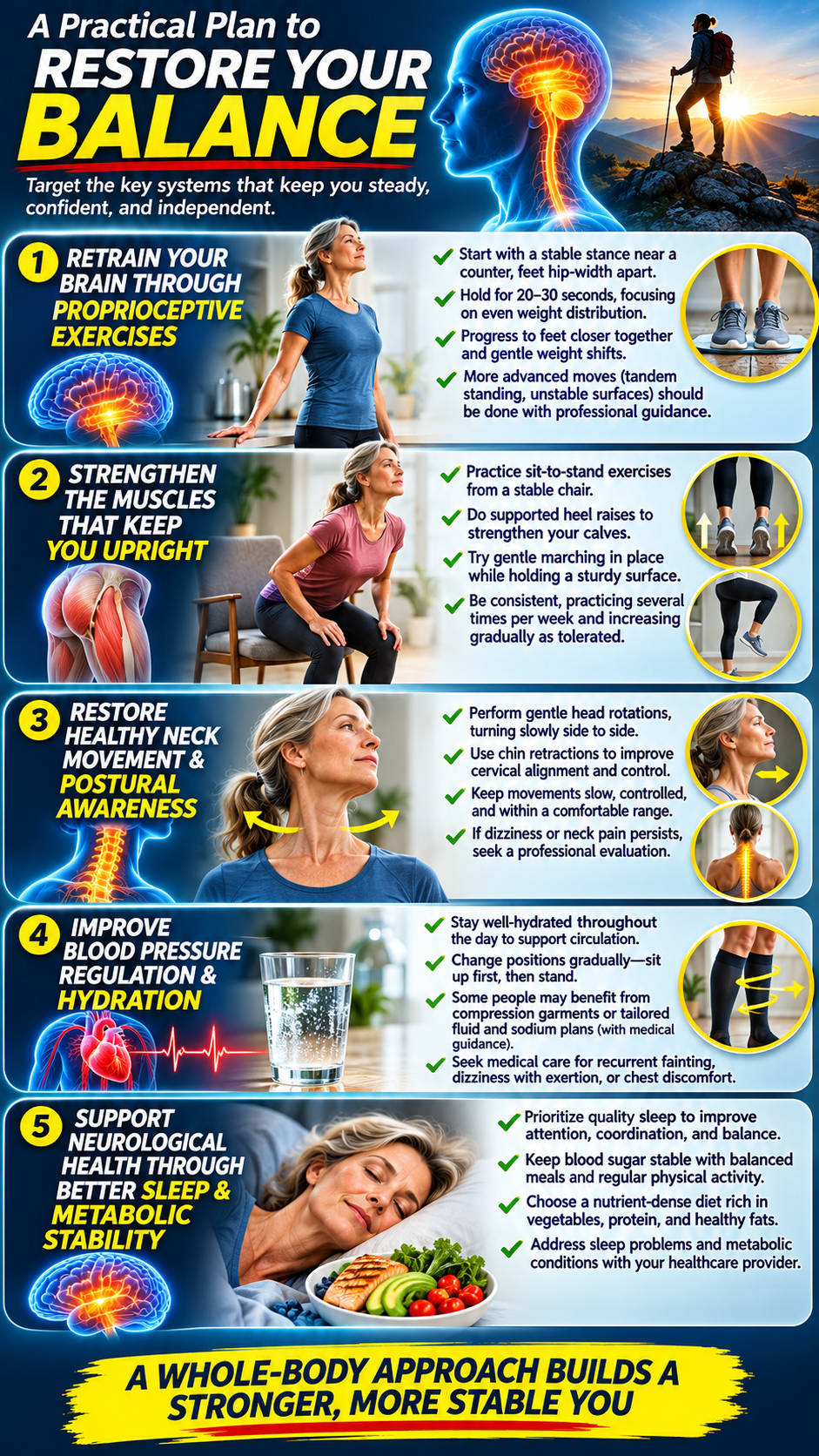
Retrain Your Brain Through Proprioceptive Exercises
Proprioception allows the brain to recognize body position without constantly relying on vision. Every time you stand, walk, or change direction, sensory receptors in your muscles, joints, and feet send information that helps coordinate movement. Balance training challenges these pathways and encourages the nervous system to develop more effective postural responses.
Begin by standing near a sturdy kitchen counter with your feet approximately hip-width apart. Maintain an upright posture while keeping your hands close enough to grasp the counter immediately. Hold this position for 20–30 seconds, concentrating on distributing your weight evenly between both feet. Repeat the exercise several times, provided you remain comfortable and stable.
As your confidence improves, gradually bring your feet closer together while maintaining access to support. Controlled weight shifts from one foot toward the other can further challenge postural coordination. These activities should remain slow and deliberate, particularly for individuals who experience dizziness when moving their heads.
More advanced exercises, including tandem standing or unstable surfaces, should be introduced only when appropriate. Closing your eyes removes an important source of balance information and can dramatically increase fall risk. A physical therapist can determine which progression provides an effective challenge without exposing you to unnecessary danger.
Strengthen the Muscles That Keep You Upright
Muscle strength contributes significantly to postural stability, especially when unexpected movement requires rapid correction. Weakness in the hips, thighs, calves, and trunk can make it difficult to recover from a stumble. Resistance training helps preserve functional mobility and may reduce fall risk when combined with appropriate balance exercises.
One accessible exercise involves repeatedly standing from a stable chair. Position your feet beneath your knees, lean forward slightly, and rise using controlled movement. Sit down slowly rather than dropping into the chair, using armrests when necessary. Begin with a manageable number of repetitions and increase gradually as strength improves.
Supported heel raises provide another useful exercise. Stand near a countertop, slowly lift your heels, and lower them with control. This strengthens the calf muscles involved in walking and postural correction. Gentle marching in place while holding a sturdy surface can also help develop coordination and controlled weight transfer.
Consistency matters more than intensity. Practicing several times weekly allows muscles and neurological pathways to adapt without unnecessary exhaustion. Individuals with significant weakness, joint disorders, or cardiovascular limitations should seek guidance before beginning a new resistance-training program.
Restore Healthy Neck Movement and Postural Awareness
Modern lifestyles often involve prolonged sitting, computer use, and repetitive downward head positioning. These habits can contribute to cervical muscle fatigue, stiffness, and discomfort. Although poor posture alone does not establish the cause of dizziness, improving cervical movement and muscular endurance may benefit individuals with associated neck dysfunction.
Begin with gentle head rotations while seated in a supportive chair. Slowly turn your head toward one shoulder, remaining within a comfortable range, before returning to the center. Repeat toward the opposite side without forcing the movement. Stop if the exercise produces substantial dizziness, sharp pain, visual disturbances, or neurological symptoms.
Gentle chin retractions may help improve cervical movement awareness. While looking straight ahead, draw your chin backward slightly without tipping your head downward. Hold briefly before relaxing, keeping the movement controlled and comfortable. These exercises are intended to support cervical function rather than treat every form of dizziness.
For patients with suspected cervicogenic dizziness, supervised rehabilitation may incorporate specific neck exercises and sensorimotor training. However, vestibular disorders and vascular conditions must be considered before attributing symptoms to cervical dysfunction. Treatment should follow diagnosis rather than assuming that neck stiffness explains every episode of instability.
Improve Blood Pressure Regulation and Hydration
Adequate hydration supports normal circulation and cardiovascular function. Dehydration can contribute to low blood pressure and lightheadedness, particularly during heat exposure, illness, or prolonged physical activity. Individuals experiencing dizziness after standing may benefit from evaluating fluid intake and discussing orthostatic symptoms with their healthcare professional.
A simple preventive habit involves changing positions gradually. After lying down, sit at the edge of the bed briefly before standing. Once upright, remain near a stable surface until you feel confident that your circulation and balance have adjusted. This strategy may reduce symptoms associated with sudden positional changes.
Some patients with orthostatic hypotension benefit from additional interventions, including compression garments or individualized fluid and sodium recommendations. However, increasing sodium or fluid intake can be inappropriate for people with heart failure, kidney disease, or certain cardiovascular conditions. These adjustments should therefore reflect the individual’s medical history.
Recurrent fainting, dizziness during exertion, or symptoms accompanied by chest discomfort require prompt medical assessment. Cardiovascular causes cannot be corrected through balance exercises alone, and overlooking them may delay essential treatment.
Support Neurological Health Through Better Sleep and Metabolic Stability
Sleep affects attention, reaction time, motor coordination, and neurological performance. Chronic sleep deprivation may increase instability, particularly among older adults or individuals already managing sensory deficits. Establishing consistent sleep schedules and addressing conditions that disrupt restorative sleep can support overall functioning.
Blood glucose regulation also deserves attention. People with diabetes may experience dizziness during hypoglycemic episodes, while chronic elevated glucose can contribute to peripheral neuropathy. Balanced meals, appropriate physical activity, and individualized diabetes management help reduce these risks.
A nutrient-dense dietary pattern emphasizing vegetables, adequate protein, healthy fats, and minimally processed foods can support cardiometabolic health. Dietary choices should account for personal medical conditions, medications, and nutritional needs. Although no single diet cures balance disorders, improving metabolic health may reduce contributors to neurological dysfunction over time.
When Specialized Vestibular Rehabilitation Becomes Necessary
Not every balance disorder can be improved through general strengthening or lifestyle changes. Specific vestibular conditions require targeted interventions designed around their underlying mechanisms. Benign paroxysmal positional vertigo, for example, frequently responds to canalith-repositioning maneuvers that return displaced particles to their appropriate location within the inner ear.
Other vestibular disorders may benefit from gaze-stabilization exercises, habituation techniques, and structured balance rehabilitation. These interventions encourage the nervous system to compensate for altered vestibular input and improve coordination between eye movements and head position. Exercise selection depends on the diagnosis and the patient’s ability to tolerate movement.
Patients should avoid repeatedly performing provocative maneuvers without understanding their condition. Certain movements can worsen symptoms or be inappropriate for individuals with cervical limitations. A trained vestibular therapist can determine which interventions offer the greatest likelihood of improvement.
Building a More Complete Path Toward Lasting Stability
Persistent balance problems deserve an investigation that extends beyond the assumption of inner-ear disease. A comprehensive evaluation may include neurological examination, cervical assessment, orthostatic blood pressure measurements, vestibular testing, medication review, and selected laboratory studies. The findings should guide treatment rather than relying on one universal protocol.
Some patients need correction of vitamin deficiencies, while others benefit from neuropathy management, vestibular rehabilitation, cardiovascular treatment, or cervical musculoskeletal care. Many require a combination of interventions because balance depends on several systems functioning together. Recognizing these differences can prevent unnecessary treatments and improve the likelihood of meaningful recovery.
The broader lesson is that the body operates through interconnected neurological and physiological networks. Your brain cannot maintain stability without accurate sensory information, adequate circulation, responsive muscles, and coordinated movement. Supporting these systems through appropriate rehabilitation, nutrition, and medical care creates a foundation for improved function.
Balance problems are not always an inner-ear problem, and the solution should never begin with an assumption about where the dysfunction originates. By investigating the entire balance network and addressing the contributors that can be identified, patients gain a clearer understanding of their symptoms and a more individualized path toward recovery. The ultimate objective extends beyond eliminating dizziness: it involves restoring confidence, preserving independence, and helping people move through life with greater stability and security.