
The Morning Your Body Begins Talking Before You Do
Imagine waking at 6:30 in the morning after what should have been a restorative eight hours of sleep. Your alarm sounds, sunlight begins creeping through the curtains, and the day ahead appears ordinary. Yet something feels profoundly wrong. Your body seems anchored to the mattress, your thoughts move through a thick mental fog, and even the simplest responsibilities feel overwhelming. You reach for coffee, hoping caffeine will accomplish what sleep apparently failed to deliver. By midmorning, you finally begin functioning, only to discover that your energy disappears again during the afternoon.
Now imagine another person awakening at precisely the same time. Their eyes open before the alarm, their thoughts feel organized, and their energy gradually increases without requiring several cups of coffee. They experience normal morning alertness and transition comfortably into the day’s activities. Both individuals slept eight hours, yet their mornings feel dramatically different. What accounts for this discrepancy? Sleep quality, circadian timing, metabolic regulation, psychological stress, and nervous system activity all deserve consideration. One particularly intriguing piece of this physiological puzzle involves a hormone called cortisol.
Most people recognize cortisol as the body’s primary stress hormone. They associate it with anxiety, emotional pressure, stubborn abdominal fat, and the consequences of living in a chronically demanding world. However, cortisol performs essential functions that extend far beyond responding to emergencies. It helps regulate blood glucose, supports cardiovascular function, influences immune activity, and coordinates the body’s response to changing environmental demands. Without sufficient cortisol, the human body cannot maintain normal physiological stability.
Perhaps its most fascinating characteristic involves what happens immediately after awakening. During the first 30 to 45 minutes following morning wakefulness, cortisol typically rises sharply before beginning a gradual decline. Researchers call this phenomenon the cortisol awakening response, commonly abbreviated CAR. This predictable hormonal event provides information about how the hypothalamic-pituitary-adrenal axis responds to the transition from sleep into wakefulness.
The important distinction is that the cortisol awakening response does not simply measure how much cortisol someone produces. It examines how cortisol changes over a specific period. That difference matters because a person may have an apparently normal morning cortisol concentration while demonstrating an unusual response after awakening. Understanding this distinction opens the door to a more sophisticated conversation about stress physiology, circadian health, and the body’s ability to adapt.
The Cortisol Awakening Response: A Biological Alarm Clock
Deep inside the brain sits a small region called the hypothalamus, which helps coordinate hormonal signaling throughout the body. The hypothalamus communicates with the pituitary gland, which releases adrenocorticotropic hormone, or ACTH. ACTH travels through the bloodstream to the adrenal cortex, stimulating cortisol production. Together, these structures form the hypothalamic-pituitary-adrenal axis, commonly known as the HPA axis.
This system operates continuously, adjusting hormone production according to biological needs, environmental conditions, and signals from other regulatory networks. Cortisol secretion follows a circadian rhythm, with concentrations generally increasing during the latter portion of sleep. Levels commonly peak around the early morning period and decline throughout the day, reaching their lowest concentrations during the early nighttime hours. Superimposed upon this daily pattern is the distinct cortisol awakening response.
The CAR represents an additional increase in cortisol following awakening, typically reaching its highest concentration approximately 30 to 45 minutes later. Its magnitude varies considerably between individuals and across different mornings in the same individual. Researchers often describe average increases of roughly 50% or more in some populations, although no single percentage defines a universally healthy response. The response depends on several interacting factors, including awakening time, sleep patterns, anticipated demands, and measurement conditions.
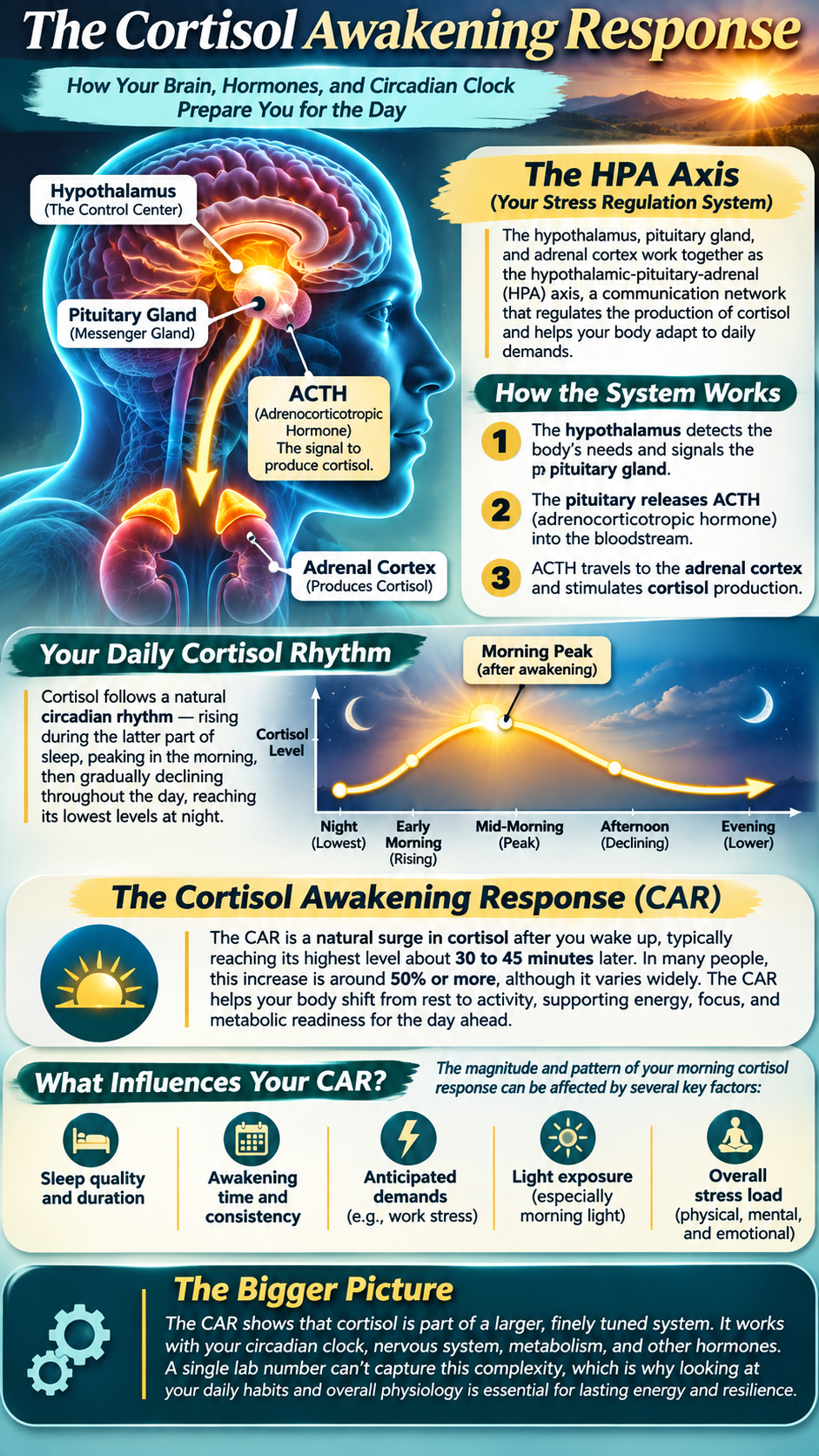
Scientists believe this morning increase may help prepare the organism for the transition into daytime activity. Cortisol influences glucose availability, vascular responsiveness, immune regulation, and interactions with other hormonal systems. However, researchers continue investigating the CAR’s precise biological purpose. It would be an oversimplification to describe it as a direct measurement of the body’s readiness to handle stress.
What makes the response particularly interesting is its relationship with the brain’s circadian clock. The suprachiasmatic nucleus, located within the hypothalamus, receives information about environmental light and coordinates daily physiological rhythms. Signals involving the circadian system, sleep-wake transitions, and adrenal responsiveness contribute to morning cortisol patterns. This explains why consistent sleep schedules and appropriately timed light exposure may influence hormonal organization.
The CAR therefore illustrates an important principle of functional physiology: hormones do not operate as isolated chemical messengers. Their effects depend on timing, tissue sensitivity, receptor activity, feedback regulation, and communication between multiple organ systems. A single laboratory number rarely captures the complexity of this biological coordination.
When the Morning Cortisol Curve Becomes Unusual
A healthy cortisol awakening response is not necessarily the largest possible response. Nor does a smaller response automatically indicate disease. Researchers have observed both exaggerated and blunted CAR patterns in association with different psychological, occupational, and medical circumstances. These findings require careful interpretation because the same hormonal pattern can occur for several different reasons.
An elevated CAR has sometimes been associated with anticipated demands, occupational stress, and certain anxiety-related conditions. Consider someone who awakens knowing that an important presentation, difficult conversation, or demanding workday awaits. The brain may begin anticipating these responsibilities before the individual fully engages with the morning. Some studies suggest that anticipated stress can influence the magnitude of the awakening response, although findings vary according to study design and population.
A reduced CAR has been reported in certain groups experiencing chronic stress, fatigue-related conditions, disrupted sleep, and some psychiatric disorders. Yet the research remains inconsistent, and substantial overlap exists between people with and without these conditions. A flattened morning curve does not establish that the adrenal glands have become exhausted. The popular concept of adrenal fatigue lacks convincing scientific evidence as a distinct medical diagnosis.
This distinction deserves particular attention because people experiencing profound exhaustion frequently receive explanations that sound biologically persuasive but have not been adequately validated. Chronic stress can alter HPA-axis regulation, and genuine adrenal insufficiency can cause serious symptoms. However, these are not interchangeable conditions. Primary adrenal insufficiency, for example, involves inadequate adrenal hormone production and requires appropriate medical diagnosis and treatment.
Another challenge involves the extraordinary sensitivity of CAR measurements to timing. If a person delays collecting their first saliva sample, the resulting curve may appear artificially flattened. A sample collected 15 minutes after awakening cannot reliably substitute for one collected immediately upon awakening. Even small deviations can substantially change the calculated response, making accurate collection procedures essential.
Consequently, an unusual CAR should prompt thoughtful investigation rather than an automatic diagnosis. It may reflect sleep disruption, medication effects, altered circadian timing, measurement error, psychological circumstances, or physiological differences that remain poorly understood. The pattern provides a research-informed clue, not a definitive explanation for fatigue, weight gain, anxiety, or chronic illness.
Your Brain, Autonomic Nervous System, and Morning Stress Response
The HPA axis does not function independently of the autonomic nervous system. These two regulatory networks coordinate responses to environmental challenges, internal metabolic demands, and emotional experiences. The sympathetic nervous system helps mobilize resources during periods of heightened activity, while parasympathetic pathways contribute to digestion, cardiovascular regulation, and recovery.
During the transition from sleep to wakefulness, cardiovascular and autonomic activity changes. Blood pressure generally increases, alertness develops, and the body prepares for upright posture and movement. Cortisol participates in this broader physiological transition, but it is not the sole driver. Catecholamines, circadian signaling, sleep architecture, and behavioral factors also contribute.
The vagus nerve plays an important role in parasympathetic communication between the brain and several internal organs. Its activity influences heart rate regulation, gastrointestinal function, and aspects of inflammatory signaling. Because autonomic and endocrine systems interact, researchers have investigated relationships between heart rate variability, psychological stress, and cortisol regulation. These relationships are complex, however, and a low heart rate variability measurement cannot diagnose an abnormal CAR.
This is where a broader functional assessment becomes valuable. Someone reporting morning exhaustion may benefit from evaluation of sleep quality, breathing patterns, physical activity, nutritional adequacy, medication exposure, and relevant medical conditions. Persistent fatigue may also warrant investigation for anemia, thyroid dysfunction, sleep apnea, depression, or other recognized causes. Focusing exclusively on cortisol risks overlooking conditions that require different interventions.
Chiropractic care may help selected patients with musculoskeletal pain and mobility limitations, potentially improving comfort and sleep. However, current evidence does not establish that spinal adjustments normalize the cortisol awakening response or treat HPA-axis disorders. Distinguishing plausible indirect benefits from demonstrated endocrine effects protects patients from exaggerated claims.
The larger lesson remains compelling. Morning physiology reflects communication between the brain, endocrine system, autonomic nervous system, cardiovascular system, and metabolic tissues. Supporting these interconnected systems requires more than chasing a particular cortisol number.
Sleep, Circadian Disruption, and the Hormonal Cost of Modern Living
Human beings evolved under predictable cycles of daylight and darkness. Morning light signaled the beginning of activity, while nighttime darkness supported the biological processes associated with sleep. Modern environments have dramatically altered these signals through artificial lighting, late-night screen exposure, irregular work schedules, and inconsistent waking times.
Circadian disruption can affect the timing of cortisol secretion. Shift workers, for example, may experience hormonal rhythms that become misaligned with their required sleep and activity schedules. Individuals who alternate between early weekday mornings and substantially later weekend awakenings may also create irregular circadian signals. Researchers sometimes describe this mismatch between biological timing and social obligations as social jet lag.
Sleep restriction introduces another layer of complexity. Insufficient sleep can influence HPA-axis activity, glucose metabolism, appetite regulation, and inflammatory processes. Nevertheless, the relationship between sleep duration and the CAR is not straightforward. Some studies report altered awakening responses following restricted sleep, while others find different or minimal effects depending on timing and experimental conditions.
Sleep quality also matters. Obstructive sleep apnea can repeatedly interrupt breathing, fragment sleep, and contribute to morning headaches, daytime fatigue, and cardiovascular strain. Someone experiencing these symptoms might incorrectly attribute their exhaustion to low cortisol when the underlying problem involves disrupted nighttime breathing. A detailed sleep history can therefore provide more useful information than an isolated hormone measurement.
Light exposure deserves special consideration because it helps synchronize the circadian clock. Bright light shortly after awakening can reinforce the biological distinction between day and night, particularly when paired with consistent sleep schedules. Evening light reduction may support melatonin timing and sleep onset. These approaches are grounded in circadian biology, although they should not be promoted as guaranteed methods for increasing or decreasing the CAR.
The goal is not to manipulate cortisol into an arbitrary laboratory range. It is to establish conditions that support predictable sleep-wake rhythms, restorative sleep, and healthy daytime functioning.
Blood Sugar, Caffeine, and the Metabolic Demands of Morning
Cortisol contributes to glucose regulation by influencing hepatic glucose production and interactions with insulin. During fasting, the body must maintain sufficient circulating glucose to support essential tissues. Cortisol participates in this process alongside glucagon, catecholamines, growth hormone, and other metabolic signals.
The early morning period also involves a physiological increase in glucose production in many individuals. In people with diabetes, this may contribute to the dawn phenomenon, characterized by elevated morning blood glucose. Circadian changes in insulin sensitivity and hormonal activity contribute to this process. However, the CAR alone cannot explain an individual’s fasting glucose concentration.
Caffeine adds another dimension to morning physiology. It promotes alertness primarily by blocking adenosine receptors in the nervous system. Acute caffeine consumption can also influence cortisol responses, particularly among people who consume caffeine infrequently. Habitual users often develop some tolerance to these effects. The popular claim that everyone must wait exactly 90 minutes after awakening before drinking coffee to protect cortisol regulation is not supported by strong clinical evidence.
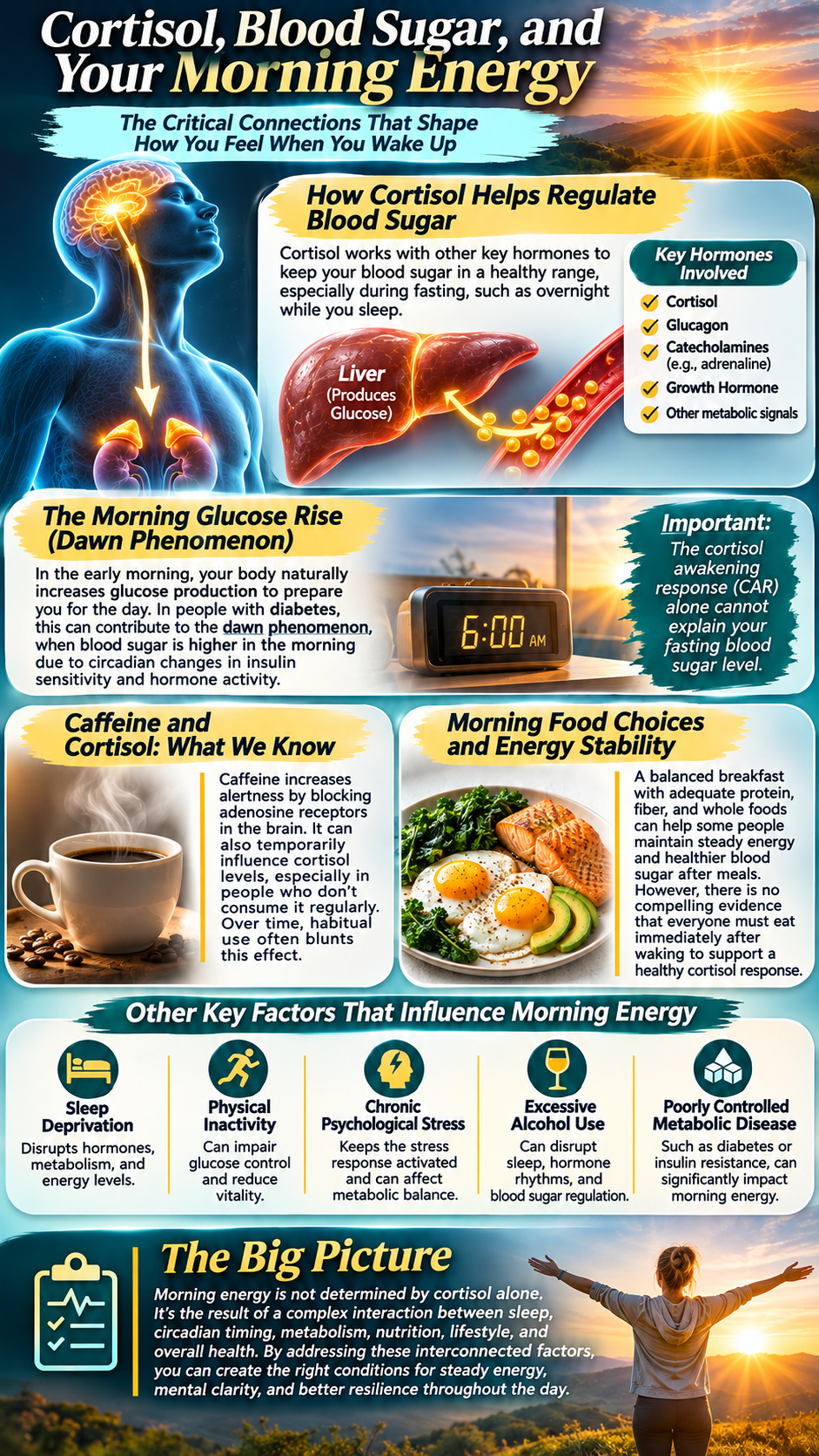
Morning food choices can influence energy stability, especially among individuals with impaired glucose regulation. A balanced breakfast containing adequate protein, fiber, and minimally processed foods may help some people manage hunger and post-meal glucose excursions. Others tolerate a later first meal without difficulty. There is no compelling evidence that every person must eat immediately after awakening to preserve a healthy cortisol response.
What matters most is the broader metabolic context. Sleep deprivation, physical inactivity, chronic psychological stress, excessive alcohol consumption, and poorly controlled metabolic disease can all influence how someone feels during the morning. Correcting these contributors may improve energy and well-being even when no measurable change in CAR occurs.
Understanding morning cortisol physiology therefore requires abandoning simplistic explanations. The body does not operate through a single hormone, and morning fatigue cannot be reduced to one endocrine measurement. Meaningful investigation begins by examining the relationships between sleep, circadian timing, metabolic function, nervous system activity, and genuine medical disorders.
When the Body’s Internal Clock Loses Its Rhythm
The human body possesses an extraordinary ability to anticipate the demands of each new day. Long before your eyes open, your brain begins coordinating hormonal activity, metabolic function, body temperature, and cardiovascular readiness. This preparation is not accidental. It reflects millions of years of biological adaptation to predictable cycles of daylight, darkness, activity, and recovery. Yet modern lifestyles increasingly interfere with the environmental signals that help organize these essential processes.
Consider the individual who awakens exhausted, struggles through the morning, and finally experiences a surge of energy around nine o’clock at night. They may assume their adrenal glands have stopped functioning properly or that their body simply cannot handle stress anymore. In reality, several physiological disturbances could explain this pattern, including circadian misalignment, inadequate sleep, psychological strain, metabolic dysfunction, or an underlying medical condition. The cortisol awakening response represents one piece of this complicated puzzle, but it cannot independently identify the cause.
Cortisol normally increases during the first 30 to 45 minutes after awakening, helping coordinate the transition into daytime activity. Researchers have observed variations in this response among individuals experiencing different forms of stress, disrupted sleep, and psychiatric or medical conditions. However, these findings remain inconsistent, and neither an unusually large nor a small response automatically indicates disease. Understanding this distinction prevents us from confusing a potentially informative biological measurement with a definitive diagnosis.
The opportunity for meaningful improvement begins by examining the conditions surrounding cortisol regulation. Rather than attempting to stimulate or suppress the adrenal glands, we can support the biological systems responsible for maintaining healthy circadian timing, restorative sleep, metabolic stability, and psychological resilience. This approach addresses the physiological environment in which cortisol operates rather than treating the hormone as an isolated problem.
The Brain-Adrenal Connection and the Physiology of Recovery
The hypothalamic-pituitary-adrenal axis functions as a sophisticated communication network between the brain and adrenal glands. When physiological demands change, the hypothalamus releases corticotropin-releasing hormone, which stimulates the pituitary gland to produce adrenocorticotropic hormone. This messenger travels through the bloodstream and signals the adrenal cortex to release cortisol. Feedback mechanisms then help regulate subsequent hormone production, maintaining a dynamic balance between physiological needs and circulating hormone concentrations.
This network interacts continuously with the autonomic nervous system, immune system, metabolic tissues, and circadian clock. Cortisol helps regulate glucose availability, supports normal blood pressure, and influences inflammatory signaling. The sympathetic nervous system coordinates rapid responses to immediate demands, while parasympathetic pathways contribute to digestion, cardiovascular regulation, and recovery. These systems are interconnected, although their activities cannot be reduced to a single cortisol measurement.
Chronic psychological stress can influence this regulatory network, particularly when accompanied by insufficient sleep, persistent pain, or disrupted daily routines. However, prolonged stress does not invariably produce high cortisol, nor does exhaustion prove that cortisol production has become depleted. Genuine adrenal insufficiency is a recognized medical disorder, whereas the commonly marketed diagnosis of adrenal fatigue lacks adequate scientific validation.
A more useful strategy involves strengthening the foundations of physiological regulation while investigating persistent symptoms appropriately. This means examining how someone sleeps, eats, moves, manages psychological demands, and responds to their daily environment. These factors offer practical opportunities for improvement without assuming that every symptom originates in the adrenal glands.
How to Restore a Healthier Morning Rhythm Naturally: Your At-Home Action Plan
Reawaken Your Biological Clock With Natural Morning Sunlight
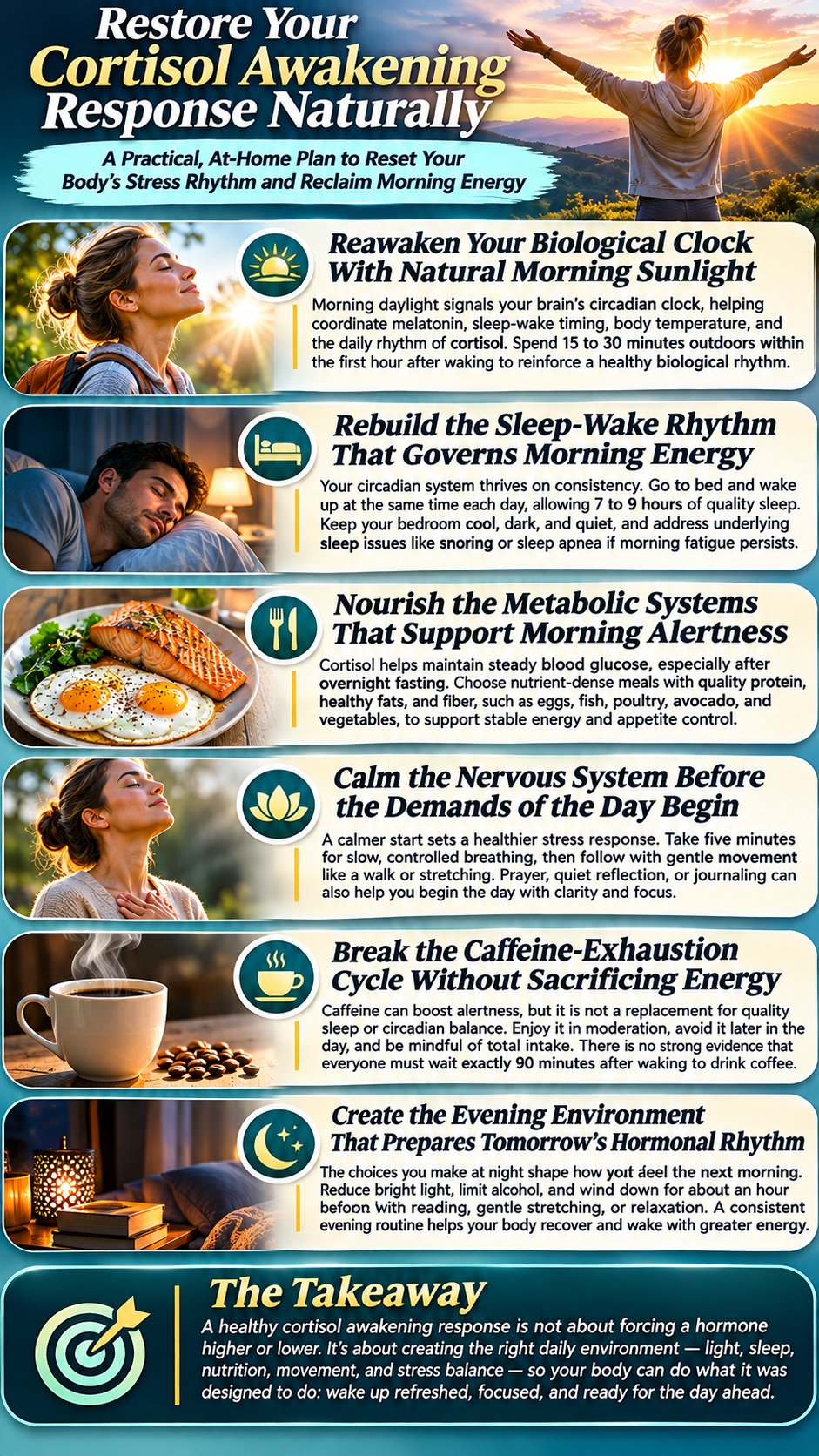
One of the most powerful environmental signals influencing human circadian biology is natural daylight. Specialized retinal cells detect environmental illumination and communicate with the suprachiasmatic nucleus, the brain’s central circadian clock. This system helps coordinate melatonin secretion, sleep-wake timing, body temperature, and the daily rhythm of cortisol production.
Unfortunately, many people spend their mornings inside dimly illuminated homes, offices, and vehicles. Meanwhile, their evenings unfold beneath bright artificial lighting and illuminated screens. This reversal of natural light exposure can weaken the distinction between biological day and night, particularly when combined with irregular sleeping patterns.
Begin by spending approximately 15 to 30 minutes outdoors within the first hour after awakening. A morning walk, quiet time on the porch, or breakfast near an outdoor garden provides an opportunity to receive natural daylight. The ideal duration depends on weather, season, brightness, and individual circumstances. There is no need to stare directly at the sun, and appropriate sun protection remains important.
Morning light can help reinforce circadian timing, especially for individuals whose internal clocks tend to run late. Although research has not established sunlight exposure as a guaranteed way to normalize the cortisol awakening response, its benefits for circadian alignment make it a valuable foundational habit.
Rebuild the Sleep-Wake Rhythm That Governs Morning Energy
The body’s circadian system thrives on consistency. When bedtime and awakening time fluctuate dramatically, the internal clock may struggle to align with daily responsibilities. Someone who awakens at five thirty during the workweek but sleeps until ten on weekends may experience a form of circadian disruption commonly described as social jet lag.
Sleep restriction adds another physiological burden. Inadequate sleep can impair glucose regulation, influence appetite, alter mood, and reduce cognitive performance. These effects may create symptoms that resemble hormonal dysfunction even when the cortisol awakening response remains within expected patterns.
Choose a consistent awakening time and maintain it throughout the week, ideally within approximately thirty to sixty minutes. Establish a bedtime that allows seven to nine hours of sleep, recognizing that individual requirements vary. Keep the bedroom cool, dark, and quiet, and reduce stimulating activities before bedtime.
If adequate time in bed does not produce restorative sleep, investigate potential causes rather than simply extending sleep duration. Loud snoring, nighttime gasping, morning headaches, and excessive daytime sleepiness may indicate obstructive sleep apnea. Addressing an underlying sleep disorder can be essential for restoring morning alertness and protecting long-term cardiovascular health.
Nourish the Metabolic Systems That Support Morning Alertness
Cortisol plays an important role in maintaining blood glucose availability, particularly during periods without food intake. Overnight, the liver helps sustain circulating glucose while hormonal signals coordinate energy production and utilization. During the morning, circadian changes in insulin sensitivity and other metabolic processes influence how the body responds to its first meal.
A diet dominated by refined carbohydrates, sugary beverages, and highly processed foods may contribute to poor satiety and unfavorable glucose patterns in susceptible individuals. However, the relationship between food choices and cortisol is complex. There is no convincing evidence that everyone must eat immediately after awakening to maintain a healthy CAR.
For individuals who enjoy breakfast, emphasize protein-rich foods and nutrient-dense ingredients. Eggs, wild-caught fish, poultry, avocado, and fiber-rich vegetables can form satisfying meals. Those following a ketogenic or lower-carbohydrate dietary pattern should still prioritize adequate nutrition, dietary quality, and individual metabolic needs.
Intermittent fasting may be appropriate for some adults, but it is not a proven treatment for abnormal cortisol awakening responses. People experiencing persistent fatigue should evaluate whether their eating schedule supports sufficient energy intake and comfortable daily functioning. Individuals with diabetes or other medical considerations may require additional guidance before changing fasting practices.
Calm the Nervous System Before the Demands of the Day Begin
Modern mornings often begin with an immediate flood of information. Smartphones deliver financial concerns, work responsibilities, troubling headlines, and social expectations before someone has even left the bedroom. Although these experiences do not necessarily create an abnormal cortisol response, they can increase perceived psychological pressure and interfere with a calm transition into the day.
The autonomic nervous system responds dynamically to internal and external demands. Slow breathing, mindfulness, and gentle movement can influence cardiovascular and emotional regulation. Research suggests that certain breathing practices may reduce perceived stress and support relaxation, although evidence that they reliably normalize CAR measurements remains limited.
Begin the morning with five minutes of comfortable, controlled breathing before opening email or social media. Inhale gently for approximately four seconds and exhale for six, adjusting the rhythm to avoid discomfort. Follow this practice with ten minutes of walking, stretching, or gentle mobility exercises.
Prayer, quiet reflection, or journaling may also provide a meaningful opportunity to organize thoughts and establish priorities. The objective is not to eliminate normal physiological stress responses. It is to develop practical habits that make daily demands more manageable while supporting psychological recovery.
Break the Caffeine-Exhaustion Cycle Without Sacrificing Energy
Caffeine has become the morning solution for millions of exhausted adults. Its stimulating effects occur primarily through blocking adenosine receptors, temporarily reducing the sensation of sleepiness. However, caffeine does not correct insufficient sleep, circadian misalignment, or underlying metabolic problems.
Excessive caffeine consumption may contribute to anxiety, palpitations, and difficulty sleeping in susceptible individuals. Because caffeine can remain biologically active for several hours, afternoon consumption may interfere with nighttime recovery. This creates a potentially frustrating cycle in which poor sleep increases the desire for caffeine the following morning.
Evaluate your total daily caffeine intake and consider gradually reducing excessive consumption. Avoid caffeine during the six to eight hours before bedtime, extending that interval if sleep remains sensitive. Contrary to popular claims, there is insufficient evidence that everyone must delay morning coffee exactly ninety minutes to protect cortisol regulation.
The objective is to enjoy caffeine without depending on it to compensate for chronic exhaustion.
Create an Evening Environment That Prepares Tomorrow’s Hormonal Rhythm
The quality of tomorrow morning begins with the decisions made tonight. Bright evening lighting, irregular bedtimes, excessive alcohol consumption, and stimulating activities can interfere with normal sleep regulation. These influences affect more than cortisol, extending into melatonin timing, sleep architecture, and metabolic function.
Create a consistent evening routine beginning approximately one hour before bedtime. Reduce overhead lighting, silence unnecessary notifications, and replace stimulating activities with reading, gentle stretching, prayer, or relaxation. Maintain a comfortable bedroom environment and avoid relying on alcohol to induce sleep, since alcohol can fragment sleep later in the night.
These practices reinforce the environmental signals that distinguish daytime activity from nighttime recovery. Over time, improved sleep consistency may support better morning alertness and daytime functioning, even without directly measuring cortisol.
When Morning Exhaustion Requires a Deeper Investigation
Persistent fatigue should never be dismissed as simply excessive stress. Thyroid disorders, anemia, nutritional deficiencies, sleep apnea, depression, medication effects, and genuine adrenal insufficiency can produce overlapping symptoms. Appropriate evaluation depends on the individual’s medical history, examination, and clinical presentation.
A conventional morning serum cortisol measurement may help investigate suspected adrenal insufficiency, sometimes alongside ACTH testing and additional endocrine evaluation. In contrast, the cortisol awakening response remains primarily a research measurement rather than a validated diagnostic test for chronic stress or adrenal fatigue.
Supplements marketed as adrenal support also warrant caution. Certain herbs may interact with medications, while glandular products can contain biologically active substances. Nutritional supplementation should address specific needs rather than presumed adrenal exhaustion.
Your First Hour Can Become the Foundation for Lasting Change
The cortisol awakening response reveals something remarkable about human physiology: the body continuously anticipates, coordinates, and adapts to changing demands. Yet healthy function depends on far more than the concentration of a single hormone.
Morning sunlight, restorative sleep, appropriate nutrition, regular movement, and intentional stress management provide practical ways to support the systems that influence daily energy and resilience. These habits do not guarantee a particular cortisol curve, but they establish conditions that promote healthier circadian and metabolic regulation.
The ultimate objective is not to chase higher morning cortisol or eliminate the body’s natural stress response. It is to restore the daily patterns that allow the nervous system, endocrine system, and metabolism to function together effectively.
When you consistently protect those foundations, your mornings may gradually become less about overcoming exhaustion and more about beginning the day with clarity, stability, and sustainable energy.