
The Ancient Healing Ritual That Modern Science Is Rediscovering
Long before physicians could measure inflammation, analyze mitochondrial function, or monitor cardiovascular health, human beings understood something remarkable about heat. Ancient civilizations discovered that exposing the body to elevated temperatures produced profound physical sensations, altered circulation, encouraged perspiration, and often left people feeling renewed. From the smoke saunas of Finland to the Roman bathhouses and Native American sweat lodges, heat became an important part of cultural traditions surrounding cleansing, relaxation, and physical restoration.
Today, scientists are beginning to explain what earlier generations observed through experience. Sauna therapy creates a controlled physiological challenge that forces the body to adapt. As core temperature rises, the cardiovascular system increases its workload, blood vessels expand, sweat glands activate, and cells initiate protective responses against thermal stress. These changes resemble certain aspects of physical exercise, although sitting in a sauna cannot reproduce every benefit of muscular activity.
The most fascinating aspect of sauna therapy involves a biological principle called hormesis. Hormesis describes how exposure to a manageable amount of stress can activate protective mechanisms that help an organism tolerate future challenges. Exercise, temporary calorie restriction, and certain environmental stresses can produce adaptive responses when applied appropriately. Heat exposure operates through similar pathways, stimulating cellular defenses that might otherwise remain relatively inactive.
However, the relationship between heat and health depends on dosage. A brief, tolerable exposure can challenge the body without overwhelming its regulatory systems. Excessive heat, prolonged dehydration, or exposure during an unstable medical condition can cause harm. The therapeutic potential of sauna bathing therefore comes from understanding how the body responds to heat and respecting the limits of human physiology.
This distinction matters because sauna therapy is frequently promoted as a universal detoxification treatment or a shortcut to cardiovascular fitness. The actual science tells a more interesting story. Heat exposure influences multiple biological systems simultaneously, but the strength of evidence varies considerably among proposed benefits. Understanding those differences allows people to use sauna therapy as a potentially valuable component of a comprehensive wellness strategy without confusing promising mechanisms with proven clinical outcomes.
Heat Stress: The Biological Alarm That Activates Adaptation
The human body maintains its internal temperature within a remarkably narrow range. Specialized neurons in the hypothalamus continuously integrate information from temperature-sensitive receptors throughout the body. When environmental heat threatens thermal balance, the nervous system activates responses designed to transfer excess heat away from vital organs.
One of the earliest responses involves cutaneous vasodilation, the widening of blood vessels near the skin. This redirects warm blood toward the body’s surface, where heat can dissipate through evaporation and other physical processes. Sweat glands simultaneously release fluid onto the skin, allowing evaporation to remove thermal energy. These responses demand additional cardiovascular work, particularly when ambient temperatures are high.
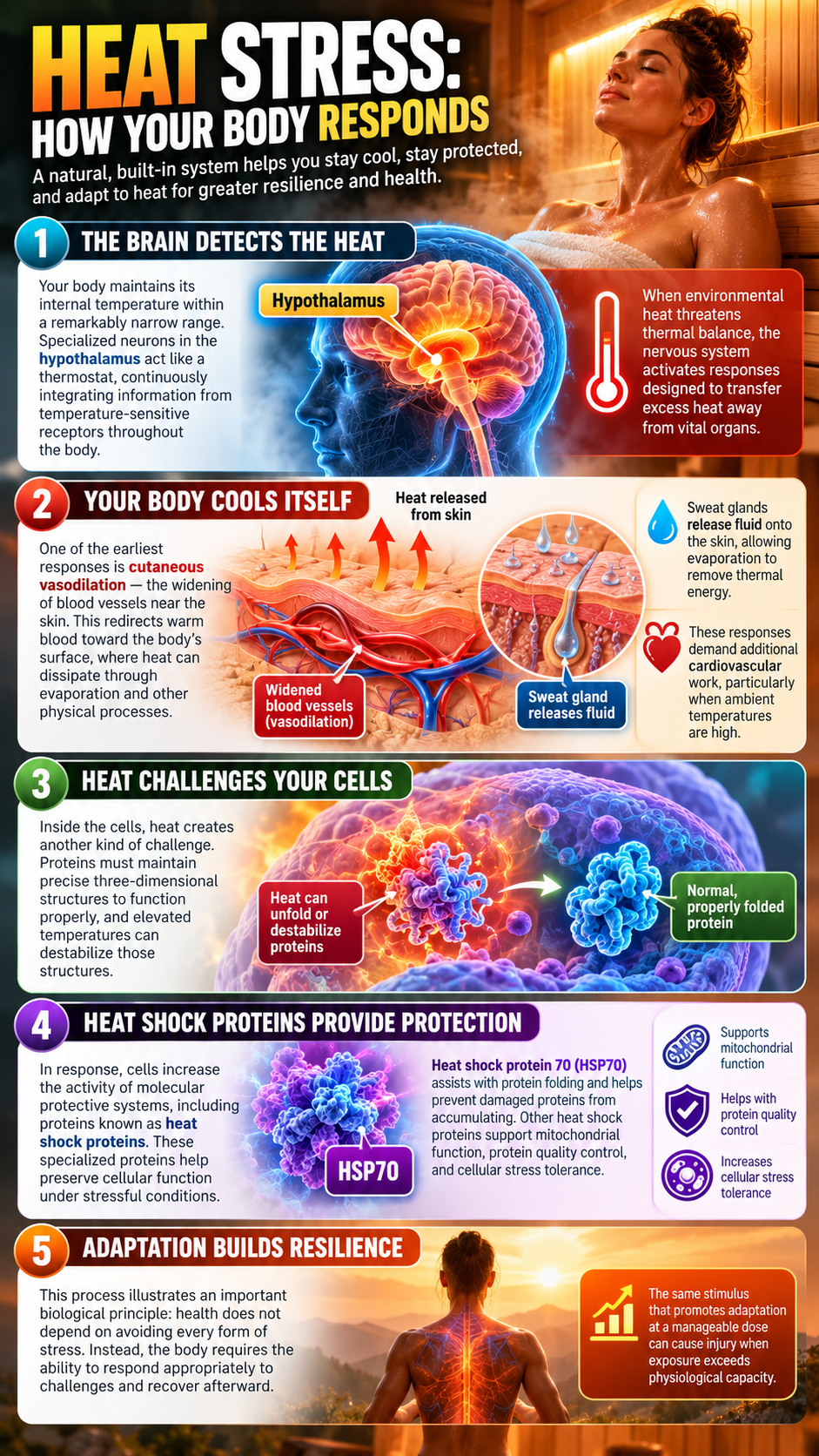
Inside the cells, heat creates another kind of challenge. Proteins must maintain precise three-dimensional structures to function properly, and elevated temperatures can destabilize those structures. In response, cells increase the activity of molecular protective systems, including proteins known as heat shock proteins. These specialized proteins help preserve cellular function under stressful conditions.
Heat shock protein 70, commonly called HSP70, is particularly interesting because it assists with protein folding and helps prevent damaged proteins from accumulating. Other heat shock proteins support mitochondrial function, protein quality control, and cellular stress tolerance. Research demonstrates that heat exposure can stimulate these systems, although the magnitude of the response depends on temperature, exposure duration, tissue type, and individual conditioning.
This process illustrates an important biological principle: health does not depend on avoiding every form of stress. Instead, the body requires the ability to respond appropriately to challenges and recover afterward. The same stimulus that promotes adaptation at a manageable dose can cause injury when exposure exceeds physiological capacity.
The Cardiovascular System: Why Your Heart Responds to Sauna Heat
One of the most immediate effects of sauna bathing occurs within the cardiovascular system. As blood vessels supplying the skin expand, the heart increases its output to maintain circulation and transport heat toward the body’s surface. Heart rate commonly rises, sometimes reaching levels associated with light or moderate physical activity, depending on sauna conditions and individual tolerance.
This cardiovascular response helps explain why researchers have become interested in the relationship between sauna bathing and heart health. Repeated heat exposure may influence endothelial function, arterial stiffness, autonomic regulation, and blood pressure. The endothelium, a thin cellular lining inside blood vessels, plays an essential role in regulating vascular tone, blood flow, and inflammatory signaling.
Nitric oxide is one of the molecules involved in this process. Produced by endothelial cells, nitric oxide helps blood vessels relax and supports normal vascular function. Some heat-therapy studies suggest that repeated exposure may improve vascular responses, potentially through changes in blood flow and endothelial signaling. However, the mechanisms are complex, and not every study demonstrates the same results.
Large observational studies from Finland have reported associations between frequent sauna bathing and lower rates of cardiovascular mortality. Research led by Jari Laukkanen and colleagues, published in JAMA Internal Medicine in 2015, followed 2,315 middle-aged Finnish men for approximately two decades. Men who reported bathing four to seven times weekly experienced lower rates of several cardiovascular outcomes than those using saunas once weekly.
These findings attracted considerable attention, but they require careful interpretation. Observational research cannot establish that sauna exposure itself caused the differences. Physical fitness, social relationships, lifestyle habits, baseline health, and other factors may contribute to the associations. Nevertheless, the findings provide a compelling reason to investigate controlled heat exposure through rigorous clinical trials.
The emerging picture suggests that sauna therapy may offer a useful cardiovascular stimulus for appropriately selected individuals. It does not replace aerobic exercise, resistance training, or necessary medical treatment. Instead, it may complement established strategies for supporting vascular health, particularly when practiced consistently and safely.
Cellular Defense: Heat Shock Proteins and the Maintenance of Healthy Tissue
Imagine a busy manufacturing facility where thousands of machines must operate continuously. If temperatures rise or equipment becomes unstable, a sophisticated maintenance crew must identify damaged components, stabilize critical systems, and restore normal production. Human cells operate through an equally intricate network of protective mechanisms.
Proteins serve as enzymes, structural supports, signaling molecules, and transport systems throughout the body. Their functions depend on maintaining proper molecular shapes. When cells encounter elevated temperatures, some proteins begin to unfold or interact incorrectly, threatening normal cellular operations.
Heat shock proteins function as molecular chaperones that help protect this delicate machinery. HSP70 and related proteins assist in refolding unstable proteins, limiting inappropriate aggregation, and directing severely damaged proteins toward degradation pathways. Their activity supports cellular resilience during heat exposure and other forms of physiological stress.
Scientists have investigated heat shock proteins in relation to aging, neurodegeneration, metabolic disorders, and inflammation. These proteins participate in fundamental cellular processes that influence how tissues respond to injury and environmental challenges. However, increasing heat shock protein expression does not automatically translate into preventing disease or extending human lifespan.
Researchers have also explored connections between heat exposure and autophagy, the cellular process that recycles damaged structures and unnecessary components. Heat can influence signaling pathways involved in protein turnover and cellular maintenance, particularly in experimental models. Yet the evidence that ordinary sauna sessions meaningfully increase beneficial autophagy in humans remains limited.
The practical significance lies in recognizing the difference between a plausible biological mechanism and a demonstrated treatment. Sauna therapy clearly challenges cellular temperature regulation and can activate protective responses. Whether these changes produce durable improvements in particular diseases requires more research.
Inflammation, Immune Signaling, and the Body’s Response to Heat
Inflammation is an essential component of human defense and tissue repair. When an infection develops or tissue becomes injured, immune cells release signaling molecules that coordinate the body’s response. Problems arise when inflammatory signaling remains persistently elevated or becomes poorly regulated.
Sauna exposure can temporarily alter immune and inflammatory markers. Heat stress influences circulating immune cells, stress hormones, and cytokine activity. Some studies report changes in inflammatory biomarkers after repeated sauna use, but the findings are not uniform across populations or protocols.
One reason involves the difference between acute and chronic inflammation. A temporary increase in certain inflammatory signals during heat exposure may form part of an adaptive stress response. Over time, repeated exposure might influence baseline inflammatory regulation, but this outcome cannot be assumed from a single session.
C-reactive protein, interleukin-6, and other markers have been examined in sauna research. Some observational findings associate greater sauna frequency with more favorable inflammatory profiles. However, these associations may also reflect differences in fitness, adiposity, smoking, diet, or other lifestyle factors.
There is also interest in how heat exposure influences the nervous system and immune communication. The autonomic nervous system participates in regulating vascular function, stress responses, and aspects of inflammatory signaling. Sauna bathing activates sympathetic responses during heating, while the recovery period may encourage relaxation and shifts in autonomic activity.
These interactions make sauna therapy scientifically intriguing, especially within a broader lifestyle program that emphasizes sleep, movement, nutrition, and stress regulation. Still, sauna use should not be represented as a proven treatment for autoimmune disease, chronic infections, or systemic inflammatory disorders.
Sweating and Detoxification: What Really Leaves the Body?
Perhaps no aspect of sauna therapy generates more excitement or misunderstanding than detoxification. The sight of perspiration pouring from the skin creates an understandable impression that unwanted substances are leaving the body. Sweat does contain water, electrolytes, metabolic compounds, and measurable concentrations of certain environmental contaminants. However, detecting a substance in perspiration does not necessarily mean sweating eliminates enough of it to improve health.
The body’s primary detoxification systems operate continuously through the liver, kidneys, gastrointestinal tract, and associated metabolic pathways. The liver transforms many substances through enzymatic reactions, making them easier to eliminate through bile or urine. The kidneys filter blood, regulate electrolytes, and excrete numerous water-soluble waste products. The gastrointestinal tract provides an important route for eliminating compounds secreted into bile.
Sweat glands serve a different primary purpose: temperature regulation. As body temperature rises, eccrine glands release fluid containing sodium, chloride, potassium, and other substances. Researchers have also identified trace amounts of metals and certain organic compounds in sweat samples. Studies investigating arsenic, cadmium, nickel, and lead suggest that perspiration can represent an additional excretion route for some substances.
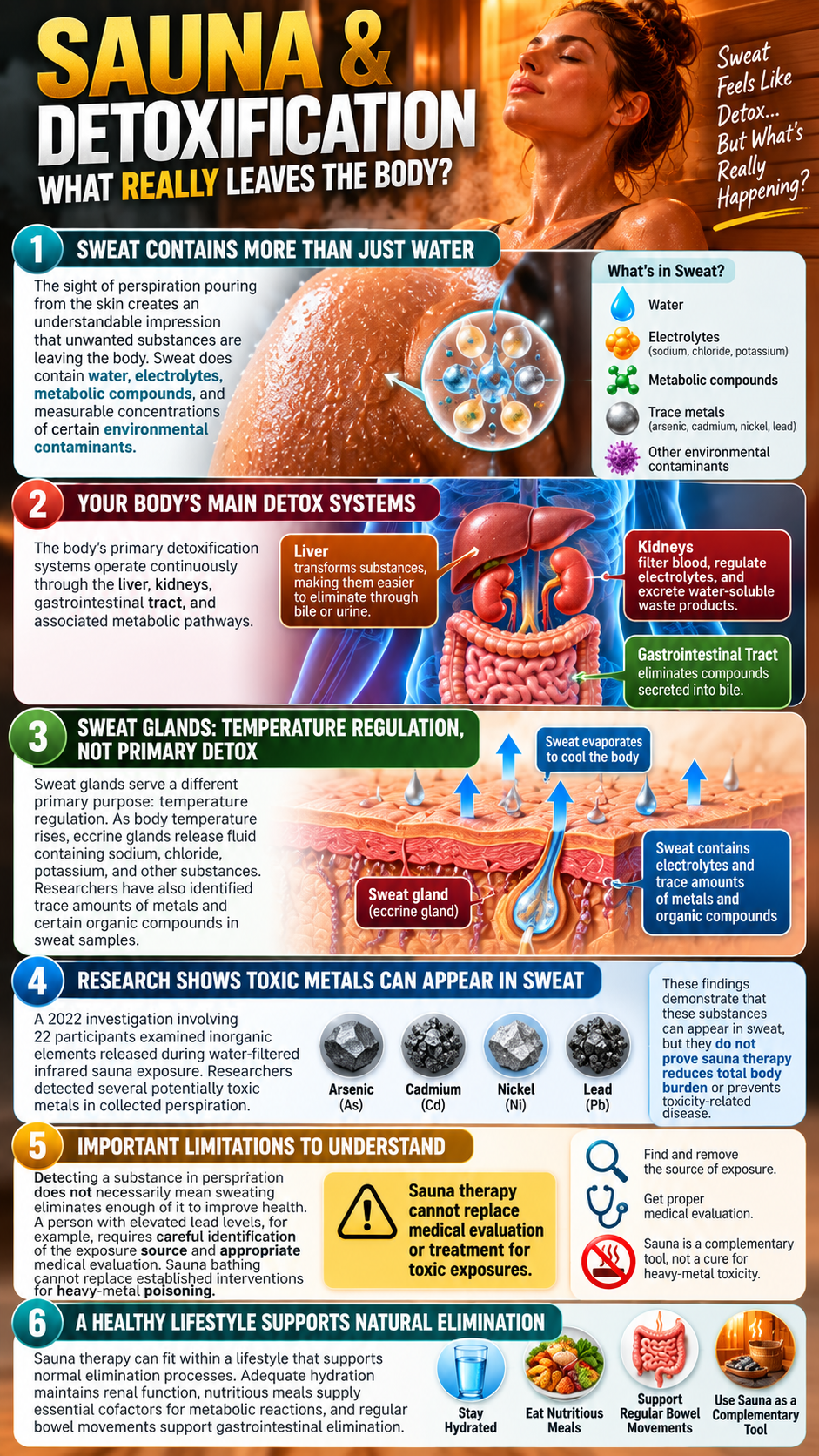
A 2022 investigation involving 22 participants examined inorganic elements released during water-filtered infrared sauna exposure. Researchers detected several potentially toxic metals in collected perspiration. The findings demonstrate that these substances can appear in sweat, but they do not establish that sauna treatment meaningfully reduces total body burden or prevents toxicity-related disease.
This distinction becomes especially important when discussing environmental exposures. A person with elevated lead levels, for example, requires careful identification of the exposure source and appropriate medical evaluation. Sauna bathing cannot replace established interventions for heavy-metal poisoning. Furthermore, contaminated skin surfaces and sweat collection methods can complicate measurements of trace substances.
Nevertheless, sauna therapy can fit within a lifestyle that supports normal elimination processes. Adequate hydration maintains renal function, nutritious meals supply essential cofactors for metabolic reactions, and regular bowel movements support gastrointestinal elimination. Heat exposure may provide additional physiological stimulation, but the strongest justification for sauna use currently rests on its cardiovascular, thermoregulatory, and potentially restorative effects rather than proven toxin clearance.
Mitochondria, Metabolism, and the Energy-Producing Machinery of Life
Every heartbeat, muscle contraction, nerve impulse, and cellular repair process requires energy. Much of that energy comes from mitochondria, specialized structures responsible for producing adenosine triphosphate, commonly known as ATP. Their function depends on coordinated interactions among nutrients, oxygen availability, metabolic enzymes, and cellular signaling pathways.
Heat stress temporarily increases the body’s energy requirements. Maintaining circulation, producing sweat, and activating cellular protective mechanisms all require metabolic resources. Consequently, sauna exposure can elevate heart rate and energy expenditure above resting levels. However, the increase should not be confused with the energy demands or muscular adaptations produced by structured exercise.
Researchers studying passive heat therapy have investigated its effects on insulin sensitivity, glucose regulation, and mitochondrial signaling. Some experimental studies suggest that repeated heating may influence pathways involved in metabolic adaptation, particularly among people with limited exercise capacity. Yet human trials remain relatively small, and results vary according to exposure protocols and participant characteristics.
One pathway of interest involves PGC-1α, a regulatory protein associated with mitochondrial biogenesis and metabolic adaptation. Heat stress can influence signaling networks connected to mitochondrial maintenance in experimental systems. Whether typical sauna sessions consistently produce meaningful increases in human mitochondrial capacity remains uncertain.
This matters for people struggling with fatigue, metabolic dysfunction, or poor exercise tolerance. Sauna therapy may provide a manageable physiological challenge for some individuals, but it does not directly correct nutritional deficiencies, thyroid disorders, sleep deprivation, or other underlying causes of low energy. Those conditions deserve individualized investigation rather than an assumption that increased heat exposure will restore cellular function.
A comprehensive metabolic strategy should therefore combine appropriate movement, adequate protein, micronutrient sufficiency, restorative sleep, and management of relevant medical conditions. Sauna bathing may complement these interventions by providing a distinct thermal stimulus. Its potential value comes from supporting adaptive physiology, not replacing the foundational requirements for cellular energy production.
The Brain, Nervous System, and the Experience of Deep Relaxation
The nervous system coordinates nearly every physiological response to sauna exposure. Temperature-sensitive receptors communicate with the hypothalamus, which adjusts circulation, sweating, and autonomic activity. During heating, sympathetic nervous system activity generally increases to help maintain cardiovascular stability and thermal regulation.
This response may seem contradictory because many people associate sauna bathing with profound relaxation. Yet the sensation of calm frequently develops during or after the heating period, when the body begins recovering from the thermal challenge. The transition from activation toward recovery may contribute to the subjective restoration people experience.
Researchers have investigated sauna bathing in relation to mood, sleep quality, and psychological well-being. Small studies and observational findings suggest possible benefits, although the evidence is not strong enough to establish sauna therapy as a treatment for anxiety, depression, or insomnia. Relaxation may also arise from the quiet environment, reduced distractions, and deliberate time away from daily responsibilities.
Heat exposure also influences cerebral circulation and thermoregulation. The brain depends on carefully controlled blood flow, oxygen delivery, and temperature stability. While modest thermal challenges are generally tolerated by healthy adults, excessive heat can impair concentration, produce dizziness, and eventually cause dangerous neurological symptoms.
The relationship between sauna bathing and brain health has attracted attention following observational studies associating frequent sauna use with lower dementia risk. These findings are intriguing but cannot demonstrate that heat exposure prevents neurodegenerative disease. Lifestyle characteristics and cardiovascular health may explain part of the association.
From a functional wellness perspective, the practical opportunity involves creating conditions that support nervous system recovery. A comfortable sauna session, followed by gradual cooling, hydration, and restful sleep, may become a useful recovery ritual. The objective should be improving tolerance and restoration rather than forcing the nervous system through increasingly extreme temperatures.
Traditional Sauna Versus Infrared Sauna: Understanding the Difference
Not all sauna experiences deliver heat in the same way. Traditional Finnish saunas generally heat the surrounding air, often operating between approximately 70°C and 100°C. The body absorbs heat through convection and radiation, while sweating and increased skin blood flow help regulate internal temperature.
Infrared saunas use radiant energy to transfer heat to the body while often maintaining lower ambient air temperatures, commonly around 40°C to 60°C. These environments may feel more tolerable to individuals who find traditional sauna temperatures uncomfortable. However, lower air temperature does not automatically mean that infrared exposure is safer for every person.
Manufacturers frequently claim that infrared heat penetrates deeply into tissues and produces superior detoxification or cellular repair. Although infrared radiation can transfer energy into superficial tissues, claims of uniquely deep therapeutic penetration or substantially greater toxin removal require stronger clinical evidence. The relevant physiological outcome depends on the actual heat dose delivered to the body.
Traditional sauna bathing currently has a larger body of long-term observational research, particularly from Finland. Infrared sauna studies have explored cardiovascular function, pain, and other outcomes, but protocols differ considerably. Direct comparisons remain insufficient to conclude that one approach universally produces better health outcomes.
The most practical choice depends on individual tolerance, medical considerations, access, and personal preference. A person who comfortably uses a traditional sauna may benefit from that established practice. Someone sensitive to intense ambient heat may prefer a lower-temperature infrared environment. Consistency and safety matter more than marketing claims about a particular heating technology.
Your At-Home Sauna Therapy Action Plan: Building Heat Tolerance Safely
The first principle of an effective sauna routine is to begin with a manageable exposure rather than attempting to reproduce the habits of experienced sauna users. Someone unfamiliar with heat stress may initially tolerate only five to ten minutes in a moderately heated environment. This is sufficient to observe individual responses, including changes in heart rate, sweating, perceived exertion, and recovery.
For generally healthy adults, an initial schedule of two or three sessions weekly may provide a reasonable starting point. Traditional sauna temperatures can be adjusted to personal comfort, while infrared units can be operated according to manufacturer guidance. There is no universally established therapeutic temperature or duration, and hotter conditions should never be assumed to produce better results.
As tolerance develops, some individuals may gradually extend sessions toward 15 to 20 minutes. Progression should depend on comfort, hydration, and the absence of concerning symptoms. The Finnish observational studies frequently discussed in sauna research involved habitual users, so their exposure patterns should not be interpreted as prescriptions for beginners.
Hydration deserves particular attention because sweating can remove substantial quantities of fluid and electrolytes. Drinking water before and after sauna use helps replace fluid losses. Individuals experiencing heavy sweating may also need to consider sodium replacement, especially after prolonged exercise or exposure to hot environments. However, electrolyte supplementation should account for kidney function, blood pressure, medications, and other individual factors.
A useful method for estimating fluid loss involves weighing yourself before and after a session under comparable conditions. A decrease of one kilogram generally represents approximately one liter of net fluid loss, although fluid intake and urination during the interval affect the calculation. The purpose of this measurement is to guide sensible rehydration, not to celebrate temporary weight reduction.
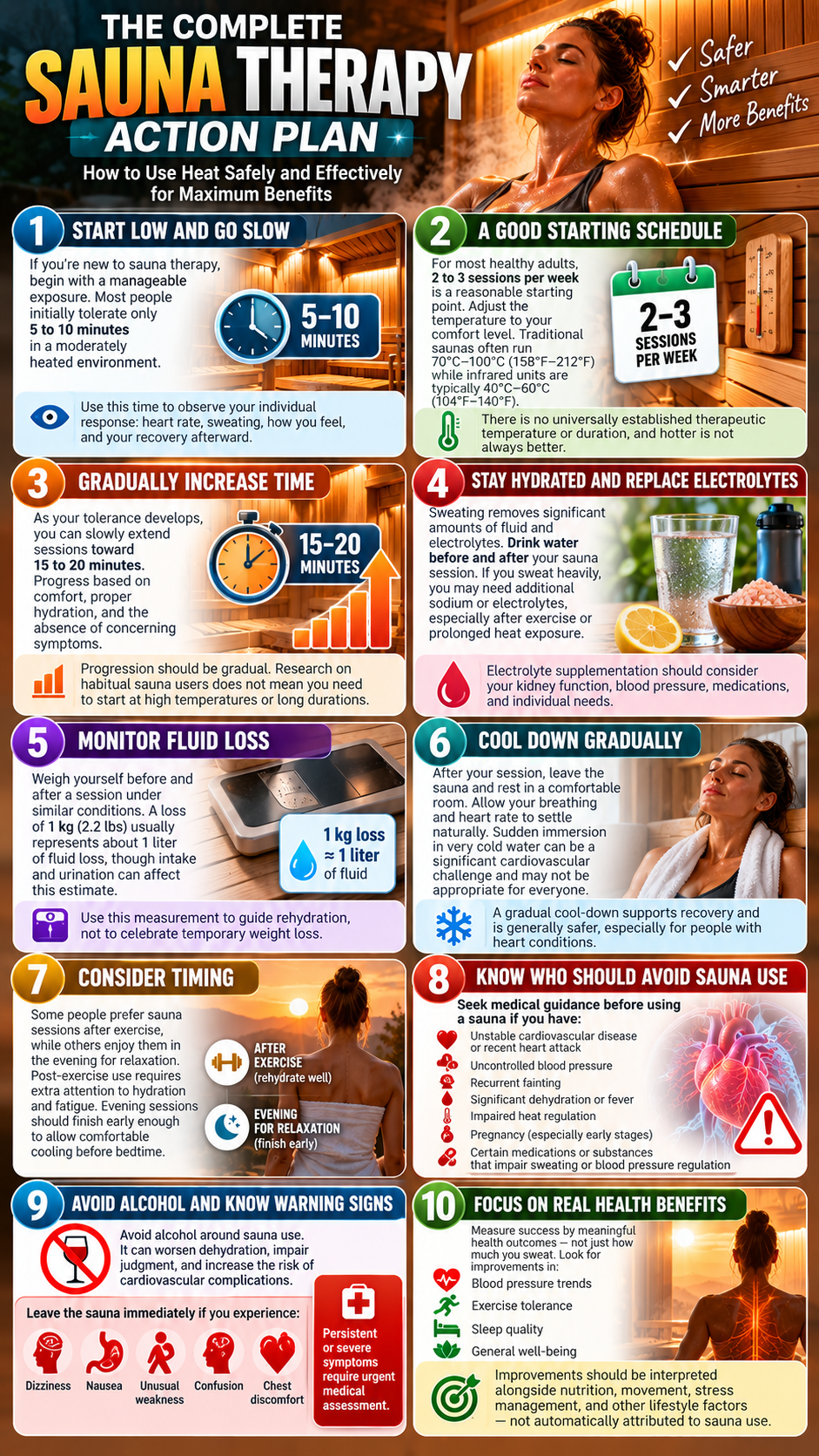
Cooling down should occur gradually. Leaving the heated environment, sitting in a comfortable room, and allowing breathing and heart rate to settle can support recovery. Sudden immersion in extremely cold water produces another significant cardiovascular challenge and may be inappropriate for people with heart disease, arrhythmias, or blood pressure instability.
Timing can also influence the experience. Some people enjoy sauna bathing after exercise, while others prefer evening sessions as part of a relaxation routine. Post-exercise heat exposure requires additional attention to hydration and fatigue because the body may already be carrying a substantial thermal load. Evening sessions should finish early enough to permit comfortable cooling before bedtime.
Individuals with unstable cardiovascular disease, recent heart attack, uncontrolled blood pressure, recurrent fainting, significant dehydration, fever, or impaired heat regulation should seek medical guidance before using a sauna. Pregnancy also warrants individualized advice, particularly because overheating can be hazardous during early fetal development. Certain medications and substances can impair sweating, blood pressure regulation, or heat tolerance.
Alcohol should be avoided around sauna use because it can worsen dehydration, impair judgment, and increase the likelihood of cardiovascular complications. People who become dizzy, nauseated, unusually weak, confused, or develop chest discomfort should leave the sauna immediately. Persistent or severe symptoms require urgent medical assessment.
Finally, sauna therapy should be evaluated through meaningful health outcomes rather than the volume of perspiration produced. Blood pressure trends, exercise tolerance, sleep quality, and general well-being may provide useful observations. Improvements should be interpreted alongside changes in nutrition, movement, stress, and other lifestyle factors rather than automatically attributed to heat exposure.
Heat, Longevity, and the Bigger Picture of Human Health
The most compelling lesson from sauna research may involve the body’s remarkable capacity to adapt. Human physiology evolved to respond to changing environmental conditions, including temperature fluctuations, physical exertion, and periods of recovery. Controlled heat exposure activates several of these ancient regulatory systems, providing a distinctive challenge to cardiovascular and cellular function.
That does not mean every biological response produces a measurable clinical benefit. Increased heat shock protein activity does not guarantee longer life, and elevated heart rate does not make sauna bathing equivalent to exercise. Similarly, sweating does not prove that the body has eliminated clinically meaningful quantities of environmental toxins.
What the evidence does suggest is that regular sauna bathing may be associated with favorable cardiovascular outcomes and may improve selected physiological measures in some populations. The strongest long-term findings remain observational, while controlled studies provide encouraging but more limited evidence concerning vascular function and other health markers.
For people pursuing better health, the opportunity lies in integrating sauna therapy into a larger pattern of beneficial habits. Nutritious food, consistent physical activity, sufficient sleep, supportive relationships, and appropriate medical evaluation remain essential. Sauna exposure may add another layer of physiological stimulation, particularly for individuals who enjoy the practice and tolerate heat well.
There is something deeply instructive about the relationship between stress and adaptation. Muscles become stronger when challenged appropriately and given time to recover. Cardiovascular fitness develops through repeated demands on circulation. Cellular defense systems also respond to environmental conditions, although their long-term consequences are more difficult to measure.
The objective is not to subject the body to the greatest possible stress. It is to provide an appropriate challenge while preserving the resources necessary for recovery. When heat exposure becomes excessive, the same physiological systems that protect us can become overwhelmed.
Sauna therapy offers a practical opportunity to explore this balance. Its value is not found in extravagant promises of instant detoxification, miraculous fat loss, or guaranteed longevity. Instead, it rests in the possibility that repeated, controlled thermal exposure can complement the body’s existing adaptive mechanisms.
Ultimately, the most effective wellness strategies recognize that the human body functions as an interconnected system. Circulation influences tissue oxygenation, cellular metabolism depends on adequate nutrition, and nervous system regulation shapes the response to environmental challenges. Sauna therapy touches several of these systems at once, making it a promising subject for continued scientific investigation.
The future of heat therapy will depend on identifying which individuals benefit most, which exposure protocols produce meaningful outcomes, and where potential risks outweigh advantages. Until those questions are answered more completely, sauna bathing deserves a place among optional, evidence-informed wellness practices rather than being promoted as a universal cure.
The greatest promise of sauna therapy is not that heat heals every condition, but that carefully controlled heat may help the body strengthen its capacity to respond, adapt, and recover.