When Your Thyroid Becomes the Target of Your Own Immune System
Imagine discovering that the very system designed to protect your body has begun attacking one of its most important glands. Your immune system, normally responsible for identifying dangerous pathogens, now recognizes parts of your thyroid as targets. Meanwhile, your energy disappears, your metabolism slows, and your ability to concentrate gradually deteriorates. You sleep eight hours yet awaken exhausted, wondering why your body no longer responds as it once did.
For millions living with thyroid dysfunction, this experience becomes a frustrating search for answers. Bloodwork may reveal elevated thyroid antibodies, abnormal thyroid-stimulating hormone, or declining thyroid hormone production. A prescription may correct hormone deficiencies, yet questions about the autoimmune process remain. What triggered the immune response, and why does the thyroid continue struggling? Could something as seemingly insignificant as a trace mineral influence the biological environment surrounding this disease?
The answer begins with selenium, an essential mineral that rarely receives attention outside nutritional research. Unlike calcium or magnesium, selenium exists in the body in remarkably small quantities. Nevertheless, its influence reaches deep into thyroid hormone metabolism, cellular antioxidant defenses, and immune regulation. The thyroid contains exceptionally high selenium concentrations because its daily biochemical activities depend on selenium-containing proteins.
Scientists have investigated this relationship for decades, and their findings challenge simplistic explanations of thyroid disease. Selenium deficiency can compromise important protective enzymes, while supplementation may reduce certain autoimmune thyroid antibodies. However, researchers have not established selenium deficiency as the primary cause of Hashimoto’s. The emerging evidence reveals something more nuanced: nutritional status may influence how effectively thyroid tissue withstands inflammation and oxidative stress.
Understanding that relationship requires examining the disease itself, rather than concentrating exclusively on thyroid hormone numbers.
Hashimoto’s Thyroiditis: The Disease That Can Begin Before Symptoms Appear
Hashimoto’s thyroiditis carries the name of Japanese physician Hakaru Hashimoto, who described its characteristic thyroid changes in 1912. His observations revealed extensive immune-cell infiltration within thyroid tissue, distinguishing the condition from ordinary thyroid enlargement. More than a century later, researchers recognize Hashimoto’s as a leading cause of hypothyroidism in iodine-sufficient populations. Yet its origins remain complex, involving inherited susceptibility, immune dysfunction, and environmental influences.
The thyroid sits near the base of the neck, quietly regulating essential aspects of human physiology. Its hormones influence energy expenditure, body temperature, cardiovascular activity, gastrointestinal movement, and neurological function. Every organ depends on adequate thyroid hormone signaling to maintain normal metabolic activity. When autoimmune inflammation gradually damages thyroid follicles, hormone production may eventually decline.
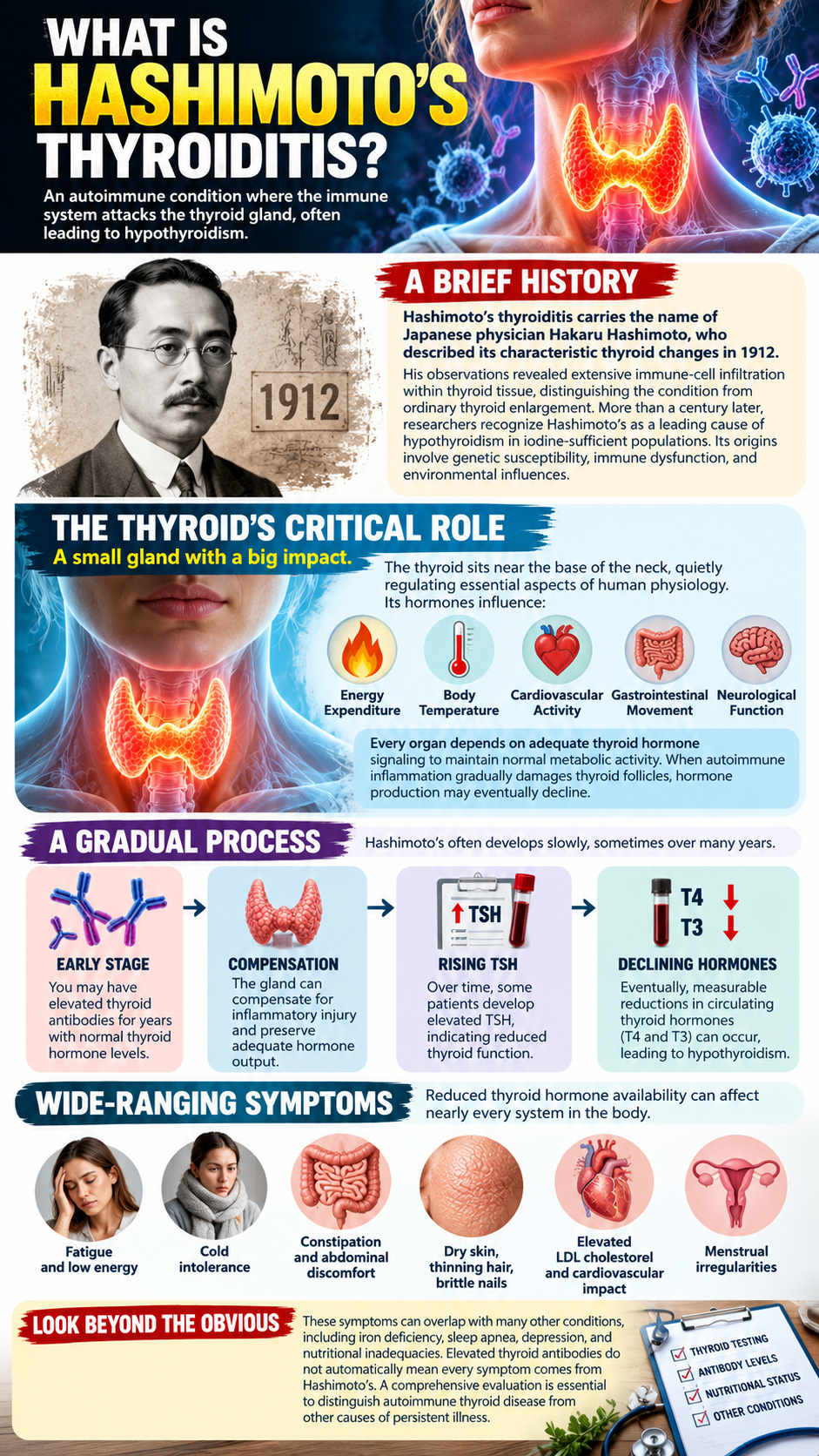
Unlike an infection that produces immediate symptoms, Hashimoto’s often develops gradually. Individuals may carry thyroid antibodies for years while maintaining normal thyroid hormone concentrations. During this period, the gland can compensate for inflammatory injury and preserve adequate hormone output. Eventually, some patients develop elevated TSH, followed by measurable reductions in circulating thyroid hormones.
The consequences can extend throughout the body. Reduced thyroid hormone availability may slow intestinal movement, contributing to constipation and abdominal discomfort. Changes in energy metabolism can produce fatigue, cold intolerance, and reduced exercise tolerance. Altered skin and hair follicle activity may cause dryness, thinning hair, and brittle nails. More severe hypothyroidism can elevate LDL cholesterol, impair cardiovascular function, and disrupt menstrual cycles.
These symptoms deserve careful investigation because they overlap with numerous other conditions. Iron deficiency, sleep apnea, depression, and nutritional inadequacies can produce similar complaints. Furthermore, elevated thyroid antibodies do not automatically establish that every symptom originates from Hashimoto’s. A comprehensive evaluation must distinguish autoimmune thyroid disease from other causes of persistent illness.
The Real Origins of Hashimoto’s: Genetics, Environment, and Immune Misidentification
Hashimoto’s rarely emerges from one isolated cause. Genetic susceptibility influences immune recognition, while environmental exposures may affect disease development in vulnerable individuals. Researchers have identified associations involving immune-regulatory genes, including HLA variants and CTLA4. However, inherited susceptibility does not guarantee that someone will develop autoimmune thyroiditis.
Environmental factors add another layer of complexity. Excessive iodine exposure can increase autoimmune thyroid risk in susceptible populations, despite iodine’s essential role in hormone production. Certain medications, including amiodarone and some immune-modulating therapies, can contribute to thyroid dysfunction. Radiation exposure and changes in immune regulation may also influence thyroid disease under specific circumstances.
Nutritional status deserves attention within this broader framework. Selenium supports antioxidant enzymes that help thyroid cells manage oxidative reactions. Inadequate selenium availability may weaken those defenses, particularly when other physiological stresses coexist. However, observational associations cannot establish that low selenium independently initiates Hashimoto’s.
The immune system itself drives the characteristic tissue injury. T lymphocytes infiltrate thyroid tissue, inflammatory signaling increases, and thyroid follicular cells experience progressive damage. B lymphocytes produce antibodies against thyroid-associated proteins, particularly thyroid peroxidase and thyroglobulin. These antibodies help identify the autoimmune process, although their concentrations do not precisely quantify ongoing tissue destruction.
This distinction changes how we should interpret thyroid bloodwork. A high thyroid peroxidase antibody concentration identifies an immune response, but it does not independently predict symptom severity. Similarly, lowering antibodies does not necessarily mean damaged thyroid tissue has regenerated. The ultimate clinical questions concern thyroid function, disease progression, symptoms, and long-term health.
Selenium enters this picture through its involvement in cellular protection and immune-related biochemical pathways. Its importance becomes clearer when we examine the unusual chemical environment inside the thyroid.
The Thyroid’s Chemical Paradox: Producing Hormones Requires Oxidative Activity
Every functioning thyroid gland operates within a fascinating biochemical contradiction. To manufacture essential hormones, thyroid cells must generate hydrogen peroxide, a chemically reactive molecule. Thyroid peroxidase uses hydrogen peroxide to support iodine incorporation into thyroid hormone precursors. Without this controlled oxidative chemistry, normal thyroid hormone synthesis cannot proceed.
Yet the same hydrogen peroxide can damage cellular membranes, proteins, and other structures when antioxidant defenses become overwhelmed. The thyroid must therefore maintain a delicate balance between generating reactive molecules and neutralizing their excess. This balancing act continues throughout life, making antioxidant regulation especially important within thyroid tissue.
Selenium contributes through enzymes known as glutathione peroxidases and thioredoxin reductases. These proteins participate in cellular antioxidant systems, helping regulate peroxides and maintain appropriate redox conditions. Their activity supports normal cellular function rather than simply eliminating every reactive molecule. After all, the thyroid needs controlled oxidative reactions to manufacture hormones.
When selenium availability becomes inadequate, some selenoprotein activities can decline. Experimental research suggests this may increase vulnerability to oxidative injury under certain conditions. However, the thyroid also possesses mechanisms that prioritize selenium use during nutritional scarcity. Consequently, mild deficiency does not automatically produce severe thyroid damage.
Researchers increasingly recognize oxidative stress as one component of autoimmune thyroid disease. Inflammatory immune cells generate reactive molecules, while damaged tissues can amplify local inflammatory responses. This interaction may contribute to continued cellular injury in susceptible individuals. Nevertheless, scientists have not demonstrated that correcting oxidative stress alone can reliably stop Hashimoto’s progression.
The relationship becomes even more interesting when we examine selenium’s involvement in thyroid hormone activation.
Selenium, T4-to-T3 Conversion, and the Metabolic Consequences of Deficiency
Most circulating thyroid hormone leaves the gland as thyroxine, commonly called T4. Although biologically important, T4 primarily serves as a reservoir for the more active hormone triiodothyronine, or T3. Specialized enzymes convert T4 into T3 according to tissue-specific physiological demands. These enzymes belong to the iodothyronine deiodinase family, which depends on selenium for normal function.
Three major deiodinases help regulate thyroid hormone activity throughout the body. Type 1 contributes to thyroid hormone metabolism in tissues such as the liver and kidneys. Type 2 supports local T3 production in tissues including the brain and pituitary gland. Type 3 helps inactivate thyroid hormones, protecting tissues from excessive hormonal stimulation.
Together, these enzymes demonstrate that thyroid health involves more than hormone production alone. The body must also regulate hormone activation, inactivation, transport, and cellular responses. Selenium contributes to this network through its incorporation into deiodinase enzymes. However, enzyme activity also depends on tissue conditions, hormonal feedback, and numerous regulatory mechanisms.
Severe selenium deficiency can interfere with normal selenoprotein function, including aspects of thyroid hormone metabolism. Yet supplementation does not consistently increase circulating T3 in people with Hashimoto’s. This matters because claims that selenium automatically fixes poor T4-to-T3 conversion exceed current clinical evidence.
A comprehensive thyroid assessment should therefore examine hormone availability alongside symptoms and relevant clinical findings. TSH and free T4 remain central measurements for identifying hypothyroidism and guiding replacement therapy. Free T3 may provide additional information in selected circumstances, although routine measurement has limitations. Selenium status may become relevant when dietary deficiency, malabsorption, or other risk factors warrant investigation.
What the Research Really Shows About Selenium and Thyroid Antibodies
The strongest evidence supporting selenium supplementation comes from randomized clinical trials examining thyroid autoantibodies. In 2024, researchers published a systematic review and meta-analysis in the journal Thyroid. Their investigation included 35 randomized studies examining selenium supplementation among individuals with Hashimoto’s thyroiditis. The analysis assessed hormone measurements, thyroid antibodies, oxidative-stress markers, ultrasound findings, and adverse events.
The results revealed a statistically significant reduction in thyroid peroxidase antibodies among selenium-treated participants. Researchers analyzed 29 study cohorts involving 2,358 participants for this outcome. They also identified a modest reduction in TSH among participants who were not receiving thyroid hormone replacement. Additionally, selenium supplementation reduced malondialdehyde, a laboratory marker associated with oxidative stress.
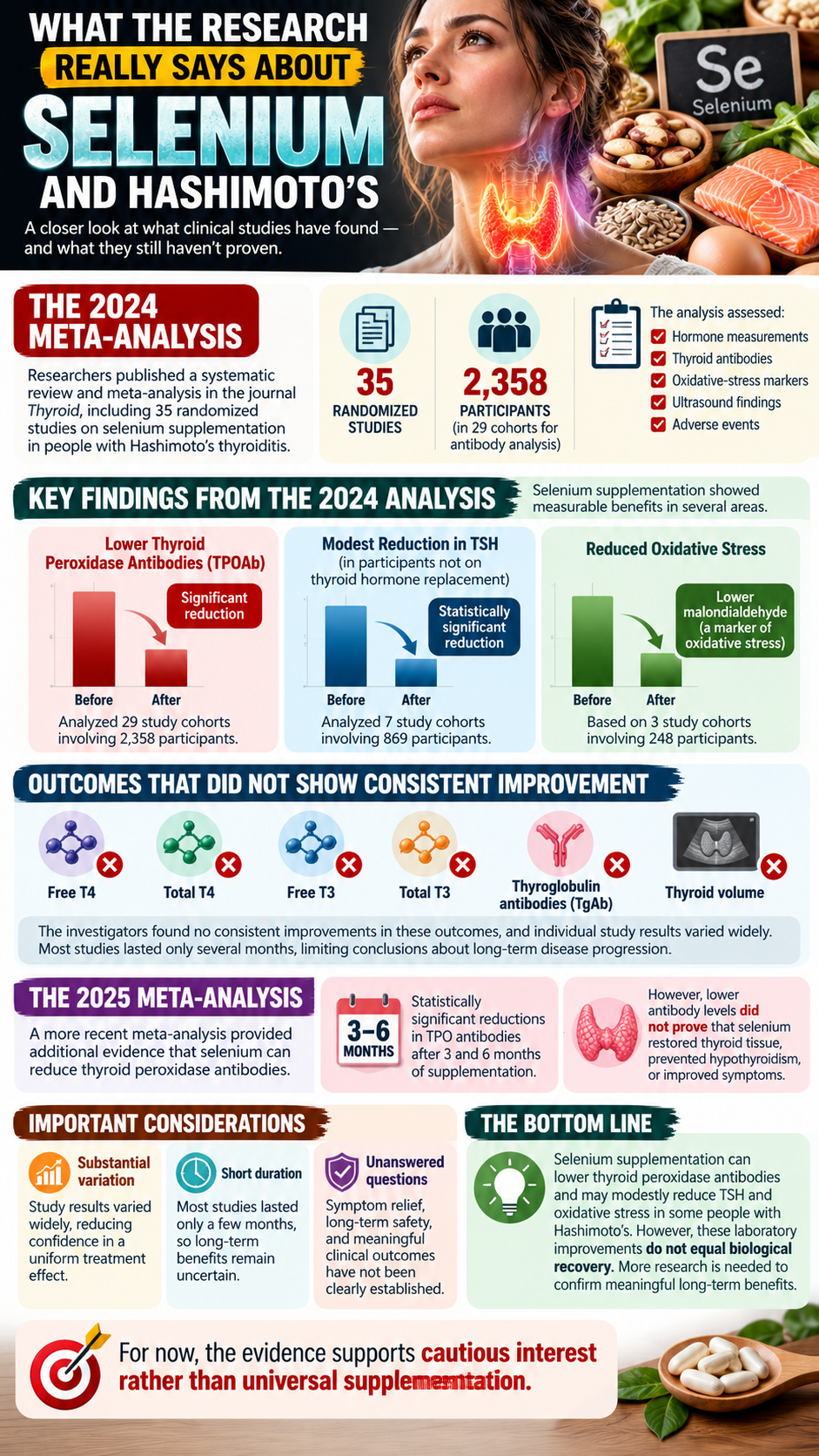
These findings provide legitimate reasons to investigate selenium as a potential supportive intervention. Nevertheless, the antibody studies displayed substantial differences in their results, reducing confidence in a uniform treatment effect. The investigators also found no consistent improvements in free T3, free T4, thyroglobulin antibodies, or thyroid volume. Importantly, most studies lasted only several months, limiting conclusions about long-term disease progression.
A 2025 meta-analysis offered further evidence that selenium can reduce thyroid peroxidase antibodies. Investigators observed statistically significant reductions after three and six months of supplementation. However, improvements in antibody concentrations did not establish that selenium restored thyroid tissue or prevented hypothyroidism. Questions about symptom relief, long-term safety, and clinical outcomes remained unresolved.
This distinction deserves emphasis because laboratory improvement and biological recovery are not interchangeable. An antibody reduction may indicate altered immune activity without proving that autoimmune injury has stopped. Researchers must demonstrate meaningful improvements in patient outcomes before declaring selenium a disease-modifying treatment. For now, the evidence supports cautious interest rather than universal supplementation.
The Overlooked Importance of Selenium Deficiency
One of the most revealing findings from selenium research concerns participants’ nutritional status before treatment. In the 2024 review, 18 studies measured selenium concentrations at baseline. Nine involved severely deficient populations, while seven involved mildly deficient populations. Only two included selenium-sufficient populations, raising questions about how broadly the results apply.
This matters because nutritional supplementation often produces different outcomes depending on initial nutrient availability. Someone with inadequate selenium intake may benefit from restoring essential enzyme function. Conversely, someone with sufficient selenium may experience little additional benefit from supplementation. Higher intake cannot indefinitely increase the activity of enzymes that already possess adequate selenium.
Geography plays an important role in selenium nutrition. Selenium enters the food supply through soil, plants, and animals, with concentrations varying substantially between regions. Agricultural conditions and food sourcing influence the selenium content of many foods. Consequently, identical diets may provide different selenium amounts depending on where ingredients originate.
Dietary restrictions and gastrointestinal disorders can further complicate nutritional adequacy. Individuals with malabsorption may struggle to obtain sufficient micronutrients despite apparently reasonable food intake. People following highly restrictive diets may also unintentionally reduce their selenium exposure. However, neither Hashimoto’s nor a restrictive diet automatically proves selenium deficiency.
This nutritional complexity argues against prescribing the same selenium dose to every thyroid patient. A more thoughtful approach considers dietary intake, existing supplements, clinical history, and possible deficiency. When appropriate, laboratory assessment may help clarify selenium status, although testing has limitations. No universally accepted blood selenium target guarantees improvement in autoimmune thyroid disease.
The Dangerous Misconception That More Selenium Means Better Thyroid Health
Selenium’s essential role creates an understandable temptation to increase intake aggressively. Unfortunately, selenium possesses a relatively narrow margin between nutritional adequacy and excessive exposure. Unlike many nutrients, chronically high selenium intake can cause clinically significant toxicity. This makes indiscriminate supplementation particularly concerning.
Excess selenium can produce nausea, gastrointestinal disturbances, brittle nails, and hair loss. More serious toxicity may cause neurological abnormalities and other systemic complications. Ironically, several symptoms of excessive selenium exposure resemble complaints associated with thyroid dysfunction. Someone attempting to improve hair thinning through supplementation could potentially worsen the problem through overexposure.
Supplement stacking creates another overlooked risk. A multivitamin, thyroid-support formula, and separate selenium capsule may each contribute meaningful amounts. Brazil nuts can also contain highly variable selenium concentrations, making their total contribution difficult to predict. Without reviewing every source, individuals may unintentionally consume excessive amounts.
Clinical research has not established that higher selenium doses produce progressively better Hashimoto’s outcomes. The 2024 meta-analysis found similar short-term adverse-event rates between supplementation and control groups. However, those findings do not eliminate concerns about prolonged excessive intake. Short trials cannot reliably establish the safety of high-dose supplementation over many years.
The central lesson is that selenium functions as an essential nutrient, not an unrestricted thyroid stimulant. Adequacy supports normal physiology, while deficiency and excess can both create problems. Effective nutritional care must respect that biological balance.
Beyond Antibodies: What Selenium Research Has Yet to Prove
Perhaps the most important unanswered question concerns whether selenium meaningfully changes the course of Hashimoto’s thyroiditis. Researchers have demonstrated reductions in certain laboratory markers, particularly thyroid peroxidase antibodies. However, consistent improvements in fatigue, quality of life, thyroid hormone requirements, and disease progression remain unproven. These outcomes matter because patients seek restored function, not merely improved laboratory numbers.
The thyroid also illustrates why successful treatment requires more than targeting a single biochemical pathway. Genetic susceptibility, immune regulation, iodine exposure, nutritional adequacy, and existing tissue damage interact in complicated ways. Selenium may support protective processes without correcting every factor driving autoimmune inflammation. No single nutrient can reasonably address every mechanism involved in this disease.
Conventional thyroid hormone replacement remains essential when the gland cannot produce adequate hormones. Restoring circulating hormone levels can prevent serious consequences of untreated hypothyroidism. At the same time, nutritional evaluation may uncover correctable deficiencies that standard hormone replacement does not address. These approaches need not compete when clinicians apply them according to reliable evidence.
The strongest future research will identify which patients benefit most from selenium supplementation. Investigators must determine whether baseline deficiency predicts meaningful clinical improvement and whether specific formulations offer advantages. Longer trials should evaluate symptoms, thyroid function, medication requirements, and progression to overt hypothyroidism. Until those answers emerge, personalized nutritional care offers a more defensible strategy than blanket supplementation.
Hashimoto’s ultimately represents a complex interaction between immune biology and thyroid physiology. Selenium occupies an important place within that relationship because it supports antioxidant defenses and thyroid hormone metabolism. Its potential benefits deserve serious consideration, but its limitations deserve equal attention. Understanding both creates the foundation for practical decisions that protect thyroid health without relying on exaggerated promises.
The Missing Piece in Thyroid Recovery: Creating the Right Environment for Healing
Understanding selenium’s relationship with Hashimoto’s thyroiditis changes how we approach thyroid health. Rather than viewing the thyroid as an isolated gland, we begin recognizing its dependence on multiple interconnected systems. Nutritional status, immune regulation, oxidative stress, and thyroid hormone metabolism all influence how effectively this small gland functions. Addressing these factors may improve overall health, even when autoimmune thyroid disease requires ongoing medical treatment.
The greatest mistake involves assuming that one supplement can reverse years of autoimmune dysfunction. Hashimoto’s develops through complicated interactions between genetic susceptibility, immune activity, environmental influences, and thyroid tissue injury. Selenium supports several important biochemical processes, but it cannot independently correct every contributing factor. Successful management requires identifying which problems actually exist before attempting to correct them.
Consider two individuals with nearly identical thyroid antibody concentrations. One consumes insufficient selenium and struggles with untreated hypothyroidism, while the other maintains adequate selenium and normal hormone levels. Both may carry a Hashimoto’s diagnosis, yet their nutritional and treatment needs differ considerably. Prescribing identical supplements without evaluating these differences ignores the biological complexity underlying their conditions.
A functional approach begins with a more useful question: What does this particular body need to function optimally? Sometimes the answer involves correcting a nutritional deficiency, improving dietary quality, or addressing gastrointestinal malabsorption. Other situations require thyroid hormone replacement, evaluation of additional autoimmune disorders, or treatment of unrelated causes of fatigue. The objective should remain improved health and function rather than chasing isolated laboratory measurements.
Selenium-Rich Foods: Rebuilding Thyroid Nutrition From the Kitchen
Food offers a practical starting point for improving selenium intake without immediately reaching for supplements. Selenium naturally occurs in seafood, poultry, eggs, meat, and certain plant foods. However, concentrations vary according to animal feed, agricultural practices, and soil composition. Building dietary variety generally provides more predictable nutrition than depending on one unusually concentrated food.
Fish such as tuna, salmon, sardines, and cod contribute selenium alongside valuable protein and other nutrients. Eggs provide additional selenium, choline, and nutrients involved in normal metabolic function. Turkey, chicken, and beef can also support adequate intake, depending on portions and food sourcing. Combining these foods throughout the week helps distribute selenium exposure across multiple meals.
Brazil nuts deserve special consideration because their selenium content can be extraordinarily high. A single nut may provide more selenium than the daily requirement, although concentrations vary widely. Eating several daily can therefore create unnecessary exposure, particularly when combined with selenium-containing supplements. Despite their popularity in thyroid nutrition discussions, Brazil nuts should not serve as an imprecise high-dose treatment.
For most adults, the recommended dietary allowance for selenium is approximately 55 micrograms daily. Pregnancy increases this requirement to 60 micrograms, while lactation increases it to 70 micrograms. These values describe nutritional adequacy, not therapeutic doses for treating Hashimoto’s. The United States adult tolerable upper intake level is 400 micrograms daily from all sources.
The practical objective involves meeting nutritional needs consistently without pursuing excessive intake. A balanced dietary pattern containing appropriate selenium sources can accomplish this for many individuals. Those with restrictive diets, gastrointestinal disorders, or suspected deficiencies may need additional evaluation. Importantly, correcting selenium deficiency supports normal physiology but does not guarantee reversal of autoimmune thyroiditis.
Choosing Selenium Supplements: Understanding Form, Dose, and Clinical Evidence
Selenium supplements commonly contain selenomethionine, sodium selenite, or selenium-enriched yeast. These formulations differ in absorption, metabolism, and incorporation into selenium-containing compounds. Selenomethionine generally demonstrates good absorption and can enter the body’s general amino acid pool. Nevertheless, greater absorption does not automatically establish superior long-term clinical outcomes.
Many Hashimoto’s studies have investigated selenium doses between 80 and 200 micrograms daily. Some trials reported reductions in thyroid peroxidase antibodies within three to six months. However, these findings do not justify recommending 200 micrograms to every patient with Hashimoto’s. Baseline selenium status, existing supplementation, dietary exposure, and individual risk factors must influence decisions.
Supplement labels also require careful interpretation. A thyroid-support formula may already contain selenium alongside iodine, zinc, vitamin D, and herbal ingredients. Adding a separate selenium supplement can unintentionally increase total exposure beyond the intended amount. Reviewing all supplements becomes particularly important when patients use multiple products from different manufacturers.
Individuals taking thyroid hormone replacement should also consider supplement timing and formulation. Selenium itself does not share every absorption concern associated with calcium and iron. However, combination supplements containing these minerals can interfere with levothyroxine absorption when taken too closely together. Consistent medication timing and appropriate separation help maintain reliable thyroid hormone treatment.
A reasonable supplementation strategy begins by establishing whether additional selenium is necessary. Dietary assessment and selected laboratory testing may identify people at greater risk of inadequate intake. When supplementation is appropriate, clinicians can select a dose and duration based on individual circumstances. Follow-up should evaluate relevant clinical outcomes, rather than assuming lower antibody concentrations always indicate meaningful recovery.
The Iodine-Selenium Connection: When Two Essential Nutrients Work Against Each Other
Iodine and selenium share an unusually close relationship within thyroid physiology. Iodine provides the essential building blocks for thyroid hormones, while selenium supports enzymes involved in hormone metabolism and antioxidant protection. Both nutrients must remain available in appropriate amounts for normal thyroid function. Unfortunately, excessive iodine exposure can complicate autoimmune thyroid disease in susceptible individuals.
During thyroid hormone synthesis, iodine incorporation depends on reactions involving hydrogen peroxide. Selenium-dependent antioxidant enzymes help regulate oxidative conditions surrounding these reactions. When iodine intake becomes excessive, thyroid oxidative activity and immune responses may change. This interaction helps explain why excessive iodine can worsen thyroid autoimmunity in certain populations.
The problem often begins with well-intentioned supplementation. Someone experiencing fatigue may purchase kelp capsules, iodine drops, or a thyroid-support product containing substantial iodine. They assume that increasing iodine will stimulate hormone production and improve energy. Yet Hashimoto’s usually does not originate from simple iodine deficiency, and excessive supplementation can aggravate thyroid dysfunction.
Correcting true iodine deficiency remains essential, especially during pregnancy and other periods of increased nutritional demand. However, taking high-dose iodine without confirming a need introduces unnecessary risk. Selenium supplementation should not serve as permission to consume excessive iodine. Both nutrients require balanced intake rather than aggressive dosing.
At home, individuals can review supplement labels for iodine content and avoid unnecessary high-dose preparations. Those regularly consuming seaweed products should recognize that iodine concentrations vary dramatically between species. People with Hashimoto’s should discuss substantial iodine supplementation with a qualified healthcare professional. This precaution helps prevent a nutritional intervention from unintentionally increasing thyroid stress.
Looking Beyond Selenium: Nutritional Deficiencies That Can Complicate Hashimoto’s
Selenium rarely operates independently within human metabolism. Thyroid hormone synthesis and cellular function also depend on iodine, iron, zinc, and numerous other nutrients. Deficiencies can coexist, particularly among individuals with restrictive diets or gastrointestinal disorders. Addressing these problems may improve general health without necessarily altering the underlying autoimmune diagnosis.
Iron deserves particular attention because thyroid peroxidase contains a heme component. Inadequate iron availability can impair normal physiological processes, while iron-deficiency anemia independently causes fatigue and reduced exercise tolerance. Menstruating individuals and those with gastrointestinal blood loss may face increased deficiency risk. Ferritin and other iron studies can help identify deficiencies when clinical findings warrant investigation.
Vitamin B12 also deserves consideration, especially because autoimmune thyroid disease can coexist with autoimmune gastritis. This condition may interfere with vitamin B12 absorption and eventually produce deficiency. Symptoms can include fatigue, neurological disturbances, and cognitive complaints that resemble hypothyroidism. Identifying a genuine deficiency allows targeted treatment rather than attributing every symptom to thyroid antibodies.
Vitamin D participates in immune regulation, and researchers have investigated its association with autoimmune thyroid disease. Observational studies frequently report lower vitamin D concentrations among people with Hashimoto’s. However, association does not establish that vitamin D deficiency causes the disease. Supplementation should address documented deficiency or established nutritional needs rather than promise autoimmune reversal.
Zinc supports numerous enzymes, cellular signaling pathways, and immune functions. Inadequate zinc intake may contribute to impaired physiological function, particularly in people with malabsorption. Nevertheless, excessive zinc supplementation can cause copper deficiency and other complications. The most effective nutritional strategy corrects identified inadequacies without creating new imbalances.
The Gut-Thyroid Connection: Understanding What Research Supports
The gastrointestinal tract plays a central role in nutrient absorption and immune function. Selenium, iron, iodine, and other nutrients must pass through digestive processes before supporting thyroid physiology. Conditions that interfere with absorption may therefore contribute to nutritional deficiencies. However, digestive symptoms alone do not establish that someone has intestinal permeability or a specific autoimmune trigger.
One particularly important association involves celiac disease. People with autoimmune thyroid disease experience celiac disease more frequently than the general population. Untreated celiac disease can damage the small intestinal lining and interfere with nutrient absorption. It may also complicate thyroid hormone management by reducing consistent medication absorption.
Persistent bloating, chronic diarrhea, unexplained iron deficiency, or unexplained weight changes may warrant gastrointestinal investigation. Appropriate celiac testing becomes especially important when symptoms or clinical history suggest increased risk. Starting a gluten-free diet before testing can reduce diagnostic accuracy. Therefore, individuals considering testing should discuss the sequence with their healthcare professional.
Research also explores relationships between the intestinal microbiome and autoimmune thyroid disease. Gut bacteria participate in immune signaling, nutrient metabolism, and intestinal barrier function. Some studies identify differences in microbial populations among individuals with Hashimoto’s. Nevertheless, researchers have not established a specific microbiome pattern that reliably causes the disease.
A practical approach emphasizes dietary diversity, adequate protein, and appropriate fiber intake when tolerated. Fermented foods may contribute to dietary variety, although they have not demonstrated reliable reversal of Hashimoto’s. Treating confirmed gastrointestinal disorders offers greater clinical certainty than pursuing unvalidated detoxification protocols. Supporting digestive health matters, but scientific evidence must guide claims about autoimmune recovery.
Reducing Oxidative Stress Through Everyday Lifestyle Choices
Oxidative stress represents an important research interest in Hashimoto’s because thyroid hormone synthesis naturally generates reactive molecules. Selenium-dependent enzymes help regulate these reactions, while inflammatory processes may increase oxidative burden. Yet oxidative stress is not inherently pathological, and the body requires controlled redox signaling. The goal involves maintaining normal physiological balance rather than eliminating every oxidant.
Dietary quality provides one avenue for supporting general antioxidant defenses. Vegetables, fruits, herbs, and other minimally processed foods supply diverse micronutrients and phytochemicals. Adequate protein supports the body’s synthesis of enzymes and structural proteins. Healthy dietary patterns also help address cardiovascular risk factors that may accompany hypothyroidism.
Regular physical activity contributes to metabolic health, insulin sensitivity, cardiovascular function, and psychological well-being. Exercise also stimulates adaptive cellular responses that support normal physiological resilience. However, people with untreated or severe hypothyroidism may struggle with exercise tolerance. Activity should match current capacity while appropriate treatment restores hormonal stability.
Sleep deserves equal attention because insufficient sleep can disrupt energy regulation and immune-related signaling. Maintaining consistent sleep and wake times helps support normal circadian physiology. Limiting late-night stimulation and addressing persistent sleep disturbances may improve daytime functioning. Sleep apnea should also receive consideration when fatigue persists despite apparently adequate thyroid treatment.
Chronic psychological stress can influence sleep, appetite, and inflammatory signaling, although it has not been established as a direct cause of Hashimoto’s. Relaxation practices, outdoor activity, and supportive relationships may improve overall well-being. These approaches complement appropriate thyroid care without replacing necessary treatment. Their greatest value lies in strengthening general health rather than promising to eliminate thyroid antibodies.
Practical At-Home Steps for Supporting Thyroid Health
The first practical step involves examining what enters the body every day. Review meals, snacks, beverages, and supplements to estimate selenium exposure and identify nutritional gaps. Include selenium-containing foods such as fish, eggs, poultry, and meat according to dietary preferences. Avoid assuming that more selenium will produce faster thyroid recovery.
Next, examine every supplement label for selenium and iodine. Multiple thyroid formulas can contain overlapping ingredients, making excessive intake surprisingly easy. Pay particular attention to concentrated kelp products and frequent Brazil nut consumption. Individuals considering selenium supplementation should first review their total intake and potential deficiency risks.
Establish a consistent medication routine if thyroid hormone replacement forms part of treatment. Levothyroxine generally works best when taken consistently under recommended conditions. Calcium and iron supplements require appropriate separation because they can reduce medication absorption. Never discontinue prescribed thyroid medication simply because symptoms improve or antibody concentrations decline.
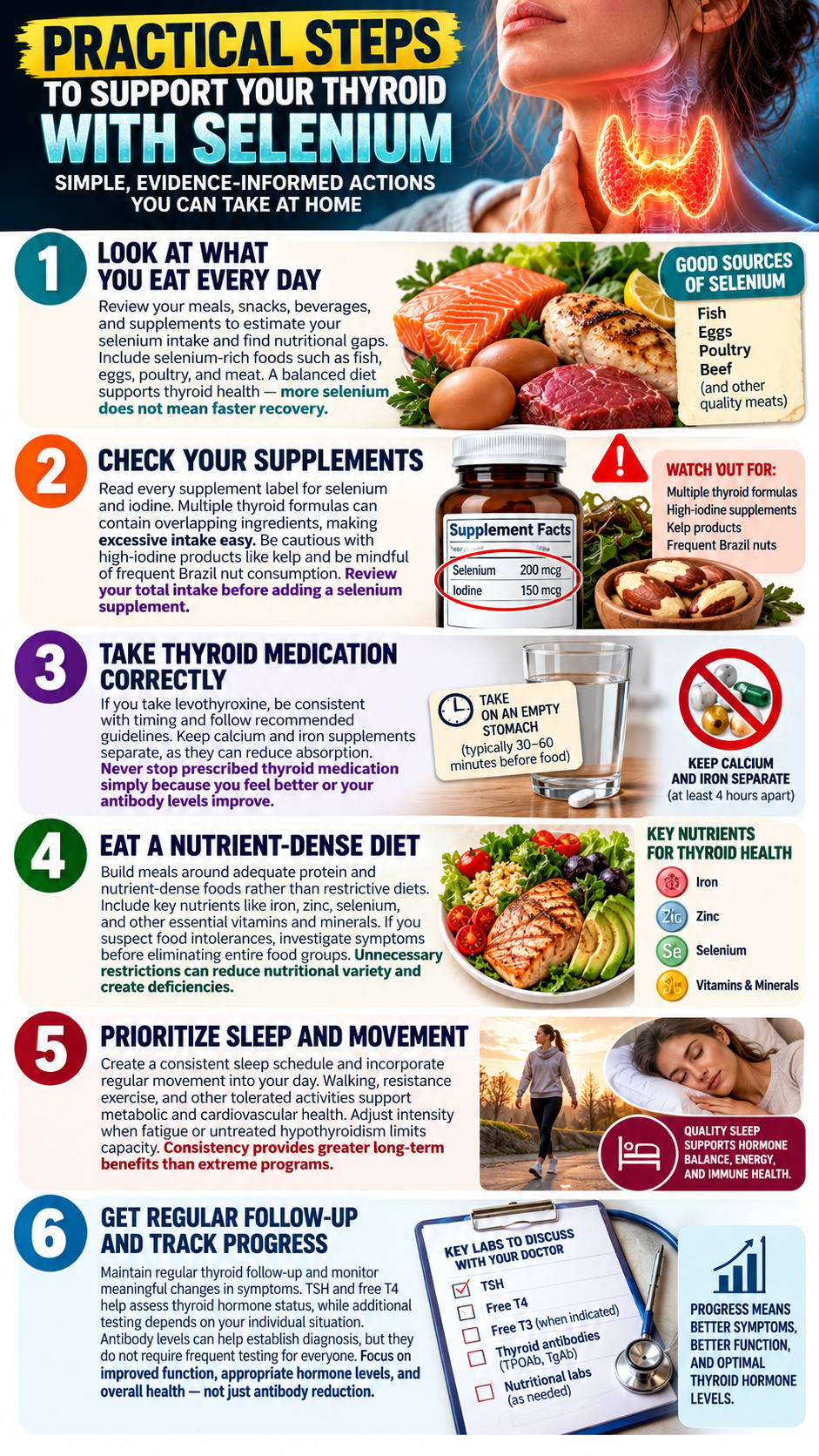
Build meals around adequate protein and nutrient-dense foods rather than relying on restrictive dietary trends. Include appropriate sources of iron, zinc, selenium, and other essential nutrients. People with suspected food intolerance should investigate symptoms before eliminating entire food groups indefinitely. Unnecessary restrictions can reduce nutritional variety and complicate long-term dietary adequacy.
Create a sustainable sleep schedule and incorporate movement into daily life. Walking, resistance exercise, and other tolerated activities support cardiovascular and metabolic health. Adjust exercise intensity when fatigue or untreated hypothyroidism limits capacity. Consistency generally offers greater long-term value than extreme programs that become impossible to maintain.
Finally, maintain regular thyroid follow-up and document meaningful changes in symptoms. TSH and free T4 help assess thyroid hormone status, while additional testing depends on clinical circumstances. Antibody concentrations may help establish diagnosis but do not require repeated measurement in every patient. Evaluate progress through improved function, appropriate hormone levels, and overall health rather than antibody reduction alone.
Measuring Progress: How to Know Whether Your Thyroid Support Plan Is Working
Effective thyroid management requires distinguishing measurable improvement from hopeful interpretation. Someone may experience greater energy after improving sleep, correcting anemia, or treating hypothyroidism. These changes matter even when thyroid antibody concentrations remain elevated. Conversely, declining antibodies offer limited reassurance when symptoms worsen or thyroid hormone levels become abnormal.
For individuals receiving thyroid hormone replacement, clinicians generally monitor TSH and adjust treatment according to clinical circumstances. Free T4 provides additional information in selected situations. Monitoring frequency depends on treatment changes, pregnancy, disease stability, and other factors. Stable patients may require less frequent testing than those undergoing medication adjustments.
Selenium supplementation introduces additional considerations because nutritional status and clinical response can differ. Individuals with confirmed deficiency may benefit from reassessment after appropriate nutritional correction. However, routine selenium testing is not necessary for everyone with Hashimoto’s. Testing should answer a meaningful clinical question rather than create unnecessary expense.
Patient-reported outcomes also deserve attention. Improvements in bowel regularity, exercise tolerance, cognitive function, and daily energy can indicate meaningful progress. Nevertheless, these changes should be interpreted alongside objective findings and other possible explanations. A thoughtful evaluation avoids crediting selenium for improvements that may result from several simultaneous interventions.
The most valuable treatment plan remains flexible as new information emerges. Nutritional deficiencies may resolve, medication needs may change, and previously overlooked conditions may become apparent. Reassessment allows care to evolve rather than remain attached to an initial theory. The objective is sustained health improvement, not lifelong dependence on increasingly complicated supplement regimens.
The Future of Hashimoto’s Care: Moving Beyond a Single Laboratory Number
Selenium research highlights an important principle: thyroid health depends on far more than one hormone measurement. The gland relies on adequate nutrients, carefully regulated oxidative chemistry, and coordinated immune function. Understanding these relationships can improve clinical reasoning and identify correctable problems. Yet recognizing biological complexity should never become an excuse for recommending interventions without reliable evidence.
The 2024 and 2025 selenium analyses provide legitimate scientific reasons for continued investigation. Reductions in thyroid peroxidase antibodies suggest that selenium supplementation can influence measurable aspects of autoimmune thyroid disease. However, researchers still need stronger evidence concerning symptom improvement, disease progression, and long-term outcomes. These unanswered questions should shape clinical recommendations rather than disappear beneath supplement marketing.
The future may involve identifying subgroups most likely to benefit from targeted nutritional interventions. Baseline selenium deficiency, dietary exposure, genetic variation, and disease characteristics could influence individual responses. Better-designed trials may eventually clarify which patients experience clinically meaningful benefits. Until then, nutritional adequacy remains a more defensible goal than indiscriminate high-dose supplementation.
For someone living with Hashimoto’s, this perspective offers both encouragement and realism. There are meaningful actions available today, including improving nutrition, correcting deficiencies, supporting sleep, and maintaining appropriate thyroid treatment. These measures can improve health even when the autoimmune condition persists. The goal is not to promise that every damaged thyroid will regenerate, but to maximize function wherever improvement remains possible.
Selenium reminds us that small nutritional factors can participate in extraordinarily important biological processes. Its contribution to antioxidant defense and thyroid hormone metabolism deserves recognition, while its toxicity potential demands respect. The strongest approach combines scientific curiosity with individualized evaluation and careful treatment decisions. Ultimately, lasting thyroid health requires understanding the whole person without losing sight of what the research actually proves.