
The Ancient Nutritional Secret Hidden in Seeds and Grains
Imagine stepping into a farmhouse kitchen two hundred years ago, where a grandmother prepares tomorrow’s meals using methods passed down through generations. Beans soak overnight in ceramic bowls, freshly harvested grains begin sprouting near the window, and bread dough slowly ferments beneath a linen cloth. These traditions existed long before scientists understood digestive enzymes, mineral bioavailability, or the complex chemistry of plant foods. Yet many of these preparation techniques accomplished something remarkable: they helped transform seeds and grains into foods that were easier to digest and potentially more nutritious.
Today, most Americans rarely consider how food preparation influences nutrient absorption. Breakfast cereals arrive ready to eat, bread rises in hours, and packaged grain products require little preparation. While modern processing has improved convenience and food accessibility, it has also displaced some traditional methods that reduce naturally occurring compounds capable of interfering with digestion and mineral absorption. One of the most extensively studied compounds is phytic acid, a substance found in many foods commonly promoted as nutritional powerhouses.
Phytic acid presents an intriguing contradiction. On one hand, it can bind essential minerals, reducing the amount available for absorption. On the other, researchers have identified antioxidant properties and investigated possible benefits involving cellular health and metabolism. Understanding this contradiction requires looking beyond food labels and examining what happens when food enters the digestive system.
What Is Phytic Acid, and Why Do Plants Produce It?
Phytic acid, scientifically known as myo-inositol hexakisphosphate or IP6, is the primary storage form of phosphorus in many plant seeds. Plants manufacture this compound to preserve phosphorus needed for germination and early development. When a seed begins growing, specialized enzymes called phytases help break down phytate, releasing phosphorus and other minerals that support the developing plant.
The molecular structure of phytic acid explains its unusual nutritional behavior. Six phosphate groups surround an inositol molecule, creating numerous negatively charged sites capable of interacting with positively charged minerals. Iron, zinc, calcium, and magnesium can associate with phytate, sometimes forming complexes that dissolve poorly in the digestive tract. This chemical interaction may reduce the availability of certain minerals during digestion.
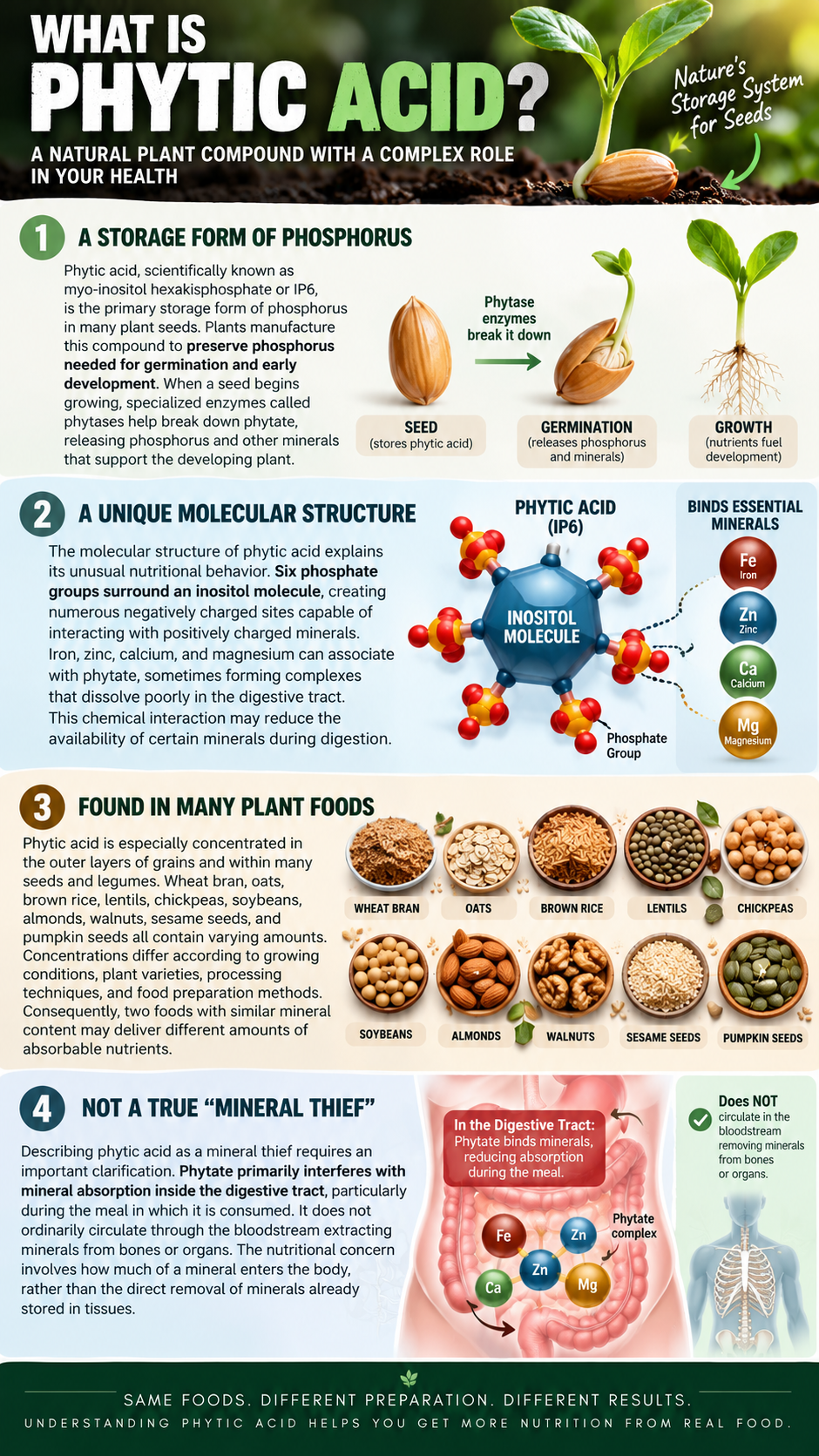
Phytic acid is especially concentrated in the outer layers of grains and within many seeds and legumes. Wheat bran, oats, brown rice, lentils, chickpeas, soybeans, almonds, walnuts, sesame seeds, and pumpkin seeds all contain varying amounts. Concentrations differ according to growing conditions, plant varieties, processing techniques, and food preparation methods. Consequently, two foods with similar mineral content may deliver different amounts of absorbable nutrients.
However, describing phytic acid as a mineral thief requires an important clarification. Phytate primarily interferes with mineral absorption inside the digestive tract, particularly during the meal in which it is consumed. It does not ordinarily circulate through the bloodstream extracting minerals from bones or organs. The nutritional concern involves how much of a mineral enters the body, rather than the direct removal of minerals already stored in tissues.
The Mineral Absorption Problem Nobody Sees on Nutrition Labels
Consider a breakfast consisting of whole-grain cereal, almond milk, and a handful of pumpkin seeds. The nutritional information may indicate substantial quantities of iron, zinc, magnesium, and calcium. Yet those numbers describe the minerals present in the food, not necessarily the quantities entering the bloodstream. The difference between nutrient content and nutrient absorption is one of the most important distinctions in nutritional science.
Iron offers a particularly revealing example. Plant foods contain non-heme iron, which must remain sufficiently soluble and undergo chemical changes before intestinal cells can absorb it efficiently. Phytate can bind this iron, reducing its availability for absorption. The effect becomes especially significant when meals contain substantial phytate without adequate quantities of absorption-enhancing nutrients, particularly vitamin C.
Zinc encounters similar challenges. This essential mineral supports immune defenses, wound healing, protein synthesis, reproductive function, and hundreds of enzymatic reactions. Diets containing large amounts of phytate can reduce zinc absorption, particularly when they rely heavily on grains and legumes with limited animal-source foods. Researchers sometimes examine the ratio of phytate to zinc in foods to estimate potential limitations in zinc bioavailability.
Calcium and magnesium also interact with phytate, although their absorption patterns are more complicated. The amount of inhibition depends on mineral concentrations, intestinal conditions, and other dietary components. It would therefore be inaccurate to assume that phytic acid blocks every mineral equally or makes nutrient-rich plant foods nutritionally worthless.
This distinction becomes especially important for individuals consuming highly restrictive diets. Someone obtaining most daily calories from unfermented grains, legumes, and seeds may face different nutritional challenges than someone eating a diverse combination of animal and plant foods. The question is not simply how much phytate a person consumes, but whether the overall diet provides sufficient absorbable minerals.
Could Phytic Acid Contribute to Fatigue, Brain Fog, and Poor Immunity?
Mineral deficiencies can develop gradually, sometimes producing vague symptoms before more recognizable clinical abnormalities appear. Iron deficiency may contribute to fatigue, reduced exercise tolerance, impaired concentration, and eventually anemia. Zinc deficiency can affect immune function, wound healing, taste perception, and normal growth. These problems demonstrate why adequate mineral availability matters far beyond maintaining healthy bones.
Imagine someone carefully following a plant-heavy diet while experiencing persistent exhaustion and difficulty concentrating. Their meals may contain generous portions of whole grains, nuts, seeds, and legumes, yet their iron intake or absorption could remain inadequate. Phytate might contribute to this nutritional imbalance, particularly when the diet lacks adequate iron sources or absorption enhancers.
Nevertheless, symptoms alone cannot identify phytic acid as the cause. Fatigue and brain fog may arise from thyroid dysfunction, inadequate sleep, chronic inflammation, blood loss, insufficient calorie intake, or numerous other conditions. Identifying a genuine mineral deficiency requires evaluating dietary patterns, medical history, and appropriate laboratory findings rather than assuming a particular food compound explains every symptom.
From a functional nutrition perspective, this raises a valuable question: Are we measuring nutritional success by what people eat, or by whether their bodies receive sufficient usable nutrients? Food quality matters, but so do digestion, absorption, individual requirements, and the broader nutritional environment.
Phytic Acid, Digestive Health, and the Gut Microbiome
The digestive system introduces another layer of complexity. Humans produce relatively little phytase in the small intestine, limiting their ability to break down substantial quantities of dietary phytate independently. Certain intestinal microorganisms possess phytase activity, while food fermentation can encourage phytate breakdown before consumption. The extent of degradation varies according to microbial activity, digestive conditions, and food preparation.
Traditional fermentation provides an interesting example of this relationship. During sourdough fermentation, microbial activity and increasing acidity can encourage phytase enzymes to break down phytate. This may improve the accessibility of certain minerals compared with otherwise similar foods prepared without sufficient fermentation. The degree of improvement depends on the grain, fermentation conditions, and overall meal composition.
Phytic acid should not, however, be confused with other plant compounds that influence digestive comfort. Beans contain fermentable carbohydrates that can produce gas and bloating, while wheat contains fructans that may trigger symptoms in susceptible individuals. These reactions do not establish that phytate damages the intestinal lining or causes increased intestinal permeability, often called leaky gut.
The distinction matters because unnecessarily eliminating nutritious foods can reduce dietary diversity. Understanding which food components cause symptoms, and which influence nutrient absorption, allows for more targeted dietary decisions.
The Antioxidant Paradox: Could Phytic Acid Actually Be Beneficial?
The same mineral-binding property that makes phytic acid controversial also explains its proposed antioxidant benefits. Free iron can participate in chemical reactions that generate highly reactive molecules capable of damaging cellular structures. By binding certain iron ions, phytate may limit some of these reactions under specific experimental conditions.
Laboratory investigations have explored whether IP6 influences oxidative stress, inflammatory signaling, abnormal cellular proliferation, and metabolic pathways. Some findings suggest potentially beneficial biological activity, although laboratory effects do not automatically translate into improved health outcomes in humans. Digestion, absorption, metabolism, and tissue exposure all influence whether these mechanisms have practical significance.
This creates a genuine nutritional paradox. Binding iron may reduce certain oxidation reactions, yet the same interaction can interfere with the absorption of iron needed for healthy red blood cell production. For someone with low iron stores, this disadvantage may outweigh any theoretical antioxidant benefit. For someone with adequate mineral status, moderate phytate consumption may be far less concerning.
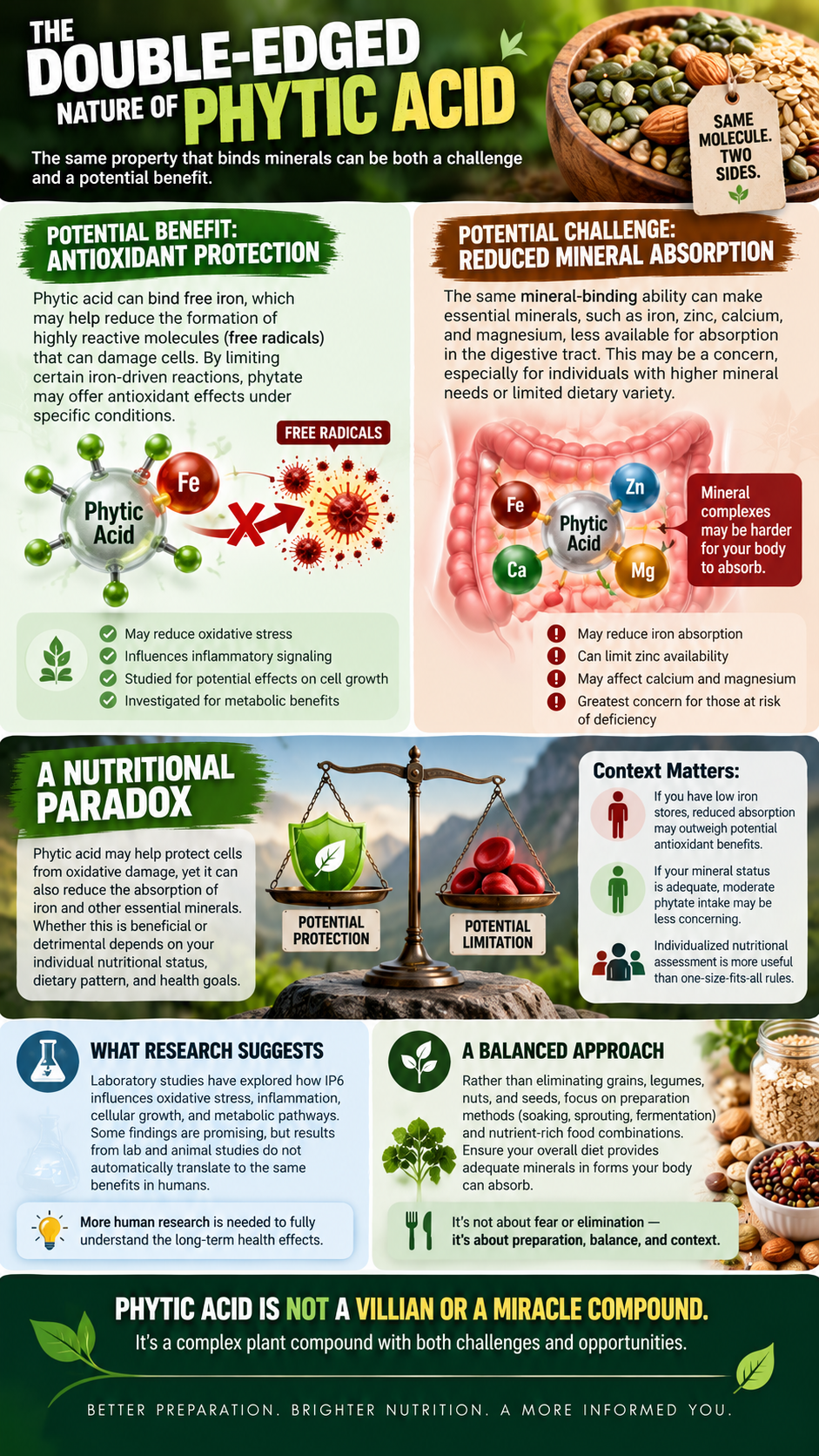
The evidence therefore challenges both extremes of the debate. Phytic acid is neither a universally dangerous dietary toxin nor a proven disease-preventing nutrient. Its biological effects depend on context, making individualized nutritional assessment more valuable than sweeping dietary rules.
Understanding this balance changes how we should approach foods containing phytate. Rather than automatically eliminating grains, legumes, nuts, and seeds, we can investigate how preparation methods influence their nutritional properties. We can also examine whether a person’s overall dietary pattern provides adequate minerals in forms the body can absorb.
The more important question is not whether phytic acid deserves a permanent place on the nutritional blacklist. It is whether modern eating habits allow us to obtain the greatest nutritional value from the foods we choose.
That question leads directly to the practical strategies explored in Part 2, where traditional food preparation, mineral-enhancing combinations, and individualized nutritional assessment offer ways to manage phytate without sacrificing dietary quality.
The Surprising Benefits of Phytic Acid: Is This Antinutrient Actually Protective?
Phytic acid has earned a reputation as an antinutrient because of its ability to bind essential minerals, but its biological activity extends beyond the digestive tract. Scientists have investigated whether this naturally occurring plant compound may influence oxidative stress, glucose metabolism, and certain processes associated with chronic disease. These findings have created an interesting debate within nutritional science, particularly because the same molecular structure responsible for inhibiting mineral absorption may also explain some of its proposed protective properties.
One area of investigation involves cancer biology. Laboratory experiments have demonstrated that inositol hexakisphosphate, commonly called IP6, can influence cellular signaling pathways associated with cell growth, differentiation, and proliferation. Animal studies have produced intriguing results, but these findings do not establish that consuming phytic acid prevents or treats cancer in humans. The concentrations used in experimental settings may differ substantially from those achieved through normal dietary consumption, making direct clinical comparisons difficult.
Researchers have also examined phytate in relation to kidney stone formation and metabolic health. Certain investigations suggest that phytate may interfere with calcium crystal formation, while others have explored possible relationships with insulin signaling and glucose regulation. However, these potential benefits remain incompletely understood, and human clinical evidence is insufficient to recommend phytic acid supplementation for preventing or treating these conditions.
The larger nutritional lesson involves recognizing that biological compounds rarely behave as entirely beneficial or harmful substances. Their effects depend on concentration, physiological conditions, and individual nutritional needs. For someone with adequate mineral stores, moderate phytate exposure may present little concern, while someone struggling with iron or zinc deficiency may benefit from reducing phytate-related interference with absorption.
What Human Research Reveals About Mineral Absorption
Human intervention studies have provided convincing evidence that dietary phytate can influence the absorption of iron and zinc. Research examining phytate-rich meals frequently demonstrates reduced mineral bioavailability, particularly when the diet contains limited absorption-enhancing nutrients. Conversely, experiments involving phytate reduction or supplementation with phytase enzymes often demonstrate improvements in mineral absorption.
A comprehensive review published in 2024 examined 42 human intervention studies investigating phytate, phytase, and mineral bioavailability. Among studies evaluating phytate-rich foods, 13 of 17 reported reduced iron or zinc bioavailability. Meanwhile, 11 of 14 studies investigating phytate reduction reported improvements in mineral availability, demonstrating that changing food preparation or phytate content can influence nutrient absorption.
These findings establish an important distinction between the minerals listed on a nutrition label and the nutrients actually available to the body. However, improved absorption from individual meals does not necessarily translate into better long-term mineral status. Iron regulation involves multiple physiological mechanisms, including the hormone hepcidin, which influences how much iron enters circulation and how stored iron becomes available.
This distinction matters when evaluating nutritional interventions. Reducing phytate may improve mineral accessibility, but it cannot compensate for inadequate mineral intake, ongoing blood loss, or medical conditions affecting nutrient absorption. A comprehensive strategy must consider the entire nutritional picture rather than concentrating exclusively on one dietary compound.
Traditional Food Preparation: How Our Ancestors Reduced Phytic Acid
Long before modern nutritional laboratories existed, traditional cultures developed food preparation techniques that changed the chemical composition of grains, seeds, and legumes. Soaking, sprouting, and fermentation became common practices across different regions, often improving cooking characteristics and digestibility. Modern research has demonstrated that some of these techniques can also reduce phytate concentrations, although their effectiveness varies considerably.
Soaking allows grains and legumes to absorb water, encouraging changes in their internal chemistry. Certain water-soluble compounds may enter the soaking liquid, while naturally occurring enzymes can become active under suitable conditions. Discarding the soaking water may remove some phytate, although soaking alone often produces modest reductions compared with fermentation or carefully controlled germination.
Sprouting activates the seed’s natural growth processes. As germination begins, phytase enzymes may break down stored phytate, releasing phosphorus required for early plant development. The extent of phytate reduction depends on the seed variety, germination temperature, moisture, and duration. Some seeds demonstrate substantial changes, while others retain considerable phytate even after sprouting.
Fermentation can be particularly effective because microorganisms produce organic acids and, in some cases, phytase enzymes. Traditional sourdough fermentation illustrates how microbial activity and acidity can improve conditions for phytate breakdown. Under favorable experimental conditions, certain fermentation processes have reduced phytate concentrations by more than 90%, although such results should not be expected from every fermented food.
These discoveries suggest that food preparation deserves greater attention in nutritional education. Choosing nutritious ingredients remains important, but understanding how preparation changes their chemical composition can provide additional opportunities to improve mineral availability.
Practical At-Home Strategies for Reducing Phytic Acid
Improving mineral bioavailability does not require eliminating every grain, nut, seed, or legume from the diet. Instead, individuals can use preparation techniques and thoughtful food combinations to reduce some of phytate’s inhibitory effects. The most appropriate approach depends on dietary preferences, mineral requirements, digestive tolerance, and existing health conditions.
Soak Beans, Legumes, and Selected Grains
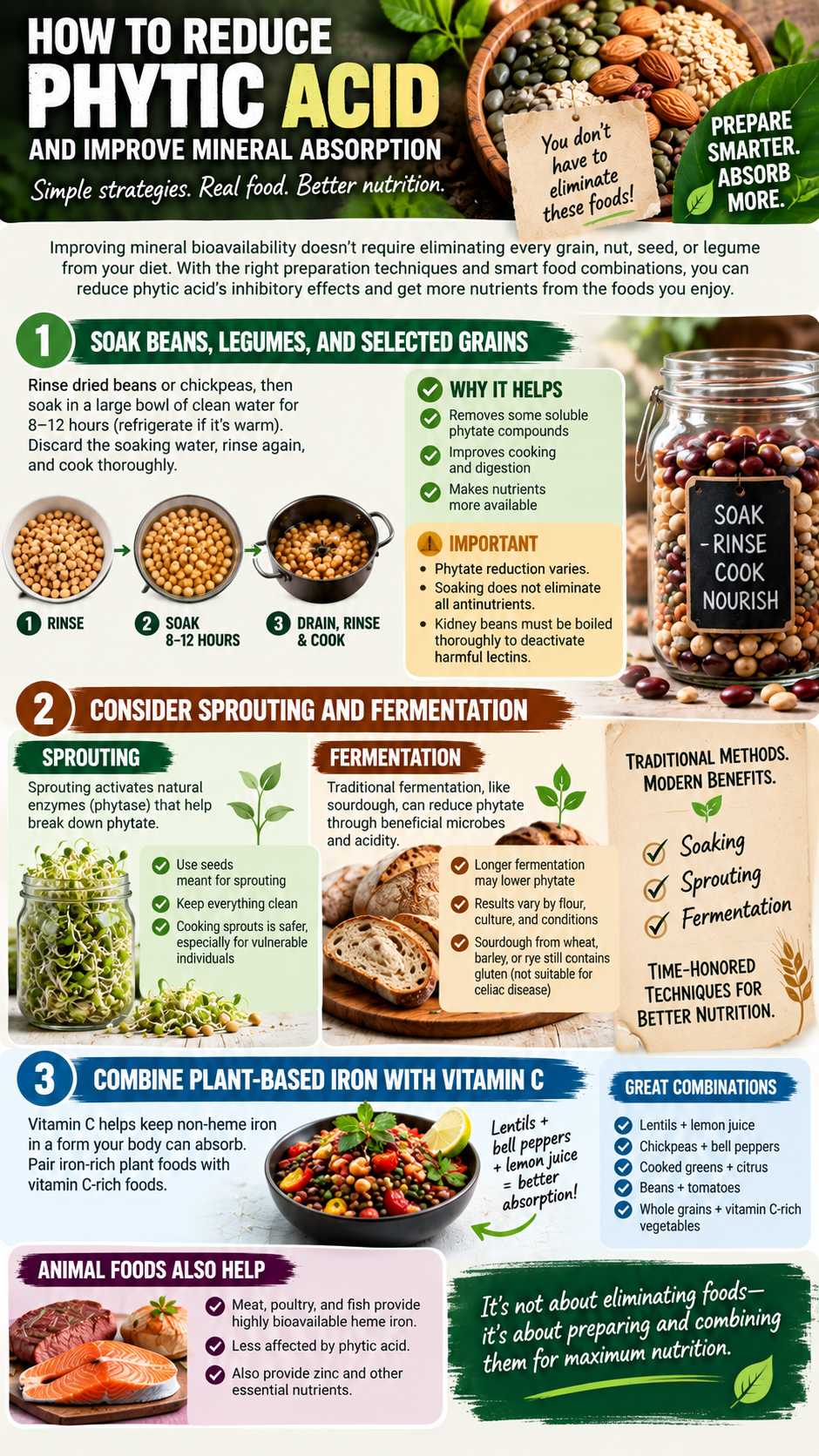
Begin by thoroughly rinsing dried beans or chickpeas before placing them in a large bowl of clean water. Allow them to soak for approximately eight to twelve hours, preferably under refrigeration when temperatures are warm. After soaking, discard the water, rinse again, and cook thoroughly according to the requirements of the specific food.
This method can improve hydration and cooking characteristics while removing some soluble compounds. Phytate reduction varies substantially, however, and soaking should not be considered a method of completely eliminating antinutrients. Kidney beans also require adequate boiling because insufficient cooking can leave harmful lectin activity.
Consider Sprouting and Fermentation
Sprouting suitable seeds and legumes may encourage natural phytase activity and reduce phytate concentrations. Use seeds intended for sprouting and maintain appropriate hygiene throughout the process. Because raw sprouts can harbor harmful microorganisms, cooking them before consumption is the safer option, particularly for vulnerable individuals.
Fermentation offers another strategy for people who consume grains. Traditionally fermented sourdough may contain less phytate than comparable rapidly prepared bread, depending on fermentation conditions. However, sourdough made from wheat, barley, or rye still contains gluten and is unsuitable for individuals with celiac disease.
Combine Plant-Based Iron With Vitamin C
Vitamin C can improve the absorption of non-heme iron by helping maintain it in a form the intestine can absorb. Adding lemon juice to lentils, combining chickpeas with bell peppers, or serving cooked greens alongside vitamin C-rich vegetables may improve iron availability.
For people who consume animal foods, meat, poultry, and fish offer additional sources of highly bioavailable minerals. Heme iron is generally less affected by phytate than plant-derived non-heme iron, while animal-source proteins can contribute zinc and other essential nutrients. Dietary diversity can therefore help reduce dependence on any single mineral source.
Should You Eliminate Nuts, Seeds, and Whole Grains?
The presence of phytic acid does not automatically make a food unhealthy. Almonds provide vitamin E, magnesium, and unsaturated fats, while lentils contain protein, folate, potassium, and dietary fiber. Whole grains supply nutrients and fiber that may be reduced during refining. Eliminating these foods solely because they contain phytate could unnecessarily restrict nutritional variety.
For individuals with documented mineral deficiencies, however, examining phytate exposure may be worthwhile. Someone relying heavily on unfermented grains and legumes could benefit from improving food preparation, increasing dietary diversity, or incorporating additional mineral-rich foods. These adjustments should complement an assessment of other possible causes of deficiency.
The goal is not to fear plant foods but to recognize that nutritional quality involves more than ingredient lists. Digestibility, bioavailability, preparation, and individual physiology all influence how effectively food supports health.
A Functional Medicine Approach to Mineral Deficiencies
A functional nutrition assessment should investigate whether a person consumes adequate minerals and whether physiological or dietary factors interfere with their availability. Persistent fatigue, unexplained anemia, impaired wound healing, or restricted dietary intake may warrant further evaluation. Depending on the clinical situation, testing may include a complete blood count, ferritin, transferrin saturation, and other appropriate measurements.
Mineral supplementation should also be individualized. Excessive iron intake can be harmful, particularly in people with iron overload disorders, while prolonged high-dose zinc supplementation can interfere with copper metabolism. Identifying a genuine deficiency and its underlying cause is more useful than assuming everyone consuming phytate requires supplements.
This approach reflects an important principle: nutritional interventions should address identifiable needs rather than impose universal restrictions. A dietary strategy appropriate for someone with iron deficiency may differ substantially from the needs of an individual with adequate mineral stores.
The Final Verdict: Nutrient Blocker or Beneficial Plant Compound?
Phytic acid is both a legitimate inhibitor of mineral absorption and a biologically interesting plant compound. Its effects on iron and zinc bioavailability are supported by human research, while many proposed antioxidant and disease-prevention benefits remain under investigation. Neither extreme avoidance nor unrestricted enthusiasm accurately reflects the available evidence.
Traditional preparation techniques provide practical ways to manage phytate exposure while preserving the nutritional advantages of plant foods. Soaking, sprouting, fermentation, thoughtful meal combinations, and adequate mineral intake can all contribute to a more balanced nutritional strategy.
Ultimately, optimal nutrition depends not simply on the nutrients present in food, but on the body’s ability to absorb and use them. Understanding phytic acid helps connect food chemistry with everyday dietary choices, encouraging a more informed approach to nourishing the body.
The real nutritional opportunity is not eliminating every antinutrient. It is learning how to prepare, combine, and select foods that deliver the nutrients your body needs while preserving their potential health benefits.