
When a “Healthy Weight” Hides an Unhealthy Metabolism
You step onto the bathroom scale and see almost exactly the same number you saw ten years ago. Your clothes still fit, your doctor calculates your body mass index and tells you that your weight falls within the normal range, and nobody looking at you would describe you as obese. By almost every conventional measure, your weight appears to be one of the healthiest things about you. Yet something underneath the surface may be changing. Your waist has become softer, your muscles are less defined, your energy crashes after meals, your triglycerides are creeping upward, and your blood pressure is no longer as impressive as it once was. You may even have elevated insulin or fat accumulating inside your liver while remaining completely unaware of it. This is the metabolic contradiction sometimes called skinny fat syndrome, and it exposes one of the greatest weaknesses of judging health by body weight alone.
Researchers generally use terms such as normal-weight obesity, metabolically obese normal weight, or metabolically unhealthy normal weight rather than “skinny fat.” Although definitions vary, they describe an important phenomenon: people can maintain a normal body weight while developing metabolic characteristics traditionally associated with obesity. These may include excessive body fat relative to lean mass, visceral fat surrounding the organs, fatty liver, insulin resistance, elevated triglycerides, poor glucose regulation, chronic low-grade inflammation, and inadequate skeletal muscle. The person may look thin on the outside while becoming metabolically unhealthy on the inside.
That distinction matters because metabolic disease is not simply a disease of body weight. It is a disease involving how the body stores, uses, and responds to energy. When we reduce metabolic health to a number on the scale, we can miss dysfunction that has been developing quietly for years.
The Problem With Using BMI as a Metabolic Report Card
Body mass index has become one of healthcare’s most familiar measurements because it is simple, inexpensive, and useful for studying large populations. Divide someone’s weight in kilograms by height in meters squared and you obtain a number that categorizes that person as underweight, normal weight, overweight, or obese. The problem begins when we ask BMI to tell us things it was never designed to reveal. BMI cannot determine how much of someone’s weight comes from skeletal muscle, where body fat is stored, how much fat surrounds the internal organs, whether fat is accumulating inside the liver, or how effectively insulin is controlling blood glucose.
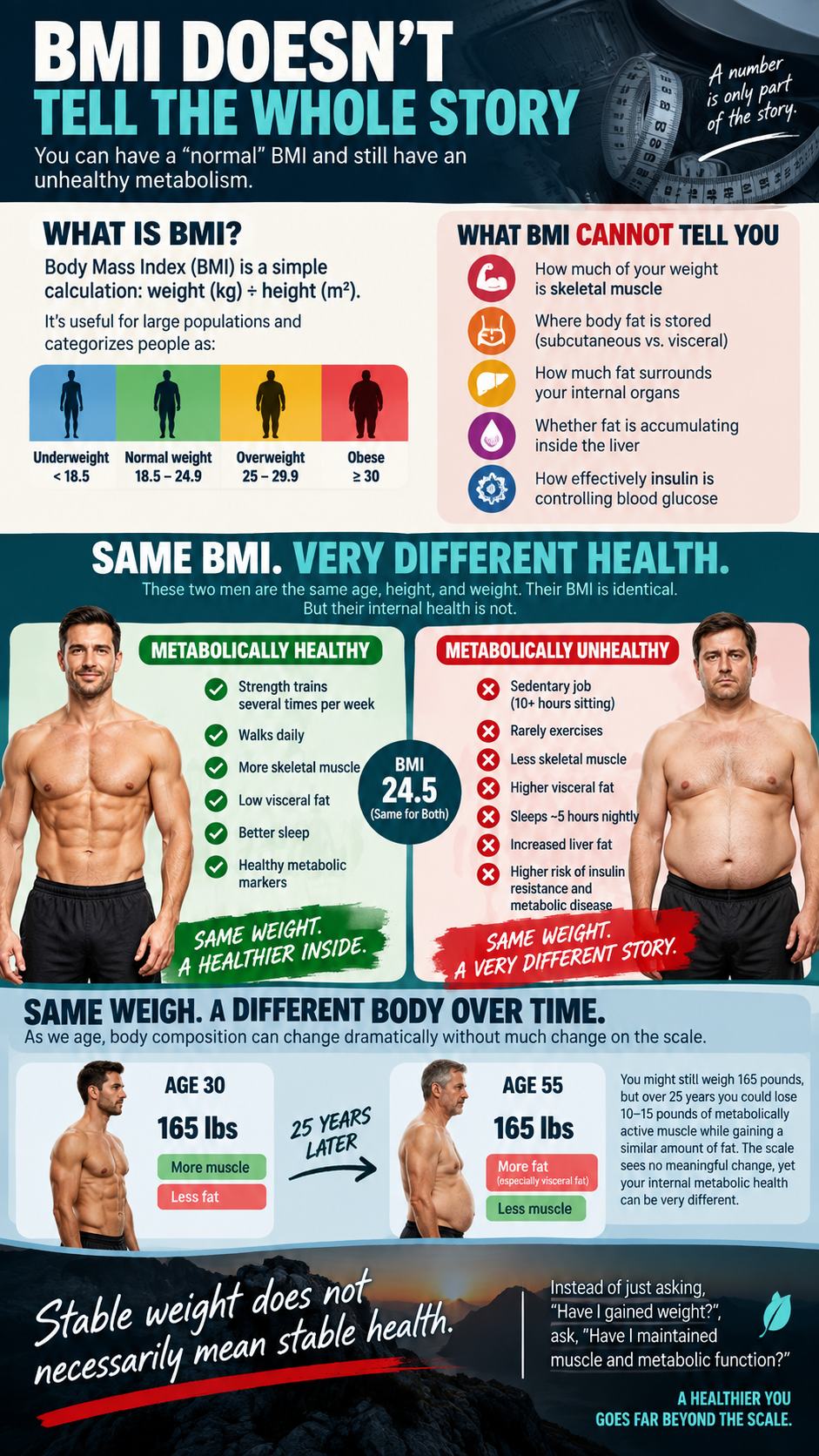
Imagine two men who are the same age, height, and weight. The first strength trains several times each week, walks daily, carries substantial skeletal muscle, sleeps well, and has relatively little visceral fat. The second works behind a desk for ten hours each day, rarely exercises, sleeps five hours nightly, carries little muscle, and has accumulated significant abdominal and liver fat. Their BMI could be identical while their metabolic physiology is dramatically different.
This becomes even more important as we age because the body can undergo substantial recomposition without producing much movement on the scale. A person might weigh 165 pounds at age thirty and 165 pounds at age fifty-five. That stability can appear reassuring until we consider what those 165 pounds actually contain. Over twenty-five years, that individual might lose ten or fifteen pounds of metabolically active muscle while gaining approximately the same amount of fat. The bathroom scale sees no meaningful change, yet the internal metabolic landscape has been substantially remodeled.
This is one reason simply asking whether someone has gained weight is inadequate. A better question is whether that person has maintained muscle and metabolic function. Stable weight does not necessarily mean stable health.
The Hidden Danger of Visceral Fat
To understand skinny fat syndrome, we also need to stop thinking about all body fat as though it were identical. The fat you can pinch underneath your skin is known as subcutaneous fat. Visceral fat is located deeper inside the abdominal cavity and surrounds internal organs. Excess visceral adipose tissue is particularly associated with insulin resistance, abnormal blood lipids, inflammatory signaling, and increased cardiometabolic risk.
This means someone can appear relatively thin while storing fat in metabolically unfavorable locations. A person may have narrow arms and legs, fit comfortably into normal-size clothing, and never consider themselves overweight while carrying disproportionate amounts of fat around the abdominal organs. The mirror may not reveal the problem clearly because some of the most metabolically significant fat is hidden from view.
Research comparing metabolically healthy and metabolically unhealthy normal-weight adults has demonstrated how striking these differences can become. People with similar body weight and even similar total body-fat levels can have very different amounts of visceral and liver fat. In one investigation, metabolically unhealthy normal-weight individuals had substantially more visceral adipose tissue and approximately four times the amount of liver fat compared with metabolically healthy controls. Their insulin sensitivity was also significantly worse.
This reveals something far more important than whether a person looks thin: where the body stores fat matters. Fat accumulating beneath the skin does not necessarily carry the same metabolic consequences as excessive fat accumulating around organs or inside tissues such as the liver.
Your Blood Sugar Can Look Normal While Insulin Is Struggling
One of the most deceptive features of early metabolic dysfunction is that fasting glucose can remain normal for years. This happens because the pancreas possesses an extraordinary ability to compensate. When cells become less responsive to insulin, the pancreas can release additional insulin to force glucose into tissues and maintain blood sugar within an apparently acceptable range.
Imagine a factory that once required ten workers to produce one thousand products each day. Years later, inefficiency develops and twenty workers are required to produce the same one thousand products. If management looked exclusively at the number of finished products, everything would appear normal. The factory still produced one thousand units. What changed was the amount of effort required to achieve the same result.
The early stages of insulin resistance can operate similarly. A fasting glucose of 90 or 95 mg/dL might look reassuring, but glucose alone does not reveal how much insulin was required to maintain that number. The pancreas may be working progressively harder while conventional glucose measurements remain within laboratory reference ranges.
This helps explain why some normal-weight individuals can eventually develop prediabetes, fatty liver, high triglycerides, or type 2 diabetes despite never experiencing dramatic weight gain. The metabolic dysfunction may have started long before glucose became obviously abnormal. By focusing exclusively on glucose and body weight, we may discover the problem only after the body’s compensatory mechanisms have begun losing their ability to keep up.
Muscle Is One of Your Most Important Metabolic Organs
The other side of skinny fat syndrome receives far less attention than body fat: many people simply do not have enough muscle. Skeletal muscle is commonly discussed in the context of strength, athletic performance, or appearance, but muscle is also one of the body’s most important metabolic tissues. It serves as a major destination for glucose after meals and contains enormous mitochondrial machinery for producing and utilizing energy.
When muscles contract during walking, lifting, climbing, carrying, or exercise, they consume fuel. Regular muscular activity also creates biological signals encouraging the body to maintain or build metabolically active tissue. When those demands disappear, the opposite can occur. Muscle gradually declines, particularly as people age and become increasingly sedentary.
Consider what modern adulthood often looks like. Someone drives to work, sits behind a computer for eight or ten hours, drives home, eats dinner, and spends the evening sitting in front of another screen. That person may never become significantly overweight because total calorie intake remains moderate. Nevertheless, years of minimal resistance exercise can gradually reduce skeletal muscle while body fat slowly rises.
This creates a particularly unfavorable metabolic combination: less muscle available to use glucose and more fat capable of disrupting metabolic signaling. The scale may barely move because one tissue is replacing another. From the perspective of metabolism, however, the transformation can be profound.
How Modern Food Makes the Problem Worse
Physical inactivity is only half of the equation. Modern food environments make it extraordinarily easy to consume energy without creating a corresponding metabolic demand. Sweetened beverages, refined carbohydrates, desserts, snack foods, alcohol, and ultra-processed meals can enter the bloodstream rapidly while requiring remarkably little physical effort to obtain or consume.
Controlled research has demonstrated that ultra-processed diets can encourage people to consume considerably more calories than minimally processed diets, even when investigators attempt to match several nutritional characteristics of the foods being offered. The significance extends beyond calorie counting. Food texture, eating speed, energy density, satiety, protein content, fiber, and processing can influence how much people spontaneously consume.
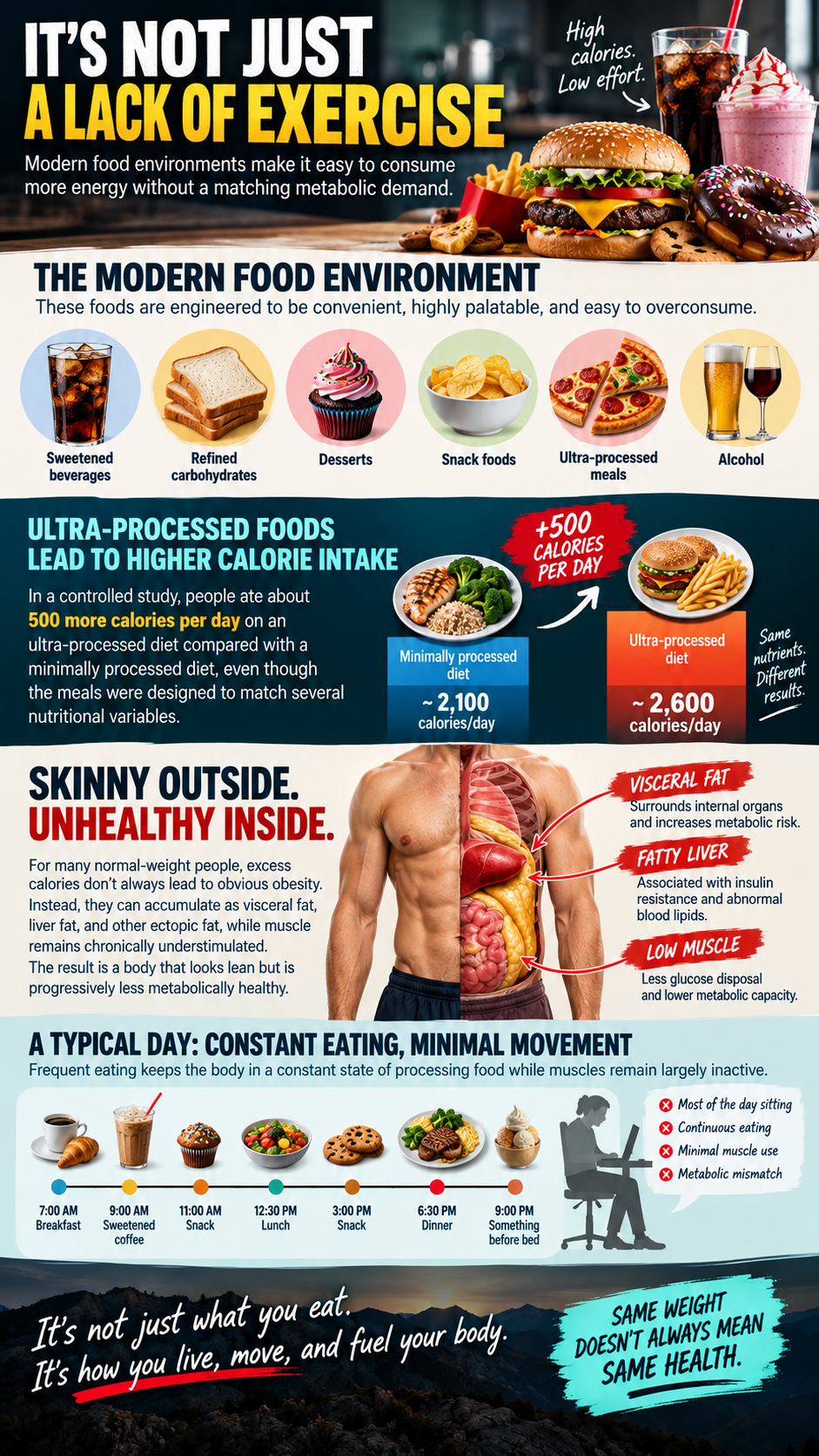
For the skinny fat individual, this does not necessarily produce obvious obesity. Instead, excess energy may gradually accumulate in unfavorable places while muscle remains chronically understimulated. The person stays relatively small but becomes progressively less capable of processing the foods being consumed.
Frequent eating can compound this metabolic environment. Breakfast is followed by sweetened coffee, a midmorning snack, lunch, another snack, dinner, and something before bed. The body moves from one feeding period into another while skeletal muscle spends most of the day physically inactive. Over years, the mismatch between incoming energy and metabolic demand becomes increasingly difficult to ignore.
Sleep and Stress Change Metabolism Too
Food and exercise receive most of the attention, but metabolic health also depends heavily on recovery. Controlled experiments have shown that even relatively short periods of sleep restriction can impair insulin sensitivity in otherwise healthy adults. Poor sleep can simultaneously increase hunger, change food preferences, reduce exercise performance, alter stress hormones, and make physical activity feel considerably more difficult.
Chronic psychological stress can further complicate this picture. The human stress response is designed to help us respond to temporary challenges, but modern stress can remain activated for months or years. Work pressure, financial concerns, constant digital stimulation, inadequate recovery, and disrupted sleep can create a physiological environment that makes healthy glucose regulation and body composition more difficult to maintain.
None of these factors operates independently. Poor sleep makes someone more likely to crave highly processed foods. Those foods can contribute to unstable energy and overeating. Fatigue reduces the desire to exercise. Less muscular activity decreases metabolic demand. Increasing visceral fat can worsen insulin sensitivity, which may eventually contribute to greater fatigue and hunger. What initially appears to be several unrelated lifestyle problems can become one interconnected metabolic cycle.
The Liver May Reveal What the Mirror Cannot
One of the clearest demonstrations of this hidden metabolism occurs in the liver. Fat can accumulate inside the liver even in people who do not appear obese. This ectopic fat is metabolically important because liver fat is strongly associated with insulin resistance, abnormal triglyceride metabolism, and broader cardiometabolic dysfunction.
A slender person can therefore develop fatty liver disease while still being told that their weight looks excellent. Rising triglycerides, increasing liver enzymes, abdominal fat accumulation, elevated fasting insulin, and deteriorating glucose regulation may all provide clues that the metabolism is changing beneath the surface.
The central lesson of skinny fat syndrome is therefore much larger than body composition. Health cannot be accurately judged by appearance alone. A person can maintain normal weight while losing muscle, accumulating visceral fat, developing fatty liver, becoming insulin resistant, sleeping poorly, and progressively losing metabolic flexibility.
That also explains why the solution cannot simply be another weight-loss diet. Someone who already has relatively little muscle may make the situation worse by aggressively restricting calories and losing additional lean tissue. The real objective must be different.
Rebuilding a Metabolism That Looks Healthy on the Inside
Once skinny fat syndrome is recognized, the goal needs to change. For decades, we have been taught that improving metabolic health means losing weight. Eat less, exercise more, watch the number on the scale fall, and assume health is improving along with it. That approach makes even less sense for someone whose weight is already considered normal. Aggressive calorie restriction can actually work against the desired outcome if the person loses additional skeletal muscle along with body fat.
The better objective is metabolic reconstruction. We want to reduce excessive visceral and liver fat while preserving and building skeletal muscle. We want the muscles and liver to respond appropriately to insulin, glucose to move efficiently out of the bloodstream, mitochondria to meet energy demands, and the body to move comfortably between fed and fasting states. Those improvements can occur without dramatic weight loss. Someone could theoretically gain five pounds of muscle while losing five pounds of fat and see absolutely no change on the bathroom scale. The scale calls that zero progress, while the metabolism experiences an enormous transformation.
This is why reversing skinny fat syndrome begins with a different question. Instead of asking how much weight you can lose, ask how much metabolic capacity you can rebuild.
Look Beneath the Normal Blood Sugar
Before changing everything at once, establish where you are starting. Fasting glucose and HbA1c provide useful information, but neither should automatically be interpreted as a complete metabolic evaluation. As we explored in Part 1, the pancreas can compensate for developing insulin resistance by producing more insulin, allowing glucose to remain relatively normal for a surprisingly long time.
Depending upon individual circumstances, looking at fasting insulin alongside fasting glucose can provide additional context. Triglycerides, HDL cholesterol, blood pressure, waist circumference, liver enzymes, and other metabolic measurements can help complete the picture. Body-composition testing can also be useful because someone whose weight has remained stable may discover that lean mass has decreased while body fat has increased.
You can begin with simple measurements at home. Record your waist circumference around the same anatomical location each time, check blood pressure if you have an accurate monitor, record your weight for context, and keep track of physical performance. How many controlled squats can you perform? How easily can you climb stairs? How far can you walk without becoming exhausted? How strong do you feel compared with five years ago? These observations provide a baseline that goes far beyond pounds.
The purpose is not to become obsessed with numbers. It is to identify trends. If your waist decreases while your strength increases and your body weight remains unchanged, that can represent meaningful progress that a conventional weight-loss mentality might completely overlook.
Muscle Must Become Part of the Treatment
One of the most powerful things you can do at home is give your body a reason to build and preserve muscle. Skeletal muscle is not merely something that makes someone look athletic. It is metabolically active tissue involved in glucose disposal, energy production, movement, and insulin sensitivity. A body with inadequate muscle simply has less metabolic machinery available to handle incoming fuel.
You do not need an expensive gym membership to begin changing that physiology. Chair squats, bodyweight squats, wall or floor push-ups, resistance-band rows, step-ups, lunges, hip bridges, overhead presses, and loaded carries can challenge nearly every major muscle group. Someone who has been sedentary can begin conservatively and increase resistance as strength improves. The important element is progression because the body adapts only when it receives a meaningful reason to adapt.
For many otherwise healthy adults, resistance training approximately three times each week provides a reasonable starting framework. Those sessions do not need to last hours. A focused routine that repeatedly challenges the legs, hips, back, chest, shoulders, and core can create an entirely different metabolic stimulus from spending another hour performing low-intensity cardio while neglecting muscle.
Progress should also be measured differently. Instead of celebrating only when the scale drops, celebrate when resistance increases, movements become easier, posture improves, stairs no longer leave you winded, and muscles begin returning to areas that have gradually softened. Those are signs that the body is rebuilding capacity rather than merely becoming smaller.
Turn the Hours After Eating Into a Metabolic Opportunity
Another remarkably simple intervention begins immediately after meals. Most people finish eating and return to a chair, desk, automobile, or couch. Yet this is precisely when nutrients are entering circulation and skeletal muscle can help determine what happens to them.
Walking for ten to twenty minutes after a larger meal creates muscular demand while glucose is being absorbed. The walk does not need to become an intense cardiovascular workout. Its value comes from contracting large muscles at a time when the body is processing incoming energy.
The same principle applies throughout the day. Someone can complete a forty-five-minute workout every morning and still spend the remaining waking hours almost completely sedentary. That pattern is better than performing no exercise, but metabolic health also responds to how frequently the body moves.
Stand up during phone calls. Walk for several minutes between periods of desk work. Take stairs when practical. Carry groceries rather than automatically choosing the easiest possible option. Walk outside after dinner rather than immediately sitting in front of a television. These behaviors may appear insignificant individually, but repeated muscular contractions accumulate across thousands of hours each year.
Give Your Muscles the Raw Materials They Need
Exercise creates the demand for stronger muscle, but food supplies the building materials. This is why aggressive dieting can become counterproductive for a normal-weight person with inadequate lean mass. If calories and protein are restricted too severely, the body may sacrifice exactly the tissue you are attempting to restore.
Begin thinking about meals differently. Rather than asking what carbohydrate will form the center of breakfast, lunch, or dinner, first identify the protein source. Eggs, beef, poultry, fish, turkey, and other minimally processed proteins can provide essential amino acids needed for muscle repair and maintenance. Appropriate plant proteins can also contribute according to dietary preference and tolerance.
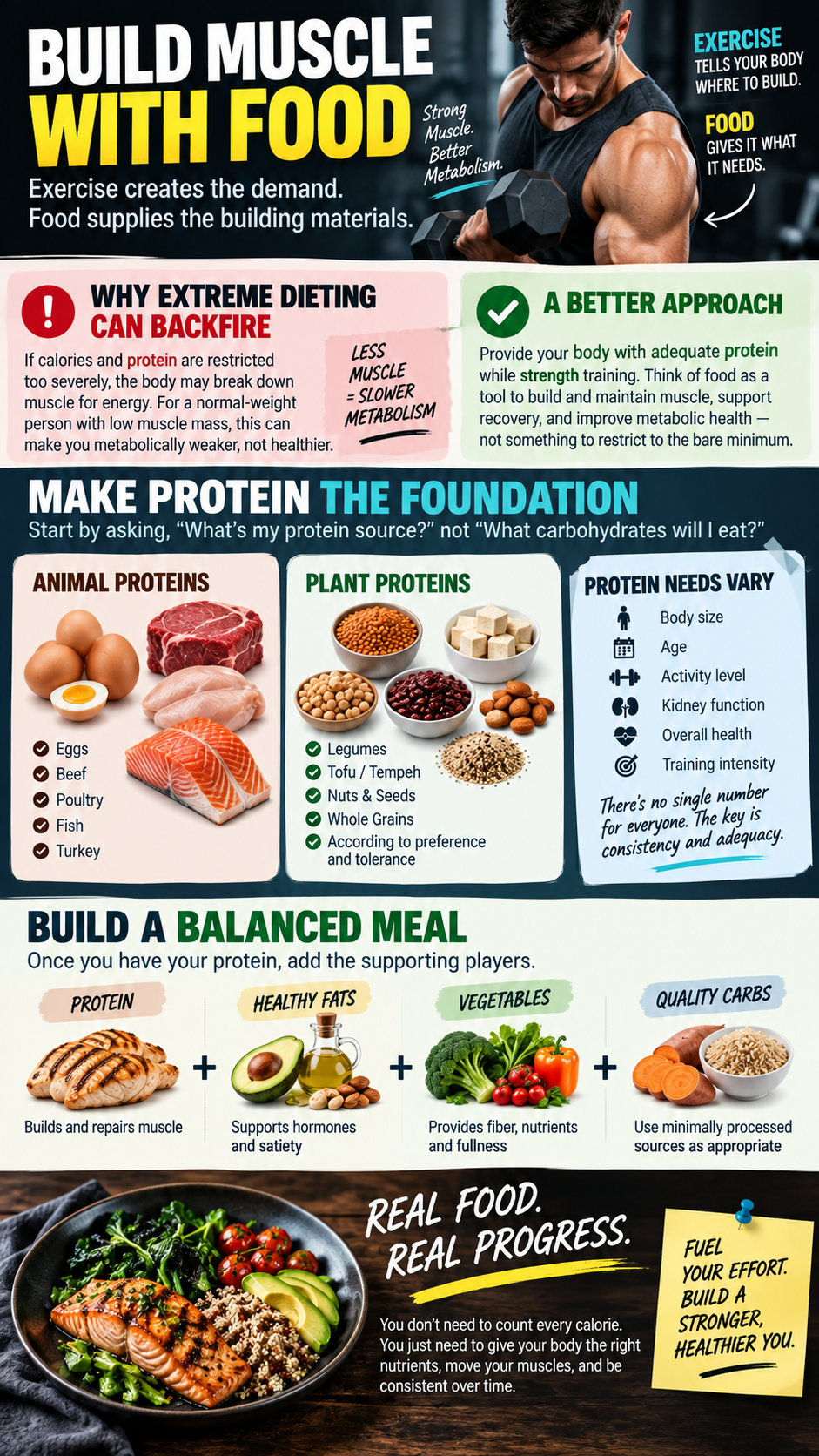
Protein needs vary considerably according to body size, age, activity, kidney function, overall health, and training intensity. The principle is therefore more useful than prescribing one universal number. Someone attempting to rebuild muscle should consistently provide the body with adequate protein while performing the resistance exercise that tells the body where those amino acids are needed.
Meals can then be constructed around that foundation using whole-food fats, vegetables, and minimally processed carbohydrate sources appropriate to the individual’s metabolic condition. This naturally begins replacing the refined foods that often dominate modern eating without requiring someone to spend the rest of life counting every calorie.
Change the Food Environment Before Fighting Your Appetite
Willpower is an unreliable long-term metabolic strategy. The easier approach is changing the environment that constantly asks you to use willpower.
Open the refrigerator and pantry and look at what surrounds you. If soda, sweetened beverages, pastries, breakfast cereals, chips, candy, cookies, crackers, and packaged snack foods occupy most of the kitchen, those foods will eventually become part of the diet. Convenience almost always wins when someone is tired, stressed, or hungry.
For thirty days, dramatically reduce ultra-processed foods and eliminate sugar-sweetened beverages. Replace them with recognizable foods that require preparation, chewing, and digestion. Water, mineral water, unsweetened tea, or minimally sweetened beverages can replace liquid sugar. Meals built around protein and whole foods can replace the cycle of refined carbohydrates followed by another snack two hours later.
Treat those thirty days as an experiment rather than a punishment. Pay attention to hunger between meals, cravings, afternoon fatigue, digestion, sleep quality, mental clarity, and energy. The objective is to discover how differently the body behaves when food is supplying nutrients rather than constantly stimulating appetite.
Rediscover the Space Between Meals
Modern humans have also normalized eating throughout almost every waking hour. Breakfast may begin at seven, followed by a sweetened coffee at nine, a snack at eleven, lunch at noon, another snack during the afternoon, dinner in the evening, and dessert or something crunchy before bed. There may be very few hours in which the body is not digesting or absorbing incoming calories.
For an otherwise healthy adult, begin by creating distinct meals rather than continuous grazing. Make meals substantial enough to satisfy you, especially by including adequate protein, and then allow several hours before eating again. Removing habitual evening snacks can naturally create a longer overnight period without requiring an aggressive fasting protocol.
Some people may eventually experiment with time-restricted eating, but fasting should never become a competition. More fasting is not automatically better. Pregnancy, adolescence, frailty, eating disorders, certain medications, diabetes treatment, low body weight, and several medical conditions can make fasting inappropriate or require professional supervision.
The objective is metabolic rhythm. The human body should be capable of processing a meal and then spending time without another constant stream of incoming energy. Reestablishing that rhythm can become an important part of restoring metabolic flexibility.
Sleep Is Part of the Metabolic Prescription
Food and exercise receive enormous attention while sleep is frequently treated as optional. That is a mistake. Sleep influences insulin sensitivity, appetite signaling, stress hormones, muscle recovery, exercise performance, food choices, and energy regulation. Someone sleeping four or five hours every night may be making metabolic recovery considerably more difficult regardless of how carefully they eat.
Give yourself enough time in bed to obtain approximately seven to nine hours when appropriate for your individual needs. Keep bedtime and waking time relatively consistent, reduce bright light and stimulating screens near bedtime, and create a dark, quiet, cool sleeping environment. Avoid confusing alcohol-induced sedation with restorative sleep because the two are physiologically different.
Persistent snoring, witnessed pauses in breathing, morning headaches, or severe daytime sleepiness should not simply be dismissed as normal aging. Sleep-disordered breathing can repeatedly disrupt sleep architecture and oxygenation while contributing to an unfavorable metabolic environment. Correcting nutrition while ignoring severely disrupted sleep leaves an important piece of the metabolic puzzle untouched.
Give Yourself 30 Days to Change the Signals
Rather than trying a different strategy every few days, spend one month consistently changing the major signals your metabolism receives. Strength train several times each week, walk after meals, move frequently throughout the day, anchor meals around adequate protein, remove liquid sugar, dramatically reduce ultra-processed foods, stop unnecessary grazing, and protect your sleep. None of these behaviors is particularly exotic, but together they change the metabolic environment twenty-four hours a day.
At the end of the month, return to your baseline measurements. Check your waist circumference, blood pressure, strength, energy, cravings, sleep, and exercise tolerance. Your weight may have fallen, increased, or barely changed. Do not allow that single number to determine whether the experiment succeeded.
Over a longer period, appropriate laboratory reassessment can reveal whether triglycerides, glucose regulation, fasting insulin, liver markers, and other metabolic measurements are moving in a healthier direction. Body-composition testing may reveal increasing lean mass even when total weight remains remarkably stable.
Skinny fat syndrome usually develops over years, so genuine metabolic reconstruction deserves more than a few weeks. The goal is not another temporary diet designed to produce a smaller body before returning to the same habits that created the problem. The goal is to build a body that is stronger, more muscular, more insulin sensitive, better rested, more physically active, and more capable of handling energy.
That is the difference between losing weight and rebuilding health. One changes what the scale says. The other changes what your body can do.