
When a Healthy Diet Starts Working Against the Body
The green smoothie arrives looking like a symbol of perfect nutrition. Spinach fills the blender beside almond butter, cacao, berries, and concentrated greens powder. Later, lunch brings a large salad topped with almonds and beets. Dinner may include sweet potatoes, followed by dark chocolate for dessert. Every food seems wholesome, yet the body does not respond to reputation. It responds to chemistry, concentration, digestion, absorption, metabolism, and elimination.
Hidden inside many celebrated superfoods is a naturally occurring compound called oxalate. Spinach, Swiss chard, rhubarb, beet greens, almonds, cacao, and several other foods contain measurable amounts. Human metabolism can also produce oxalate internally through several biochemical pathways. Unlike essential vitamins or amino acids, oxalate serves no known nutritional requirement inside the human body. Once it reaches circulation, the body must eventually eliminate it, primarily through the kidneys.
For many people, ordinary dietary oxalate creates no obvious difficulty. Trouble develops when exposure exceeds the body’s ability to bind, metabolically manage, or eliminate that burden. Gastrointestinal dysfunction, fat malabsorption, low calcium intake, poor hydration, kidney impairment, genetics, and microbial changes can all influence oxalate handling. This explains why two people can consume nearly identical meals and experience completely different biological consequences.
The real question, therefore, is not whether spinach is good or bad. The better question asks whether a particular person can safely manage the amount of oxalate entering the body. That distinction shifts the conversation away from food fear and toward physiology. It also explains why personalized nutrition becomes more useful than universal superfood recommendations.
How the Superfood Movement Changed the Dose
Humans have consumed oxalate-containing plants for thousands of years. However, modern wellness culture has changed the quantity, frequency, and concentration of many foods. Few traditional diets included several cups of raw spinach blended into one drink every morning. Almond flour also did not appear in breakfast, snacks, breads, crackers, and desserts throughout the same day.
Processing makes unusually large food quantities easier to consume. Whole almonds require chewing, create satiety, and naturally slow intake. Almond flour can hide the equivalent of many almonds inside pancakes, breads, and baked snacks. Add almond milk and almond butter, and the same ingredient can appear several times before dinner.
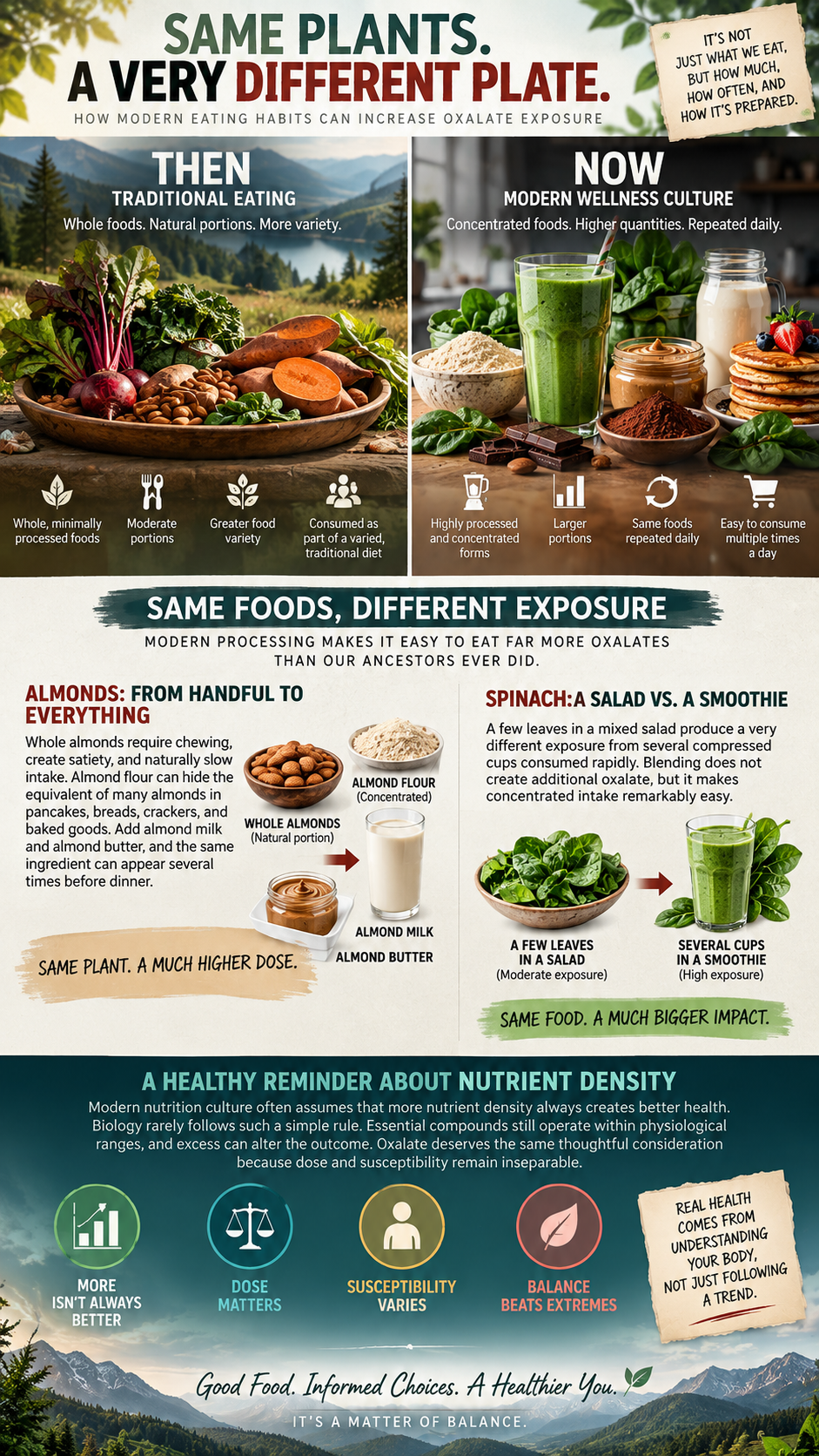
Spinach creates a similar situation when blended. A few leaves in a mixed salad produce a very different exposure from several compressed cups consumed rapidly. Blending does not create additional oxalate, but it makes concentrated intake remarkably easy. The same principle applies to cacao powders, green powders, nut flours, and other concentrated wellness foods.
Modern nutrition culture often assumes that more nutrient density always creates better health. Biology rarely follows such a simple rule. Essential compounds still operate within physiological ranges, and excess can alter the outcome. Oxalate deserves the same thoughtful consideration because dose and susceptibility remain inseparable.
Oxalate Is Part of Plant Chemistry
Plants cannot run from predators, drought, infection, or environmental stress. Instead, they use structural barriers and chemical compounds to regulate survival and mineral balance. Oxalate participates in several plant functions, including calcium regulation and cellular storage. Its presence in food is therefore natural, but natural origin does not guarantee universal tolerance.
Many plant compounds provide valuable benefits at normal dietary exposures. Others become more relevant when consumed repeatedly, concentrated heavily, or processed differently. The human body also handles those compounds according to its own digestive and metabolic condition. One person may eliminate a compound efficiently, while another absorbs far more than expected.
This is where nutritional ideology becomes dangerous. Declaring every oxalate-containing plant toxic ignores people who tolerate these foods without difficulty. Declaring every plant food universally therapeutic ignores people with measurable hyperoxaluria or recurrent calcium oxalate stones. A better model examines the relationship between the food and the person consuming it.
The Calcium-Oxalate Paradox
One of the most misunderstood parts of oxalate physiology involves calcium. Most kidney stones contain calcium oxalate, which often leads people to fear dietary calcium immediately. The assumption sounds logical because the stone contains calcium. However, gastrointestinal chemistry tells a much more interesting story.
Calcium can bind oxalate inside the digestive tract before meaningful absorption occurs. That interaction makes oxalate less available to cross the intestinal lining. More of the calcium-oxalate complex can then leave through stool rather than enter circulation. Adequate dietary calcium can therefore reduce the amount of oxalate eventually reaching the kidneys.
The location of this interaction changes everything. Calcium meeting oxalate inside the intestine can reduce absorption and offer protection. Calcium meeting oxalate inside concentrated urine can contribute to crystal formation. This is why removing dietary calcium indiscriminately can create the opposite outcome someone intended.
Low calcium intake leaves more dietary oxalate unbound in the intestine. That free oxalate may then cross into circulation and travel toward the kidneys. A person may therefore reduce calcium while unknowingly increasing urinary oxalate exposure. The mistake comes from focusing on the stone’s ingredients rather than understanding where the chemistry begins.
When Fat Malabsorption Changes the Equation
For many susceptible people, the problem begins inside the gastrointestinal tract rather than the kidneys. Under healthy digestive conditions, calcium remains available to bind dietary oxalate. Fat malabsorption can disrupt this relationship significantly. Unabsorbed fatty acids remain inside the intestine and attract calcium away from oxalate.
When calcium binds those fatty acids, more oxalate remains soluble and available for absorption. That oxalate can cross the intestinal wall and enter circulation at higher levels. Researchers call this condition enteric hyperoxaluria. It can occur in several gastrointestinal disorders and after certain malabsorptive surgical procedures.
Once intestinal oxalate absorption increases, the kidneys must handle a larger burden. Urinary oxalate can rise, calcium oxalate supersaturation can increase, and stone formation becomes more likely. In severe cases, oxalate crystals may deposit inside renal tissue and contribute to kidney injury.
This is one of the clearest examples of why identical foods can behave differently inside different bodies. The spinach did not suddenly become more dangerous. The intestinal environment changed how much oxalate entered the bloodstream. Root-cause thinking begins by recognizing that distinction.
The Gut Microbiome May Influence Oxalate Handling
The intestine contains trillions of microorganisms that participate in digestion, immune regulation, and chemical metabolism. Oxalate also enters this microbial ecosystem before much of it reaches circulation. Certain bacteria can degrade oxalate and potentially reduce the amount available for absorption.
One organism has attracted particular attention: Oxalobacter formigenes. This bacterium can use oxalate as an energy source, while other microbial species may also contribute to oxalate breakdown. Researchers continue studying how microbial diversity influences stone formation and urinary oxalate. The emerging picture suggests a complex ecological relationship rather than one magical bacterial solution.
Antibiotic exposure adds another layer to this discussion. Antibiotics can alter intestinal microbial communities and may reduce organisms involved in oxalate metabolism. This does not mean every antibiotic prescription causes kidney stones. However, repeated microbial disruption may change the gastrointestinal environment in ways worth investigating.
A thoughtful functional approach should avoid overstating this science. No single probiotic has been proven to correct every oxalate problem. Still, the microbiome remains highly relevant because food enters a living ecosystem rather than an empty digestive tube. That ecosystem can influence how much oxalate eventually reaches the kidneys.
The Kidney Becomes the Final Checkpoint
After oxalate enters circulation, the kidneys become the primary route for elimination. Inside urine, oxalate can encounter calcium and other stone-forming substances. When concentrations rise sufficiently, calcium oxalate supersaturation can increase. Small crystals may then form, enlarge, and aggregate over time.
Not every crystal becomes a kidney stone because urinary chemistry contains natural protective factors. Citrate can inhibit calcium crystal formation, while higher urine volume dilutes stone-forming substances. Sodium intake can influence urinary calcium, and magnesium may also affect the environment. Urine pH and uric acid contribute additional variables.
Oxalate therefore never acts alone inside the kidney. Imagine a crowded room containing calcium and oxalate molecules. As the room becomes smaller, collisions become more likely. Increasing urine volume effectively expands that biochemical room and reduces the concentration of those compounds.
This is why hydration matters so much for susceptible people. Someone with normal urinary oxalate can still create unfavorable conditions through persistent dehydration. Another person may have elevated oxalate but reduce risk by maintaining strong urine volume and favorable citrate levels. The entire urinary environment must be considered.
The Body Can Produce Oxalate Without Eating Spinach
Diet receives most of the attention in oxalate discussions, but the human body can produce oxalate internally. Several metabolic pathways can ultimately generate oxalate from precursor compounds. Glyoxylate metabolism plays an important role, while rare genetic disorders can dramatically increase production.
Primary hyperoxaluria represents the most serious example of excessive endogenous production. These inherited disorders can create severe kidney damage even without unusually high dietary oxalate. Their existence proves that dietary restriction cannot explain every oxalate problem. Sometimes the source comes from metabolism itself.
Vitamin C deserves attention because some ascorbic acid can be metabolized into oxalate. Very large supplemental doses may increase urinary oxalate in susceptible people. Vitamin C remains essential, but that does not mean unlimited supplementation produces unlimited benefit.
Someone with recurrent calcium oxalate stones should therefore review high-dose vitamin C use carefully. The concern centers on supplemental dosing rather than normal food intake. This principle appears repeatedly in nutrition because concentrated supplements often behave differently from ordinary dietary exposure.
What Excess Oxalate Can Do to the Body
The strongest evidence surrounding problematic oxalate handling concerns the kidneys and urinary tract. Calcium oxalate stones can produce severe flank pain despite their small size. Nausea, vomiting, urinary bleeding, and obstruction may follow. Recurrent stones can create years of repeated procedures, imaging, medication use, and emergency visits.
Hyperoxaluria creates another level of concern because elevated urinary oxalate increases calcium oxalate supersaturation. The effect becomes more significant when low urine volume accompanies that elevation. Concentration allows calcium and oxalate to encounter each other more easily and encourages crystal growth.
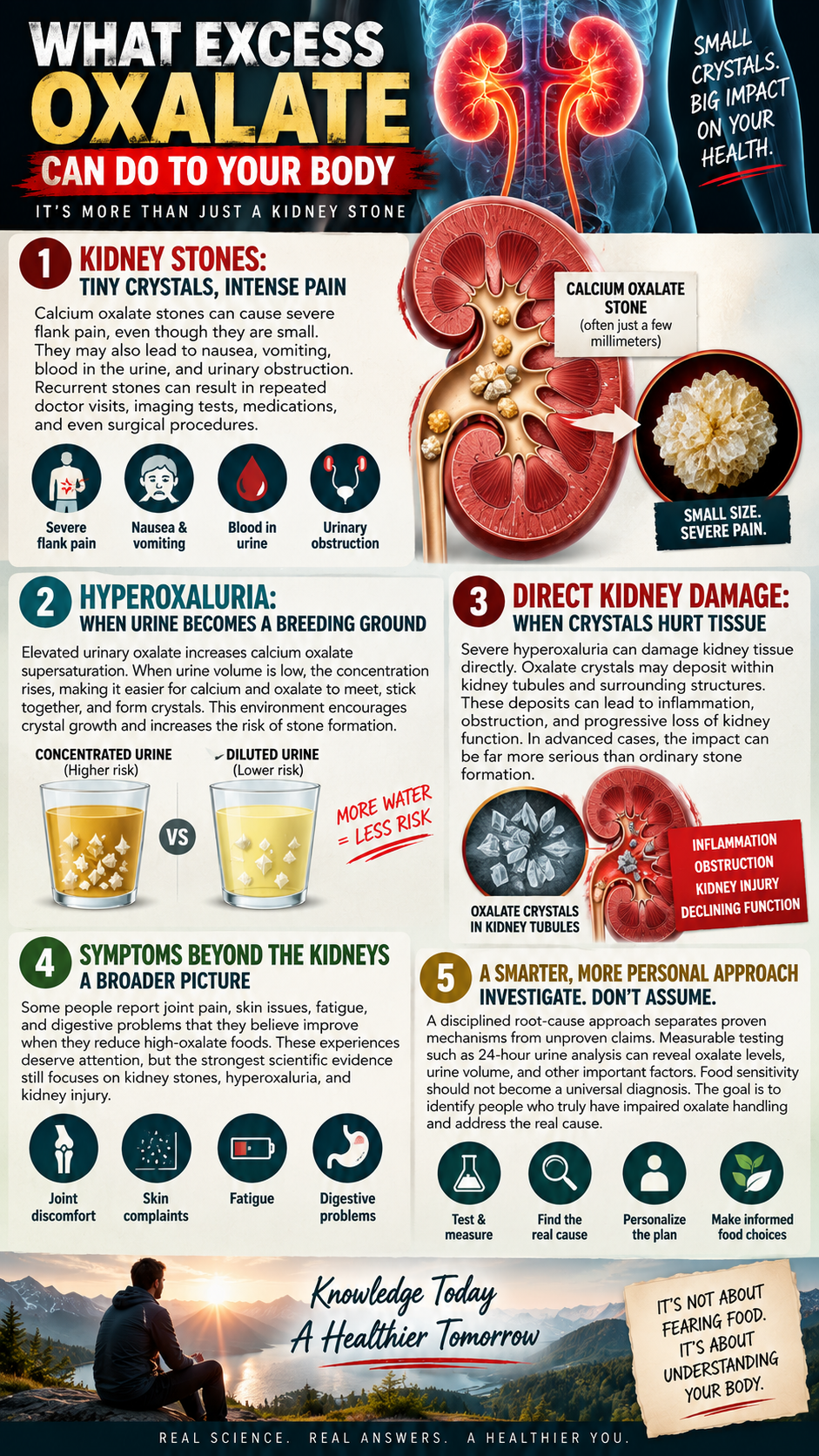
Severe hyperoxaluria can also damage renal tissue directly. Oxalate crystals may deposit within kidney tubules and surrounding structures. These deposits can contribute to inflammation, obstruction, and progressive loss of kidney function. Advanced disease may become far more serious than ordinary stone formation.
People frequently report symptoms beyond the kidneys, including joint discomfort, skin complaints, fatigue, and digestive problems. Some individuals improve after reducing high-oxalate foods, which deserves thoughtful attention. However, the strongest scientific evidence still centers on stone disease, hyperoxaluria, and kidney injury.
A disciplined root-cause approach should distinguish established mechanisms from emerging hypotheses. Functional investigation gains credibility when measurable physiology guides conclusions. Food sensitivity should not become another universal diagnosis. The goal is to identify the person who actually has impaired oxalate handling.
Susceptibility Matters More Than the Food List
Consider two people drinking the same spinach smoothie every morning. One has normal digestion, healthy kidneys, adequate calcium intake, and excellent hydration. Testing reveals normal urinary oxalate, normal citrate, and strong urine volume. That person may tolerate the smoothie without difficulty.
The second person has chronic digestive dysfunction and recurrent calcium oxalate stones. Testing reveals elevated urinary oxalate and persistently low urine volume. The drink remains identical, but the biological terrain changes the outcome. This is why dietary advice should begin with susceptibility rather than universal restriction.
Several mechanisms can create that susceptibility. High dietary exposure may contribute, while fat malabsorption can increase absorption. Low calcium intake may leave more oxalate unbound, and high-dose vitamin C may add endogenous production. Poor hydration can then concentrate everything further.
The most effective strategy starts by identifying which mechanism applies. Treating every person with the same restrictive diet ignores important differences. A targeted approach reduces unnecessary food fear while improving the chance of correcting the true problem.
Recognize the Modern Oxalate Stack
Many people unknowingly create repetitive diets packed with concentrated oxalate sources. Breakfast may include almond-flour pancakes and almond butter. A spinach smoothie follows after exercise, while lunch includes beet greens and almonds. Dark chocolate may appear later before sweet potatoes at dinner.
Each food appears healthy when considered alone. The cumulative pattern creates the concern because exposure repeats throughout the day. Someone can therefore eat clean while creating an unusually high oxalate load. This pattern deserves attention before anyone starts blaming a single vegetable.
Obsessive milligram counting usually creates more frustration than clarity. Oxalate values vary according to plant variety, growing conditions, preparation, and laboratory methods. Pattern recognition often provides a more practical starting point. Repeated spinach, almond flour, cacao, and other concentrated sources deserve the closest attention.
Dietary diversity offers a simple solution. Rotate greens instead of consuming spinach every morning. Reduce dependence on almond-based substitutes and vary side dishes throughout the week. This approach lowers repetition without creating a restrictive nutritional prison.
Test Before You Guess
Anyone with recurrent stones should identify the stone type whenever possible. Calcium oxalate stones require different strategies from uric acid, cystine, and calcium phosphate stones. Treating every stone as an oxalate problem risks missing the true metabolic cause.
A 24-hour urine collection can provide far more useful information than dietary guessing. This testing may evaluate oxalate, calcium, citrate, sodium, uric acid, urine volume, and pH. Those measurements can reveal which factors actually drive stone formation.
Someone may have normal urinary oxalate but dangerously low urine volume. Another person may show high urinary calcium associated with sodium intake. Someone else may demonstrate low citrate despite reasonable oxalate exposure. The test helps separate assumptions from measurable physiology.
Marked hyperoxaluria deserves deeper investigation rather than immediate dietary blame. Past intestinal surgery, chronic diarrhea, malabsorption, and family history can provide important clues. Very high urinary oxalate may signal a metabolic problem requiring more comprehensive evaluation.
Restore the Calcium-Oxalate Relationship
One of the most common mistakes involves removing dietary calcium after forming a calcium oxalate stone. The assumption feels intuitive because calcium appears in the stone’s name. However, adequate calcium inside the digestive tract can actually reduce oxalate absorption.
Calcium works best when consumed with meals containing oxalate. Both compounds must occupy the intestine together for meaningful binding to occur. Calcium consumed many hours later cannot capture oxalate that has already crossed the intestinal lining.
Food-based calcium often provides a sensible starting point for appropriate people. High-dose calcium supplements should not become an automatic strategy because individual health factors matter. Kidney disease, abnormal calcium metabolism, and complex stone histories require more tailored recommendations.
The essential principle remains straightforward. Do not remove calcium simply because calcium appears inside the stone. Understand the timing and location of the chemistry before changing the diet.
Hydration Changes the Chemistry
Adequate hydration remains one of the most practical tools for reducing stone-forming conditions. Urine contains minerals, salts, acids, and metabolic waste. When water content falls, those compounds become increasingly concentrated. Calcium and oxalate then occupy a tighter chemical environment.
Greater urine volume lowers the concentration of stone-forming substances. This reduces the likelihood of calcium oxalate supersaturation and crystal formation. The goal involves steady hydration rather than occasional large amounts of water.
Fluid intake should remain distributed throughout the day. Exercise, hot weather, sauna use, heavy sweating, and diarrhea increase fluid requirements. People who lose large amounts of water may remain dehydrated despite drinking what seems like a normal amount.
Urine color can offer a rough clue, although it cannot replace testing. Persistently dark urine often suggests concentrated urine, but supplements and medications can change appearance. A 24-hour urine study gives a clearer picture for recurrent stone formers.
More water does not always mean better health. Excessive consumption can dangerously dilute blood sodium in certain circumstances. People with advanced kidney disease, heart failure, or prescribed fluid restrictions need individualized guidance.
Support Citrate and the Urinary Environment
Citrate serves as one of the body’s natural defenses against calcium crystal formation. It can bind calcium and reduce the amount available for crystallization. Low urinary citrate removes this protective effect and can increase stone risk.
Several factors influence citrate excretion. Diet, potassium status, acid-base balance, kidney physiology, and certain medications may alter urinary levels. Testing can determine whether hypocitraturia actually exists before treatment begins.
Citrus foods can provide a practical dietary strategy for some people. Lemon and lime can support citrate intake while making water easier to drink. Adding large amounts of sugar defeats much of that benefit, so preparation matters.
Some people with documented low citrate may require more targeted medical treatment. Potassium citrate may be used in appropriate circumstances under clinical guidance. The larger lesson remains consistent throughout this article: measure the problem before treating it aggressively.
Address the Gut Instead of Blaming the Food
Elevated urinary oxalate combined with gastrointestinal symptoms should immediately raise questions about intestinal function. Chronic diarrhea can increase fluid losses and alter mineral handling. Fat malabsorption can free more oxalate for absorption. Previous intestinal surgery can change the entire digestive environment.
Greasy stools, unexplained weight loss, chronic diarrhea, and persistent nutrient deficiencies deserve investigation. These signs may indicate that digestion and absorption are not functioning normally. Simply removing spinach may reduce exposure while leaving the underlying problem untouched.
A root-cause strategy asks why the intestine absorbs excessive oxalate. Correcting digestive dysfunction may change how the same foods behave. That approach aims to restore normal physiology rather than create permanent fear around vegetables.
Microbial health may also deserve attention, although random probiotic use should not replace proper investigation. Diverse diets, appropriate fiber, and thoughtful antibiotic use can support microbial resilience. The goal should involve restoring an ecosystem rather than chasing one bacterial species.
Change Food Preparation and Reduce Concentration
Preparation methods can influence oxalate exposure. Boiling certain high-oxalate vegetables can reduce soluble oxalate because some leaches into the cooking water. Discarding that water removes a portion of what left the plant.
Steaming generally removes less because the food contacts less water. Blending keeps everything inside the final drink, including the original oxalate content. This difference matters when someone consumes several cups of spinach every morning.
People with documented hyperoxaluria may benefit from reducing concentrated raw spinach intake. They can rotate lower-oxalate greens and change cooking methods rather than eliminating vegetables entirely. Small adjustments often create meaningful reductions in cumulative exposure.
Reducing concentration also applies to almond flour, cacao powders, and greens powders. A concentrated ingredient can deliver far more plant material than someone realizes. Whole-food variety usually creates a more balanced exposure.
Review Supplements Carefully
The supplement cabinet deserves attention when urinary oxalate remains elevated. High-dose vitamin C represents one of the most important considerations. Large supplemental amounts can increase oxalate production in susceptible individuals.
Someone taking several grams of vitamin C daily should review whether that dose remains necessary. Recurrent calcium oxalate stone formers deserve particular caution. The goal is not eliminating vitamin C, but avoiding excessive intake without a clear reason.
Concentrated plant powders may also contribute to total exposure. Greens powders can combine multiple ingredients into one scoop, while several daily servings may create unusually high intake. Reading labels becomes essential when someone already consumes numerous high-oxalate foods.
Natural products still participate in normal chemistry. The body does not ignore a substance simply because it came from a plant or supplement bottle. Concentration, metabolism, and elimination always matter.
The At-Home Oxalate Reset
An effective home strategy begins with observation rather than restriction. Spend several days tracking repeated high-oxalate foods without changing the diet immediately. Look for spinach, almonds, cacao, beet greens, and concentrated powders appearing multiple times each day.
Once patterns become clear, reduce repetition rather than eliminating everything. Rotate greens, use fewer almond-based substitutes, and reduce massive daily servings of concentrated foods. This preserves dietary variety while lowering total oxalate exposure.
Pair oxalate-containing meals with appropriate dietary calcium when possible. Avoid unnecessary calcium restriction unless a specific medical reason exists. The goal is to encourage intestinal binding before oxalate enters circulation.
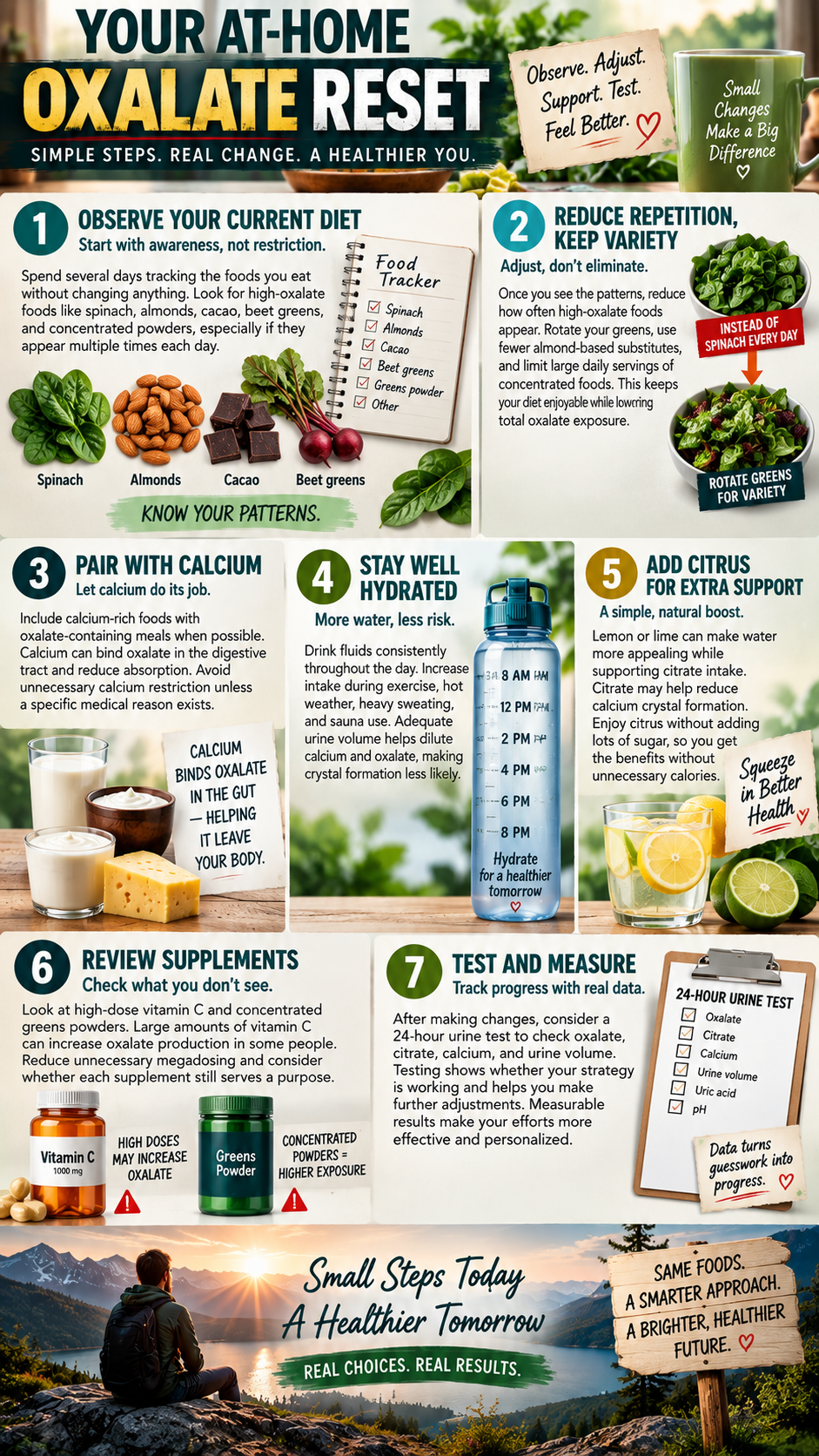
Hydration should remain consistent across the day. Increase fluid intake during exercise, heat exposure, heavy sweating, and sauna use. Maintaining adequate urine volume helps dilute calcium and oxalate before they can concentrate excessively.
Citrus foods can fit into the strategy when appropriate. Lemon or lime can make water more appealing while supporting citrate intake. Avoid turning hydration into a source of unnecessary sugar.
Review high-dose vitamin C and concentrated greens powders carefully. Reduce unnecessary megadosing and consider whether every supplement still serves a purpose. Recurrent stone formers should combine these changes with objective testing whenever possible.
After making targeted changes, reassess measurable markers. A repeat 24-hour urine study can reveal whether oxalate, citrate, calcium, and urine volume improved. Functional intervention becomes far more valuable when biological change can be demonstrated.
The Goal Is Not a Low-Oxalate Life
Nutrition becomes distorted when every food gets divided into heroes and villains. Spinach does not deserve sainthood, but it does not deserve demonization either. Most people can tolerate oxalate-containing foods inside a varied diet without difficulty.
Susceptible individuals deserve a more personalized strategy. Their problem may begin with excessive intake, intestinal malabsorption, low dietary calcium, poor hydration, altered metabolism, or impaired kidney function. Several of those factors may operate at the same time.
The most important question asks what changed inside the person. That question moves the conversation beyond simplistic claims about superfoods. It also directs attention toward the gut, kidneys, minerals, hydration, metabolism, and overall biological terrain.
The healthiest diet is not necessarily the one containing the most fashionable superfoods. It is the one the body can digest, regulate, absorb appropriately, and eliminate without creating harm. When nutrition starts with individual physiology, food becomes a tool instead of an ideology.