
How Seed Oils Took Over the Modern Diet
There was a time when dietary fat was visible. Butter sat on the table, cream floated on milk, and meat carried its natural fat. Olive oil came from olives, while people rendered cooking fats in their own kitchens. Today, much of our dietary fat has become almost invisible. It hides inside crackers, restaurant dressings, mayonnaise, chips, sauces, frozen meals, protein bars, and countless packaged foods. Soybean, corn, canola, sunflower, safflower, cottonseed, and grapeseed oils have quietly entered nearly every corner of modern eating. The result represents more than a change in cooking oil. It represents a profound transformation in the human food environment.
The controversy surrounding these oils has now become one of nutrition’s fiercest arguments. Critics call seed oils inflammatory, oxidative, metabolically disruptive, and fundamentally incompatible with human health. Defenders point toward studies showing that linoleic acid can lower LDL cholesterol when replacing saturated fat. They also cite trials showing no consistent increase in common inflammatory markers. Both camps possess pieces of evidence. Neither side benefits from pretending the unanswered questions have disappeared. The real story requires examining processing, oxidation, dose, food quality, cooking practices, and the industrial diet carrying these fats.
That distinction matters because the problem cannot be reduced to one molecule. Linoleic acid is an essential omega-6 fatty acid, and the body requires some dietary linoleic acid. Human trials also challenge the claim that linoleic acid automatically causes measurable systemic inflammation. A systematic review of randomized trials found little evidence of increased common inflammatory biomarkers. A later meta-analysis of 30 randomized trials reached a similar overall conclusion. Yet those findings do not establish that every seed oil behaves identically. They certainly do not prove that repeatedly heated industrial frying oils are harmless.
The Real Problem Begins With Industrialization
Understanding seed oils requires understanding how they reach the plate. Traditional fats usually required relatively straightforward processing. Modern refined oils can undergo extraction, refining, bleaching, deodorization, filtration, and other manufacturing steps. Processing differs among oils and manufacturers, so sweeping descriptions can mislead. Still, refinement creates a product far removed from eating the original seed. A handful of sunflower seeds brings protein, fiber, minerals, and intact cellular structures. Refined sunflower oil delivers concentrated fat without that original food matrix.
Concentration changes how humans consume food. Nobody casually eats the number of soybeans required to provide several tablespoons of soybean oil. Yet those tablespoons can disappear effortlessly inside restaurant meals and packaged foods. Fat contributes substantial energy without creating the volume associated with intact plants. Manufacturers can combine refined oils with starch, sugar, salt, flavors, and emulsifiers. That combination creates inexpensive foods that remain remarkably easy to overeat. Consequently, seed-oil consumption becomes intertwined with another enormous health problem: ultra-processed food.
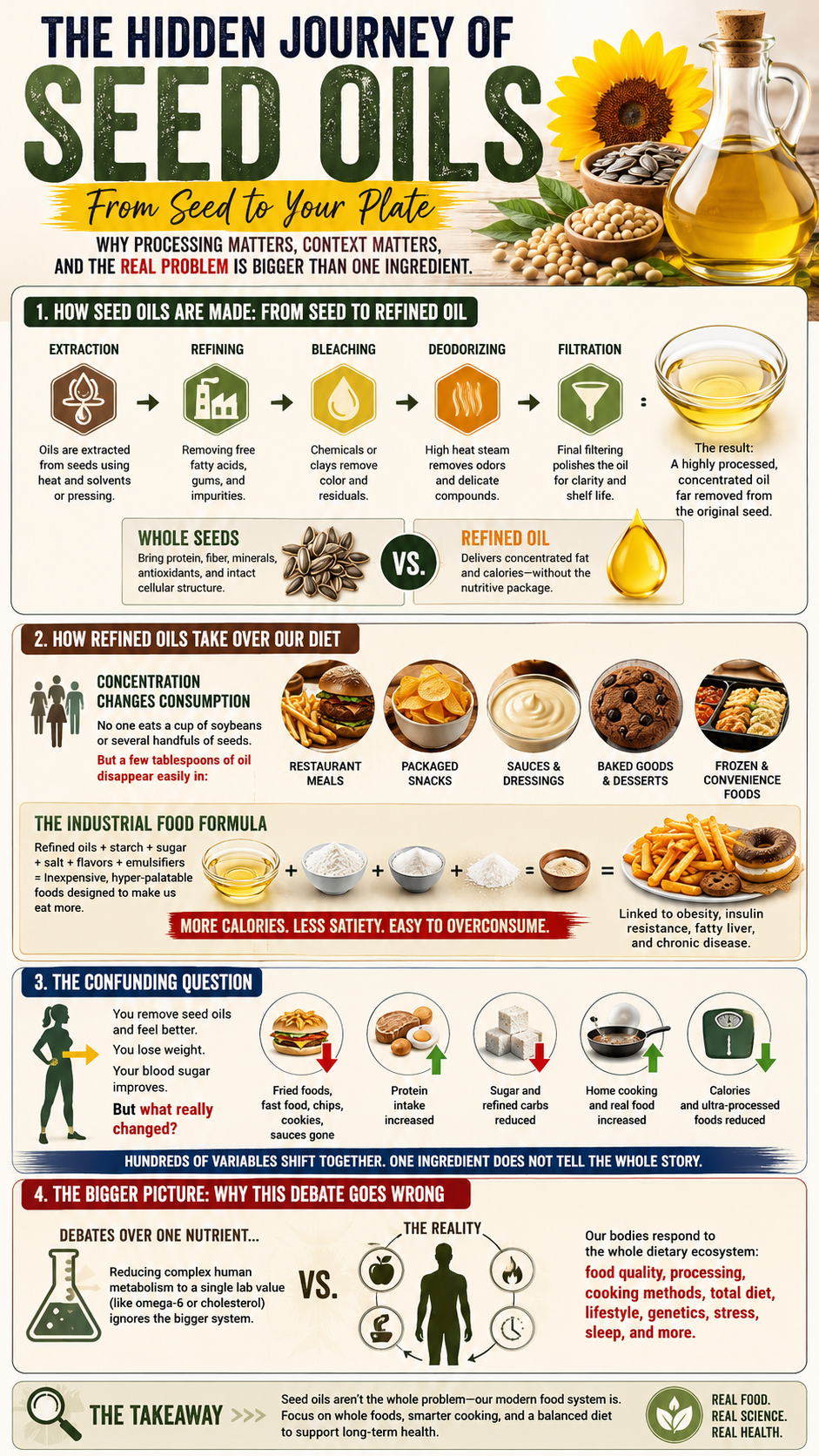
This creates one of nutrition science’s most difficult confounding questions. Suppose someone removes seed oils and suddenly loses weight, improves glucose control, and feels better. Did reducing linoleic acid produce those changes? Perhaps it contributed. However, that person may have simultaneously eliminated fries, chips, cookies, sauces, fast food, and packaged snacks. Protein intake may have increased while sugar consumption fell. Restaurant meals may have disappeared as home cooking increased. Hundreds of nutritional variables changed together, making simplistic conclusions impossible.
The real problem, therefore, extends beyond whether omega-6 fat is inherently “good” or “bad.” Modern humans consume refined fats within a dietary ecosystem unlike traditional food environments. We combine concentrated fats with refined carbohydrates and highly engineered foods. We heat oils repeatedly and store them for long periods. Restaurants may maintain frying oils through multiple heating cycles. Meanwhile, debates often reduce this complex exposure to a single laboratory measurement. Human metabolism deserves a more sophisticated investigation.
Omega-6 Fatty Acids: Essential Does Not Mean Unlimited
Linoleic acid deserves special attention because many common seed oils contain substantial amounts. Humans cannot synthesize linoleic acid, making it an essential fatty acid. The body uses it within cell membranes and physiological signaling systems. That biological requirement sometimes becomes a rhetorical shield against questioning modern intake. Yet essentiality establishes a requirement, not an unlimited optimal dose. Water is essential, iron is essential, and sodium is essential. Their essential nature does not make every level of exposure equally desirable.
Concerns surrounding omega-6 often focus on its relationship with arachidonic acid and downstream signaling molecules. Some arachidonic-acid-derived mediators participate in inflammatory processes. That biochemical pathway produced an attractive theory that increasing linoleic acid must increase systemic inflammation. Human trials have complicated that narrative. Randomized studies generally have not shown meaningful increases in CRP, TNF-alpha, IL-6, and several other inflammatory biomarkers. Therefore, describing every gram of dietary linoleic acid as inflammatory overstates current human evidence.
However, conventional inflammatory markers cannot answer every biological question. CRP provides valuable information, but CRP does not measure the entire cellular environment. It cannot completely describe membrane composition, lipid peroxidation, oxidative metabolites, mitochondrial function, or every signaling pathway. Researchers must distinguish what studies demonstrate from what they cannot measure. Failure to raise CRP does not automatically establish metabolic perfection. Conversely, biochemical plausibility does not establish clinical harm.
A better question concerns dietary context and balance. Modern diets often deliver substantial omega-6 fats while providing inadequate marine omega-3 fatty acids. EPA and DHA participate in different membrane and signaling pathways. They also provide substrates for specialized pro-resolving mediators involved in resolving inflammatory responses. Instead of declaring omega-6 inherently poisonous, improving overall fatty-acid quality offers a stronger strategy. Reducing industrial food while increasing quality omega-3 sources accomplishes far more than chasing a theoretical ratio.
Oxidation Changes the Conversation
The strongest concerns surrounding seed oils emerge when oxidation enters the discussion. Polyunsaturated fatty acids contain multiple double bonds, which increase their susceptibility to oxidative reactions. Heat, oxygen, light, metals, and storage conditions influence those reactions. A fresh oil stored properly therefore differs chemically from oil repeatedly exposed to frying temperatures. Treating them as nutritionally identical ignores basic lipid chemistry.
High-temperature cooking can generate reactive aldehydes and other oxidation products. A 2025 review described compounds including acrolein, formaldehyde, acetaldehyde, 4-HNE, and 2,4-decadienal in heated vegetable oils. Researchers noted their potential cytotoxic, genotoxic, mutagenic, and other adverse biological effects. More recent research continues examining unsaturated aldehydes created during heating and storage. These compounds can react with biological molecules and contribute to carbonyl stress.
Repeated heating intensifies the concern. Frying creates an environment containing high temperatures, oxygen, moisture, and food residues. Reusing oil exposes already altered fats to another oxidative cycle. Reviews describe increasing lipid peroxidation and declining antioxidant capacity during repeated heating. Commercial frying makes this especially relevant because consumers rarely know an oil’s age. They cannot see its heating history or determine how often the restaurant replaced it.
Reactive aldehydes matter because they do not behave like ordinary dietary fat. Some can interact with proteins, phospholipids, enzymes, and nucleic acids. Experimental research links excessive lipid oxidation with oxidative stress and cellular injury. Cardiovascular researchers have also investigated connections between repeatedly heated oils, vascular dysfunction, blood pressure, inflammation, and atherosclerotic processes. Much of that evidence remains mechanistic or animal-based, which limits causal claims about humans. Still, the chemistry of oil degradation itself is well established.
This distinction should reshape the debate. Fresh canola oil used once at moderate temperature presents a different exposure from repeatedly heated restaurant frying oil. Sunflower seeds differ from refined sunflower oil inside a packaged snack. Extra oil added to an already calorie-dense processed diet differs from replacing another dietary fat. Anyone describing these situations as identical sacrifices scientific accuracy for ideological simplicity.
What Oxidized Fats May Do Inside the Body
Oxidative stress occurs when reactive compounds overwhelm the body’s antioxidant and repair systems. Lipid oxidation can create reactive molecules capable of modifying proteins and cellular structures. Cells then must neutralize, repair, metabolize, or remove those damaged molecules. When exposure overwhelms defenses, oxidative stress can disrupt normal cellular signaling. Mitochondria, membranes, enzymes, and vascular tissues become relevant targets.
Blood vessels deserve particular attention because endothelial cells regulate vascular tone, clotting, immune signaling, and nutrient exchange. Oxidative stress can reduce normal nitric oxide signaling and alter endothelial behavior. These mechanisms matter because endothelial dysfunction develops long before a cardiovascular event becomes obvious. Reviews examining repeatedly heated vegetable oils describe vascular changes and inflammatory processes that may promote cardiovascular risk. Researchers still need stronger human outcome data before assigning precise risk levels.
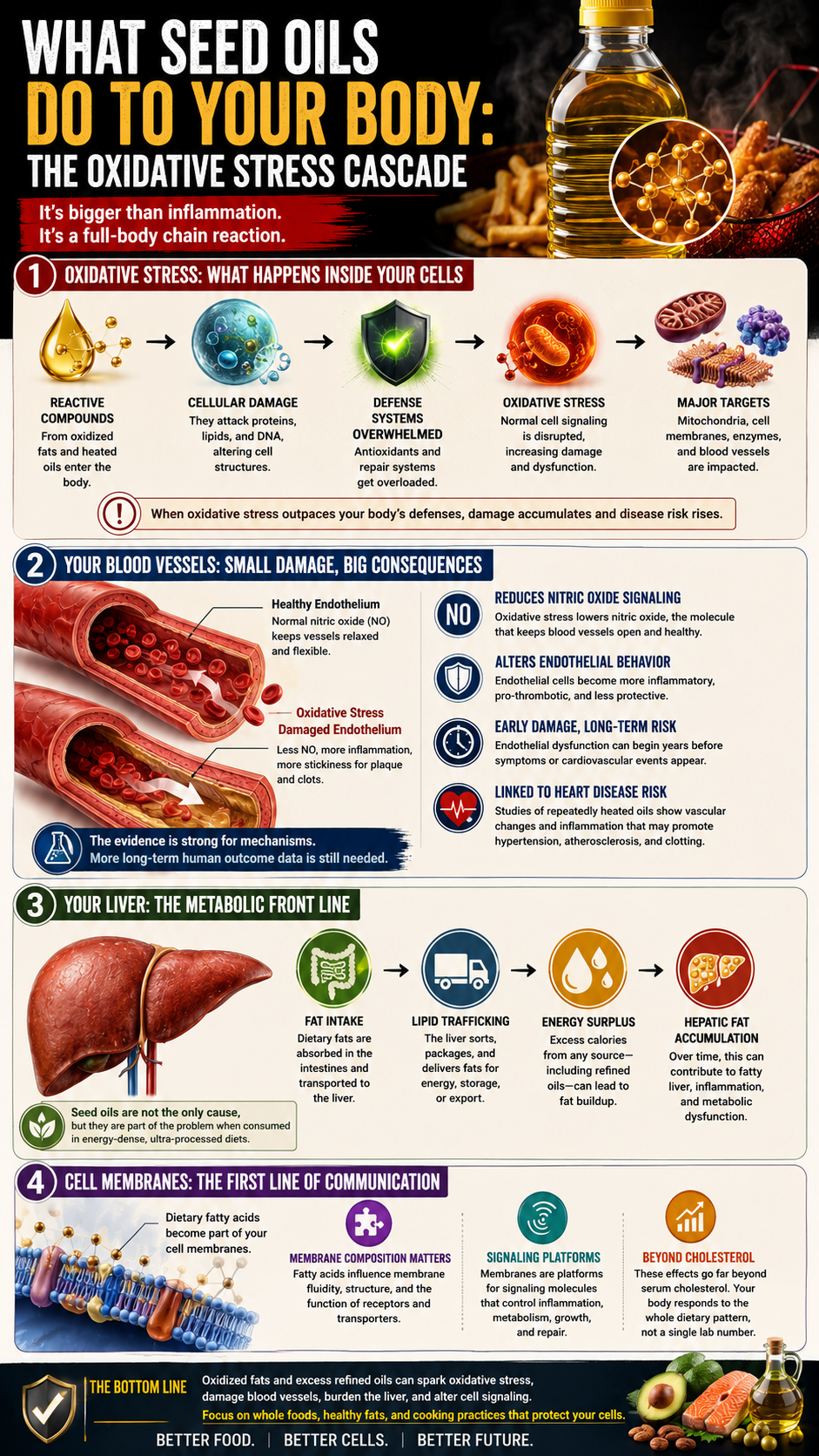
The liver also occupies the front line of dietary fat metabolism. Dietary lipids arrive through intestinal absorption and lipoprotein transport, while the liver coordinates lipid trafficking and energy metabolism. Excess energy from any source can contribute to hepatic fat accumulation. Refined oils can become part of that energy surplus when consumed through calorie-dense processed foods. Blaming seed oils alone for fatty liver would exceed available evidence. Ignoring their role within energy-dense industrial diets would be equally shortsighted.
Cell membranes provide another layer of complexity. Dietary fatty acids influence membrane fatty-acid composition over time. Those membranes serve as structural boundaries and platforms for signaling molecules. Their composition can influence fluidity and substrate availability for downstream mediators. This biology explains why fatty-acid intake deserves study beyond serum cholesterol alone. Human physiology responds to dietary fat through interconnected pathways rather than one isolated laboratory number.
The Cholesterol Paradox That Keeps the Debate Alive
Supporters of seed oils often emphasize their ability to lower LDL cholesterol when replacing saturated fats. That effect has substantial evidence behind it. Yet historical intervention trials raise an uncomfortable question about translating biomarker changes into clinical outcomes. The Minnesota Coronary Experiment tested replacing saturated fat with linoleic-acid-rich vegetable oil. Serum cholesterol fell, but recovered data did not show the expected mortality benefit.
Researchers examining those recovered records reported another striking finding. Participants experiencing greater cholesterol reductions did not demonstrate better survival. The intervention group also showed no clear advantage in atherosclerosis or myocardial infarction at autopsy. These findings do not prove that linoleic acid causes cardiovascular death. Historical trials contain limitations that prevent such sweeping conclusions. Nevertheless, they challenge the assumption that improving one biomarker automatically proves a food intervention improves longevity.
The Sydney Diet Heart Study created similar controversy. Its recovered data suggested unfavorable cardiovascular outcomes despite cholesterol reduction in the intervention group. Interpretation remains complicated by the products used during that era and possible trans-fat exposure. That uncertainty should remain visible rather than erased. Science advances by confronting conflicting evidence, not hiding inconvenient findings.
The larger lesson reaches far beyond seed oils. Human health cannot be reduced to LDL, CRP, glucose, or any single measurement. Biomarkers provide windows into physiology, but no window reveals the entire house. Diet influences energy regulation, oxidative biology, endothelial function, insulin signaling, nutrient density, and food intake simultaneously. A truly useful seed-oil discussion must examine the whole metabolic landscape.
The Problem Is Bigger Than the Oil Bottle
The greatest mistake in the seed-oil debate may involve staring at the bottle while ignoring the supermarket around it. Seed oils became ubiquitous because they fit industrial food production exceptionally well. They can be produced economically, incorporated into countless products, and used for frying at massive scale. Their rise parallels the expansion of ultra-processed foods, although parallel trends alone cannot establish causation. The important point involves exposure. Most consumers receive these oils through manufactured foods rather than deliberate spoonfuls.
Consider what usually surrounds soybean oil inside a processed meal. Refined flour may provide rapidly digestible starch. Added sugar increases sweetness and caloric density. Salt heightens palatability, while flavors encourage repeated consumption. Refined fat adds texture and energy. Manufacturers can combine these elements into foods requiring minimal chewing and preparation. That dietary architecture can overwhelm natural appetite regulation far more effectively than an isolated ingredient.
Consequently, removing seed oils often produces benefits because it forces a larger dietary transformation. Fast food disappears. Deep-fried meals decline. Packaged snacks leave the pantry. Home cooking increases. Whole-food protein often rises while refined carbohydrates fall. People become more conscious of ingredients. The metabolic improvement may be genuine even when its exact mechanism remains multifactorial.
This insight offers a path beyond nutritional tribalism. We do not need proof that every seed oil molecule is toxic before reducing dependence on industrial food. Neither do we need to pretend that linoleic acid automatically causes inflammation. Both extremes distract from an obvious opportunity. Humans thrive when diets emphasize nutrient-dense foods, adequate protein, quality fats, vegetables, and minimally processed ingredients.
Where the Debate Goes Wrong
One camp begins with chemistry and leaps directly to disease. Polyunsaturated fats oxidize more readily, therefore seed oils must cause chronic disease. That conclusion moves beyond the evidence. Susceptibility to oxidation is real, especially under prolonged heating. Yet dose, temperature, antioxidants, storage, food matrix, and human metabolism modify exposure.
The opposing camp makes a different leap. Randomized trials show that linoleic acid does not consistently increase CRP, therefore concerns about seed oils lack merit. That argument also exceeds the evidence. CRP cannot capture every consequence of oxidation, repeated heating, or ultra-processed food consumption. A study answering one question should not become evidence for ten questions researchers never tested.
Nutrition science improves when we separate established evidence from reasonable caution. Current evidence does not support calling fresh seed oils uniquely poisonous. Strong chemical evidence does support minimizing degraded and repeatedly heated oils. Robust dietary logic also supports reducing ultra-processed foods regardless of their oil content. Those conclusions can coexist without contradiction.
Rebuilding the Kitchen: What You Can Do at Home
Begin by changing the environment rather than obsessing over perfection. Open your refrigerator and pantry and read the ingredient panels carefully. Notice how often refined oils appear inside foods that barely resemble their original ingredients. Salad dressings, mayonnaise, crackers, chips, frozen meals, sauces, and packaged snacks deserve particular attention. The goal involves identifying patterns rather than fearing trace exposure.
Next, replace manufactured meals with recognizable foods. Build meals around eggs, fish, poultry, quality meats, vegetables, avocados, olives, berries, and other minimally processed ingredients. Whole foods naturally reduce dependence on refined oils without requiring obsessive tracking. They also provide protein, minerals, vitamins, fiber, and phytochemicals that isolated oils cannot supply.
Cooking practices deserve equal attention. Avoid repeatedly heating the same cooking oil. Discard oil after deep frying rather than saving it for repeated cycles. Keep oils away from sunlight and excessive heat. Purchase quantities that you can use while fresh. Oxidation accelerates with prolonged heat and storage, making kitchen handling an overlooked part of dietary quality.
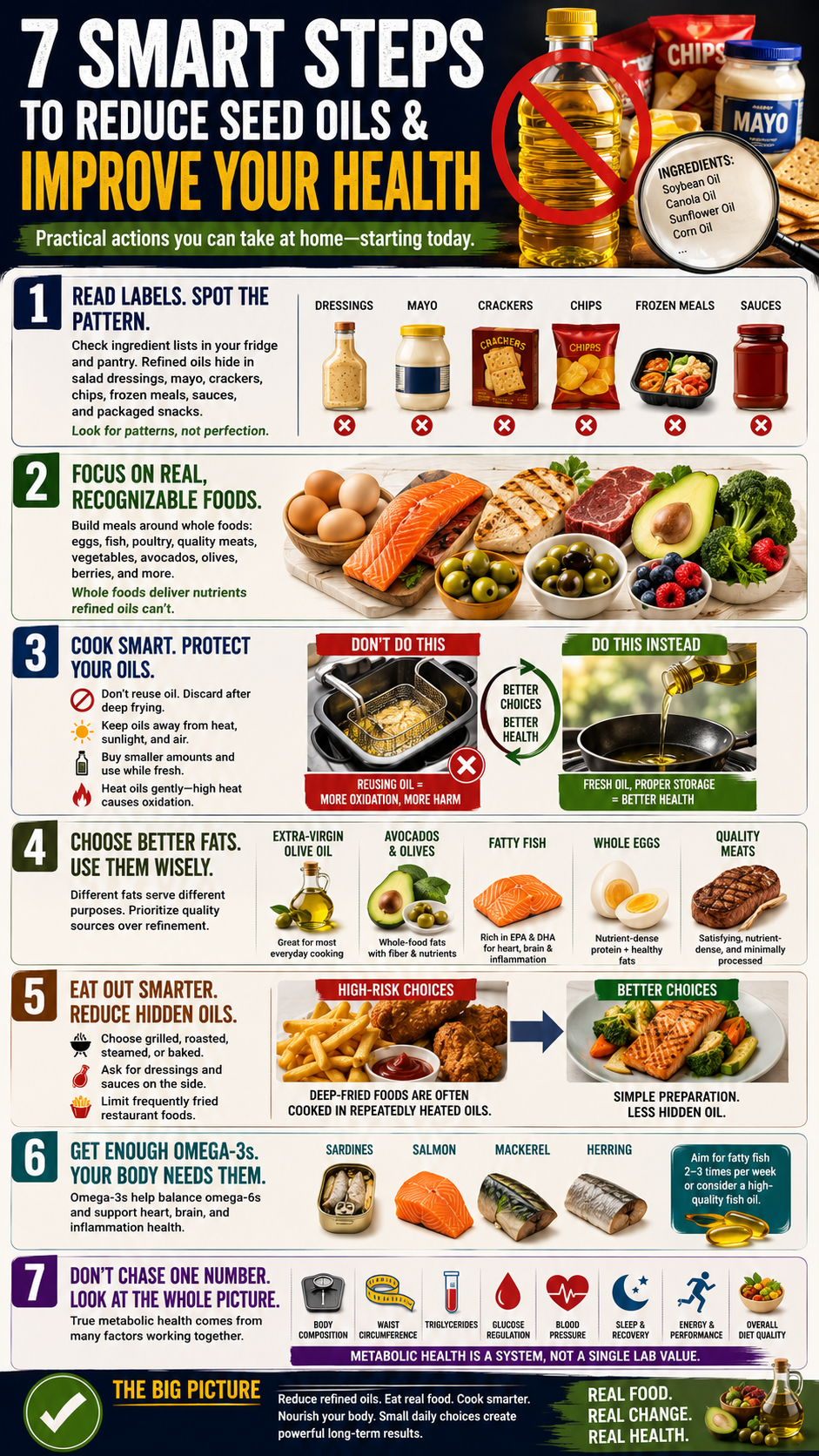
Choose fats according to culinary purpose and overall dietary pattern. Extra-virgin olive oil works well for many applications and has extensive evidence within Mediterranean dietary patterns. Avocados and olives provide fats within whole-food matrices. Fatty fish supplies EPA and DHA directly. Whole eggs and minimally processed animal foods also contribute dietary fats alongside valuable nutrients. These choices shift attention from isolated fatty acids toward complete foods.
Restaurant eating requires another strategy because diners cannot inspect the fryer. Limiting frequently deep-fried foods offers an easy way to reduce exposure to repeatedly heated oils. Grilled, roasted, steamed, or baked foods usually provide greater control. Asking for dressings and sauces separately can reduce hidden refined oils without turning meals into nutritional interrogations. Frequency matters more than achieving impossible purity.
Omega-3 intake deserves deliberate attention as well. Sardines, salmon, mackerel, herring, and other fatty fish provide EPA and DHA. These fatty acids participate in membrane biology and inflammatory resolution pathways. Improving omega-3 status creates a more meaningful strategy than simply fearing omega-6. The objective should remain better fatty-acid quality within a nutrient-dense diet.
Finally, stop judging dietary success by one biomarker. Evaluate body composition, waist circumference, triglycerides, glucose regulation, blood pressure, sleep, physical performance, and overall dietary quality alongside appropriate clinical markers. Metabolic health emerges from an interacting system. No isolated cholesterol measurement can describe every consequence of a person’s diet.
The Most Important Ingredient Is the Dietary Pattern
Perhaps the greatest lesson from the seed-oil controversy involves how easily nutrition becomes reductionist. Researchers isolate one nutrient because controlled experiments require measurable variables. Social media then transforms that nutrient into either a hero or villain. Human beings never eat nutrients under laboratory isolation. They eat meals embedded within lifestyles.
A person eating wild salmon, vegetables, eggs, avocados, berries, and olive oil lives in a different nutritional world. Another person may consume similar calories through fries, pizza, pastries, packaged snacks, and sweetened beverages. Comparing only their linoleic acid intake misses nearly everything important. Protein quality differs. Micronutrient density differs. Fiber, sugar, oxidation, food structure, and satiety differ. The body’s metabolic response therefore differs for many reasons.
This explains why the healthiest response to seed oils does not require panic. It requires moving upstream. Instead of searching endlessly for one dietary villain, dismantle the industrial food pattern that exposes people to dozens of questionable variables simultaneously. Reduce ultra-processed foods and repeated frying. Restore whole foods. Improve fatty-acid quality. Cook more meals yourself. Those changes remain valuable even if future research changes our understanding of linoleic acid.
What We Know, What We Don’t, and What Matters Now
We know that linoleic acid is essential. We also know that increasing linoleic acid has not consistently increased common inflammatory biomarkers in randomized human trials. Therefore, claims that ordinary omega-6 intake automatically produces systemic inflammation require more caution than internet discussions usually provide.
We know something else with greater chemical certainty. Unsaturated oils can oxidize during heating and storage. High-temperature cooking can generate reactive aldehydes, while repeated heating increases degradation. That evidence provides a rational basis for avoiding frequently reused frying oils. It does not require exaggerating every seed oil into poison.
Important questions remain unresolved. Researchers still lack decades-long randomized trials comparing carefully controlled low-seed-oil diets against high-seed-oil diets. We also lack perfect information about individual susceptibility, oxidation exposure, and interactions with metabolic dysfunction. Historical cardiovascular trials further remind us that cholesterol reduction does not guarantee improved clinical outcomes. Scientific uncertainty should inspire better investigation rather than louder certainty.
The debate ultimately goes wrong because both sides ask a question that is too small. “Are seed oils healthy?” cannot capture processing, oxidation, heating, dose, food matrix, replacement nutrients, or overall diet. A tablespoon of fresh oil does not equal a basket of fries cooked in repeatedly heated oil. Whole sunflower seeds do not equal refined sunflower oil inside a packaged snack. Context changes biology.
The better question asks what happened when humans replaced traditional foods with industrial formulations. That transformation brought refined carbohydrates, concentrated fats, hyper-palatable combinations, repeated frying, and unprecedented food availability. Seed oils became deeply embedded within that transition. They deserve scrutiny, but they should not become a distraction from the larger system that carries them.
Our bodies do not read nutrition headlines. Cells respond to substrates, hormones, nutrients, oxidative signals, movement, sleep, and energy availability. The cardiovascular system responds to an entire metabolic environment. The liver responds to the total burden placed upon it. Mitochondria respond to the conditions surrounding energy production. Health therefore demands a wider lens.
The practical answer is surprisingly old-fashioned. Eat foods that still resemble food. Prepare more meals in your own kitchen. Reduce ultra-processed products and frequently fried restaurant foods. Avoid repeatedly heated oils. Favor nutrient-dense sources of fat and adequate omega-3 intake. Let food quality outrank nutritional ideology.
Seed oils may remain controversial for years because important scientific questions remain unanswered. Yet we do not need to wait decades before improving the modern diet. The strongest evidence already points toward something larger than one bottle of oil. Our greatest nutritional problem may be the industrial food environment that turned eating from nourishment into manufacturing.
Fix the environment, and many arguments about individual ingredients become far less important.