
For decades, fat was treated like the nutritional villain hiding in plain sight. Grocery-store shelves filled with “low-fat” cookies, reduced-fat yogurt, fat-free salad dressings, and margarine marketed as a healthier alternative to butter. People were taught to trim the fat from meat, avoid egg yolks, replace traditional fats with highly processed alternatives, and count grams of fat as though every molecule entering the body carried the same biological message.
But the human body tells a much more interesting story.
Fat is not simply stored energy hanging around your waistline. Fatty acids become structural components of cell membranes, participate in signaling pathways, influence inflammatory and immune responses, contribute to brain and retinal structure, provide fuel for tissues, and serve as precursors or modulators for numerous biologically active compounds. The type of fatty acid matters enormously because different fatty acids behave differently once they enter human metabolism.
That means asking, “How much fat do you eat?” is often far less informative than asking, “Which fats are you eating?”
Fatty acids differ according to chain length, the number and location of double bonds, and whether those double bonds occur primarily in the cis or trans configuration. These structural differences influence how the molecules behave inside membranes, how readily they are oxidized for energy, what signaling molecules can be produced from them, and how they interact with metabolic pathways.
Some fatty acids must come from the diet because humans cannot synthesize them. Others can be manufactured internally. Some are produced by intestinal microbes. Some are rapidly burned as fuel, while others become important components of the nervous system.
Understanding these differences gives us a far more sophisticated view of dietary fat than the old “fat is bad” mentality.
Here are twelve fatty acids worth knowing.
1. Alpha-Linolenic Acid (ALA): The Essential Plant Omega-3
Alpha-linolenic acid, usually abbreviated ALA, is an 18-carbon omega-3 polyunsaturated fatty acid. It is considered essential because humans cannot synthesize it from scratch in sufficient fashion and therefore must obtain it through food.
ALA occurs primarily in plant foods such as flaxseed, chia seeds, walnuts, hemp seeds, and certain plant oils.
Once consumed, ALA can enter several metabolic pathways. Some may be oxidized for energy, some incorporated into tissues, and some converted through elongation and desaturation into the longer-chain omega-3 fatty acids EPA and DHA.
That last pathway creates an important nutritional distinction.
Eating ALA is not metabolically equivalent to eating EPA or DHA.
Conversion of ALA to EPA occurs to a limited degree in humans, while conversion through to DHA is generally even more restricted and varies considerably among individuals. Sex, dietary composition, genetics, metabolic status, and competing fatty acids can influence these pathways.
Therefore, someone consuming plenty of plant-derived omega-3 should not automatically assume that tissue EPA and DHA levels will be optimal.
ALA still belongs in the conversation because it is an essential fatty acid and foods containing it can be highly nutritious. But it represents the beginning of an omega-3 metabolic pathway rather than a perfect replacement for every downstream omega-3 molecule.
2. Eicosapentaenoic Acid (EPA): An Omega-3 Signaling Powerhouse
Eicosapentaenoic acid, or EPA, is a 20-carbon long-chain omega-3 fatty acid most closely associated with marine foods.
Fatty fish such as sardines, anchovies, herring, salmon, and mackerel are important dietary sources.
EPA’s significance extends beyond simply being another source of calories. It becomes incorporated into cell membranes and serves as a substrate for multiple families of lipid mediators.
This is where the inflammatory story becomes more sophisticated than simply labeling inflammation “good” or “bad.”
Inflammation is essential to survival. Without an appropriate inflammatory response, wounds would not heal properly and immune defenses would be impaired. The problem occurs when inflammatory signaling becomes excessive, inappropriate, or fails to resolve.
EPA participates in pathways capable of generating signaling compounds involved in regulating inflammatory processes and their resolution. EPA also competes metabolically with arachidonic acid for some enzymes involved in eicosanoid production.
EPA has additionally been studied extensively in cardiovascular and metabolic health, particularly its ability at sufficient doses to lower elevated triglycerides. Clinical outcomes, however, depend on formulation, dose, population, and overall context, so EPA should not be reduced to a simplistic claim that it universally “prevents heart disease.”
The broader lesson is more useful: EPA is a biologically active structural and signaling fatty acid, not merely dietary fat.
3. Docosahexaenoic Acid (DHA): Structural Fat for the Brain and Retina
If EPA deserves attention for signaling, DHA deserves special recognition for structure.
Docosahexaenoic acid contains 22 carbon atoms and six double bonds, making it a highly unsaturated omega-3 fatty acid. DHA is particularly concentrated within nervous tissue and retinal membranes.
The brain is extraordinarily lipid-rich, and DHA contributes to the physical properties of neuronal membranes. Membrane composition can affect receptors, transporters, signaling proteins, and cellular communication.
DHA is also particularly important during pregnancy and infancy because the developing nervous system and retina accumulate substantial quantities of it.
But DHA does not suddenly become irrelevant once development is complete.
Adults continually maintain and remodel cellular membranes. DHA remains an important component of neuronal and retinal tissue throughout life.
Marine foods are major dietary sources, while algae-derived DHA provides a non-fish source. Interestingly, fish accumulate omega-3 fatty acids through aquatic food chains ultimately connected to microorganisms such as microalgae.
The larger nutritional point is that the brain is not built exclusively from glucose and protein. Lipids are fundamental structural materials, and DHA is one of the most biologically significant examples.
4. Linoleic Acid (LA): The Essential Omega-6 That Requires Context
Linoleic acid is an 18-carbon omega-6 polyunsaturated fatty acid and, like ALA, is essential.
Humans need it.
That fact sometimes gets lost in arguments about omega-6 fats.
Linoleic acid contributes to normal membrane structure and can be converted through enzymatic pathways into longer-chain omega-6 fatty acids. Severe essential fatty-acid deficiency can produce abnormalities involving skin and other physiological systems.
The modern debate is not really about whether humans require linoleic acid. We do. The more useful discussion concerns dietary quantity, food source, overall dietary pattern, oxidation, and the relationship between omega-6 and omega-3 pathways.
Modern diets can contain large amounts of linoleic acid from soybean, corn, sunflower, safflower, and other oils, especially through packaged and restaurant foods.
It is tempting to describe all dietary linoleic acid as inherently inflammatory, but human evidence does not support such a simple equation. Increasing linoleic acid intake does not automatically translate into proportionally higher arachidonic acid or inflammatory biomarkers in every context.
At the same time, repeatedly heating polyunsaturated oils can promote lipid oxidation, and a diet dominated by highly processed foods creates problems that cannot be understood by examining a single fatty acid in isolation.
The practical lesson is to distinguish an essential nutrient from the industrial food environment in which enormous quantities of certain oils may be consumed.
5. Arachidonic Acid (AA): The Omega-6 Signaling Fat
Arachidonic acid is a 20-carbon omega-6 polyunsaturated fatty acid found in cell membranes and animal-derived foods such as meat and eggs.
It is frequently portrayed as an inflammatory villain.
That description is incomplete.
Arachidonic acid serves as the precursor for numerous eicosanoids, including certain prostaglandins, thromboxanes, and leukotrienes. Some participate prominently in inflammatory processes, vascular function, platelet activity, immune signaling, and tissue responses.
But biology rarely divides itself neatly into “good molecules” and “bad molecules.”

Arachidonic acid is a normal component of human physiology. The inflammatory pathways arising from it are often essential. A person who could not generate an inflammatory response would have serious problems with immunity, tissue repair, and survival.
The important issue is regulation.
Cellular membranes function partly as reservoirs for fatty acids. When signaling pathways activate specific enzymes, fatty acids can be released and transformed into potent lipid mediators.
EPA and arachidonic acid can compete within overlapping enzymatic systems, demonstrating why overall membrane fatty-acid composition matters.
Health therefore depends less on eliminating arachidonic acid and more on maintaining appropriately regulated signaling within a healthy metabolic environment.
6. Gamma-Linolenic Acid (GLA): The Omega-6 Most People Forget
Gamma-linolenic acid, or GLA, provides a fascinating reminder that the labels “omega-3” and “omega-6” do not tell the entire physiological story.
GLA is an omega-6 fatty acid.
The body can produce it from linoleic acid through the delta-6-desaturase enzyme. GLA can then be elongated into dihomo-gamma-linolenic acid, or DGLA, which participates in additional signaling pathways.
Certain foods and oils—including evening primrose, borage, and black currant seed oils—contain GLA.
Researchers have studied GLA in areas including skin physiology and inflammatory conditions, although evidence for supplementation varies considerably according to the condition being investigated.
The lesson here is not that everyone should automatically take GLA.
Instead, GLA demonstrates why nutrition becomes distorted when entire families of fatty acids are labeled inflammatory or anti-inflammatory. Two molecules classified as omega-6 fats can enter different pathways and generate different downstream effects.
The body does not read nutrition headlines.
It responds to molecular structure, enzymes, receptors, concentrations, tissue requirements, and metabolic context.
7. Oleic Acid: The Famous Fat in Olive Oil
Oleic acid is an 18-carbon monounsaturated omega-9 fatty acid.
Unlike omega-3 and omega-6 essential fatty acids, oleic acid is not considered essential because the human body can synthesize it.
That certainly does not make it unimportant.
Oleic acid is abundant in olive oil and avocados and is also present in numerous animal fats and nuts.
Extra-virgin olive oil has become strongly associated with Mediterranean dietary patterns, although it is important not to attribute every observed benefit of those diets exclusively to oleic acid. Extra-virgin olive oil also contains numerous phenolic compounds, while Mediterranean diets generally include vegetables, legumes, seafood, minimally processed foods, and other potentially beneficial dietary components.
Oleic acid itself is relatively resistant to oxidation compared with highly polyunsaturated fatty acids because it contains only one double bond.
Substituting certain saturated fats with unsaturated fats, including oleic-acid-rich foods, can also influence blood lipid profiles.
But once again, food quality matters.
An avocado, an olive, freshly produced extra-virgin olive oil, and an ultra-processed food manufactured with refined oil may technically contain some of the same fatty acids while delivering profoundly different nutritional packages.
Fatty acids should therefore be understood both individually and within the foods carrying them.
8. Palmitic Acid: The Saturated Fat Your Own Body Can Manufacture
Palmitic acid is a 16-carbon saturated fatty acid and one of the most common saturated fatty acids in the human body.
Here is the fascinating part: your liver can manufacture it.
When excess energy—particularly carbohydrate—is available, de novo lipogenesis can convert carbon substrates into fatty acids, with palmitate serving as a major product of this pathway.
That does not mean every carbohydrate eaten immediately becomes palmitate. Under ordinary mixed-diet conditions, humans often store dietary fat more efficiently than converting large amounts of carbohydrate into fat. However, de novo lipogenesis can increase substantially under conditions of sustained energy excess and certain high-carbohydrate feeding conditions.
Palmitic acid is also obtained directly from food, including meat, dairy fat, cocoa butter, and palm oil.
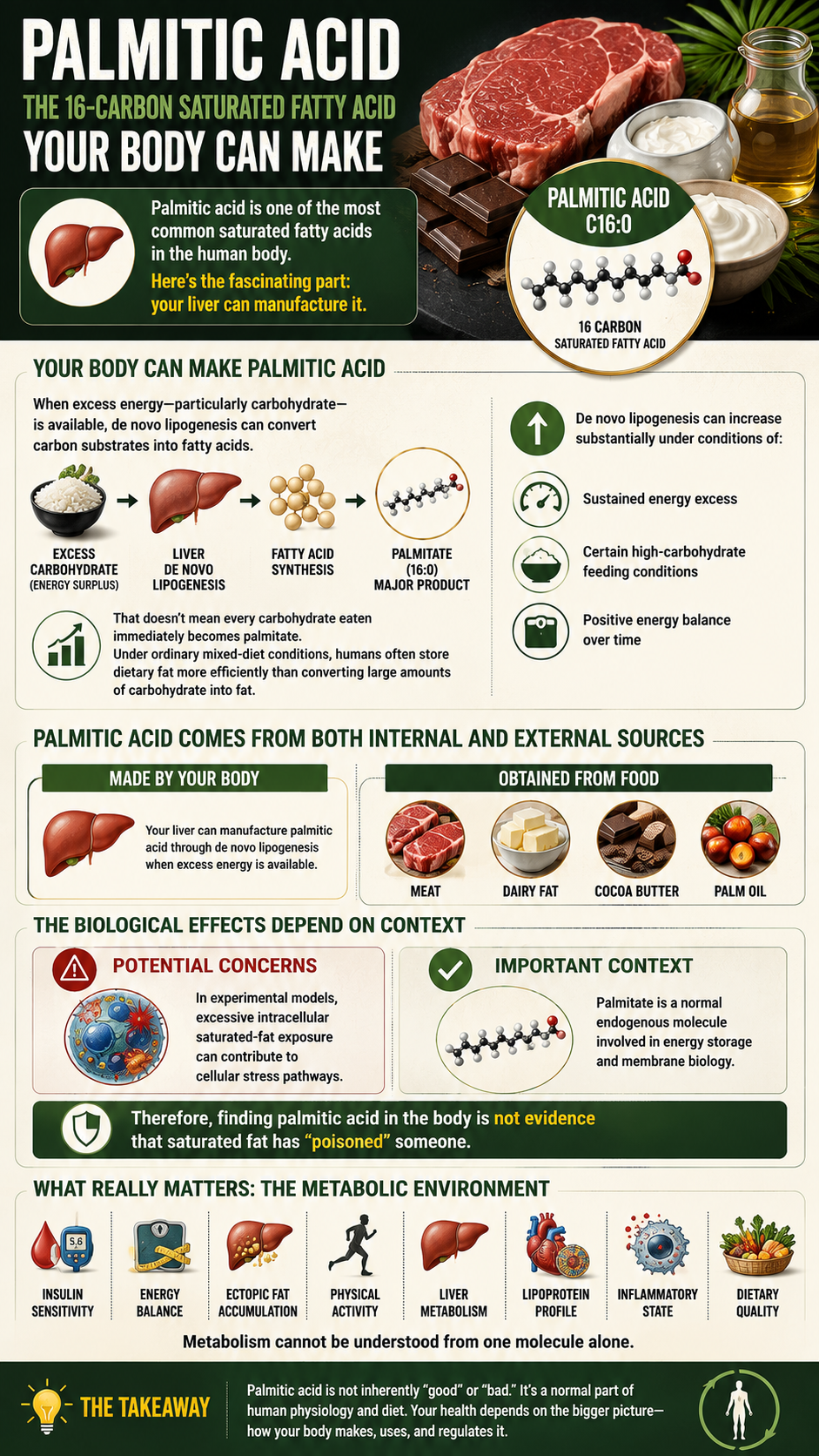
The biological effects of palmitate depend heavily upon context.
In experimental models, excessive intracellular saturated-fat exposure can contribute to cellular stress pathways. Yet palmitate is also a normal endogenous molecule involved in energy storage and membrane biology.
Therefore, finding palmitic acid in the body is not evidence that saturated fat has “poisoned” someone.
A better question is what the entire metabolic environment looks like: insulin sensitivity, energy balance, ectopic fat accumulation, physical activity, liver metabolism, lipoprotein profile, inflammatory state, and dietary quality.
Metabolism cannot be understood from one molecule alone.
9. Stearic Acid: A Saturated Fat With Different Metabolic Behavior
Stearic acid is an 18-carbon saturated fatty acid found in foods including beef, cocoa butter, and other animal and plant fats.
Although stearic acid and palmitic acid are both saturated fats, they do not behave identically.
That is important because nutrition discussions often lump every saturated fatty acid into one category.
The liver can convert stearic acid into oleic acid through the enzyme stearoyl-CoA desaturase. Controlled feeding research has also found that stearic acid generally has a more neutral effect on LDL cholesterol than some other saturated fatty acids, such as palmitic or myristic acid.
This demonstrates an important principle:
“Saturated fat” describes a structural category, not a single molecule.
Chain length matters. Food matrix matters. Metabolic conversion matters. The nutrients accompanying the fat matter.
Consider dark chocolate or cocoa butter. Its fatty-acid profile contains substantial stearic acid along with oleic and palmitic acids. Treating that entire mixture as metabolically identical to every other saturated-fat-containing food ignores considerable biochemical complexity.
Human nutrition repeatedly becomes more accurate when we move from categories toward actual molecules.
10. Butyric Acid: The Fatty Acid Your Gut Microbes Can Make
Butyrate—or butyric acid in its protonated form—is one of the most interesting fatty acids in human physiology.
Unlike the long-chain fats people usually imagine when discussing dietary fat, butyrate is a short-chain fatty acid containing only four carbon atoms.
Your intestinal microbiota can produce it.
When certain gut bacteria ferment fermentable carbohydrates, including particular fibers and resistant starches, they generate short-chain fatty acids such as acetate, propionate, and butyrate.
Colonocytes—the cells lining the colon—can use butyrate as an important energy substrate.
Butyrate also functions as a signaling molecule. It can interact with G-protein-coupled receptors and influence gene expression partly through effects on histone deacetylases. These mechanisms have generated considerable research interest regarding intestinal barrier function, immune regulation, and metabolic health.
This creates a remarkable relationship.
You eat.
Your microbes metabolize components of that food.
They manufacture molecules.
Those molecules then communicate with your cells.
The gut microbiome therefore behaves less like passive intestinal baggage and more like a biochemical ecosystem interacting continuously with human physiology.
Supporting microbial diversity through an individualized, minimally processed diet may consequently influence fatty-acid metabolism in ways that cannot be understood by simply counting grams of dietary fat.
11. Caprylic Acid: The Rapidly Metabolized Medium-Chain Fat
Caprylic acid, also called octanoic acid, is an eight-carbon saturated fatty acid belonging to the medium-chain family.
Medium-chain fatty acids behave differently from many long-chain fats.
Long-chain dietary fatty acids are commonly packaged into chylomicrons within intestinal cells and transported initially through the lymphatic system. Medium-chain fatty acids are more readily absorbed into portal circulation and transported toward the liver.
This makes them relatively accessible for oxidation.
Caprylic acid occurs naturally in coconut oil and smaller quantities in other foods, and it is also a component of some medium-chain triglyceride products.
At the liver, medium-chain fatty acids can be rapidly metabolized, and under appropriate metabolic conditions they can contribute to ketone production.
Ketone bodies such as beta-hydroxybutyrate can then serve as alternative oxidative fuels for numerous tissues, including the brain when circulating concentrations rise sufficiently.
However, this does not mean drinking unlimited MCT oil automatically produces superior health. Large quantities can cause gastrointestinal distress, and adding concentrated fat to an already energy-excessive diet does not magically bypass energy balance.
The interesting feature of caprylic acid is its metabolic behavior—not a claim that more is always better.
12. Lauric Acid: The Unusual Fat in Coconut
Lauric acid contains 12 carbon atoms and is abundant in coconut oil.
Its classification can become confusing because it sits near the boundary between traditional descriptions of medium- and long-chain fatty acids. Its absorption and metabolism are not identical to shorter medium-chain fats such as caprylic acid.
This distinction matters because coconut oil is sometimes marketed as though all of its fatty acids behave exactly like purified MCT oil.
They do not.
Coconut oil contains substantial lauric acid along with other saturated fatty acids. Controlled trials have shown that coconut oil can raise LDL cholesterol compared with oils richer in unsaturated fats, even though it may also increase HDL cholesterol.
Therefore, coconut oil should not be treated as a magical food capable of overriding the rest of someone’s metabolic condition.
At the same time, food should be evaluated within the context of an entire diet rather than through fear of one ingredient.
Lauric acid also has interesting antimicrobial properties in laboratory settings, and its derivative monolaurin has attracted research interest. Translating laboratory antimicrobial activity into claims about treating infections in humans, however, requires much stronger clinical evidence.
That distinction—between an intriguing biochemical mechanism and a proven therapeutic outcome—is essential in responsible functional nutrition.
The Omega-3-to-Omega-6 Question Is More Complicated Than a Ratio
One of the most popular ideas in nutrition is that health depends on maintaining a particular omega-6-to-omega-3 ratio.
There is some biological logic behind looking at these families together because omega-3 and omega-6 fatty acids interact with overlapping metabolic pathways.
But focusing exclusively on a mathematical ratio can become misleading.
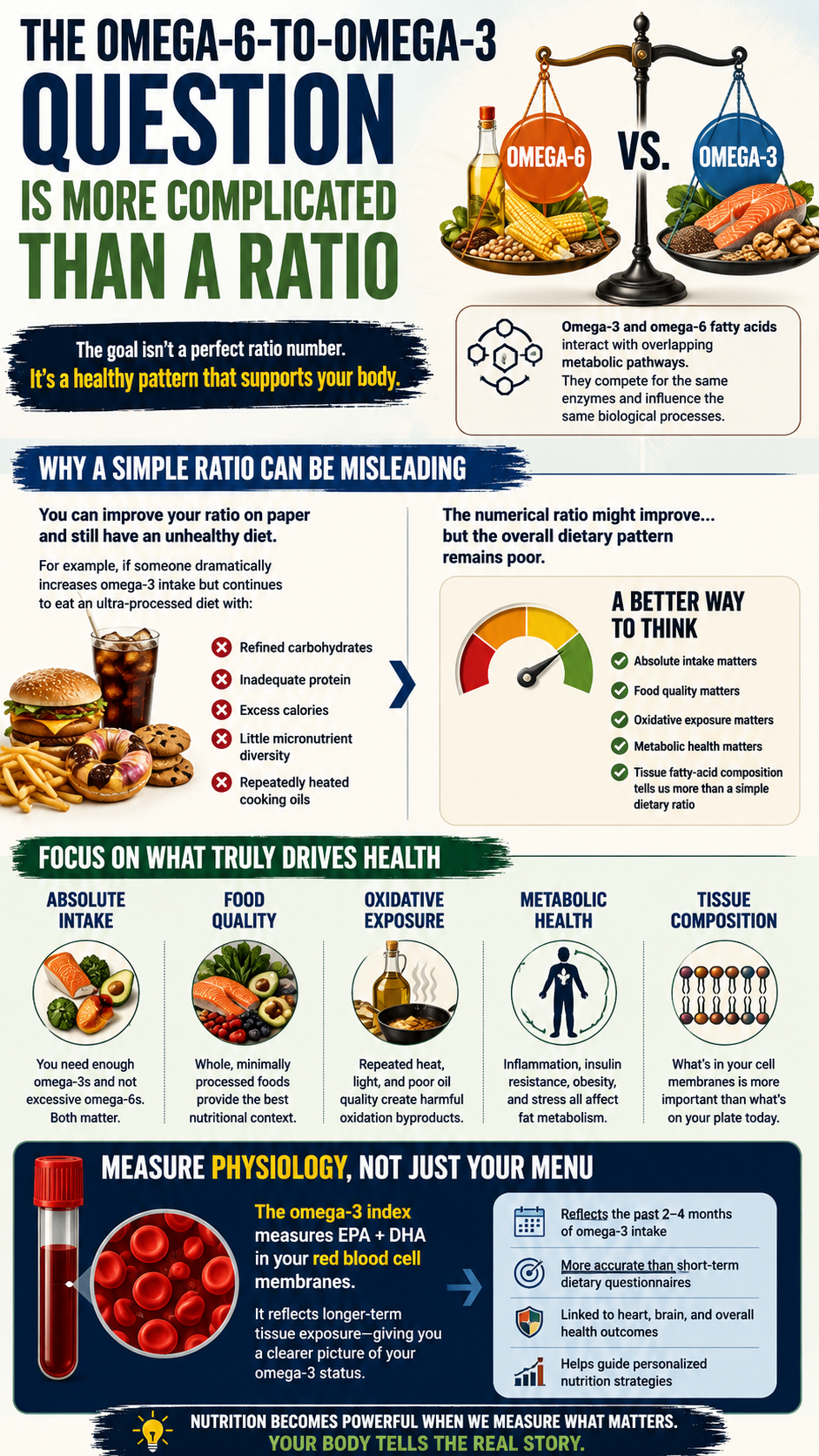
Imagine someone dramatically increases omega-3 intake while continuing to eat an ultra-processed diet containing refined carbohydrates, inadequate protein, excess calories, little micronutrient diversity, and repeatedly heated cooking oils. The numerical ratio might improve while the overall dietary pattern remains poor.
Absolute intake matters.
Food quality matters.
Oxidative exposure matters.
Metabolic health matters.
And tissue fatty-acid composition may ultimately tell us more than a simplistic dietary ratio.
This is one reason biomarkers such as the omega-3 index have attracted attention. The omega-3 index measures EPA plus DHA within red-blood-cell membranes and provides information about longer-term tissue exposure rather than relying solely on a dietary questionnaire.
Nutrition becomes much more useful when we measure physiology instead of merely guessing from menus.
Oxidation: The Part of the Fat Conversation People Often Miss
Double bonds make polyunsaturated fatty acids biologically useful, but they also make them more susceptible to oxidation.
The more unsaturated a fatty acid becomes, the more opportunities exist for oxidative reactions.
This is particularly relevant to oils exposed repeatedly to high heat, oxygen, light, and prolonged storage. Oxidation can produce lipid hydroperoxides and secondary products such as aldehydes.
That does not mean every polyunsaturated fat is dangerous. EPA and DHA themselves are highly polyunsaturated and physiologically important.
The real lesson is that storage, processing, freshness, antioxidant systems, cooking practices, and food quality matter.
A freshly prepared piece of salmon containing delicate omega-3 fatty acids is metabolically and chemically different from an industrial frying oil repeatedly heated throughout a day.
The phrase “healthy fat” therefore needs context.
We should ask what fatty acid is present, what food contains it, how the food was processed, how the fat was stored, whether it has been repeatedly heated, what else is eaten with it, and what metabolic condition exists in the person consuming it.
Building a Healthier Fatty-Acid Profile at Home
You do not need a biochemistry laboratory in your kitchen to begin improving dietary fat quality.
Start by removing the greatest source of confusion: ultra-processed foods.
The typical person is not sitting at the dinner table drinking a cup of isolated linoleic acid or palmitic acid. Fatty acids arrive packaged inside foods. Improving food quality therefore changes multiple nutritional variables simultaneously.
Build meals primarily around recognizable whole or minimally processed foods.
For people who eat seafood, incorporating fatty fish such as sardines, salmon, herring, anchovies, or mackerel regularly can provide preformed EPA and DHA rather than relying exclusively on ALA conversion.
Plant foods such as flaxseed and chia can provide ALA, while avocados and extra-virgin olive oil provide substantial oleic acid.
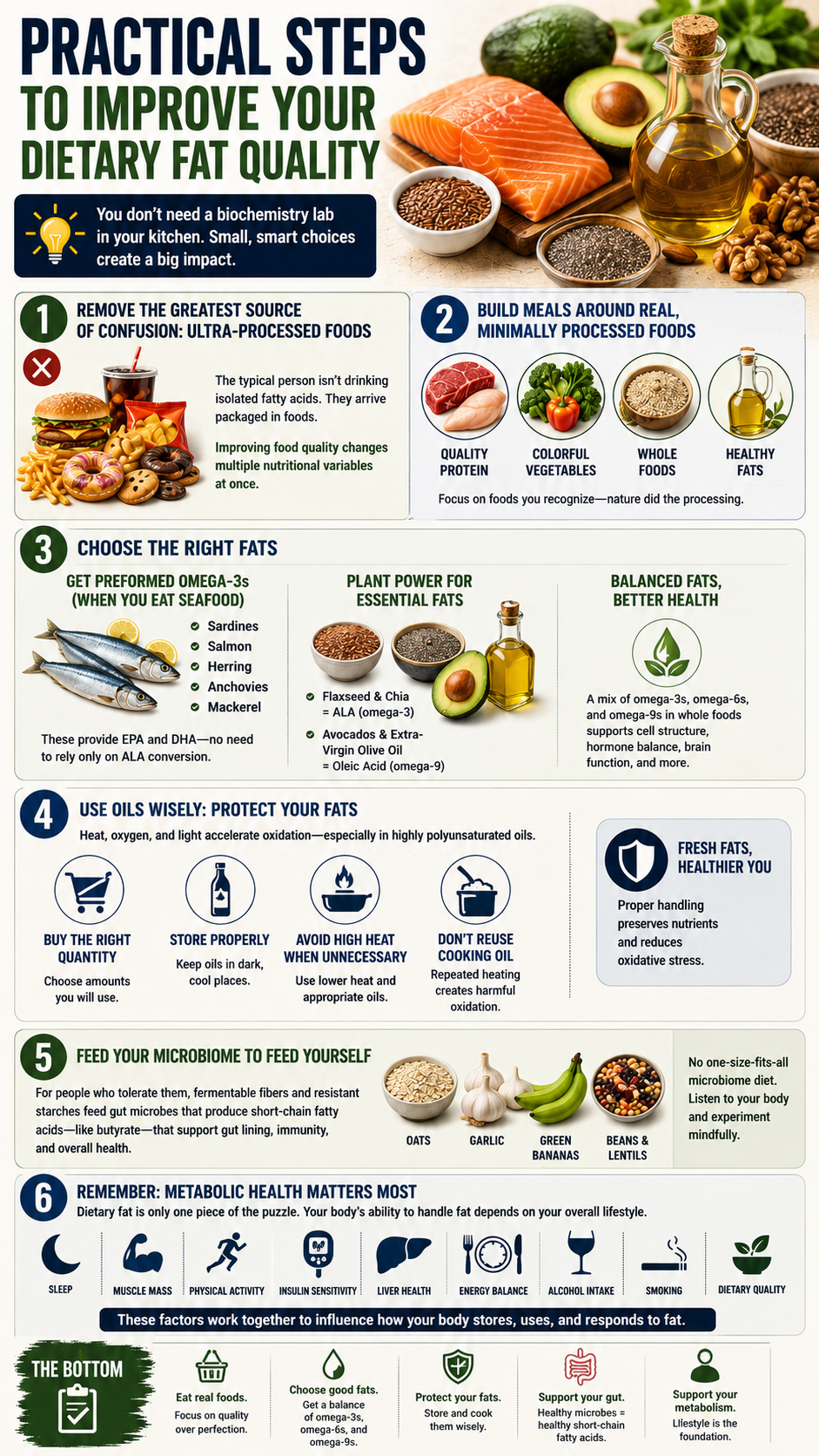
If using oils, pay attention to storage and cooking. Heat, oxygen, and light can accelerate oxidation, particularly in highly polyunsaturated oils. Purchase appropriate quantities, store them properly, and avoid repeatedly reheating the same cooking oil.
Support the intestinal ecosystem as well.
For people who tolerate them, appropriate fermentable fibers and resistant starches can provide substrates that gut microorganisms convert into short-chain fatty acids, including butyrate. There is no universally perfect microbiome diet, however, and gastrointestinal tolerance should guide dietary experimentation.
Finally, remember that metabolic health affects how dietary fat is handled.
Sleep, muscle mass, physical activity, insulin sensitivity, liver health, total energy intake, alcohol intake, smoking, and dietary quality interact with lipid metabolism. No fatty acid supplement can compensate for every metabolic insult occurring elsewhere.
Food First, Testing When Appropriate, Supplements Second
The supplement industry has helped create another misconception: once a nutrient is beneficial, taking enormous quantities must be even better.
Biology rarely works that way.
Omega-3 supplementation provides an excellent example.
EPA and DHA can be extremely useful in appropriate circumstances, but dosage should depend on the objective. Someone trying to correct low omega-3 status is dealing with a different situation from someone being treated medically for severe hypertriglyceridemia.
Testing may occasionally provide useful information.
Depending upon the clinical situation, evaluating triglycerides, HDL-C, LDL-C, ApoB, fasting glucose, insulin-related markers, liver markers, and potentially red-blood-cell fatty acids can provide far more information than simply asking whether someone takes fish oil.
The principle is straightforward:
Measure when measurement will change the decision.
A personalized nutrition strategy should move beyond automatically giving everyone the same bottle of supplements.
The Bigger Lesson: Your Cell Membranes Are Built From Your Metabolic Environment
Perhaps the most powerful way to think about fatty acids is to stop imagining them simply as things floating around in food.
They become part of you.
Fatty acids can be incorporated into phospholipids within cell membranes. Membrane composition influences physical properties such as fluidity and provides reservoirs for molecules that participate in cellular signaling.
The fats entering your body therefore participate in the biochemical environment within which your cells operate.
EPA matters differently from DHA.
DHA behaves differently from linoleic acid.
Linoleic acid behaves differently from arachidonic acid.
Palmitic acid behaves differently from stearic acid.
Butyrate behaves dramatically differently from all of them.
This molecular diversity is exactly why simplistic nutritional wars—low-fat versus high-fat, saturated versus unsaturated, plant versus animal—often fail to capture the complexity of human metabolism.
The better question is not whether fat is good or bad.
The better questions are: Which fatty acid? From what food? In what amount? Prepared how? In what metabolic environment? And for what individual?
Those questions lead us toward a far more useful model of nutrition.
The 12 Fatty Acids Worth Remembering
If you remember nothing else, remember these twelve:
Alpha-linolenic acid (ALA) is the essential plant omega-3 and a metabolic precursor to longer-chain omega-3 fatty acids.
Eicosapentaenoic acid (EPA) is a marine omega-3 involved in membrane biology, lipid signaling, inflammatory regulation, and triglyceride metabolism.
Docosahexaenoic acid (DHA) is a major structural omega-3 fatty acid within the brain and retina.
Linoleic acid (LA) is an essential omega-6 fatty acid whose effects must be understood in the context of dose, food source, processing, and the overall diet.
Arachidonic acid (AA) is an important membrane fatty acid and precursor for numerous signaling molecules involved in inflammation, immunity, vascular physiology, and tissue responses.
Gamma-linolenic acid (GLA) reminds us that not every omega-6 fatty acid behaves identically.
Oleic acid is the primary monounsaturated fat associated with olives, olive oil, and avocados.
Palmitic acid is a major saturated fatty acid that can come from food or be synthesized internally.
Stearic acid demonstrates that individual saturated fatty acids can produce different metabolic effects.
Butyric acid connects nutrition, intestinal microorganisms, colon-cell metabolism, gene regulation, and immune signaling.
Caprylic acid illustrates the distinctive absorption and rapid metabolism of shorter medium-chain fatty acids.
Lauric acid is a major coconut fatty acid whose metabolism differs from shorter MCTs and whose health effects should be considered within the entire diet.
Together, these twelve molecules reveal something nutrition science should have taught us long ago: dietary fat is not one substance.
It is an entire biochemical language.
Learning that language changes the conversation from “Should I eat fat?” to the far more intelligent question:
“What kinds of fats help create the metabolic environment I want my cells to live in?”
That is where a more precise approach to nutrition begins.