
The Silent Hormone Storm That Fuels Chronic Pain
For generations, women have been told that severe menstrual pain is simply part of life. Mothers passed the belief to daughters, teachers reassured struggling students, and countless healthcare visits ended with little more than a prescription for pain medication or hormonal birth control. Meanwhile, an entirely different story unfolded beneath the surface. Tiny islands of tissue, resembling the lining of the uterus, quietly settled where they did not belong. They attached themselves to ovaries, the pelvic lining, the bladder, the intestines, and even the diaphragm. Every month they responded to hormonal signals, creating inflammation, bleeding into surrounding tissues, and leaving behind scar tissue that gradually distorted normal anatomy. By the time many women finally heard the word endometriosis, years of damage had already occurred.
Receiving the diagnosis often brings relief because it confirms that the pain was never imagined. Unfortunately, the diagnosis rarely explains why the disease developed in the first place. Conventional treatment usually focuses on suppressing hormones, surgically removing lesions, or controlling symptoms until menopause arrives. Those approaches may provide temporary relief for some women, but they seldom investigate the biological conditions that allowed endometriosis to flourish. The more important question is not simply where the abnormal tissue exists. The real question asks why the body created an environment that allowed those cells to survive, multiply, and continue triggering inflammation year after year. That question leads far beyond the reproductive organs and into the complex relationship between hormones, inflammation, detoxification, immunity, and the liver.
Looking Beyond the Lesions
Endometriosis has traditionally been described as a disease of misplaced uterine tissue. Although that description remains useful, modern research reveals a much more complicated picture. Scientists now recognize endometriosis as a chronic inflammatory condition involving the immune system, hormonal regulation, oxidative stress, and abnormal tissue repair. Instead of behaving like passive implants, endometriotic lesions become biologically active. They release inflammatory chemicals, recruit new blood vessels, stimulate nerve growth, and communicate with surrounding tissues through an elaborate network of signaling molecules. Every one of those activities helps the lesions survive while simultaneously increasing pain and inflammation.
The disease affects far more than the pelvis. Many women develop chronic fatigue, digestive discomfort, painful bowel movements, bloating, migraines, infertility, anxiety, depression, lower back pain, and persistent brain fog. These symptoms often seem unrelated until the underlying biology becomes clear. Chronic inflammation never respects anatomical boundaries. Once inflammatory chemicals circulate throughout the bloodstream, they influence nearly every organ system. The body begins operating as though it faces a constant threat, even when no infection exists. Energy shifts away from repair and toward survival, leaving many women exhausted despite sleeping through the night.
Functional medicine approaches this disease from a broader perspective. Rather than asking how to suppress symptoms, it investigates why inflammation refuses to resolve. Instead of viewing hormones in isolation, it examines the systems responsible for producing, balancing, transporting, metabolizing, and eliminating them. This perspective does not deny the value of medical treatment. Instead, it expands the conversation by exploring the biological terrain that allows endometriosis to become a chronic condition.
When Estrogen Stops Working in Harmony
Estrogen has developed an unfair reputation in modern health discussions. Many people blame it for nearly every hormone-related condition affecting women. In reality, estrogen remains one of the body’s most essential hormones. It supports cardiovascular health, maintains bone density, protects brain function, preserves skin elasticity, regulates reproductive cycles, and influences hundreds of genes throughout the body. Without adequate estrogen, the female body simply cannot function normally. Problems emerge when estrogen loses its natural balance with other hormones or when the body cannot efficiently remove it after it completes its work.
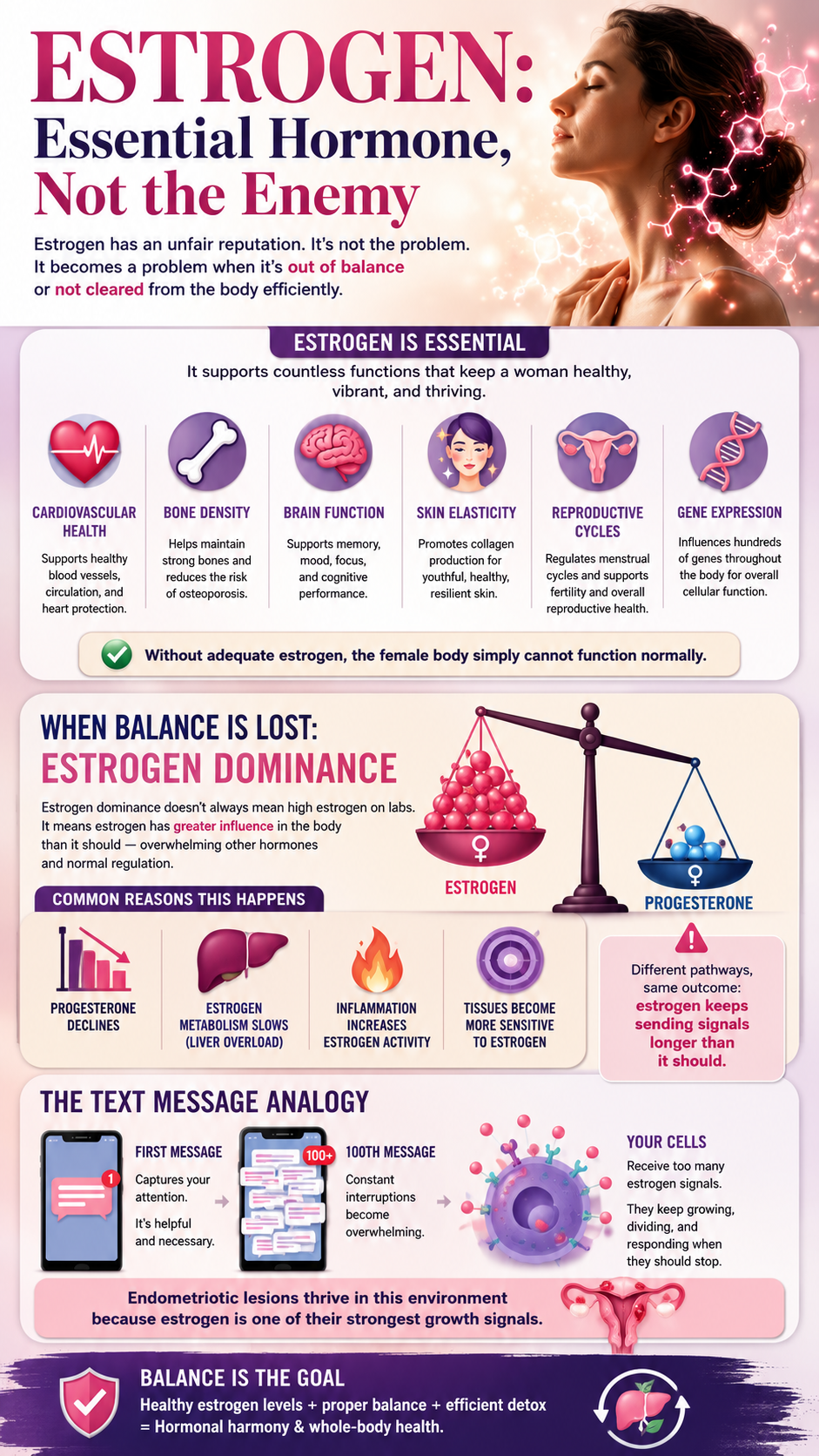
This imbalance is commonly called estrogen dominance, although the phrase often creates confusion. Estrogen dominance does not always mean estrogen levels appear excessively high on laboratory testing. Instead, it describes a situation where estrogen exerts greater biological influence than the body can properly regulate. That imbalance may develop because progesterone declines, estrogen metabolism slows, inflammatory signals increase estrogen activity, or tissues become more sensitive to hormonal stimulation. Different pathways produce the same outcome. Estrogen continues delivering messages long after those messages should have ended.
Imagine receiving the same text message hundreds of times every day. The first notification captures your attention. By the hundredth notification, the constant interruption becomes overwhelming. Hormones communicate with cells in a remarkably similar fashion. Every hormonal message requires a beginning, a purpose, and a clear ending. When estrogen remains active too long, tissues continue receiving instructions to grow, divide, and respond long after normal regulation should have restored balance. Endometriotic lesions thrive within that environment because estrogen acts as one of their strongest growth signals.
A Vicious Cycle Hidden Inside Every Lesion
Researchers have uncovered one of the most fascinating discoveries in endometriosis during the past two decades. Endometriotic lesions do not merely respond to estrogen. Many lesions actually produce estrogen themselves. Specialized enzymes inside these tissues convert precursor hormones into active estrogen, allowing the lesions to create their own hormonal support system. Instead of relying entirely on the ovaries, they establish miniature hormone factories capable of sustaining their own survival.
That discovery helps explain why endometriosis often persists even when circulating hormone levels appear relatively normal. Local estrogen production fuels inflammation directly within the lesion. Inflammatory chemicals then stimulate additional estrogen production, creating a destructive biological feedback loop. Each cycle strengthens the next. New blood vessels nourish expanding tissue while newly formed nerve fibers increase pain sensitivity. Scar tissue develops as repeated inflammation heals imperfectly, gradually binding organs together through fibrous adhesions that restrict normal movement and function.
Progesterone normally provides an important counterbalance to estrogen. It slows excessive tissue growth and helps regulate inflammatory responses. Many women with endometriosis, however, develop progesterone resistance. Cells become less responsive to progesterone despite normal hormone production. This resistance weakens one of the body’s primary protective mechanisms, allowing estrogen-driven activity to dominate. The imbalance resembles driving a vehicle downhill after the brakes gradually lose their effectiveness. Momentum continues building while the ability to slow the process steadily declines.
The Liver Holds One of the Most Overlooked Answers
Discussions about endometriosis rarely begin with the liver, yet they probably should. The liver serves as the body’s largest chemical processing center, performing hundreds of essential functions every minute. Most people associate it with alcohol metabolism, but that represents only a small portion of its workload. The liver manufactures proteins, regulates blood sugar, stores vitamins, produces bile, supports immunity, neutralizes toxins, metabolizes medications, and processes hormones that have completed their biological tasks. Every molecule of estrogen eventually depends upon the liver for safe removal from the body.
Healthy hormone regulation requires far more than proper hormone production. The body must also eliminate hormones efficiently once they finish delivering their messages. The liver accomplishes this through a carefully coordinated sequence of enzymatic reactions known as Phase I and Phase II detoxification. During these processes, estrogen undergoes chemical transformations that make it easier to remove through bile, stool, and urine. Efficient detoxification prevents yesterday’s hormones from continuing tomorrow’s work.
Problems arise when detoxification cannot keep pace with the demands placed upon the liver. Estrogen may remain biologically active longer than intended, increasing its opportunity to stimulate sensitive tissues. Functional medicine does not suggest that the liver simply becomes “dirty” or requires a trendy cleanse. Instead, it recognizes that normal detoxification depends upon adequate nutrition, healthy mitochondria, sufficient antioxidant capacity, proper enzyme activity, and continuous elimination through the digestive tract. When any portion of that system struggles, hormone metabolism may become less efficient.
Modern Life Places an Extraordinary Burden on Hormone Metabolism
Human physiology evolved in an environment that looked nothing like today’s world. Thousands of years ago, people encountered relatively few synthetic chemicals throughout daily life. Modern society surrounds us with plastics, pesticides, herbicides, industrial pollutants, pharmaceutical residues, heavy metals, food additives, air pollution, and countless manufactured compounds. Each exposure requires biochemical processing before the body can safely eliminate it. The liver accepts that responsibility without complaint, but every additional chemical increases its metabolic workload.
Scientists have devoted increasing attention to endocrine-disrupting chemicals because many interfere with normal hormone signaling. Certain plastics, industrial compounds, pesticides, and personal care products can mimic estrogen or alter its metabolism. These chemicals do not necessarily cause endometriosis by themselves. Instead, they may contribute to a biological environment that favors hormonal imbalance and chronic inflammation. The cumulative effect of years of exposure often matters far more than any single chemical encountered on one particular day.
Lifestyle factors compound the challenge. Chronic psychological stress elevates cortisol while altering immune regulation. Sleep deprivation reduces cellular repair and increases inflammatory signaling. Highly processed foods often provide abundant calories but relatively few nutrients needed for efficient detoxification. Sedentary lifestyles reduce metabolic flexibility, while obesity contributes additional inflammatory chemicals through fat tissue. Individually, these factors may appear modest. Together, they create a physiological burden that continually challenges the body’s ability to maintain hormonal balance.
The Problem Begins Long Before the First Symptoms
Endometriosis rarely appears suddenly. Long before debilitating pelvic pain develops, subtle biological changes often begin reshaping the internal environment. Chronic inflammation quietly activates immune cells that never fully switch off. Oxidative stress damages delicate cellular structures while reducing the efficiency of energy-producing mitochondria. Hormonal communication becomes less precise as estrogen remains active longer than intended. Detoxification pathways struggle to process an ever-growing chemical workload. Gradually, the body’s remarkable ability to maintain balance begins losing ground.
Every one of these changes influences the others. Inflammation slows efficient hormone metabolism. Altered hormone metabolism fuels additional inflammation. Oxidative stress damages tissues that require repair, while impaired repair encourages even greater inflammatory signaling. The result resembles a row of falling dominoes rather than a single isolated event. By the time endometriosis produces unmistakable symptoms, many of these biological processes have operated silently for years.
Understanding this progression transforms the way we view the disease. Endometriosis becomes more than misplaced tissue inside the pelvis. It becomes evidence of a body struggling to maintain harmony within an increasingly demanding environment. That perspective opens the door to a far more comprehensive strategy aimed at supporting hormone balance, reducing inflammation, improving detoxification, and restoring the physiological conditions that promote resilience rather than chronic disease.
The Hidden Recycling System That Keeps Estrogen Alive
The liver may perform its job perfectly, yet another organ can quietly undo much of its hard work. That organ is the digestive tract. Once the liver finishes processing estrogen, it packages the hormone into water-soluble compounds and releases them into bile. Bile carries those compounds into the intestines, where they should continue their journey out of the body through normal bowel movements. This elegant process completes the hormone’s life cycle and allows fresh hormonal signals to take their place during the next cycle.
The journey, however, does not always end there. Certain bacteria living within the intestines produce an enzyme called beta-glucuronidase. Under healthy conditions, this enzyme plays a normal role in digestion and bacterial metabolism. Problems develop when its activity becomes excessive because of an unhealthy gut microbiome. Elevated beta-glucuronidase removes the protective chemical tag the liver carefully attached during detoxification. Once that tag disappears, estrogen becomes biologically active again and may pass back through the intestinal wall into the bloodstream. Scientists call this process enterohepatic recirculation, but its effects are surprisingly simple. The body ends up recycling hormones it had already worked hard to eliminate.
This recycling process creates an endless loop that quietly contributes to estrogen dominance. The liver continues processing hormones while the intestines continue returning them to circulation. Women experiencing constipation, chronic digestive inflammation, intestinal dysbiosis, or low dietary fiber often face a greater opportunity for this recycling to occur. The longer waste remains inside the digestive tract, the greater the chance estrogen will be reabsorbed instead of eliminated. Functional medicine therefore views digestive health as an essential component of hormone balance rather than an unrelated system.
Your Gut Microbiome May Shape Your Hormones More Than You Realize
The human digestive tract houses trillions of microorganisms that influence nearly every aspect of health. Collectively, these bacteria, fungi, and viruses form the gut microbiome, an ecosystem that affects digestion, immunity, metabolism, inflammation, and hormone regulation. Researchers have even identified a specialized portion of this microbial community known as the estrobolome, referring to bacterial genes involved in estrogen metabolism. When this microbial population remains balanced, estrogen moves efficiently through the digestive tract and exits the body with minimal interruption.
Modern lifestyles often disturb that delicate ecosystem. Repeated antibiotic use, highly processed foods, excessive sugar consumption, chronic stress, poor sleep, environmental toxins, and inflammatory diets reduce microbial diversity while encouraging the growth of less desirable organisms. As beneficial bacteria decline, inflammatory species frequently expand. This imbalance influences intestinal permeability, immune regulation, nutrient absorption, and beta-glucuronidase activity. The result extends well beyond digestive discomfort because the gut becomes an active participant in hormone imbalance.
Emerging research continues exploring the relationship between the estrobolome and hormone-related disorders, including endometriosis. Although scientists continue investigating the exact mechanisms, evidence increasingly supports the idea that gut health influences estrogen metabolism through multiple pathways. A healthier microbiome supports more efficient elimination, while an imbalanced microbiome increases opportunities for hormone recycling. This connection reinforces a central principle of functional medicine. The body functions as an integrated network rather than a collection of isolated organs.
Chronic Inflammation Never Travels Alone
Inflammation serves an essential purpose when responding to infections or injuries. Healthy inflammation eliminates harmful invaders before quietly resolving once healing begins. Chronic inflammation behaves very differently. Instead of shutting down, it continues sending biochemical alarms long after the original trigger disappears. Endometriosis represents one of the clearest examples of this persistent inflammatory state. Lesions release prostaglandins, cytokines, chemokines, and growth factors that continually recruit immune cells into surrounding tissues. Those immune cells then produce additional inflammatory compounds, sustaining the cycle month after month.
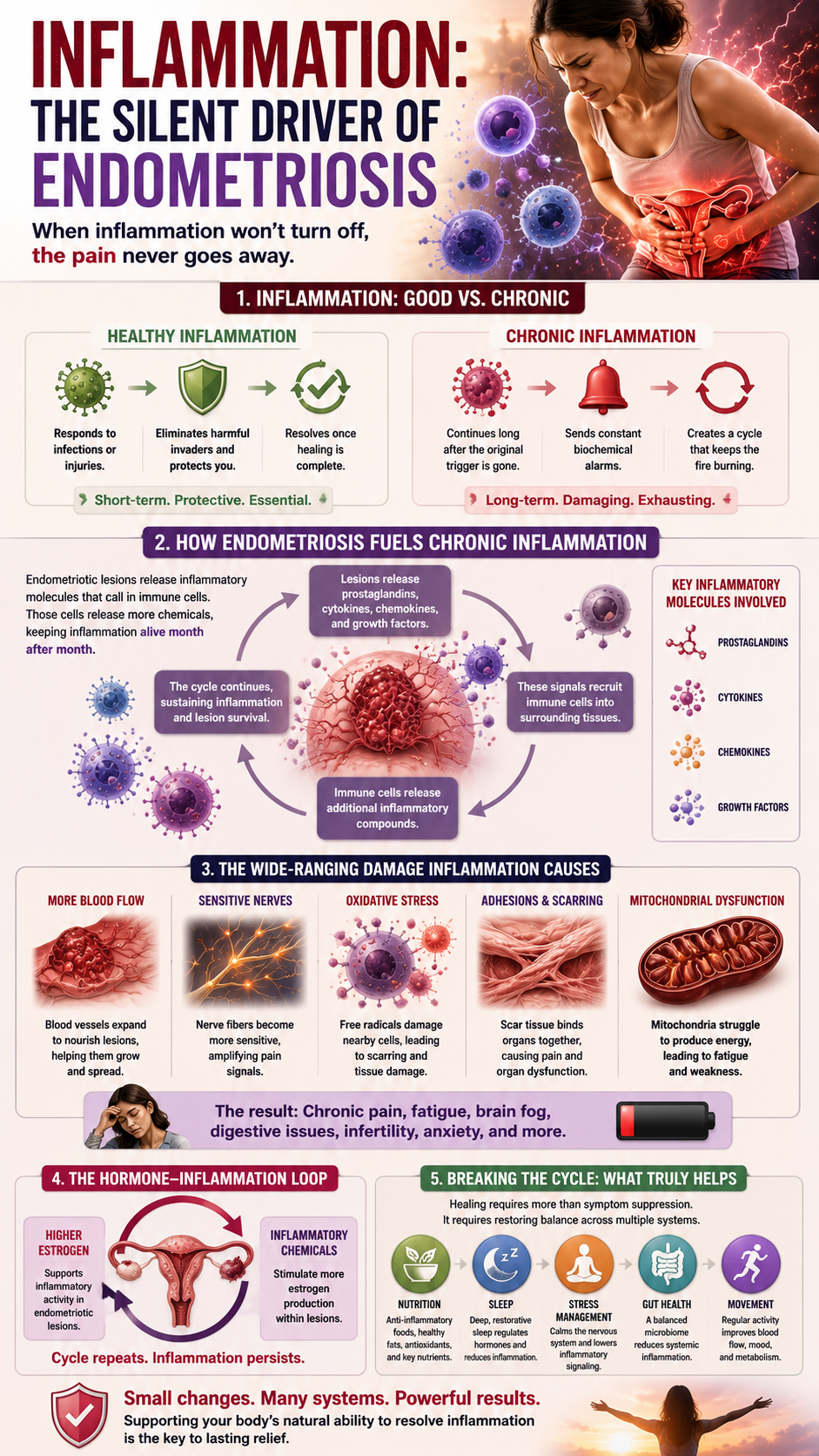
This prolonged inflammatory response creates consequences extending far beyond pelvic pain. Blood vessels expand to nourish growing lesions while nerve fibers become increasingly sensitive to pain signals. Oxidative stress damages nearby cells, encouraging scar formation and adhesions that bind organs together. Mitochondria, the tiny structures responsible for producing cellular energy, struggle to maintain normal function under constant inflammatory pressure. Many women therefore experience overwhelming fatigue alongside chronic pain because inflammation reduces energy production throughout the body.
Hormones and inflammation influence each other continuously. Elevated estrogen supports inflammatory activity inside endometriotic lesions, while inflammatory chemicals encourage additional estrogen production within those same tissues. Breaking this cycle requires more than suppressing symptoms. It requires addressing the biological conditions that allow inflammation to persist. Nutrition, sleep quality, physical activity, stress management, gut health, and environmental exposures all influence inflammatory signaling. Small improvements across multiple systems often create greater long-term benefits than relying upon a single intervention alone.
Environmental Toxins Add Fuel to an Already Active Fire
The average person encounters thousands of synthetic chemicals every week without realizing it. Plastic food containers, thermal receipts, scented candles, pesticides, herbicides, non-stick cookware, personal care products, household cleaners, air pollution, and contaminated water all contribute to daily chemical exposure. The liver processes these compounds continuously, often without producing obvious symptoms. Over time, however, cumulative exposure may increase oxidative stress and compete with normal hormone metabolism for valuable detoxification resources.
Several environmental compounds have attracted scientific attention because they interact with estrogen receptors or influence hormone metabolism. Bisphenol A, commonly known as BPA, certain phthalates used to soften plastics, dioxins, polychlorinated biphenyls, and several agricultural chemicals demonstrate endocrine-disrupting properties in laboratory studies. These compounds may mimic estrogen, alter receptor activity, or interfere with normal hormonal communication. Although no single chemical explains every case of endometriosis, reducing unnecessary exposure supports the body’s natural detoxification systems while lowering the overall chemical burden.
Functional medicine emphasizes practical risk reduction rather than fear. Complete avoidance of every environmental toxin remains impossible in modern society. Thoughtful daily choices, however, significantly reduce cumulative exposure. Using glass or stainless-steel food containers, filtering drinking water, choosing fragrance-free personal care products when possible, avoiding unnecessary plastic contact with hot foods, and emphasizing whole foods over heavily processed products all lessen the workload placed upon the liver. Consistent habits practiced over years often matter far more than dramatic short-term detoxification programs.
Nourishing the Liver Begins on the Dinner Plate
The liver cannot perform thousands of detoxification reactions without raw materials. Every enzymatic pathway requires vitamins, minerals, amino acids, antioxidants, and healthy fats to function efficiently. Nutritional deficiencies do not automatically cause endometriosis, yet inadequate nutrient intake may reduce the body’s ability to process hormones, repair damaged tissues, and defend against oxidative stress. Supporting liver health therefore begins with consistently supplying the nutrients required for normal physiology.
Protein deserves particular attention because amino acids provide building blocks for detoxification pathways. Glycine, cysteine, glutamine, and methionine participate directly in important metabolic reactions involved in hormone processing and antioxidant production. High-quality protein from fish, poultry, eggs, lean meats, and other nutrient-dense sources supplies these essential amino acids while supporting tissue repair. Colorful vegetables contribute vitamins, minerals, and plant compounds that help maintain healthy liver enzyme activity. Healthy fats from olive oil, avocados, and omega-3-rich fish support cellular membranes while helping regulate inflammatory responses.
Dietary fiber plays an equally important role because it helps remove metabolized estrogen through the digestive tract. Fiber binds bile acids, supports beneficial gut bacteria, and promotes regular bowel movements that reduce opportunities for estrogen recycling. Many people underestimate the importance of bowel regularity, yet healthy elimination remains one of the body’s primary detoxification mechanisms. A liver that efficiently processes hormones still depends upon the digestive tract to complete the job.
Everyday Habits That Support Healthy Estrogen Metabolism
Supporting estrogen metabolism does not require expensive detoxification retreats or extreme cleansing programs. The body already possesses extraordinary detoxification systems. The goal is to remove obstacles while supplying the nutrients and lifestyle factors those systems require. Regular physical activity improves insulin sensitivity, supports healthy circulation, enhances lymphatic movement, and helps regulate inflammatory signaling. Exercise also contributes to maintaining healthy body composition because excess fat tissue produces inflammatory compounds and influences estrogen metabolism.
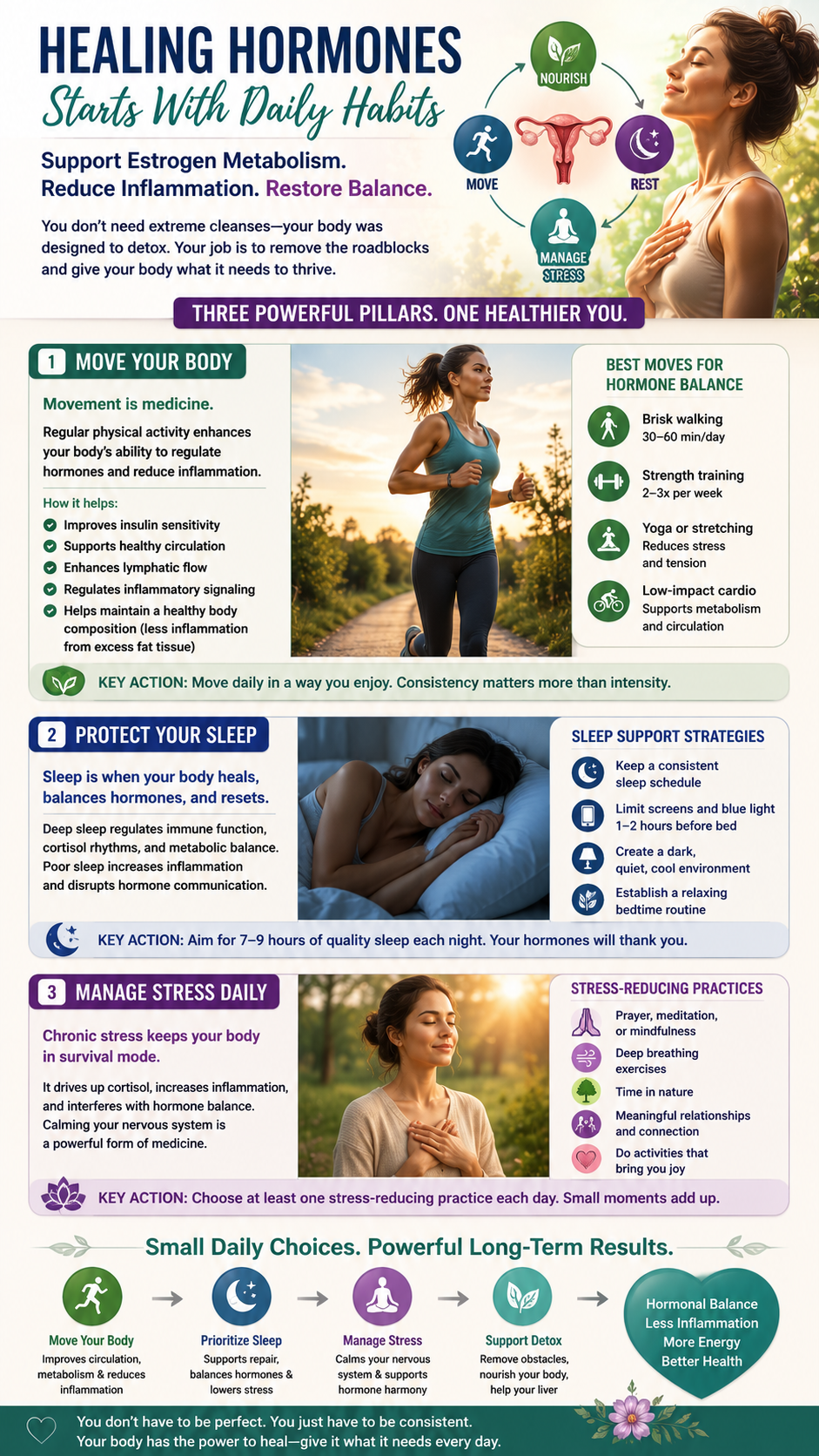
Sleep remains one of the most underestimated aspects of hormone health. During deep sleep, the body performs extensive cellular repair while regulating immune function, cortisol rhythms, and metabolic balance. Chronic sleep deprivation increases inflammatory markers and disrupts normal hormonal communication. Establishing a consistent sleep schedule, minimizing evening light exposure, and creating a dark, quiet sleeping environment support these restorative processes without requiring complicated interventions.
Stress management also deserves careful attention. Chronic psychological stress continuously activates the hypothalamic-pituitary-adrenal axis, altering cortisol production and influencing immune regulation. Persistent stress does not directly cause endometriosis, but it may intensify inflammation while disrupting hormonal balance. Daily practices such as prayer, meditation, breathing exercises, time outdoors, meaningful relationships, and enjoyable physical activity help calm the nervous system and reduce the physiological burden created by chronic stress.
A Functional Medicine Approach Looks for the Missing Pieces
Every woman with endometriosis presents a unique biological story. One patient may struggle primarily with chronic inflammation, while another demonstrates significant gut dysbiosis, nutritional deficiencies, insulin resistance, or thyroid dysfunction. Functional medicine therefore emphasizes personalized evaluation rather than assuming every individual shares identical root causes. Comprehensive assessment may include nutritional status, metabolic health, inflammatory markers, digestive function, thyroid physiology, and selected hormone testing when clinically appropriate. These evaluations aim to identify patterns that help explain why symptoms developed rather than simply confirming that symptoms exist.
It remains important to recognize that no single laboratory test diagnoses estrogen dominance with complete certainty. Hormones fluctuate naturally throughout the menstrual cycle, making interpretation more complex than a single blood draw. Healthcare professionals often consider symptoms, medical history, physical examination, and laboratory findings together rather than relying upon one isolated value. This broader perspective provides a more meaningful understanding of the body’s overall physiological state.
Endometriosis often requires a collaborative approach involving gynecologists, primary care physicians, physical therapists, nutrition professionals, and other qualified healthcare providers. Surgery, medications, pain management, nutritional strategies, and lifestyle interventions each hold appropriate roles depending upon the individual. Functional medicine complements conventional care by searching for modifiable contributors that influence inflammation, hormone metabolism, immune function, and long-term resilience.
Healing Begins by Supporting the Systems Designed to Protect You
Endometriosis remains one of the most complex conditions affecting women’s health because it reflects dysfunction across multiple interconnected systems. Hormones, immunity, inflammation, detoxification, gut health, environmental exposures, and cellular energy production continuously influence one another. Focusing on only one piece of that puzzle risks overlooking the broader biological landscape. Understanding those relationships transforms endometriosis from an isolated pelvic disorder into a systemic condition requiring comprehensive support.
The encouraging reality is that the human body possesses remarkable capacity for adaptation. Every nutritious meal provides raw materials for repair. Every restorative night of sleep supports immune regulation. Every healthy bowel movement completes an essential phase of hormone elimination. Every reduction in unnecessary chemical exposure lessens the liver’s daily workload. Every anti-inflammatory lifestyle choice shifts physiology toward greater resilience. These changes rarely produce overnight miracles, yet their cumulative effects often become profound over months and years.
Healing does not begin with searching for a perfect supplement or the latest detoxification trend. It begins by creating an internal environment where hormones can communicate clearly, inflammation can resolve appropriately, the liver can efficiently process its enormous workload, and the digestive tract can complete the final step of hormone elimination. When those systems begin working together again, the body gains its greatest opportunity to restore balance. That journey requires patience, consistency, and individualized care, but it also offers something many women living with endometriosis have searched for over countless years: genuine hope grounded in understanding how the body was designed to heal and protect itself.