
The Hidden Cost of Exercising Too Hard
For decades, the fitness industry has sold one powerful promise to anyone desperate to lose weight. Push harder, sweat longer, leave the gym exhausted, and your body will finally surrender its fat stores. High-Intensity Interval Training, better known as HIIT, became the embodiment of that promise. Fitness influencers built entire careers around twenty-minute workouts that claimed to outperform an hour of traditional exercise. Television shows praised it. Personal trainers prescribed it. Health clubs built entire classes around it. Millions of people embraced HIIT because it appeared to offer the ultimate shortcut to a leaner body.
Yet a different story unfolds behind the closed doors of medical clinics and performance laboratories. Countless people who faithfully complete four or five HIIT sessions each week still struggle with stubborn belly fat, declining energy, brain fog, restless sleep, elevated blood sugar, thyroid dysfunction, hormonal imbalance, and chronic fatigue. Many become frustrated because they appear to be doing everything right. They eat healthier than before. They exercise harder than ever. They count calories with precision. Despite those efforts, the scale barely moves, their waistline expands, and recovery becomes increasingly difficult.
This contradiction forces an uncomfortable question that deserves far more attention than it receives. Could the very workout designed to accelerate fat loss actually become one of the reasons some people cannot lose weight? The answer is neither simple nor sensational. HIIT itself is not the villain. The real problem lies in how modern physiology collides with modern lifestyles. Understanding that collision requires stepping beyond calories and entering the remarkable world of hormones, metabolism, inflammation, and human evolution.
A Body Designed for Survival Meets a World of Constant Stress
Human physiology evolved over hundreds of thousands of years under conditions that look nothing like modern life. Our ancestors certainly experienced moments of explosive physical effort. Hunters sprinted after wounded animals. Mothers carried children to safety. Entire tribes escaped predators through bursts of speed and strength. Those intense efforts rarely lasted long because survival demanded energy conservation. Hours of walking, climbing, gathering food, and performing manual labor surrounded those brief episodes of maximal exertion.
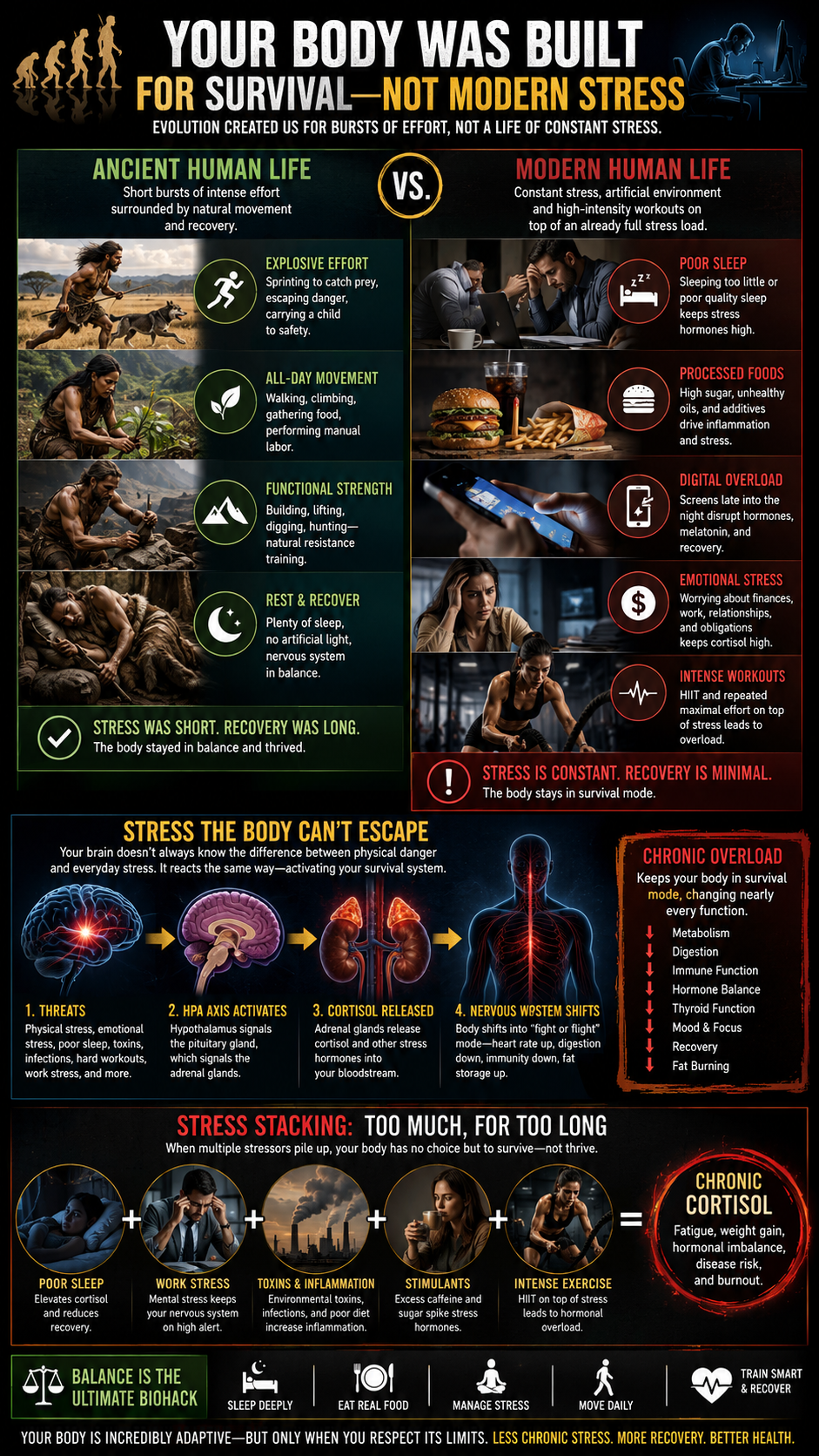
Today’s version of HIIT attempts to recreate those ancient bursts of effort. The workout itself resembles something the human body recognizes. The environment surrounding it does not. Most people now perform HIIT after sleeping too little, sitting at a desk all day, consuming highly processed foods, staring at digital screens until midnight, worrying about finances, managing family obligations, and carrying emotional burdens that never existed during human evolution. Every one of those factors activates stress pathways inside the body. Adding repeated high-intensity exercise on top of that already crowded stress load creates a biological situation our ancestors rarely experienced.
The human brain does not separate emotional stress from physical stress as clearly as many people imagine. Financial anxiety, inflammatory disease, poor sleep, excessive caffeine, chronic infections, environmental toxins, demanding work schedules, and repeated maximal exercise all activate overlapping hormonal systems. Each stressor adds another layer to the total burden your body must manage. Eventually, the nervous system begins responding as though survival itself has become the highest priority. That shift changes almost every metabolic process inside the body.
The Hormone Quietly Running the Show
Few hormones receive as much attention as cortisol, yet few remain as misunderstood. Popular culture often labels cortisol as the enemy, creating the false impression that every increase damages health. Biology tells a far more sophisticated story. Cortisol keeps people alive. Every morning it helps raise blood sugar, increase alertness, regulate blood pressure, mobilize stored energy, coordinate immune responses, and prepare the brain for another day. Without cortisol, survival would become impossible.
Problems emerge only when cortisol remains elevated far longer than nature intended. The adrenal glands cannot distinguish between an angry supervisor, chronic inflammation, sleep deprivation, financial hardship, or repeated exhaustive workouts. They simply respond to stress. Every stressful event instructs the hypothalamus to activate the pituitary gland, which then signals the adrenal glands to release cortisol. That communication network, known as the hypothalamic-pituitary-adrenal axis, represents one of the body’s most important survival systems.
Chronic activation of this system slowly reshapes human physiology. Digestion becomes less efficient because survival takes priority over nutrient absorption. Immune regulation changes as inflammatory pathways become increasingly difficult to control. Blood sugar rises because the liver continually releases stored glucose into circulation. Appetite shifts toward calorie-dense foods because the brain prepares for prolonged hardship. Sleep quality declines because the nervous system remains locked in a state of vigilance. Fat storage increases because the body begins protecting its energy reserves rather than spending them freely.
Every Workout Is a Controlled Form of Stress
Exercise strengthens the body precisely because it creates stress. Weight training tears microscopic muscle fibers. Running depletes glycogen stores. Cycling challenges cardiovascular endurance. HIIT dramatically activates the sympathetic nervous system while demanding enormous amounts of energy within seconds. None of those responses represent failure. Instead, they initiate the rebuilding process that ultimately creates stronger muscles, healthier hearts, and improved endurance.
Scientists describe this phenomenon as hormesis. Small amounts of carefully controlled stress stimulate adaptation that makes the body more resilient. Excessive stress overwhelms those same repair systems. The difference between improvement and breakdown rarely depends on the workout itself. Instead, recovery determines whether adaptation succeeds or fails.
Professional athletes understand this principle remarkably well. Elite competitors devote enormous attention to sleep quality, nutrient timing, hydration, mobility training, massage therapy, breathing exercises, and scheduled recovery days. Recreational exercisers often reverse that formula completely. Many sleep six hours each night, consume excessive caffeine, rush through stressful workdays, skip meals, perform intense evening workouts, and spend hours staring at bright screens before bedtime. Under those circumstances, another HIIT session may become one more withdrawal from an already depleted physiological bank account.
The Metabolic Alarm System Begins to Sound
The body possesses an extraordinary ability to sense danger long before conscious awareness notices anything unusual. Hormones continually communicate with the brain about energy availability, inflammation, nutrient status, infection, and physical stress. Whenever those signals suggest prolonged hardship, metabolism quietly shifts into conservation mode.
This response protected human survival throughout history. During famine, injury, or extended periods of physical hardship, burning calories rapidly would have reduced survival chances. Conserving energy increased the likelihood of living long enough to find food again. Modern biology still follows those ancient instructions because evolution has not rewritten the program.
Repeated high-intensity exercise without adequate recovery may contribute to this conservation response in susceptible individuals. Resting metabolic rate may decline slightly as the body attempts to preserve energy. Hunger hormones may become more active. Fat oxidation may become less efficient. Exercise begins feeling harder despite producing fewer visible results. Many people mistakenly interpret these changes as evidence they need even more exercise, creating a cycle that becomes increasingly difficult to escape.
The Thyroid Responds to Every Major Stress Signal
Most discussions surrounding thyroid health focus exclusively on the gland located in the neck. That narrow perspective overlooks the sophisticated communication network regulating thyroid function throughout the body. The hypothalamus monitors environmental conditions continuously. The pituitary gland interprets those signals before instructing the thyroid how much hormone to produce. Every organ then decides how much thyroid hormone to activate according to local needs.
Under favorable conditions, inactive thyroxine converts efficiently into active triiodothyronine, commonly called T3. This hormone enters cells and stimulates energy production inside mitochondria. Healthy conversion supports body temperature, mental clarity, digestive efficiency, healthy cholesterol metabolism, and normal fat burning.
Chronic stress may interfere with this elegant system. Elevated cortisol, systemic inflammation, prolonged calorie restriction, illness, and excessive training can reduce T4 conversion into active T3 while increasing production of reverse T3, an inactive form that occupies thyroid receptors without activating them. This adaptation conserves precious energy during difficult times. Unfortunately, modern individuals often remain trapped in this protective state for months or years. Fatigue, cold intolerance, constipation, weight gain, and sluggish metabolism frequently follow as natural consequences.
Mitochondria Thrive Under Challenge but Demand Recovery
Every heartbeat, every thought, every breath, and every muscle contraction depends upon microscopic structures called mitochondria. These remarkable organelles transform nutrients into adenosine triphosphate, commonly known as ATP, which serves as the body’s universal energy currency. Healthy mitochondria determine far more than athletic performance. They influence aging, immune function, hormone production, cognitive health, and nearly every aspect of metabolism.
HIIT powerfully stimulates mitochondrial biogenesis, the process of creating new mitochondria. Researchers consistently demonstrate improvements in aerobic capacity, insulin sensitivity, and metabolic flexibility following appropriately prescribed interval training. Those findings explain much of HIIT’s popularity within sports science.
Adaptation, however, occurs only after recovery begins. Intense exercise generates reactive oxygen species as a natural byproduct of energy production. Healthy antioxidant systems neutralize those molecules before significant damage develops. Excessive training combined with inadequate sleep, poor nutrition, emotional stress, and chronic inflammation may overwhelm those protective systems. Mitochondria then spend more time repairing themselves than producing optimal energy. Fatigue increases, performance declines, and metabolic efficiency gradually deteriorates.
Belly Fat Tells a Hormonal Story
Many people believe belly fat reflects little more than excess calorie intake. Human physiology paints a far richer picture. Fat tissue functions as a remarkably active endocrine organ rather than an inert storage depot. It produces inflammatory molecules, communicates with the brain, influences insulin sensitivity, and responds directly to hormonal signals throughout the day.
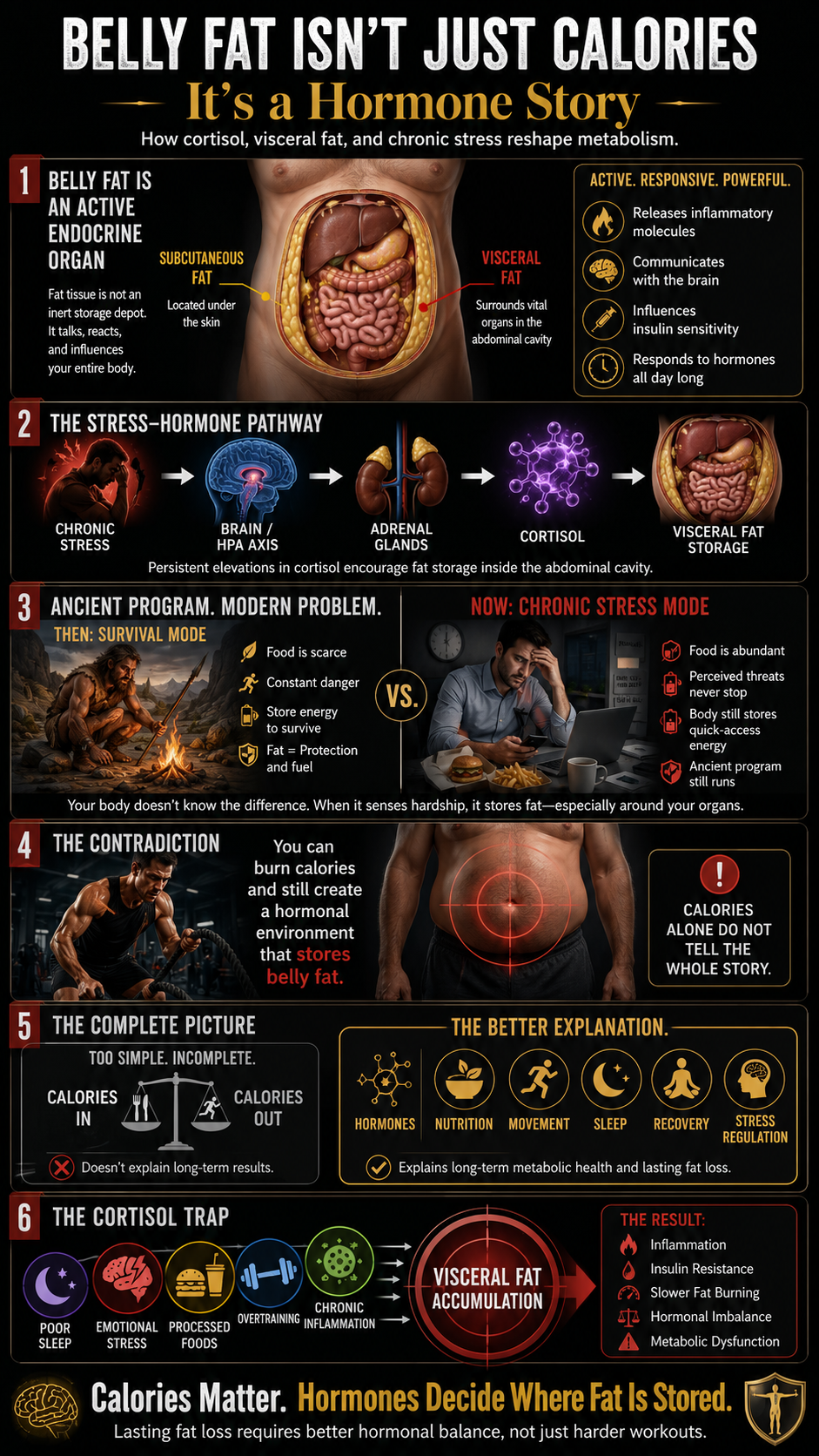
Visceral fat surrounding internal organs appears especially responsive to cortisol. Persistent elevations in stress hormones encourage fat storage within the abdominal cavity because that location provides rapid access to emergency fuel during perceived hardship. From an evolutionary perspective, this adaptation improved survival during periods of starvation or prolonged physical danger. Modern lifestyles continually activate that ancient program despite abundant food supplies.
Someone may burn several hundred calories during an intense workout while simultaneously maintaining hormonal conditions that encourage long-term fat storage. This apparent contradiction explains why calories alone rarely tell the complete story. Nutrition matters tremendously. Physical activity matters equally. Hormonal balance determines how effectively those efforts translate into lasting metabolic health.
Inflammation Draws the Line Between Progress and Breakdown
Every effective workout creates temporary inflammation. Muscle fibers sustain microscopic damage that attracts immune cells to the affected tissue. Growth factors appear. Repair enzymes activate. Connective tissue strengthens. Bones become denser. Muscles rebuild larger and stronger than before. Short-term inflammation forms an essential part of healthy adaptation.
Chronic inflammation tells an entirely different story. Poor sleep, refined sugar, excessive alcohol, environmental toxins, obesity, periodontal disease, persistent infections, and repeated exhaustive exercise may all contribute to inflammatory overload. When one workout begins before inflammation from the previous session has fully resolved, recovery gradually falls behind demand. Performance plateaus. Injuries become increasingly common. Hormonal balance shifts unfavorably. Fat loss slows despite escalating effort.
The human body rewards balance rather than extremes. Appropriate stress stimulates remarkable healing. Relentless stress eventually overwhelms even the most resilient physiology. Understanding that distinction represents the first step toward determining whether HIIT functions as a metabolic miracle or quietly transforms into a cortisol disaster.
Turning HIIT into a Metabolic Ally Instead of a Hormonal Enemy
The debate surrounding HIIT often becomes unnecessarily polarized. One group praises it as the ultimate fat-burning workout. Another group blames it for every hormonal problem imaginable. Neither position reflects the remarkable complexity of human physiology. The truth lies somewhere between those extremes. High-Intensity Interval Training remains one of the most powerful exercise tools ever studied, yet even the finest tool becomes destructive when used in the wrong situation. A scalpel can save a life in skilled hands, but careless use creates injury instead of healing. HIIT follows that same principle. Success depends less on the workout itself and far more on the person performing it.
Every exercise program must begin with one simple question. Is your body prepared to benefit from this stress today? That question rarely appears in fitness magazines because it lacks the excitement of promises about six-pack abs and rapid fat loss. Biology, however, refuses to ignore it. A healthy metabolism responds very differently to intense exercise than one already burdened by inflammation, sleep deprivation, nutritional deficiencies, insulin resistance, or chronic psychological stress. The body never evaluates a workout in isolation. Instead, it adds that workout to every other demand already competing for its resources.
The People Who Benefit Most from HIIT
Healthy individuals with good sleep, balanced nutrition, stable blood sugar, and adequate recovery often experience remarkable improvements from interval training. Their nervous systems move easily between the sympathetic “fight-or-flight” state and the parasympathetic “rest-and-repair” state. Cortisol rises during exercise, performs its intended job, and then gradually returns to baseline. Growth hormone supports tissue repair. Insulin sensitivity improves. Mitochondria multiply. Cardiovascular fitness increases. Recovery finishes before the next workout begins.
Athletes provide an excellent example of this balance. Elite competitors rarely perform maximal workouts every day of the week. Instead, coaches carefully organize periods of intense effort with lighter training sessions that allow physiological adaptation. Recovery receives the same attention as exercise because coaches understand that muscles, hormones, and mitochondria grow stronger during rest rather than during the workout itself. This structured approach allows athletes to tolerate stress that would overwhelm the average person.
Many recreational exercisers unknowingly copy the intensity of elite athletes without copying their recovery strategies. They complete demanding workouts while juggling careers, raising families, sleeping too little, and consuming meals that fail to support tissue repair. Under those circumstances, the body never receives an opportunity to finish rebuilding before the next challenge arrives. Gradually, fatigue replaces progress, and frustration begins replacing motivation.
The Warning Signs Your Body Has Entered Survival Mode
The earliest signs of excessive physiological stress rarely appear on the bathroom scale. Instead, subtle changes begin affecting daily life long before obvious weight gain develops. Morning energy starts declining despite adequate caffeine intake. Sleep becomes lighter, even though exhaustion continues increasing. Motivation disappears. Cravings for sugar and processed carbohydrates become more intense because the brain searches for rapid fuel. Muscle soreness lasts longer than expected. Resting heart rate begins creeping upward. Recovery from ordinary workouts suddenly requires several days.
Many people dismiss these changes as temporary inconveniences. Unfortunately, the body often views them as early warning signals. The nervous system continually evaluates whether enough energy exists to support growth and reproduction. When the answer becomes uncertain, metabolism gradually shifts toward conservation rather than expansion. Cortisol remains elevated longer after workouts. Testosterone may decline in men. Estrogen and progesterone balance may become disrupted in women. Thyroid hormone activation slows. Appetite increases while fat burning becomes less efficient.
Ignoring these warning signs often produces the opposite of the desired result. Instead of resting, many individuals increase workout intensity because they assume they simply have not trained hard enough. This decision resembles pressing harder on a car’s accelerator after the engine has already overheated. More effort cannot solve a recovery problem. Only restoration can accomplish that goal.
The Nervous System Holds the Missing Piece
Modern fitness conversations focus almost entirely on muscles, calories, and heart rate. Far fewer discussions acknowledge the nervous system that controls every one of those functions. The autonomic nervous system operates like the body’s master switchboard. One branch prepares us for action through the sympathetic response. The other promotes healing through the parasympathetic response. Health depends upon moving smoothly between those two states throughout the day.
Repeated HIIT workouts strongly activate the sympathetic nervous system. That activation proves beneficial when followed by adequate recovery. Problems emerge when people remain trapped in sympathetic dominance for weeks or months. Digestion slows because blood flow favors working muscles instead of the gastrointestinal tract. Blood pressure remains elevated longer than necessary. Inflammatory signals become more difficult to regulate. Sleep quality deteriorates because the brain struggles to transition into a restorative state. Even emotional resilience begins declining as stress hormones remain persistently elevated.
Creating metabolic health requires strengthening the parasympathetic nervous system just as intentionally as strengthening muscles. Deep diaphragmatic breathing, outdoor walking, restorative sleep, meditation, prayer, enjoyable social interaction, and unhurried meals all activate pathways that promote healing. These activities rarely generate dramatic social media videos, yet they often determine whether intense exercise produces adaptation or exhaustion.
Food Determines Whether HIIT Builds or Breaks the Body
Exercise creates demand. Nutrition supplies the materials needed to meet that demand. Without sufficient nutrients, the body simply cannot rebuild damaged tissues efficiently. Every sprint depletes glycogen. Every muscle contraction consumes amino acids during repair. Every inflammatory response increases the need for antioxidants, vitamins, minerals, and healthy fats.
Many individuals unknowingly combine frequent HIIT workouts with aggressive calorie restriction. This combination sends conflicting messages throughout the body. Exercise communicates that greater physical performance is required. Severe calorie restriction announces that food has become scarce. The brain responds by conserving energy rather than expanding metabolic activity. Hunger increases. Recovery slows. Lean muscle becomes more difficult to maintain. Fat loss eventually stalls despite continued discipline.
Protein deserves particular attention because muscle functions as one of the body’s largest metabolic organs. Adequate protein supports tissue repair, immune function, enzyme production, hormone synthesis, and healthy aging. Healthy fats also play a critical role because steroid hormones, including testosterone and cortisol, require cholesterol as a foundational building block. Meanwhile, strategically timed carbohydrates can replenish glycogen after intense training without necessarily disrupting long-term metabolic goals for many individuals. Balance consistently outperforms extremes when sustainable health remains the objective.
Sleep Is the Ultimate Recovery Supplement
No supplement sold in any nutrition store can replace high-quality sleep. During deep sleep, growth hormone reaches some of its highest daily concentrations. Muscle repair accelerates. Memory consolidates. Immune regulation improves. The brain clears metabolic waste through the recently discovered glymphatic system. Cortisol gradually declines while parasympathetic activity dominates the night.
Unfortunately, many people sacrifice sleep while expecting exercise to compensate for that loss. Biology refuses to negotiate this trade. Even one night of restricted sleep can impair insulin sensitivity, increase hunger hormones, elevate cortisol, and reduce exercise performance the following day. Repeating that pattern week after week gradually shifts metabolism toward fat storage and away from efficient energy production.
Improving sleep often produces surprisingly rapid improvements in exercise tolerance. Going to bed at a consistent time strengthens circadian rhythms that regulate hormone production throughout the day. Reducing bright light exposure during the evening supports natural melatonin release. Limiting caffeine later in the day prevents unnecessary stimulation. Maintaining a cool, dark bedroom further enhances restorative sleep. These simple habits frequently improve recovery more effectively than adding another supplement or another workout.
Building a Smarter Relationship with HIIT at Home
The healthiest exercise program begins by respecting the body’s biological limits rather than ignoring them. Most healthy adults achieve excellent results from two or three HIIT sessions each week instead of performing maximal workouts daily. Lower-intensity activities between those sessions encourage circulation, improve mitochondrial function, and accelerate recovery without adding excessive physiological stress. Walking outdoors, recreational cycling, swimming, mobility training, and moderate resistance exercise all support long-term metabolic health while allowing the nervous system to recover.
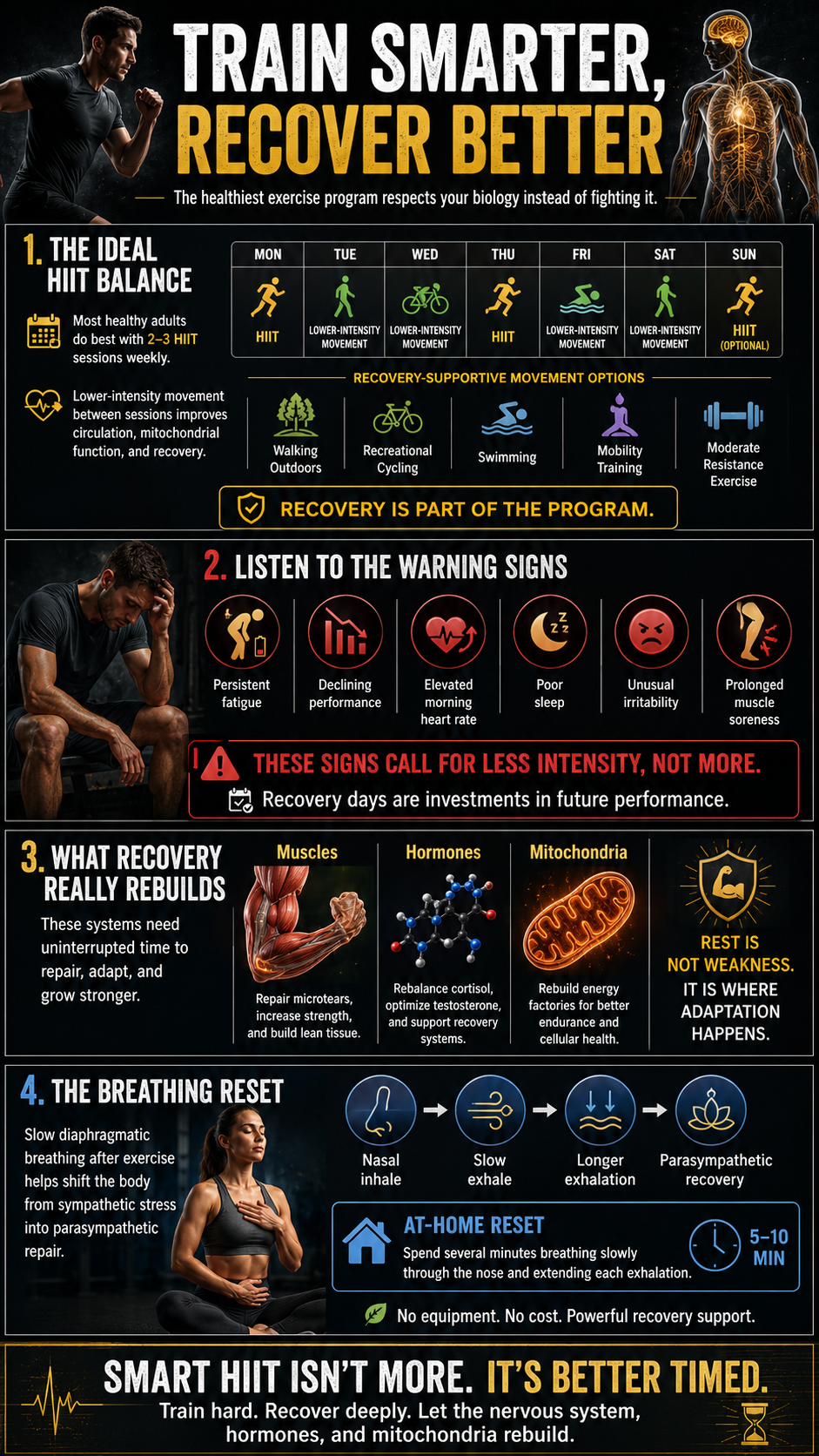
Listening to the body’s signals becomes equally important. Persistent fatigue, declining performance, elevated morning heart rate, poor sleep, unusual irritability, or prolonged muscle soreness should prompt a temporary reduction in training intensity rather than an increase. Recovery days represent active investments in future performance rather than evidence of weakness. Muscles, hormones, and mitochondria all require uninterrupted time to rebuild after intense effort.
Breathing deserves far greater attention than it receives. Slow diaphragmatic breathing immediately after exercise helps transition the nervous system from sympathetic activation toward parasympathetic recovery. Spending several minutes breathing slowly through the nose while extending each exhalation calms stress pathways and promotes a faster return to physiological balance. This simple practice requires no equipment, costs nothing, and supports every recovery system inside the body.
Looking Beyond Calories Toward Metabolic Flexibility
Many people judge every workout by the number of calories displayed on a smartwatch or treadmill screen. While calorie expenditure matters, it represents only one small piece of human metabolism. Long-term health depends far more on metabolic flexibility, the body’s ability to switch efficiently between burning carbohydrates and burning fat according to changing energy demands.
Healthy mitochondria support this flexibility by responding appropriately to exercise, fasting, meals, and rest. Chronic stress gradually reduces this adaptability. Instead of smoothly transitioning between fuel sources, the body becomes increasingly dependent on glucose while storing more fat for perceived emergencies. Restoring metabolic flexibility requires addressing inflammation, improving sleep, reducing unnecessary stress, optimizing nutrition, and selecting exercise volumes that match individual recovery capacity.
Walking after meals offers one remarkably effective strategy. Even a brief walk encourages muscles to absorb circulating glucose while improving insulin sensitivity. Daily movement throughout the day often contributes more to metabolic health than a single exhausting workout followed by ten hours of uninterrupted sitting. The human body evolved for frequent movement rather than prolonged inactivity punctuated by isolated bursts of extreme exercise.
The Real Secret Behind Lasting Fat Loss
The greatest misconception surrounding weight loss involves believing that fat disappears because exercise forces it away. Human physiology tells a different story. The body willingly releases stored fat only after concluding that survival no longer requires conserving energy. Safety, not suffering, often determines successful fat loss.
A body sleeping well, eating nourishing foods, recovering adequately, managing stress effectively, and exercising intelligently receives powerful signals that resources remain abundant. Under those conditions, hormones begin supporting fat oxidation rather than resisting it. Thyroid function improves. Insulin sensitivity increases. Cortisol follows healthier daily rhythms. Appetite becomes easier to regulate. Energy naturally rises because mitochondria produce ATP more efficiently. Sustainable weight loss becomes the byproduct of restored metabolic health rather than endless punishment through exercise.
This perspective transforms exercise from a battle into a partnership. Instead of asking how much punishment the body can survive, we begin asking how much challenge it can successfully adapt to. That subtle change in thinking often produces dramatically different long-term results.
The Final Verdict
HIIT is neither a miracle nor a disaster. It remains one of the most effective exercise strategies available when used within the right biological context. Healthy recovery transforms intense exercise into stronger muscles, healthier hearts, improved insulin sensitivity, and greater metabolic flexibility. Inadequate recovery transforms that same workout into another layer of chronic stress capable of disrupting hormones, slowing metabolism, and encouraging stubborn fat storage.
The body always tells the truth. It reveals that truth through energy levels, sleep quality, mood, appetite, recovery speed, and metabolic health. Learning to recognize those signals allows exercise to become a powerful ally instead of an invisible source of physiological overload. The ultimate goal should never be exercising harder than everyone else. Instead, success comes from exercising intelligently enough to build a body that grows stronger, healthier, and more resilient with every passing year.