
What Your Antiperspirant Is Really Doing to Your Body
Every morning begins with familiar rituals. The coffee brews while the shower warms. Clothes are chosen for the day ahead, hair is combed, teeth are brushed, and almost without thinking, a stick of deodorant glides across the underarms. The entire routine takes less than a minute, yet that brief moment has become one of the most repeated health decisions a person makes throughout life. By middle age, many people have applied deodorant more than 15,000 times. Few daily habits occur with such consistency, yet few receive so little scrutiny.
Modern advertising has transformed underarm perspiration into something shameful. Commercials portray sweat as an enemy that threatens careers, relationships, confidence, and social acceptance. Pharmaceutical companies and cosmetic manufacturers responded by creating products that promised complete dryness instead of simply reducing odor. Today, entire aisles in grocery stores display antiperspirants boasting forty-eight-hour protection, seventy-two-hour protection, and even “clinical strength” formulas designed to stop sweating almost entirely. Consumers often assume these stronger products represent progress, yet very few understand the biological price of preventing one of the body’s oldest survival mechanisms.
Behind the pleasant fragrances and sleek packaging lies an important question that deserves far more attention than it receives. What happens when people repeatedly interfere with a natural process that the human body carefully designed over thousands of years? More importantly, what happens when that interference depends on aluminum compounds applied directly to one of the most absorbent regions of the skin? Scientists continue to investigate these questions, and while some answers remain unsettled, the conversation has grown far more complex than many consumers realize. Understanding how these products work offers valuable insight into whether suppressing sweat every day truly serves long-term health.
A Biological System Designed for Survival
Sweating represents one of the body’s most remarkable engineering achievements. Every drop of perspiration reflects an intricate conversation between the brain, nervous system, blood vessels, endocrine system, kidneys, and millions of specialized sweat glands distributed across the skin. Long before air conditioning, climate-controlled buildings, or electric fans existed, sweating allowed human beings to survive harsh summers, cross deserts, and perform strenuous physical labor without succumbing to dangerous overheating. Evolution preserved this system because survival depended upon it.
Temperature regulation remains the primary purpose of sweating, yet the process accomplishes much more than simple cooling. Blood carries heat generated during metabolism toward the skin’s surface. Sweat glands release moisture that evaporates into the surrounding air, removing heat and protecting delicate proteins, enzymes, and organs from excessive temperatures. Without this elegant cooling mechanism, core body temperature would rise rapidly during exercise or hot weather, placing the heart, brain, and every major organ under enormous physiological stress.
Researchers have also discovered that perspiration contributes to the body’s natural elimination processes. The liver and kidneys perform most detoxification work, but sweat provides another pathway through which certain compounds leave the body. Studies have identified measurable amounts of heavy metals, including arsenic, cadmium, lead, and mercury, in human sweat. Investigators continue exploring the extent of this contribution, yet the findings reinforce an important principle. Sweating exists because the body benefits from it. Nature rarely creates elaborate physiological systems without an important purpose.
Despite these biological realities, modern culture often treats sweating as an inconvenience rather than a sign of healthy physiology. Instead of asking how to support normal perspiration while controlling odor, manufacturers invested decades perfecting methods that suppress sweat altogether. That decision fundamentally changed the purpose of underarm products and introduced millions of people to ingredients they rarely question.
The Critical Difference Between Deodorant and Antiperspirant
Many shoppers use the words deodorant and antiperspirant interchangeably, yet they perform completely different functions inside the body. Understanding that distinction reveals why so much attention centers on aluminum rather than fragrance alone.
Traditional deodorants target odor without attempting to stop perspiration. They reduce populations of odor-producing bacteria, neutralize unpleasant smells, or absorb moisture while allowing sweat glands to function normally. Perspiration continues reaching the skin, but fewer bacteria remain available to metabolize sweat into the compounds responsible for body odor. In other words, deodorants address the consequence of sweating rather than the process itself.
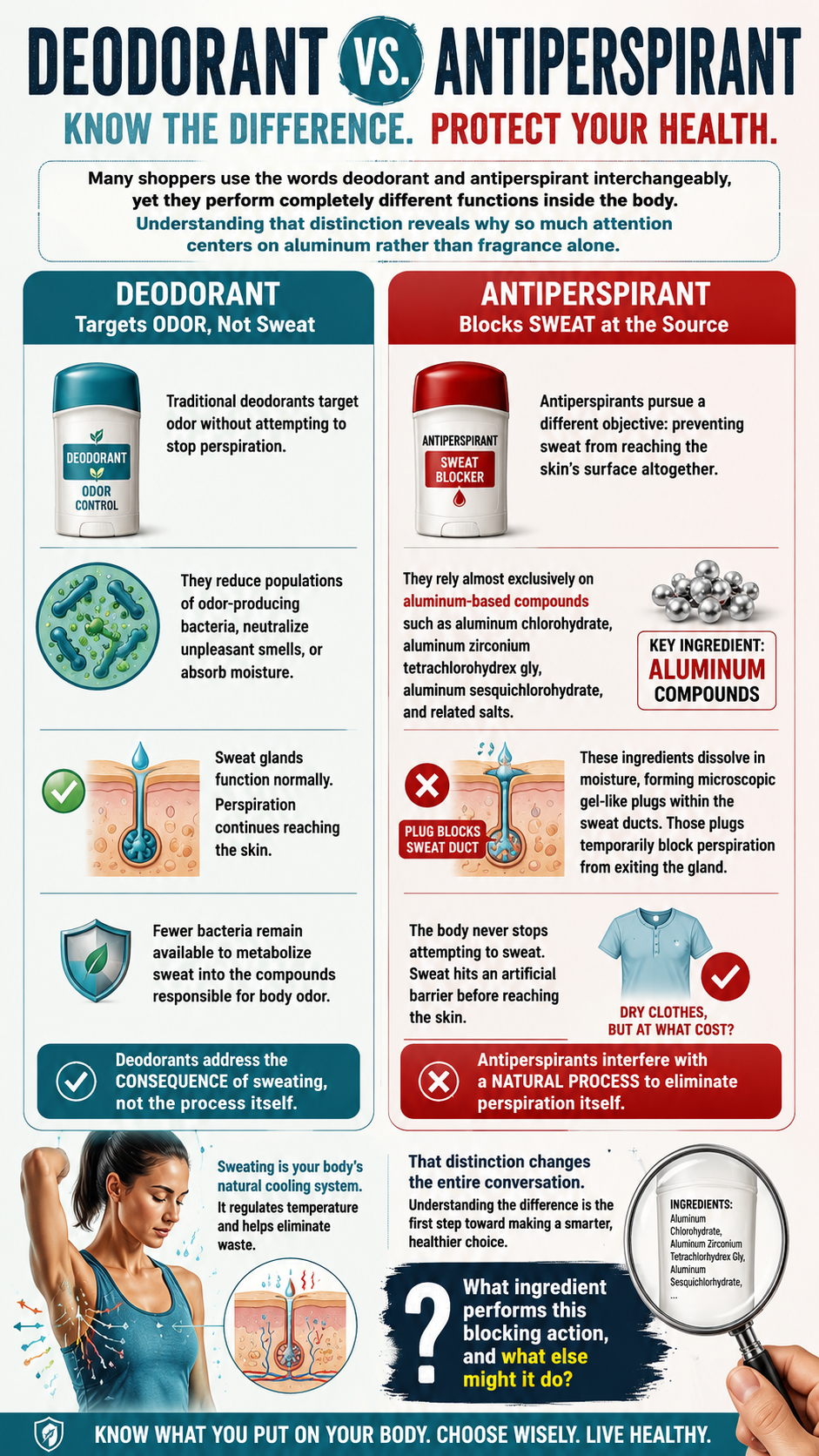
Antiperspirants pursue a dramatically different objective. Their goal involves preventing sweat from reaching the skin’s surface altogether. Achieving that outcome requires active ingredients capable of physically interfering with sweat gland function. That responsibility falls almost exclusively to aluminum-based compounds, including aluminum chlorohydrate, aluminum zirconium tetrachlorohydrex gly, aluminum sesquichlorohydrate, and related salts. These ingredients dissolve in moisture, forming microscopic gel-like plugs within the sweat ducts. Those plugs temporarily block perspiration from exiting the gland.
The body never stops attempting to sweat. Instead, sweat encounters an artificial barrier before reaching the skin. Eventually, normal skin turnover removes those plugs, requiring another application to maintain dryness. Consumers often celebrate this effect because their clothing remains dry throughout the day. Few recognize that complete dryness occurs only because a normal biological pathway has been deliberately interrupted.
That distinction changes the entire conversation. Deodorants manage odor while respecting the body’s natural cooling process. Antiperspirants deliberately interfere with physiology to eliminate perspiration itself. Once consumers understand this difference, the next logical question becomes unavoidable. What ingredient performs this blocking action, and what else might it do?
Aluminum: The Active Ingredient Few Consumers Ever Notice
Aluminum ranks among the most abundant elements on Earth. It appears naturally in soil, rocks, water, and numerous foods. Modern industrial society expanded exposure dramatically through cookware, beverage cans, processed foods, medications, cosmetics, and personal care products. Most healthy people eliminate much of the aluminum they consume through normal kidney function, yet researchers continue examining how repeated exposure from multiple sources may influence long-term health.
The aluminum compounds used in antiperspirants differ from the metallic aluminum found in soda cans or kitchen foil. Manufacturers formulate specialized aluminum salts because these compounds readily dissolve in sweat before forming temporary plugs within sweat ducts. Without aluminum, conventional antiperspirants simply could not perform their advertised function. Aluminum represents the active ingredient responsible for reducing perspiration.
The underarm presents an especially interesting location for repeated aluminum exposure. Skin in this region remains thinner than many other body areas. Hair follicles create additional pathways toward deeper tissues. Daily shaving frequently produces microscopic abrasions that temporarily increase skin permeability. Warm temperatures and consistent moisture create conditions that differ substantially from those on the forearm or back. These anatomical features encouraged scientists to investigate whether aluminum compounds applied repeatedly beneath the arms remain confined to the skin’s surface.
Laboratory studies demonstrate that small amounts of aluminum can penetrate the skin after topical application. Researchers continue debating how much reaches systemic circulation compared with dietary exposure, yet several investigations suggest localized absorption does occur. Regulatory agencies currently maintain that approved antiperspirants remain safe when used as directed, while scientists continue exploring questions surrounding cumulative exposure, tissue accumulation, and long-term biological effects. Those ongoing investigations deserve thoughtful attention rather than dismissal because scientific understanding advances through careful examination rather than unquestioned assumptions.
When Daily Exposure Becomes a Lifetime Habit
Risk rarely develops from a single exposure. Instead, many health concerns emerge through thousands of repeated encounters occurring over decades. Cigarette smoking, excessive ultraviolet radiation, chronic sleep deprivation, and highly processed diets all illustrate this principle. Each individual event appears insignificant, yet cumulative effects eventually shape long-term health. Some researchers believe aluminum exposure deserves similar consideration.
Imagine a person beginning antiperspirant use during adolescence. That individual applies aluminum-containing products every morning for forty years. During the same period, aluminum enters the body through food additives, medications, drinking water, cosmetics, and household products. Each exposure may remain relatively small, yet cumulative contact spans tens of thousands of applications. This broader perspective explains why many investigators focus less on single doses and more on lifelong exposure patterns.
Scientists have explored aluminum’s ability to influence oxidative stress, inflammatory pathways, mitochondrial function, and cellular signaling under experimental conditions. Oxidative stress occurs when unstable molecules known as free radicals overwhelm the body’s antioxidant defenses. Excessive oxidative stress can damage proteins, lipids, and DNA while accelerating tissue aging. Laboratory experiments demonstrate that aluminum may contribute to oxidative stress in certain biological systems, encouraging additional investigation into whether chronic exposure could influence human health.
Inflammation represents another area receiving increasing attention. Acute inflammation protects the body during injury or infection, yet persistent low-grade inflammation contributes to numerous chronic diseases. Experimental studies suggest aluminum compounds may activate inflammatory pathways within cells under specific conditions. Human health remains far more complex than laboratory experiments, but these findings encourage researchers to continue exploring how chronic aluminum exposure might interact with other lifestyle factors that already promote inflammation.
The discussion becomes even more important because consumers rarely associate their morning antiperspirant with systemic health. Most view deodorant as harmless hygiene rather than an ongoing chemical exposure. That perception may discourage meaningful conversations between consumers, researchers, and healthcare professionals about whether better alternatives exist.
Why Clinical-Strength Antipersspirants Deserve Greater Attention
Walk through any pharmacy and one marketing message appears repeatedly. If regular antiperspirants fail, clinical-strength formulas promise stronger protection. Advertisements celebrate seventy-two-hour dryness, maximum sweat control, and prescription-level performance without requiring a doctor’s visit. Those promises sound reassuring until consumers understand what makes these products different.
Clinical-strength antiperspirants achieve greater effectiveness because they generally contain higher concentrations or more efficient combinations of aluminum salts. Manufacturers formulate these products specifically to create stronger, longer-lasting plugs within sweat ducts. More aluminum means greater suppression of perspiration. The entire concept depends upon increasing the ingredient responsible for blocking sweat production.
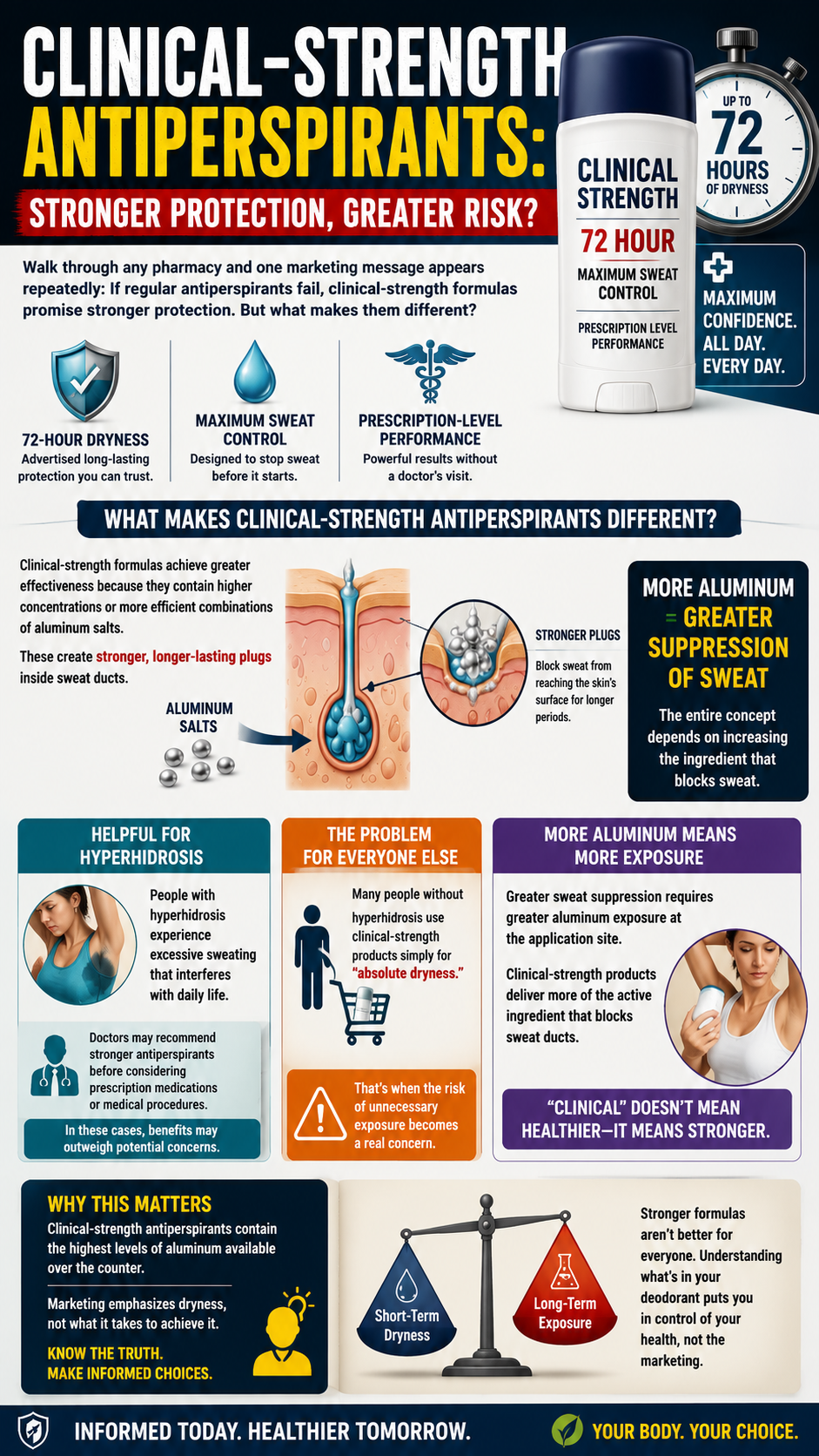
Individuals diagnosed with hyperhidrosis often experience excessive sweating that interferes with daily activities. Physicians sometimes recommend stronger antiperspirants before considering prescription medications or medical procedures. Under those circumstances, benefits may outweigh potential concerns because the condition significantly affects quality of life. The problem arises when consumers without hyperhidrosis purchase clinical-strength products simply because they prefer absolute dryness throughout the day.
Greater sweat suppression naturally requires greater aluminum exposure at the application site. Consumers frequently interpret the word “clinical” as meaning healthier, safer, or medically superior. In reality, clinical-strength products generally deliver more of the active ingredient responsible for blocking sweat ducts. From a physiological standpoint, stronger formulas accomplish their purpose by exposing underarm tissues to larger amounts of aluminum compounds.
That reality deserves far greater public awareness. Anyone concerned about minimizing unnecessary chemical exposure should recognize that clinical-strength antiperspirants represent the highest aluminum exposure available over the counter. Marketing emphasizes dryness while rarely explaining how that dryness occurs. Understanding this relationship empowers consumers to make informed decisions instead of assuming stronger always means better.
The Conversation Surrounding Breast Tissue and Nearby Structures
Few areas of the body receive more scientific attention than the region beneath the arms. The underarm lies immediately adjacent to breast tissue while containing numerous lymphatic vessels and lymph nodes that participate in immune surveillance and fluid regulation. This anatomical proximity explains why researchers became interested in whether repeated aluminum application might influence nearby tissues.
Several studies have detected measurable aluminum within human breast tissue. Those findings alone do not establish that antiperspirants caused the accumulation because aluminum reaches the body through many different sources. Nevertheless, the observations encouraged scientists to examine possible biological mechanisms more closely. Laboratory experiments have demonstrated that aluminum can influence oxidative stress, alter certain cellular processes, and affect estrogen-related signaling under experimental conditions. These discoveries generated important scientific questions worthy of continued investigation.
Large human population studies have not consistently demonstrated that aluminum-containing antiperspirants cause breast cancer. Major cancer organizations therefore conclude that current evidence does not establish a causal relationship. At the same time, researchers continue studying localized aluminum exposure because laboratory findings suggest plausible biological pathways deserving further exploration. Science often advances through precisely this type of careful investigation, where early observations inspire more rigorous studies rather than immediate conclusions.
Consumers benefit most from understanding both sides of the evidence. Current research does not prove that aluminum antiperspirants cause breast cancer, yet neither does it eliminate every unanswered question surrounding lifelong localized exposure. Appreciating that distinction allows individuals to make thoughtful choices while supporting continued scientific inquiry into one of the most common personal care products used worldwide.
Natural Deodorants, Healthier Alternatives, and Practical Steps for Making the Change
The conversation surrounding aluminum-based antiperspirants extends far beyond a single ingredient. Every year, researchers uncover more about the remarkable ecosystem living beneath the surface of the skin and the complex relationship between sweat, bacteria, immunity, and overall health. The underarm is not simply a place where unpleasant odors develop. It functions as an active biological environment that communicates with the immune system, regulates moisture, supports a diverse microbiome, and contributes to the body’s natural cooling process. When that environment changes every morning through repeated applications of aluminum-containing antiperspirants, synthetic fragrances, preservatives, and other cosmetic chemicals, the effects may reach further than most consumers ever imagine.
Many people begin questioning their daily deodorant only after developing skin irritation, persistent rashes, clogged pores, or sensitivity to fragrances. Others become concerned after reading ingredient labels or learning how antiperspirants actually prevent sweating. Whatever prompts the investigation, one discovery often surprises them. Eliminating body odor does not require blocking the body’s ability to sweat. Modern natural deodorants approach the problem from an entirely different biological perspective. Rather than shutting down a normal physiological function, they work alongside the body’s design while addressing the true source of odor.
Body Odor Does Not Come From Sweat
One of the greatest misconceptions surrounding deodorants involves the origin of body odor itself. Sweat has almost no smell when it leaves the body. The familiar odor develops only after naturally occurring bacteria begin breaking down proteins and lipids found within perspiration. Those bacteria convert otherwise odorless compounds into volatile molecules that produce the scent commonly associated with body odor. In other words, perspiration itself is not the culprit. The interaction between sweat and bacteria creates the problem.
The underarm provides an ideal environment for bacterial growth because it remains warm, moist, and protected from constant airflow. Hundreds of microbial species inhabit this region, forming part of the skin’s natural microbiome. Many of these organisms perform beneficial functions that help maintain healthy skin, discourage harmful pathogens, and support the immune system. Problems arise when the microbial balance shifts, allowing odor-producing bacteria to dominate the environment. Simply eliminating sweat does not necessarily improve the overall health of this microbial community.
Researchers increasingly recognize the importance of maintaining a healthy skin microbiome throughout the body. Just as beneficial bacteria support digestive health within the intestines, healthy microbial populations contribute to the integrity of the skin’s protective barrier. Repeated exposure to harsh chemicals, strong preservatives, and broad-spectrum antimicrobial agents may alter that delicate balance. Although scientists continue studying the long-term implications, growing evidence suggests that preserving microbial diversity supports healthier skin function. Natural deodorants often embrace this philosophy by controlling odor without attempting to sterilize or fundamentally disrupt the underarm ecosystem.
Conventional Deodorants Often Contain More Than Aluminum
Aluminum receives most of the attention because it serves as the active ingredient responsible for blocking sweat glands. Yet conventional antiperspirants frequently contain numerous additional ingredients that deserve consideration. Synthetic fragrance mixtures, preservatives, petroleum-derived compounds, silicones, artificial dyes, and other cosmetic additives contribute to the final product. Many fragrance formulations remain protected as proprietary trade secrets, meaning manufacturers do not always disclose every individual chemical contributing to a product’s scent.
Synthetic fragrances represent one of the leading causes of cosmetic contact dermatitis worldwide. Sensitive individuals may develop redness, itching, burning, or chronic irritation after repeated exposure. Even people without obvious skin reactions sometimes experience headaches or respiratory discomfort when exposed to heavily fragranced personal care products. The cosmetic industry continues improving ingredient safety, yet fragrance sensitivity remains remarkably common among dermatology patients.
Certain conventional formulations have also contained parabens, preservatives used to inhibit bacterial growth within cosmetic products. Although many manufacturers have reduced or eliminated parabens in response to consumer demand, these compounds generated scientific interest because some laboratory studies demonstrated weak estrogen-like activity under experimental conditions. Regulatory agencies currently consider approved cosmetic levels safe, yet many consumers prefer avoiding unnecessary exposures whenever effective alternatives exist. This broader movement reflects a growing preference for ingredient simplicity rather than increasing chemical complexity.
Choosing a natural deodorant does not guarantee perfection because every cosmetic ingredient carries the potential to irritate someone. Instead, the goal involves reducing unnecessary exposures while selecting products built around simpler formulations that respect the body’s normal physiology. Consumers increasingly seek transparency regarding ingredients, manufacturing practices, and product safety because they recognize that daily habits accumulate over time.
How Natural Deodorants Work With the Body Instead of Against It
Natural deodorants embrace a fundamentally different philosophy than conventional antiperspirants. Instead of attempting to prevent sweating, they focus on minimizing odor while allowing perspiration to continue performing its intended biological functions. This distinction represents the greatest advantage of natural alternatives.
Magnesium hydroxide has emerged as one of the most popular natural deodorant ingredients because it creates an environment that discourages odor-producing bacteria without blocking sweat glands. Zinc ricinoleate works differently by binding odor molecules before they become noticeable. Arrowroot powder and tapioca starch help absorb excess moisture while allowing perspiration to reach the skin’s surface naturally. Activated charcoal may assist with moisture management and odor absorption in certain formulations. Coconut oil contributes moisturizing properties while demonstrating mild antimicrobial activity against selected bacterial species. Each ingredient addresses odor through mechanisms that preserve rather than suppress normal sweating.
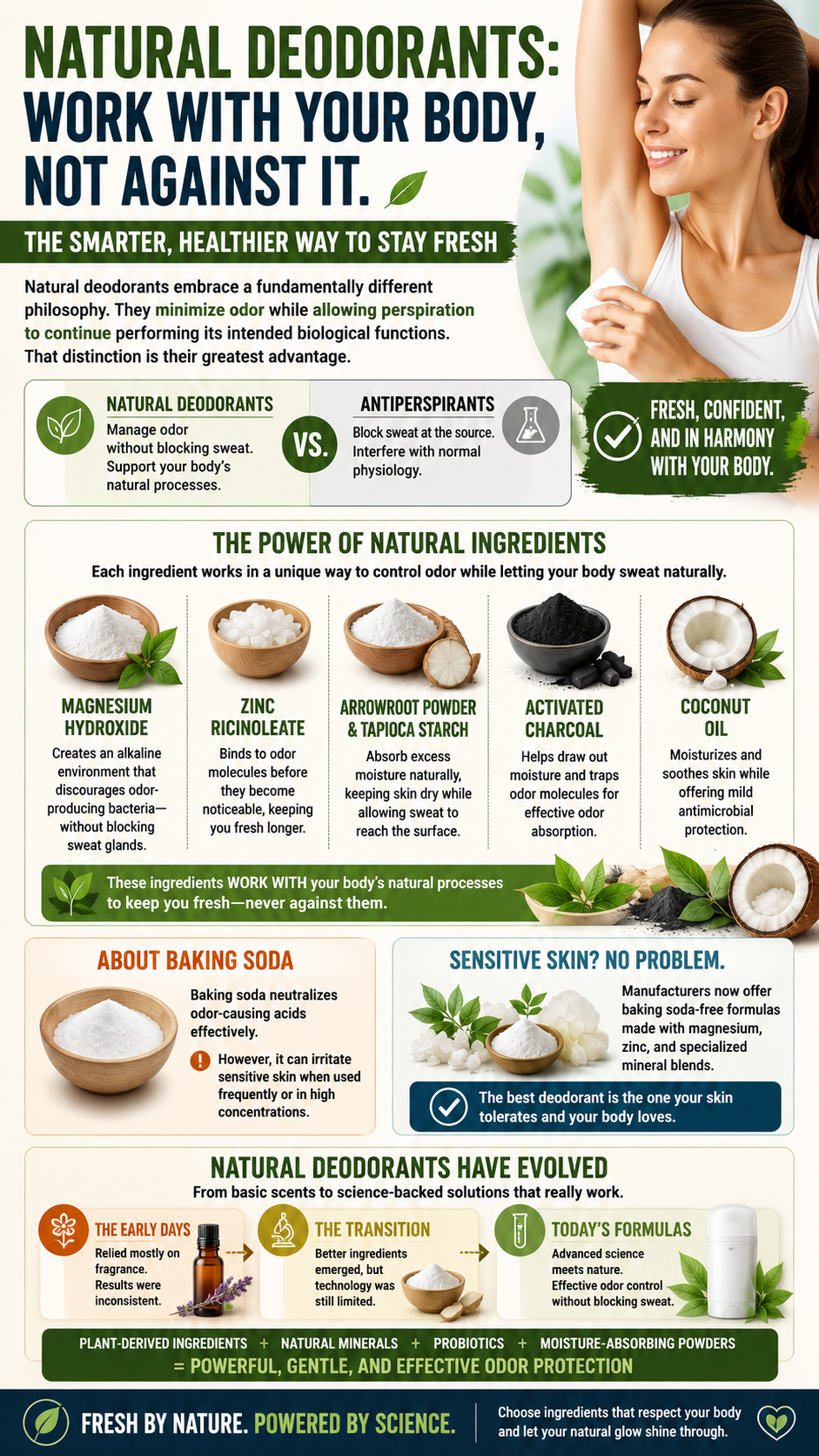
Some natural deodorants include baking soda because it effectively neutralizes odor-causing acids. Unfortunately, baking soda may irritate sensitive skin when used frequently or at high concentrations. Manufacturers increasingly recognize this limitation and now offer baking soda-free alternatives containing magnesium, zinc, or specialized mineral blends. Consumers often discover that selecting the appropriate formulation depends more upon individual skin sensitivity than marketing claims.
Perhaps the greatest misconception surrounding natural deodorants involves their effectiveness. Early formulations often disappointed consumers because they relied primarily on pleasant fragrances rather than sophisticated odor-control technology. Modern natural deodorants have evolved considerably. Advances in cosmetic science now allow manufacturers to combine plant-derived ingredients, naturally occurring minerals, probiotics, and moisture-absorbing powders into products that effectively control odor without interfering with the body’s natural cooling system.
Understanding the Transition Period
Many people abandon natural deodorants after only a few days because they believe the products failed. In reality, the body often requires time to adjust after years of relying on aluminum-based antiperspirants. Understanding this transition prevents unnecessary frustration and encourages realistic expectations.
When antiperspirants repeatedly block sweat ducts, perspiration remains partially suppressed day after day. Switching to a natural deodorant allows those glands to resume normal activity. Increased sweating during the first several weeks does not necessarily indicate that the new deodorant performs poorly. Instead, the body simply returns to its natural physiological pattern after years of chemical suppression. Most individuals notice that perspiration gradually stabilizes as the adjustment period progresses.
Changes within the underarm microbiome may also contribute to temporary increases in body odor. Different bacterial populations thrive under different environmental conditions. As sweat production normalizes and aluminum-based products disappear from the daily routine, microbial communities gradually reorganize. During this transition, odor may become temporarily stronger before healthier bacterial populations establish a more balanced ecosystem. Although researchers continue studying these microbial shifts, many dermatologists acknowledge that temporary adaptation commonly accompanies changes in personal care products.
Patience often determines success during this process. Consumers accustomed to complete dryness from clinical-strength antiperspirants should not expect identical results from products designed around entirely different biological principles. Natural deodorants aim to control odor while preserving healthy sweating. That objective differs substantially from eliminating perspiration altogether. Recognizing this distinction helps establish appropriate expectations and encourages long-term satisfaction.
Supporting the Body’s Natural Detoxification Systems
Many marketing campaigns exaggerate the concept of detoxification, promising miraculous cleansing through expensive supplements or elaborate protocols. Human physiology tells a far more impressive story. The body already possesses extraordinary detoxification systems that function continuously throughout life. The liver transforms countless compounds into forms suitable for elimination. The kidneys filter enormous volumes of blood every day. The digestive tract removes waste products, while the lungs eliminate carbon dioxide during every breath. Healthy sweating complements these systems by assisting temperature regulation and contributing modestly to the elimination of selected substances.
Supporting these natural processes begins with everyday lifestyle habits rather than dramatic interventions. Adequate hydration allows sweat glands, kidneys, and circulation to function efficiently. Regular physical activity promotes healthy perspiration while improving cardiovascular function and metabolic health. Consuming a nutrient-dense diet rich in colorful vegetables, high-quality protein, healthy fats, and antioxidant-containing foods supports the liver’s remarkable detoxification capacity. Sufficient sleep allows cellular repair processes to occur each night, while stress management reduces excessive cortisol production that may influence numerous physiological systems.
None of these habits eliminate the need for thoughtful product choices. Instead, they reinforce an important principle. Health rarely depends upon one decision alone. Every meal, every hour of sleep, every exercise session, and every personal care product contributes to a cumulative picture of wellness. Choosing a deodorant that works alongside normal physiology simply becomes one more opportunity to reduce unnecessary burdens on the body.
Practical Steps for Transitioning to a Natural Deodorant
Making the switch from a conventional aluminum-containing antiperspirant to a natural deodorant requires preparation rather than perfection. Consumers achieve the greatest success when they understand that the goal extends beyond eliminating odor. The objective involves allowing the body to resume its normal biological function while selecting products that effectively manage odor without blocking perspiration.
Begin by reading ingredient labels carefully instead of relying upon marketing language displayed on the front of the package. Many products advertised as “natural” still contain synthetic fragrances or ingredients that may irritate sensitive skin. Look for formulations featuring magnesium hydroxide, zinc ricinoleate, arrowroot powder, tapioca starch, coconut oil, or other well-recognized odor-controlling ingredients while avoiding aluminum chlorohydrate, aluminum zirconium compounds, and similar antiperspirant agents if minimizing aluminum exposure remains your goal.
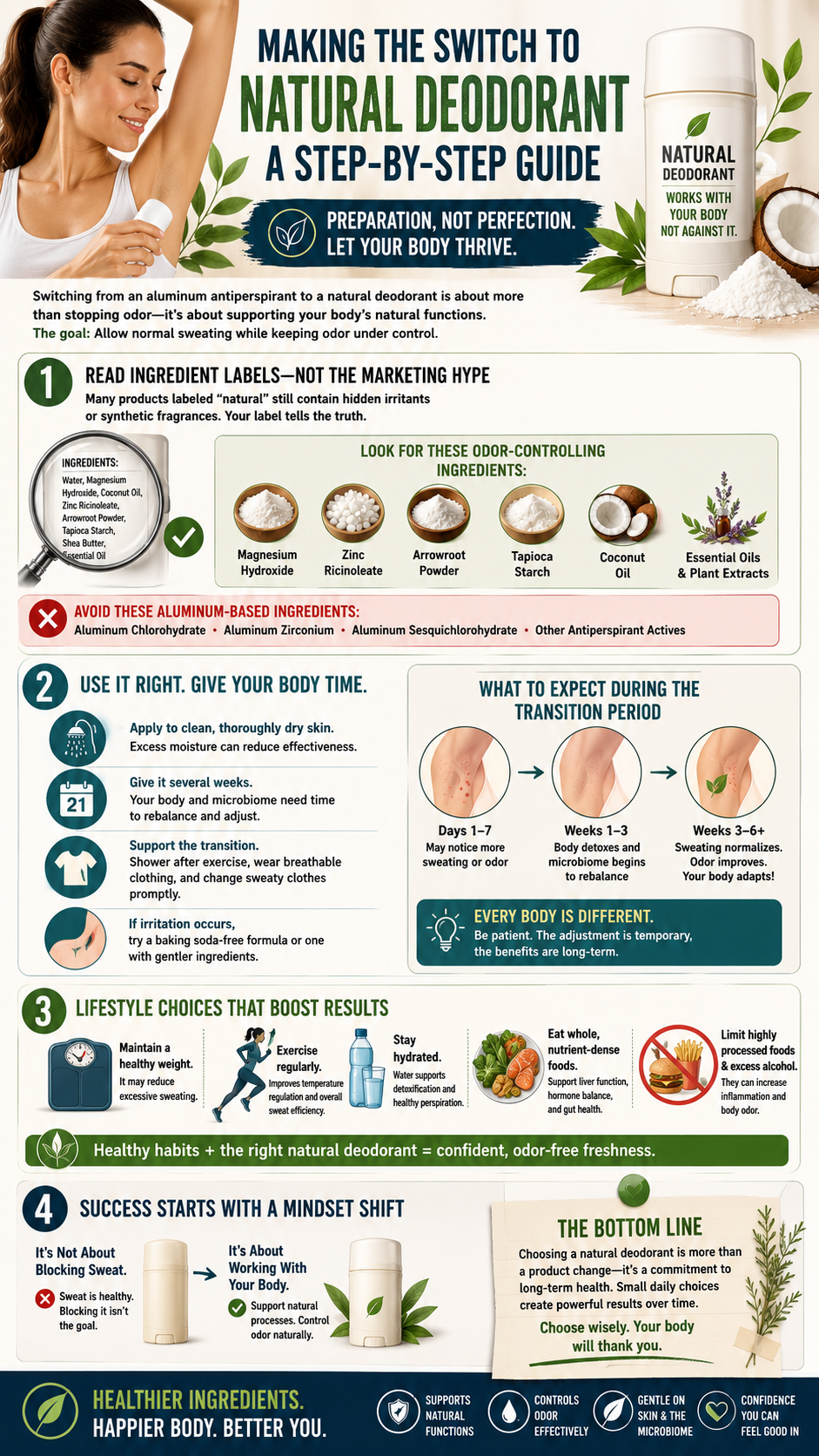
Apply natural deodorant to clean, thoroughly dry skin because excessive moisture may reduce its effectiveness. Give the product several weeks before deciding whether it works for your body. During this adjustment period, showering after exercise, changing perspiration-soaked clothing promptly, and maintaining good underarm hygiene often improve comfort while the microbiome adapts. If irritation develops, consider switching to a baking soda-free formulation rather than abandoning natural deodorants altogether because individual ingredients influence skin differently.
Lifestyle choices further enhance results. Maintaining a healthy body weight may reduce excessive sweating in some individuals. Regular exercise improves temperature regulation over time, while adequate hydration supports efficient perspiration. Limiting highly processed foods and excessive alcohol consumption may also influence body odor because metabolic byproducts enter perspiration through multiple physiological pathways. These habits do not replace deodorant, yet they frequently improve its overall performance.
A Small Daily Decision With Long-Term Implications
The average person spends more time choosing a smartphone than selecting a deodorant, despite applying that deodorant thousands of times throughout life. Daily habits deserve thoughtful consideration precisely because they become lifelong exposures. Consumers cannot control every environmental chemical they encounter, yet they retain remarkable influence over products they deliberately place on their bodies each morning.
Current scientific evidence does not prove that aluminum-containing antiperspirants directly cause diseases such as breast cancer or Alzheimer’s disease. At the same time, laboratory research continues exploring how aluminum influences oxidative stress, inflammation, and cellular function. Clinical-strength antiperspirants deserve particular attention because they generally contain greater concentrations of the very ingredient responsible for blocking sweat. Anyone seeking to reduce unnecessary aluminum exposure should understand that stronger sweat suppression usually requires more aluminum rather than less.
Natural deodorants offer an alternative philosophy rooted in respecting the body’s design instead of overriding it. They acknowledge that sweating serves important biological purposes while recognizing that body odor originates primarily from bacterial activity rather than perspiration itself. By addressing odor without obstructing sweat glands, these products allow the body to cool itself naturally while helping individuals feel confident throughout the day.
Health rarely changes because of one dramatic decision. It evolves through thousands of ordinary choices repeated over months and years. The deodorant applied every morning may seem insignificant in isolation, yet it represents one of those repeated choices. Understanding what conventional antiperspirants contain, why clinical-strength formulas deliver even more aluminum, and how natural deodorants work empowers every consumer to make that daily decision with greater knowledge, greater confidence, and a deeper appreciation for the remarkable wisdom built into the human body.