
The Invisible Light That Is Reprogramming Human Biology
There was a time when darkness carried extraordinary power. As the sun slipped below the horizon, every living creature received the same unmistakable message: slow down, repair, recover, and prepare for tomorrow. Human physiology evolved around that rhythm for hundreds of thousands of years. Every hormone, every organ, every immune cell, and every metabolic pathway synchronized itself to the rising and setting of the sun. Nature established the schedule, and the human body obeyed it with remarkable precision.
Then humanity accomplished something no previous generation had experienced. We conquered the night. Electric lights first illuminated our homes, followed by fluorescent offices, LED televisions, smartphones, tablets, laptops, gaming systems, and wearable technology. Artificial light became so common that many people now spend more time under manufactured illumination than beneath the sun itself. Although this transformation created unprecedented convenience, it also introduced a biological experiment unlike anything in human history. The body still interprets light through ancient programming, yet the environment surrounding modern life has changed completely. That mismatch has quietly become one of the greatest overlooked threats to long-term health.
Most people believe blue light simply interferes with sleep. That explanation barely scratches the surface. Sleep disruption represents only the first visible symptom of a much larger biological disturbance. Blue light alters hormonal communication, weakens mitochondrial repair, disrupts blood sugar regulation, increases oxidative stress, impairs detoxification, weakens immune coordination, and accelerates cellular aging. Functional medicine recognizes that chronic disease rarely begins where symptoms appear. Instead, illness often develops after foundational regulatory systems lose their ability to coordinate normal physiology. Circadian rhythm represents one of those foundational systems, and blue light has emerged as one of its greatest modern disruptors.
Nature’s Original Biological Clock
Long before physicians understood hormones or neuroscientists mapped the brain, nature had already designed a remarkably accurate biological clock inside every human being. Deep within the hypothalamus sits the suprachiasmatic nucleus, commonly called the SCN. Although this structure contains only about twenty thousand neurons, it functions as the master clock governing nearly every process inside the body. Rather than measuring time with gears or electronics, the SCN measures light. Every sunrise resets this internal clock, allowing thousands of biological functions to occur in the correct sequence throughout the following twenty-four hours.
Scientists once believed only the eyes detected light for vision. Research over the past two decades has completely transformed that understanding. Specialized retinal ganglion cells contain a unique pigment called melanopsin. Unlike rods and cones, these cells exist primarily to measure environmental light rather than create images. They remain especially sensitive to blue wavelengths between approximately 460 and 480 nanometers. Whenever blue light enters the eye, these cells immediately transmit signals directly to the hypothalamus. The brain never questions whether the light originated from the morning sun or an LED smartphone. It simply receives information that daylight has arrived.
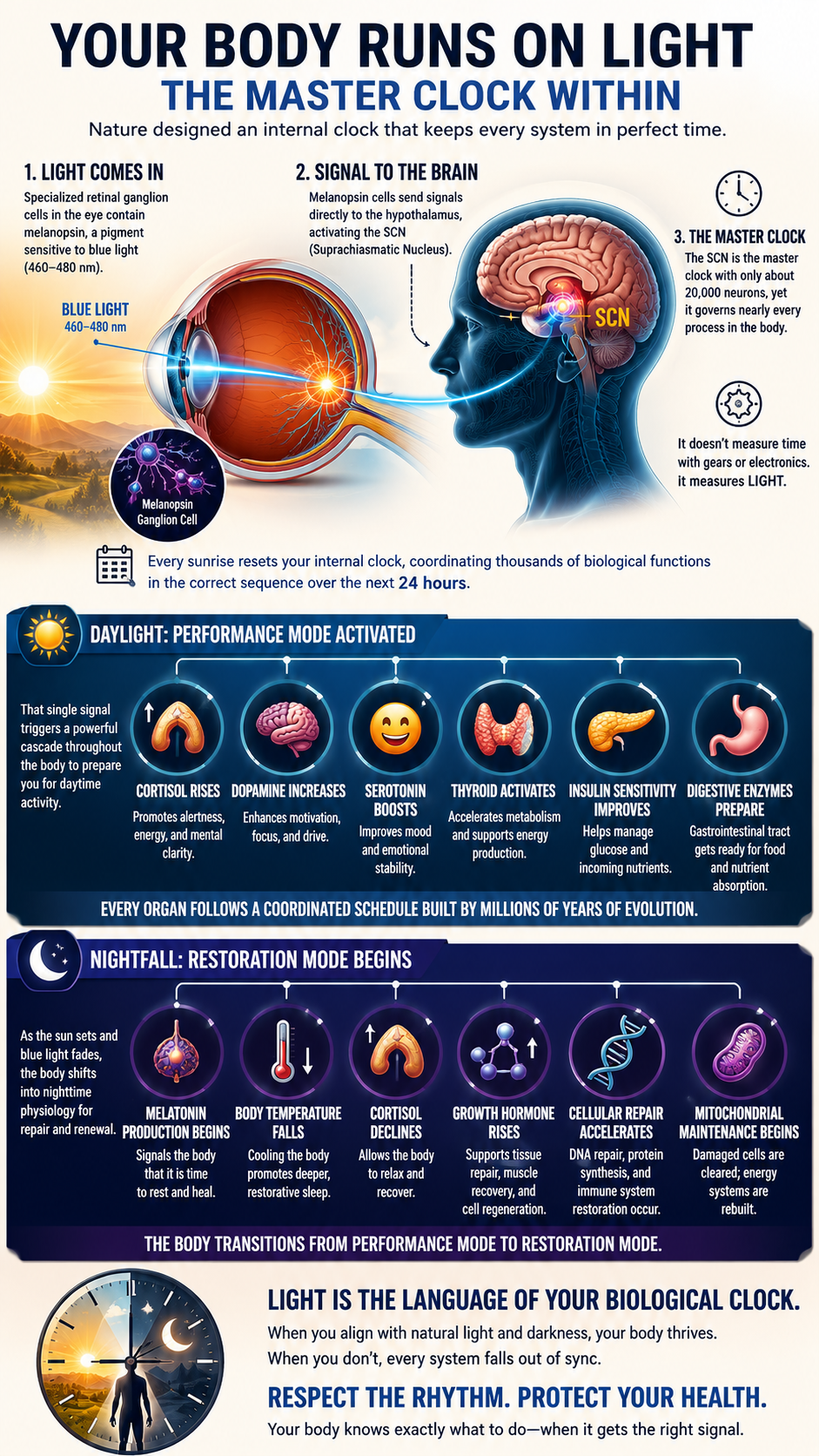
That single signal triggers an astonishing cascade throughout the body. Cortisol rises naturally, allowing healthy alertness and mental clarity. Dopamine increases to improve motivation and focus. Serotonin production becomes more efficient, supporting emotional stability throughout the day. Thyroid activity accelerates metabolism, while insulin sensitivity improves to manage incoming nutrients. Digestive enzymes prepare the gastrointestinal tract for food consumption. Every organ begins operating according to a coordinated schedule established by millions of years of evolution.
Evening should produce the opposite response. As sunlight fades, blue wavelengths disappear almost completely from the natural environment. Melanopsin activity declines, allowing the brain to initiate nighttime physiology. Melatonin production begins, body temperature gradually falls, cortisol declines, growth hormone rises, cellular repair accelerates, and mitochondrial maintenance begins. Every biological system transitions from performance mode into restoration mode. That elegant shift has sustained human survival since long before recorded history.
The Moment Modern Life Broke Evolution
Human genetics evolve over thousands of generations, yet technology changes within decades. That difference explains why modern biology struggles to adapt to artificial lighting. Until the late nineteenth century, people rarely encountered bright illumination after sunset. Firelight produced mostly red and amber wavelengths with very little blue light. Candlelight behaved similarly. Moonlight remained far too dim to suppress normal nighttime physiology. Darkness dominated the evening landscape, allowing circadian rhythms to operate exactly as nature intended.
Modern LED technology completely altered that environment. Smartphones, tablets, televisions, computer monitors, office lighting, and energy-efficient household bulbs all emit substantial amounts of blue light. Many individuals continue exposing themselves to these wavelengths until the moment they fall asleep. Some awaken during the night and immediately reach for a glowing phone, unknowingly telling the brain that morning has already arrived. Others spend entire workdays beneath fluorescent office lights before returning home to several more hours of digital entertainment. The body receives conflicting information almost continuously, making accurate circadian regulation increasingly difficult.
Evolution has not prepared humans for midnight daylight. The hypothalamus still interprets blue wavelengths exactly as it did thousands of years ago. Artificial lighting creates a false sunrise every evening, convincing the brain that repair should wait because daytime activity continues. Night after night, the body postpones restoration while continuing to expend energy. Eventually, that imbalance begins affecting virtually every organ system.
Melatonin Is Much More Than a Sleep Hormone
Most conversations about melatonin focus exclusively on sleep. That narrow perspective overlooks one of the most remarkable molecules produced within the human body. Melatonin functions as a master coordinator of nighttime repair, extending its influence far beyond simply helping someone fall asleep. Scientists have identified melatonin production not only within the pineal gland but also throughout the gastrointestinal tract, immune cells, retina, reproductive organs, bone marrow, skin, and even inside mitochondria themselves. Such widespread production reflects its extraordinary importance.
Unlike many antioxidants that remain outside cells, melatonin easily crosses cellular membranes and enters nearly every tissue. It protects DNA from oxidative injury, stabilizes mitochondrial function, reduces inflammatory signaling, supports immune communication, regulates blood pressure, influences glucose metabolism, and enhances cellular resilience against environmental stress. During healthy sleep, melatonin orchestrates countless microscopic repair processes that determine how effectively the body recovers before morning arrives.
Blue light interrupts that entire sequence. Even relatively brief exposure during the evening suppresses melatonin production by convincing the brain that daylight continues. Instead of initiating repair, the body delays restoration while maintaining physiological readiness for activity. Repeating this pattern every night gradually shifts the body toward chronic stress rather than recovery. Fatigue eventually appears, but it represents only one consequence among many.
Mitochondria Never Receive Their Maintenance Window
Every heartbeat, every breath, every muscle contraction, and every thought depends upon microscopic structures called mitochondria. Often described as cellular power plants, mitochondria convert nutrients into adenosine triphosphate, commonly called ATP. Without adequate ATP production, every tissue experiences declining performance. Functional medicine frequently identifies mitochondrial dysfunction near the beginning of chronic illness because energy production influences every biological system.
Healthy mitochondria require scheduled maintenance just as sophisticated machinery requires regular servicing. During nighttime hours, damaged proteins undergo recycling, oxidized membranes become repaired, dysfunctional mitochondria enter programmed removal through mitophagy, and healthy replacements emerge through mitochondrial biogenesis. These processes preserve efficient energy production while minimizing oxidative stress. Circadian timing determines when many of these repair mechanisms occur most effectively.
Blue light interferes with those maintenance cycles. Instead of receiving uninterrupted repair, mitochondria continue operating under signals encouraging daytime metabolism. Imagine asking an automobile engine to run continuously without ever changing the oil, replacing worn components, or cleaning accumulated debris. Mechanical efficiency would gradually decline despite continued operation. Human mitochondria respond similarly. Cellular energy decreases while oxidative stress increases, creating fertile ground for fatigue, brain fog, metabolic dysfunction, and accelerated aging.
Researchers continue discovering additional connections between circadian disruption and mitochondrial health. Numerous clock genes regulate mitochondrial enzymes responsible for energy metabolism. When artificial light disturbs those genes, ATP production becomes less efficient while reactive oxygen species accumulate more rapidly. Cells still generate energy, yet they create increasing amounts of biological wear with every passing day. That imbalance gradually contributes to chronic inflammation throughout the body.
The Brain Cleans Itself Only After Darkness Arrives
One of neuroscience’s most important discoveries emerged only recently. Researchers identified an elaborate waste removal network inside the brain known as the glymphatic system. Unlike most organs, the brain lacks traditional lymphatic drainage. Instead, cerebrospinal fluid circulates through microscopic channels surrounding neurons, washing away metabolic waste generated during waking hours. This cleansing system removes inflammatory compounds, damaged proteins, cellular debris, and potentially harmful substances before they accumulate.
Deep sleep dramatically increases glymphatic activity. During this restorative stage, brain cells shrink slightly, allowing cerebrospinal fluid to move more freely between tissues. That expansion creates an ideal environment for removing waste while delivering nutrients needed for repair. Scientists believe this nightly cleaning process plays a critical role in maintaining cognitive function throughout life.
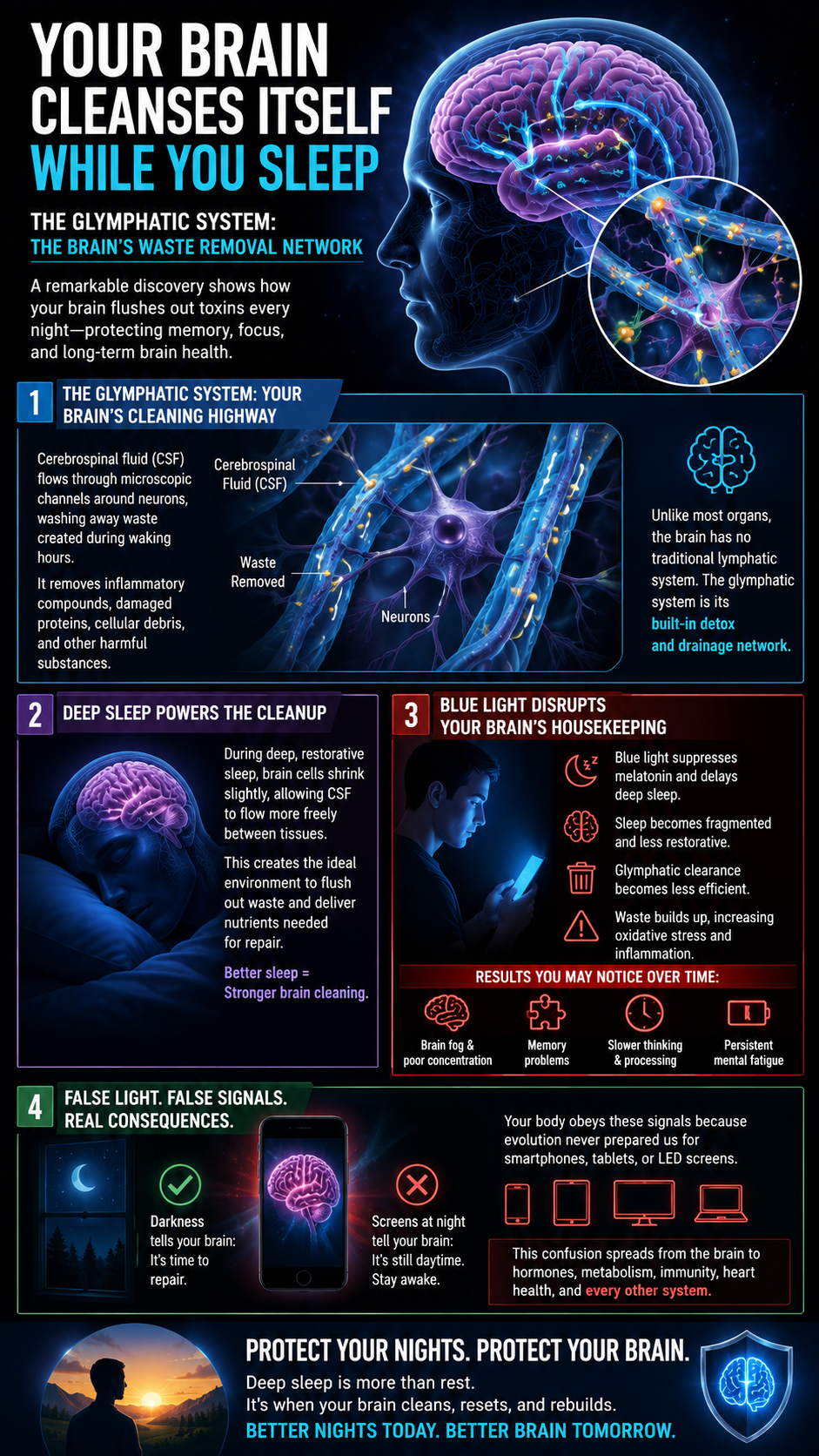
Artificial blue light undermines that biological housekeeping. Suppressing melatonin delays deep sleep while fragmenting normal sleep architecture. As restorative sleep decreases, glymphatic clearance becomes less efficient. Waste products remain inside neural tissue longer than intended, increasing oxidative stress and inflammatory signaling. Individuals often notice declining concentration, memory difficulties, slower processing speed, and persistent mental fatigue long before more serious neurological problems develop.
The damage caused by blue light does not begin with exhaustion. Instead, it begins with false information. Every evening screen tells the brain that daylight continues, even when darkness surrounds the outside world. The body faithfully obeys those signals because evolution never anticipated smartphones, tablets, or LED televisions. Over months and years, that confusion spreads from the brain into hormones, metabolism, immune regulation, cardiovascular function, and nearly every other biological system.
Reclaiming Your Biological Clock Before Chronic Disease Takes Hold
Modern medicine often treats fatigue with stimulants, insomnia with sedatives, anxiety with antidepressants, obesity with injectable medications, and diabetes with blood sugar drugs. Each treatment addresses a symptom, yet few approaches examine the environmental signals that may have contributed to those conditions in the first place. Functional medicine begins from a different perspective. Instead of asking which medication matches a diagnosis, it asks which biological systems stopped communicating correctly. Circadian rhythm frequently emerges as one of the earliest systems to lose synchronization. Blue light does not act like a poison entering the bloodstream. It acts like misinformation entering the brain. Once that misinformation reaches the body’s master clock, every downstream system begins operating with inaccurate timing.
The human body depends on timing just as much as chemistry. Hormones released at the wrong hour become less effective. Digestive enzymes secreted outside their normal schedule impair nutrient absorption. Immune cells activated during inappropriate phases promote unnecessary inflammation instead of targeted defense. Mitochondria generate energy less efficiently when clock genes lose coordination. These disruptions accumulate quietly over months and years until laboratory values begin drifting away from normal. By the time symptoms become impossible to ignore, circadian dysfunction may have existed for a decade or longer.
When the Thyroid Loses Its Rhythm
Many people associate thyroid disease with iodine deficiency or autoimmune disorders, yet thyroid physiology depends heavily upon circadian signaling. The hypothalamus, pituitary gland, and thyroid communicate continuously through carefully timed hormonal pulses. Thyrotropin-releasing hormone stimulates thyroid-stimulating hormone, which then directs the thyroid gland to produce thyroxine and triiodothyronine. That entire conversation follows predictable daily rhythms established by the brain’s master clock.
Evening blue light alters those rhythms by disrupting the normal rise of melatonin and the gradual decline of cortisol. Persistently elevated nighttime cortisol influences hypothalamic signaling while increasing sympathetic nervous system activity. Over time, this environment reduces the efficiency of hormonal communication throughout the hypothalamic-pituitary-thyroid axis. Many individuals eventually develop symptoms resembling hypothyroidism despite laboratory values remaining within broad reference ranges. They complain of cold hands, stubborn weight gain, constipation, dry skin, thinning hair, low motivation, and persistent exhaustion. Conventional testing frequently labels these patients as normal because timing disturbances often precede measurable hormone deficiencies.
Circadian disruption also influences thyroid hormone conversion inside peripheral tissues. Most thyroid hormone leaves the gland as inactive T4 before conversion into metabolically active T3. Chronic inflammation, oxidative stress, sleep deprivation, and elevated cortisol all reduce that conversion process. Blue light contributes to each of those physiological stressors, creating an environment where adequate thyroid hormone production no longer guarantees optimal thyroid function. Functional medicine recognizes that restoring circadian health frequently supports healthier endocrine communication before stronger interventions become necessary.
Blood Sugar Was Never Designed for Midnight
Metabolism follows a daily schedule as predictable as sunrise. Healthy insulin sensitivity reaches its highest point during daylight hours when human beings naturally move, hunt, gather, and consume food. Evening brings a gradual decline in glucose tolerance because the body historically prepared for fasting rather than eating. That design conserved energy during sleep while allowing nighttime repair to proceed without competing metabolic demands.
Modern lifestyles reverse that pattern almost perfectly. Dinner often becomes the largest meal of the day, followed immediately by television, computer work, or smartphone use. Artificial blue light convinces the brain that daytime continues while digestion simultaneously processes a large influx of carbohydrates. The liver, pancreas, muscles, and adipose tissue begin receiving conflicting biological instructions. Internal clocks lose synchronization, creating a phenomenon scientists call circadian misalignment.
Research consistently associates circadian misalignment with insulin resistance, elevated fasting glucose, impaired glucose tolerance, increased appetite, and progressive weight gain. Night-shift workers provide one of the clearest demonstrations of this relationship. Numerous studies report substantially higher rates of metabolic syndrome, obesity, type 2 diabetes, and cardiovascular disease among workers experiencing chronic disruption of normal light exposure. Although diet and exercise remain important, the timing of environmental light appears to influence metabolism more profoundly than many people realize.
Inflammation Never Truly Sleeps
Inflammation serves as one of the body’s most valuable defense mechanisms when activated appropriately. Following injury or infection, inflammatory cells eliminate damaged tissue before initiating healing. Problems arise when inflammation persists long after its protective role has ended. Chronic low-grade inflammation quietly damages arteries, joints, nerves, muscles, and internal organs while accelerating virtually every degenerative disease associated with aging.
Blue light contributes indirectly to this inflammatory environment through several interconnected mechanisms. Poor sleep reduces antioxidant defenses while increasing oxidative stress throughout the body. Suppressed melatonin removes one of the body’s strongest natural anti-inflammatory molecules. Mitochondrial dysfunction generates increasing numbers of reactive oxygen species. Elevated nighttime cortisol eventually disrupts immune regulation rather than supporting healthy adaptation. Collectively, these disturbances create fertile ground for persistent inflammatory signaling.
Scientists continue investigating how circadian disruption influences inflammatory gene expression. Many immune cells possess their own molecular clocks that determine when cytokines, macrophages, and lymphocytes should become most active. Artificial light exposure during nighttime hours interferes with those rhythms, potentially promoting inappropriate immune activation. Functional medicine views chronic inflammation not as an isolated disease but as a downstream consequence of disturbed biological regulation. Restoring circadian rhythm often becomes an essential step toward calming inflammatory pathways naturally.
The Heart Also Depends on Darkness
Cardiovascular health extends far beyond cholesterol levels. Healthy blood vessels follow circadian rhythms that regulate blood pressure, vascular tone, endothelial repair, and heart rate variability. During normal sleep, blood pressure falls naturally while the cardiovascular system enters a restorative phase. This phenomenon, commonly called nocturnal dipping, allows arteries to recover from the mechanical stress experienced throughout the day.
Blue light exposure before bedtime interferes with that transition. Suppressed melatonin, persistent sympathetic activation, and altered cortisol rhythms prevent complete cardiovascular relaxation. Blood pressure may remain elevated longer into the evening, while heart rate variability declines. Over many years, this persistent physiological strain contributes to endothelial dysfunction, arterial stiffness, and increased cardiovascular risk.
Large epidemiological studies consistently associate inadequate sleep with hypertension, coronary artery disease, stroke, heart failure, and cardiac arrhythmias. Sleep quality represents only one piece of that puzzle. Circadian timing appears equally important because biological repair follows a schedule that artificial light continuously interrupts. Every evening spent under bright LED illumination postpones another opportunity for vascular recovery.
Aging Accelerates When Repair Falls Behind
Every human body accumulates microscopic damage throughout daily life. Ultraviolet radiation injures DNA, metabolism generates reactive oxygen species, environmental toxins challenge detoxification systems, and normal cellular activity produces waste requiring removal. Healthy aging depends less upon avoiding all damage than upon repairing it efficiently every night.
Circadian biology governs much of that repair. DNA correction enzymes become more active during darkness. Autophagy removes dysfunctional cellular components before they create additional stress. Growth hormone stimulates tissue regeneration while melatonin protects mitochondria against oxidative injury. Together, these processes preserve resilience despite continual environmental challenges.
Artificial blue light interrupts each stage of this recovery cycle. Repair slows while damage continues accumulating. Cells gradually lose efficiency, tissues regenerate more slowly, and biological age begins advancing faster than chronological age. Researchers increasingly identify circadian disruption as a hallmark of accelerated aging because virtually every longevity pathway depends upon synchronized biological timing. Healthy aging requires more than nutritional supplementation. It requires allowing repair systems sufficient opportunity to perform their work.
Rebuilding Your Circadian Rhythm at Home
Fortunately, the same environmental signals capable of disrupting circadian biology can also restore it. Healing begins by recognizing that light functions as biological information rather than simple illumination. Every decision involving artificial light either strengthens or weakens communication between the environment and the brain’s master clock. Small daily habits gradually reshape that communication, allowing hormones, metabolism, and cellular repair to recover their natural rhythm.
Morning sunlight provides the most powerful circadian reset available. Spending twenty to thirty minutes outdoors shortly after sunrise exposes the retina to full-spectrum natural light that cannot be replicated by indoor lighting. This daily practice strengthens communication between melanopsin-containing retinal cells and the suprachiasmatic nucleus. Cortisol rises appropriately, melatonin production later improves, and the body’s internal clocks synchronize more effectively throughout the day. Even cloudy mornings provide substantially greater light intensity than typical indoor environments.
Evening habits deserve equal attention. Reducing exposure to bright LED lighting two hours before bedtime allows melatonin production to begin naturally. Dimming household lights creates an environmental signal closely resembling sunset. Warm-colored lamps, amber lighting, or candlelight produce far less circadian disruption than bright overhead LEDs. When electronic devices remain necessary, blue-light filtering software or specially designed amber glasses may reduce melanopsin stimulation. Although these tools cannot replace darkness completely, they often lessen the biological confusion created by nighttime screens.
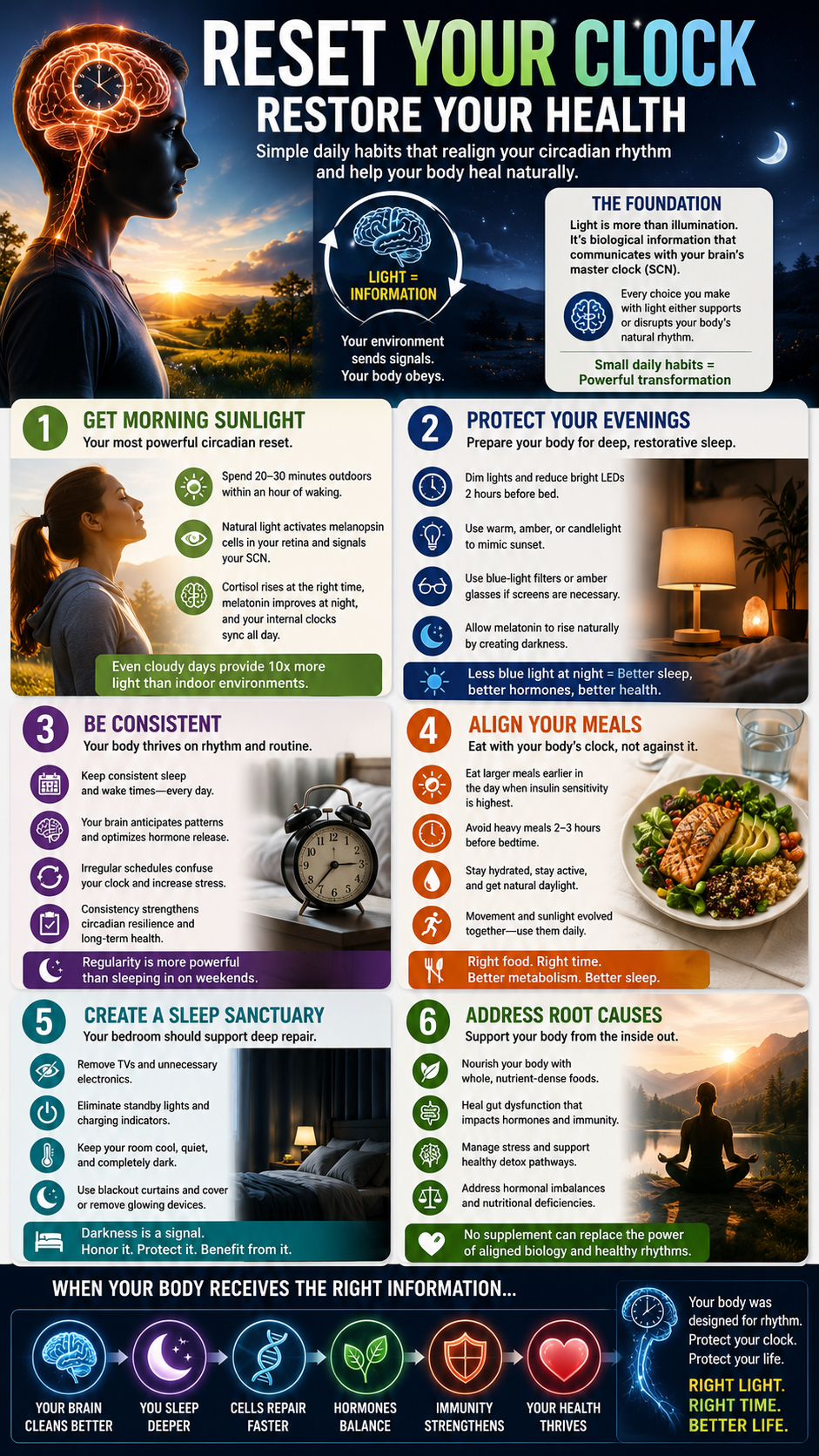
Creating consistent sleep and wake times strengthens circadian resilience more effectively than sleeping longer on weekends. The brain anticipates recurring patterns and gradually optimizes hormone release around those schedules. Irregular sleep habits repeatedly force the hypothalamus to recalibrate, weakening communication among internal clocks. Consistency allows biological systems to operate with greater precision.
Meal timing also influences circadian health. Consuming larger meals earlier in the day aligns food intake with peak insulin sensitivity. Avoiding heavy meals during the final two to three hours before bedtime reduces metabolic conflict while supporting overnight repair. Hydration, regular physical activity, and exposure to outdoor daylight further reinforce healthy circadian signaling because movement evolved alongside sunlight rather than artificial illumination.
Bedrooms should become sanctuaries for biological recovery. Removing televisions, minimizing electronic devices, eliminating standby indicator lights, and keeping the room cool and completely dark encourage deeper restorative sleep. Even small sources of nighttime light may influence sensitive individuals by reducing melatonin secretion. Blackout curtains, covered electronic displays, and the absence of glowing screens create an environment closely resembling the darkness under which human physiology evolved.
Functional medicine also recognizes the importance of addressing nutritional deficiencies, chronic stress, gut dysfunction, toxic burden, and hormonal imbalances that may accompany circadian disruption. Nevertheless, no supplement can fully overcome nightly exposure to inappropriate artificial light. Restoring environmental signals must remain the foundation upon which other therapies build. Once the brain receives accurate information about day and night, every downstream repair system gains an opportunity to function more efficiently.
Returning to the Rhythm That Built Human Health
Blue light itself is not the enemy. Morning sunlight contains abundant blue wavelengths because human biology depends upon them to awaken the brain and organize daytime physiology. The problem begins when technology extends that daylight deep into the hours reserved for restoration. Evolution programmed the human body to alternate between activity and recovery, light and darkness, performance and repair. Modern life has blurred those boundaries so completely that millions of people no longer experience true biological night.
Chronic disease rarely appears overnight. It develops gradually as countless small disruptions accumulate faster than the body can repair them. Blue light represents one of those seemingly insignificant influences that quietly affects nearly every organ system through the common language of circadian biology. Protecting your biological clock does not require abandoning technology or living by candlelight. It requires respecting the rhythms that shaped human physiology long before electricity transformed the modern world.
When darkness once again signals healing instead of endless stimulation, the body remembers what it has always known how to do. Hormones regain their rhythm. Mitochondria restore their efficiency. The brain cleans itself more effectively. Inflammation begins to quiet. Energy gradually returns. Sleep deepens. Recovery accelerates. Health rarely depends upon one dramatic intervention. More often, it emerges when the body receives the correct information at the correct time, allowing the remarkable design of human biology to perform exactly as it was created to do.