When the Medication Ends but the Nightmare Begins
For many people, the decision to stop an antidepressant is supposed to represent the beginning of healing. Depression has improved. Anxiety feels manageable. Life is finally moving forward. The prescription bottle that once symbolized hope is now expected to become unnecessary. Yet for countless individuals, the weeks and months after discontinuing an SSRI become something entirely unexpected. Instead of freedom, they encounter dizziness that seems impossible to describe, electric shock sensations shooting through their heads, crushing fatigue, panic attacks they never had before, insomnia, digestive problems, emotional numbness, or waves of despair so overwhelming they fear they are losing their minds.
Many are told these symptoms simply mean their depression has returned. Others hear that withdrawal only lasts a few days and that anything beyond that must be psychological. This explanation often leaves patients feeling confused because the timing does not fit their experience. Someone who felt emotionally stable while tapering suddenly finds themselves unable to think clearly three weeks later. Another person develops symptoms months after stopping the medication altogether. Friends, family members, and even healthcare providers may dismiss what they are experiencing because conventional education has historically underestimated how profoundly selective serotonin reuptake inhibitors can influence the brain’s adaptive systems.
This is where a functional medicine perspective becomes valuable. Rather than assuming every symptom represents the return of the original illness, functional practitioners ask a different series of questions. What changes occurred inside the nervous system during years of medication use? How did neurotransmitter receptors adapt? What nutrients became depleted? What happened to mitochondrial energy production? Did chronic inflammation or intestinal dysfunction interfere with neurotransmitter production? Is the brain now struggling to restore its own internal balance after relying on an outside chemical influence?
These questions recognize a basic biological principle. Every system in the human body adapts to its environment. The brain is no exception. Whenever a medication changes neurotransmitter activity over months or years, the nervous system responds by altering receptor density, enzyme activity, transport proteins, inflammatory pathways, and even gene expression. These adaptations are not evidence of permanent damage. Instead, they represent the remarkable flexibility of the human brain. The challenge arises when the medication is removed faster than the nervous system can readjust.
Understanding this process offers hope. Recovery is not simply about enduring symptoms until they disappear. It is about creating the biological environment that allows neurons to rebuild healthy communication, restore natural neurotransmitter production, repair cellular membranes, reduce inflammation, improve energy metabolism, and gradually re-establish equilibrium. The brain possesses extraordinary capacity for healing when given the nutrients, lifestyle support, and time necessary for recovery.
Understanding What SSRIs Actually Do
Selective serotonin reuptake inhibitors are often described in remarkably simple terms. Patients are commonly told that depression results from low serotonin and that SSRIs increase serotonin levels by preventing its reabsorption. While this explanation is easy to understand, neuroscience now recognizes that the reality is considerably more complex.
SSRIs do not manufacture serotonin. Instead, they inhibit the serotonin transporter, commonly abbreviated SERT, which normally removes serotonin from the synaptic space after it has transmitted a signal. Blocking this transporter allows serotonin to remain available longer between neurons. Initially, this creates increased serotonin signaling. However, the brain is not a passive organ. It continually monitors neurotransmitter activity and adjusts accordingly.
When serotonin remains elevated for prolonged periods, neurons frequently reduce the sensitivity or number of serotonin receptors through a process known as downregulation. Imagine living beside railroad tracks. During the first few weeks, every passing train feels loud and disruptive. After several years, your brain learns to ignore much of the noise. The sound has not necessarily become quieter. Your nervous system has simply adapted to constant stimulation.
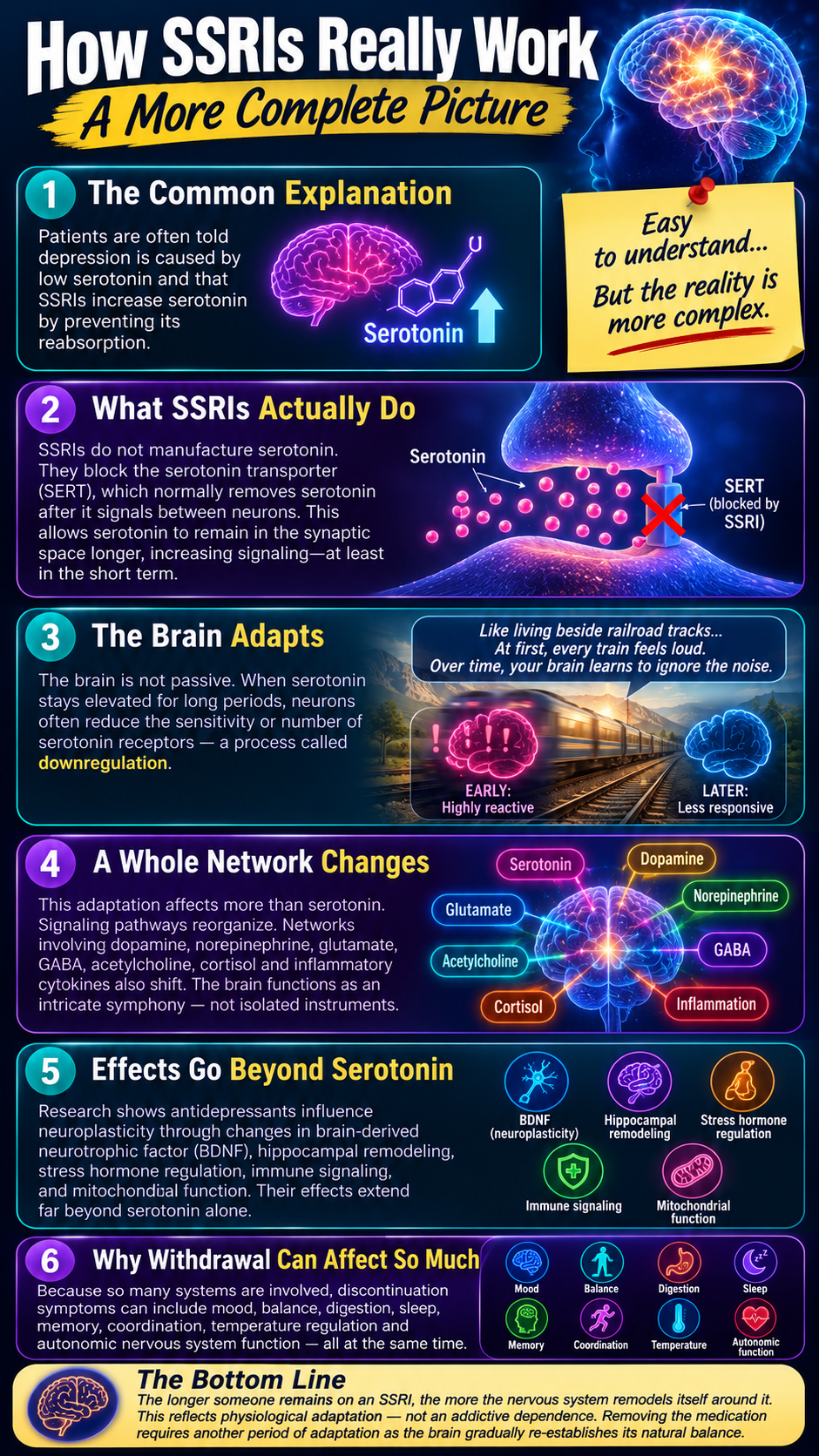
The same adaptive principle applies to neurotransmitters. Receptors change their responsiveness. Signaling pathways reorganize themselves. Networks involving dopamine, norepinephrine, glutamate, GABA, acetylcholine, cortisol, and inflammatory cytokines also shift because none of these systems operate independently. The brain functions as an intricate symphony rather than isolated instruments.
Research over the past two decades has demonstrated that antidepressants also influence neuroplasticity through changes in brain-derived neurotrophic factor (BDNF), hippocampal remodeling, stress hormone regulation, immune signaling, and mitochondrial function. Their effects extend far beyond serotonin alone. This helps explain why discontinuation symptoms can involve mood, balance, digestion, sleep, memory, coordination, temperature regulation, and autonomic nervous system function simultaneously.
The longer an individual remains on therapy, the more opportunity the nervous system has to remodel itself around the medication. That does not imply dependence in the traditional sense associated with addictive substances. Instead, it reflects physiological adaptation. The brain has established a new equilibrium while the medication remains present. Removing that influence requires another period of adaptation as normal regulatory mechanisms gradually resume responsibility.
The Hidden Biology Behind Withdrawal Symptoms
One of the most frustrating aspects of SSRI withdrawal is that symptoms often appear unrelated. A person may experience dizziness one hour, anxiety the next, gastrointestinal distress after lunch, insomnia overnight, and overwhelming emotional sensitivity the following morning. At first glance these seem like unrelated conditions. From a neurological standpoint, however, they reflect the widespread influence serotonin exerts throughout the body.
Approximately 90 percent of the body’s serotonin is produced within specialized cells lining the gastrointestinal tract, although the serotonin that functions in the gut does not directly cross into the brain. Even so, serotonin participates in regulating intestinal motility, communication between the gut and nervous system, immune responses, platelet function, and numerous autonomic processes. When serotonin signaling changes, effects may appear throughout multiple organ systems simultaneously.
Another phenomenon commonly reported during withdrawal involves “brain zaps,” described as sudden electrical sensations or brief shock-like feelings inside the head. Although researchers have not established a definitive mechanism, hypotheses include abrupt alterations in neuronal firing patterns, vestibular processing, membrane excitability, and serotonin-mediated signaling within sensory pathways. These symptoms illustrate how rapidly changing neurotransmitter activity can temporarily disrupt coordinated communication among neuronal networks.
Withdrawal also activates the stress response. Cortisol rhythms frequently become dysregulated, sympathetic nervous system activity increases, and sleep architecture deteriorates. Once sleep becomes fragmented, recovery slows further because the deepest stages of sleep support glymphatic clearance, synaptic remodeling, hormone production, and memory consolidation. In other words, one of the brain’s primary repair mechanisms becomes impaired precisely when healing is needed most.
Inflammation represents another overlooked contributor. Chronic psychological stress, processed food consumption, blood sugar instability, environmental toxin exposure, intestinal permeability, infections, and obesity can all elevate inflammatory cytokines that influence neurotransmitter metabolism. These inflammatory molecules alter the conversion of tryptophan away from serotonin production and toward the kynurenine pathway, generating metabolites that may contribute to fatigue, cognitive dysfunction, and mood disturbances.
At the cellular level, mitochondria also deserve attention. Every neuron requires extraordinary amounts of ATP to maintain electrical gradients, manufacture neurotransmitters, recycle synaptic vesicles, and repair cellular structures. Mitochondrial dysfunction reduces the energy available for these demanding tasks. During withdrawal, when neurons are attempting to establish new signaling patterns, energy requirements likely increase further. Supporting mitochondrial health therefore becomes an important consideration in comprehensive recovery strategies.
None of these mechanisms suggest that recovery is impossible. Quite the opposite. They reveal numerous biological targets that can be supported through nutrition, lifestyle modification, correction of deficiencies, management of inflammation, restoration of circadian rhythm, physical activity, stress reduction, and individualized functional medicine interventions. Rather than viewing withdrawal as an unpredictable mystery, these mechanisms provide a roadmap for understanding what the nervous system is attempting to accomplish.
Recovery Begins by Rebuilding the Brain’s Foundation
Healing from SSRI withdrawal is rarely accomplished by focusing on serotonin alone. Neurotransmitters require amino acids, vitamins, minerals, healthy fats, adequate sleep, stable blood sugar, resilient mitochondria, healthy intestinal function, and balanced inflammatory signaling to operate efficiently. If these foundational systems remain compromised, the brain must rebuild itself with inadequate materials.
The first priority is nutritional sufficiency. Protein provides amino acids such as tryptophan and tyrosine, which serve as building blocks for several neurotransmitters. B vitamins—including B6, folate, and B12—participate in methylation and neurotransmitter synthesis. Magnesium influences hundreds of enzymatic reactions involved in neuronal signaling while also supporting relaxation and sleep quality. Zinc, selenium, vitamin D, omega-3 fatty acids, and iron each contribute unique roles in neurological function.
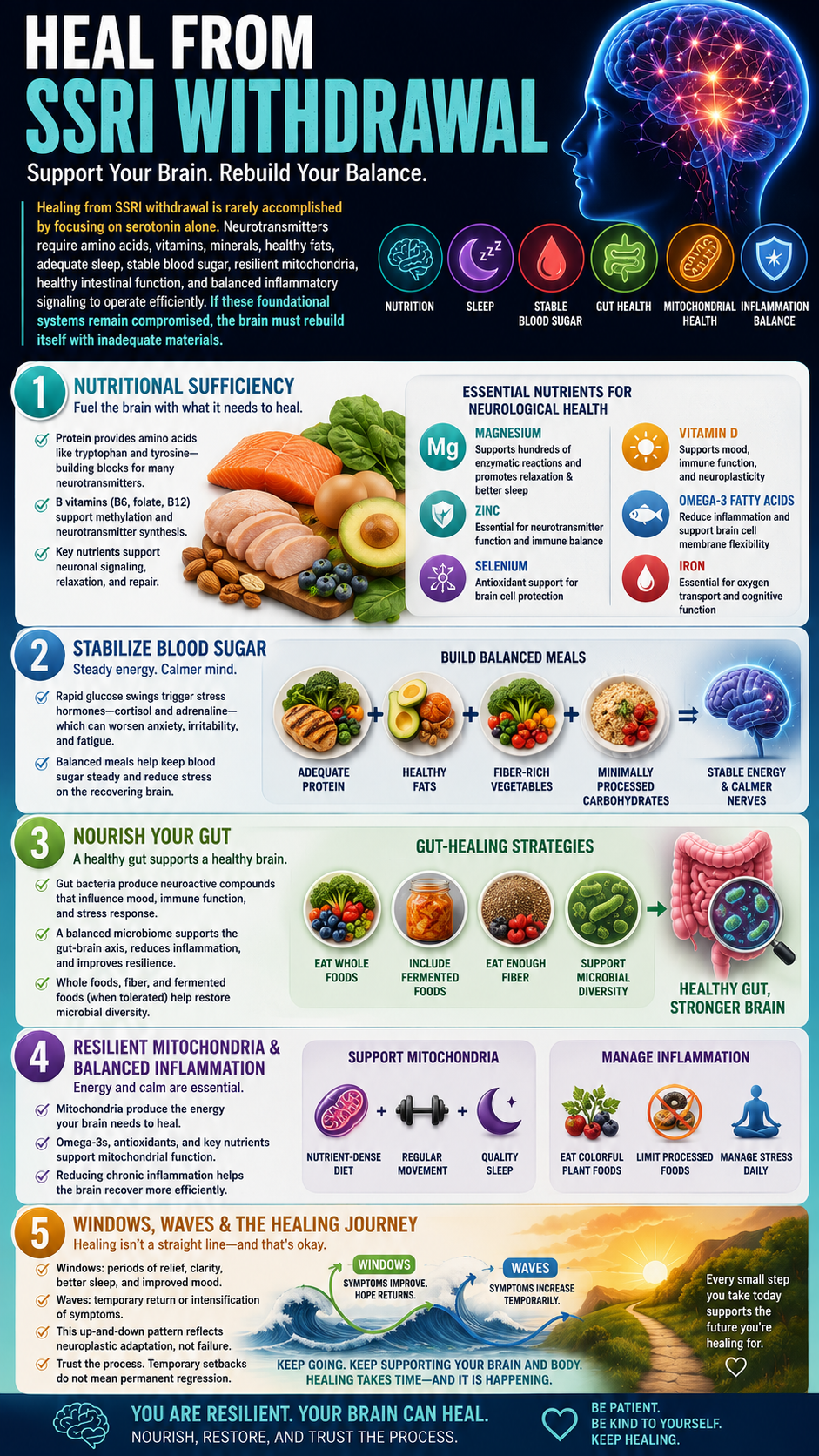
Equally important is stabilizing blood glucose. Rapid swings in glucose trigger stress hormone release, increasing cortisol and adrenaline precisely when the recovering nervous system is attempting to regain balance. Meals emphasizing adequate protein, healthy fats, fiber-rich vegetables, and minimally processed carbohydrates often produce more stable energy throughout the day while reducing unnecessary stress on the brain.
The intestinal microbiome also deserves careful attention because gut microorganisms produce numerous neuroactive compounds while influencing immune activity, intestinal permeability, inflammation, and communication along the gut-brain axis. Restoring microbial diversity through whole foods, fermented foods when tolerated, adequate fiber, and individualized nutritional strategies may contribute to improved neurological resilience over time.
Finally, patients should remember that healing rarely follows a straight line. Many individuals experience what withdrawal communities describe as “windows and waves.” During windows, symptoms improve dramatically. During waves, symptoms temporarily intensify before gradually subsiding again. This fluctuating pattern reflects ongoing neuroplastic adaptation rather than failure. Appreciating this natural rhythm often reduces fear and helps patients recognize that temporary setbacks do not necessarily indicate permanent regression.
Rebuilding the Brain After SSRI Withdrawal
Understanding what happens during SSRI withdrawal is only half of the story. The next question is the one nearly everyone asks: “What can I do to help my brain recover?” While no supplement, diet, or therapy has been proven to eliminate SSRI withdrawal in every person, neuroscience has repeatedly shown that the brain is remarkably adaptable. Through a process known as neuroplasticity, neurons continually form new connections, strengthen existing pathways, and adjust their communication in response to nutrition, sleep, movement, stress, and the surrounding environment.
Rather than searching for a single miracle cure, the goal is to create the healthiest possible internal environment while the nervous system gradually re-establishes its own balance. The brain may have spent months or years adapting to the presence of an SSRI, and reversing those changes is rarely immediate. The medication, dose, length of use, tapering speed, genetics, age, overall health, and coexisting conditions may all influence the recovery process. Some people improve within weeks, while others require months before they begin feeling like themselves again.
Nutritional Building Blocks for Neurotransmitter Repair
Neurotransmitters do not appear out of nowhere. The body manufactures them from amino acids, vitamins, minerals, and other nutritional cofactors. Serotonin is synthesized from tryptophan, while dopamine and norepinephrine are produced from tyrosine. These pathways also depend on nutrients such as vitamin B6, folate, vitamin B12, iron, copper, magnesium, and vitamin C.
At home, one of the most practical steps is to include a high-quality protein source at each meal. Fish, poultry, eggs, beef, lentils, beans, and other tolerated protein sources provide the amino acids the nervous system uses for repair and normal neurotransmitter production. This does not mean that eating more tryptophan automatically produces more serotonin. Neurotransmitter regulation is far more complex. However, inadequate protein intake can deprive the body of the raw materials it needs to function normally.
A nutrient-dense diet should also reduce dependence on ultra-processed foods, refined sugar, and heavily processed oils. These foods may worsen inflammation, destabilize energy, and crowd out foods that supply the nutrients required for neurological recovery. Meals built around protein, natural fats, vegetables, berries, herbs, and minimally processed foods provide a more stable nutritional foundation.
Blood Sugar Stability and the Stress Response
Blood sugar swings can mimic or intensify many symptoms associated with withdrawal. When glucose drops rapidly, the body releases adrenaline and cortisol to restore balance. That stress response may produce shakiness, racing thoughts, sweating, irritability, palpitations, dizziness, and a sudden sense of panic.
To reduce these fluctuations, meals should contain protein, healthy fats, and fiber rather than refined carbohydrates alone. Someone who begins the morning with a pastry and coffee may experience a rapid glucose rise followed by a crash several hours later. In contrast, a breakfast containing eggs, avocado, vegetables, or another protein-based meal may provide steadier energy.
Hydration also matters. Even mild dehydration can contribute to headaches, fatigue, dizziness, and poor concentration. Drinking water consistently throughout the day and maintaining adequate electrolytes through food may help reduce symptoms that can otherwise be mistaken for worsening withdrawal.
Omega-3 Fatty Acids and Neuronal Membranes
The brain is rich in fat, and the membranes surrounding neurons depend heavily on fatty acids for structure and flexibility. Omega-3 fatty acids, particularly DHA and EPA, support membrane function, inflammatory balance, and communication between nerve cells.
Omega-3 supplements have not been proven to treat SSRI withdrawal, but adequate intake supports overall neurological health. Fatty fish such as salmon, sardines, trout, anchovies, and mackerel are among the best food sources. Eating these foods several times each week may help supply the fats used to maintain healthy brain-cell membranes.
People considering concentrated fish-oil supplements should discuss them with a qualified clinician, especially if they take blood-thinning medication, have a bleeding disorder, or are preparing for surgery. More is not always better, and supplements should never replace a nutrient-dense diet.
Sleep as the Brain’s Repair Window
Sleep may be one of the most important tools available during neurological recovery. During deep sleep, the brain consolidates memories, regulates hormones, clears metabolic waste, and remodels neural connections. Unfortunately, insomnia, vivid dreams, frequent waking, and early-morning anxiety are common during antidepressant withdrawal.
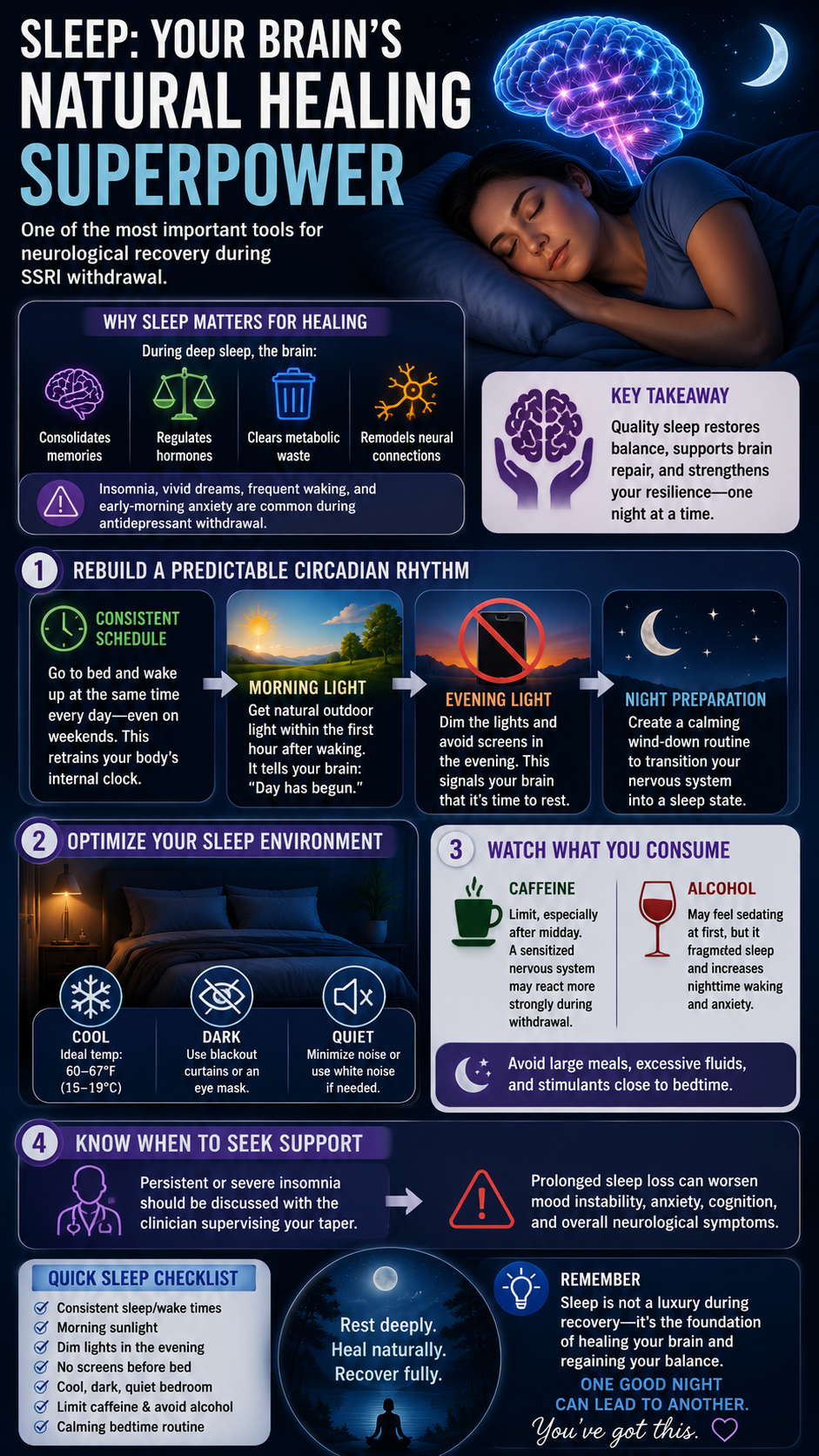
The most effective at-home strategy is to rebuild a predictable circadian rhythm. Going to bed and waking at the same time every day helps retrain the body’s internal clock. Natural outdoor light within the first hour after waking sends a strong signal to the brain that the day has begun. Reducing bright light and screen exposure during the evening sends the opposite signal, preparing the nervous system for sleep.
The bedroom should be cool, dark, and quiet. Caffeine should be limited, particularly after midday, because a sensitized nervous system may react more strongly than it did before withdrawal. Alcohol may initially feel sedating, but it often fragments sleep and increases nighttime waking. Persistent or severe insomnia should be discussed with the clinician supervising the taper because prolonged sleep loss can worsen mood instability and neurological symptoms.
Healing the Gut-Brain Connection
The digestive tract and the brain communicate continuously through the vagus nerve, immune signaling, hormones, and microbial metabolites. This relationship is known as the gut-brain axis. Although gut serotonin does not directly enter the brain, intestinal health still influences inflammation, stress regulation, nutrient absorption, and immune activity.
At home, gut support begins with whole foods and dietary variety. Vegetables, berries, herbs, legumes when tolerated, fermented foods, and naturally fiber-rich foods can help support microbial diversity. Some individuals tolerate fermented foods well, while others experiencing histamine sensitivity may temporarily feel worse after eating them. The correct approach should therefore be individualized.
Persistent constipation, diarrhea, reflux, bloating, abdominal pain, or food intolerance should not automatically be blamed on withdrawal. These symptoms may reveal a separate digestive problem that deserves evaluation. Supporting the gut is valuable, but broad claims that one probiotic or one cleanse can reset the brain should be viewed with caution.
Movement, BDNF, and Neuroplasticity
Physical activity is one of the most consistently supported ways to promote brain health. Exercise improves circulation, supports mitochondrial function, reduces inflammation, and stimulates brain-derived neurotrophic factor, often called BDNF. This protein helps neurons adapt, form connections, and maintain resilience.
During withdrawal, however, intense exercise may be too stimulating. A person who previously tolerated strenuous workouts may temporarily experience dizziness, anxiety, fatigue, or symptom flares after overexertion. The solution is not necessarily to stop moving, but to reduce the intensity.
Walking, gentle cycling, light resistance training, stretching, yoga, swimming, and tai chi may be better starting points. Ten minutes of movement performed consistently may be more beneficial than an exhausting workout followed by several days of recovery. The goal is to stimulate the nervous system without overwhelming it.
Calming an Overactive Stress Response
SSRI withdrawal may leave the autonomic nervous system unusually reactive. Minor stressors can trigger disproportionate anxiety, irritability, palpitations, or a sense of impending danger. These reactions may feel psychological, but they can also reflect a nervous system that has temporarily lost flexibility.
Slow diaphragmatic breathing is one of the simplest techniques to practice at home. Breathing gently through the nose, expanding the abdomen, and extending the exhalation may help reduce sympathetic activation. Prayer, meditation, journaling, gentle stretching, quiet music, and time outdoors may also help reinforce a sense of safety.
Social connection is equally important. Withdrawal often creates isolation because symptoms can be difficult to explain. Staying connected with trusted friends, family members, counselors, or support groups can reduce fear and provide perspective during difficult periods. The nervous system often regulates more effectively when a person feels supported rather than alone.
Laboratory Testing and Hidden Barriers to Recovery
No laboratory test can confirm SSRI withdrawal, but testing may uncover other conditions that intensify symptoms. Fatigue, depression, brain fog, anxiety, and poor sleep can also be associated with anemia, iron deficiency, thyroid dysfunction, vitamin B12 deficiency, folate deficiency, vitamin D deficiency, glucose dysregulation, or electrolyte abnormalities.
A functional evaluation may also consider inflammation, digestive function, nutrient status, and other contributing factors based on the individual’s history. Testing should be targeted rather than indiscriminate. The purpose is not to order every available laboratory panel, but to identify correctable problems that may be slowing recovery.
Correcting a genuine deficiency can support overall brain health, but supplementing without evidence may create new problems. Iron, vitamin B6, and other nutrients can become harmful in excessive amounts. Laboratory findings should therefore be interpreted in the context of symptoms, history, and clinical judgment.
Tracking Windows, Waves, and Gradual Progress
Recovery from SSRI withdrawal is rarely linear. Many people experience periods of improvement followed by temporary setbacks. These shifts are often described as “windows and waves.” During a window, sleep improves, anxiety eases, and thinking becomes clearer. During a wave, symptoms may return for several days or weeks before settling again.
Keeping a daily journal can help reveal progress that is otherwise difficult to notice. Record sleep quality, meals, hydration, movement, stress levels, medication changes, and major symptoms. Over time, patterns may emerge. A person may discover that poor sleep, skipped meals, excessive caffeine, alcohol, or intense exercise consistently precedes symptom flares.
The journal also provides useful information for the clinician overseeing the taper. More importantly, it helps the patient see that a difficult day does not erase weeks of progress. Healing often happens gradually, with small improvements that only become obvious when viewed over time.
A Foundation for Long-Term Neurological Recovery
The brain remains one of the most adaptable organs in the body. It continuously remodels neural pathways, changes receptor sensitivity, repairs cellular structures, and responds to its environment. Withdrawal can be frightening because symptoms may feel unpredictable, but unpredictability does not mean the brain is permanently damaged.
A home-based recovery plan should focus on the fundamentals: nutrient-dense food, adequate protein, stable blood sugar, hydration, healthy fats, consistent sleep, gentle movement, stress regulation, digestive support, and meaningful social connection. These strategies cannot guarantee a symptom-free recovery, but they can reduce avoidable stress on the nervous system and support the biological processes involved in healing.
SSRI tapering should always be individualized and coordinated with the prescribing clinician. Abrupt discontinuation can produce severe symptoms, and anyone experiencing suicidal thoughts, extreme agitation, mania, confusion, inability to sleep for several nights, or rapidly worsening symptoms should seek urgent medical help. With patience, appropriate supervision, and consistent support, many people gradually regain emotional stability, clearer thinking, restorative sleep, and confidence as the nervous system establishes a healthier equilibrium.