
Imagine beginning every morning with a ritual designed to help you look healthier. You step into the bathroom and reach for shampoo, conditioner, body wash, lotion, deodorant, perfume, makeup, hairspray, and toothpaste. Each product promises beauty, confidence, or freshness. Hidden beneath those promises often lies a group of chemicals that few consumers recognize and even fewer understand. Those chemicals are called phthalates, and they have quietly become one of the most widespread sources of daily chemical exposure in modern life.
Cosmetics have evolved dramatically during the past century. Manufacturers no longer rely solely on natural oils, beeswax, herbal extracts, and mineral pigments. Today’s beauty industry uses thousands of synthetic ingredients that improve texture, preserve fragrance, increase flexibility, and extend shelf life. Among those ingredients, phthalates have played an important role because they help fragrances last longer, prevent nail polish from cracking, and improve the consistency of lotions and creams. Their usefulness to manufacturers has also created an unintended consequence for consumers. Millions of people apply hormone-disrupting chemicals directly onto their skin every single day without realizing it.
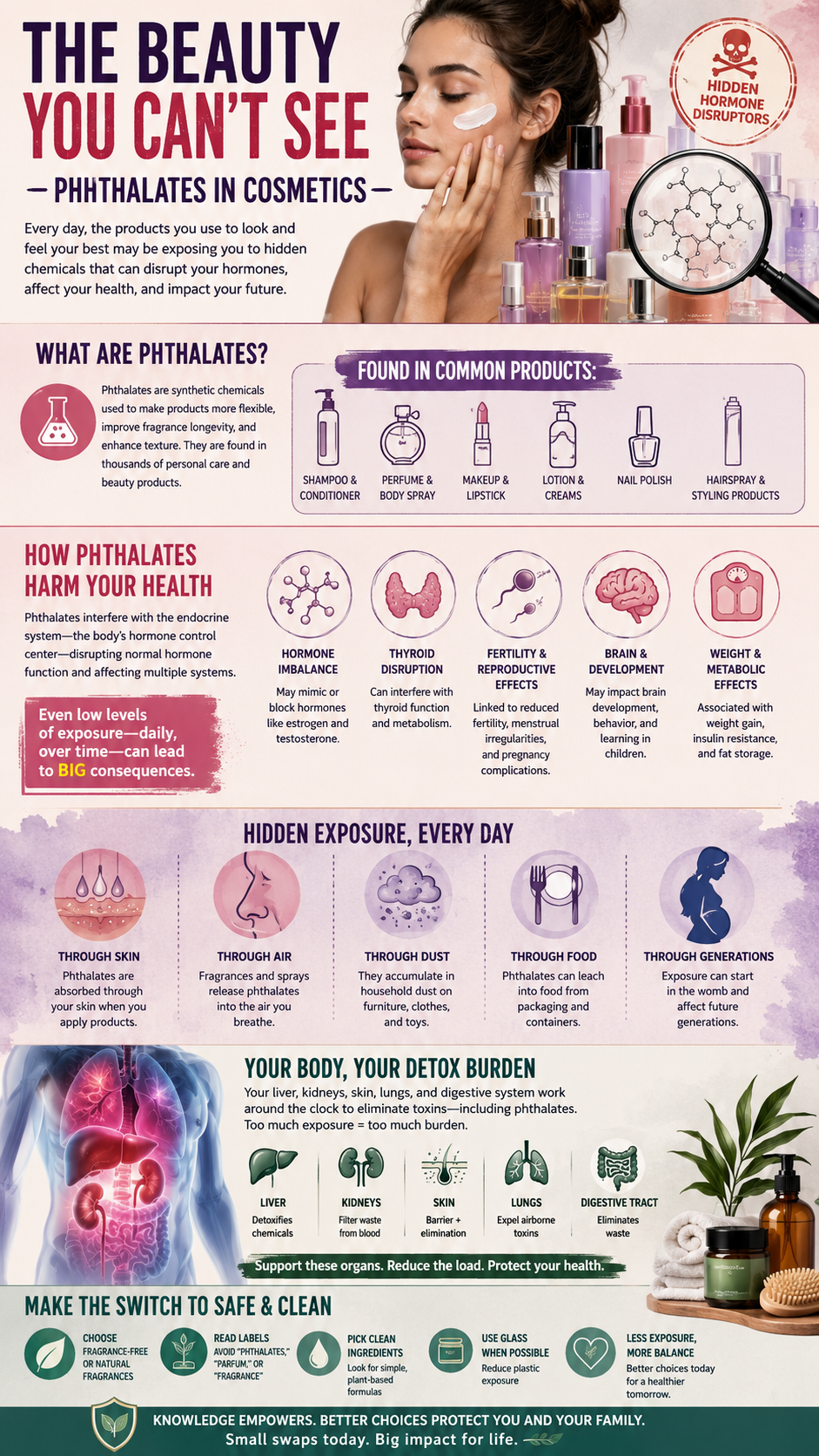
The concern surrounding phthalates extends far beyond cosmetic chemistry. Researchers have spent decades examining how these compounds interact with the endocrine system, the body’s intricate network of hormone-producing glands. Hormones regulate nearly every biological process, including metabolism, fertility, thyroid function, mood, growth, sleep, and aging. Even slight disruptions within this system can create widespread physiological changes because hormones function as powerful chemical messengers that coordinate communication throughout the body.
Understanding the true impact of phthalates requires looking beyond the cosmetic aisle. These chemicals represent a much larger story about environmental toxins, industrial manufacturing, and the growing burden placed upon human detoxification systems. While genetics influence health, environmental exposures often determine whether those genetic tendencies become reality. Every lotion, perfume, shampoo, lipstick, and body spray contributes another layer to the chemical load that the liver, kidneys, digestive tract, lungs, and skin must process daily.
Fortunately, knowledge empowers better decisions. Consumers cannot eliminate every environmental toxin, yet they can dramatically reduce exposure by understanding where phthalates hide, how they affect human physiology, and which safer alternatives deserve a permanent place inside the bathroom cabinet.
What Are Phthalates?
Phthalates are synthetic chemicals primarily used as plasticizers. Manufacturers originally developed them to make rigid plastics softer, stronger, and more flexible. Over time, scientists discovered additional industrial applications that extended well beyond plastics. Cosmetic companies soon realized these compounds could stabilize fragrances, improve product spreadability, prevent cracking, and increase durability.
Several phthalates commonly appear in personal care products. Diethyl phthalate frequently appears in perfumes and scented cosmetics because it helps fragrances remain on the skin longer. Dibutyl phthalate once appeared regularly in nail polish because it improved flexibility and reduced chipping. Other phthalates continue appearing throughout manufacturing despite increasing regulatory scrutiny in many countries.
One characteristic makes phthalates particularly concerning. They do not permanently bind to the products containing them. Instead, they slowly escape into surrounding air, dust, skin, food, and water. Every application creates another opportunity for absorption through inhalation, ingestion, or direct skin contact.
This constant release explains why scientists routinely detect phthalate metabolites inside human urine, blood, breast milk, placental tissue, and umbilical cord blood. Exposure begins before birth and often continues throughout life unless individuals intentionally reduce contact with products containing these chemicals.
How Did Phthalates Become So Common?
The rise of synthetic chemistry transformed consumer products after World War II. Manufacturers sought ingredients that reduced production costs while improving consistency and durability. Phthalates solved multiple engineering challenges simultaneously. They extended fragrance longevity, improved cosmetic performance, and reduced manufacturing expenses.
The cosmetics industry embraced these chemicals because consumers appreciated products that lasted longer and felt smoother. Perfumes retained their scent throughout the day. Nail polish resisted cracking. Hair sprays remained flexible instead of becoming brittle. Lotions spread evenly across the skin.
Marketing campaigns rarely mentioned these industrial chemicals. Instead, advertisements focused on beauty, glamour, youthfulness, and luxury. Consumers developed trust in recognizable brands without questioning the complex ingredient lists printed in tiny lettering on product labels.
Decades later, toxicological research began revealing unintended biological effects. Scientists noticed that certain phthalates behaved differently from traditional toxins. Rather than directly poisoning tissues, many acted as endocrine disruptors capable of interfering with hormonal communication. This discovery shifted scientific attention toward chronic low-dose exposure rather than acute toxicity.
Why Hormones Matter More Than Most People Realize
The endocrine system resembles an orchestra directed by microscopic chemical messengers. Each hormone plays a specific role while remaining closely synchronized with countless others. The hypothalamus communicates with the pituitary gland. The pituitary directs the thyroid, adrenal glands, ovaries, testes, and other organs. Every signal depends upon precise timing and concentration.
Hormones regulate metabolism, blood sugar, immune function, reproduction, mood, memory, energy production, sleep quality, inflammation, tissue repair, and body temperature. Small disturbances ripple throughout multiple organ systems because hormonal pathways constantly interact with one another.
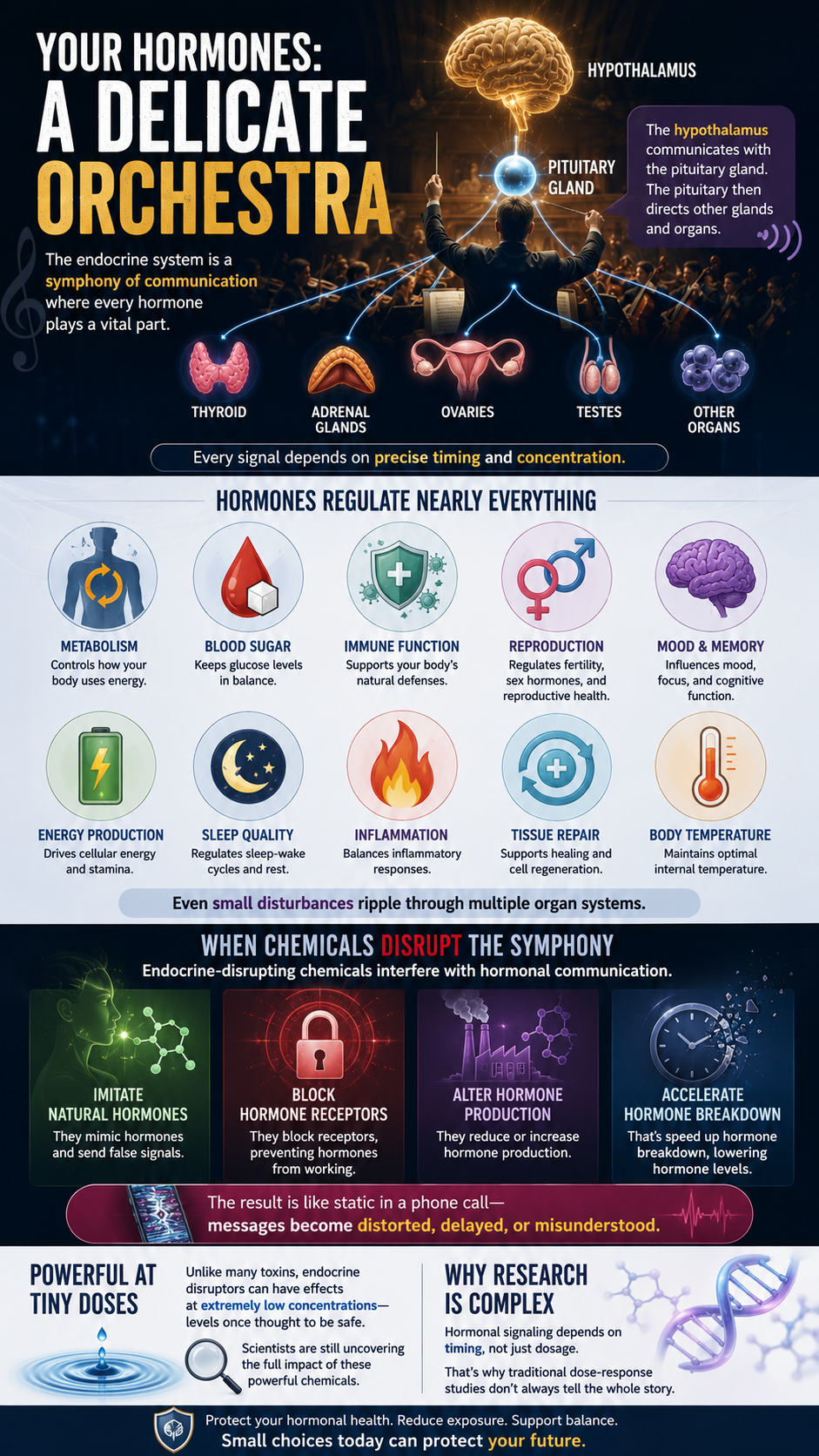
Endocrine-disrupting chemicals create confusion within this communication network. Some imitate natural hormones. Others block hormone receptors. Certain compounds alter hormone production or accelerate hormone breakdown. The result resembles static interfering with an important telephone conversation. Messages become distorted, delayed, or misunderstood.
Unlike many toxins, endocrine disruptors may exert biological effects at extremely low concentrations. Scientists continue investigating these complex relationships because hormonal signaling depends upon timing rather than simple dose-response relationships.
How Phthalates Enter the Human Body
Human skin serves as a remarkable protective barrier, yet many small fat-soluble molecules penetrate its outer layers. Phthalates belong to this category. Lotions, creams, perfumes, deodorants, and makeup remain on the skin for hours, providing repeated opportunities for absorption.
Inhalation creates another significant exposure pathway. Perfumes, hairsprays, air fresheners, and scented body products release microscopic particles and vapors into indoor air. Every breath carries those compounds deeper into the respiratory tract, where absorption occurs rapidly.
Household dust also becomes an important reservoir for phthalates. Furniture, vinyl flooring, shower curtains, cosmetics, cleaning products, and plastics continuously release these chemicals into indoor environments. Dust particles accumulate on furniture, clothing, bedding, and children’s toys, increasing daily exposure.
Diet contributes additional exposure because food packaging, plastic containers, processing equipment, and disposable gloves often contain related plasticizers. Heating plastic containers further increases chemical migration into food.
Instead of encountering one large exposure, modern individuals experience hundreds of small exposures every day. This continuous chemical burden concerns many environmental health researchers because chronic accumulation may influence long-term physiology.
Hormone Chaos Begins with the Endocrine System
Hormonal balance depends upon accurate signaling between glands and target tissues. Phthalates interfere with this balance through several biological mechanisms currently under investigation.
Research suggests certain phthalates reduce testosterone production by affecting enzymes involved in steroid hormone synthesis. Lower testosterone may influence muscle maintenance, energy, fertility, libido, mood, and metabolic health.
Other investigations suggest altered estrogen activity. Estrogen regulates bone density, cardiovascular health, menstrual cycles, cognitive performance, skin integrity, and reproductive function. Disruptions may contribute to hormonal symptoms affecting both women and men.
Scientists also continue studying phthalates’ influence on hormone receptors. Even when hormone production remains normal, blocked or altered receptor activity may reduce biological responses throughout the body.
Hormonal disruption rarely affects one gland alone. Because endocrine organs constantly communicate, disturbances often spread through interconnected feedback loops involving the thyroid, adrenal glands, pancreas, reproductive organs, and brain.
The Hidden Connection Between Phthalates and Thyroid Function
The thyroid gland produces hormones that determine metabolic rate, energy production, temperature regulation, digestive activity, and neurological development. Even subtle changes in thyroid hormone availability may produce widespread symptoms.
Several observational studies have reported associations between higher phthalate exposure and altered thyroid hormone measurements. Researchers continue investigating whether these chemicals interfere with hormone synthesis, transport proteins, receptor sensitivity, or metabolic conversion.
Reduced thyroid efficiency may contribute to fatigue, weight gain, constipation, dry skin, brain fog, depression, cold intolerance, and reduced exercise tolerance. Although many factors influence thyroid function, environmental chemical exposure increasingly receives scientific attention as one possible contributor.
Healthy thyroid physiology depends upon adequate nutrition, efficient liver function, balanced immune activity, and minimal endocrine disruption. Reducing unnecessary chemical exposure supports this broader physiological environment.
Fertility and Reproductive Health
Human reproduction depends upon extraordinary hormonal precision. Eggs mature according to carefully timed hormonal signals. Sperm production requires coordinated communication between the brain and testes. Pregnancy demands continuous endocrine adaptation throughout every trimester.
Research has explored associations between phthalate exposure and reduced sperm quality, altered sperm motility, decreased testosterone, menstrual irregularities, and fertility challenges. Scientists continue studying these relationships because reproductive tissues appear particularly sensitive to endocrine-disrupting chemicals.
Pregnancy introduces additional concerns because fetal development relies upon tightly regulated hormonal signaling. Early developmental periods often represent windows of increased biological vulnerability. Researchers therefore continue evaluating maternal exposure during pregnancy and potential developmental outcomes.
Reducing unnecessary chemical exposure before conception represents a practical strategy that many healthcare professionals encourage alongside healthy nutrition and lifestyle habits.
Metabolism, Weight Gain, and Insulin Resistance
Weight regulation involves much more than calories consumed and calories burned. Hormones determine hunger, satiety, fat storage, energy expenditure, insulin sensitivity, and metabolic flexibility.
Some researchers describe certain environmental chemicals as obesogens because they may influence fat cell development and metabolic regulation. Phthalates have appeared within this growing field of investigation.
Laboratory studies suggest some phthalates may affect adipocyte development, inflammatory signaling, and glucose metabolism. Human observational studies have reported associations between higher exposure and increased waist circumference or insulin resistance, although causation remains under investigation.
Reducing environmental chemical exposure complements other healthy lifestyle habits that support metabolic resilience, including nutritious eating patterns, regular physical activity, restorative sleep, and stress management.
Liver Detoxification Under Constant Pressure
The liver functions as the body’s primary chemical processing center. Every medication, food additive, environmental toxin, alcohol molecule, and cosmetic chemical eventually requires metabolic processing.
Detoxification occurs through carefully coordinated biochemical pathways involving enzymes that modify fat-soluble compounds into water-soluble molecules suitable for elimination. These pathways require amino acids, vitamins, minerals, antioxidants, and adequate energy production.
Continuous exposure to numerous environmental chemicals increases metabolic workload. While the liver performs remarkably well, reducing unnecessary toxin exposure decreases demand on these detoxification systems.
Supporting liver health also includes consuming nutrient-dense foods, maintaining hydration, limiting excessive alcohol, encouraging regular bowel movements, exercising consistently, and obtaining sufficient sleep.
The Developing Brain Faces Unique Risks
Brain development begins early during pregnancy and continues throughout childhood. Hormones guide neuronal migration, synapse formation, myelination, and cognitive maturation.
Researchers continue examining whether prenatal or early-life phthalate exposure influences neurodevelopmental outcomes. Several observational studies have explored associations involving attention, behavior, executive function, and learning differences. These findings remain areas of active scientific investigation because many environmental and genetic factors interact during development.
Children experience proportionally greater exposure because they breathe faster, consume more food relative to body weight, and frequently place objects into their mouths. Their detoxification systems also continue developing throughout childhood.
Reducing unnecessary chemical exposure during pregnancy and early childhood represents a practical precaution supported by many public health organizations.
The Fragrance Loophole
Many consumers carefully read ingredient labels yet overlook one important detail. Manufacturers often list only the word “fragrance” rather than identifying each individual chemical used within proprietary scent formulations.
A single fragrance mixture may contain dozens or even hundreds of different compounds. Some formulations historically included phthalates to stabilize scent and extend longevity. Labeling laws often protect these formulations as trade secrets, making consumer evaluation difficult.
Choosing fragrance-free products or those scented exclusively with transparent ingredient disclosure helps reduce uncertainty surrounding chemical exposure.
Consumers increasingly seek companies committed to complete ingredient transparency because openness builds trust while supporting informed purchasing decisions.
Safe Cosmetic Swaps Begin with Simplicity
Creating a healthier bathroom cabinet rarely requires replacing every product overnight. Gradual changes produce meaningful reductions in cumulative exposure.
Many companies now manufacture lotions using plant oils, shea butter, cocoa butter, aloe vera, and botanical extracts rather than unnecessary synthetic additives. Mineral-based makeup often contains fewer ingredients than conventional formulations. Glass packaging further reduces contact with certain plasticizers.
Unscented products eliminate one major source of unnecessary chemical exposure. When fragrance remains desirable, products scented with clearly identified essential oils provide greater ingredient transparency.
Reading ingredient labels soon becomes second nature. Consumers who recognize chemical terminology quickly identify products deserving closer examination.
Supporting Natural Detoxification at Home
The human body possesses sophisticated detoxification systems that function continuously. Healthy lifestyle habits strengthen these natural processes more effectively than dramatic cleansing programs.
Nutritious eating provides antioxidants, vitamins, minerals, amino acids, and phytonutrients required for detoxification enzymes. Colorful vegetables, berries, herbs, citrus fruits, quality proteins, and healthy fats all contribute important nutritional building blocks.
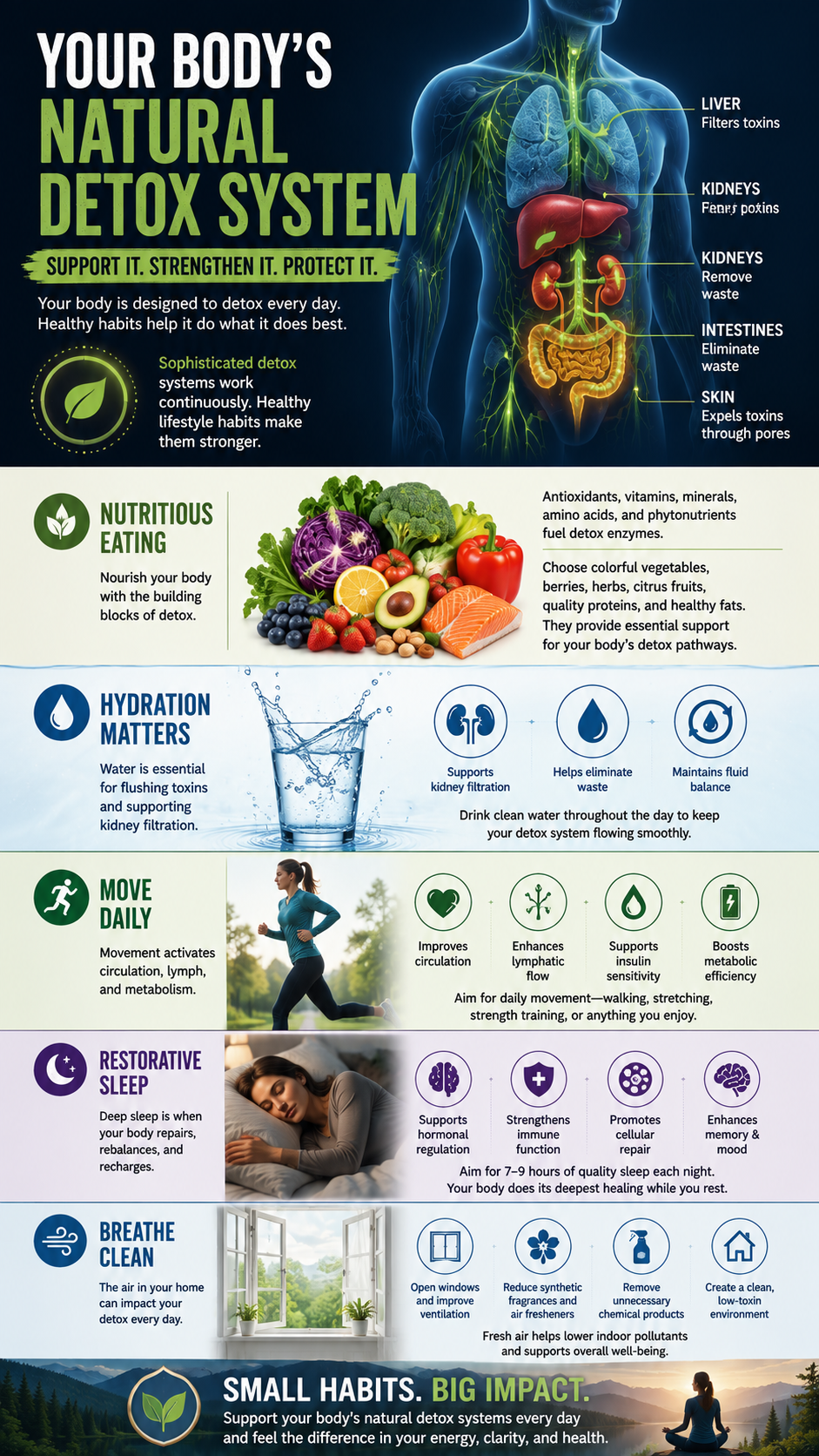
Hydration supports kidney filtration while encouraging efficient elimination of water-soluble waste products. Regular physical activity improves circulation, lymphatic movement, insulin sensitivity, and metabolic efficiency.
Restorative sleep allows numerous repair processes to occur. Hormonal regulation, immune function, cellular maintenance, and neurological recovery all depend upon adequate nightly sleep.
Fresh indoor air also matters. Opening windows, improving ventilation, reducing synthetic fragrances, and removing unnecessary chemical products decrease indoor pollutant concentrations.
Small Daily Choices Produce Lasting Benefits
Environmental health rarely depends upon one dramatic decision. Instead, countless daily habits shape long-term exposure patterns. Every bottle replaced, every ingredient label examined, and every unnecessary fragrance avoided gradually reduces cumulative chemical burden.
Consumers possess tremendous influence because purchasing decisions drive manufacturing trends. Growing demand for cleaner cosmetics has already encouraged many companies to reformulate products and increase ingredient transparency.
Perfect avoidance remains impossible in today’s world. Plastics, industrial chemicals, and environmental contaminants surround modern society. Progress matters more than perfection. Reducing exposure wherever practical allows the body’s natural protective systems to operate with less interference.
A Healthier Future Starts in the Bathroom
The conversation surrounding phthalates reaches beyond cosmetics. It reflects a broader movement toward understanding how everyday environmental exposures influence lifelong health. Beauty products should enhance confidence without creating unnecessary biological uncertainty.
Scientific research continues evolving, yet current evidence supports minimizing unnecessary exposure to endocrine-disrupting chemicals whenever practical. Choosing cleaner products, reading ingredient labels carefully, improving household air quality, and supporting the body’s natural detoxification pathways represent reasonable steps toward protecting hormonal health.
Every bottle on a bathroom shelf tells a story about modern chemistry. Consumers now have the opportunity to write a different ending. By choosing transparency over marketing, simplicity over complexity, and informed decisions over convenience, individuals can reduce chemical exposure while encouraging healthier hormonal balance for themselves and future generations.