
The Glass on Your Kitchen Counter Tells a Much Bigger Story
Crystal-clear water pours from a kitchen faucet every day. Most people never question what fills that glass because it looks clean, tastes acceptable, and arrives with remarkable convenience. Modern water treatment created an expectation that every drop reaching our homes is safe. Unfortunately, appearance rarely reveals the complete story. Water can carry dozens of invisible contaminants without changing its color, smell, or taste. Many compounds remain completely undetectable to human senses while interacting with nearly every organ system in the body.
Municipal water treatment plants perform an extraordinary public service by reducing infectious diseases that once devastated communities. They remove many dangerous microorganisms and significantly improve public health. Even so, treatment facilities cannot eliminate every contaminant entering rivers, lakes, reservoirs, and groundwater. Aging infrastructure, agricultural runoff, industrial waste, pharmaceutical residues, naturally occurring minerals, and emerging synthetic chemicals challenge treatment systems that were often designed decades before these contaminants became widespread concerns.
Consumers often respond by filling shopping carts with bottled water, believing plastic bottles provide a healthier alternative. Clever marketing has encouraged that belief for decades. Images of untouched mountain springs, pristine glaciers, and crystal-clear streams suggest exceptional purity. The reality proves far more complicated. Many bottled water brands originate from municipal supplies. Others contain measurable amounts of microplastics or chemicals that migrate from plastic packaging during transportation and storage. Spending hundreds or thousands of dollars each year on bottled water may create peace of mind without solving the underlying exposure problem.
Whole-house water filtration offers a fundamentally different approach. Instead of treating drinking water alone, it addresses nearly every source of household exposure. Showering, bathing, cooking, brushing teeth, washing produce, making coffee, laundering clothes, and even breathing steam all become opportunities for cleaner water. Understanding why that distinction matters begins with recognizing what actually enters municipal water before it reaches your faucet.
Where Tap Water Contaminants Really Come From
Water follows an astonishing journey before arriving inside a home. Rain falls onto farmland, highways, forests, industrial sites, neighborhoods, and commercial developments. Along that journey, flowing water dissolves minerals, collects pollutants, absorbs chemicals, and transports microscopic particles into rivers, reservoirs, and underground aquifers. Treatment plants receive water already carrying a complex chemical fingerprint reflecting everything upstream.
Agriculture represents one major contributor. Fertilizers rich in nitrogen and phosphorus wash into streams after storms. Herbicides and pesticides travel with surface runoff while infiltrating groundwater. Animal operations contribute bacteria, hormones, antibiotics, and organic waste that challenge treatment facilities. Even responsible farming practices cannot eliminate every environmental pathway carrying agricultural chemicals into drinking water sources.
Industrial activities create another important source of contamination. Manufacturing plants release solvents, heavy metals, synthetic compounds, and chemical byproducts that sometimes persist for decades. Historic pollution continues affecting groundwater long after factories close. Certain compounds resist natural degradation and remain present across generations. Communities located downstream from industrial regions often experience greater challenges maintaining water quality despite continuous treatment efforts.
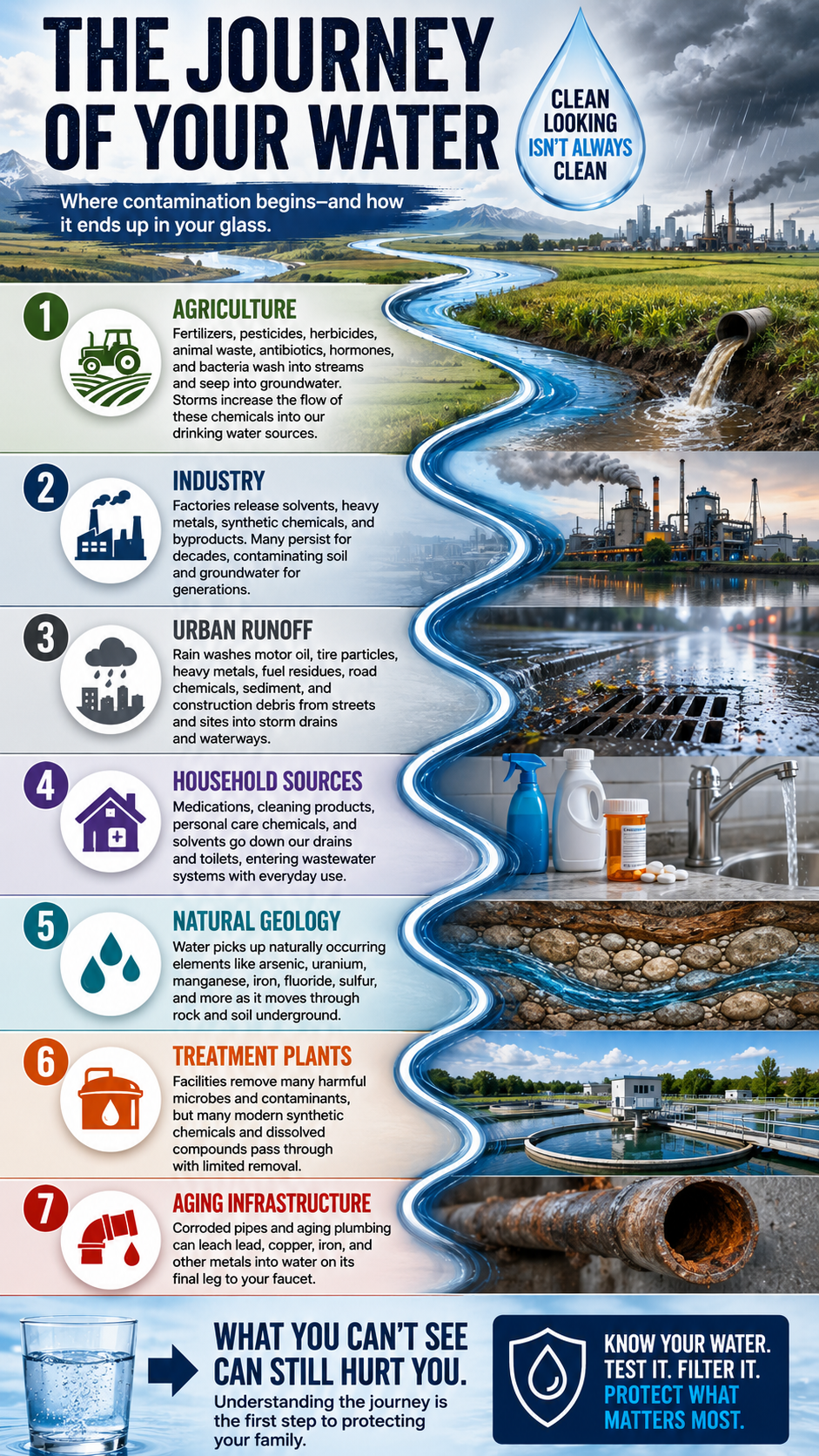
Urban environments introduce additional contaminants through stormwater runoff. Roads accumulate motor oil, tire particles, brake dust, heavy metals, fuel residues, and roadway chemicals. Every rainfall carries portions of those pollutants into nearby waterways. Construction sites contribute sediment and industrial debris while densely populated areas increase pharmaceutical residues entering wastewater treatment facilities.
Households themselves also contribute contaminants. Medications flushed down toilets, cleaning products poured into drains, personal care chemicals, and household solvents eventually enter wastewater systems. Traditional wastewater treatment removes many substances effectively. However, numerous modern synthetic chemicals pass through conventional treatment with limited removal. Scientists continue identifying emerging contaminants faster than treatment technology evolves.
Natural geology also influences drinking water quality. Groundwater moving through rock formations dissolves arsenic, uranium, manganese, iron, fluoride, sulfur, and other naturally occurring elements. Some minerals provide health benefits in appropriate concentrations. Others create potential concerns when concentrations rise beyond recommended levels.
Finally, aging infrastructure creates problems after treatment finishes. Water distribution systems include thousands of miles of underground pipes. Corrosion inside older plumbing may release lead, copper, iron, and other metals into drinking water before it reaches household faucets. Treatment plants may produce excellent water, yet deteriorating distribution systems sometimes change water quality before consumers ever take a sip.
The Hidden Chemicals That Challenge Modern Water Systems
Today’s drinking water contains far more than chlorine and minerals. Scientists now detect thousands of synthetic compounds in environmental water sources. Many exist at extremely low concentrations. Nevertheless, continuous daily exposure over decades raises important questions about cumulative health effects.
Per- and polyfluoroalkyl substances, commonly called PFAS, illustrate this growing concern. Manufacturers developed these chemicals because they resist heat, oil, grease, and water. Those same characteristics prevent them from breaking down naturally. Researchers often refer to PFAS as “forever chemicals” because they remain remarkably persistent in both the environment and human tissues. Studies continue examining possible associations between higher PFAS exposure and changes involving cholesterol metabolism, immune response, liver health, thyroid function, and certain cancers. Ongoing research continues to refine our understanding of these relationships.
Pharmaceutical residues represent another emerging issue. Tiny amounts of antibiotics, antidepressants, blood pressure medications, hormones, and pain relievers have been detected in some water supplies worldwide. Individual concentrations remain extremely low. However, scientists continue investigating the biological significance of lifelong exposure to complex mixtures rather than isolated compounds.
Disinfection byproducts deserve equal attention. Chlorine protects communities by reducing dangerous microorganisms responsible for waterborne diseases. During treatment, chlorine also reacts with natural organic matter present in source water. That reaction creates compounds called trihalomethanes and haloacetic acids. Regulatory agencies establish limits because elevated long-term exposure may increase certain health risks.
Microplastics have rapidly become one of the most discussed environmental contaminants. These microscopic plastic fragments originate from degrading packaging, synthetic clothing, vehicle tires, industrial processes, and consumer products. Researchers have identified microplastics in oceans, rivers, food, bottled water, tap water, and even human tissues. Scientists continue studying their long-term biological effects, but their widespread presence demonstrates how modern pollution extends throughout the environment.
What Contaminated Water Can Do Inside the Human Body
Water nourishes nearly every biological process. Every cell depends upon hydration to produce energy, transport nutrients, eliminate waste, regulate temperature, and maintain structural integrity. Continuous exposure to unwanted contaminants therefore raises understandable concerns because water reaches virtually every organ within minutes of consumption.
Heavy metals illustrate how contaminants may affect multiple systems simultaneously. Lead exposure remains especially concerning because no known physiological role exists for lead within the human body. Elevated exposure can affect neurological development in children while contributing to cardiovascular and kidney concerns in adults. Copper, although essential in small amounts, may produce gastrointestinal symptoms when concentrations become excessive.
Certain contaminants may increase oxidative stress, a process involving an imbalance between free radicals and antioxidant defenses. Persistent oxidative stress can damage proteins, lipids, and DNA while influencing inflammation throughout the body. Researchers continue investigating how chronic environmental exposures contribute to cumulative oxidative burden over many years.
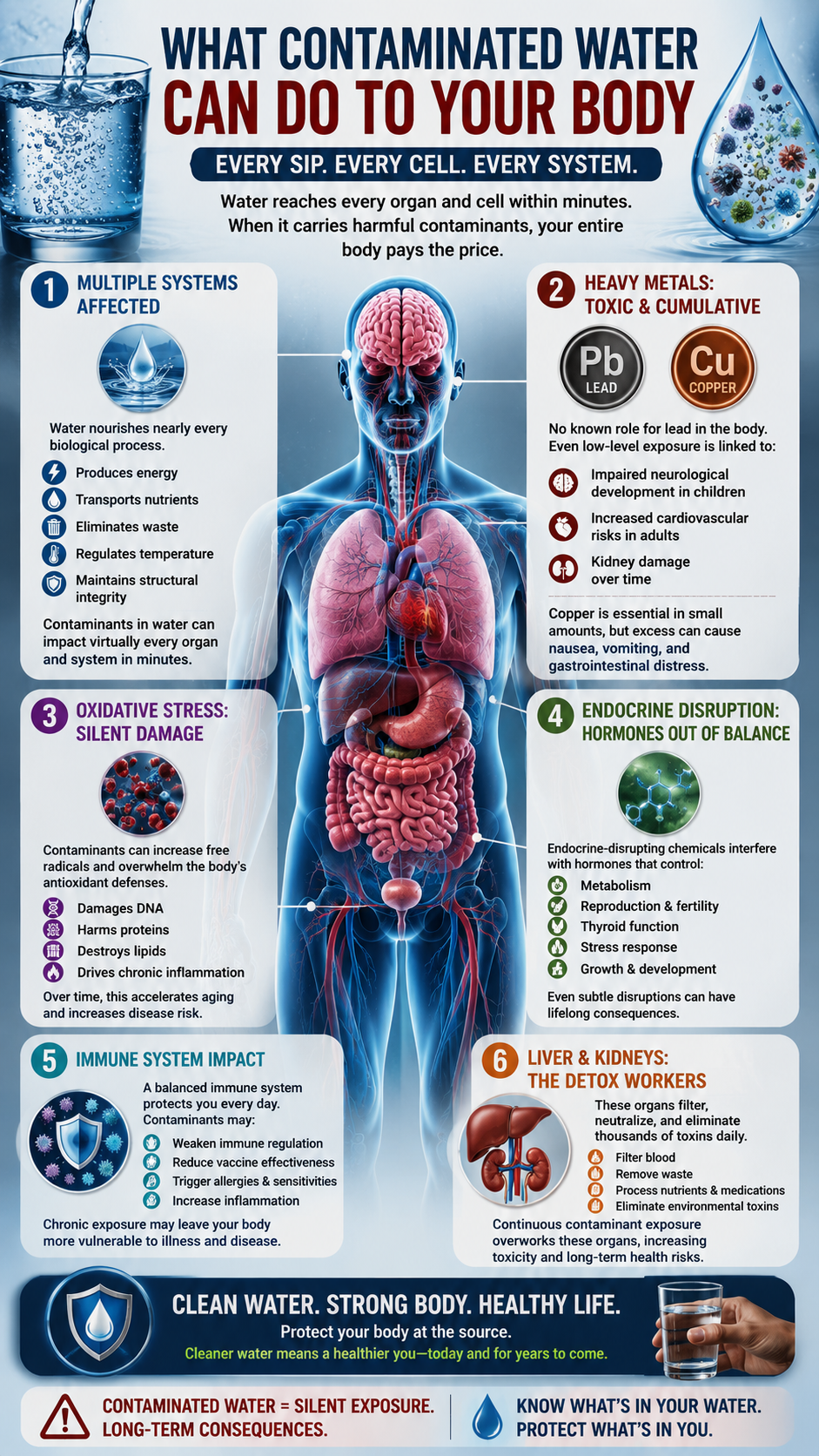
Endocrine-disrupting chemicals create additional concern because hormones regulate nearly every physiological function. Even subtle hormonal disturbances may influence metabolism, reproduction, thyroid signaling, stress responses, and developmental processes. Scientists continue evaluating how lifelong exposure to mixtures of endocrine-active compounds affects human health across different stages of life.
Immune function also depends upon a balanced internal environment. Several environmental contaminants appear capable of influencing immune regulation in laboratory and epidemiological studies. Researchers continue exploring how chronic chemical exposure may interact with immune resilience, vaccine responses, allergy development, and inflammatory conditions.
The liver and kidneys bear much of the body’s detoxification workload. These organs constantly filter blood while processing nutrients, medications, metabolic waste, and environmental chemicals. Although remarkably resilient, continuous exposure to unnecessary contaminants increases the physiological work required to maintain internal balance. Reducing exposure whenever practical may decrease that overall burden.
Why Bottled Water Is Not the Perfect Solution
Marketing transformed bottled water into one of the most profitable beverage industries worldwide. Attractive labels promise exceptional purity while encouraging consumers to distrust tap water completely. Reality paints a more nuanced picture.
Many bottled water brands simply package treated municipal water. Companies often perform additional filtration before bottling, yet consumers frequently pay hundreds of times more than the original municipal cost. Brand identity sometimes creates greater perceived value than measurable differences in water quality.
Plastic packaging introduces another important consideration. Heat accelerates chemical migration from plastic containers into water. Bottles transported inside hot trucks or stored in warm warehouses may experience greater chemical leaching than bottles maintained under cooler conditions. Researchers continue studying compounds released from packaging materials under varying environmental conditions.
Microplastic contamination further complicates bottled water’s reputation. Multiple investigations have identified microscopic plastic particles within bottled water from numerous manufacturers. These particles originate from bottle production, caps, packaging materials, and filling processes. Although research continues evaluating long-term health implications, bottled water clearly does not eliminate exposure to microscopic plastic debris.
Environmental costs deserve equal attention. Manufacturing plastic bottles requires petroleum, energy, transportation, and substantial water resources. Millions of discarded bottles enter landfills, waterways, and oceans every year despite recycling efforts. Choosing bottled water exclusively shifts pollution rather than addressing water quality where families actually live.
Most importantly, bottled water solves only one exposure pathway. Families still shower in chlorinated water, cook with tap water, wash produce under untreated faucets, brush teeth twice daily, inhale steam carrying volatile chemicals, and expose their skin during bathing. Drinking cleaner water helps, yet household exposure extends far beyond what enters a reusable bottle.
Why Whole-House Filtration Changes the Conversation
Whole-house filtration approaches water quality from an entirely different perspective. Instead of focusing only on drinking water, it improves water entering every faucet, showerhead, washing machine, dishwasher, and appliance throughout the home.
Skin represents the body’s largest organ. During bathing, warm water opens pores while increasing blood circulation near the skin surface. Volatile compounds, including chlorine, may evaporate into bathroom air where inhalation becomes another exposure route. Cleaner shower water therefore addresses both skin contact and respiratory exposure simultaneously.
Cooking also benefits substantially. Soups, sauces, vegetables, coffee, tea, and ice cubes all contain water. Every meal prepared with filtered water reduces unnecessary contaminant exposure while often improving flavor. Coffee enthusiasts frequently notice better taste because chlorine and certain dissolved compounds no longer interfere with delicate flavor profiles.
Household appliances generally perform better with cleaner water. Reduced sediment helps extend the lifespan of water heaters, washing machines, dishwashers, coffee makers, and plumbing fixtures. Less mineral accumulation often improves efficiency while decreasing maintenance costs over time.
Laundry receives surprising benefits as well. Chlorine and excessive minerals may contribute to fabric wear while reducing the lifespan of clothing, towels, and bedding. Softer, cleaner water often helps detergents perform more efficiently, leaving fabrics feeling cleaner and lasting longer.
Whole-house systems also eliminate the inconvenience of transporting heavy cases of bottled water. Families gain immediate access to filtered water from every faucet without worrying about inventory, storage space, recycling, or emergency shortages.
Choosing the Right Filtration System for Your Home
Not every filtration system removes the same contaminants. Effective water treatment begins with understanding local water quality rather than purchasing the most expensive equipment available.
Activated carbon remains one of the most effective technologies for improving taste and reducing chlorine, volatile organic compounds, and many synthetic chemicals. High-quality catalytic carbon offers enhanced performance against chloramine, which many municipalities now use instead of traditional chlorine.
Reverse osmosis systems remove an exceptionally broad range of dissolved contaminants through a semipermeable membrane. Many homeowners install reverse osmosis beneath kitchen sinks for drinking and cooking water while combining it with whole-house filtration for comprehensive household treatment.
Specialized media target unique concerns including arsenic, iron, manganese, sulfur, fluoride, nitrate, and PFAS. Water testing helps determine whether these technologies would provide meaningful benefits based upon regional water characteristics.
Water softeners address hardness caused primarily by calcium and magnesium. Although hardness does not usually represent a health concern, excessive mineral content damages plumbing, reduces appliance efficiency, and interferes with soap performance. Many households benefit from combining softening with contaminant filtration rather than choosing one technology alone.
Professional water analysis provides the strongest foundation for selecting appropriate treatment. Every community presents different challenges because source water, infrastructure, industrial activity, and geological conditions vary dramatically across regions. Testing removes guesswork while allowing homeowners to invest strategically rather than emotionally.
Practical Steps Every Family Can Take Today
Improving household water quality begins with awareness rather than fear. Most communities publish annual consumer confidence reports describing regulated contaminants detected within municipal systems. Reviewing those reports provides valuable insight into local water characteristics while identifying potential concerns requiring additional evaluation.
Independent laboratory testing offers another important layer of information because household plumbing may introduce contaminants after water leaves municipal treatment facilities. Testing becomes especially valuable for older homes, private wells, or properties located near agricultural or industrial activity.
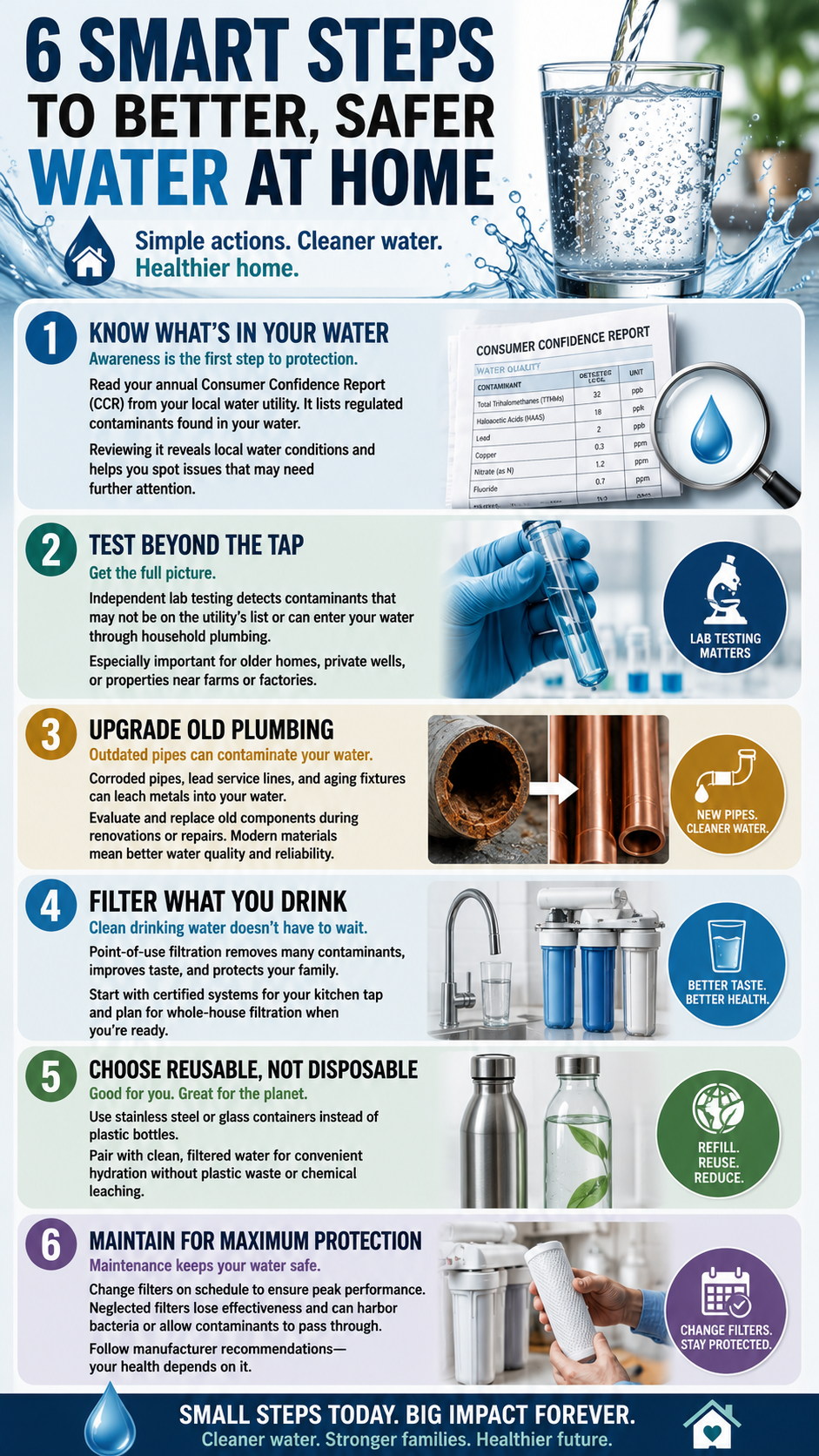
Replacing old plumbing components may reduce exposure to metals released through corrosion. Lead service lines, aging fixtures, and deteriorating household plumbing deserve careful evaluation during renovations or major repairs. Modern materials often improve both water quality and plumbing reliability.
Filtering drinking and cooking water provides meaningful benefits even before installing a comprehensive whole-house system. Families unable to invest immediately in complete filtration may begin with certified point-of-use systems while planning future upgrades as budgets allow.
Reusable stainless steel or glass containers help reduce reliance upon disposable plastic bottles. Combined with high-quality filtration, they provide convenient hydration without generating unnecessary plastic waste or repeated packaging exposure.
Regular maintenance remains essential because neglected filtration systems eventually lose effectiveness. Replacing filters according to manufacturer recommendations preserves performance while preventing bacterial growth or declining contaminant removal.
The Future of Clean Water Begins at Home
Clean water should inspire confidence rather than uncertainty. Modern treatment plants protect public health remarkably well compared with previous generations. Nevertheless, evolving environmental pollution introduces challenges that traditional infrastructure never anticipated. Emerging contaminants continue appearing faster than treatment technologies can eliminate them universally.
Families cannot control industrial pollution, agricultural runoff, aging municipal pipes, or regulatory timelines. They can control what enters their own homes. Thoughtful water filtration represents one practical strategy for reducing unnecessary exposure while improving taste, protecting appliances, and supporting healthier daily living.
Bottled water offers convenience, but convenience should never be confused with comprehensive protection. Plastic bottles cannot improve shower water, cooking water, laundry water, or every other household use occurring dozens of times each day. Whole-house filtration addresses the broader reality that water touches nearly every aspect of life.
The healthiest water strategy does not rely upon marketing claims or fear-driven advertising. It relies upon understanding where contaminants originate, recognizing how exposure occurs, evaluating local water quality, and choosing evidence-informed solutions appropriate for each household. Every glass of cleaner water reflects a simple principle that extends far beyond hydration. The quality of what enters your home shapes the environment in which your body functions every single day. Investing in cleaner water therefore becomes an investment not only in taste or convenience but also in long-term environmental awareness, household resilience, and the everyday choices that quietly influence health for years to come.