
The Great Environmental Shift Nobody Talks About
Few people can identify the exact moment when the air changed. There was no headline announcing that the atmosphere surrounding humanity had entered a new era. No government agency declared that every future breath would carry a biological cost. The transformation happened gradually, unfolding across decades as industrialization expanded, automobiles multiplied, cities grew, manufacturing accelerated, and synthetic chemicals became woven into everyday life. By the time scientists began measuring the consequences, the world had already become immersed in one of the largest environmental experiments in human history.
For most of human existence, people breathed air shaped primarily by natural forces. Dust storms swept across deserts. Wildfires occasionally filled the sky with smoke. Pollen drifted through forests and grasslands during seasonal changes. Although these exposures challenged the respiratory system, they occurred within ecosystems that allowed periods of recovery. Modern air presents an entirely different challenge. Today, microscopic particles from vehicle exhaust, industrial emissions, construction materials, agricultural chemicals, wildfire smoke, and synthetic compounds circulate continuously through the atmosphere. Many are invisible. Most are odorless. Yet each possesses the ability to interact with the body at a cellular level.
The conversation surrounding air pollution often focuses on environmental concerns, climate issues, or public policy. While those discussions matter, they frequently overlook a more immediate question. What happens inside the human body every time polluted air enters the lungs? The answer reveals why respiratory disease, chronic inflammation, oxidative stress, and numerous chronic health conditions continue to rise despite remarkable advances in modern medicine. The true danger of air pollution does not begin in the sky. It begins in the tissues that must process every breath.
The Lungs Were Never Designed for the Modern Atmosphere
The human respiratory system represents one of the most sophisticated biological structures ever created. Every day, the lungs process thousands of gallons of air while simultaneously extracting oxygen and removing carbon dioxide. This exchange occurs across millions of microscopic air sacs known as alveoli. Together, these structures create an enormous surface area that allows efficient transfer of gases between the lungs and bloodstream.
Nature equipped the respiratory system with impressive defenses. Tiny hair-like structures called cilia continuously sweep debris away from sensitive tissues. Mucus traps foreign particles before they travel deeper into the lungs. Specialized immune cells patrol the airways and respond quickly to potential threats. Antioxidant systems neutralize harmful compounds before significant damage occurs. These mechanisms evolved over thousands of generations to manage naturally occurring environmental challenges.
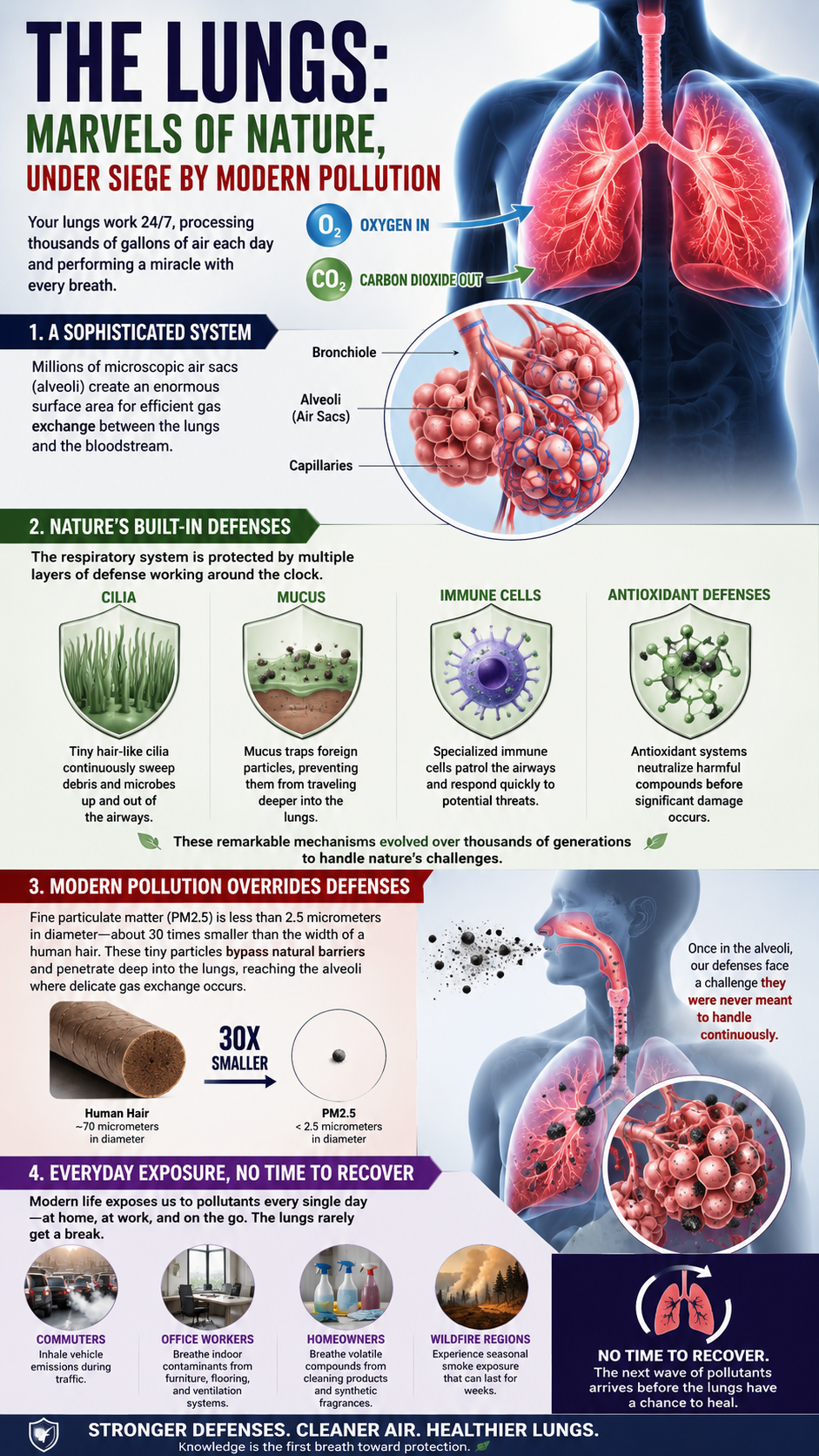
Modern pollution overwhelms many of these defenses. Fine particulate matter, often called PM2.5, measures less than 2.5 micrometers in diameter. To appreciate its size, consider that a human hair appears roughly thirty times wider. These particles easily bypass many protective barriers and travel deep into respiratory tissues. Once they reach the alveoli, the body’s defense systems face a challenge they were never designed to handle continuously.
Unlike occasional environmental exposures, modern pollution often arrives every day. Commuters inhale vehicle emissions during traffic. Office workers encounter indoor air contaminants from furniture, flooring materials, and ventilation systems. Homeowners breathe volatile compounds released from cleaning products and synthetic fragrances. Residents in wildfire-prone regions experience seasonal smoke exposure that can persist for weeks. The lungs rarely receive an opportunity to fully recover before the next wave of pollutants arrives.
The Silent Fire of Lung Inflammation
Inflammation serves an essential purpose. Without it, the body could not respond effectively to injury, infection, or environmental threats. Problems emerge when inflammation remains active long after the initial threat appears. Air pollution creates exactly this scenario.
When pollutants enter the lungs, immune cells immediately recognize them as foreign substances. Macrophages attempt to engulf and remove the particles. Chemical messengers recruit additional immune cells into the area. Blood flow increases. Inflammatory compounds flood surrounding tissues. These responses help protect the lungs from immediate harm.
Repeated exposure changes everything. Pollutants continue entering the respiratory system before previous inflammation has fully resolved. The immune system shifts into a state of constant activation. Instead of functioning like a temporary emergency response team, inflammatory pathways begin operating around the clock. Airway tissues become increasingly irritated. Mucus production rises. Sensitivity increases. Breathing efficiency gradually declines.
Many people never notice this process during its early stages. The lungs possess remarkable reserve capacity. Symptoms often appear only after years of chronic irritation. Persistent throat clearing, morning congestion, exercise intolerance, recurring respiratory infections, and chronic coughing may develop gradually. Because the progression occurs slowly, many individuals attribute these changes to aging rather than recognizing them as signs of ongoing inflammation.
Oxidative Stress: The Real Engine Behind the Damage
Inflammation tells only part of the story. Behind nearly every pollution-related health problem lies oxidative stress, a process that accelerates cellular damage throughout the body.
Every cell generates free radicals during normal metabolism. These unstable molecules can damage proteins, cell membranes, mitochondria, and DNA if left unchecked. Fortunately, the body possesses an extensive antioxidant network designed to neutralize free radicals before they cause significant harm. Health depends upon maintaining balance between free radical production and antioxidant protection.
Air pollution dramatically disrupts this balance. Diesel exhaust, ozone, industrial chemicals, smoke particles, and heavy metals stimulate excessive free radical formation. Antioxidant reserves become depleted as the body struggles to keep pace with the increased demand. The result is widespread oxidative stress that extends far beyond the lungs.
Imagine leaving a metal structure exposed to moisture for years. Corrosion develops gradually, weakening the structure long before visible damage appears. Oxidative stress operates similarly. Cellular damage accumulates quietly. Repair mechanisms become overwhelmed. Tissue resilience declines. Aging accelerates. The consequences often emerge years after the process begins.
Mitochondria suffer particularly severe effects. These cellular power plants generate the energy required for repair, detoxification, and normal function. Pollution-induced oxidative stress impairs mitochondrial performance, reducing energy production while increasing vulnerability to further injury. Many individuals living in polluted environments report fatigue, reduced stamina, slower recovery, and diminished resilience. Mitochondrial dysfunction helps explain why these symptoms frequently accompany chronic respiratory complaints.
When Lung Inflammation Becomes a Whole-Body Problem
Many people assume pollutants remain confined to the respiratory system. Research increasingly demonstrates otherwise. Ultrafine particles can cross respiratory barriers and enter circulation. Once inside the bloodstream, they gain access to virtually every organ system.
Inflammatory compounds produced within the lungs also travel throughout the body. The cardiovascular system often experiences significant consequences. Chronic inflammation can impair blood vessel function, increase oxidative stress within arterial walls, and contribute to vascular dysfunction. Researchers continue documenting relationships between air pollution and cardiovascular disease, hypertension, and impaired circulation.

The nervous system remains vulnerable as well. Emerging evidence suggests that environmental pollutants may influence memory, mood, cognitive performance, and long-term neurological health. Inflammatory compounds generated by pollution can alter communication pathways throughout the brain and nervous system.
Metabolic function frequently suffers under conditions of chronic inflammation. Insulin signaling may become less efficient. Energy production declines. Recovery slows. The body devotes increasing resources toward managing environmental stress rather than supporting optimal function. This widespread impact explains why air pollution should never be viewed solely as a lung issue. It represents a systemic challenge affecting multiple aspects of human health.
Why Modern Antioxidant Defenses Are Failing
The human body possesses powerful antioxidant systems, yet many individuals struggle to maintain adequate protection. Modern lifestyles contribute significantly to this problem.
Nutrient deficiencies remain surprisingly common. Antioxidant systems require vitamins, minerals, amino acids, and plant compounds to function effectively. Processed foods often provide calories without supplying the nutrients necessary for cellular defense. Poor dietary choices gradually weaken the body’s ability to respond to environmental stressors.
Chronic psychological stress creates another challenge. Elevated stress hormones increase inflammation and oxidative burden throughout the body. Sleep deprivation compounds the problem by reducing antioxidant regeneration and impairing tissue repair. Sedentary lifestyles further diminish resilience by weakening mitochondrial function and reducing metabolic flexibility.
Environmental toxins rarely arrive alone. Many individuals face simultaneous exposure to pollution, processed foods, chronic stress, poor sleep, chemical contaminants, and sedentary behavior. Each factor increases demand upon antioxidant systems. Eventually, the cumulative burden exceeds the body’s capacity to adapt.
Rebuilding the Antioxidant Shield
Protecting the lungs requires more than avoiding pollution. Complete avoidance is rarely possible. A more practical strategy involves strengthening the body’s natural defense systems so they can respond more effectively to environmental challenges.
Glutathione sits at the center of this defense network. Often called the master antioxidant, glutathione participates in detoxification, immune regulation, and cellular protection. Pollution exposure rapidly consumes glutathione reserves because neutralizing free radicals requires constant antioxidant activity. Supporting glutathione production therefore becomes a foundational strategy for protecting respiratory tissues.
Foods rich in sulfur-containing compounds help provide the raw materials necessary for glutathione synthesis. Garlic, onions, eggs, and cruciferous vegetables contribute important building blocks. Adequate protein intake supplies amino acids required for antioxidant production. Without sufficient protein, the body struggles to maintain optimal glutathione levels.
Vitamin C serves as another critical component of respiratory defense. Lung tissue naturally concentrates vitamin C because of its constant exposure to oxidative stress. This nutrient helps neutralize free radicals while supporting immune function and tissue repair. Consistent intake from fruits and vegetables provides ongoing support during periods of environmental exposure.
Polyphenols found in colorful plant foods offer additional protection. Berries, green tea, herbs, spices, and deeply pigmented vegetables contain compounds that support antioxidant pathways. Many of these compounds activate genes involved in cellular defense, encouraging the body to strengthen its own protective systems.
Omega-3 fatty acids also deserve attention because they help regulate inflammatory responses. Healthy cell membranes rely upon adequate omega-3 intake. When inflammation becomes excessive, these beneficial fats help restore balance and support tissue resilience.
Turning the Home Into a Recovery Environment
The majority of people spend most of their time indoors. Improving indoor air quality therefore provides one of the most practical opportunities for reducing exposure.
High-quality air filtration can significantly reduce particulate matter circulating through the home. Proper maintenance of heating and cooling systems improves ventilation while reducing contaminant accumulation. Reducing the use of artificial fragrances, harsh cleaning products, and unnecessary chemical sprays can further decrease indoor pollution levels.

Mold prevention remains equally important. Moisture problems create environments where mold spores thrive, increasing respiratory irritation and immune activation. Addressing leaks, improving ventilation, and controlling humidity help reduce this burden.
Indoor environments should support recovery rather than contribute additional stress. Every reduction in exposure gives antioxidant systems greater opportunity to restore balance and repair damage.
A Future Built on Resilience
Air pollution will likely remain a defining health challenge of the twenty-first century. Industrial growth continues. Urbanization expands. Environmental exposures persist. Waiting for the atmosphere to become perfect is unrealistic. Building a stronger body offers a far more practical solution.
The lungs possess extraordinary healing potential when given adequate support. Antioxidant systems, immune defenses, and repair mechanisms work continuously to preserve respiratory health. Supporting these systems through nutrient-dense foods, restorative sleep, regular movement, stress management, and cleaner living environments strengthens the body’s ability to adapt.
Every breath represents an interaction between the external world and the internal biology that sustains life. While modern air presents challenges previous generations never faced, the body retains remarkable capacity for resilience. Strengthening that resilience may be one of the most important health investments a person can make. Healthy lungs support energy, vitality, immunity, and longevity. Protecting them requires understanding not only the dangers of pollution but also the extraordinary defenses already built into the human body.