
The Invisible Hormone Disruptor
Walk through any grocery store, airport, school, hospital, or office building and you will encounter plastic at every turn. Plastic bottles line store shelves. Plastic containers hold lunches. Plastic wraps cover foods. Plastic components appear in appliances, electronics, medical devices, and household products. Most people rarely think about these materials because they have become part of everyday life. Yet hidden within many plastic products are chemicals capable of influencing some of the most important biological systems in the human body.
Among the most studied of these chemicals is Bisphenol A, commonly known as BPA. Scientists originally developed BPA more than a century ago. Manufacturers later discovered that BPA could help create strong, lightweight, durable plastics and protective epoxy resins. Its usefulness quickly transformed it into one of the most widely produced industrial chemicals on earth. Unfortunately, the same molecular characteristics that made BPA commercially valuable also created significant biological concerns.
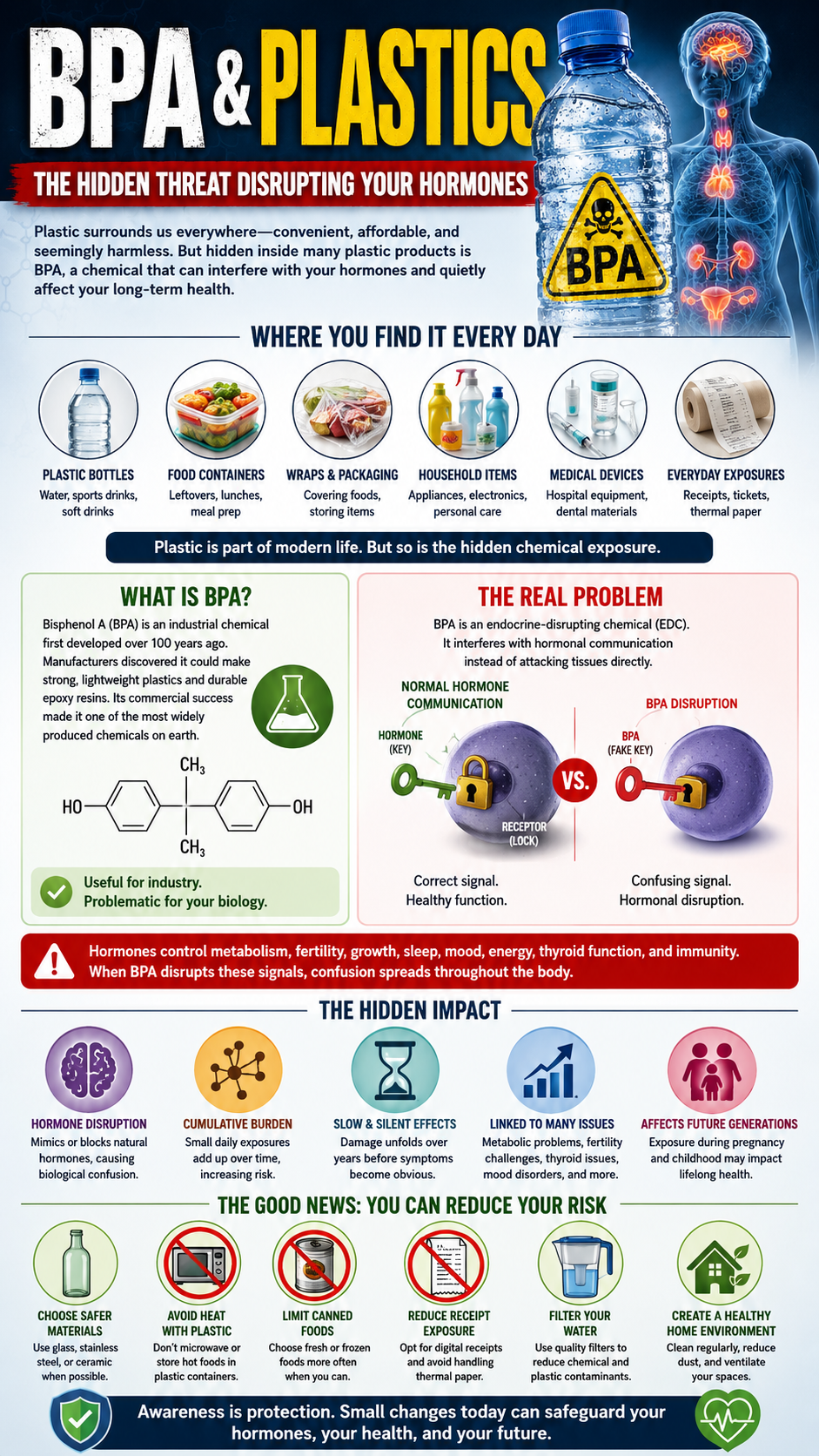
Modern research has revealed that BPA belongs to a class of compounds known as endocrine-disrupting chemicals. Unlike traditional toxins that damage tissues directly, endocrine disruptors interfere with hormonal communication. Hormones regulate metabolism, fertility, growth, sleep, mood, energy production, thyroid function, and immune activity. When outside chemicals mimic or disrupt those signals, biological confusion can develop throughout the body. This confusion often unfolds slowly and quietly over years before symptoms become obvious.
The story of BPA is not simply about plastic bottles. The real issue involves chronic exposure, cumulative burden, and the long-term effects of hormone disruption on human health. Understanding where BPA comes from, how exposure occurs, what it does inside the body, and how to reduce risk provides a critical roadmap for protecting long-term health in a world increasingly dominated by synthetic chemicals.
How BPA Became Part of Modern Life
BPA was first synthesized in the late nineteenth century. Researchers initially investigated it because it displayed estrogen-like properties. Although other compounds became preferred pharmaceutical estrogens, BPA later found a new role in industrial manufacturing. Chemists discovered that BPA could create exceptionally durable plastics and protective coatings. That discovery launched decades of widespread commercial use.
Throughout the twentieth century, manufacturers incorporated BPA into countless products. Food storage containers, water bottles, can linings, reusable drinkware, sports equipment, medical devices, eyeglass lenses, and household products all benefited from BPA-based materials. The chemical offered manufacturers a low-cost method of producing strong and transparent products that resisted breakage.
Few safety evaluations considered the possibility that tiny amounts of BPA might influence hormonal signaling. Toxicology studies traditionally focused on acute poisoning rather than subtle endocrine disruption. Scientists asked whether BPA could kill cells or produce obvious toxicity. Researchers rarely explored whether microscopic doses might alter metabolism, fertility, neurological development, or thyroid activity over decades.
Today, BPA production reaches millions of tons annually. Researchers routinely detect BPA in human urine, blood, placental tissue, breast milk, and fetal tissues. Exposure has become so widespread that measurable levels appear in the majority of individuals tested worldwide. The chemical has effectively become a constant background exposure of modern life.
The Endocrine System Under Attack
To understand why BPA creates concern, it is necessary to understand the endocrine system. Hormones function as chemical messengers. They travel through the bloodstream carrying instructions from one part of the body to another. These messages help coordinate metabolism, reproduction, immune function, growth, repair, and stress adaptation.
Each hormone works through specific receptors. A receptor functions like a lock waiting for the correct key. When the proper hormone arrives, the receptor activates a specific biological response. Precision remains essential because even small disruptions can produce significant consequences.
BPA presents a problem because its structure resembles estrogen. Although weaker than natural estrogen, BPA can interact with estrogen receptors throughout the body. The chemical can send false signals, block legitimate signals, or alter the timing of hormonal communication. Instead of supporting normal physiology, BPA introduces confusion into systems designed for extraordinary precision.
Researchers now recognize that endocrine disruptors may exert biological effects at remarkably low concentrations. Hormones naturally operate in tiny amounts. Consequently, even minute quantities of hormone-mimicking chemicals may influence important biological pathways. This characteristic distinguishes endocrine disruptors from many traditional toxins and helps explain why scientists continue investigating their long-term health implications.
How BPA Enters the Human Body
Many consumers assume BPA exposure occurs only through plastic water bottles. Reality tells a different story. Food packaging remains one of the largest exposure sources. Many canned foods contain epoxy resin linings manufactured using BPA. Over time, BPA can migrate into the food itself, especially when products contain acidic ingredients.
Heat dramatically increases migration. Leaving a plastic bottle inside a hot vehicle, storing food in warm environments, or heating food in plastic containers accelerates chemical leaching. Repeated use and aging further degrade plastics and increase the likelihood of migration.
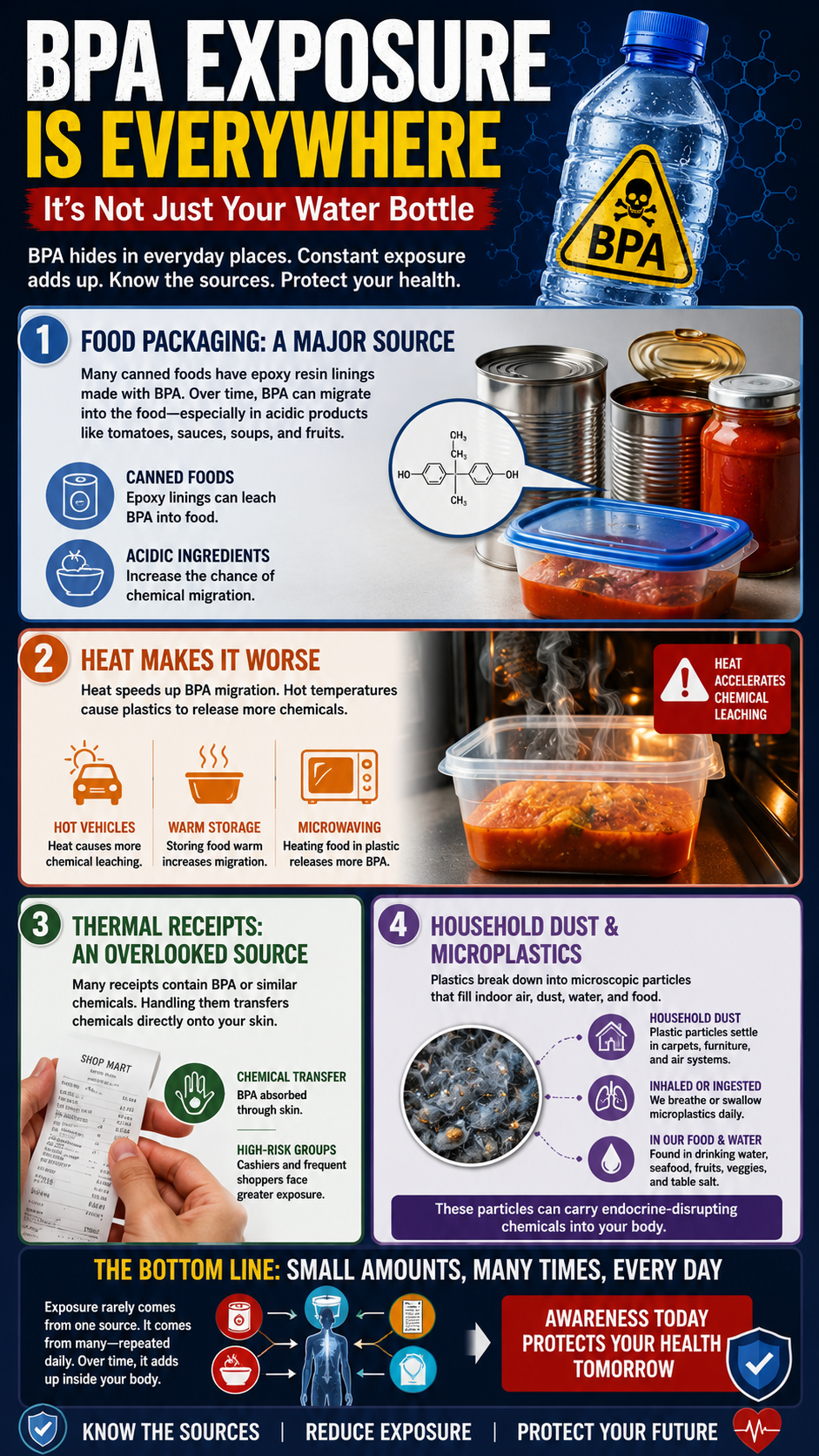
Thermal receipt paper represents another overlooked source. Many receipts contain BPA or chemically similar compounds. Simply handling receipts transfers chemicals onto the skin. Individuals who handle receipts regularly may experience significantly greater exposure than the general population.
Household dust also contributes. Plastics slowly degrade and release microscopic particles into indoor environments. These particles accumulate in carpets, furniture, and ventilation systems. People inhale or ingest small amounts every day. Researchers have also identified microplastics in drinking water, seafood, fruits, vegetables, and table salt. Many of these particles carry endocrine-disrupting chemicals directly into biological systems.
What BPA Does to Metabolism
One of the most concerning areas of BPA research involves metabolic health. Obesity rates have increased dramatically during the same decades that synthetic chemical exposure has expanded. While diet and lifestyle remain important contributors, researchers increasingly investigate how environmental chemicals influence metabolism.
BPA appears capable of affecting fat-cell development and energy regulation. Laboratory studies suggest that BPA may encourage immature cells to become fat cells. Other studies indicate that BPA may alter how fat cells store energy and communicate with hormonal systems.
Insulin regulation may also suffer. Insulin controls blood sugar movement into cells. When insulin signaling becomes disrupted, blood sugar regulation becomes more difficult. Over time, metabolic dysfunction may contribute to weight gain, insulin resistance, and elevated risk for type 2 diabetes.
Many people view weight gain strictly through the lens of calories consumed and calories burned. Human physiology proves far more complex. Hormones influence hunger, satiety, energy expenditure, and fat storage. When endocrine disruptors interfere with these signals, achieving and maintaining a healthy weight becomes increasingly challenging.
BPA and Thyroid Health
The thyroid gland functions as the body’s metabolic control center. Thyroid hormones influence energy production, temperature regulation, cardiovascular function, digestion, mood, and cellular metabolism. Even minor disruptions can create widespread symptoms.
Research suggests that BPA may interfere with thyroid signaling through multiple mechanisms. Some studies indicate that BPA can compete with thyroid hormones for receptor binding. Others suggest alterations in hormone production or feedback regulation.
Individuals experiencing thyroid dysfunction often report fatigue, brain fog, depression, constipation, dry skin, weight gain, and reduced exercise tolerance. Numerous factors contribute to thyroid disease, including genetics, nutrient deficiencies, autoimmune activity, and environmental exposures. BPA exposure may represent an additional burden on an already stressed system.
The concern extends beyond BPA itself. Manufacturers frequently replace BPA with structurally similar compounds such as BPS and BPF. Emerging evidence suggests that these replacements may possess endocrine-disrupting properties of their own. A BPA-free label does not automatically guarantee hormonal safety.
Fertility, Reproduction, and Future Generations
Hormones orchestrate every aspect of human reproduction. They regulate sperm production, egg maturation, ovulation, implantation, pregnancy maintenance, and fetal development. Because BPA can interact with hormonal pathways, reproductive health remains an area of intense scientific investigation.
Studies have explored relationships between BPA exposure and reduced sperm quality, altered hormone levels, ovarian dysfunction, and fertility challenges. While research continues evolving, evidence suggests that reproductive tissues may be particularly sensitive to endocrine-disrupting chemicals.
Pregnancy represents a critical period because fetal development depends upon precise hormonal signaling. Researchers have detected BPA in placental tissue, umbilical cord blood, and amniotic fluid. These findings demonstrate that exposure can occur before birth.
Developmental exposures create special concern because small disruptions during critical growth windows may influence lifelong health. Scientists continue studying whether prenatal endocrine disruption contributes to metabolic disorders, behavioral changes, immune dysfunction, and reproductive abnormalities later in life.
BPA, the Brain, and Mental Performance
The brain relies heavily upon hormones throughout life. Hormonal signals influence memory, mood, learning, attention, and neurological development. Disruption of these signals can affect cognitive performance and emotional well-being.
Animal studies have linked BPA exposure to alterations in learning, memory, anxiety-like behaviors, and neurological development. Researchers continue examining whether similar effects occur in humans. Although many questions remain, existing evidence suggests that the developing brain may be particularly vulnerable.

Children face unique risks because their brains continue developing rapidly throughout infancy and adolescence. During these periods, hormonal signals help guide neural connections and brain organization. Interference with those signals may influence long-term neurological outcomes.
Adults may also experience consequences. Some researchers investigate potential relationships between endocrine disruptors and mood disorders, cognitive decline, and neurodegenerative disease risk. Although additional research remains necessary, protecting neurological health requires considering environmental influences alongside nutrition, exercise, and lifestyle.
Why Microplastics Make the Problem Worse
Microplastics have transformed the BPA discussion from a packaging issue into a global environmental concern. These microscopic plastic fragments originate from degrading bottles, containers, clothing fibers, industrial materials, and consumer products.
Scientists have detected microplastics in oceans, rivers, soil, drinking water, food supplies, and even human tissues. Recent research has identified microplastics in blood, lungs, reproductive organs, and placental tissue. These findings demonstrate the extraordinary reach of plastic pollution.
Microplastics create a double threat. First, the particles themselves may trigger inflammation and tissue irritation. Second, they often carry endocrine-disrupting chemicals such as BPA and phthalates. The particles function as delivery vehicles that transport chemicals throughout the body.
The long-term implications remain under investigation. Nevertheless, the widespread presence of microplastics underscores the importance of reducing plastic dependence and minimizing unnecessary exposure whenever possible.
How to Reduce BPA Exposure at Home
Completely eliminating BPA exposure may be unrealistic in modern society. Reducing exposure significantly, however, remains achievable through practical daily habits. Small changes repeated consistently can substantially lower cumulative chemical burden.
Glass and stainless-steel containers offer excellent alternatives to plastic food storage. These materials resist chemical leaching and remain durable for years. Replacing frequently used food containers often represents one of the simplest and most effective strategies.
Avoid heating food in plastic containers whenever possible. Heat accelerates chemical migration. Transferring food to glass or ceramic dishes before reheating reduces exposure risk. Similarly, limiting hot liquids in plastic containers can decrease leaching.
Choosing fresh or frozen foods instead of canned products may reduce dietary exposure. Washing hands after handling receipts helps limit dermal absorption. High-quality water filtration systems may also reduce exposure to certain contaminants and microplastic particles.
Reducing overall plastic use creates cumulative benefits. Reusable glass bottles, stainless-steel drinkware, and minimally packaged foods all contribute to a lower chemical burden over time.
Supporting the Body’s Natural Detoxification Systems
The human body possesses remarkable detoxification capabilities. The liver, kidneys, digestive system, lungs, and skin continuously process and eliminate unwanted compounds. Supporting these systems may help the body manage environmental exposures more effectively.
Hydration remains fundamental. Adequate water intake supports kidney function and assists elimination processes. Nutrient-dense foods provide vitamins, minerals, antioxidants, and phytonutrients that support cellular defense mechanisms.
Regular physical activity promotes circulation, metabolic health, and overall resilience. Quality sleep allows the body to perform critical repair and recovery functions. Chronic sleep deprivation may impair numerous physiological processes involved in detoxification and hormonal regulation.
Dietary patterns rich in vegetables, fruits, quality proteins, and healthy fats help provide the raw materials required for normal detoxification pathways. Maintaining healthy digestion also supports elimination of compounds processed through the liver and intestines.
Although no single supplement or detox program can eliminate all chemical exposures, consistent lifestyle practices strengthen the body’s natural ability to adapt and recover.
The Future of Human Health in the Plastic Age
The rise of BPA highlights a broader challenge facing modern society. Human biology evolved over millions of years without constant exposure to synthetic hormone-mimicking chemicals. Industrialization introduced thousands of novel compounds into the environment within a remarkably short period.
Many chronic health conditions continue increasing despite advances in medical technology. Researchers increasingly investigate environmental contributors alongside genetics, nutrition, and lifestyle. Endocrine disruptors have emerged as important candidates because hormones influence nearly every aspect of human physiology.
Awareness represents the first step toward meaningful change. Consumers today possess far more information than previous generations. Increased awareness encourages safer product development, improved manufacturing standards, and informed purchasing decisions.
The goal is not fear. The goal is understanding. Every exposure reduction helps lower cumulative burden. Every informed decision supports healthier biological function. Every effort to reduce unnecessary contact with endocrine-disrupting chemicals moves individuals toward greater long-term resilience.
The next time a plastic bottle appears harmless, remember the larger story. The issue extends far beyond convenience. BPA represents a powerful reminder that modern health depends not only on what enters the body intentionally, but also on what enters quietly through the products used every day. Protecting hormonal health requires recognizing those hidden influences and taking practical steps to minimize their impact.