
A century ago, a family could walk into a garden, pick a tomato from the vine, wash away a little dirt, and eat it with confidence. Few people worried about herbicides, insecticides, fungicides, endocrine disruptors, or chemical residues accumulating inside their bodies. Food came from soil, sunlight, water, and the labor of farmers. Today, the story is dramatically different. The average person consumes food produced in an agricultural system that relies heavily on synthetic chemicals designed to kill living organisms. Most consumers never see those chemicals applied, yet they encounter the consequences every day at breakfast, lunch, and dinner.
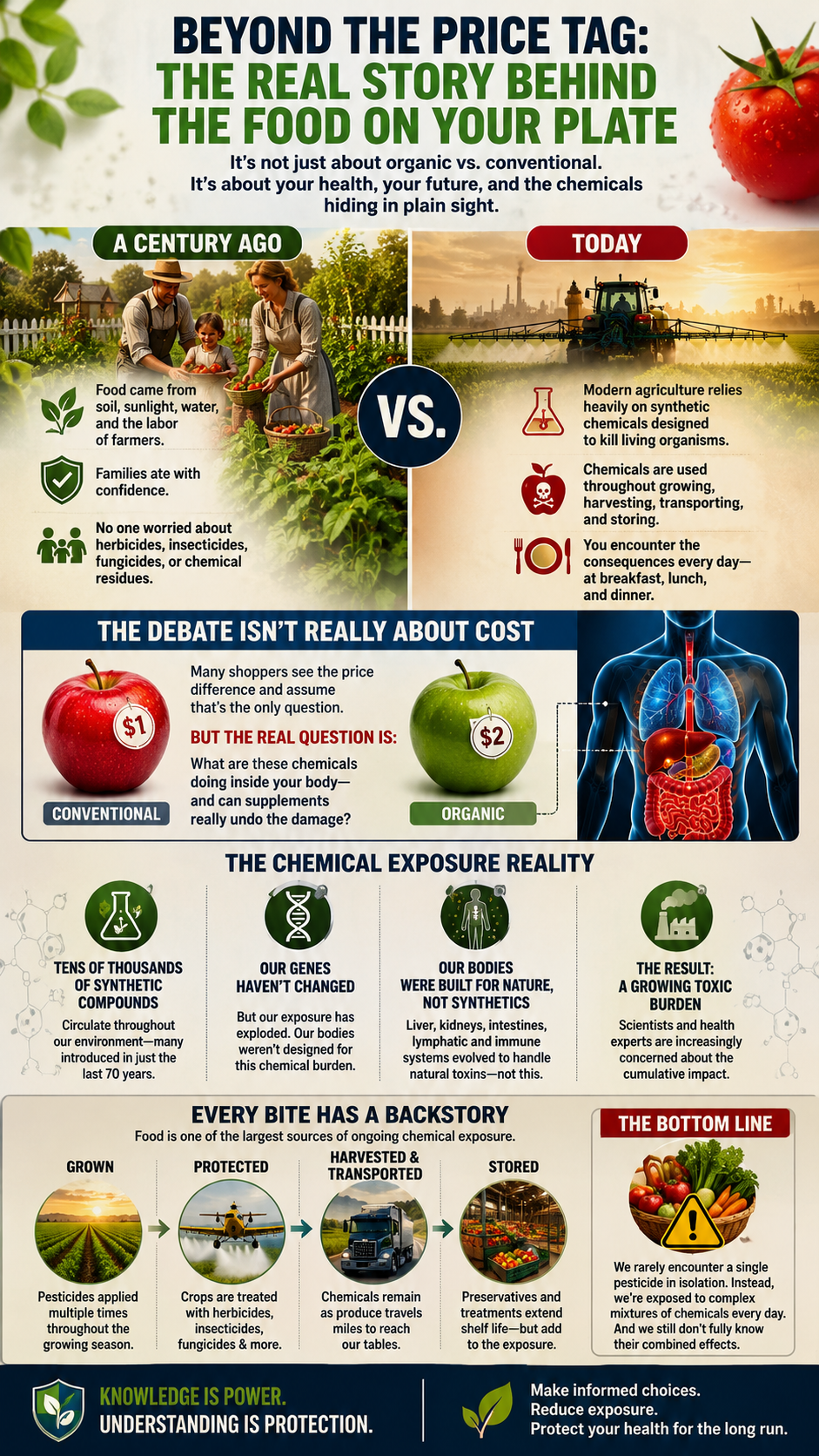
The debate surrounding organic produce often focuses on cost. One shopper sees a conventional apple for a dollar and an organic apple for two dollars and immediately asks whether the higher price makes sense. Unfortunately, that question misses the larger issue. The real concern is not whether organic produce costs more. The real concern is understanding what modern agricultural chemicals do inside the human body, how chronic exposure affects long-term health, and whether detoxification supplements can truly compensate for daily exposure. Before anyone can answer whether organic food is worth purchasing, they must understand what problem organic agriculture is attempting to solve.
Modern consumers live in an era of unprecedented chemical exposure. Researchers estimate that tens of thousands of synthetic compounds circulate throughout the environment. Many of these compounds entered widespread use only within the last seventy years. Human genetics, however, have not changed significantly during that period. The liver, kidneys, intestines, lymphatic system, and immune system evolved to handle naturally occurring toxins found in nature. Those same systems now face a constant barrage of synthetic pesticides, industrial pollutants, plastic compounds, heavy metals, preservatives, and chemical additives. The result is a growing concern among scientists and health practitioners regarding cumulative toxic burden.
Food remains one of the largest sources of ongoing chemical exposure. Every piece of produce tells a story about how it was grown, protected, harvested, transported, and stored. Unfortunately, that story often includes numerous pesticide applications throughout the growing season. While regulatory agencies establish allowable residue limits, many experts question whether long-term low-dose exposure receives adequate attention. Human beings rarely encounter a single pesticide in isolation. Instead, they experience continuous exposure to complex mixtures of chemicals whose combined effects remain poorly understood.
Where Did the Pesticide Problem Begin?
The origins of modern pesticide use can be traced back to the industrial revolution and accelerated dramatically following World War II. Chemical companies discovered that compounds originally developed for military applications possessed powerful agricultural properties. Manufacturers quickly recognized a commercial opportunity. Farmers faced constant threats from insects, weeds, fungi, and crop diseases. Synthetic chemicals promised higher yields, improved profitability, and greater food production.
Agricultural productivity increased dramatically over subsequent decades. Farmers gained tools that reduced crop losses and helped feed growing populations. Consumers enjoyed abundant produce throughout the year. Grocery stores became stocked with fruits and vegetables regardless of season. Beneath those benefits, however, another reality emerged. Agricultural success became increasingly dependent upon repeated chemical applications. Crops received treatments before planting, during growth, after harvest, and throughout transportation. Chemical intervention gradually became a standard component of food production.
Many pesticides were designed with one primary objective. They needed to disrupt biological processes within living organisms. Insects, fungi, weeds, and parasites became targets. Although humans differ significantly from agricultural pests, biological systems often share common pathways. Cellular communication, hormone signaling, mitochondrial energy production, nervous system function, and immune responses depend upon delicate biochemical processes. When chemicals interfere with those processes in pests, questions naturally arise regarding their effects on humans.
Over time, researchers began identifying links between pesticide exposure and numerous health concerns. Scientists observed associations involving neurological disorders, hormone disruption, fertility challenges, immune dysfunction, metabolic disturbances, and chronic inflammatory conditions. While individual studies varied in their conclusions, a consistent theme emerged. Chemical exposure appeared far more biologically active than previously believed.
How Pesticides Enter the Human Body
Most people imagine pesticides sitting on the surface of fruits and vegetables. Washing produce certainly removes some contaminants. Unfortunately, many agricultural chemicals penetrate much deeper than the outer skin. Systemic pesticides are absorbed through roots and distributed throughout plant tissues during growth. As a result, residues may exist inside the fruit itself rather than solely on the surface.
Consumption represents only one exposure route. Agricultural workers frequently absorb pesticides through the skin and respiratory tract. Wind can carry chemical particles into nearby communities. Groundwater contamination may introduce pesticides into drinking water supplies. Household dust can accumulate chemical residues brought indoors on shoes, clothing, and pets. Every exposure pathway contributes to overall toxic burden.

Once pesticides enter the body, the liver attempts to neutralize and eliminate them. Detoxification pathways convert fat-soluble toxins into water-soluble compounds suitable for excretion. This process requires substantial nutritional resources. Vitamins, minerals, amino acids, antioxidants, and enzyme systems must work together efficiently. Chronic exposure increases the workload placed upon these biological systems.
Problems arise when exposure exceeds detoxification capacity. Under those circumstances, toxins may accumulate within tissues. Fat cells often serve as storage sites for chemical compounds. Nervous tissue, endocrine glands, and cellular membranes may also become reservoirs for certain toxins. The body frequently prioritizes survival over immediate elimination. As a result, individuals may carry accumulated toxic burdens for years before symptoms become obvious.
The Assault on the Brain and Nervous System
One of the most concerning effects of pesticide exposure involves neurological health. Many pesticides were specifically engineered to disrupt nervous system signaling in insects. These compounds target neurotransmitter pathways, nerve conduction, and cellular communication mechanisms. Although humans possess different physiological characteristics, some neurological pathways remain surprisingly similar.
Research increasingly suggests that chronic pesticide exposure may influence cognitive performance, mood regulation, memory formation, and neurological resilience. Individuals experiencing persistent brain fog, difficulty concentrating, memory lapses, and mental fatigue often search for explanations involving aging, stress, or sleep deprivation. Environmental toxins frequently receive less attention despite mounting evidence supporting their neurological impact.
Mitochondria provide another important piece of the puzzle. These microscopic structures generate cellular energy throughout the body. Brain tissue consumes enormous amounts of energy every day. Certain pesticides appear capable of disrupting mitochondrial function, reducing energy production and increasing oxidative stress. Cells forced to operate under these conditions become less efficient and more vulnerable to damage.
Inflammation amplifies the problem. Neuroinflammation occurs when immune activity develops within the nervous system. Chronic inflammatory responses can alter neurotransmitter balance and impair communication between brain cells. Many researchers now view neuroinflammation as a significant contributor to cognitive decline and neurological dysfunction. Environmental toxins may serve as one trigger among many that fuels this process.
The Endocrine Disruption Nobody Talks About
Hormones function as chemical messengers that coordinate virtually every aspect of human physiology. Thyroid function, metabolism, reproduction, growth, sleep, mood, and energy production all depend upon proper hormonal communication. Endocrine disruptors interfere with these signaling systems in ways that often escape routine medical testing.
Several pesticides have demonstrated endocrine-disrupting properties. Some compounds mimic hormones. Others block hormone receptors. Certain chemicals alter hormone production or metabolism. The consequences may not appear immediately. Instead, subtle disruptions accumulate over time, gradually influencing metabolic health and physiological performance.
Women frequently experience the effects through menstrual irregularities, fertility challenges, and hormone-related symptoms. Men may notice reduced testosterone levels, diminished vitality, and reproductive concerns. Children appear particularly vulnerable because developing endocrine systems are highly sensitive to environmental influences. Even small disruptions during critical developmental periods may have lasting consequences.
Thyroid health deserves special attention within this discussion. The thyroid gland regulates metabolic rate, temperature control, energy production, and countless biochemical reactions. Several environmental toxins appear capable of interfering with thyroid hormone production, conversion, transport, and receptor sensitivity. Individuals struggling with fatigue, weight gain, hair loss, cold intolerance, and brain fog often investigate thyroid dysfunction without considering environmental chemical exposure as a contributing factor.
Why Inflammation Is the Real Story
When discussing pesticides, many people focus on toxicity as though exposure causes immediate poisoning. Acute poisoning certainly occurs in severe cases. Most modern health challenges involve a different mechanism. Chronic low-dose exposure often promotes inflammation rather than dramatic toxicity.
Inflammation represents the body’s response to perceived threats. Under normal circumstances, inflammation supports healing and protection. Problems develop when inflammatory signals remain activated for months or years. Chronic inflammation damages tissues, disrupts cellular communication, impairs recovery, and accelerates biological aging.
Environmental chemicals can contribute to inflammatory burden through multiple pathways. Oxidative stress damages cellular structures. Immune activation increases inflammatory signaling. Gut barrier dysfunction allows unwanted substances to enter circulation. Hormonal disruption alters metabolic regulation. Together, these processes create conditions that favor persistent inflammation.
Many chronic diseases share inflammatory roots. Cardiovascular disease, autoimmune disorders, metabolic syndrome, neurodegenerative conditions, and digestive dysfunction all involve inflammatory mechanisms. Pesticides may not serve as the sole cause of these conditions. However, they often contribute to the cumulative burden pushing physiology toward dysfunction.
Are Functional Binders Enough?
The popularity of functional medicine has introduced many people to detoxification strategies involving binders. Activated charcoal, modified citrus pectin, bentonite clay, humic substances, zeolite, and specialized fibers have gained attention for their ability to support toxin elimination. These compounds can provide valuable support under appropriate circumstances.
Binders function primarily within the digestive tract. They attach to toxins and reduce reabsorption during elimination. This mechanism becomes particularly important when toxins enter bile and undergo enterohepatic recirculation. Interrupting that recycling process can help lower total body burden over time.
Despite their usefulness, binders cannot solve the entire problem. Imagine attempting to empty a bathtub while leaving the faucet fully open. Water continues entering as quickly as removal occurs. Progress becomes difficult despite considerable effort. The same principle applies to environmental toxins. Continuous exposure limits the effectiveness of even sophisticated detoxification protocols.
Many consumers hope supplements will compensate for poor environmental choices. Unfortunately, biology rarely works that way. Reducing incoming exposure remains the most effective strategy. Detoxification support enhances results but cannot completely offset ongoing chemical overload. The smartest approach combines exposure reduction with detoxification enhancement rather than relying exclusively on either strategy.
Is Organic Produce Worth the Extra Cost?
The evidence strongly suggests that organic produce reduces pesticide exposure. Numerous studies have demonstrated measurable decreases in pesticide metabolites among individuals consuming predominantly organic diets. These findings indicate that food choices directly influence chemical burden.
Organic farming standards prohibit many synthetic pesticides commonly used in conventional agriculture. While organic farming does not eliminate every chemical exposure, it substantially reduces many of the most concerning compounds. This reduction translates into lower demands on detoxification systems and decreased cumulative burden over time.
Cost remains a legitimate concern for many families. Purchasing exclusively organic food may not fit every budget. Fortunately, perfection is unnecessary. Strategic choices can significantly reduce exposure without doubling grocery expenses. Prioritizing organic purchases for produce carrying the highest pesticide residues often provides meaningful benefits while preserving financial flexibility.
Long-term health economics deserve consideration as well. Consumers frequently focus on immediate grocery expenses while overlooking future healthcare costs. Chronic disease management often costs far more than preventive lifestyle investments. Food quality influences health trajectories in ways that become apparent over decades rather than weeks.
Practical Steps to Reduce Pesticide Exposure at Home
Reducing pesticide exposure begins with awareness. Consumers who understand where exposures originate can make more informed decisions. Washing produce thoroughly helps remove surface residues. Peeling certain fruits and vegetables may further reduce contamination, although this approach can also remove valuable nutrients.
Choosing organic versions of high-residue produce offers another practical strategy. Seasonal purchasing supports this effort because locally grown foods often require fewer preservation treatments. Farmers markets frequently provide opportunities to discuss growing practices directly with producers.

Supporting detoxification pathways remains equally important. Hydration assists elimination through the kidneys. Regular bowel movements reduce toxin reabsorption. Adequate protein intake supplies amino acids required for liver detoxification. Cruciferous vegetables contain compounds that support detoxification enzymes. Physical activity enhances circulation and lymphatic movement, improving waste removal throughout the body.
Sleep deserves special recognition because detoxification processes intensify during restorative rest. Poor sleep impairs recovery, increases inflammation, and compromises physiological resilience. Individuals attempting to lower toxic burden while neglecting sleep often experience limited progress.
Functional binders can serve as valuable tools when incorporated thoughtfully. Their greatest benefits occur within comprehensive programs addressing nutrition, gut health, liver function, hydration, movement, and exposure reduction simultaneously. No supplement can replace healthy foundational habits.
The Final Verdict
The debate between organic produce and functional binders creates a false choice. Both approaches address different aspects of the same problem. Organic food reduces incoming chemical exposure. Functional binders assist elimination of toxins already present within the body. One strategy prevents accumulation. The other supports removal.
Modern society exposes individuals to more environmental chemicals than any previous generation experienced. Food represents one of the most controllable exposure sources available. Every meal creates an opportunity either to increase toxic burden or reduce it. Small choices repeated daily produce powerful effects over time.
Ultimately, the question is not whether organic produce is perfect. The question is whether reducing pesticide exposure matters. Current evidence suggests it does. The goal should never be perfection. Instead, the objective involves lowering toxic burden whenever practical while strengthening the body’s natural detoxification systems. When exposure decreases and detoxification improves simultaneously, physiology gains the opportunity to function as nature intended. That combination remains far more powerful than any binder, supplement, or cleanse used in isolation.