
The Exhaustion That Sleep Cannot Fix
Imagine waking after ten hours of sleep and feeling as though you never closed your eyes. Your body feels heavy. Your thoughts move slowly. Climbing a flight of stairs feels like a major accomplishment. Coffee offers only temporary relief. Exercise leaves you worse than before. Friends tell you to get more rest. Doctors tell you your blood work looks normal. Yet deep inside, you know something is wrong. The energy that once powered your life seems to have disappeared, replaced by a relentless exhaustion that follows you everywhere.
This experience has become increasingly common. Millions of people struggle with chronic fatigue syndrome, unexplained exhaustion, post-viral fatigue, fibromyalgia, and debilitating brain fog. Many spend years searching for answers. They visit specialists, undergo testing, and try countless treatments. Despite these efforts, they often hear the same response: everything appears normal. Unfortunately, normal laboratory values do not always reflect optimal cellular health. Many routine tests fail to examine one of the most important systems in the human body—the system responsible for producing energy itself.
Beneath the surface of chronic fatigue syndrome lies a growing body of evidence pointing toward mitochondrial dysfunction. These tiny structures exist inside nearly every cell and determine how much energy your body can generate. When mitochondria function properly, life feels vibrant and productive. When they become damaged, exhausted, or overwhelmed, every organ system begins to suffer. Understanding this connection may explain why so many people remain chronically fatigued despite receiving normal test results and conventional reassurance.
What Chronic Fatigue Syndrome Really Is
Many people mistakenly believe chronic fatigue syndrome simply means feeling tired. The reality is far more complex. Chronic fatigue syndrome represents a profound breakdown in the body’s ability to produce, manage, and utilize energy. Individuals often experience severe exhaustion that does not improve with rest. Daily tasks become difficult. Physical activity triggers prolonged crashes. Mental performance declines. Sleep becomes less restorative despite increasing fatigue.
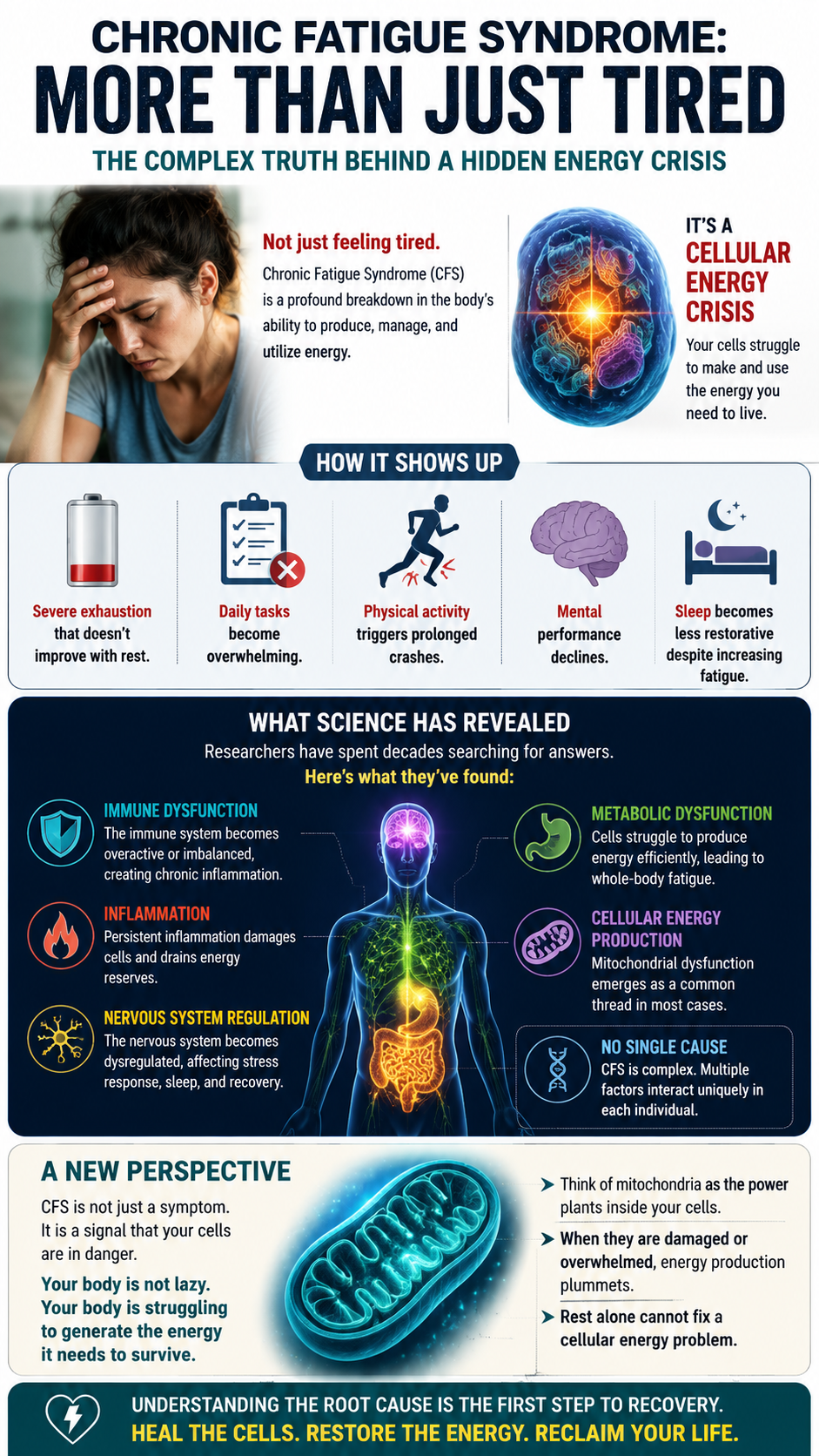
Researchers have spent decades attempting to understand this condition. Early theories focused on psychological causes, stress, or simple deconditioning. More recent investigations reveal a much deeper biological problem. Scientists now recognize abnormalities involving immune function, inflammation, nervous system regulation, metabolism, and cellular energy production. Although no single cause explains every case, mitochondrial dysfunction consistently appears as a major contributor.
This perspective changes how we view chronic fatigue syndrome. Instead of seeing fatigue as a symptom alone, we begin viewing it as evidence of a cellular energy crisis. The body is not merely tired. The body is struggling to generate the energy required to sustain normal physiological function.
The Tiny Power Plants That Control Human Energy
Inside nearly every cell reside specialized structures called mitochondria. These remarkable organelles function as microscopic power plants. Their primary job involves converting nutrients and oxygen into adenosine triphosphate, commonly known as ATP. ATP serves as the body’s universal energy currency. Every heartbeat, every breath, every thought, and every movement depends upon a continuous supply of ATP.
The importance of mitochondria becomes apparent when considering the organs that consume the most energy. The brain represents only a small percentage of body weight, yet it consumes enormous amounts of ATP. The heart never stops beating and requires constant energy production. Muscles need ATP for movement and recovery. The liver requires energy for detoxification. The immune system demands energy to identify and eliminate threats.
Healthy mitochondria allow cells to perform these functions efficiently. Damaged mitochondria produce less ATP, generate more oxidative stress, and struggle to meet cellular demands. As energy production declines, symptoms begin appearing throughout the body. Fatigue often emerges first, but many other problems soon follow.
Where Mitochondrial Dysfunction Begins
Mitochondrial dysfunction rarely develops overnight. Most cases result from years of accumulated stressors that gradually impair cellular performance. Modern life exposes people to an unprecedented combination of inflammatory triggers, environmental toxins, chronic stress, nutritional deficiencies, and sleep disruption. Each factor places additional strain on mitochondria.
Inflammation serves as one of the most significant contributors. Acute inflammation helps the body heal injuries and fight infections. Chronic inflammation creates an entirely different outcome. Persistent inflammatory signals generate reactive oxygen species that damage mitochondrial membranes, proteins, and DNA. Over time, these microscopic injuries reduce the mitochondria’s ability to produce ATP efficiently.
Environmental toxins create another major burden. Heavy metals such as mercury, lead, arsenic, and cadmium interfere directly with mitochondrial enzymes. Pesticides, herbicides, plastics, industrial chemicals, and air pollutants further increase oxidative stress. Many of these compounds accumulate in tissues and continuously challenge cellular function. The result is a gradual decline in energy production that often goes unnoticed until symptoms become severe.
The Hidden Role of Chronic Stress
Stress affects far more than emotions. Chronic stress creates profound physiological consequences that directly influence mitochondrial health. The human body evolved to handle short bursts of danger. Modern lifestyles often keep individuals trapped in a constant state of survival.
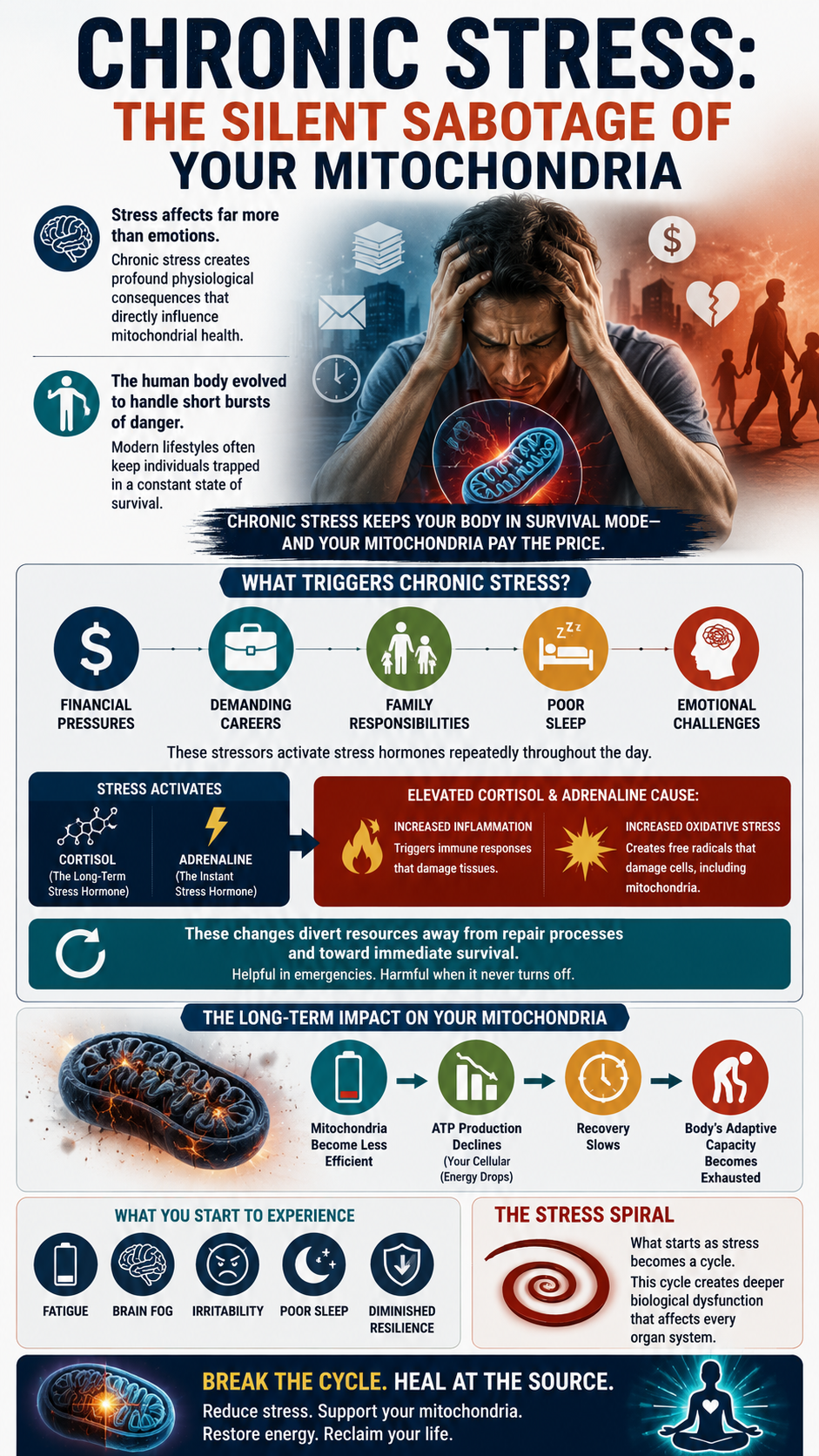
Financial pressures, demanding careers, family responsibilities, poor sleep, and emotional challenges activate stress hormones repeatedly throughout the day. Elevated cortisol and adrenaline increase inflammation and oxidative stress. These changes divert resources away from repair processes and toward immediate survival. While this response helps during emergencies, it becomes harmful when activated continuously.
Over months and years, chronic stress exhausts the body’s adaptive capacity. Mitochondria become less efficient. ATP production declines. Recovery slows. Individuals begin experiencing fatigue, brain fog, irritability, poor sleep, and diminished resilience. What starts as stress eventually evolves into a deeper biological dysfunction affecting every organ system.
How Chronic Infections Fuel Fatigue
Many patients with chronic fatigue syndrome trace the onset of symptoms to an infection. A virus, bacterial illness, or severe flu-like episode often precedes the development of long-term exhaustion. This pattern has led researchers to investigate the relationship between infections and mitochondrial dysfunction.
Viruses such as Epstein-Barr, cytomegalovirus, and others possess the ability to alter cellular metabolism. Even after acute symptoms resolve, lingering immune activation may continue damaging mitochondria. Persistent inflammation increases oxidative stress and reduces ATP production. Some researchers believe certain infections push the body into a protective metabolic state designed for survival rather than performance.
Unfortunately, survival mode creates significant consequences. Energy production slows. Physical capacity declines. Mental clarity suffers. The immune system remains activated. Patients often describe feeling as though they never fully recovered from the original illness. In many cases, mitochondrial dysfunction helps explain why.
What Mitochondrial Dysfunction Does to the Brain
The brain demands extraordinary amounts of energy. Every thought, memory, and decision depends upon ATP production. When mitochondria struggle, cognitive performance declines quickly.
Brain fog often represents one of the earliest signs of mitochondrial dysfunction. Individuals report difficulty concentrating, recalling information, and processing thoughts. Tasks that once felt effortless suddenly require tremendous effort. Reading comprehension decreases. Conversations become harder to follow. Productivity suffers both personally and professionally.
Reduced ATP production also affects neurotransmitter balance. The brain relies on complex chemical signaling systems to regulate mood, motivation, focus, and emotional stability. Mitochondrial dysfunction disrupts these processes, contributing to anxiety, depression, irritability, and poor stress tolerance. Patients frequently describe feeling disconnected from their former selves.
The Impact on Hormones and Metabolism
Hormonal systems require energy to function properly. Every hormone must be produced, transported, converted, and utilized by cells. Mitochondrial dysfunction interferes with each step of this process.
The thyroid gland provides a clear example. Thyroid hormones influence metabolism, body temperature, energy levels, and cognitive function. Although laboratory values may appear normal, cellular energy deficits can impair hormone utilization. Many individuals experience symptoms consistent with hypothyroidism despite receiving reassuring test results.
Blood sugar regulation also becomes compromised. Mitochondria play a critical role in insulin sensitivity and glucose metabolism. As mitochondrial function declines, cells become less efficient at utilizing fuel. Blood sugar fluctuations increase. Cravings worsen. Weight gain becomes more common. Fatigue intensifies because cells struggle to convert nutrients into usable energy.
The Gut-Mitochondria Connection
The digestive system plays a central role in mitochondrial health. Every nutrient required for ATP production enters the body through the gastrointestinal tract. When digestive function deteriorates, energy production suffers.
Leaky gut syndrome represents one important mechanism. Increased intestinal permeability allows inflammatory compounds to enter the bloodstream. The immune system responds aggressively, creating chronic inflammation that damages mitochondria. Simultaneously, nutrient absorption declines. Deficiencies in magnesium, zinc, selenium, amino acids, and B vitamins become more common.
The gut microbiome also influences mitochondrial function. Beneficial bacteria produce compounds that support energy production and reduce inflammation. Disruptions in microbial balance contribute to fatigue through multiple pathways. Restoring digestive health often becomes a crucial step in recovering energy.
Why Most Laboratories Miss the Real Problem
Traditional laboratory testing excels at identifying advanced disease. Unfortunately, mitochondrial dysfunction often develops long before conventional markers become abnormal. A person can experience severe fatigue while maintaining normal blood counts, cholesterol levels, and metabolic markers.
Most routine tests evaluate downstream consequences rather than cellular performance. They measure what happens after significant dysfunction develops. Mitochondrial impairment occurs much earlier. The problem exists within the cell rather than within the bloodstream.
This limitation explains why many patients feel dismissed. Their symptoms are real. Their suffering is genuine. Standard testing simply fails to examine the systems responsible for producing cellular energy. As a result, many individuals spend years searching for answers while the underlying problem continues progressing.
Nutrients Required for Cellular Energy
Mitochondria require a steady supply of nutrients to produce ATP efficiently. Modern diets often provide excess calories while lacking critical micronutrients. This imbalance creates an environment where energy production becomes increasingly difficult.
Magnesium participates in hundreds of biochemical reactions related to ATP generation. B vitamins serve as essential cofactors throughout energy-producing pathways. Coenzyme Q10 supports electron transport chain activity. Carnitine helps transport fatty acids into mitochondria where they can be converted into fuel. Selenium protects against oxidative damage while supporting thyroid function.
Deficiencies in these nutrients impair mitochondrial performance. Processed foods, chronic stress, medications, digestive dysfunction, and poor dietary habits increase the likelihood of deficiency. Correcting nutritional imbalances often produces meaningful improvements in energy, cognition, and recovery.
Steps You Can Take at Home to Support Mitochondrial Health
Recovery begins by reducing the factors damaging mitochondria while supporting cellular repair. Sleep should become a top priority. Deep restorative sleep allows mitochondria to repair themselves and replenish energy reserves. Consistent sleep schedules, reduced evening light exposure, and healthy sleep hygiene create a foundation for healing.
Nutrition also plays a critical role. Whole foods provide the vitamins, minerals, amino acids, and healthy fats required for ATP production. Reducing processed foods, refined sugars, and inflammatory ingredients lowers oxidative stress while improving metabolic efficiency. Supporting digestive health enhances nutrient absorption and reduces inflammatory burden.

Movement remains important, but intensity matters. Many individuals with chronic fatigue syndrome worsen symptoms by pushing too hard. Gentle walking, stretching, and low-intensity resistance training often provide greater benefits than aggressive exercise. The goal involves gradually improving mitochondrial function rather than overwhelming already stressed energy systems.
Stress management cannot be overlooked. Prayer, meditation, deep breathing, time in nature, and meaningful social connections help calm the nervous system. Lower stress levels reduce inflammation and improve mitochondrial efficiency. Consistent stress reduction often produces significant improvements in energy and resilience.
Supporting detoxification may further enhance recovery. Hydration, regular bowel movements, sweating, and adequate nutrient intake help the body eliminate toxins more effectively. Reducing exposure to environmental chemicals decreases the ongoing burden placed upon mitochondria.
The Future of Fatigue Recovery
Scientific understanding of chronic fatigue syndrome continues evolving. Researchers increasingly recognize that fatigue represents far more than a lack of motivation or inadequate sleep. The condition reflects complex interactions involving inflammation, metabolism, immune function, environmental exposures, and mitochondrial performance.
This shift in perspective offers hope. Rather than merely masking symptoms, future approaches may focus on restoring cellular energy production. Identifying root causes allows for targeted interventions that address the true source of fatigue rather than its downstream consequences.
Final Thoughts
Chronic fatigue syndrome often represents a cellular energy crisis hidden beneath normal laboratory results. Mitochondrial dysfunction affects the brain, hormones, metabolism, digestive system, immune function, and overall quality of life. Unfortunately, conventional testing frequently overlooks these changes because it rarely examines the body’s energy-producing machinery.
The encouraging news is that mitochondria possess a remarkable capacity for recovery. By reducing inflammation, improving nutrition, supporting digestive health, managing stress, prioritizing sleep, and minimizing toxic exposures, individuals can often begin rebuilding their cellular energy systems. Fatigue may feel overwhelming, but understanding its true origins provides a roadmap toward restoration. The journey back to health does not begin with another stimulant or another attempt to push harder. It begins by supporting the microscopic power plants that fuel every cell in the human body.