
The Illness Nobody Can See, Yet Millions Feel Every Day
She wakes before sunrise, not because she feels refreshed, but because pain refuses to let her sleep any longer. Her shoulders ache. Her hips feel stiff. Her hands feel swollen despite appearing normal. A thick mental fog clouds her thoughts before her feet touch the floor. She wonders how she can feel so broken when every test says she is healthy. Friends tell her she looks fine. Family members encourage her to push through it. Deep inside, she begins questioning herself, even though every part of her body insists something is wrong.
This scene unfolds in millions of homes every day. Fibromyalgia affects millions of people worldwide and remains one of the most misunderstood conditions in modern healthcare. Patients often spend years searching for answers. They visit specialists. They undergo scans. They complete blood tests. Yet many leave those appointments without understanding why their symptoms exist. Receiving a diagnosis often explains what they have, but it rarely explains why they developed it.

For decades, fibromyalgia occupied a controversial place within medicine. Patients experienced severe symptoms, yet standard testing frequently appeared normal. As a result, many healthcare providers viewed the condition as a disorder of pain processing rather than a disease driven by measurable biological dysfunction. Unfortunately, that perspective left countless sufferers feeling dismissed, misunderstood, and hopeless. While experts debated theories, patients continued struggling with pain, exhaustion, and declining quality of life.
A growing body of research now points toward a different explanation. Fibromyalgia appears less like a mysterious pain syndrome and more like a complex inflammatory condition involving the immune system, digestive tract, nervous system, endocrine system, mitochondria, and detoxification pathways. Instead of asking whether fibromyalgia is real, researchers increasingly ask what mechanisms drive it. The answers emerging from that question are changing how many experts understand chronic pain and fatigue.
The story of fibromyalgia begins long before the diagnosis. Symptoms often develop after years of accumulated stress on the body. Understanding those underlying forces helps explain why so many people suffer and why conventional treatments often fail to deliver lasting results.
The Great Fibromyalgia Mystery: Why Conventional Medicine Missed the Real Story
Modern medicine excels at identifying acute illnesses. A broken bone appears on an X-ray. Diabetes reveals itself through elevated glucose levels. Pneumonia shows up on a chest scan. Fibromyalgia presents a very different challenge. Symptoms develop gradually. Multiple body systems become involved. Standard laboratory tests often fail to capture the dysfunction occurring beneath the surface.
For years, researchers focused primarily on a concept known as central sensitization. According to this theory, the brain amplifies pain signals, causing ordinary sensations to feel painful. While central sensitization explains part of the picture, it fails to explain why the nervous system becomes sensitized in the first place. It also fails to account for digestive disturbances, hormonal changes, fatigue, cognitive dysfunction, and immune abnormalities that frequently accompany fibromyalgia.
Imagine a smoke detector blaring in a house. Conventional medicine often focuses on silencing the alarm. Functional investigation asks what caused the fire. Pain represents the alarm. The real question involves identifying what keeps triggering it. If inflammation, toxicity, infection, nutritional deficiencies, and gut dysfunction continue feeding the fire, the alarm will keep sounding regardless of how many medications suppress symptoms.
Modern life exposes people to unprecedented levels of physiological stress. Processed foods dominate the food supply. Environmental toxins infiltrate the air, water, and soil. Chronic psychological stress affects nearly every household. Sleep deprivation has become commonplace. Sedentary lifestyles weaken resilience. These factors place continuous strain on the body’s adaptive systems.
Fibromyalgia may represent one consequence of that cumulative burden. Symptoms rarely appear overnight. Most patients can identify years of digestive problems, hormonal disruptions, recurrent infections, emotional trauma, toxic exposures, or chronic stress before their diagnosis. The illness often reflects accumulated physiological overload rather than a single isolated cause.
The Hidden Fire: How Chronic Inflammation Hijacks the Entire Body
Inflammation serves an essential purpose when properly regulated. It helps the body heal after injury and defend itself against infection. Problems arise when inflammation becomes chronic. Instead of supporting healing, it begins damaging tissues and disrupting normal physiological processes.
Research has identified elevated inflammatory cytokines in many individuals with fibromyalgia. These signaling molecules influence pain perception, energy production, sleep quality, immune activity, and brain function. Elevated levels of inflammatory cytokines create a biological environment where healing becomes difficult and symptoms become persistent.
Inflammation changes how the nervous system processes information. Pain receptors become hypersensitive. Minor stimuli begin generating major discomfort. Muscles remain tense. Recovery slows. Sleep becomes fragmented. The nervous system enters a constant state of vigilance. Patients often describe feeling trapped in survival mode. Scientific evidence increasingly supports that observation.
Chronic inflammation also affects circulation. Blood vessels become less responsive. Oxygen delivery declines. Nutrient transport becomes less efficient. Waste removal slows. Every organ depends upon healthy circulation. When inflammation interferes with vascular function, tissues struggle to meet their energy demands.
The immune system suffers as well. Persistent inflammation forces immune cells to remain active long after their protective role should have ended. This creates a vicious cycle where inflammation generates more inflammation. The result is a body stuck in a state of chronic stress.
Pain may represent the most obvious symptom of fibromyalgia, but it is not the only consequence. Inflammation affects every major organ system. Understanding this reality shifts attention away from symptom suppression and toward identifying the factors that keep inflammation alive.
Ground Zero: Why the Gut Often Starts the Fibromyalgia Cascade
The digestive tract may be one of the most important pieces of the fibromyalgia puzzle. Scientists once viewed the gut primarily as a digestive organ. Modern research reveals a much broader role. The gastrointestinal system functions as an immune organ, a communication network for the nervous system, and a protective barrier separating the body from the outside world.
Inside the intestines live trillions of microorganisms collectively known as the microbiome. These microbes influence digestion, immunity, metabolism, hormone production, and brain function. A healthy microbiome supports resilience. An unhealthy microbiome promotes inflammation.
Processed foods, chronic stress, antibiotics, pesticides, artificial sweeteners, and environmental toxins can disrupt the microbiome. As beneficial bacteria decline, harmful species gain an advantage. This imbalance creates inflammation within the intestinal lining and weakens the protective barrier that separates intestinal contents from the bloodstream.
When the intestinal barrier becomes compromised, increased intestinal permeability may develop. Many people know this condition as leaky gut. Bacterial toxins, undigested food particles, and inflammatory compounds begin crossing into circulation. The immune system responds aggressively because it recognizes these substances as threats.
That immune activation does not remain confined to the gut. Inflammatory molecules travel throughout the body. Muscles become sensitive. Joints become reactive. The brain experiences inflammatory stress. Energy production declines. Pain thresholds decrease. Over time, symptoms emerge that closely resemble fibromyalgia.
Many patients recall years of bloating, constipation, diarrhea, reflux, or food sensitivities before developing widespread pain. These observations suggest the gut often serves as the starting point for systemic dysfunction. Addressing digestive health therefore becomes one of the most important steps in any recovery strategy.
The Brain Under Siege: Understanding Fibro Fog
One of the most frustrating aspects of fibromyalgia involves cognitive dysfunction. Patients frequently describe forgetfulness, poor concentration, difficulty finding words, and mental fatigue. These symptoms can interfere with careers, relationships, and daily responsibilities.
Inflammation plays a significant role in this process. The brain constantly communicates with the immune system. Elevated inflammatory cytokines alter neurotransmitter production and impair neuronal communication. As inflammation increases, cognitive performance often declines.
Mitochondrial dysfunction contributes to the problem. The brain requires enormous amounts of energy. Mitochondria generate that energy inside every cell. When mitochondrial performance declines, mental clarity often follows. Patients experience slower processing speed, impaired memory, and reduced concentration.
Researchers also suspect neuroinflammation contributes to fibro fog. Immune cells within the brain become activated during chronic inflammatory states. While protective in the short term, prolonged activation can disrupt normal neurological function. The result is a brain struggling to perform under constant biochemical stress.
Fibro fog is not imaginary. It reflects measurable physiological changes occurring inside the nervous system. Recognizing this fact helps validate the experiences of millions who have been told their symptoms exist only in their minds.
When Your Cellular Batteries Begin to Fail
Every cell in the human body relies on mitochondria for energy production. These microscopic structures function like power plants. They convert nutrients into ATP, the energy currency required for life.
Studies have repeatedly identified mitochondrial dysfunction in individuals with fibromyalgia. Damaged mitochondria produce less ATP while generating greater amounts of oxidative stress. This combination creates fatigue, muscle pain, exercise intolerance, and slow recovery.
Imagine trying to power a city while shutting down half of its electrical plants. Lights would dim. Systems would fail. Productivity would decline. A similar process occurs inside the body when mitochondria lose efficiency.
Muscles require energy to contract and relax. The brain requires energy to process information. The immune system requires energy to regulate inflammation. Every organ depends upon adequate ATP production. When mitochondrial function declines, symptoms begin appearing throughout the body.
This energy crisis explains why many fibromyalgia patients wake up exhausted despite sleeping all night. Their cells simply cannot produce energy efficiently. The result is a body that feels depleted regardless of how much rest it receives.
Toxic Overload: The Environmental Factors Nobody Talks About
Modern humans encounter more synthetic chemicals than any previous generation. Heavy metals, pesticides, herbicides, plastics, solvents, and industrial pollutants have become part of everyday life. While the body possesses detoxification systems, those systems can become overwhelmed.
Many environmental toxins increase oxidative stress and inflammation. Some interfere directly with mitochondrial function. Others disrupt hormone production or damage the nervous system. Over time, toxic burden may contribute to the development of chronic symptoms.
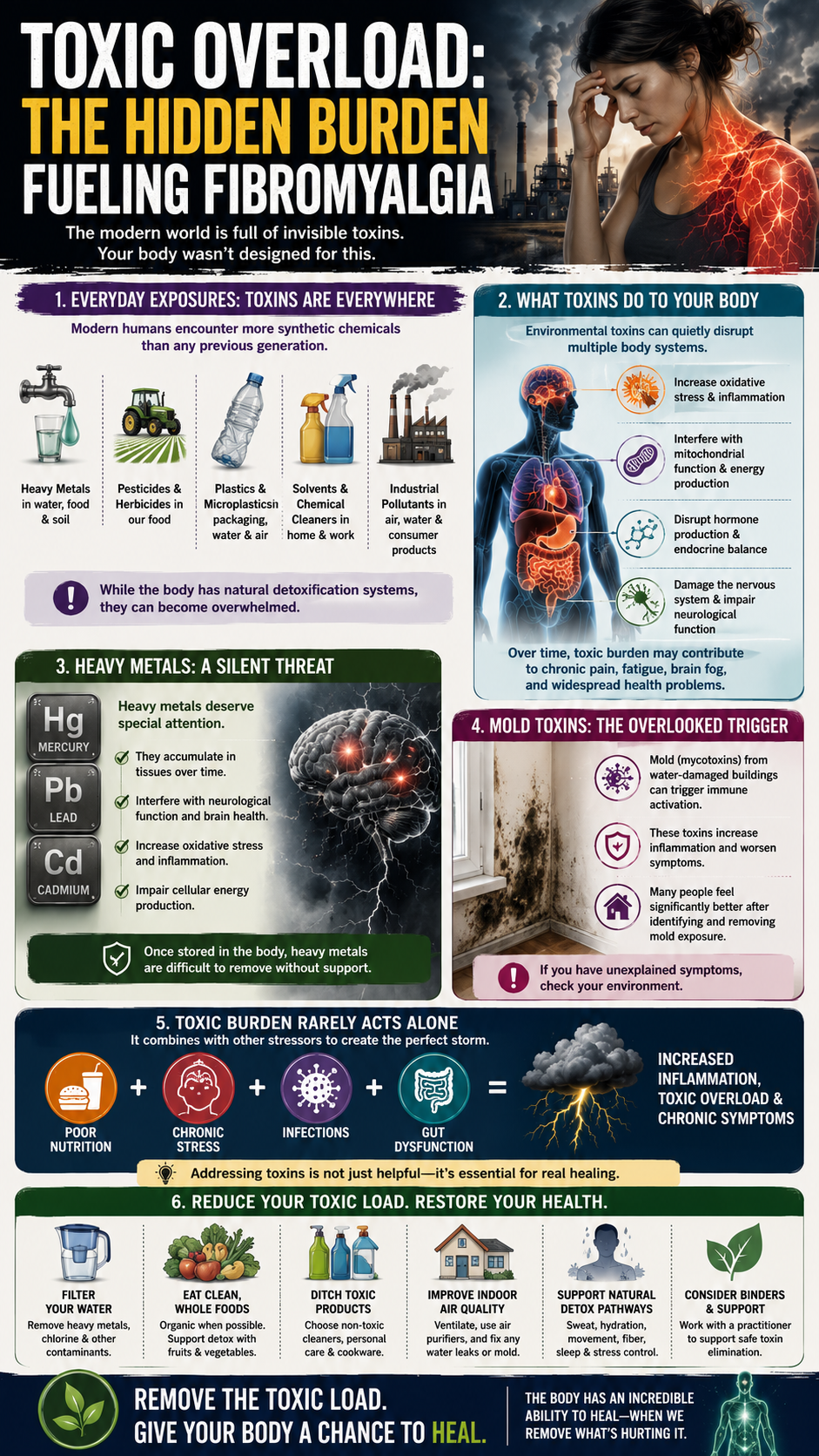
Heavy metals such as mercury, lead, and cadmium deserve particular attention. These substances can accumulate within tissues and interfere with neurological function. They also promote oxidative stress and impair cellular energy production.
Mold toxins represent another overlooked trigger. Water-damaged buildings can expose individuals to mycotoxins that activate the immune system and increase inflammation. Many patients report symptom improvement after identifying and removing mold exposure.
Toxic burden rarely acts alone. Instead, it combines with poor nutrition, chronic stress, infections, and gut dysfunction to create a perfect storm. Removing sources of toxic exposure often becomes an important step toward restoring health.
The Infection Link
Many fibromyalgia patients report symptom onset following an infection. Researchers have investigated links between fibromyalgia and pathogens such as Epstein-Barr virus, Lyme disease, cytomegalovirus, and mycoplasma species.
Although infections may not cause every case, they can trigger chronic immune activation. Even after the original infection resolves, the immune system may remain on high alert. Persistent inflammation can then affect the nervous system, digestive tract, endocrine system, and mitochondria.
Some infections also increase oxidative stress and impair energy production. Others disrupt immune regulation. The result is a body struggling to return to normal physiological balance.
For certain individuals, addressing hidden infections may become a critical component of recovery. Identifying these factors requires a comprehensive approach that looks beyond symptom management.
Why Stress Makes Fibromyalgia Worse
Stress does not necessarily cause fibromyalgia, but it can worsen every mechanism involved. Chronic stress increases cortisol production and activates the sympathetic nervous system. Over time, these changes disrupt sleep, impair digestion, weaken immunity, and promote inflammation.
The body was designed to handle short periods of stress. It was never designed for constant activation. Modern lifestyles often keep individuals in a state of perpetual vigilance. Financial concerns, relationship challenges, work pressures, and digital overload prevent the nervous system from recovering.
When stress hormones remain elevated, inflammation increases. Gut permeability worsens. Blood sugar becomes unstable. Mitochondrial function declines. The entire body shifts into survival mode.
Reducing stress therefore becomes more than an emotional exercise. It becomes a biological intervention capable of influencing inflammation, immunity, digestion, and energy production.
Why Conventional Treatments Often Fail
Most conventional treatments focus on symptom management. Pain medications reduce discomfort. Sleep aids encourage rest. Antidepressants alter neurotransmitter activity. While these interventions may provide temporary relief, they rarely address the underlying drivers of inflammation.
Imagine placing a bucket beneath a leaking roof. The bucket prevents water from reaching the floor, but it does not repair the hole. Symptom-based treatments often function in a similar manner. They reduce suffering without eliminating the source of dysfunction.
This does not mean medications lack value. They may provide important support for some patients. However, long-term recovery usually requires identifying the factors fueling inflammation. Until those factors are addressed, symptoms often persist.
A more comprehensive approach investigates nutrition, gut health, toxin exposure, infections, sleep quality, stress levels, hormonal balance, and mitochondrial function. By addressing multiple contributors simultaneously, patients often experience more meaningful improvements.
The At-Home Recovery Blueprint
Healing begins with reducing inflammatory inputs and supporting the body’s natural repair mechanisms. Nutrition provides one of the most powerful starting points. Whole foods rich in nutrients help lower inflammation while supporting mitochondrial function. Eliminating processed foods, refined sugars, and industrial seed oils often produces noticeable improvements.
Restoring gut health should become a priority. Removing foods that trigger immune reactions while supporting microbial diversity can reduce inflammation throughout the body. Many individuals experience improvements in pain and energy after addressing digestive dysfunction.
Sleep optimization remains essential. Deep sleep serves as the body’s primary repair window. Consistent sleep schedules, reduced evening screen exposure, and healthy sleep habits support recovery and reduce inflammatory burden.

Movement also plays a crucial role. Gentle exercise improves circulation, supports mitochondrial function, and reduces inflammation. Walking, stretching, swimming, and mobility work often provide benefits without overwhelming the body.
Stress reduction deserves equal attention. Meditation, prayer, breathing exercises, time in nature, and meaningful social connections help calm the nervous system. As stress decreases, inflammatory signaling often follows.
Reducing toxic exposure can further support healing. Filtering water, improving indoor air quality, choosing cleaner foods, and avoiding unnecessary chemical exposure may decrease the burden placed upon detoxification systems.
Recovery rarely occurs overnight. Healing represents a process rather than a single event. Consistent daily actions often produce the most meaningful long-term results.
Extinguishing the Fire
Fibromyalgia is not imaginary. It is not weakness. It is not a character flaw. The symptoms experienced by millions of sufferers reflect real physiological dysfunction occurring throughout the body. Pain represents only one manifestation of a much larger problem.
Evidence increasingly suggests that chronic inflammation sits at the center of the fibromyalgia story. Gut dysfunction, toxic burden, hidden infections, chronic stress, hormonal imbalances, and mitochondrial failure may all contribute to that inflammatory state. Together, they create an environment where pain, fatigue, and cognitive dysfunction flourish.
The future of fibromyalgia treatment may depend less on suppressing symptoms and more on identifying the factors that keep the inflammatory fire burning. When those factors are addressed, the body often demonstrates a remarkable capacity for recovery.
For millions searching for answers, that possibility offers something more valuable than another diagnosis. It offers hope. Hope that the pain has a reason. Hope that the fatigue has an explanation. Hope that healing remains possible. Most importantly, it offers the understanding that fibromyalgia is not all in your head. It is a whole-body condition demanding a whole-body solution.