
The Strange Story Behind a Treatment Many Elite Athletes Refuse to Compete Without
Few topics in athletic performance create more debate than chiropractic adjustments. For decades, elite athletes have quietly sought chiropractic care before major competitions, during grueling training seasons, and throughout rehabilitation programs. Olympic athletes, professional football players, golfers, mixed martial artists, runners, and gymnasts have repeatedly reported improvements in mobility, coordination, balance, recovery, and overall sports performance after receiving adjustments. Yet despite these reports, chiropractic care has often faced skepticism, resistance, and at times outright opposition from segments of the sports medicine community.
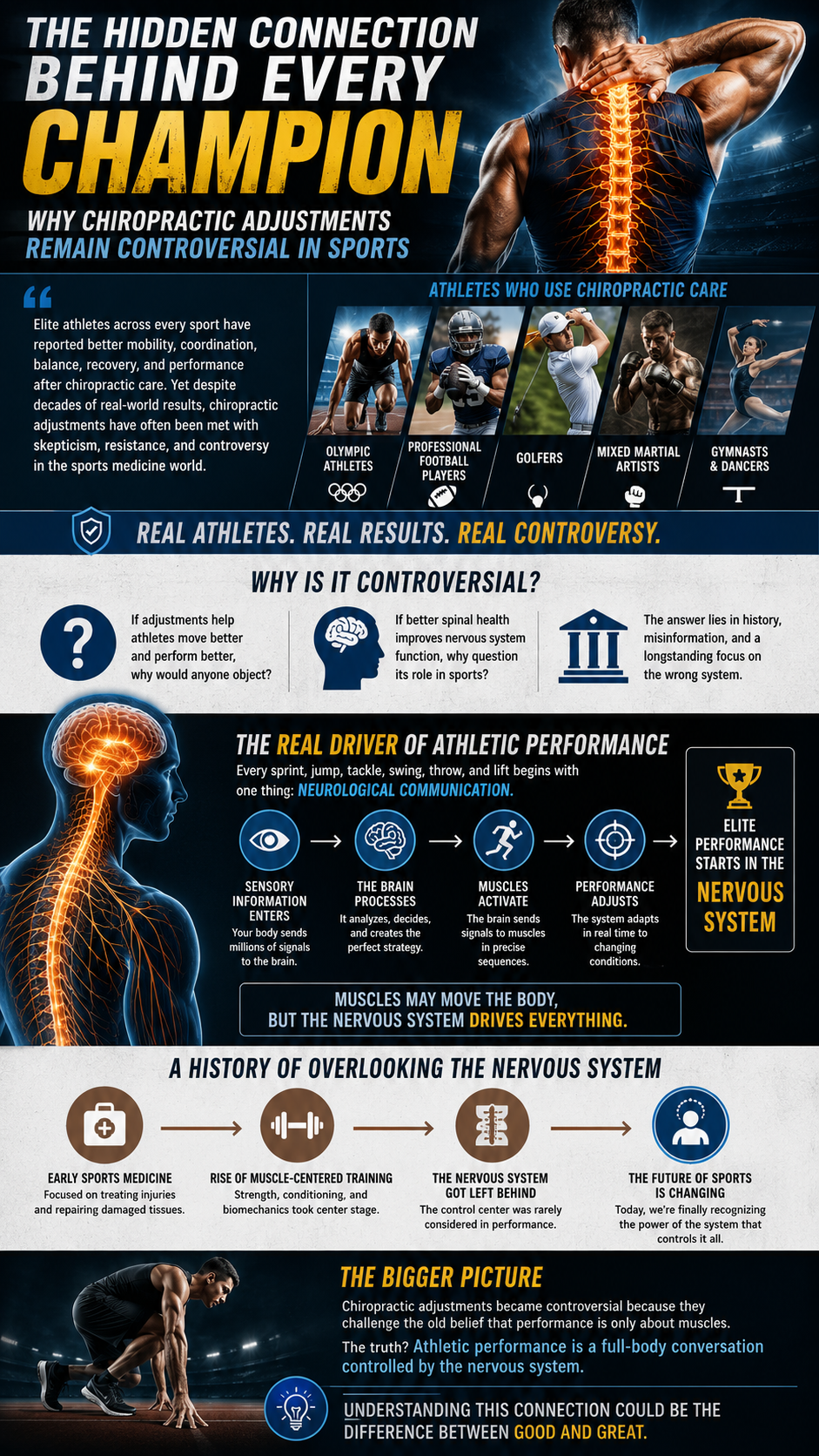
The controversy becomes even more fascinating when viewed through a historical lens. If chiropractic adjustments merely help athletes feel better, why would anyone object? If improved spinal health and nervous system function contribute to better movement, why would sports organizations question their role? The answer lies in a fundamental misunderstanding about how athletic performance actually works. For generations, coaches, physicians, and athletes focused heavily on muscles, conditioning, and biomechanics while often overlooking the most important performance system in the human body: the nervous system.
Beneath every sprint, jump, tackle, swing, throw, and lift exists a complex network of neurological communication. The brain must process incoming sensory information, determine appropriate movement strategies, activate muscles in precise sequences, and constantly adjust performance based on changing conditions. Every athletic achievement begins not in the muscles but within the nervous system. When that communication network functions optimally, performance improves. When communication breaks down, even the most talented athlete may struggle to reach their full potential.
Understanding why chiropractic adjustments became controversial requires a deeper look at the history of sports medicine, the evolution of athletic training, and the growing recognition that performance optimization involves far more than muscle strength. The story ultimately reveals one of the most overlooked factors affecting athletic success today.
The Real Controller of Athletic Performance
Walk into almost any training facility and you will see athletes working tirelessly to build stronger muscles. Strength training remains an essential component of sports performance. Speed drills, conditioning sessions, and sport-specific exercises all contribute to athletic success. However, muscles do not control movement. Muscles merely respond to instructions issued by the nervous system.
Every athletic movement begins as an electrical signal generated within the brain. That signal travels through the spinal cord and peripheral nerves before reaching muscles. The quality of movement depends on how efficiently that information travels and how accurately the body responds. An athlete cannot run, jump, throw, or react without proper communication between the brain and body.
The nervous system continuously gathers information from every joint, muscle, tendon, and ligament. Specialized sensory receptors send updates to the brain regarding body position, movement speed, balance, and environmental conditions. This process allows athletes to know where their bodies are in space without consciously thinking about every movement. Scientists refer to this remarkable ability as proprioception, and it forms the foundation of athletic performance.
Consider a baseball player attempting to hit a ninety-five-mile-per-hour fastball. The athlete has only milliseconds to process visual information, predict ball trajectory, coordinate body position, and execute a swing. Muscular strength certainly matters, but neurological efficiency determines whether the bat meets the ball. Similar principles apply to nearly every sport. The athlete with superior nervous system function often possesses an advantage that cannot be explained solely by strength or conditioning.
Unfortunately, many athletes spend years training their muscles while paying little attention to the system directing those muscles. This oversight creates performance limitations that traditional training methods often fail to address.
How Sports Medicine Lost Sight of the Nervous System
The origins of modern sports medicine help explain why chiropractic care became controversial. During the twentieth century, healthcare achieved remarkable progress in treating injuries and trauma. Orthopedic surgery advanced rapidly. Rehabilitation techniques improved. Physicians developed sophisticated methods for repairing damaged tissues and restoring physical function after injury.
These achievements transformed sports medicine and benefited countless athletes. However, they also shaped the way healthcare professionals viewed athletic performance. The primary focus became identifying damaged structures and repairing them. Muscles, bones, tendons, and ligaments occupied center stage. The nervous system often remained in the background.
Athletic training evolved along a similar path. Coaches measured performance through strength, speed, endurance, and power. Training programs focused on improving these physical attributes. While these methods produced results, they rarely addressed neurological efficiency directly. Athletes learned how to build stronger bodies, yet few learned how to optimize the communication systems controlling those bodies.
Meanwhile, chiropractic physicians approached human performance from a different perspective. Rather than concentrating exclusively on structural injuries, chiropractic emphasized the relationship between spinal function and nervous system communication. This viewpoint challenged conventional assumptions and generated considerable debate.
Much of the resistance chiropractic encountered stemmed from professional politics rather than scientific inquiry. Healthcare professions often compete for authority and influence. Throughout much of the twentieth century, chiropractic faced organized opposition from segments of organized medicine. These tensions extended into sports medicine, creating barriers that limited collaboration and slowed acceptance.
Despite these obstacles, athletes continued seeking chiropractic care because many experienced measurable benefits. Their experiences forced sports medicine professionals to reconsider long-held assumptions regarding performance optimization.
What Happens When the Spine Stops Functioning Properly
Most people associate spinal problems with pain. While pain often accompanies spinal dysfunction, it represents only one possible consequence. Athletes frequently experience performance declines long before significant discomfort develops. In many cases, the earliest signs involve changes in coordination, balance, reaction time, and movement efficiency rather than pain.
The spine contains thousands of sensory receptors that constantly communicate with the brain. These receptors monitor movement, position, and mechanical stress. Every twist, bend, jump, and change of direction generates information that travels through the nervous system. The brain relies on this information to coordinate movement and maintain stability.
When spinal joints lose normal mobility, sensory information changes. The brain receives less accurate input regarding body position and movement. Imagine attempting to drive through an unfamiliar city using a navigation system that occasionally provides incorrect directions. The vehicle may function perfectly, but poor information creates inefficiency and increases the likelihood of mistakes.
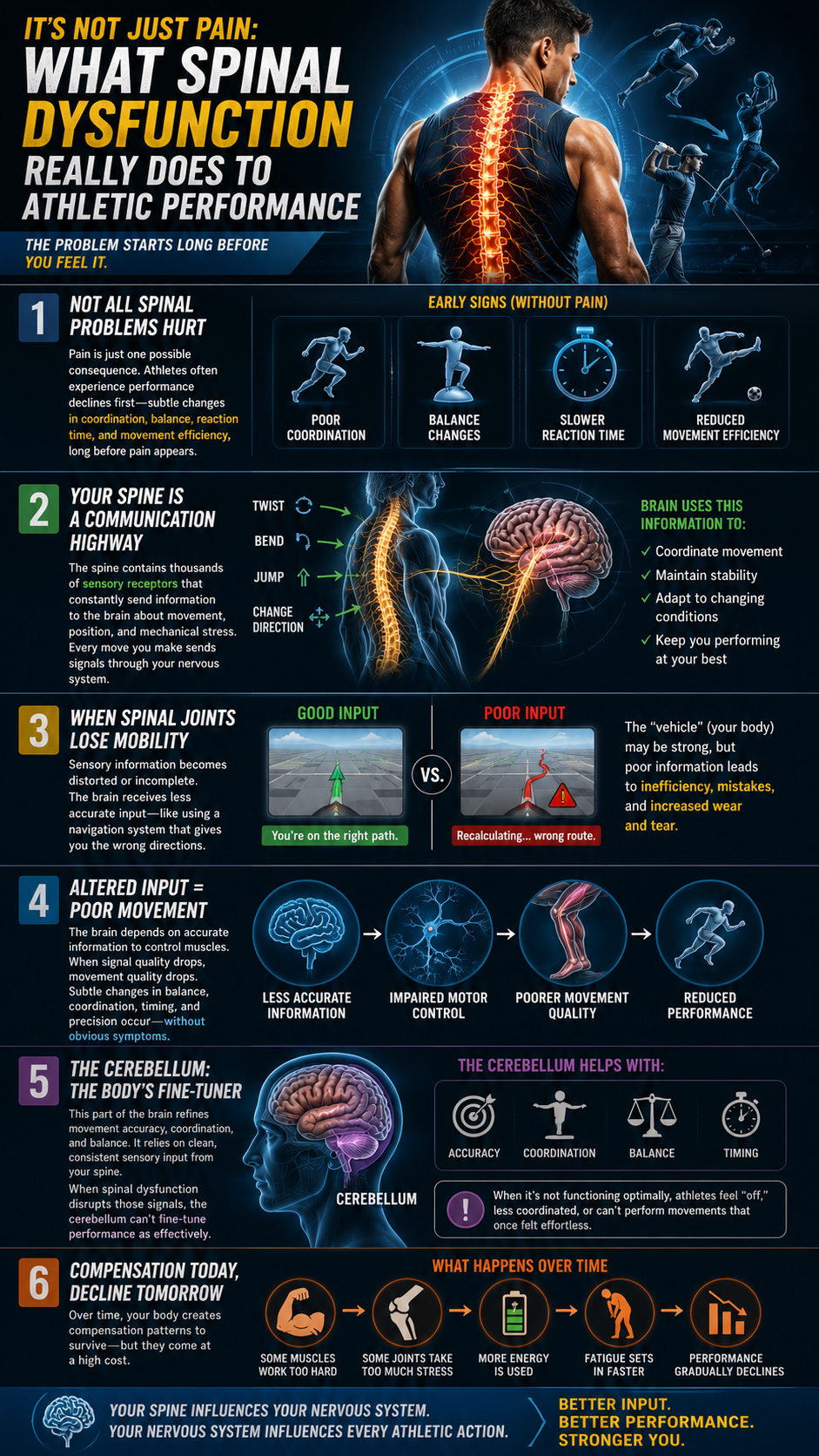
Within the body, altered sensory input affects motor control. The brain depends on accurate information to coordinate muscles effectively. When information quality declines, movement quality often declines as well. Athletes may experience subtle reductions in balance, coordination, timing, and precision. These changes frequently occur without obvious symptoms, making them difficult to recognize.
The cerebellum plays a particularly important role in this process. This region of the brain helps regulate movement accuracy, coordination, and balance. It continuously processes sensory information arriving from the body and uses that information to fine-tune athletic performance. When spinal dysfunction alters incoming signals, cerebellar processing may become less efficient. Athletes often describe feeling slightly off, less coordinated, or unable to perform movements that once felt effortless.
Over time, compensation patterns emerge. One muscle group works harder to compensate for another. Certain joints absorb excessive stress while others become underutilized. Energy expenditure increases. Fatigue develops more rapidly. Performance gradually declines even though training volume remains unchanged.
The Hidden Cost of Neurological Inefficiency
Athletes frequently assume performance plateaus result from inadequate effort. When progress slows, they often train harder, increase volume, or spend more time practicing. While dedication remains admirable, additional training does not always solve the underlying problem.
Neurological inefficiency can limit athletic performance even in highly conditioned individuals. The body may possess adequate strength and endurance, yet struggle to utilize those resources effectively. This situation resembles a powerful race car with a poorly calibrated steering system. The engine performs admirably, but the vehicle cannot reach its full potential because communication between the driver and machine remains compromised.
Reaction time provides a powerful example. Competitive sports often depend on fractions of a second. A delayed response may determine whether a baseball player reaches first base, whether a tennis player returns a serve, or whether a football player avoids a tackle. The nervous system governs reaction time. Even slight disruptions in communication can influence performance outcomes.
Balance and coordination suffer as well. Athletes depend on precise control during complex movements. Gymnasts, golfers, runners, and basketball players all require exceptional body awareness. When neurological communication deteriorates, movement becomes less efficient and less predictable. Small errors accumulate and performance suffers.
Athletic recovery also depends heavily on nervous system function. Training creates stress that the body must repair and adapt to. The autonomic nervous system regulates many recovery processes, including circulation, tissue repair, sleep quality, and hormonal balance. Chronic neurological stress may impair recovery, leaving athletes feeling fatigued despite adequate training programs.
These factors help explain why some athletes experience dramatic improvements after addressing nervous system dysfunction. Rather than creating new abilities, interventions such as chiropractic adjustments may help athletes access capabilities that were previously limited by inefficient communication.
Why Chiropractic Became Controversial in Competitive Sports
The controversy surrounding chiropractic care emerged partly because athletes often reported rapid improvements following adjustments. Many healthcare interventions require weeks or months to produce measurable changes. Chiropractic adjustments occasionally appeared to influence movement quality, mobility, and coordination almost immediately.
These observations generated both interest and skepticism. Supporters argued that improved spinal function enhanced nervous system communication, leading to better performance. Critics questioned whether such changes could occur so quickly. The debate continues today, although growing research supports the relationship between spinal function and neurological performance.
Sports organizations occasionally struggled with the implications. If improved nervous system function enhances athletic performance, does chiropractic care provide a competitive advantage? Unlike performance-enhancing drugs, chiropractic adjustments do not introduce foreign substances into the body. Instead, they seek to optimize existing physiological function. This distinction created challenges for organizations attempting to define fair competition.
Professional athletes often ignored the controversy and focused on results. Many continued receiving chiropractic care because they believed it improved performance, accelerated recovery, and reduced injury risk. Their experiences contributed to a gradual shift in perception. Today, chiropractic physicians serve on healthcare teams for numerous professional and Olympic organizations, reflecting a growing appreciation for the role of nervous system function in sports performance.
The Functional Medicine View of Athletic Performance
Functional medicine approaches athletic performance differently than conventional models. Traditional sports medicine often focuses on diagnosing injuries, managing symptoms, and restoring damaged tissues. These goals remain important, but they represent only part of the performance equation.
Functional medicine seeks to identify factors limiting optimal function before injury develops. Practitioners examine the interconnected systems that influence performance, including the nervous system, digestive system, immune system, endocrine system, and metabolic pathways. Rather than asking what structure is damaged, functional medicine asks why the body cannot perform at its highest level.
This perspective recognizes that athletic performance emerges from the coordinated activity of multiple systems. An athlete may possess exceptional strength yet struggle with chronic inflammation. Another athlete may maintain excellent conditioning while suffering from poor recovery. Someone else may experience hormonal imbalances that impair adaptation to training. Addressing these underlying issues often produces greater improvements than simply treating symptoms.
Chiropractic care fits naturally within this framework because it focuses on optimizing nervous system communication. The nervous system influences every aspect of human performance. Better communication often leads to better movement, improved recovery, enhanced coordination, and more efficient energy utilization.
How Inflammation Sabotages Athletic Performance
Many athletes focus exclusively on training while overlooking the impact of chronic inflammation. Although inflammation serves important healing functions, excessive inflammation creates significant obstacles to athletic success. Poor dietary habits, inadequate sleep, chronic stress, environmental toxins, and overtraining all contribute to inflammatory burden.
Inflammation affects the nervous system as well as muscles and joints. Research increasingly demonstrates connections between inflammation and altered brain function. Athletes experiencing excessive inflammation often report slower recovery, reduced energy, impaired focus, and diminished performance.
The body responds to inflammation by diverting resources toward defense and repair. This response may interfere with optimal athletic adaptation. Training sessions become less productive. Recovery periods lengthen. Fatigue accumulates. Over time, performance stagnates.
Reducing inflammatory burden often improves athletic recovery and overall performance. Whole foods, adequate hydration, quality sleep, stress management, and proper recovery strategies all contribute to a healthier internal environment. Athletes who prioritize these factors frequently experience improvements that exceed expectations.
Improving Athletic Performance at Home
Athletes do not need access to professional training facilities to improve nervous system function. Several practical strategies support neurological health and enhance athletic performance. Consistency matters more than complexity.
Daily spinal mobility exercises help maintain healthy movement patterns and sensory input. Modern lifestyles encourage prolonged sitting, which restricts movement and alters posture. Gentle mobility work restores motion, improves body awareness, and supports nervous system communication. Athletes who dedicate even ten minutes each day to mobility often notice improvements in flexibility and movement quality.
Posture deserves equal attention. Poor posture changes the way sensory information travels to the brain. Hours spent looking down at phones or sitting at desks create stress throughout the spine. Athletes should regularly change positions, stand frequently, and maintain awareness of spinal alignment throughout the day.
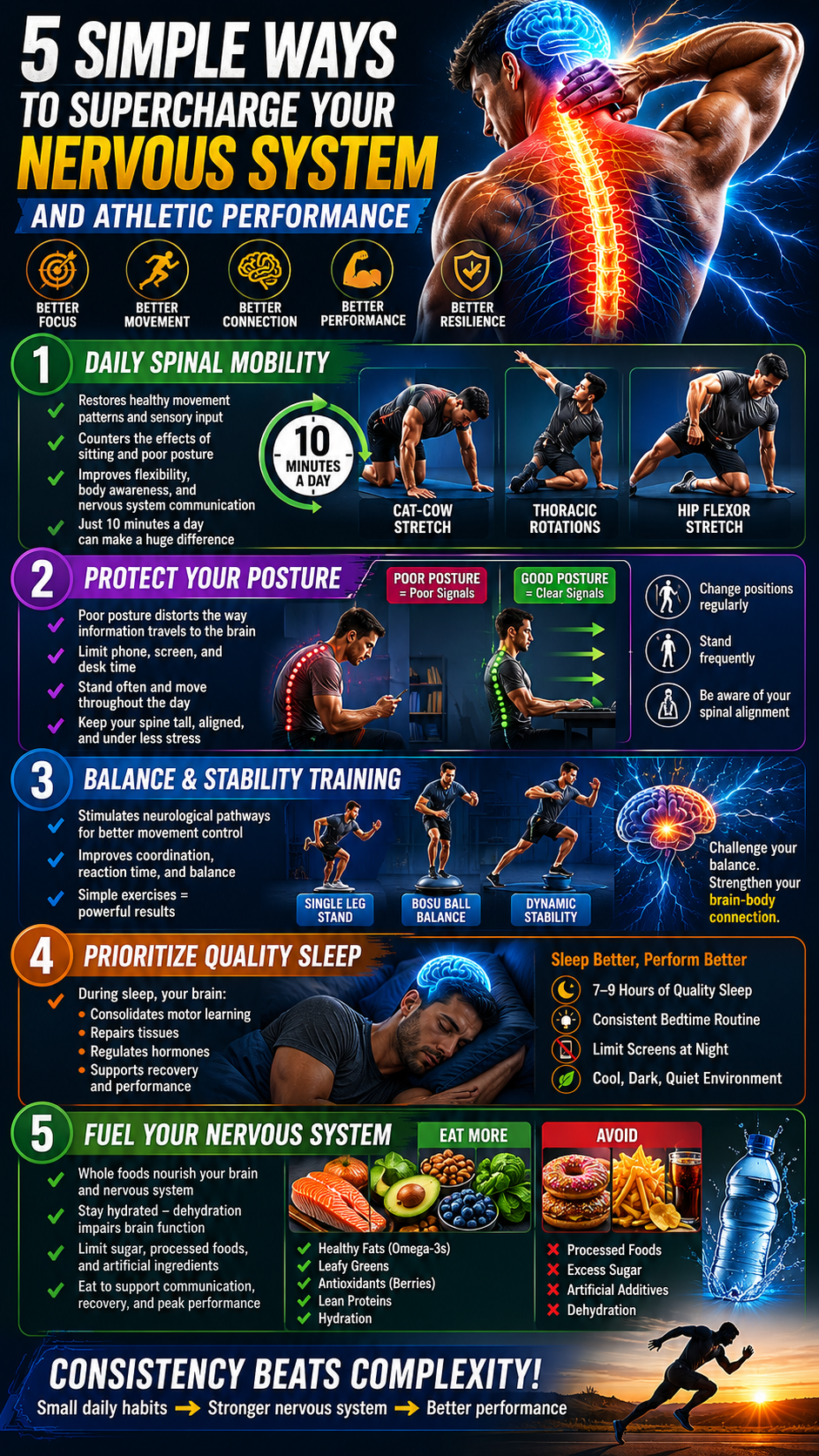
Balance training provides another powerful tool. Standing on one leg, practicing stability exercises, and challenging coordination stimulate neurological pathways responsible for movement control. These exercises strengthen communication between the brain and body while enhancing athletic performance.
Sleep remains one of the most underappreciated performance enhancers available. During sleep, the brain consolidates motor learning, repairs tissues, regulates hormones, and supports recovery. Athletes who consistently prioritize high-quality sleep often outperform competitors who neglect recovery despite similar training programs.
Nutrition also plays a critical role. Whole foods provide nutrients required for nervous system health and recovery. Processed foods, excessive sugar, and chronic dehydration create obstacles to optimal function. Athletes should view nutrition as a tool for supporting communication, recovery, and performance rather than merely fueling workouts.
The Future of Sports Performance
Athletic performance continues evolving as our understanding of human physiology expands. Future training methods will likely place greater emphasis on nervous system function, movement quality, and performance optimization. Strength and conditioning will remain important, but they will increasingly operate within a broader framework that recognizes the central role of neurological communication.
The growing acceptance of chiropractic care reflects this shift. Athletes and coaches increasingly understand that performance depends on more than muscle size and cardiovascular endurance. Brain-body communication influences every aspect of movement. Optimizing that communication may unlock performance improvements that traditional training methods cannot achieve alone.
Sports organizations once viewed chiropractic care with skepticism because it challenged established assumptions. Today, many recognize its potential role within comprehensive performance programs. The controversy has not disappeared completely, but the conversation has become more nuanced and evidence-based.
Conclusion
The debate surrounding chiropractic adjustments reveals a larger truth about athletic performance. For generations, sports culture focused heavily on muscles while overlooking the system controlling those muscles. Strength, endurance, and conditioning remain essential, but they cannot operate independently of the nervous system.
Every athletic achievement begins with communication between the brain and body. Reaction time, coordination, balance, movement efficiency, and recovery all depend on that communication. When the nervous system functions optimally, athletes gain access to their full potential. When communication deteriorates, performance often suffers regardless of effort or talent.
Chiropractic adjustments became controversial because they challenged conventional thinking. They encouraged athletes and healthcare professionals to view performance through a neurological lens rather than a purely structural one. That perspective continues gaining support as research expands and athletes share their experiences.
The future of athletic performance will belong to those who understand a simple but powerful principle. Muscles may generate movement, but the nervous system directs every action. Athletes who protect spinal health, optimize nervous system function, and support whole-body performance will place themselves in the strongest position to succeed. The next frontier of sports performance is not simply building a stronger body. It is creating a better connection between the brain and the body that body controls.