
The Hidden Injury That Changes Lives
Most people walk away from a car accident believing they escaped serious harm. The vehicle may show only minor damage. Emergency room imaging may reveal no fractures. Friends often reassure the injured person that a few days of rest will solve everything. Unfortunately, that assumption has created one of the most misunderstood health crises in modern healthcare. Whiplash injuries affect millions of people every year, yet most victims never learn what actually happened inside their bodies during the collision.
The common belief holds that whiplash is simply a sore neck caused by strained muscles. Conventional medicine frequently reinforces that narrative. Patients often receive pain medication, anti-inflammatory drugs, muscle relaxers, and referrals for physical therapy. The expectation remains simple. Symptoms should disappear within a few weeks. Many patients soon discover a different reality. Headaches linger. Neck stiffness becomes constant. Concentration worsens. Energy levels drop. Sleep quality declines. Some individuals develop symptoms that persist for years after the accident.
The real danger of whiplash lies beneath the surface. The injury affects far more than muscles. Violent acceleration and deceleration forces disrupt spinal alignment, damage ligaments, irritate nerves, alter posture, and create long-term biomechanical dysfunction. When these issues remain uncorrected, the body compensates in ways that accelerate degeneration and perpetuate pain. The result often becomes a chronic health problem disguised as a temporary injury.
Understanding why chiropractic care frequently outperforms months of traditional physical therapy requires a deeper look at what whiplash truly is. Recovery begins when patients stop viewing the injury as muscle soreness and start recognizing it as a structural and neurological problem.
What Really Causes Whiplash?
The mechanics of whiplash occur within fractions of a second. During a rear-end collision, the body accelerates forward while the head temporarily remains behind. The neck rapidly extends backward before snapping forward with tremendous force. This violent motion exceeds the normal limits of cervical movement and places enormous stress upon the spine.
The average human head weighs approximately twelve pounds. During a collision, that effective weight can increase dramatically because of acceleration forces. The cervical spine suddenly becomes responsible for controlling loads far beyond what it was designed to handle. Ligaments stretch. Joints compress. Muscles contract forcefully. Discs absorb abnormal pressure. Nerves become vulnerable to irritation.
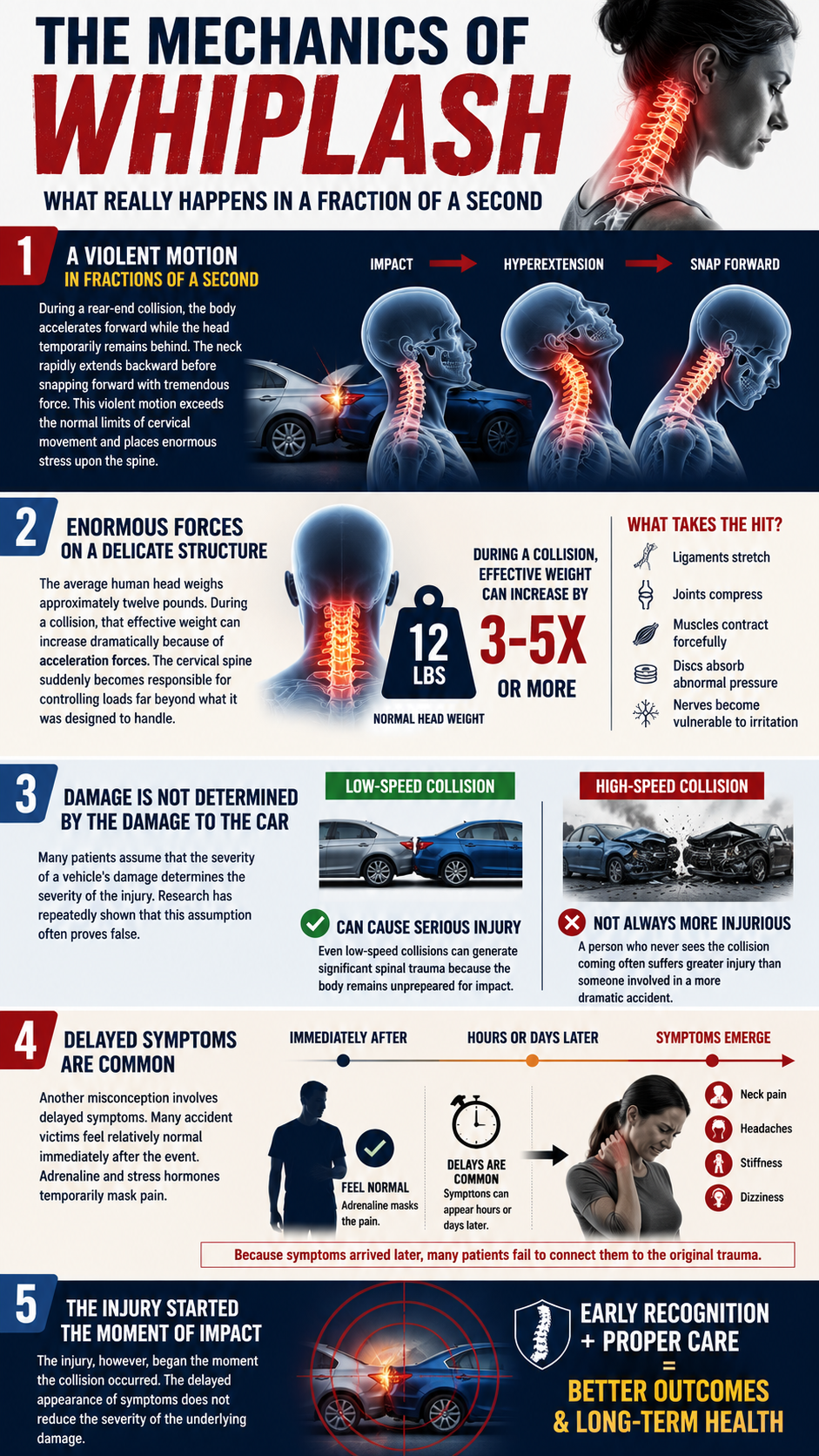
Many patients assume that the severity of a vehicle’s damage determines the severity of the injury. Research has repeatedly shown that this assumption often proves false. Low-speed collisions can generate significant spinal trauma because the body remains unprepared for impact. A person who never sees the collision coming often suffers greater injury than someone involved in a more dramatic accident.
Another misconception involves delayed symptoms. Many accident victims feel relatively normal immediately after the event. Adrenaline and stress hormones temporarily mask pain. Hours later, or even days later, symptoms begin to emerge. Neck pain appears. Headaches develop. Stiffness worsens. Dizziness surfaces. Because symptoms arrived later, many patients fail to connect them to the original trauma.
The injury, however, began the moment the collision occurred. The delayed appearance of symptoms does not reduce the severity of the underlying damage.
Why Most People Misunderstand Whiplash
The public often views whiplash through the lens of pain. If the neck hurts, the injury exists. If pain disappears, healing must be complete. This belief creates significant problems because pain represents only one component of injury.
Consider a house with a damaged foundation. Cracks may appear in the walls, but repairing those cracks does not fix the foundation. Symptoms function similarly within the body. Pain signals that something is wrong, but it rarely identifies the root cause. Eliminating pain without correcting the underlying problem creates the illusion of recovery.
Mainstream healthcare frequently focuses on symptom suppression. Medications reduce discomfort. Muscle relaxers decrease tension. Anti-inflammatory drugs blunt inflammatory pathways. While these interventions may provide temporary relief, they often leave structural dysfunction untouched.
Patients commonly assume that feeling better means healing occurred. In reality, symptoms can improve while damage remains. Ligament instability may persist. Spinal misalignments may remain unchanged. Postural distortions may continue worsening. Over time, these unresolved issues generate recurring symptoms and chronic degeneration.
This disconnect explains why so many people continue struggling months or years after their accident. The underlying problem never received proper attention.
The Real Injury: Damage to Ligaments and Structure
Most discussions about whiplash focus on muscles. Muscles certainly suffer during trauma, but they rarely represent the primary problem. Ligaments often sustain the most significant injury.
Ligaments connect bone to bone. These structures stabilize joints and guide movement patterns throughout the body. Unlike muscles, ligaments possess a limited blood supply. Healing occurs slowly and often incompletely. When ligaments become stretched or damaged, instability develops.
Spinal instability creates a cascade of dysfunction. Vertebrae begin moving abnormally. Certain joints become hypermobile while others become restricted. Muscles compensate by tightening around unstable areas. Nerves experience increased irritation. Inflammation persists because abnormal movement continually stresses tissues.
Perhaps the most important structural change involves the loss of the cervical curve. The neck contains a natural forward curvature called lordosis. This curve functions as a shock absorber and distributes forces evenly throughout the spine. Whiplash frequently straightens or reverses this curve.
Loss of cervical lordosis changes everything. Mechanical stress increases. Disc pressure rises. Muscles fatigue more quickly. Posture deteriorates. The nervous system experiences additional strain. Over time, degeneration accelerates because the spine no longer handles forces efficiently.
These structural changes rarely correct themselves. The body adapts to dysfunction rather than restoring ideal alignment. Without targeted intervention, abnormal biomechanics often become permanent.
Why Physical Therapy Often Falls Short
Physical therapy serves an important role within healthcare. Restoring movement and strengthening muscles can improve function and reduce discomfort. Unfortunately, physical therapy often addresses the consequences of whiplash rather than the cause.
Most rehabilitation programs focus on stretching, strengthening, and mobility exercises. These interventions improve muscle performance. Stronger muscles certainly contribute to stability. Better mobility can reduce stiffness. Yet these benefits do not necessarily correct structural abnormalities.
Imagine strengthening the suspension of a vehicle with a bent frame. The suspension may improve, but the frame remains distorted. Similarly, stronger muscles cannot fully compensate for spinal misalignment or ligament instability.
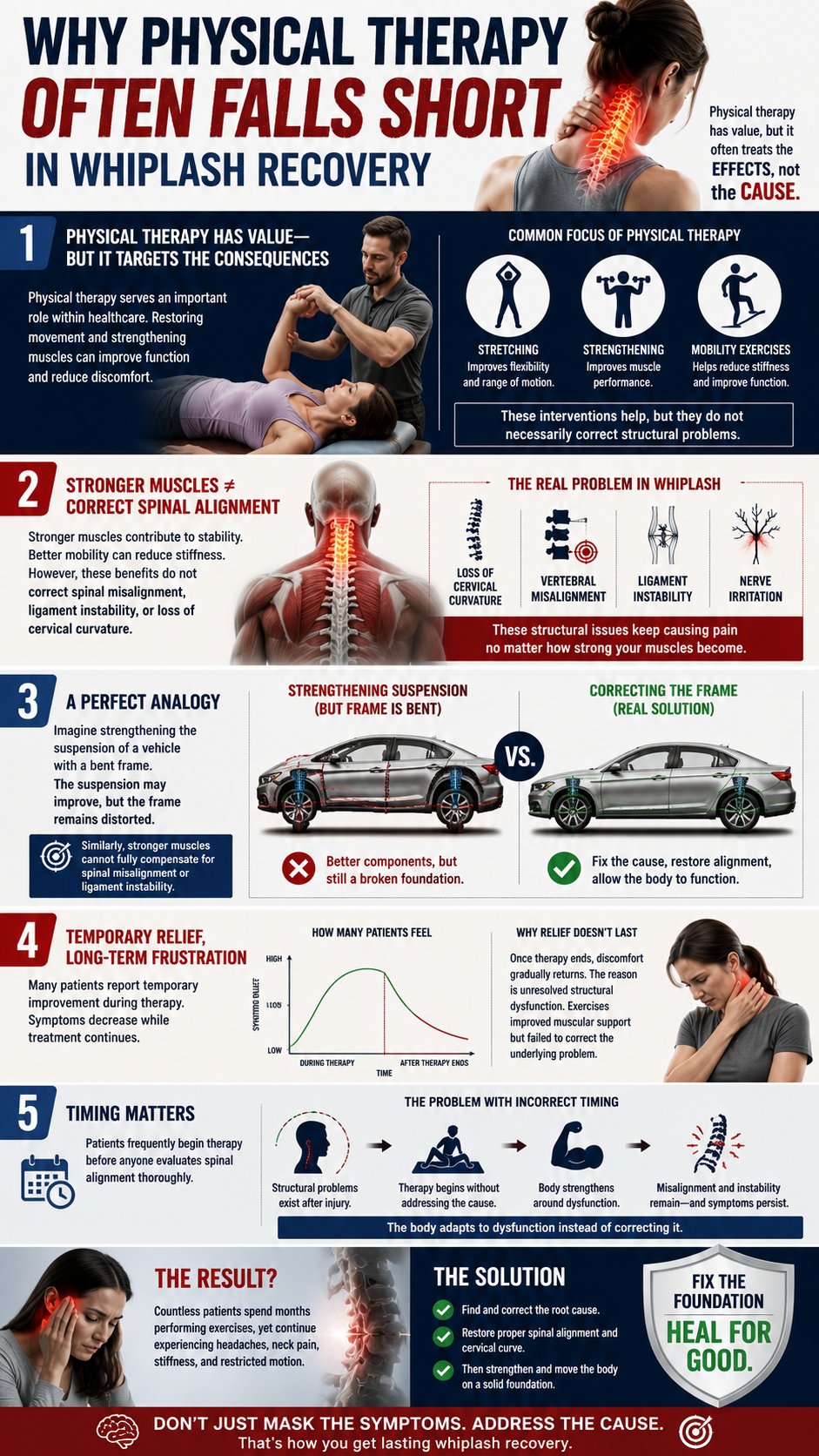
Many patients report temporary improvement during therapy. Symptoms decrease while treatment continues. Once therapy ends, discomfort gradually returns. The reason often involves unresolved structural dysfunction. Exercises improved muscular support but failed to correct the underlying problem.
Another limitation involves timing. Patients frequently begin therapy before anyone evaluates spinal alignment thoroughly. Rehabilitation proceeds without addressing loss of cervical curvature, vertebral misalignment, or ligament instability. The body strengthens around dysfunction instead of correcting it.
This approach explains why countless patients spend months performing exercises yet continue experiencing headaches, neck pain, and restricted motion.
Why Chiropractic Care Targets the Root Cause
Chiropractic care approaches whiplash from a different perspective. Rather than focusing exclusively on symptoms, chiropractors evaluate spinal structure, alignment, biomechanics, and nervous system function.
A comprehensive examination often includes postural analysis, range-of-motion testing, orthopedic evaluations, neurological assessments, and imaging studies. These procedures help identify structural abnormalities that may contribute to persistent symptoms.
The goal extends beyond pain reduction. Chiropractic care seeks to restore proper motion and alignment within the spine. When vertebrae move correctly, mechanical stress decreases. Muscles relax naturally. Joint function improves. Nerve irritation diminishes. The body begins operating more efficiently.
Structural correction matters because form influences function. A properly aligned spine distributes forces evenly and supports optimal neurological communication. A misaligned spine creates compensation patterns that perpetuate dysfunction.
Many patients notice improvements that extend beyond pain relief. Better sleep, increased energy, improved concentration, and reduced headaches frequently accompany enhanced spinal function. These changes occur because the nervous system functions more effectively when structural interference decreases.
The distinction between symptom management and structural correction often determines whether recovery remains temporary or becomes lasting.
The Nervous System Connection Nobody Talks About
Whiplash injuries affect more than bones, muscles, and ligaments. The cervical spine houses and protects the spinal cord, which serves as the communication highway between the brain and body.
Every organ, gland, tissue, and muscle depends upon neurological communication. When spinal dysfunction develops, neurological interference can follow. This relationship helps explain why whiplash symptoms often extend beyond neck pain.
Many patients experience brain fog after an accident. Concentration declines. Memory becomes less reliable. Fatigue develops despite adequate rest. Dizziness appears unexpectedly. Sleep quality deteriorates. Conventional medicine often treats these symptoms individually without considering their common origin.
The upper cervical spine maintains close connections with brainstem structures responsible for balance, coordination, autonomic regulation, and sensory processing. Trauma affecting this region can disrupt neurological signaling patterns and create widespread symptoms.
When nerves become irritated, the body enters a state of chronic stress. Muscles tighten. Inflammation increases. Recovery slows. Hormonal balance shifts. Patients often find themselves trapped in a cycle where neurological dysfunction fuels physical symptoms and physical symptoms further aggravate neurological stress.
Addressing nervous system function becomes essential for complete recovery. Without restoring proper neurological communication, symptom management often produces limited results.
How Whiplash Accelerates Arthritis and Degeneration
One of the most overlooked consequences of whiplash involves accelerated spinal degeneration. Many patients believe arthritis develops solely because of aging. Age certainly influences degeneration, but biomechanics often determine the rate at which degeneration occurs.
Healthy joints distribute forces evenly. Injured joints do not. Following whiplash, abnormal movement patterns place excessive stress upon specific spinal segments. Discs experience increased compression. Facet joints endure greater friction. Ligaments remain under constant tension.
The body responds to chronic stress predictably. Inflammation persists. Cartilage deteriorates. Bone spurs develop. Disc height decreases. Mobility declines. These changes represent the foundation of degenerative arthritis.
Research consistently demonstrates higher rates of cervical degeneration among individuals with previous whiplash injuries. The process may take years to become obvious, but the underlying damage often begins immediately after trauma.
This reality highlights the importance of early intervention. Correcting structural abnormalities before degeneration develops offers the best opportunity to preserve long-term spinal health.
The Functional Medicine Perspective on Recovery
Functional medicine asks a different question than conventional healthcare. Instead of asking which medication suppresses symptoms, functional medicine asks why symptoms developed in the first place.
Following whiplash, inflammation becomes a major obstacle to recovery. Acute inflammation serves an important purpose. The body uses it to initiate repair. Problems arise when inflammation becomes chronic.
Persistent inflammation delays tissue healing and sensitizes the nervous system. Pain pathways become more reactive. Recovery slows. Energy production declines. Patients often feel stuck in a state of perpetual irritation and fatigue.
Several lifestyle factors intensify this inflammatory burden. Processed foods, excessive sugar consumption, poor sleep, chronic stress, alcohol, smoking, and nutritional deficiencies all impair healing capacity. Many patients unknowingly sabotage recovery through daily habits that promote inflammation.
Functional medicine seeks to create an internal environment that supports repair. Reducing inflammation allows tissues to heal more efficiently and improves the body’s ability to recover from trauma.
Nutrition That Supports Ligament and Joint Healing
Healing requires raw materials. The body cannot repair damaged tissues without adequate nutritional support. Unfortunately, many accident victims consume diets that provide insufficient resources for recovery.
Protein serves as the foundation of tissue repair. Ligaments, tendons, muscles, and connective tissues all require amino acids for regeneration. High-quality protein sources provide the building blocks necessary for healing.
Vitamin C plays an equally important role because collagen production depends upon adequate levels. Collagen forms the structural framework of ligaments and connective tissues. Without sufficient vitamin C, tissue repair becomes less efficient.
Omega-3 fatty acids help regulate inflammatory pathways. These nutrients support healing while reducing excessive inflammatory responses. Magnesium contributes to muscle relaxation, nervous system regulation, and energy production. Zinc supports immune function and tissue repair.
Hydration also deserves attention. Intervertebral discs contain substantial amounts of water. Dehydration reduces their ability to absorb shock and recover from injury. Consistent hydration supports spinal health and tissue function.
Recovery improves when nutrition shifts from convenience foods toward nutrient-dense whole foods that provide the resources required for repair.
What You Can Do at Home to Speed Recovery
Healing begins with awareness. Anyone involved in an accident should seek evaluation promptly, even when symptoms appear minimal. Early detection of structural problems offers the best opportunity for successful intervention.
Posture deserves immediate attention. Forward head posture dramatically increases stress upon the cervical spine. Keeping screens at eye level and avoiding prolonged downward gaze helps reduce mechanical strain during recovery.
Movement also matters. Complete inactivity often delays healing. Gentle movement encourages circulation, reduces stiffness, and supports tissue function. Patients should avoid aggressive exercise initially, but controlled movement generally benefits recovery.
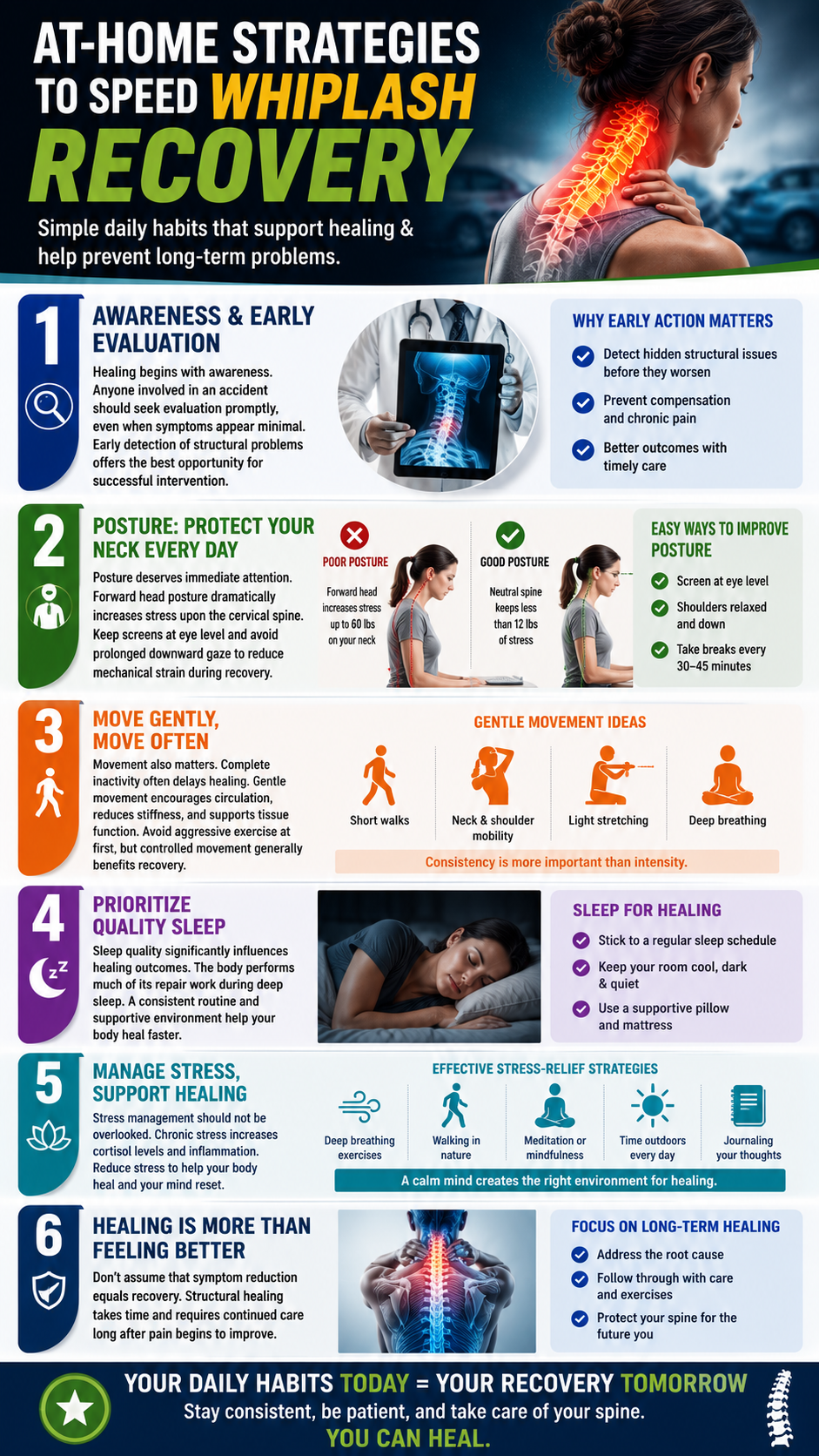
Sleep quality significantly influences healing outcomes. The body performs much of its repair work during deep sleep. Maintaining consistent sleep schedules and creating a supportive sleeping environment helps accelerate recovery.
Stress management should not be overlooked. Chronic stress elevates cortisol levels and promotes inflammation. Breathing exercises, walking, meditation, and time outdoors can help regulate the nervous system and support healing.
Most importantly, patients should avoid assuming that symptom reduction equals recovery. Structural healing often requires continued attention long after pain begins to improve.
The Future of Whiplash Recovery
Healthcare continues evolving toward a more comprehensive understanding of injury and healing. The old model of pain suppression and passive observation no longer satisfies many patients seeking lasting results.
Modern approaches increasingly recognize the importance of biomechanics, neurological function, inflammation management, lifestyle factors, and structural correction. Recovery succeeds when treatment addresses the entire system rather than isolated symptoms.
Whiplash represents far more than a sore neck. It is a complex injury capable of affecting posture, nervous system function, spinal health, hormonal balance, and quality of life. Patients deserve treatment strategies that acknowledge this complexity.
The most successful recoveries often occur when structural correction, lifestyle modification, nutritional support, and nervous system optimization work together. Each component reinforces the others and creates an environment where healing becomes possible.
Conclusion: Why Chiropractic Often Wins the Long Game
The conventional view of whiplash remains incomplete. Most treatment programs focus on reducing pain and restoring muscle function. While those goals matter, they rarely address the structural and neurological consequences of trauma.
Whiplash often damages ligaments, alters spinal alignment, disrupts cervical curvature, irritates nerves, and accelerates degeneration. These changes can persist long after symptoms temporarily improve. Patients who rely solely on symptom management frequently find themselves battling recurring pain, headaches, stiffness, and neurological complaints for years.
Chiropractic care offers a fundamentally different approach. Rather than chasing symptoms, it seeks to identify and correct the underlying structural dysfunction responsible for those symptoms. When combined with anti-inflammatory nutrition, quality sleep, stress reduction, hydration, and healthy movement, chiropractic care helps create conditions that support genuine healing.
Recovery from whiplash should never focus solely on feeling better. True recovery means functioning better. It means restoring spinal integrity, optimizing nervous system communication, reducing inflammation, and protecting the body from future degeneration. Patients who understand this distinction often achieve results that medications and months of traditional therapy alone fail to deliver.
The sooner structural problems receive attention, the greater the opportunity for lasting recovery. When the body regains proper alignment and function, healing becomes more than symptom relief. Healing becomes a return to health.