
Why Ear Infections Have Exploded in Modern Children
Few childhood conditions create more fear, frustration, and exhaustion for parents than recurring ear infections. The screaming pain often begins late at night. A child pulls at the ear, develops a fever, refuses sleep, and cries inconsolably for hours. Parents rush toward urgent care clinics where physicians usually prescribe another antibiotic. Several weeks later, the same child develops another infection, another fever, another prescription, and eventually another referral. Before long, the conversation shifts toward ear tubes, surgical intervention, and the belief that chronic ear infections simply represent a normal part of childhood.
That belief has become deeply embedded within modern healthcare, yet history tells a different story. Earlier generations certainly experienced occasional infections, but today’s epidemic of chronic recurring ear infections reflects something far deeper than bad luck or weak genetics. Millions of children now suffer repeated inflammatory illnesses because modern lifestyles continuously weaken immune resilience, impair drainage pathways, damage the microbiome, overload the nervous system, and inflame delicate tissues throughout the body.
Mainstream medicine often approaches ear infections as isolated bacterial problems. Functional medicine and chiropractic care approach them as inflammatory and neurological problems first. That distinction changes everything because bacteria often represent secondary opportunists rather than the original cause of dysfunction. Fluid buildup, tissue swelling, lymphatic congestion, immune dysregulation, and nervous system stress usually develop long before bacteria arrive inside the middle ear.
Children do not develop chronic infections because their bodies randomly malfunction. The body responds intelligently to stressors affecting the immune system, inflammatory pathways, lymphatic circulation, and neurological communication. When those systems become overwhelmed, the ears frequently become one visible location where deeper dysfunction reveals itself. The infection itself often acts as the final symptom of a much larger physiological imbalance already developing inside the child for months or even years.
Parents deserve more than temporary symptom suppression. Families need to understand why recurrent infections develop, what repeated antibiotics may be doing to the body, how inflammation destroys proper drainage, and why natural approaches often produce profound improvements when root causes finally receive attention.
Understanding the Anatomy of an Ear Infection
The middle ear sits in a small chamber directly behind the eardrum. Tiny canals called Eustachian tubes connect the ears to the upper throat and nasal passages. Those tubes perform several critical functions. They equalize pressure inside the ears, drain excess fluid, and maintain healthy ventilation throughout the middle ear space.
Healthy children naturally produce mucus and immune fluid constantly. The body uses those secretions to trap microbes, filter irritants, and support immune defense. Problems begin when inflammation narrows the Eustachian tubes and prevents normal drainage from occurring efficiently.
Children possess anatomical disadvantages that already increase vulnerability. Their Eustachian tubes remain smaller, narrower, and more horizontal than adult tubes. That structure makes fluid drainage naturally less effective during early childhood. Once inflammation develops inside surrounding tissues, fluid easily becomes trapped behind the eardrum.
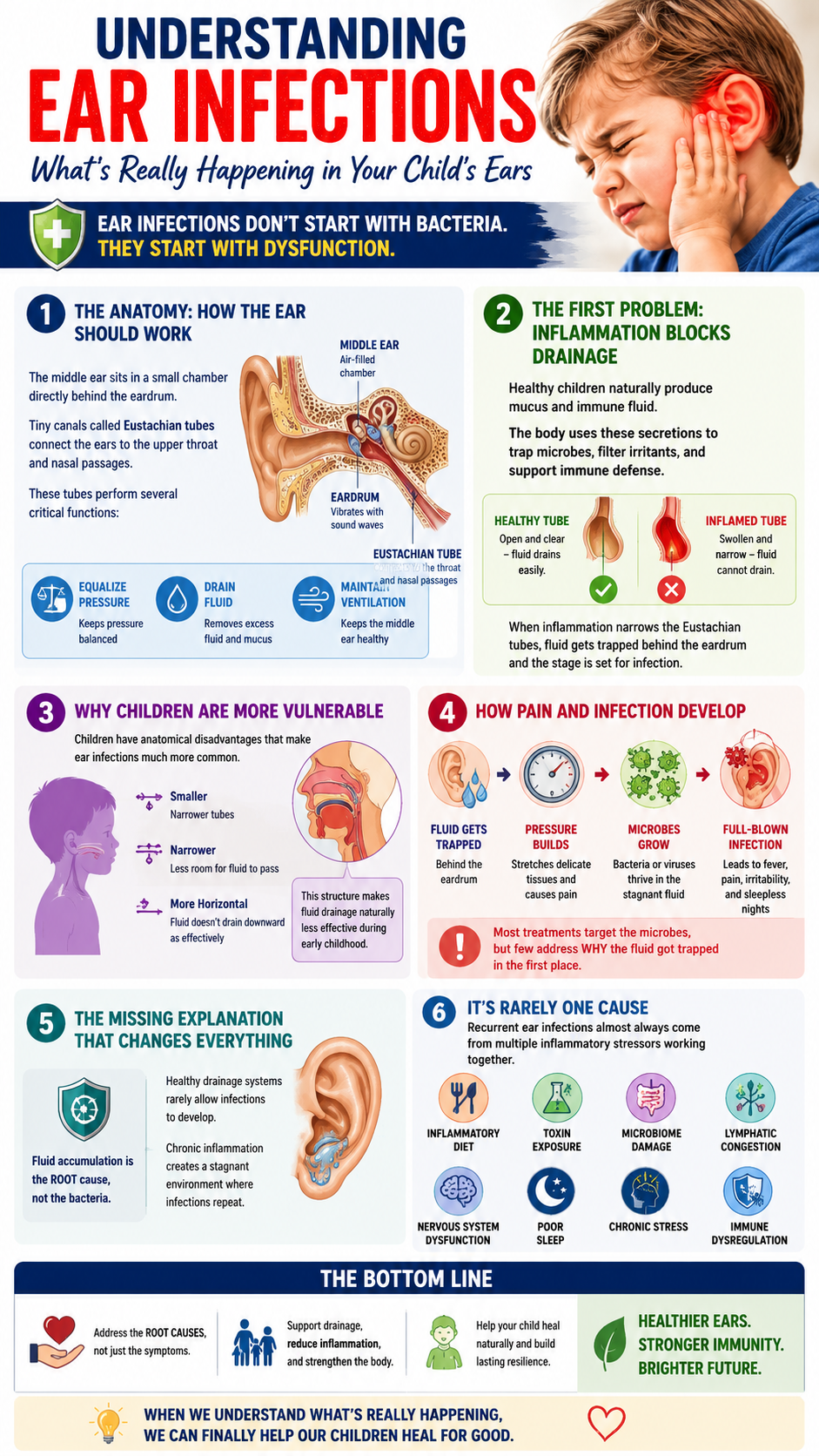
Pressure then rises rapidly inside the enclosed ear chamber. The trapped fluid stretches delicate tissues and creates severe pain. Bacteria or viruses may eventually colonize that stagnant fluid, leading to full infection. Most conventional treatments target the microbes, yet few providers spend time explaining why the fluid failed to drain initially.
That missing explanation matters enormously because fluid accumulation usually represents the true underlying issue. Healthy drainage systems rarely allow repeated infections to develop. Chronic inflammation, however, transforms the ear into a stagnant environment where microbes thrive repeatedly.
Functional medicine recognizes that recurrent ear infections rarely stem from one isolated event. Instead, multiple inflammatory stressors usually converge simultaneously. Diet, toxins, microbiome damage, lymphatic congestion, nervous system dysfunction, poor sleep, and chronic immune activation often work together to create the perfect environment for recurring illness.
The Real Root Cause: Chronic Inflammation in Children
Inflammation drives nearly every chronic disease process inside the human body, including recurring ear infections. Most parents think inflammation only appears after injury, but chronic low-grade inflammation may quietly affect tissues for years before symptoms become obvious.
Modern children now live inside highly inflammatory environments. Processed foods, excessive sugar, environmental toxins, poor sleep, sedentary lifestyles, chemical exposure, and chronic stress continually stimulate inflammatory pathways. Those stressors affect the entire body simultaneously, including the tissues surrounding the ears, sinuses, throat, and lymphatic system.
Inflamed tissues swell rapidly. Swollen tissues narrow drainage pathways. Narrow drainage pathways trap fluid. Trapped fluid creates congestion and pressure. Bacteria then flourish inside that stagnant environment. The infection itself often develops last, not first.
This distinction explains why many children experience recurring infections despite repeated antibiotics. Antibiotics may temporarily suppress bacterial growth, but they rarely reduce the inflammatory conditions causing fluid retention initially. The inflammation remains active, drainage stays impaired, and another infection develops shortly afterward.
Many children with chronic ear infections also suffer from eczema, allergies, asthma, chronic congestion, enlarged tonsils, digestive issues, and behavioral changes. Those conditions rarely occur independently. Instead, they often reflect widespread inflammatory dysfunction affecting multiple systems simultaneously.
Inflammation also affects the nervous system profoundly. Children living with chronic inflammatory stress frequently develop sleep disturbances, irritability, anxiety, mood instability, and poor concentration. The body expends enormous energy fighting inflammatory triggers continuously, leaving fewer resources available for healing and recovery.
Functional medicine seeks to identify what continuously fuels inflammation rather than simply suppressing symptoms after they appear. That investigative mindset separates true healing approaches from temporary management strategies.
How Modern Diets Are Destroying Children’s Immune Systems
Food profoundly shapes immune function, inflammatory activity, mucus production, microbiome diversity, and neurological health. Unfortunately, many children now consume diets that continuously inflame tissues from infancy onward.
Highly processed foods dominate modern childhood nutrition. Sugary cereals, crackers, packaged snacks, refined grains, artificial flavorings, preservatives, seed oils, and fast food meals now appear daily in many households. Those substances trigger inflammatory reactions repeatedly while providing little meaningful nutrition.
Excess sugar weakens immune defenses dramatically. Research consistently demonstrates that high sugar intake suppresses white blood cell function and increases inflammatory cytokine production. Children consuming large amounts of sugar daily often experience poorer immune resilience and greater infection susceptibility.

Dairy products create another major issue for many children. Conventional medicine rarely discusses this connection, yet dairy commonly increases mucus production and inflammatory congestion within sensitive individuals. Many parents notice dramatic improvements in chronic ear infections after eliminating milk, cheese, yogurt, and ice cream temporarily.
Gluten may also contribute to chronic inflammation in susceptible children. Wheat proteins can irritate the intestinal lining, increase immune activation, and worsen mucus production throughout the respiratory system. Artificial dyes and preservatives further stimulate inflammatory pathways and may negatively affect neurological regulation simultaneously.
The gut and immune system remain deeply interconnected. Approximately seventy percent of immune tissue surrounds the digestive tract. Inflammatory diets damage beneficial gut bacteria and disrupt microbial balance, leading to widespread immune dysfunction over time.
Children cannot build strong immune systems using inflammatory foods daily. The body requires nutrient-dense whole foods to regulate inflammation properly and maintain healthy tissue function.
The Gut Microbiome: The Forgotten Key to Childhood Immunity
The human microbiome contains trillions of beneficial organisms influencing immunity, digestion, inflammation, neurotransmitters, detoxification, and neurological development. Healthy microbial diversity helps train the immune system to respond appropriately to threats without overreacting excessively.
Repeated antibiotic exposure severely disrupts that delicate ecosystem. Many children receive multiple antibiotic rounds before reaching kindergarten. Some infants begin antibiotics within the first months of life. Those medications destroy harmful bacteria, yet they also eliminate enormous populations of beneficial microbes protecting the body.
Microbiome disruption often creates long-term consequences extending far beyond digestion. Children with damaged gut flora frequently develop chronic congestion, eczema, food sensitivities, constipation, yeast overgrowth, asthma, inflammatory disorders, and behavioral disturbances.
When beneficial bacteria decline, opportunistic organisms often expand rapidly. Yeast overgrowth becomes particularly common after repeated antibiotics. Yeast organisms produce inflammatory compounds that may worsen congestion, irritability, digestive distress, and immune dysregulation.
Increased intestinal permeability, commonly called leaky gut, may also develop when inflammation damages the intestinal lining. Food particles and toxins then enter circulation improperly and trigger additional immune reactions throughout the body. The immune system becomes increasingly reactive and inflamed over time.
Children trapped in repeated antibiotic cycles often experience worsening infections because microbiome destruction weakens natural immune defenses progressively. Functional medicine focuses heavily upon restoring gut health because lasting immune resilience depends upon healthy microbial balance.
Bone broth, fermented foods, high-quality probiotics, fiber-rich vegetables, and anti-inflammatory nutrition may help rebuild healthier microbiomes gradually. Healing the gut frequently improves far more than digestion because immune function becomes more regulated throughout the entire body.
The Nervous System’s Role in Ear Infections
The nervous system coordinates every healing process inside the body. Immune responses, lymphatic drainage, circulation, muscle tension, inflammatory signaling, and tissue repair all depend heavily upon proper neurological communication.
The upper cervical spine contains delicate structures closely connected to the brainstem and autonomic nervous system. Nerves emerging from that region influence the ears, jaw, throat, lymphatics, and surrounding tissues. Restrictions or dysfunction within the upper cervical area may interfere with normal drainage and regulatory mechanisms.
Birth trauma often places enormous stress upon infant spines. Difficult labor, forceps delivery, vacuum extraction, prolonged pushing, and cesarean delivery may all strain delicate cervical tissues. Even normal vaginal births generate tremendous mechanical pressure during delivery.
Children also experience frequent falls, poor posture, excessive screen exposure, and repetitive mechanical stress during development. Those stressors may contribute to spinal dysfunction affecting neurological balance over time.
Chiropractic care seeks to restore proper spinal motion and reduce neurological interference. Pediatric adjustments remain extremely gentle and specifically adapted for children’s developing bodies. Most adjustments involve light fingertip pressure rather than forceful twisting movements.
Many parents initially pursue chiropractic care for ear infections but later notice widespread improvements elsewhere. Children often sleep better, digest food more efficiently, breathe easier, and experience calmer behavior after care begins. Those changes reflect improved nervous system regulation affecting multiple physiological systems simultaneously.
The autonomic nervous system contains two major branches. The sympathetic branch controls stress responses, while the parasympathetic branch supports healing, digestion, immune balance, and recovery. Many modern children remain trapped in chronic sympathetic dominance because of overstimulation, inflammation, poor sleep, excessive screen exposure, and environmental stressors.
Healing becomes difficult when the body remains stuck in constant fight-or-flight physiology. Chiropractic care may help support healthier parasympathetic regulation and improve the body’s natural healing capacity.
Why Ear Tubes Often Fail to Solve the Real Problem
Ear tube surgeries have become incredibly common across pediatric medicine. Small tubes inserted into the eardrum temporarily ventilate the middle ear and allow fluid drainage. Many parents believe surgery permanently fixes the condition, yet recurrent infections frequently continue afterward.
Ear tubes may relieve pressure temporarily, but they rarely address why fluid accumulation developed initially. Inflammation, microbiome dysfunction, toxic burden, poor nutrition, lymphatic congestion, and nervous system stress often remain completely unchanged after surgery.
Some children eventually require multiple tube placements because the original inflammatory environment persists. The body continues producing congestion because the root causes driving inflammation never resolved.
Parents also deserve transparent discussions regarding surgical risks. Scar tissue formation, chronic drainage, persistent perforation, repeated anesthesia exposure, hearing complications, and future infections may occur after tube placement. While complications remain uncommon, families should understand that surgery does not represent a true cure for chronic inflammation.
Functional medicine asks deeper questions before surgery becomes necessary. Why does the child remain chronically inflamed? What continually blocks drainage pathways? Why does the immune system struggle repeatedly? What dietary, environmental, neurological, or microbiome factors contribute to dysfunction?
Real healing begins once those questions receive serious attention.
Environmental Toxins Fueling Chronic Childhood Illness
Modern children encounter unprecedented toxic exposure daily. Air pollution, pesticides, heavy metals, mold, plastics, synthetic fragrances, cleaning chemicals, and contaminated water now surround families constantly. Those toxic burdens place enormous stress upon detoxification systems and immune regulation.
Mold exposure represents one major hidden trigger behind chronic inflammatory illness. Mold toxins may irritate respiratory tissues, increase mucus production, impair immune defenses, and trigger chronic congestion. Many children living in water-damaged homes experience recurring infections until mold exposure finally receives attention.
Synthetic fragrances also create substantial inflammatory stress. Air fresheners, candles, perfumes, laundry detergents, and household cleaners often contain volatile organic compounds irritating sensitive airways and nervous systems. Children remain especially vulnerable because developing detoxification systems process toxins less efficiently.
Plastic exposure may disrupt hormones and immune signaling as well. Heated plastic containers, food packaging, and synthetic materials release chemicals capable of affecting inflammatory pathways and neurological development.
Heavy metals such as lead and mercury may further impair immune resilience and nervous system function. Chronic toxic burden forces the body into persistent inflammatory states where healing becomes increasingly difficult.
Reducing environmental toxin exposure often improves chronic infections more than parents expect. Cleaner air, filtered water, natural household products, and mold remediation may dramatically reduce inflammatory stress over time.
What Parents Can Begin Doing at Home Immediately
Healing childhood ear infections naturally requires consistency rather than perfection. Small daily improvements often produce significant long-term changes when families address inflammation systematically.
Parents should first examine the child’s diet honestly. Processed foods, sugary snacks, and excessive dairy frequently fuel chronic congestion. Replacing those foods with nutrient-dense whole meals may reduce inflammatory stress substantially within weeks.
Protein-rich breakfasts stabilize blood sugar and support healthier immune regulation throughout the day. Healthy fats from avocados, olive oil, eggs, wild fish, and grass-fed meats provide anti-inflammatory nutrients supporting neurological development simultaneously.

Children should spend substantial time outdoors daily. Sunlight supports vitamin D production, while movement stimulates lymphatic circulation naturally. Fresh air and physical activity strengthen immune resilience far more effectively than sedentary indoor lifestyles.
Sleep quality also requires serious attention. Deep restorative sleep regulates inflammatory hormones, immune signaling, tissue repair, and nervous system recovery. Dark cool bedrooms, consistent routines, and limited evening screen exposure improve healing dramatically.
Hydration remains equally important because proper fluid intake helps thin mucus secretions and support drainage pathways. Sugary beverages worsen inflammation and should remain minimal whenever possible.
Parents should also consider chiropractic evaluations with providers trained specifically in pediatric care. Gentle adjustments may support healthier drainage and nervous system regulation naturally.
Most importantly, families must stop accepting chronic illness as normal childhood development. Symptoms always communicate underlying imbalance. The body attempts to signal distress long before deeper disease develops.
The Future of Pediatric Health Depends Upon Addressing Root Causes
Modern healthcare excels during emergencies and acute crises. Unfortunately, chronic childhood conditions continue rising despite greater pharmaceutical intervention than ever before. Ear infections represent one example of a much larger problem affecting children worldwide.
Children now develop inflammatory disorders at astonishing rates because modern lifestyles continuously disrupt natural physiology. Processed food, toxins, sleep deprivation, chronic stress, microbiome damage, sedentary behavior, and neurological overload all contribute heavily to declining childhood health.
Functional medicine and chiropractic care challenge the outdated belief that suppressing symptoms equals healing. Real healing requires restoring proper function throughout the body. That process involves reducing inflammation, supporting nervous system balance, rebuilding microbiome diversity, improving nutrition, optimizing sleep, lowering toxic burden, and enhancing natural drainage pathways.
The human body possesses extraordinary healing intelligence when interference decreases and proper support increases. Children especially demonstrate remarkable recovery once underlying stressors finally receive attention.
Parents deserve healthcare conversations focused upon prevention, resilience, and root-cause investigation rather than endless pharmaceutical management. Families deserve truthful education regarding what modern lifestyles are doing to developing immune systems and nervous systems.
Most importantly, children deserve approaches honoring the body’s ability to heal rather than assuming chronic illness represents normal development.
Final Thoughts on Chiropractic and Ear Infections in Children
Recurring ear infections rarely occur because children lack antibiotics or require surgery by default. Chronic inflammation, immune dysregulation, microbiome damage, toxic overload, poor nutrition, lymphatic congestion, and nervous system stress usually drive the condition long before infection appears.
Antibiotics may temporarily suppress bacterial activity, yet repeated use often weakens long-term immune resilience by damaging beneficial gut bacteria. Ear tubes may relieve pressure temporarily without correcting the deeper inflammatory environment causing fluid accumulation initially.
Chiropractic care and functional medicine offer parents a different framework rooted in restoring proper physiological function. Reducing inflammation, improving spinal and neurological balance, rebuilding gut health, supporting lymphatic drainage, strengthening immunity, and lowering toxic burden may help children recover naturally and avoid recurring cycles of illness.
Parents should never underestimate the body’s capacity for healing when proper conditions exist. Children possess incredible resilience, especially when families begin addressing root causes rather than chasing symptoms endlessly.
The goal extends beyond avoiding antibiotics or surgery. True healing means helping children build stronger immune systems, healthier nervous systems, better inflammatory regulation, and lifelong resilience.
Children deserve more than temporary relief. They deserve health strategies focused upon restoring the body’s natural ability to heal, adapt, and thrive.