
The War Over Cancer Never Truly Focused on Health
Cancer terrifies modern society more than nearly any other disease. Fear follows the diagnosis into every hospital room, every chemotherapy suite, and every late-night internet search. Families often feel desperate for answers after hearing grim statistics, invasive treatment plans, and endless warnings about survival rates. That fear creates the perfect environment for controversy, especially when a natural therapy challenges a billion-dollar medical industry. Few therapies have ignited more outrage than Laetrile, commonly called Vitamin B17.
Supporters describe Laetrile as a suppressed natural cancer treatment. Critics call it dangerous medical fraud. Government agencies banned it across the United States decades ago. Mainstream oncology still condemns its use today. Meanwhile, thousands of patients continue traveling overseas seeking metabolic cancer therapies centered around amygdalin, apricot kernels, and alternative protocols. The debate never disappeared because the deeper issue never disappeared. Modern medicine still struggles to answer the central question surrounding cancer. Why does the human body lose control over normal cellular function in the first place?
Conventional medicine usually approaches cancer as a genetic accident requiring destruction. Functional medicine views cancer differently. Practitioners often see cancer as a metabolic crisis developing inside a toxic, inflamed, nutrient-deficient environment. That distinction changes everything. One model attacks tumors aggressively. The other examines why tumors formed within weakened tissue environments. Laetrile entered public consciousness because many people sensed conventional medicine ignored that deeper conversation entirely.
The controversy surrounding Laetrile exposes a massive divide between disease management and true health restoration. Patients searching for answers deserve honesty instead of propaganda. They deserve scientific curiosity instead of ridicule. Most importantly, they deserve education explaining what creates cancer-friendly terrain inside the human body.
What Is Laetrile and Why Did It Become So Controversial?
Laetrile comes from amygdalin, a naturally occurring compound found inside apricot pits, bitter almonds, peaches, plums, cherries, and apple seeds. Chemists later developed a processed form called Laetrile. Alternative practitioners eventually labeled the substance “Vitamin B17,” although mainstream nutritional science never recognized it as a true vitamin.
Interest in Laetrile exploded during the 1950s and 1970s. Thousands of cancer patients pursued the therapy after hearing stories about tumor shrinkage and unexpected recoveries. Advocates believed cancer resulted partly from nutritional deficiencies and metabolic dysfunction. They argued modern diets removed protective compounds historically consumed through traditional foods. Amygdalin became central to that argument.
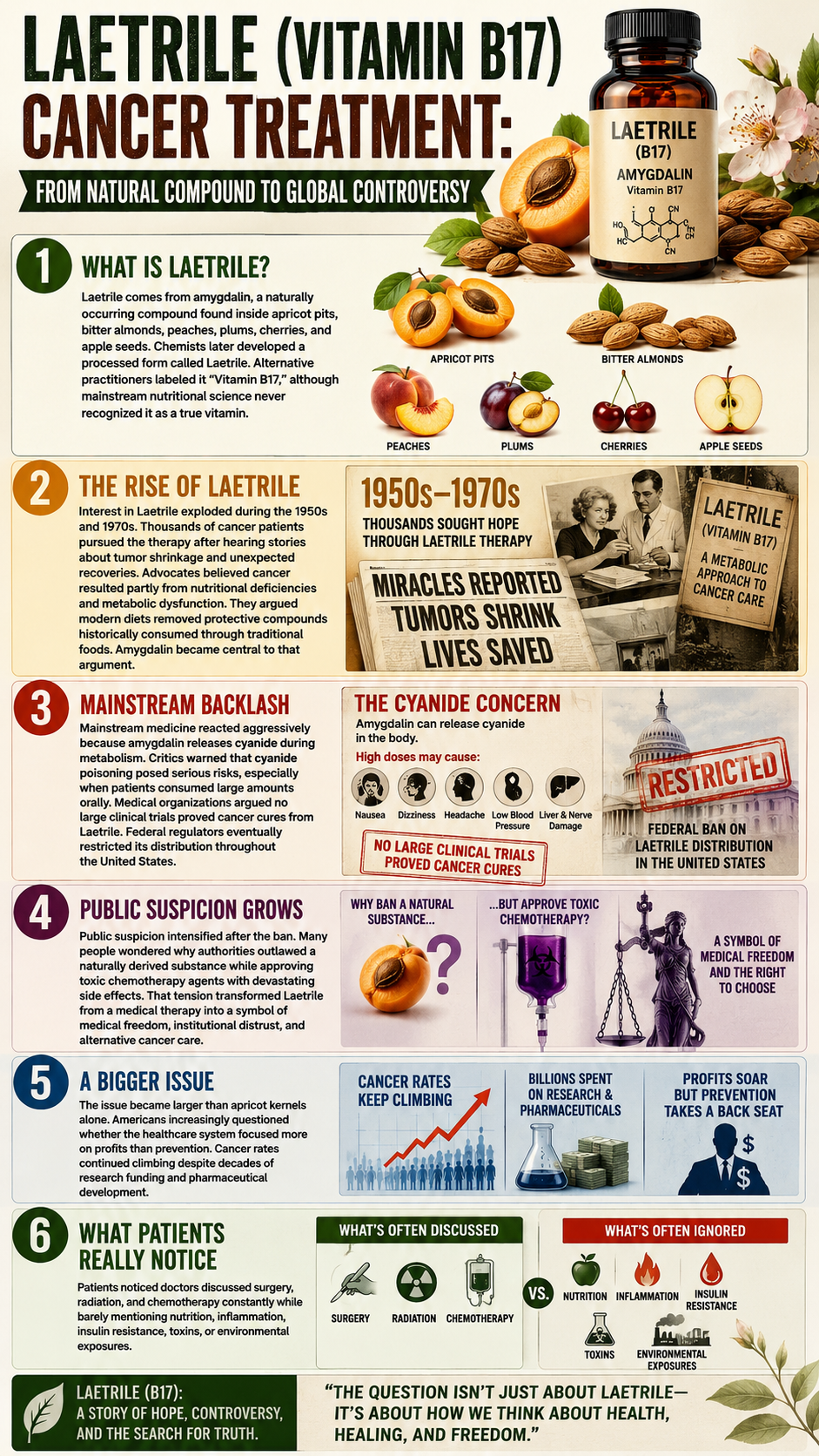
Mainstream medicine reacted aggressively because amygdalin releases cyanide during metabolism. Critics warned that cyanide poisoning posed serious risks, especially when patients consumed large amounts orally. Medical organizations argued no large clinical trials proved cancer cures from Laetrile. Federal regulators eventually restricted its distribution throughout the United States.
Public suspicion intensified after the ban. Many people wondered why authorities outlawed a naturally derived substance while approving toxic chemotherapy agents with devastating side effects. That tension transformed Laetrile from a medical therapy into a symbol of medical freedom, institutional distrust, and alternative cancer care.
The issue became larger than apricot kernels alone. Americans increasingly questioned whether the healthcare system focused more on profits than prevention. Cancer rates continued climbing despite decades of research funding and pharmaceutical development. Patients noticed doctors discussed surgery, radiation, and chemotherapy constantly while barely mentioning nutrition, inflammation, insulin resistance, toxins, or environmental exposures.
That disconnect fueled the Laetrile movement and continues driving interest today.
The Real Problem Behind Cancer Development
Cancer rarely appears overnight. Cellular dysfunction develops gradually through years of inflammatory stress, toxic exposure, metabolic breakdown, immune suppression, and mitochondrial damage. Functional medicine focuses heavily on those root causes because unhealthy terrain creates ideal conditions for abnormal cellular growth.
Modern life bombards the body with metabolic chaos. Processed food dominates grocery stores across developed nations. Refined sugar floods the bloodstream daily. Industrial seed oils damage cell membranes while increasing oxidative stress. Chronic stress elevates cortisol continuously, weakening immune defenses and impairing repair mechanisms. Sleep deprivation disrupts melatonin production and mitochondrial recovery. Environmental toxins accumulate inside tissues year after year.
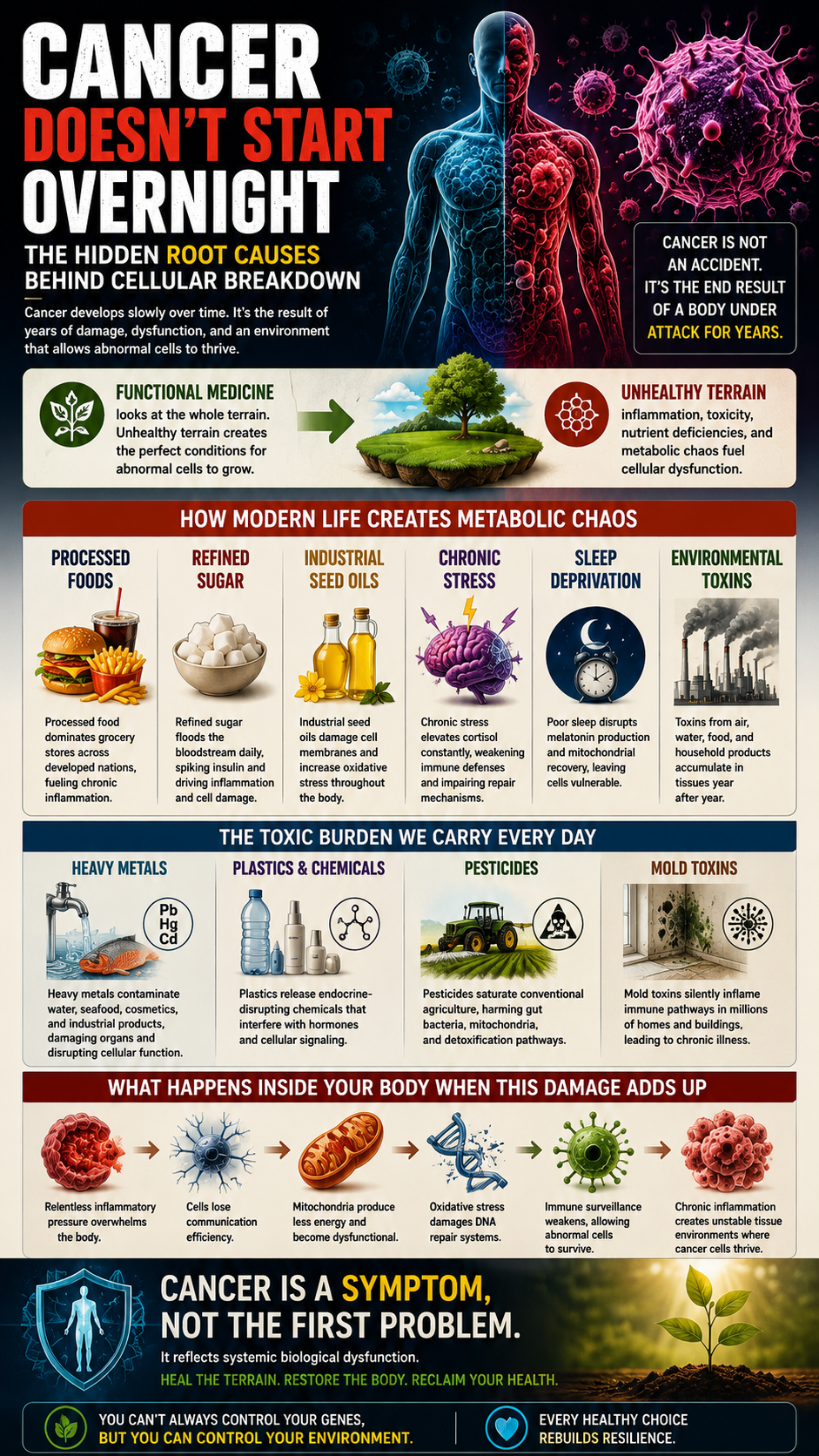
Heavy metals now contaminate water, seafood, cosmetics, and industrial products. Plastics release endocrine-disrupting chemicals affecting hormones and cellular signaling. Pesticides saturate conventional agriculture while damaging gut bacteria and mitochondrial function. Mold toxins silently inflame immune pathways inside millions of homes and buildings.
The body cannot thrive under relentless inflammatory pressure. Cells eventually lose communication efficiency. Mitochondria begin producing less energy. Oxidative stress damages DNA repair systems. Immune surveillance weakens. Chronic inflammation creates unstable tissue environments where malignant cells gain survival advantages.
Cancer often reflects systemic biological dysfunction rather than isolated genetic bad luck.
How Chronic Inflammation Fuels Cancer Growth
Inflammation protects the body during injury and infection. Problems emerge when inflammation becomes chronic and unresolved. Persistent inflammatory signaling damages healthy tissues while creating fertile ground for mutation and abnormal cell behavior.
Processed foods drive enormous inflammatory responses throughout the body. Excess sugar spikes insulin repeatedly while increasing inflammatory cytokines. Industrial oils rich in omega-6 fats promote oxidative stress inside cellular membranes. Artificial additives burden detoxification systems while disrupting gut bacteria. Alcohol damages intestinal lining integrity, allowing inflammatory compounds into circulation.
Inflamed tissues experience increased oxidative damage over time. Free radicals attack DNA, proteins, and cell membranes continuously. Healthy cells struggle repairing themselves while under constant inflammatory assault. Tumors thrive in those chaotic environments because inflammation stimulates blood vessel formation and abnormal cellular signaling.
Functional medicine practitioners often measure inflammatory markers because inflammation predicts disease progression across many chronic conditions. Elevated C-reactive protein, homocysteine, ferritin, and inflammatory cytokines frequently accompany metabolic dysfunction and chronic disease development.
Mainstream oncology rarely emphasizes reducing inflammation aggressively before cancer develops. That omission may represent one of modern medicine’s greatest failures.
The Hidden Role of Mitochondrial Dysfunction
Mitochondria generate cellular energy and regulate apoptosis, the programmed death of damaged cells. Healthy mitochondria help maintain normal tissue function while preventing abnormal cellular survival. Damaged mitochondria contribute significantly to cancer development.
Scientists observed unusual cancer metabolism nearly one century ago. Researcher Otto Warburg discovered cancer cells rely heavily on glucose fermentation instead of efficient oxygen-based energy production. This phenomenon became known as the Warburg Effect.
Healthy cells generate energy primarily through oxidative phosphorylation inside mitochondria. Cancer cells behave differently because damaged mitochondria impair normal energy pathways. Tumors become heavily dependent on glucose and fermentation for survival.
That metabolic weakness explains why functional medicine practitioners emphasize blood sugar control and mitochondrial support. Excess carbohydrates continually feed unstable metabolic pathways. Chronically elevated insulin further stimulates inflammatory growth signals throughout the body.
Mitochondrial dysfunction also reduces cellular resilience against toxins, infections, and oxidative stress. Damaged mitochondria produce more free radicals while generating less energy. Cells eventually lose the ability to regulate repair processes effectively.
The conversation surrounding Laetrile often intersects with metabolic cancer theories because supporters believe metabolic therapies may selectively target vulnerable cancer cells.
Why Cyanide Became the Center of the Debate
Critics of Laetrile focus intensely on cyanide toxicity. Their concern carries legitimate scientific weight because cyanide disrupts oxygen utilization inside cells. High amounts can impair respiration, damage organs, and become fatal.
Amygdalin breaks down into several compounds during digestion, including hydrogen cyanide. Supporters historically argued cancer cells contain higher amounts of beta-glucosidase, an enzyme releasing cyanide directly within tumors. Healthy cells supposedly possess greater concentrations of rhodanese, an enzyme detoxifying cyanide into less harmful thiocyanate.
That theory remains controversial. Some laboratory studies suggest amygdalin demonstrates anti-tumor activity under certain conditions. However, mainstream researchers argue clinical evidence remains insufficient and inconsistent.
The real danger appears when individuals consume excessive apricot kernels or unregulated products without supervision. Cyanide toxicity symptoms may include dizziness, nausea, headaches, confusion, breathing difficulty, liver stress, and neurological damage.
Functional medicine practitioners supporting metabolic therapies typically emphasize individualized protocols, monitoring, and comprehensive care instead of reckless self-experimentation. Responsible practitioners acknowledge toxicity risks while also questioning why conventional medicine tolerates severe chemotherapy toxicity without similar public outrage.
The issue ultimately involves dosage, context, supervision, and therapeutic philosophy.
The Pharmaceutical Model Versus the Functional Medicine Model
Conventional oncology primarily focuses on destroying cancer cells. Treatment plans usually involve surgery, chemotherapy, radiation, immunotherapy, or targeted pharmaceutical agents. Those interventions sometimes save lives, especially during acute or aggressive disease stages.
However, many treatments create profound collateral damage. Chemotherapy often suppresses immunity, damages the gut lining, harms mitochondria, and increases oxidative stress. Radiation injures healthy tissue surrounding tumors while increasing inflammatory burden. Patients frequently experience exhaustion, digestive dysfunction, neuropathy, hormonal disruption, and immune suppression during treatment.
Functional medicine does not necessarily reject every conventional therapy. Instead, practitioners question why oncology rarely addresses the biological terrain producing cancer. They focus heavily on restoring metabolic balance, supporting detoxification pathways, strengthening immunity, reducing inflammation, and improving mitochondrial health.
That systems-based approach seeks long-term resilience rather than short-term tumor destruction alone.
Mainstream medicine often labels those strategies “alternative” despite mounting evidence connecting metabolic dysfunction to chronic disease. Hospitals commonly serve inflammatory processed foods while treating cancer patients. Many oncologists receive minimal nutritional education during training. Environmental toxin exposure rarely becomes central during treatment discussions.
Patients increasingly recognize those contradictions.
How Modern Food Damages the Human Body
The average modern diet creates biochemical chaos inside the body. Refined carbohydrates flood the bloodstream with glucose while stimulating insulin repeatedly. Excess insulin promotes inflammation, oxidative stress, and abnormal cellular signaling. Tumors frequently exploit those metabolic pathways aggressively.
Processed foods also contain synthetic additives, preservatives, emulsifiers, artificial sweeteners, and damaged fats. Many ingredients disrupt the gut microbiome while increasing intestinal permeability. Once the intestinal barrier weakens, inflammatory compounds enter circulation continuously.
Industrial seed oils worsen the problem dramatically. Corn oil, soybean oil, sunflower oil, and canola oil contain unstable polyunsaturated fats prone to oxidation. Oxidized fats damage mitochondria and cell membranes while increasing inflammatory signaling.
Nutrient depletion compounds the crisis further. Modern soils contain fewer minerals than previous generations. Processed foods remove fiber, antioxidants, vitamins, and phytonutrients essential for cellular repair. People consume calories abundantly while remaining biologically malnourished.
That environment creates perfect conditions for chronic disease progression.
The Toxic Burden Most People Never Consider
Environmental toxins represent one of the most overlooked drivers of chronic illness. Modern humans encounter unprecedented chemical exposure levels daily. Heavy metals, pesticides, plastics, mold toxins, solvents, and industrial pollutants accumulate silently over decades.
Mercury damages neurological tissue and mitochondrial function. Lead interferes with enzymatic pathways while increasing oxidative stress. Cadmium affects kidney function and hormone balance. Aluminum disrupts neurological signaling and inflammatory pathways.
Mold toxins present another hidden epidemic. Water-damaged buildings often expose occupants to mycotoxins causing chronic inflammation, immune dysregulation, brain fog, fatigue, and hormonal disruption. Long-term mold exposure may weaken resilience significantly.
Plastics release endocrine-disrupting compounds like BPA and phthalates. Those chemicals alter hormonal signaling while affecting fertility, metabolism, and cellular communication.
The liver works constantly to neutralize those toxic burdens. Eventually detoxification pathways become overwhelmed. Functional medicine practitioners frequently evaluate toxic exposure histories because toxins influence mitochondrial function, inflammation, immunity, and cancer risk profoundly.
What Chronic Stress Does to the Body
Emotional stress affects biology far more than most people realize. Chronic psychological stress elevates cortisol and adrenaline continuously. Those stress hormones impair immune surveillance while increasing inflammation and blood sugar levels.
Persistent stress weakens digestion by reducing stomach acid and digestive enzyme production. Nutrient absorption declines while gut permeability increases. Sleep quality deteriorates as cortisol rhythms become disrupted. Mitochondrial recovery suffers under constant sympathetic nervous system activation.
The immune system performs best during balanced parasympathetic states. Chronic fear and anxiety push the body into survival mode continuously. That state prioritizes immediate survival over repair, detoxification, and immune regulation.
Cancer patients often experience enormous emotional trauma following diagnosis. Fear itself may worsen biological instability when left unmanaged. Functional medicine practitioners frequently incorporate stress reduction strategies because emotional physiology influences healing capacity significantly.
Prayer, meditation, breathing exercises, counseling, nature exposure, and meaningful community support all improve nervous system regulation while reducing inflammatory stress responses.
Why Gut Health Matters in Cancer Prevention
The gut microbiome influences nearly every major system inside the human body. Beneficial bacteria regulate immunity, inflammation, nutrient absorption, neurotransmitter production, and detoxification pathways. Dysbiosis disrupts those protective functions dramatically.
Processed foods, antibiotics, pesticides, alcohol, chronic stress, and environmental toxins damage microbial diversity over time. Harmful bacteria gain dominance while beneficial species decline. Intestinal permeability increases, allowing inflammatory compounds into circulation.
The immune system depends heavily on gut integrity. Approximately seventy percent of immune tissue surrounds the digestive tract. Dysfunctional gut environments weaken immune regulation while increasing inflammatory signaling.
Certain gut bacteria even influence estrogen metabolism, carcinogen detoxification, and short-chain fatty acid production. Healthy microbial ecosystems protect tissues against chronic inflammation and metabolic instability.
Functional medicine frequently addresses gut restoration aggressively through nutrition, fermented foods, targeted supplementation, and inflammatory food removal. Many practitioners believe healing begins inside the digestive system because the gut controls so many biological processes simultaneously.
Actionable Steps to Reduce Cancer Risk Naturally
People cannot control every environmental exposure or genetic variable. However, daily lifestyle choices strongly influence metabolic resilience and inflammatory burden. Consistent habits shape long-term health outcomes more powerfully than most realize.
Nutrition forms the foundation of metabolic health. Whole foods rich in nutrients support mitochondrial function, detoxification pathways, and immune regulation. Non-starchy vegetables provide antioxidants neutralizing oxidative stress. Healthy fats stabilize blood sugar while supporting hormone production and cellular membranes.
Protein intake matters greatly because amino acids repair tissues and maintain immune function. Clean animal proteins, wild-caught fish, pasture-raised eggs, and collagen-rich foods support recovery and resilience. Refined sugar should disappear from daily routines because excess glucose feeds inflammation and metabolic dysfunction.

Sleep deserves equal attention because the brain and immune system repair themselves during deep rest. Darkness stimulates melatonin production while supporting mitochondrial recovery. Consistent sleep schedules improve hormone balance and nervous system regulation significantly.
Movement also protects against chronic disease. Exercise improves insulin sensitivity, circulation, detoxification, mitochondrial function, and mood regulation. Walking outdoors combines physical activity with sunlight exposure and stress reduction simultaneously.
Hydration supports detoxification and cellular communication. Filtered water reduces exposure to chlorine, heavy metals, and contaminants while supporting metabolic processes.
Saunas and sweating therapies may enhance detoxification pathways by increasing circulation and toxin elimination through the skin. Deep breathing exercises improve oxygen delivery while reducing sympathetic nervous system dominance.
Every small habit compounds biologically over time.
The Medical Freedom Question
The Laetrile debate continues because people increasingly distrust centralized medical authority. Many patients believe healthcare systems prioritize symptom management and pharmaceutical profits over prevention and root-cause healing.
Historical examples fuel that skepticism. Tobacco companies once manipulated scientific narratives aggressively. Certain medications entered markets before later causing devastating harm. Processed food industries influenced nutritional guidelines for decades. Chemical manufacturers often minimized environmental toxicity concerns.
Those realities do not automatically prove every alternative therapy works. However, they explain why millions question institutional certainty surrounding controversial treatments.
Patients want the freedom to explore integrative approaches without ridicule or censorship. They also want honest discussions acknowledging the limitations of conventional oncology.
True science welcomes investigation and debate. Dogmatic dismissal weakens public trust dramatically.
The Most Dangerous Myth About Cancer
Perhaps the greatest misconception involves believing cancer develops randomly without lifestyle influence. Genetics matter, but genes rarely act independently from environmental and metabolic conditions.
Diet, stress, toxins, sleep, inflammation, movement, and emotional health all influence gene expression through epigenetic mechanisms. The body constantly responds to internal and external signals.
Modern culture normalizes behaviors damaging metabolic health daily. Ultra-processed foods dominate family meals. Chronic stress becomes celebrated as productivity. Artificial light disrupts circadian rhythms nightly. Environmental toxins infiltrate homes, workplaces, and water supplies continuously.
The result becomes widespread biological dysfunction long before symptoms appear.
Cancer often emerges after years of silent metabolic instability.
The Future of Cancer Care
The future likely belongs to integrative medicine rather than rigid ideological extremes. Patients need access to both advanced medical interventions and comprehensive metabolic support. Oncology should address nutrition, mitochondrial function, inflammation, toxin exposure, and emotional health alongside tumor management.
Researchers continue exploring metabolic therapies, fasting protocols, ketogenic nutrition, hyperbaric oxygen, immune modulation, and targeted natural compounds. Those conversations would have sounded radical decades ago. Today, growing evidence supports the importance of metabolic health in chronic disease management.
The Laetrile controversy opened broader discussions about medical freedom, cancer metabolism, nutritional therapy, and root-cause medicine. Regardless of one’s opinion about amygdalin specifically, the debate forced people to question whether modern healthcare truly prioritizes long-term wellness.
That question still demands honest answers.
Final Thoughts on Laetrile and Functional Medicine
Laetrile remains one of the most polarizing subjects in cancer history because it touches deeper cultural fears surrounding illness, power, trust, and survival. Some people view it as suppressed natural medicine. Others see dangerous false hope. The truth likely exists somewhere between those extremes.
Amygdalin carries legitimate toxicity risks when used irresponsibly. Large-scale clinical evidence proving universal cancer cures does not currently exist. However, dismissing every metabolic or nutritional cancer strategy as quackery ignores growing scientific understanding surrounding inflammation, mitochondria, insulin resistance, immunity, and environmental toxicity.
Functional medicine asks a critical question often ignored during conventional cancer discussions. What created the internal environment allowing disease progression initially? That question shifts focus toward prevention, resilience, detoxification, nutrition, and metabolic restoration.
Cancer care should never revolve around fear alone. Patients deserve education empowering them to improve biological terrain through daily choices. They deserve practitioners examining root causes instead of symptoms exclusively. Most importantly, they deserve transparent discussions free from propaganda, financial bias, and intellectual arrogance.
The human body possesses remarkable healing intelligence when supported properly. Food, sleep, detoxification, movement, sunlight, stress reduction, and metabolic balance influence health profoundly. Those foundational principles matter regardless of any individual therapy debate.
The conversation surrounding Laetrile ultimately reveals something much larger than apricot kernels. Modern society desperately needs a healthcare model focused on restoring health before disease becomes unstoppable.