The Modern Cannabis Movement Hides a Dangerous Contradiction
Cannabis has become one of the most controversial substances in modern healthcare. Politicians debate it endlessly. Pharmaceutical companies monitor it closely. Social media influencers praise it recklessly. Millions of patients use it daily for chronic pain, anxiety, autoimmune disease, insomnia, digestive disorders, and neurological conditions. Yet confusion continues growing because the public rarely hears the full story.
Mainstream medicine often treats cannabis like a dangerous narcotic while simultaneously prescribing opioids, antidepressants, steroids, sleep medications, and anti-anxiety drugs with devastating long-term consequences. On the opposite side, cannabis advocates often portray marijuana as a harmless miracle plant that heals nearly every disease. Neither position reflects reality. The truth lives somewhere between fear and fantasy.
Patients with chronic illness usually enter the cannabis conversation desperate for relief. Many have spent years trapped inside a broken medical system focused almost entirely on symptom suppression. They receive prescriptions instead of answers. Doctors label their conditions as lifelong diseases rather than warning signs of deeper dysfunction. Chronic fatigue becomes a stimulant deficiency. Anxiety becomes a serotonin deficiency. Chronic pain becomes a painkiller deficiency. Insomnia becomes a sleeping pill deficiency. The body’s distress signals become lifelong pharmaceutical opportunities.
Functional medicine rejects that model completely. Symptoms do not appear randomly. Chronic illness does not emerge because the body suddenly malfunctions without reason. The human body adapts intelligently to stress, toxicity, inflammation, nutrient depletion, trauma, hormonal imbalance, poor sleep, environmental chemicals, processed foods, and nervous system overload. Cannabis may influence those pathways, but the plant alone does not solve the deeper problem.
The cannabis industry now mirrors many pharmaceutical tactics once criticized by holistic practitioners. Massive corporations push highly concentrated products with little discussion about dependency, endocrine disruption, cognitive impairment, toxic contaminants, or long-term neurological effects. Potency has become the primary selling point. Patients often believe stronger products equal better healing. Unfortunately, the opposite frequently occurs.
Functional medicine views cannabis differently. The goal should never involve escaping symptoms permanently through intoxication. Instead, cannabis may serve as one supportive tool while patients repair inflammation, stabilize blood sugar, restore gut health, detoxify chemicals, rebuild mitochondrial function, and calm nervous system hyperactivity. Without that foundation, chronic illness usually progresses regardless of symptom suppression.
The legal battles surrounding cannabis have distracted the public from the most important issue. People continue asking whether cannabis should remain legal while ignoring why chronic disease rates continue exploding worldwide. Americans consume more medications than any generation before them, yet autoimmune disease, obesity, depression, neurological disorders, infertility, diabetes, and chronic pain continue rising rapidly. Something much deeper is happening beneath the surface.
The Forgotten History of Cannabis and Why Governments Feared It
Cannabis existed within human medicine long before modern pharmaceuticals emerged. Ancient Chinese physicians documented cannabis use thousands of years ago. Ayurvedic practitioners in India used cannabis therapeutically for digestion, inflammation, pain, and nervous system disorders. Middle Eastern healers prescribed it for muscle spasms and migraines. European physicians later incorporated cannabis tinctures into medical practice throughout the nineteenth century.
During the early twentieth century, cannabis remained available inside pharmacies across America. Doctors prescribed it for sleep disturbances, chronic pain, digestive problems, menstrual cramps, and neurological conditions. Then political agendas, economic interests, and industrial competition changed everything.
Large industries viewed hemp and cannabis as economic threats. Hemp produced textiles, paper, rope, fuel, and industrial materials cheaply. Pharmaceutical companies increasingly favored synthetic patentable medications rather than natural plant compounds. Government propaganda campaigns soon transformed cannabis into a social enemy through fear-based media narratives designed to provoke emotional reactions rather than scientific discussion.
The Marihuana Tax Act of 1937 dramatically restricted cannabis use. Later federal laws classified cannabis as a Schedule I substance beside heroin. Officials claimed cannabis possessed no accepted medical value despite centuries of documented therapeutic use. That classification severely limited research opportunities for decades. Scientists struggled to study cannabis while pharmaceutical companies rapidly expanded opioid medications, antidepressants, benzodiazepines, and synthetic painkillers.
The legal war against cannabis created a massive contradiction inside healthcare. Patients consistently reported symptom relief from cannabis while mainstream institutions denied its medical value publicly. Simultaneously, many approved pharmaceutical drugs produced addiction, overdose deaths, organ damage, and severe dependency.
Functional medicine practitioners eventually recognized something deeper occurring beneath the political theater. The body contains an entire biological system specifically designed to interact with cannabinoid compounds. That discovery changed the cannabis conversation forever.
The Endocannabinoid System Explains Why Cannabis Affects Chronic Illness
The discovery of the endocannabinoid system transformed scientific understanding of cannabis completely. Researchers identified an intricate communication network regulating inflammation, pain perception, mood balance, sleep quality, immune activity, memory, appetite, hormonal signaling, and neurological stability. Modern medicine rarely discusses this system despite its enormous importance.
The body naturally produces compounds called endocannabinoids. These compounds bind to cannabinoid receptors throughout the brain, immune system, digestive tract, connective tissue, and nervous system. Two major receptors dominate the system. CB1 receptors exist primarily inside the brain and nervous system. CB2 receptors concentrate heavily within immune tissues and inflammatory pathways.
Cannabis compounds mimic many natural endocannabinoids. THC interacts strongly with CB1 receptors, creating psychoactive effects alongside pain modulation and appetite changes. CBD influences inflammatory pathways differently while avoiding intoxication. Other cannabinoids also contribute therapeutic effects through complex biochemical interactions.
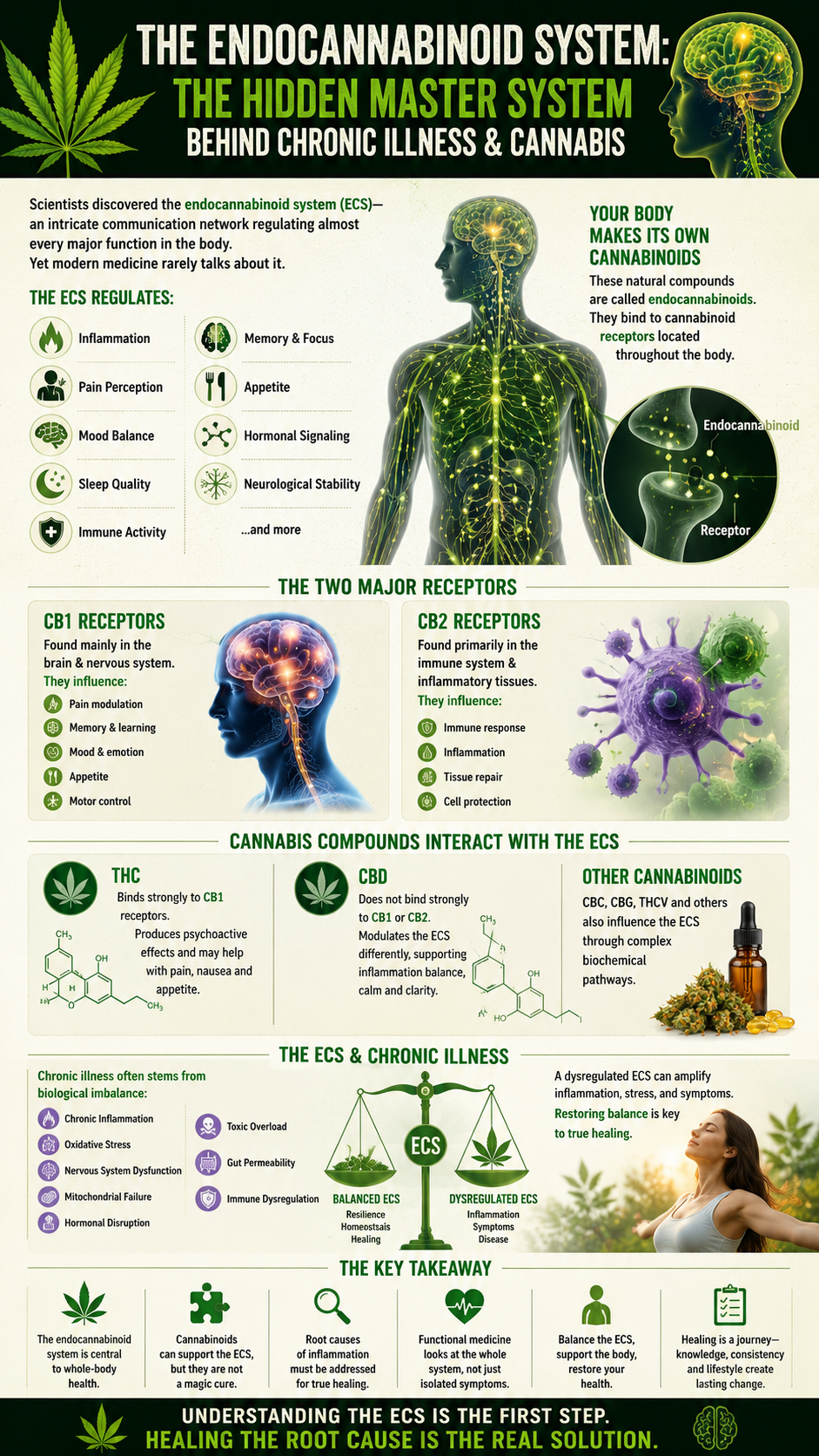
Functional medicine recognizes chronic illness as a state of biological imbalance involving inflammation, oxidative stress, nervous system dysfunction, mitochondrial failure, hormonal disruption, toxic overload, and gut permeability. The endocannabinoid system appears deeply involved in regulating those processes. When the system becomes dysregulated, symptoms often intensify dramatically.
Mainstream medicine frequently isolates symptoms into separate disease categories. One specialist treats migraines. Another manages arthritis. A different doctor addresses anxiety. Yet many chronic illnesses share common inflammatory pathways involving nervous system stress and immune dysregulation. The endocannabinoid system influences nearly all those mechanisms simultaneously.
Patients often misunderstand this relationship completely. Cannabis does not heal disease magically. Instead, cannabinoids may temporarily alter inflammatory signaling, neurotransmitter activity, pain sensitivity, stress responses, and sleep regulation while deeper healing occurs underneath. Without addressing the underlying drivers of inflammation, symptom relief alone rarely creates lasting health transformation.
Chronic Inflammation Drives Most Modern Disease
The true epidemic destroying modern health is chronic inflammation. Most people never hear that message because symptom management dominates conventional medicine. Patients receive labels and prescriptions while the inflammatory fire continues burning underneath.
Inflammation itself is not inherently dangerous. Acute inflammation protects the body during injury and infection. Chronic inflammation creates the real problem. When inflammatory chemicals remain elevated continuously, tissues begin deteriorating slowly throughout the body. Blood vessels stiffen. Hormones fluctuate abnormally. Mitochondria lose efficiency. The immune system becomes confused. The nervous system enters survival mode constantly.
Modern lifestyles fuel inflammation aggressively. Ultra-processed foods flood the bloodstream with refined sugars, seed oils, artificial chemicals, preservatives, and inflammatory proteins. Environmental toxins accumulate inside fat tissue, organs, and the brain. Chronic stress elevates cortisol continuously. Sleep deprivation weakens cellular repair mechanisms. Sedentary lifestyles impair circulation and lymphatic drainage. Gut bacteria become imbalanced from antibiotics, pesticides, alcohol, and processed foods.
Cannabis interacts with many inflammatory pathways, which explains why patients often experience symptom relief. However, suppressing inflammation temporarily differs greatly from removing the causes driving inflammation originally. Functional medicine focuses intensely on identifying those triggers rather than masking symptoms endlessly.
The public often believes chronic disease emerges from bad genetics alone. Genetics influence vulnerability, but environment usually determines activation. A person may carry genes predisposing them toward autoimmune disease, depression, obesity, or chronic pain, yet inflammation often pulls the trigger. Toxicity, nutrient deficiencies, poor sleep, stress, mold exposure, heavy metals, and blood sugar instability can activate dormant vulnerabilities over time.
Cannabis may reduce suffering during the healing process, but no plant can fully protect the body against chronic inflammatory destruction indefinitely. Patients must repair the terrain creating disease rather than chasing endless symptom suppression.
High-THC Cannabis Creates Hidden Problems Most Users Never Expect
The modern cannabis industry has changed dramatically from previous generations. Today’s products often contain extremely high THC concentrations never seen historically. Many dispensaries market potency aggressively because consumers associate stronger intoxication with greater therapeutic value. That assumption creates serious problems.
High-dose THC affects the brain differently than balanced whole-plant cannabis. Excessive THC stimulation may alter dopamine signaling, impair memory formation, reduce motivation, disrupt emotional regulation, and worsen anxiety in vulnerable individuals. Some chronic users develop dependency patterns resembling psychological addiction despite claims that cannabis remains completely harmless.
Heavy THC exposure may also disrupt sleep architecture. Many users believe cannabis improves sleep because it induces sedation rapidly. Long-term overuse can reduce restorative REM sleep significantly. The brain may become dependent on cannabis for sleep initiation while natural circadian rhythm regulation weakens gradually.
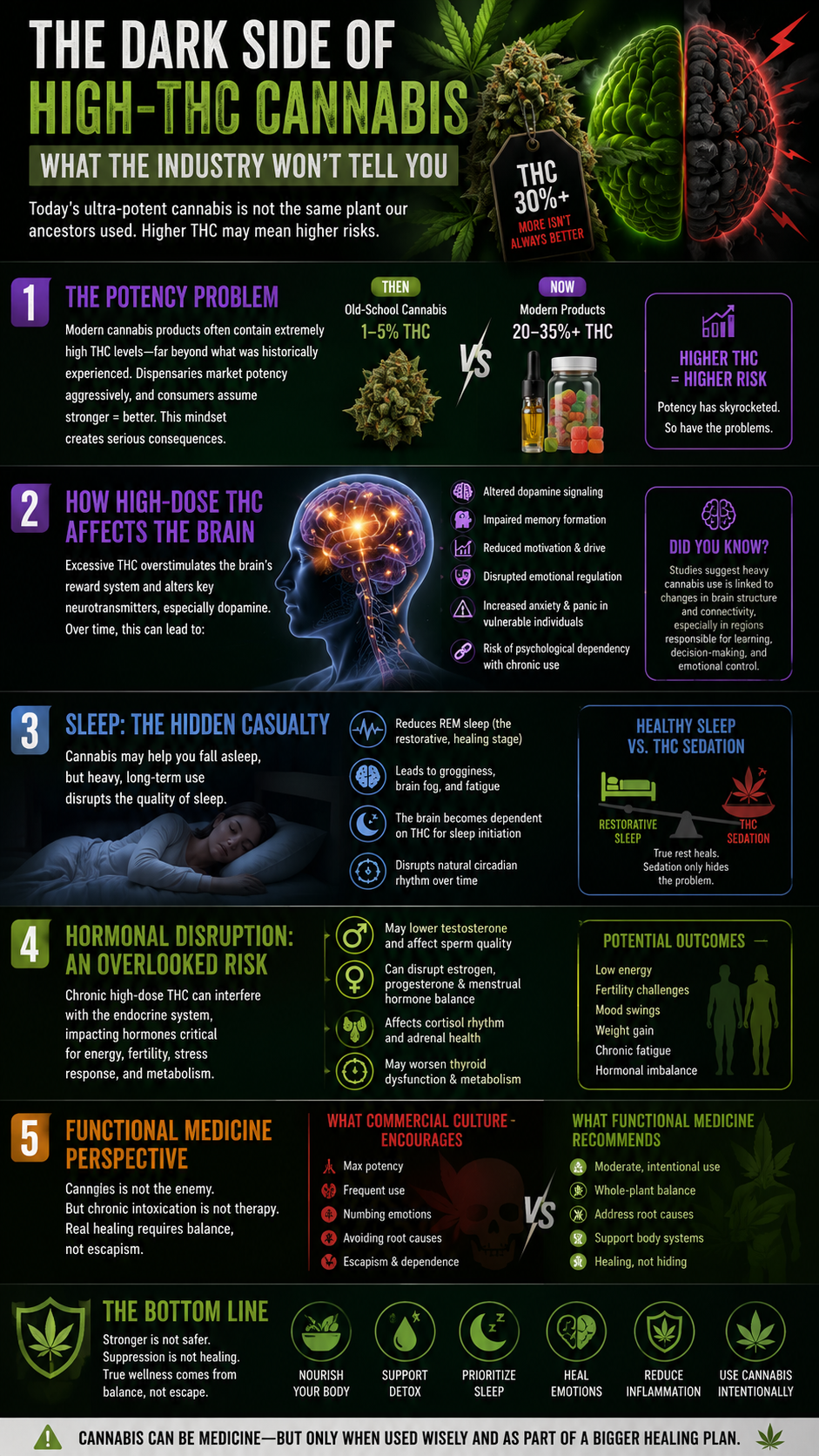
Hormonal disruption presents another overlooked concern. Chronic heavy cannabis use may alter testosterone production, fertility, cortisol balance, and reproductive hormones in some individuals. Patients already struggling with fatigue, thyroid dysfunction, adrenal stress, or metabolic syndrome may unknowingly worsen those conditions through excessive cannabis exposure.
Functional medicine practitioners increasingly warn against chronic intoxication masquerading as therapy. Therapeutic cannabis use should prioritize balance, not sedation. Unfortunately, commercial cannabis culture often encourages escapism rather than healing. Patients consume stronger products repeatedly while ignoring nutrition, detoxification, sleep quality, emotional trauma, and inflammatory triggers.
That pattern mirrors the same pharmaceutical mindset functional medicine originally opposed. Stronger symptom suppression rarely creates deeper healing.
Cannabis and the Brain: What Really Happens Neurologically
The human brain responds powerfully to cannabinoids because CB1 receptors exist abundantly throughout neurological tissue. THC influences neurotransmitters including dopamine, GABA, serotonin, glutamate, and acetylcholine. Those interactions explain both therapeutic benefits and potential side effects.
Low doses of cannabinoids may calm nervous system hyperactivity and reduce stress signaling temporarily. Patients with PTSD, chronic anxiety, trauma histories, or severe pain often experience nervous system relaxation after careful dosing. However, chronic overstimulation of cannabinoid receptors may eventually impair cognitive flexibility and emotional resilience.
Adolescent cannabis exposure creates especially serious concerns because the developing brain remains highly vulnerable. THC may interfere with synaptic pruning, memory formation, impulse control, and executive function during neurological development. Functional medicine strongly discourages recreational cannabis use among teenagers because long-term neurological effects may persist into adulthood.
Adults also experience neurological consequences from excessive use. Chronic high-dose THC exposure may reduce short-term memory performance, impair concentration, and decrease motivation. Some individuals develop worsening anxiety or panic attacks despite initially using cannabis for relaxation. Others experience depersonalization, emotional numbness, or cognitive fog.
Cannabis affects every brain differently because genetics, trauma history, inflammation levels, nutrient status, and toxic burden vary tremendously between individuals. Functional medicine avoids generalized assumptions entirely. Personalized assessment matters greatly when considering therapeutic cannabis strategies.
The Cannabis Industry Rarely Discusses Toxic Contamination
Many patients assume cannabis products remain naturally clean because they originate from plants. Unfortunately, cannabis functions as a bioaccumulator. The plant absorbs substances aggressively from soil, water, and air. Contaminated growing environments create contaminated cannabis products.
Commercial cannabis may contain pesticides, herbicides, mold toxins, heavy metals, residual solvents, synthetic flavorings, and microbial contamination. Patients with chronic illness often possess weakened detoxification capacity already. Adding additional toxic exposure may worsen inflammation significantly despite temporary symptom relief.
Mold contamination presents especially serious concerns. Immunocompromised individuals and patients with chronic inflammatory illnesses often react strongly to mold toxins. Poorly stored cannabis products may develop fungal contamination capable of triggering neurological symptoms, respiratory irritation, immune activation, and fatigue.
Heavy metals create another hidden danger. Cannabis plants may absorb lead, arsenic, cadmium, and mercury from contaminated soil. Chronic exposure to those metals damages mitochondria, nervous system tissue, hormonal pathways, and immune function gradually over time.
Functional medicine emphasizes sourcing rigorously tested products from transparent cultivators using organic growing practices. Patients should seek third-party laboratory verification whenever possible. Clean products matter enormously when using cannabis therapeutically.
Functional Dosing Changes Everything
Most cannabis users misunderstand dosing completely. Recreational culture encourages maximal intoxication while functional medicine pursues physiological balance instead. Those approaches produce vastly different outcomes.
Cannabinoids demonstrate biphasic effects. Small doses may create benefits while large doses create opposite reactions. Low THC doses often reduce anxiety gently. Excessive THC commonly worsens anxiety dramatically. Small cannabinoid amounts may improve focus temporarily. High doses frequently impair cognition and concentration.
Functional medicine practitioners frequently recommend microdosing because it minimizes side effects while preserving therapeutic potential. Microdosing involves using extremely small cannabinoid amounts carefully throughout the day rather than pursuing heavy intoxication.
Patients often experience meaningful symptom improvement with surprisingly low doses. The ideal dose rarely involves overwhelming psychoactive effects. Instead, patients should feel calmer, clearer, and more balanced without cognitive impairment.
CBD-rich products often provide better long-term tolerability than ultra-high THC products. Balanced cannabinoid ratios may reduce inflammation and nervous system stress without producing dependency patterns associated with chronic intoxication.
Patients should increase dosing slowly while monitoring sleep quality, cognition, emotional stability, digestion, and energy levels carefully. Functional medicine prioritizes the lowest effective dose rather than maximal symptom suppression.
Chronic Pain Patients Need More Than Symptom Relief
Millions of people use cannabis for chronic pain management because conventional medicine often fails them completely. Opioids create dependency. Steroid injections weaken tissues gradually. Anti-inflammatory drugs damage the gut lining and kidneys over time. Surgery frequently produces mixed outcomes.
Cannabis may reduce pain perception effectively for some individuals, but pain itself rarely represents the root problem. Pain functions as the body’s alarm system. Chronic inflammation, nerve irritation, mitochondrial dysfunction, poor biomechanics, toxic accumulation, blood sugar instability, emotional trauma, and nutrient deficiencies may all contribute simultaneously.
Functional medicine evaluates why tissues became inflamed initially. Gut permeability frequently drives widespread inflammation. Mold toxicity may trigger neurological pain syndromes. Mineral deficiencies often worsen muscle tension and nerve sensitivity. Sleep deprivation amplifies pain dramatically through inflammatory cytokine elevation.
Patients should avoid assuming symptom reduction equals structural healing. Reduced pain may encourage overactivity before tissues recover fully. Long-term healing requires rebuilding the biological environment supporting healthy cellular repair.
Cannabis works best alongside anti-inflammatory nutrition, chiropractic care, movement therapy, nervous system regulation, detoxification support, mitochondrial restoration, and stress reduction strategies.
Autoimmune Disease and Cannabis: The Missing Root Cause Conversation
Autoimmune disease rates continue rising rapidly across industrialized nations. Mainstream medicine typically suppresses immune activity using medications while rarely investigating why immune dysfunction emerged originally. Functional medicine approaches autoimmune illness completely differently.
The immune system usually becomes confused because environmental triggers overwhelm biological tolerance mechanisms repeatedly. Gut permeability allows inflammatory proteins into circulation. Mold toxins activate chronic immune responses. Heavy metals impair immune regulation. Chronic infections trigger persistent inflammation. Processed foods damage intestinal integrity continuously.
Cannabis may reduce inflammatory symptoms temporarily because cannabinoids influence immune signaling pathways. Many autoimmune patients report reduced pain, improved sleep, and lower anxiety while using cannabis products. Yet symptom relief alone does not eliminate immune triggers.
Patients should investigate food sensitivities carefully. Gluten, dairy, processed seed oils, alcohol, and refined sugars commonly worsen autoimmune inflammation. Sleep quality also matters enormously because immune repair occurs heavily during deep sleep cycles. Chronic stress keeps the nervous system locked inside survival mode, further aggravating immune dysregulation.
Functional medicine views cannabis as supportive rather than curative. Healing autoimmune disease requires removing inflammatory triggers while rebuilding gut integrity, detoxification capacity, nervous system stability, and mitochondrial resilience.
The Functional Medicine Plan for Safe Cannabis Use at Home
Patients considering cannabis for chronic illness should approach it strategically rather than emotionally. Functional medicine emphasizes education, discipline, and root-cause healing rather than blind experimentation.
The first priority involves lowering overall inflammation through nutrition. Processed foods, sugar, alcohol, artificial sweeteners, and inflammatory seed oils worsen nearly every chronic illness. Patients should emphasize clean proteins, healthy fats, mineral-rich vegetables, filtered water, and stable blood sugar patterns.
Sleep restoration must become non-negotiable. Chronic illness worsens dramatically when circadian rhythms collapse. Patients should reduce blue light exposure at night, maintain consistent sleep schedules, and obtain morning sunlight exposure daily. Magnesium-rich foods and stress reduction techniques may improve sleep quality naturally.
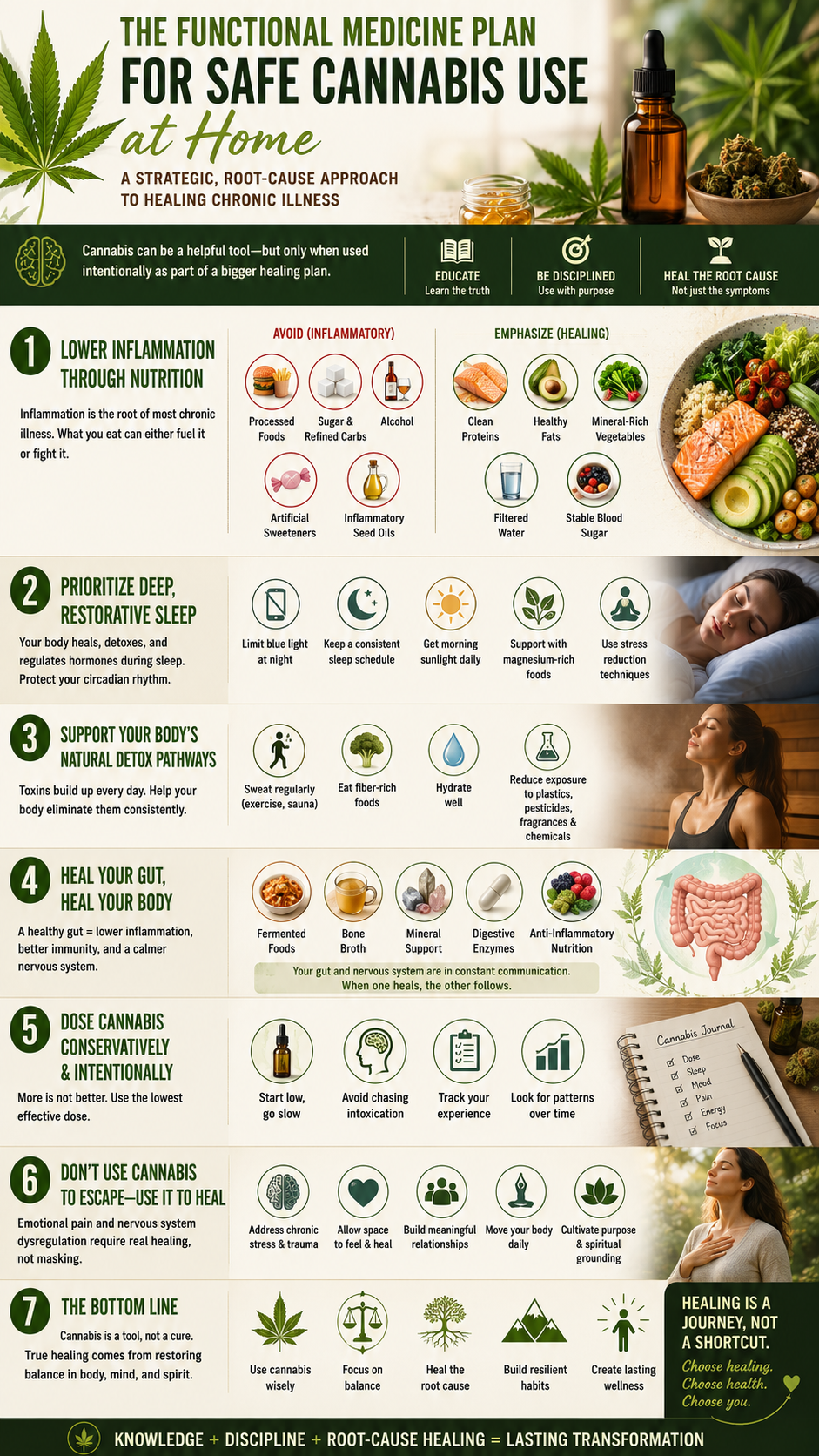
Detoxification support remains essential because toxins accumulate relentlessly inside modern environments. Sweating regularly through exercise or sauna use may assist toxin elimination. Fiber intake supports bowel clearance while hydration improves lymphatic circulation. Patients should reduce exposure to plastics, pesticides, fragrances, and chemical cleaning products whenever possible.
Gut healing also matters profoundly. Fermented foods, bone broth, mineral support, digestive enzymes, and anti-inflammatory nutrition may improve intestinal integrity gradually. The gut and nervous system communicate continuously through inflammatory signaling pathways.
Cannabis dosing should remain conservative and intentional. Patients should avoid chasing intoxication while monitoring mental clarity carefully. Journaling symptoms, sleep quality, mood changes, energy levels, and cognitive performance may reveal important patterns over time.
Most importantly, cannabis should never become emotional anesthesia. Chronic stress, trauma, unresolved grief, and nervous system dysregulation require deeper healing work. No substance can permanently replace emotional resilience, meaningful relationships, proper nutrition, movement, sleep, and spiritual grounding.
The Future of Cannabis Depends on Truth Rather Than Propaganda
The cannabis conversation has suffered from extreme polarization for decades. Government agencies exaggerated dangers while commercial industries now exaggerate benefits. Patients deserve something far more valuable than propaganda from either side. They deserve truth.
Cannabis possesses legitimate therapeutic potential for certain individuals when used intelligently and conservatively. However, chronic intoxication, excessive THC exposure, contaminated products, dependency patterns, and symptom suppression without root-cause healing create serious problems long term.
Functional medicine offers a more balanced path forward. The body does not malfunction randomly. Chronic disease reflects deeper biological stress involving inflammation, toxicity, nervous system overload, nutrient depletion, poor sleep, gut dysfunction, and metabolic imbalance. Cannabis may support healing temporarily, but foundational health restoration requires much more than cannabinoids alone.
The modern chronic illness epidemic will not disappear through pharmaceuticals or cannabis products alone. Real healing requires rebuilding the biological terrain supporting cellular resilience and nervous system balance. Patients must stop viewing symptoms as enemies requiring suppression endlessly. Symptoms often reveal where the body needs attention most urgently.
Cannabis should remain a tool rather than a lifestyle. When used strategically within a broader functional medicine framework, cannabinoids may help reduce suffering and improve quality of life significantly. Without deeper healing work, however, symptom relief often becomes another temporary escape from unresolved biological dysfunction.
The future of healthcare depends on moving beyond symptom management entirely. True medicine should restore function rather than merely masking dysfunction. Cannabis may play an important role within that future, but only when truth replaces ideology and healing replaces dependency.