
Why Millions Now Believe a Diabetes Drug Can Slow Aging
The modern wellness industry constantly searches for a shortcut to longevity. Every few years, a new compound rises into the spotlight and promises to delay aging, preserve energy, and protect against disease. Today, that compound is Metformin. Once reserved for Type 2 Diabetes treatment, this drug now sits at the center of the anti-aging movement. Longevity influencers, Silicon Valley executives, celebrities, and even some physicians now promote Metformin as a scientific breakthrough capable of extending human lifespan.
The public hears a seductive message. Take a cheap pill. Lower blood sugar. Activate longevity genes. Live longer. That narrative sounds exciting because modern people want youth without sacrifice. They want the benefits of discipline without changing the lifestyle creating disease. Unfortunately, the human body does not work that way. Biology never rewards shortcuts for long.
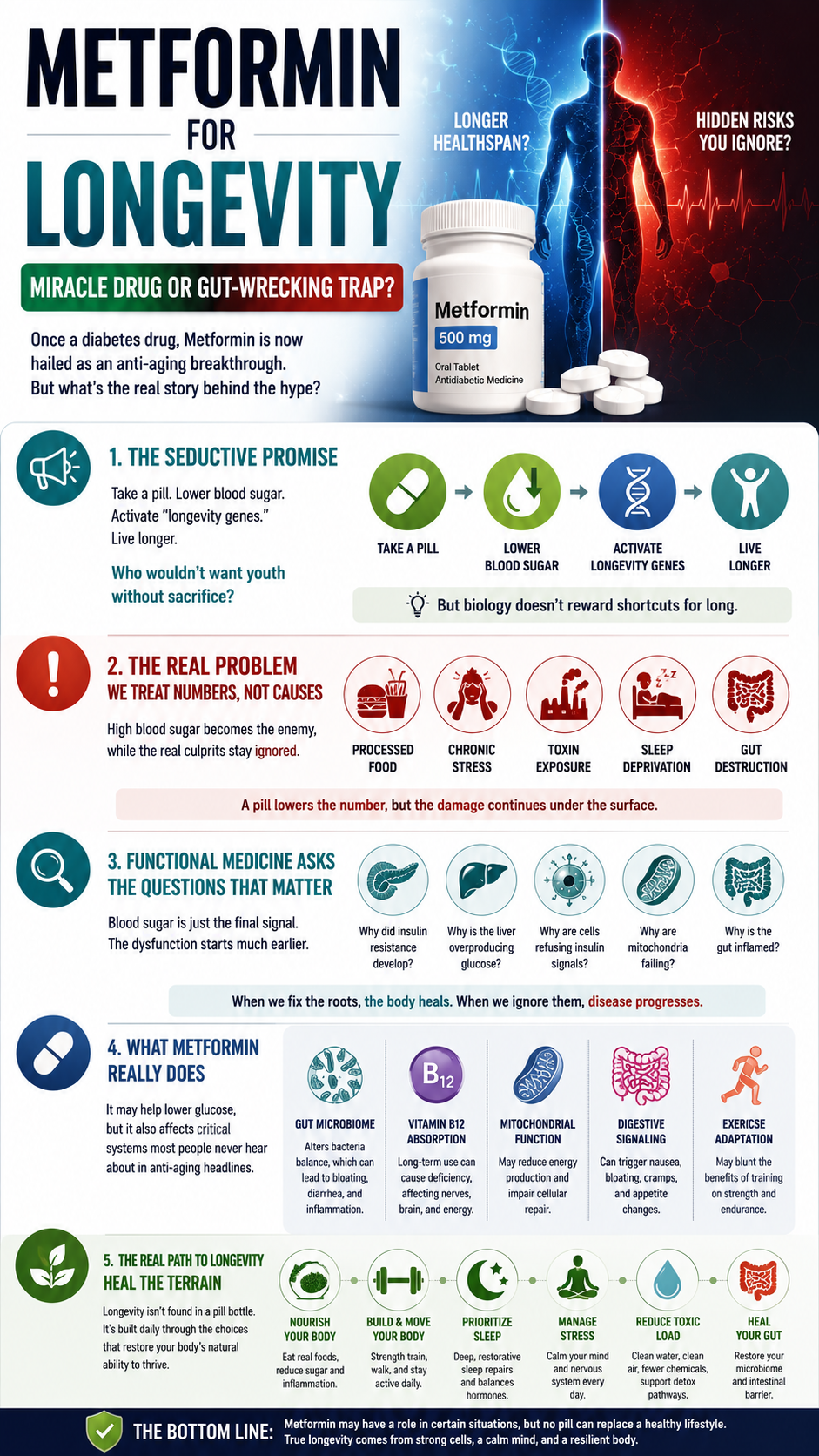
The growing obsession with Metformin reveals a larger cultural problem. Modern medicine increasingly treats symptoms while ignoring the environment creating those symptoms. High blood sugar becomes the enemy while processed food, chronic stress, toxin exposure, sleep deprivation, and gut destruction remain untouched. A medication then enters the picture and lowers the number. The patient hears success while the body continues deteriorating beneath the surface.
Functional medicine sees this situation differently. Functional medicine asks deeper questions. Why did insulin resistance develop in the first place? Why is the liver overproducing glucose? Why are cells refusing insulin signals? Why are mitochondria failing? Why is the gut inflamed? Those questions matter because blood sugar problems rarely begin in the bloodstream alone. They begin in the gut, nervous system, muscles, liver, and mitochondria long before glucose numbers rise.
Metformin may help some people temporarily manage metabolic dysfunction. However, the drug also affects the gut microbiome, vitamin B12 absorption, mitochondrial energy production, digestive signaling, and exercise adaptation. Those effects rarely appear in anti-aging headlines. The public hears promises about longevity while remaining uninformed about what the drug may be doing to digestion, energy systems, nerves, and nutrient reserves.
The real issue is not whether Metformin lowers glucose. The real issue is whether people understand the deeper causes of aging and metabolic collapse. The body does not age rapidly because it lacks pharmaceuticals. The body ages rapidly because modern lifestyles destroy cellular resilience. No pill can fully compensate for chronic inflammation, toxic overload, muscle loss, nutrient depletion, and gut dysfunction.
The Origins of the Metformin Longevity Movement
Researchers originally developed Metformin to help control blood sugar in Type 2 Diabetes patients. The drug lowers hepatic glucose production and improves insulin sensitivity. Doctors embraced it because it effectively reduced glucose without causing frequent dangerous hypoglycemia. Over time, scientists noticed certain diabetic populations taking Metformin appeared healthier than expected.
Some observational studies suggested reduced cardiovascular disease rates and lower cancer incidence among Metformin users. These findings sparked enormous excitement in longevity research. Scientists began theorizing that Metformin might mimic calorie restriction, one of the most studied anti-aging interventions in history. Calorie restriction activates cellular pathways associated with survival and repair. Researchers believed Metformin activated similar mechanisms through AMPK signaling.
AMPK↑⇒Insulin Sensitivity↑
Mainstream media quickly transformed this scientific curiosity into a cultural phenomenon. Articles described Metformin as an “anti-aging pill.” Biohackers promoted it aggressively. Longevity clinics began prescribing it to healthy adults. Silicon Valley entrepreneurs embraced the drug as part of their optimization routines. Yet most people never heard the deeper biological concerns surrounding chronic use.
The excitement ignored an important truth. Lower glucose does not automatically create health. Many chronically ill people maintain normal glucose while suffering from mitochondrial dysfunction, inflammation, hormonal collapse, digestive failure, and toxic overload. Human biology depends on interconnected systems. Improving one marker while damaging another may create long-term consequences.
Functional medicine practitioners immediately recognized this danger. They understood that medications altering metabolism also alter gut function, nutrient absorption, microbial diversity, mitochondrial signaling, and detoxification capacity. The body never isolates one pathway. Every intervention creates ripple effects throughout the organism.
The longevity conversation surrounding Metformin therefore became dangerously incomplete. The public heard promises of longer life without hearing discussions about digestive inflammation, nutrient depletion, impaired exercise adaptation, and microbiome disruption. That imbalance created a distorted perception of the drug.
The Real Cause of Premature Aging
Most people misunderstand aging completely. They believe aging results primarily from genetics or the passage of time. Functional medicine views aging through a different lens. Aging accelerates when damage overwhelms repair capacity. The body constantly repairs cells, removes waste, fights inflammation, and rebuilds tissues. Problems begin when modern living overloads those repair systems.
Processed food represents one of the greatest drivers of premature aging. Ultra-processed foods contain refined sugar, industrial seed oils, synthetic additives, pesticide residues, and nutrient-poor carbohydrates. These foods spike insulin repeatedly and damage metabolic flexibility. Over time, cells stop responding properly to insulin. The pancreas compensates by producing more. Chronic insulin elevation accelerates inflammation, fat storage, vascular damage, and hormonal dysfunction.
Chronic stress creates another major problem. Modern people rarely experience true rest. Financial pressure, social media stimulation, emotional trauma, sleep deprivation, and nonstop notifications keep cortisol elevated constantly. High cortisol weakens digestion, disrupts thyroid signaling, damages the gut barrier, increases belly fat, and accelerates muscle breakdown. The nervous system becomes trapped in survival mode.
Environmental toxins also accelerate biological aging aggressively. Modern humans encounter pesticides, plastics, heavy metals, mold toxins, synthetic fragrances, polluted water, and industrial chemicals daily. These toxins damage mitochondria and overwhelm detoxification pathways. Cells struggle to produce energy while constantly defending themselves against chemical stress.
Gut dysfunction compounds the problem further. The intestinal barrier regulates immunity, inflammation, neurotransmitter production, and nutrient absorption. When the gut lining becomes damaged, inflammatory compounds enter circulation and activate the immune system. Chronic inflammation then spreads throughout the body and contributes to fatigue, autoimmune disease, brain fog, joint pain, and insulin resistance.
Sedentary living worsens every aspect of metabolic dysfunction. Human biology evolved around movement. Muscles regulate glucose storage, circulation, mitochondrial density, and hormonal balance. Physical inactivity weakens insulin sensitivity and accelerates muscle loss. Muscle loss strongly predicts frailty, diabetes, cardiovascular disease, and mortality.
Poor sleep also drives accelerated aging. During deep sleep, the body repairs tissues, balances hormones, clears brain waste products, and restores energy systems. Sleep deprivation increases insulin resistance and inflammatory signaling rapidly. Many modern people survive on caffeine while their bodies remain chronically exhausted.
These factors created the metabolic crisis now labeled “aging.” Metformin entered this damaged environment and became marketed as salvation. Yet the true problem never began with a Metformin deficiency. The true problem began when modern lifestyles overwhelmed human physiology.
What Metformin Actually Does Inside the Body
Metformin primarily lowers blood glucose by reducing glucose production inside the liver. It also improves insulin sensitivity and slightly reduces intestinal glucose absorption. These effects explain why physicians prescribe the medication widely for Type 2 Diabetes management.
However, the mechanisms behind these effects reveal important concerns. Metformin partially inhibits mitochondrial complex I activity. Mitochondria function as microscopic energy generators inside cells. They convert nutrients into ATP, the energy currency powering repair, detoxification, cognition, immunity, and muscle contraction.
ATP↓⇒Cellular Repair↓
Supporters argue mild mitochondrial stress may create beneficial adaptation through hormesis. Critics worry chronic mitochondrial suppression may impair energy production, recovery, and resilience over time. Many patients taking Metformin report fatigue, weakness, reduced endurance, and exercise intolerance. These symptoms suggest mitochondrial compromise may affect certain individuals significantly.
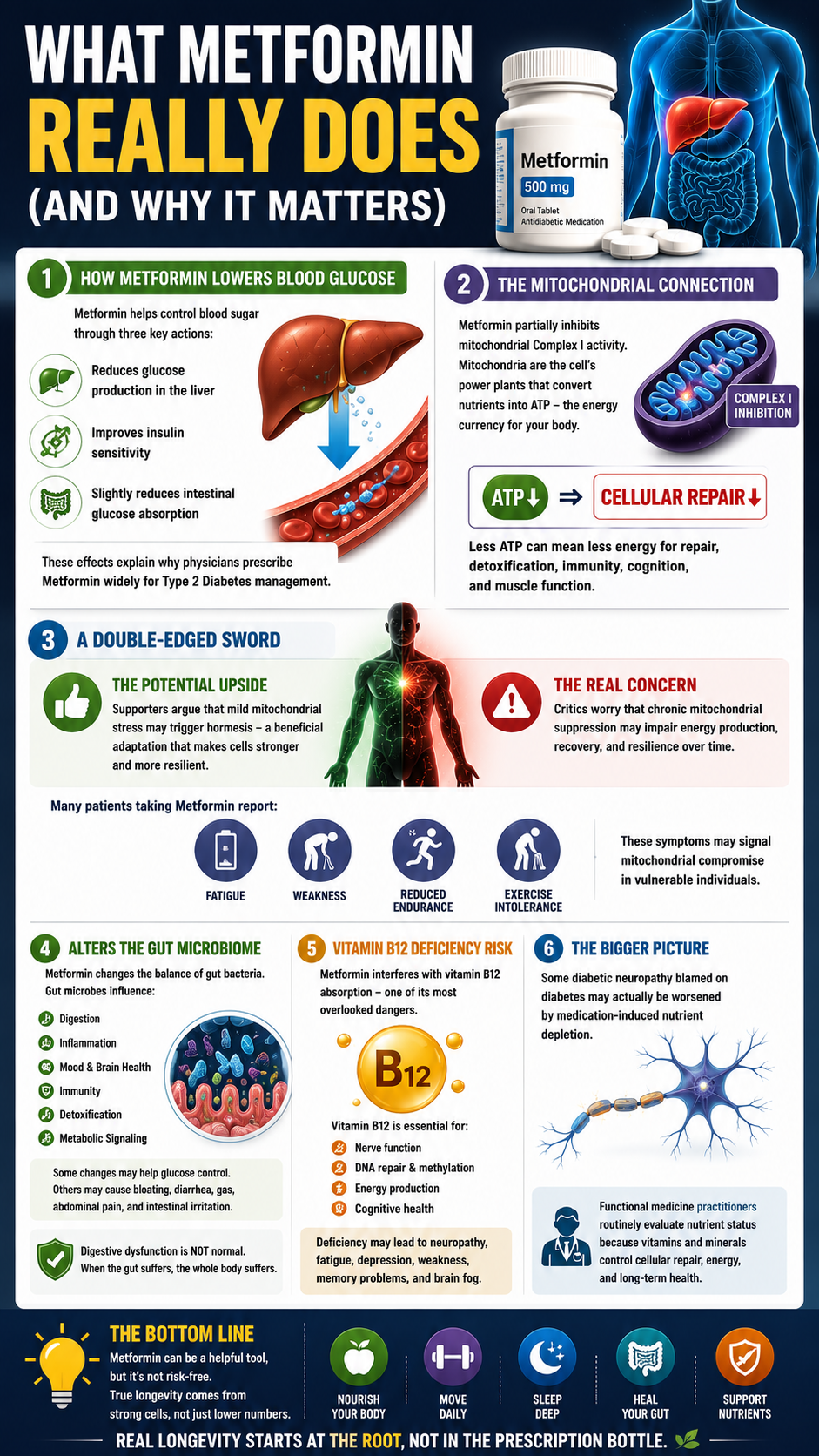
The drug also alters the intestinal microbiome. Gut bacteria influence digestion, inflammation, mood, immunity, detoxification, and metabolic signaling. Some microbial changes associated with Metformin may improve glucose control temporarily. Others may contribute to bloating, diarrhea, gas, abdominal pain, and intestinal irritation.
Digestive dysfunction should never become normalized. The gut controls far more than digestion. The gut regulates immune activity, inflammatory balance, neurotransmitter production, and nutrient absorption. When digestion suffers chronically, the entire body suffers.
Metformin also interferes with vitamin B12 absorption. This issue represents one of the drug’s most overlooked dangers. Vitamin B12 supports nerve function, DNA repair, methylation, energy production, and cognitive health. Deficiency may contribute to neuropathy, fatigue, depression, weakness, memory problems, and brain fog.
Ironically, some diabetic neuropathy symptoms blamed entirely on diabetes may partially result from medication-induced nutrient depletion. Functional medicine practitioners routinely evaluate nutrient status because they understand vitamins and minerals control cellular repair.
The Gut-Wrecking Side of Metformin
The digestive system already suffers enormous stress in modern society. Antibiotics, alcohol, processed food, pesticides, artificial sweeteners, and chronic stress have severely damaged the modern microbiome. Adding Metformin into this fragile environment often intensifies digestive dysfunction.
Many users experience bloating shortly after beginning the medication. Others develop chronic diarrhea, nausea, cramping, abdominal discomfort, or excessive gas. Physicians often dismiss these symptoms as harmless side effects. Functional medicine views them differently. Digestive symptoms represent biological warning signals.
The gut microbiome contains trillions of microorganisms communicating constantly with the immune system and nervous system. Healthy bacteria help digest food, produce vitamins, regulate inflammation, and maintain intestinal barrier integrity. Harmful bacterial imbalances increase inflammation and weaken gut defenses.
When the gut barrier becomes compromised, partially digested proteins and bacterial toxins enter circulation. The immune system responds aggressively, creating widespread inflammation. This condition often becomes known as intestinal permeability or “leaky gut.”
Leaky gut contributes to autoimmune disease, fatigue, brain fog, joint pain, skin disorders, thyroid dysfunction, and metabolic instability. Many patients taking Metformin already struggle with these symptoms before beginning the medication. Digestive disruption may therefore worsen an already inflamed internal environment.
The gut also produces neurotransmitters affecting mood and cognition. Serotonin production occurs primarily inside the digestive tract. Chronic intestinal inflammation therefore affects emotional stability and mental clarity directly.
Healthy aging requires a healthy microbiome. The body cannot maintain strong immunity, nutrient absorption, and metabolic resilience while chronic digestive irritation persists. Longevity depends on preserving gut integrity, not sacrificing it for improved lab markers alone.
The Hidden Vitamin B12 Crisis
One of the most dangerous consequences of long-term Metformin use involves vitamin B12 depletion. Many patients remain completely unaware of this issue for years because symptoms develop gradually.
Vitamin B12 supports red blood cell production, nerve protection, methylation, detoxification, and brain function. Deficiency may manifest as fatigue, numbness, tingling, depression, memory decline, balance problems, weakness, and cognitive dysfunction.
Many physicians only test serum B12 occasionally or wait until deficiency becomes severe. Functional medicine practitioners often evaluate methylmalonic acid and homocysteine alongside B12 because these markers reveal deeper methylation dysfunction.
The nervous system ages rapidly when nutrient reserves decline. Brain fog, mood instability, poor focus, and neuropathy may worsen significantly when B12 absorption remains impaired for years. Older adults face particularly high risk because stomach acid production naturally declines with age.
The public rarely hears about this problem during anti-aging discussions surrounding Metformin. Instead, marketing narratives focus on longevity while ignoring the biological costs associated with chronic nutrient depletion.
The Exercise and Muscle Problem
Exercise remains one of the most powerful anti-aging interventions known to science. Strength training improves insulin sensitivity, mitochondrial density, hormonal balance, circulation, bone density, and cognitive function. Muscle mass strongly predicts resilience and survival in aging populations.
Some research suggests Metformin may blunt beneficial exercise adaptations. Certain studies observed reduced improvements in aerobic fitness and muscle hypertrophy among individuals taking Metformin during training programs.
This issue matters enormously because muscle functions as a metabolic organ. Healthy muscle stores glucose efficiently and improves insulin sensitivity naturally. Muscle loss contributes directly to frailty, falls, weakness, and chronic disease.
Longevity without strength becomes prolonged decline. Living longer matters little if the body becomes weak, exhausted, and dependent. Functional medicine therefore prioritizes preserving muscle and mitochondrial function aggressively.
The body requires challenge and adaptation to remain resilient. Exercise stimulates mitochondrial growth, hormone production, and cellular repair pathways naturally. Anything interfering with those adaptations deserves careful scrutiny inside longevity conversations.
Why Mainstream Medicine Misses the Bigger Picture
Conventional medicine often measures success through symptom reduction and lab normalization. If glucose improves, treatment appears successful. Functional medicine asks a broader question. Is the patient actually healthier?
A person may achieve lower blood sugar while suffering worsening fatigue, digestive distress, nutrient depletion, poor recovery, and declining energy. Blood work may look better while physiology deteriorates underneath.
Mainstream medicine often compartmentalizes the body into separate systems. Gastrointestinal symptoms belong to gastroenterology. Fatigue belongs to endocrinology. Neuropathy belongs to neurology. Functional medicine recognizes the body as an interconnected network.
The gut influences immunity, hormones, neurotransmitters, inflammation, and metabolism simultaneously. Mitochondria influence energy production across every organ. Nutrient depletion affects the nervous system, muscles, detoxification, and cognition together.
This systems-based perspective changes treatment entirely. Instead of suppressing symptoms chemically, functional medicine seeks to restore physiological balance. The goal becomes healing terrain rather than masking dysfunction.
How to Repair the Real Problem Naturally
The body possesses extraordinary healing capacity when given proper conditions. Functional medicine focuses on removing obstacles to healing while restoring biological resilience.
The first step involves eliminating ultra-processed foods. Refined sugar, industrial seed oils, packaged snacks, artificial sweeteners, and processed carbohydrates drive insulin resistance aggressively. Replacing these foods with nutrient-dense whole foods stabilizes glucose naturally.
Healthy meals should emphasize clean protein, healthy fats, and mineral-rich vegetables. Eggs, grass-fed meats, wild fish, avocados, olive oil, leafy greens, cruciferous vegetables, herbs, and fermented foods provide stronger metabolic signals.
The second step involves healing the gut. Removing inflammatory foods reduces immune activation inside the intestines. Fermented vegetables and probiotic-rich foods support microbial diversity. Bone broth and collagen-rich foods may help repair intestinal lining integrity.

Hydration and digestive support also matter significantly. Many people rush meals, chew poorly, and eat under stress. Slowing down during meals improves digestive signaling and nutrient absorption.
The third step involves building muscle through resistance training. Squats, lunges, rows, carries, and push movements improve insulin sensitivity rapidly. Muscle acts as a glucose reservoir and protects against metabolic disease.
The fourth step involves improving sleep aggressively. Deep sleep restores hormonal balance and supports mitochondrial repair. Reducing evening screen exposure, maintaining consistent sleep schedules, and getting morning sunlight improve circadian rhythm naturally.
The fifth step involves reducing toxic exposure. Filtering water, avoiding plastic food containers, improving indoor air quality, and reducing chemical products lower toxic burden significantly. Detoxification systems function better when toxic input decreases.
The sixth step involves supporting mitochondrial function directly. Magnesium, CoQ10, omega-3 fats, B vitamins, and adequate protein intake support cellular energy production. Sunlight exposure and movement also stimulate mitochondrial resilience.
The seventh step involves calming the nervous system. Chronic stress keeps cortisol elevated and prevents healing. Prayer, meditation, deep breathing, walking outdoors, chiropractic care, and meaningful relationships help shift the body into repair mode.
The Functional Medicine View of Longevity
The modern world constantly searches for anti-aging shortcuts. Pharmaceutical companies market pills while social media promotes optimization trends. Most approaches ignore the deeper biological truth. Longevity begins with cellular resilience, not pharmaceutical dependency.
Healthy aging requires strong mitochondria, balanced hormones, low inflammation, resilient digestion, abundant nutrients, stable glucose, healthy muscle mass, and restorative sleep. These systems work together continuously.
Metformin may provide meaningful benefit for certain diabetic patients. However, the drug should never become a substitute for rebuilding metabolic health naturally. No medication can overcome chronic processed food consumption, sleep deprivation, toxic overload, inactivity, and digestive collapse indefinitely.
The body was designed to heal when given proper conditions. Human physiology evolved around movement, sunlight, nutrient-dense food, clean water, meaningful social connection, and circadian rhythm alignment. Modern life opposes those biological requirements constantly.
Functional medicine seeks to restore alignment with human biology. Instead of suppressing symptoms alone, it asks why dysfunction appeared initially. That approach often uncovers deeper problems involving the gut, nervous system, mitochondria, toxins, hormones, and nutrient status.
Final Verdict: Miracle Drug or Gut-Wrecking Trap?
Metformin sits at the center of one of modern medicine’s most important longevity debates. Supporters call it revolutionary. Critics warn about gut disruption, nutrient depletion, mitochondrial compromise, and exercise interference. The truth likely exists somewhere between those extremes.
The greatest danger involves oversimplification. Media headlines often portray Metformin as a magical anti-aging solution while ignoring biological tradeoffs. The public then begins believing longevity can come from pharmaceuticals instead of foundational health restoration.
The gut-wrecking concerns surrounding Metformin deserve serious attention because digestion influences immunity, inflammation, mood, and nutrient absorption profoundly. The mitochondrial concerns matter because energy production determines resilience and recovery. The B12 concerns matter because nervous system health depends on proper nutrient reserves.
Functional medicine does not reject medication blindly. Functional medicine rejects shallow thinking. It rejects the idea that symptom suppression equals healing. Instead, it seeks restoration of the terrain creating health itself.
True longevity does not begin inside a prescription bottle. Longevity begins when inflammation falls, the gut heals, mitochondria strengthen, muscles grow, toxins decrease, sleep improves, and the nervous system feels safe again.
The future of healthy aging will belong to people rebuilding their biology from the cellular level upward rather than searching endlessly for pharmaceutical shortcuts.