
The Rise of the “Superfood” Narrative
Over the past two decades, the concept of “superfoods” has evolved from a marketing buzzword into a dominant framework shaping how people think about nutrition, disease prevention, and even longevity itself. Grocery store shelves are lined with products boasting antioxidant scores, social media influencers promote daily green smoothies as a path to vitality, and even clinical recommendations increasingly emphasize plant diversity as a cornerstone of health. Spinach is promoted for its iron content, almonds for their healthy fats, beets for circulatory benefits, and dark chocolate for cardiovascular protection, all contributing to a narrative that these foods are not just beneficial but essential.
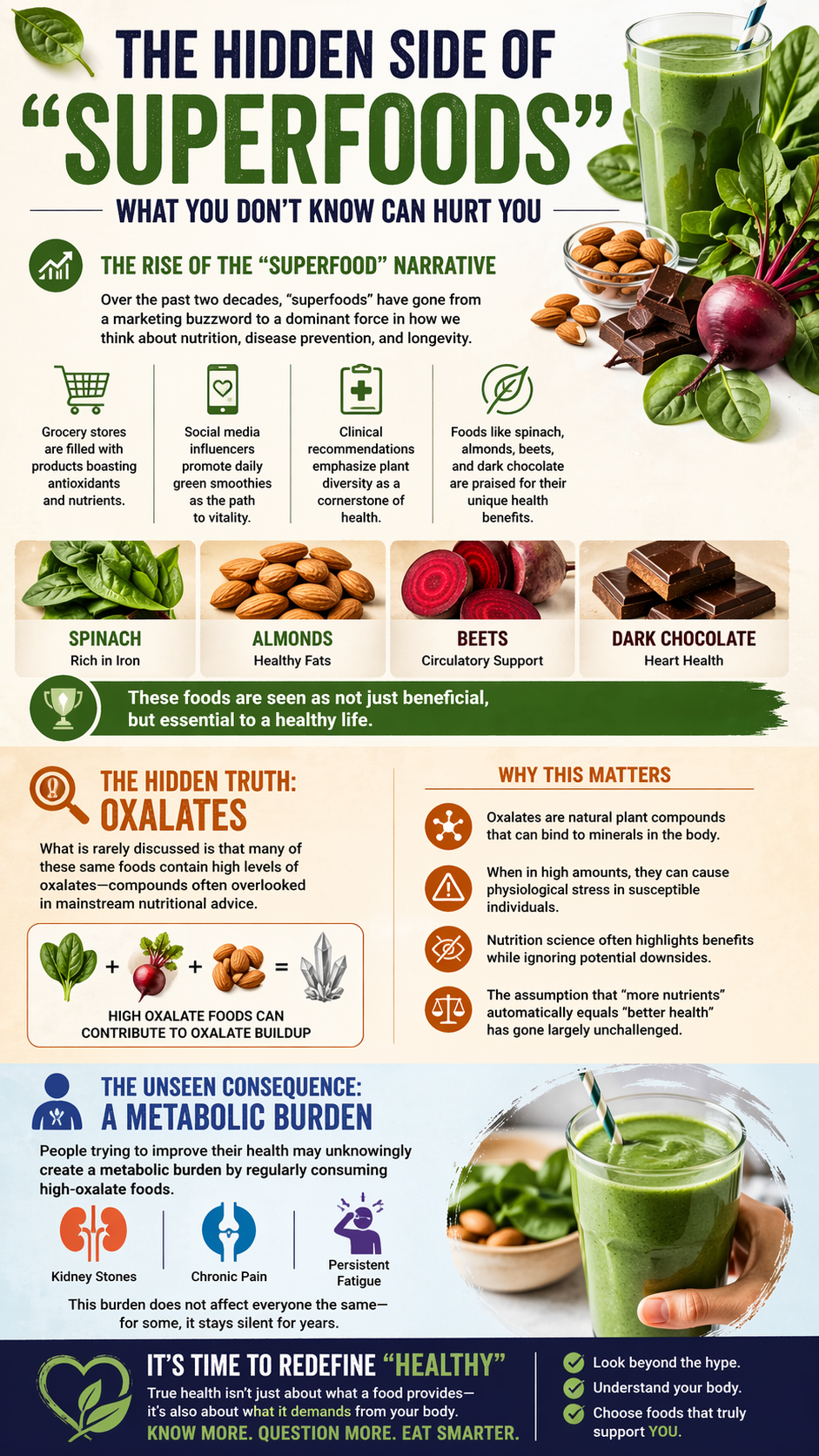
What is rarely discussed in this enthusiasm is that many of these same foods contain high concentrations of oxalates, compounds that introduce a layer of complexity often ignored in mainstream dietary advice. This omission is not accidental but reflects a broader tendency within nutrition science to highlight beneficial compounds while overlooking elements that may impose physiological stress under certain conditions. The assumption that a food’s nutrient density automatically translates to universal benefit has gone largely unchallenged, despite increasing clinical observations suggesting otherwise.
As a result, individuals who are earnestly attempting to improve their health—blending spinach into smoothies, replacing grains with almond flour, or increasing their intake of plant-based foods—may unknowingly be creating a metabolic burden. This burden does not manifest uniformly; for some, it remains silent for years, while for others it emerges as kidney stones, chronic pain, or persistent fatigue. The discrepancy between intention and outcome underscores the need to reevaluate how “healthy” foods are defined and to consider not only what a food provides but also what it demands from the body.
What Are Oxalates and Why Do Plants Produce Them?
Oxalates, or oxalic acid and its salts, are naturally occurring compounds found in a wide variety of plant foods, ranging from leafy greens to nuts and seeds. In the plant kingdom, these compounds serve several biological purposes, including regulating internal calcium levels and acting as a defense mechanism against herbivores. When consumed by animals, oxalates can form sharp, crystalline structures that create irritation, thereby discouraging excessive consumption and protecting the plant from being overgrazed.
In humans, however, oxalates do not serve a beneficial physiological role and are instead treated as waste products that must be processed and eliminated. Once ingested, oxalates enter the digestive tract, where they may bind to minerals such as calcium or magnesium and be excreted in stool. When this binding does not occur effectively, oxalates are absorbed into the bloodstream, eventually filtered by the kidneys and excreted in urine, a process that can become problematic if concentrations are elevated.
The body’s ability to manage oxalates depends on a delicate balance of digestive efficiency, mineral availability, and detoxification capacity. When these systems function optimally, oxalates are handled with minimal consequence, passing through the body without causing harm. When they are compromised, however, oxalates can accumulate, crystallize, and contribute to a range of health issues that extend far beyond the kidneys.
High-Oxalate “Superfoods”: A Closer Look
The overlap between high-oxalate foods and commonly recommended “superfoods” is striking and warrants closer examination, particularly given how frequently these foods are consumed in modern dietary patterns. Spinach, often considered a nutritional powerhouse, contains some of the highest oxalate levels of any commonly eaten food, especially when consumed raw in salads or blended into smoothies. Almonds and almond flour, which have become staples in gluten-free and ketogenic diets, can deliver substantial oxalate loads, particularly when used as substitutes for traditional grains in baked goods.
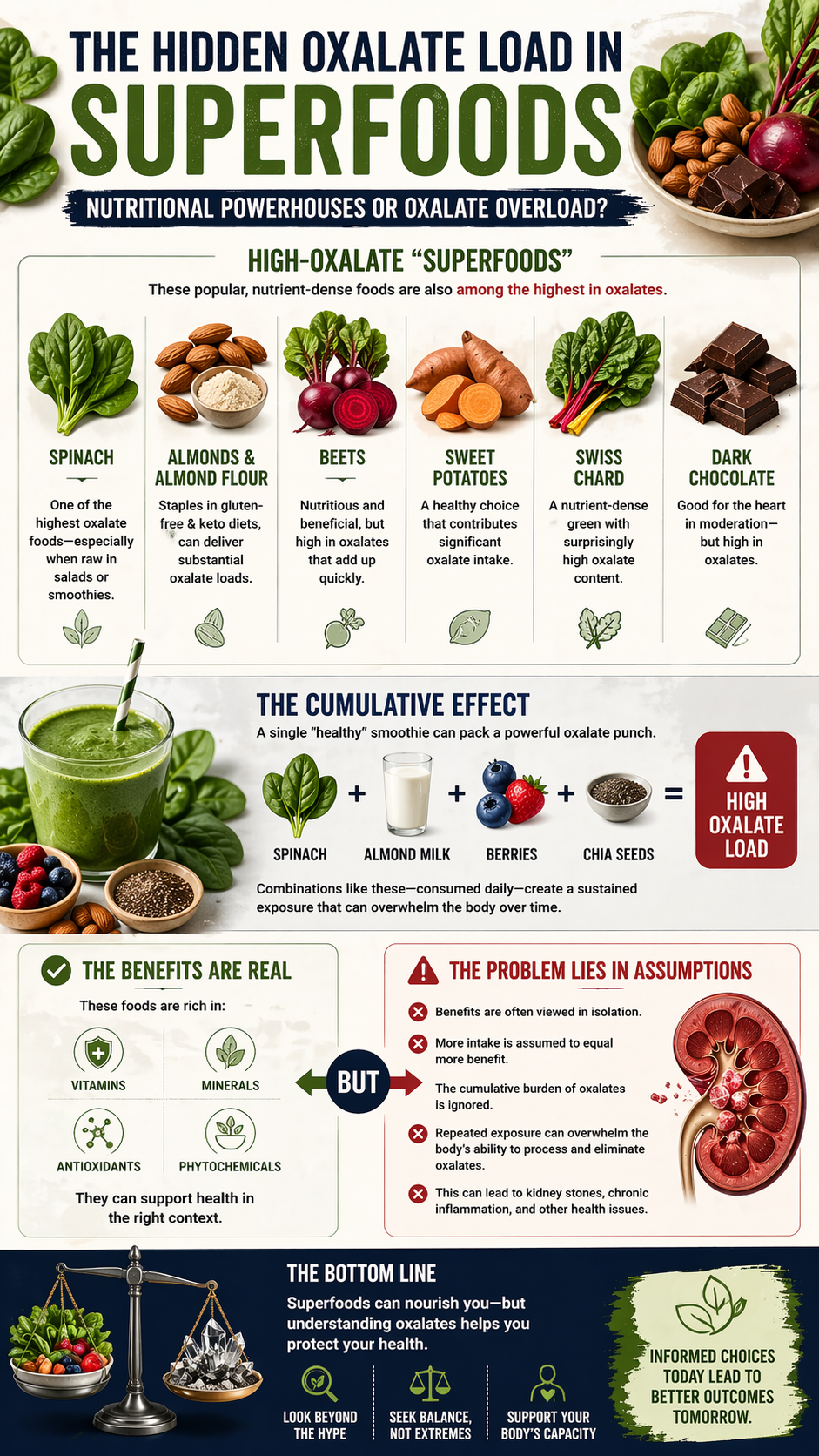
Beets, sweet potatoes, Swiss chard, and dark chocolate also contribute significantly to overall oxalate intake, and these foods are often consumed together in combinations that amplify their cumulative effect. A single smoothie containing spinach, almond milk, berries, and chia seeds can deliver a concentrated dose of oxalates that far exceeds what the body would have encountered in traditional dietary patterns. When consumed daily, these combinations create a sustained exposure that the body must continuously manage.
The issue is not that these foods lack beneficial nutrients, as they do contain vitamins, minerals, and phytochemicals that can support health in certain contexts. The problem lies in the assumption that these benefits exist in isolation and that increasing intake will always produce positive outcomes. This perspective ignores the cumulative burden of oxalates and fails to consider how repeated exposure can overwhelm the body’s capacity to process and eliminate these compounds effectively.
Kidney Stones: The Most Recognized Outcome
The relationship between oxalates and kidney stones is one of the most well-documented aspects of oxalate metabolism, with calcium oxalate stones accounting for the majority of cases worldwide. These stones form when oxalate binds with calcium in the urine, creating crystals that can grow, aggregate, and eventually obstruct the urinary tract. The resulting pain is often severe and can lead to emergency medical intervention, making kidney stones one of the most visible and acute consequences of oxalate imbalance.
Conventional approaches to managing kidney stones tend to focus on hydration and dietary restriction, with recommendations to increase water intake and reduce consumption of specific high-oxalate foods. While these measures can be effective in reducing immediate risk, they do not address the underlying factors that determine why oxalate levels become elevated in the first place. Patients are often left with the impression that their condition is largely unavoidable or genetic, rather than a reflection of modifiable physiological processes.
From a functional perspective, kidney stones are not isolated events but indicators of systemic dysfunction, signaling that the body’s mechanisms for handling oxalates are under strain. Addressing this dysfunction requires a broader examination of digestive health, mineral balance, and metabolic capacity, rather than a narrow focus on symptom management. By shifting attention to these underlying factors, it becomes possible to reduce not only the risk of stone formation but also the broader impact of oxalates on the body.
Beyond Stones: Systemic Effects of Oxalate Accumulation
While kidney stones are the most recognized manifestation of oxalate overload, they represent only one aspect of a much broader physiological impact that can extend to multiple systems within the body. Oxalates have the capacity to form microscopic crystals that deposit in tissues such as joints, muscles, blood vessels, and even neural structures, creating localized irritation and inflammation that may not be immediately attributed to dietary factors. These deposits can persist over time, contributing to chronic symptoms that are often labeled as idiopathic or attributed to unrelated conditions.
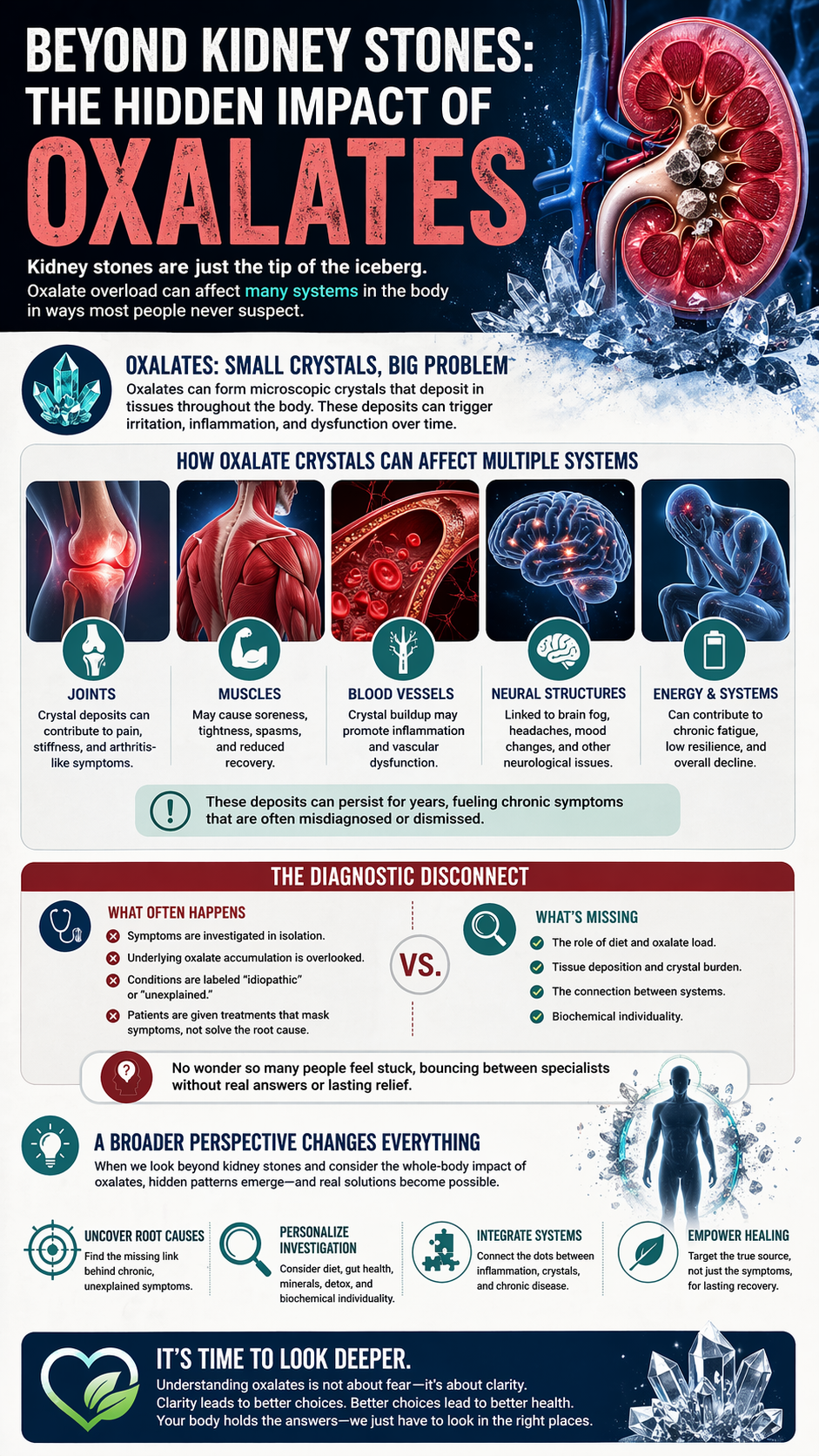
Individuals experiencing joint pain, muscle stiffness, or chronic fatigue may not consider the role of oxalates, particularly when their diet is perceived as healthy and aligned with mainstream recommendations. Similarly, neurological symptoms such as brain fog or mood disturbances may be investigated through a variety of lenses without considering the potential contribution of oxalate accumulation. This disconnect highlights a gap in conventional diagnostic approaches, which tend to focus on discrete disease categories rather than underlying biochemical processes.
By expanding the scope of investigation to include oxalates, it becomes possible to identify patterns that might otherwise remain unexplained, offering new avenues for intervention and symptom resolution. This broader perspective does not negate the role of other factors but integrates oxalates into a more comprehensive understanding of chronic health conditions.
Why Sensitivity to Oxalates Varies
The variability in individual responses to oxalate intake is one of the most important and least understood aspects of this topic, as it challenges the notion that dietary recommendations can be universally applied. While some individuals consume high-oxalate foods without apparent consequence, others develop significant symptoms, suggesting that underlying physiological differences play a critical role in determining susceptibility.
Gut Microbiome and Oxalate Degradation
The gut microbiome is a central determinant of oxalate metabolism, with certain bacterial species possessing the ability to break down oxalates before they are absorbed. Among these, Oxalobacter formigenes has been identified as particularly important, as it uses oxalate as an energy source and reduces its availability for absorption. The presence and activity of such bacteria depend on a range of factors, including diet, antibiotic exposure, and overall microbial diversity.
Modern dietary patterns and environmental influences often disrupt the microbiome, reducing populations of beneficial bacteria and impairing the body’s ability to manage oxalates effectively. In the absence of these protective mechanisms, a greater proportion of dietary oxalates enters the bloodstream, increasing the burden on the kidneys and other elimination pathways.
Intestinal Integrity and Absorption
The integrity of the intestinal lining plays a crucial role in regulating the absorption of oxalates, as it determines how selectively substances are allowed to pass into the bloodstream. When the gut barrier is compromised, a condition often referred to as increased intestinal permeability, oxalates can bypass normal regulatory processes and enter circulation in higher amounts. This increased absorption amplifies the systemic effects of oxalates and contributes to their accumulation in tissues.
Mineral Status and Binding Capacity
Calcium and magnesium are essential for binding oxalates within the digestive tract, forming complexes that are excreted in stool rather than absorbed. When these minerals are deficient, whether due to inadequate intake or impaired absorption, the body’s capacity to neutralize oxalates is diminished. This creates a scenario in which even moderate dietary intake can lead to elevated levels, particularly in individuals with additional risk factors.
Liver Function and Metabolic Processing
The liver contributes to oxalate metabolism through its role in processing metabolic byproducts and supporting detoxification pathways. When liver function is compromised, whether due to toxin exposure, nutrient deficiencies, or metabolic stress, the balance between oxalate production and elimination can be disrupted. This imbalance may lead to increased circulating levels and a greater likelihood of tissue deposition.
The Limitations of Mainstream Nutritional Thinking
Mainstream nutritional frameworks often rely on population averages and simplified categorizations, emphasizing patterns that appear beneficial across large groups while overlooking individual variability. This approach has led to the widespread promotion of certain foods based on their nutrient content, without fully considering how these nutrients interact with other compounds present in the same foods. The result is a model that prioritizes isolated benefits while neglecting potential drawbacks.
The categorization of foods into binary labels such as “healthy” and “unhealthy” further reinforces this oversimplification, creating a narrative that does not accommodate the complexity of human physiology. A more nuanced approach requires acknowledging that the effects of a given food depend on context, including the individual’s metabolic state, digestive capacity, and overall health status.
Functional Strategies for Managing Oxalates
Gradual Reduction Rather Than Abrupt Elimination
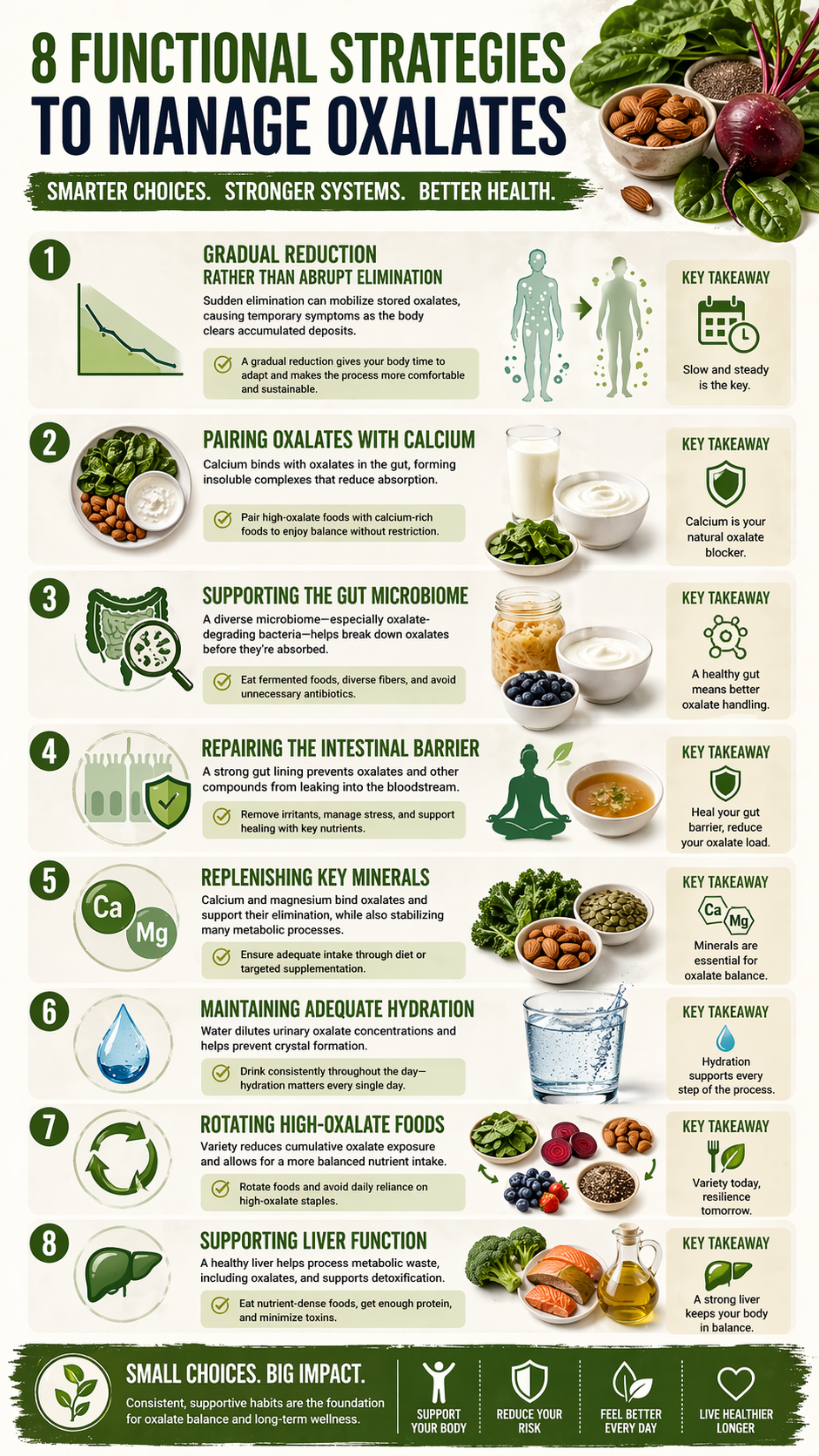
Reducing oxalate intake should be approached with care, as sudden elimination can lead to the mobilization of stored oxalates, a process that may produce temporary symptoms as the body attempts to clear accumulated deposits. A gradual reduction allows the body to adapt and minimizes the likelihood of discomfort, making the transition more sustainable and effective over time.
Pairing Oxalates with Calcium
Consuming calcium-rich foods alongside high-oxalate foods can significantly reduce absorption by promoting the formation of insoluble complexes in the gut. This strategy allows individuals to continue enjoying certain foods while mitigating their potential impact, emphasizing balance rather than restriction.
Supporting the Gut Microbiome
Enhancing microbial diversity through diet and lifestyle is essential for maintaining populations of oxalate-degrading bacteria, which play a critical role in reducing absorption. Incorporating fermented foods, diverse plant fibers, and minimizing unnecessary antibiotic use can support this process and improve overall gut health.
Repairing the Intestinal Barrier
Improving gut integrity reduces the passage of oxalates and other potentially harmful compounds into the bloodstream, thereby lowering systemic exposure. This involves addressing dietary irritants, managing stress, and providing nutrients that support tissue repair and regeneration.
Replenishing Key Minerals
Ensuring adequate intake of calcium and magnesium supports the body’s ability to bind and eliminate oxalates effectively, while also contributing to broader metabolic stability. This may require dietary adjustments or targeted supplementation based on individual needs.
Maintaining Adequate Hydration
Hydration plays a supportive role in diluting urinary oxalate concentrations and reducing the risk of crystal formation, but it should be viewed as one component of a comprehensive strategy rather than a standalone solution.
Rotating High-Oxalate Foods
Diversifying dietary choices and avoiding repetitive consumption of high-oxalate foods reduces cumulative exposure and allows for a more balanced intake of nutrients. This approach aligns with the principle that variety supports resilience within biological systems.
Supporting Liver Function
Optimizing liver health enhances the body’s capacity to process metabolic waste, including oxalates, and supports overall detoxification pathways. This involves nutrient-dense eating patterns, adequate protein intake, and minimizing exposure to environmental toxins.
Conclusion: Rethinking the Role of Oxalates
Oxalates represent a compelling example of how the relationship between food and health cannot be reduced to simple narratives or universal prescriptions, as their effects depend on a complex interplay of dietary patterns, physiological capacity, and individual variability. Their presence in many widely recommended foods challenges the assumption that nutrient density alone determines value and highlights the importance of context in shaping health outcomes.
By examining the mechanisms through which oxalates are processed and the factors that influence their impact, a more comprehensive understanding emerges that allows for informed decision-making rather than rigid adherence to generalized advice. This perspective does not require abandoning nutrient-dense foods but instead encourages a more intentional and individualized approach that aligns dietary choices with the body’s capacity to process and eliminate compounds effectively.
In adopting this approach, health becomes less about following trends and more about cultivating an awareness of how the body responds to different inputs, creating an opportunity for more sustainable and meaningful improvements in well-being.