
The Origin of a Modern Illusion
Artificial sweeteners did not emerge because humanity suddenly needed sweetness without calories. Their rise is rooted in a deeper cultural and industrial shift that began in the mid-20th century, when processed food manufacturing expanded and metabolic diseases began quietly increasing. As sugar consumption skyrocketed, so did obesity, diabetes, and cardiovascular conditions. Rather than addressing the underlying dietary patterns driving this trend, the food industry sought a workaround—something that could preserve taste while avoiding blame.
Compounds like saccharin, later followed by aspartame and sucralose, were introduced as technological solutions to a biological problem. The messaging was simple and compelling: enjoy sweetness without consequences. This narrative aligned perfectly with a society increasingly driven by convenience, speed, and the desire for immediate gratification without long-term cost. However, the human body does not interpret inputs based on marketing claims. It responds to chemical signals, patterns, and consistency.
From a functional perspective, the problem did not begin with sugar alone, nor was it solved by removing calories from sweetness. The issue began when natural food patterns were replaced with synthetic approximations that the body could not properly interpret. Artificial sweeteners represent a continuation of this disconnect—a scenario where taste is divorced from nutrition, and signals are sent without fulfillment. Understanding where this began is critical because it reframes the issue. This is not simply about choosing a different sweetener; it is about correcting a fundamental mismatch between modern dietary habits and human physiology.
The Core Problem: Sweetness as a Biological Signal, Not Just a Flavor
Sweetness is often misunderstood as a simple sensory experience, yet it is one of the most powerful metabolic signals the human body can perceive. When sweetness is detected on the tongue, it triggers a cascade of physiological responses that extend far beyond taste perception. The brain interprets sweetness as a sign of incoming energy, prompting insulin release, digestive enzyme activation, and hormonal shifts that prepare the body to absorb and utilize glucose.
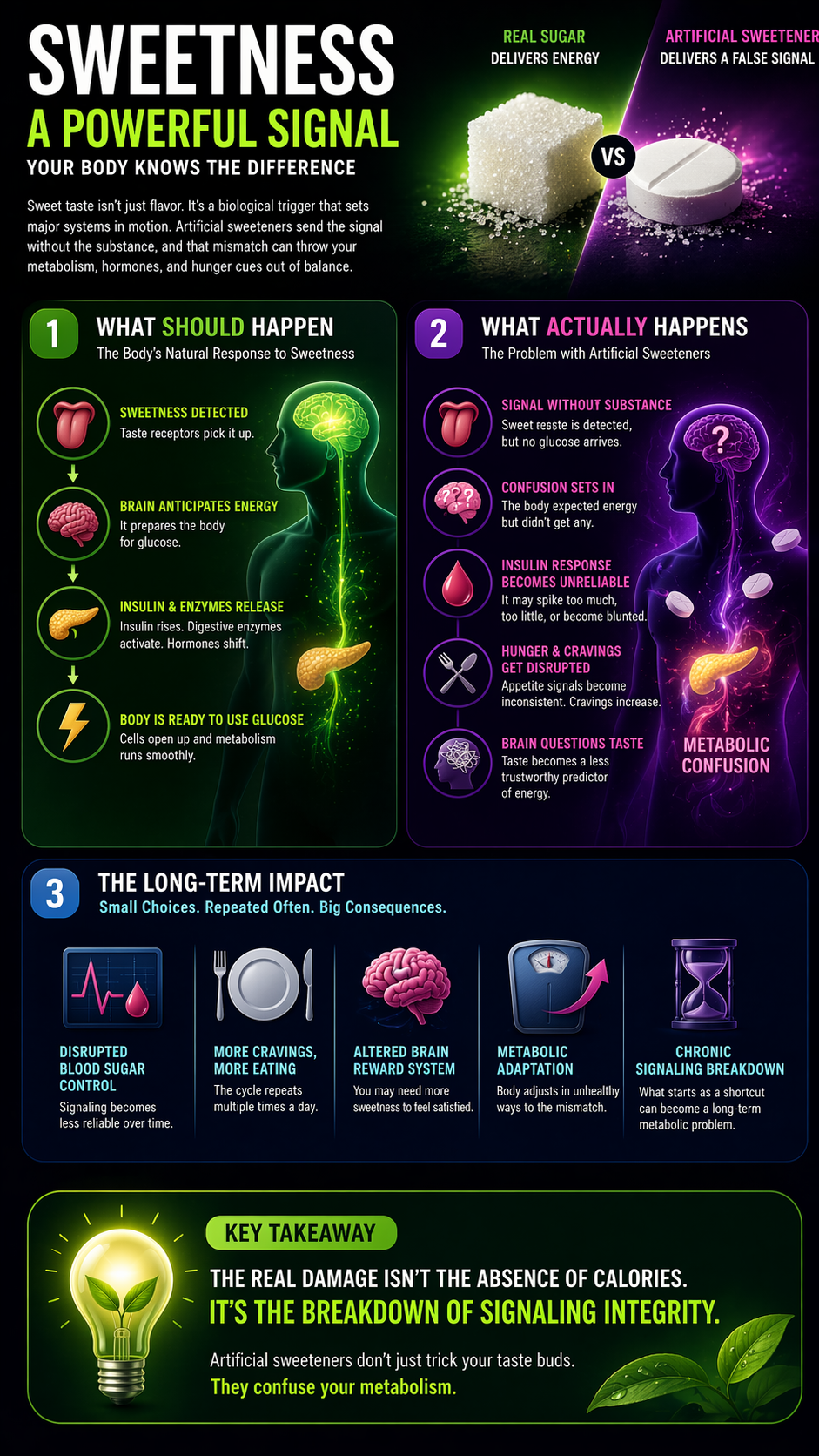
Artificial sweeteners disrupt this process by delivering the signal without the substance. The body prepares for an influx of glucose that never arrives, creating a mismatch between expectation and reality. This repeated pattern forces the body into a state of confusion, where signaling pathways become less reliable over time. Insulin responses may become exaggerated or blunted, hunger cues may become inconsistent, and the brain may begin to question the validity of taste as a predictive tool.
This disruption is not a one-time event. It occurs repeatedly, often multiple times per day, in individuals who rely on artificially sweetened beverages, snacks, or supplements. Over time, the body adapts to this inconsistency by altering its regulatory mechanisms. What begins as a seemingly harmless substitution gradually evolves into a chronic disturbance of metabolic communication. From a functional standpoint, this is where the real damage occurs—not in the absence of calories, but in the breakdown of signaling integrity.
Insulin Dysfunction and Fat Storage: The Hidden Impact of “Zero-Calorie” Sweetness
One of the most pervasive misconceptions surrounding artificial sweeteners is that they are metabolically neutral because they do not contain calories. This assumption ignores the hormonal dimension of metabolism, particularly the role of insulin. Insulin is not merely a regulator of blood sugar; it is a master hormone that dictates whether the body stores or burns energy.
When artificial sweeteners stimulate the sweet receptors on the tongue, they can trigger a cephalic phase insulin response. This anticipatory release of insulin occurs before any glucose enters the bloodstream. In the absence of actual sugar, this insulin release can lead to a drop in blood glucose levels, which the body interprets as a need for energy. The result is an increase in hunger and cravings, particularly for carbohydrate-rich foods.
Over time, repeated insulin stimulation without corresponding glucose intake can contribute to insulin resistance. Cells become less responsive to insulin signals, forcing the pancreas to produce more insulin to achieve the same effect. This creates a metabolic environment that favors fat storage, particularly in the abdominal region. Individuals may find themselves gaining weight despite consuming fewer calories, leading to frustration and confusion.
The functional medicine approach recognizes that weight gain is not solely a function of caloric intake. It is a reflection of hormonal balance, cellular sensitivity, and metabolic flexibility. Artificial sweeteners interfere with all three, creating a scenario where the body becomes increasingly efficient at storing fat and less capable of utilizing it for energy.
Gut Microbiome Disruption: How Artificial Sweeteners Damage the Inner Ecosystem
The gut microbiome plays a central role in regulating metabolism, immunity, and inflammation. It is a complex ecosystem composed of trillions of microorganisms that interact with the body in highly sophisticated ways. Artificial sweeteners have been shown to alter this ecosystem in ways that can have far-reaching consequences.
Certain artificial sweeteners, particularly sucralose and saccharin, have been observed to reduce the diversity of beneficial gut bacteria while promoting the growth of strains associated with inflammation and metabolic dysfunction. This imbalance, known as dysbiosis, can impair the gut’s ability to process nutrients, regulate blood sugar, and maintain a healthy immune response.
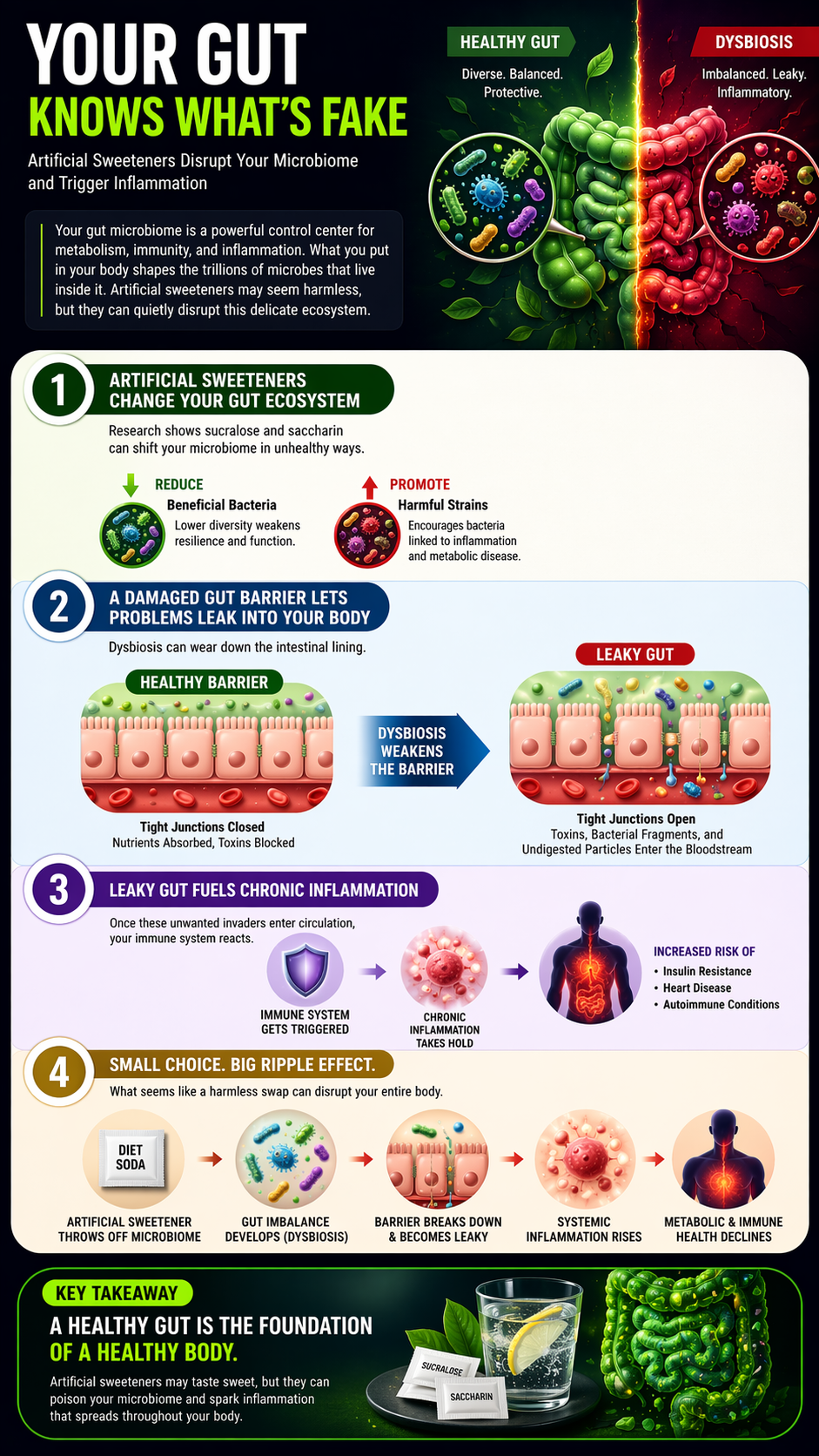
One of the most concerning outcomes of dysbiosis is increased intestinal permeability. The lining of the gut is designed to act as a selective barrier, allowing nutrients to pass into the bloodstream while keeping harmful substances out. When this barrier becomes compromised, toxins, undigested food particles, and bacterial fragments can enter the circulation, triggering systemic inflammation.
Chronic inflammation is a key driver of many modern diseases, including insulin resistance, cardiovascular disease, and autoimmune conditions. From a functional perspective, the gut is not just a digestive organ; it is a central hub of health. Disrupting its balance with artificial compounds creates a ripple effect that extends throughout the entire body.
Neurological Effects and Craving Amplification: Rewiring the Brain’s Reward System
The brain’s relationship with sweetness is deeply rooted in survival mechanisms. Sweet taste activates the reward centers of the brain, releasing dopamine and reinforcing behaviors that lead to energy acquisition. Artificial sweeteners exploit this system by providing the taste of sweetness without the accompanying energy.
This creates a paradox within the brain’s reward circuitry. The expected reward is not fully delivered, leading to a state of dissatisfaction. To compensate, the brain may increase its demand for sweet or calorie-dense foods, driving cravings and overeating. Over time, this can lead to a recalibration of the reward threshold, where greater levels of sweetness are required to achieve the same level of satisfaction.
Additionally, artificial sweeteners may interfere with the brain’s ability to regulate appetite. Hormones such as leptin and ghrelin, which control hunger and satiety, can become dysregulated in response to inconsistent signaling. Individuals may find themselves eating more frequently or struggling to feel full, even after consuming adequate calories.
From a functional standpoint, these changes are not behavioral flaws. They are physiological adaptations to repeated exposure to artificial stimuli. Addressing them requires restoring the natural relationship between taste, energy, and reward.
The Toxic Load Perspective: Cumulative Exposure and Systemic Stress
Artificial sweeteners do not exist in isolation within the body. They contribute to the overall toxic load—the cumulative burden of environmental chemicals, processed foods, and metabolic byproducts that the body must process and eliminate. While each individual exposure may seem insignificant, the cumulative effect can place significant stress on detoxification pathways.
The liver, which plays a central role in detoxification, must process these compounds alongside other environmental toxins. This can divert resources away from essential functions such as hormone regulation and nutrient metabolism. Over time, this added burden can contribute to fatigue, hormonal imbalances, and reduced metabolic efficiency.
Functional medicine emphasizes the importance of reducing toxic load as a foundational step in restoring health. Artificial sweeteners, while often overlooked, represent a consistent and unnecessary source of chemical exposure that can be eliminated with conscious dietary choices.
Functional Solutions: Rebuilding the Body’s Natural Metabolic Intelligence
Addressing the impact of artificial sweeteners requires more than simply removing them from the diet. It involves restoring the systems that have been disrupted and supporting the body’s ability to regulate itself effectively.
Stabilizing Blood Sugar Through Nutrient-Dense Meals
Balanced meals that include high-quality protein, healthy fats, and fiber are essential for maintaining stable blood sugar levels. These nutrients slow the absorption of glucose, prevent spikes and crashes, and provide sustained energy. Incorporating foods such as grass-fed meats, wild-caught fish, eggs, avocados, and non-starchy vegetables can help reestablish metabolic stability.
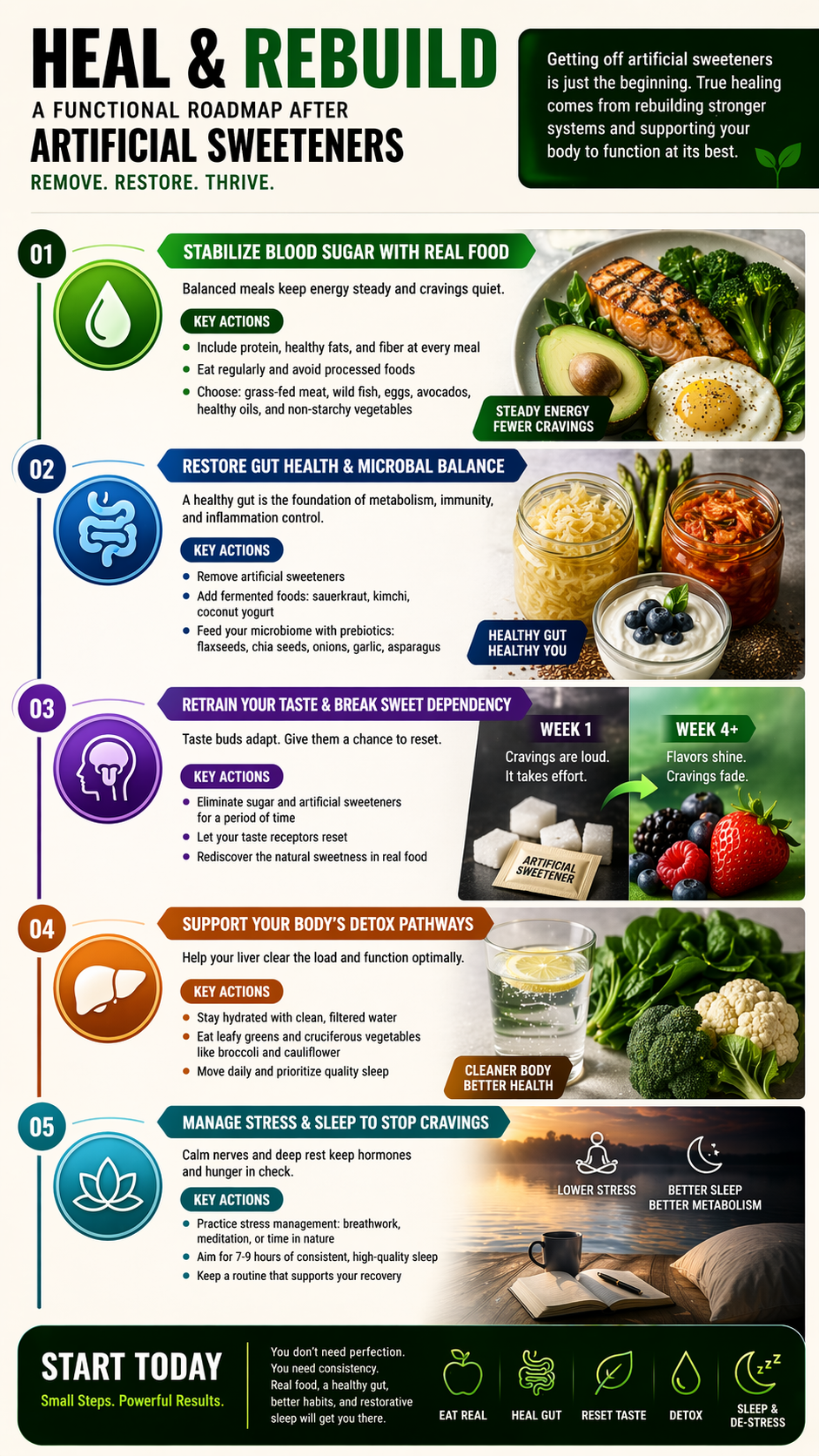
Eating at regular intervals and avoiding highly processed foods further supports this process. Over time, stable blood sugar reduces cravings and eliminates the perceived need for artificial sweetness.
Restoring Gut Health and Microbial Balance
Healing the gut requires both removing harmful inputs and introducing supportive elements. Eliminating artificial sweeteners is a critical first step, as it removes a source of microbial disruption. Adding fermented foods such as sauerkraut, kimchi, and coconut-based yogurt can help replenish beneficial bacteria.
Prebiotic fibers from foods like flaxseed, chia seeds, and vegetables provide nourishment for these bacteria, promoting a balanced and resilient microbiome. In some cases, targeted supplementation may be beneficial, but the foundation should always be built on whole foods.
Retraining Taste Perception and Reducing Sweet Dependency
The preference for intense sweetness can be reversed through gradual reduction. Eliminating both sugar and artificial sweeteners for a period of time allows taste receptors to reset. During this process, natural flavors become more pronounced, and the need for added sweetness diminishes.
This transition may require patience, but it is a critical step in breaking the cycle of dependency. The goal is not to eliminate enjoyment of food, but to restore the ability to appreciate its natural qualities.
Supporting Detoxification Pathways
Enhancing the body’s natural detoxification processes can help mitigate the effects of past exposure. This includes supporting liver function through adequate hydration, nutrient intake, and lifestyle practices such as regular physical activity and sufficient sleep.
Foods rich in antioxidants, such as leafy greens and cruciferous vegetables, provide compounds that assist in detoxification. While the focus should remain on whole foods, reducing exposure to unnecessary chemicals is equally important.
Addressing Lifestyle Factors That Drive Cravings
Chronic stress and sleep deprivation are powerful drivers of metabolic dysfunction. Elevated cortisol levels can increase blood sugar and promote fat storage, while poor sleep impairs insulin sensitivity and increases hunger.
Implementing stress management techniques such as breathing exercises, meditation, or time in nature can support hormonal balance. Prioritizing consistent, high-quality sleep allows the body to repair and regulate itself effectively.
Conclusion: From Substitution to Restoration
Artificial sweeteners represent a broader misunderstanding of health—one that prioritizes shortcuts over solutions. While they offer the illusion of control, they ultimately disrupt the very systems they are intended to support. The body does not thrive on deception, even when that deception is calorie-free.
True metabolic health is not achieved by replacing one substance with another. It is achieved by restoring the body’s natural ability to interpret signals, regulate energy, and maintain balance. This requires a shift in perspective, from managing symptoms to addressing root causes.
By removing artificial sweeteners, stabilizing blood sugar, healing the gut, and supporting the body’s innate processes, individuals can reclaim their metabolic intelligence. The result is not only improved physical health, but a renewed sense of clarity and control that no artificial substitute can provide.
The path forward is not complicated, but it does require intention. It begins with understanding, continues with action, and ultimately leads to a state of health that is both sustainable and deeply aligned with the body’s design.