
The Misdiagnosis That Shaped a Generation
Heart disease did not suddenly become the leading cause of death because humanity forgot how to eat properly, nor did it arise from a single dietary villain as the public has been led to believe. Instead, it emerged from a profound misunderstanding of human metabolism, one that redirected attention away from the true driver of cardiovascular damage and toward a convenient but incomplete explanation. For decades, the dominant narrative has insisted that dietary fat and cholesterol are the primary culprits, yet this perspective fails to explain why populations consuming high-fat diets historically experienced low rates of heart disease while modern societies, adhering to low-fat guidelines, continue to see escalating cardiovascular risk. The answer lies not in what was blamed, but in what was ignored, and that overlooked factor is sugar.
The modern epidemic of heart disease is best understood not as a failure of individual discipline but as the predictable consequence of a widespread metabolic disruption fueled by refined carbohydrates and sugars. While the public was taught to fear saturated fat, the food industry quietly replaced it with sugar-laden alternatives, creating a metabolic environment that promotes inflammation, insulin resistance, and vascular damage. This shift was not accidental, and to understand how it occurred, one must revisit the origins of the diet-heart hypothesis and the influence of Ancel Keys, whose work shaped decades of dietary recommendations while leaving critical questions unanswered.
The Origin of the Misconception: How Fat Took the Blame
The belief that fat causes heart disease did not arise from overwhelming scientific consensus but from a combination of limited data and compelling storytelling. In the mid-20th century, researchers were under pressure to explain the rising incidence of heart attacks, and into that uncertainty stepped Ancel Keys with a hypothesis that appeared both logical and actionable. He proposed that saturated fat raised cholesterol levels and that elevated cholesterol caused plaque buildup in arteries, leading to heart disease. While this theory gained traction quickly, it was built on observational correlations rather than controlled, causative evidence, and it overlooked numerous confounding variables that were never fully addressed.
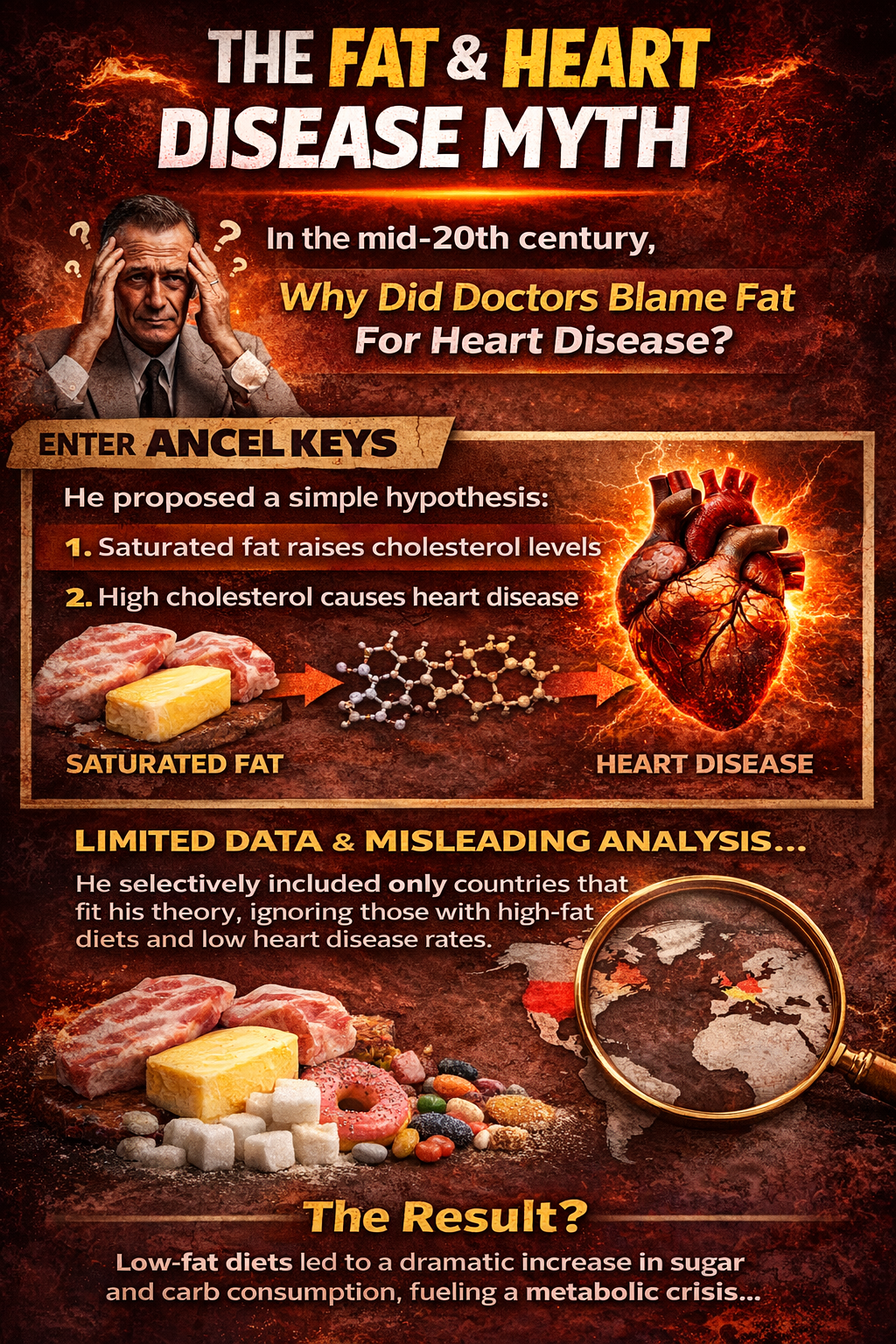
What is often excluded from mainstream discussion is the selective nature of the data used to support this hypothesis. Early analyses included a broad range of countries with varying dietary patterns, yet only those that aligned with the fat-heart disease connection were emphasized. Nations with high fat consumption but low cardiovascular mortality were minimized or excluded, creating a narrative that appeared consistent but was not representative of the full dataset. This selective framing allowed the hypothesis to gain credibility, ultimately influencing public health policy, medical education, and food manufacturing practices on a global scale.
As dietary guidelines shifted to promote low-fat consumption, the unintended consequence was a dramatic increase in carbohydrate intake, particularly from refined sugars. Foods that were once naturally rich in fat were reformulated to meet new standards, often sacrificing nutritional integrity in favor of shelf stability and palatability. The result was a population consuming more sugar than ever before, setting the stage for a metabolic crisis that would unfold over the following decades.
The Real Offender: Sugar’s Rise in the Modern Diet
The transition to low-fat diets did not eliminate calories from the food supply; it simply redistributed them, and sugar became the primary replacement. This shift was subtle yet profound, as sugar is metabolically distinct from fat in ways that directly impact cardiovascular health. Unlike fat, which has minimal effect on insulin levels, sugar—particularly in its refined forms—triggers rapid spikes in blood glucose and insulin, initiating a cascade of hormonal and biochemical responses that disrupt normal metabolic function.
Fructose, a major component of table sugar and high-fructose corn syrup, plays a particularly destructive role because it is processed almost exclusively by the liver. This metabolic pathway bypasses the regulatory mechanisms that typically control glucose utilization, leading to unchecked production of triglycerides and the accumulation of fat within liver cells. Over time, this process contributes to non-alcoholic fatty liver disease, a condition closely linked to insulin resistance and systemic inflammation, both of which are key drivers of heart disease.
The widespread availability of sugar in processed foods has created a constant state of metabolic overload, where the body is repeatedly forced to manage excess glucose and insulin. This chronic exposure does not merely increase calorie intake; it fundamentally alters the way cells respond to energy, leading to a breakdown in metabolic flexibility and the development of long-term disease processes.
What Sugar Does to the Body: The Biochemical Breakdown
The damage caused by sugar is not abstract or theoretical; it is measurable at the cellular level and manifests in multiple interconnected systems. One of the most significant effects is the development of insulin resistance, a condition in which cells lose their ability to respond effectively to insulin, forcing the body to produce higher levels to achieve the same effect. This state of hyperinsulinemia is not benign, as it promotes fat storage, increases blood pressure, and accelerates inflammatory processes that directly damage blood vessels.
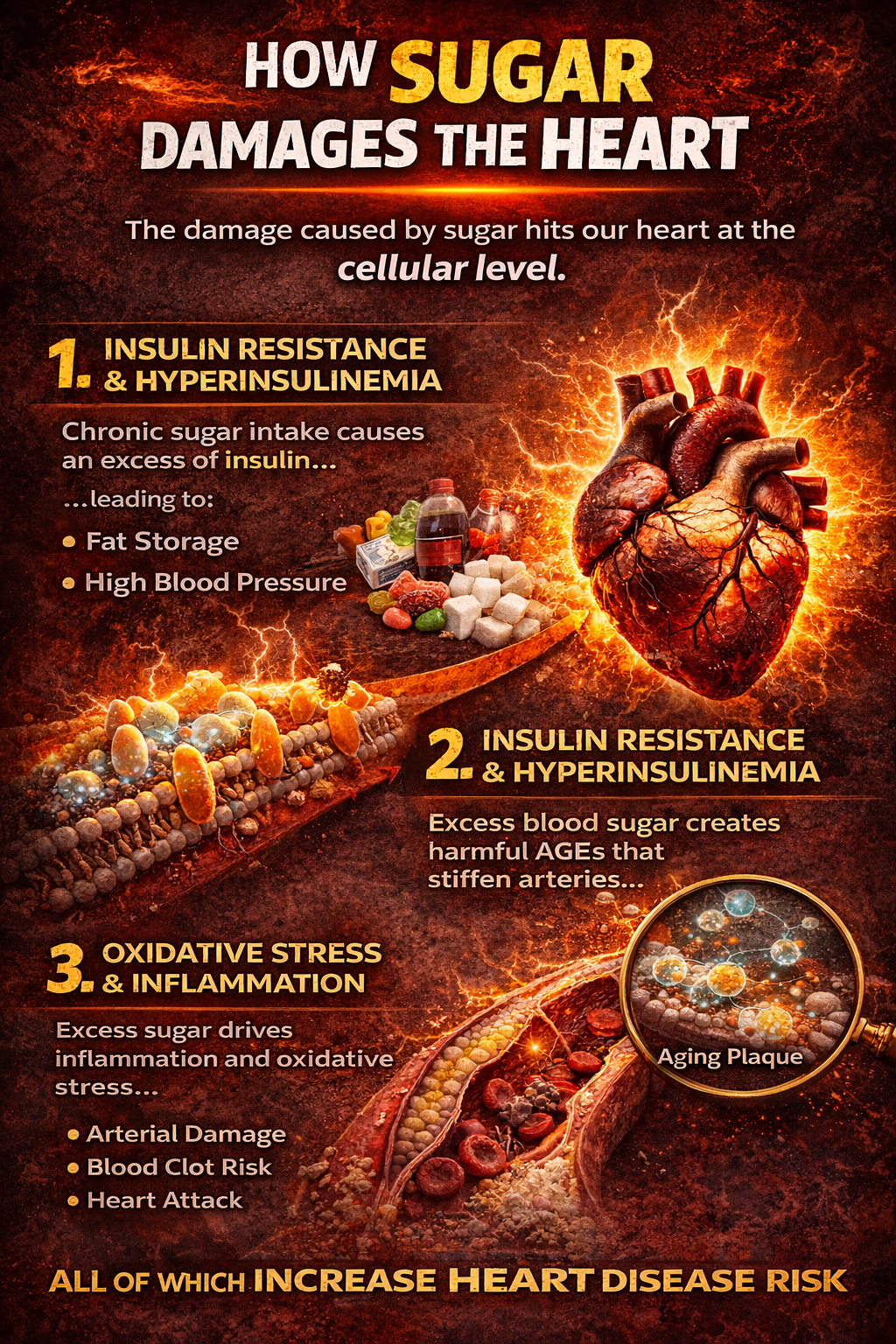
At the same time, elevated blood sugar leads to the formation of advanced glycation end products, compounds that result from the binding of sugar to proteins and lipids. These molecules alter the structural integrity of tissues, particularly within the vascular system, where they contribute to the stiffening of arteries and the impairment of endothelial function. The endothelium, which serves as the inner lining of blood vessels, plays a critical role in regulating blood flow and preventing clot formation, and its dysfunction is one of the earliest indicators of cardiovascular disease.
Oxidative stress further compounds this damage, as excess glucose increases the production of free radicals that overwhelm the body’s antioxidant defenses. These reactive molecules attack cellular components, including DNA, proteins, and lipids, leading to a cycle of damage and repair that ultimately results in chronic inflammation. It is this inflammatory environment, rather than cholesterol alone, that determines whether arterial plaque becomes stable or prone to rupture, which is the event that triggers heart attacks.
The Cholesterol Distraction: Misplaced Focus and Missed Opportunities
Cholesterol has been positioned as the central factor in heart disease, yet this focus has led to a narrow understanding of a much broader problem. Cholesterol itself is not inherently harmful; it is a vital substance required for hormone production, cell membrane integrity, and neurological function. The issue arises when cholesterol becomes oxidized in an environment of inflammation and oxidative stress, conditions that are often driven by excessive sugar consumption.
By concentrating efforts on lowering cholesterol levels, conventional approaches often overlook the underlying metabolic dysfunction that causes cholesterol to become problematic in the first place. This is analogous to addressing the smoke from a fire without extinguishing the flames, as the visible marker is treated while the root cause continues to burn. Patients may achieve lower cholesterol numbers through medication or dietary restriction, yet still experience progressive cardiovascular disease because the inflammatory and metabolic drivers remain unaddressed.
This misdirection has significant consequences, as it delays the implementation of strategies that could effectively reverse the disease process. A more comprehensive approach requires shifting the focus from cholesterol alone to the metabolic environment in which it operates, recognizing that sugar-induced inflammation and insulin resistance are central to the development of cardiovascular pathology.
The Functional Medicine Perspective: Identifying the Root Cause
Functional medicine approaches heart disease not as an isolated condition but as the culmination of multiple interacting factors that disrupt normal physiology. This perspective emphasizes the importance of identifying and correcting the underlying causes of disease rather than merely managing its symptoms. In the context of heart disease, this means addressing insulin resistance, inflammation, and oxidative stress as primary targets for intervention.
Sugar is a unifying factor in many of these processes, making it a critical area of focus for those seeking to restore metabolic health. By reducing sugar intake and improving the body’s ability to regulate blood glucose, it is possible to reverse many of the biochemical changes that contribute to cardiovascular disease. This approach does not rely on a single intervention but integrates dietary, lifestyle, and environmental strategies to create a comprehensive plan for healing.
The functional model also recognizes the role of the gut microbiome, nutrient status, and toxin exposure in shaping metabolic health. These factors interact with dietary inputs to influence inflammation and immune function, further highlighting the need for a holistic approach that goes beyond simplistic dietary guidelines.
The Solution: Reversing the Damage at Its Source
Addressing the impact of sugar on heart disease requires a deliberate and sustained effort to restore metabolic balance. The first step involves eliminating sources of added sugar from the diet, including those that are hidden in processed foods and marketed as healthy alternatives. This shift allows the body to stabilize blood glucose levels and reduce the demand for insulin, creating an environment in which healing can begin.
Equally important is the emphasis on nutrient-dense, whole foods that provide the building blocks for cellular repair. Proteins, healthy fats, and minimally processed carbohydrates support stable energy levels and reduce the likelihood of blood sugar spikes. Over time, this approach improves insulin sensitivity, decreases inflammation, and enhances overall metabolic function.
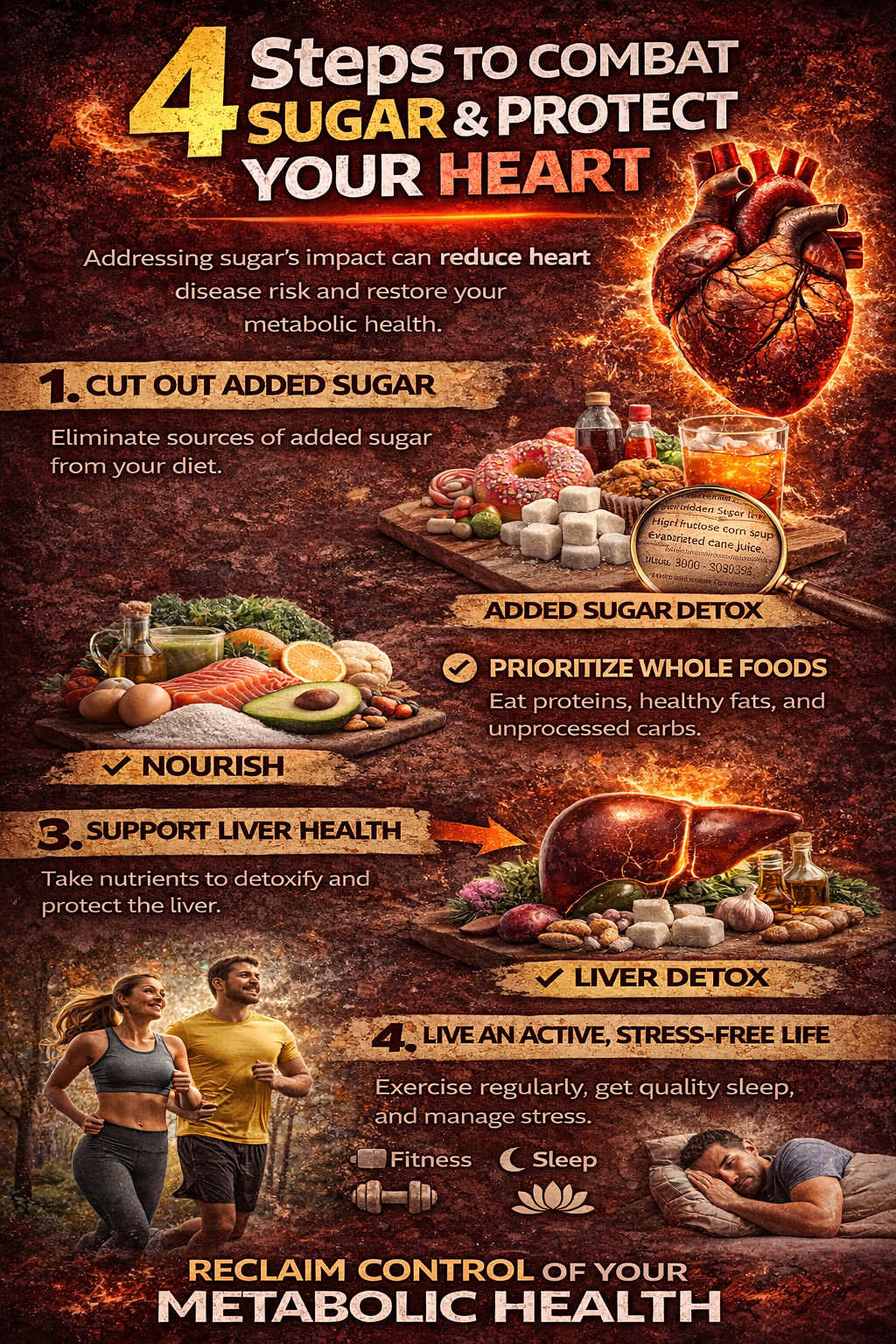
Supporting liver health is another critical component, as the liver plays a central role in processing sugars and regulating lipid metabolism. Nutrients that promote detoxification and reduce fat accumulation within the liver can help reverse the effects of excessive sugar consumption, improving both metabolic and cardiovascular outcomes.
Lifestyle factors such as physical activity, sleep quality, and stress management also play a significant role in modulating the body’s response to sugar. Exercise enhances insulin sensitivity and promotes the utilization of glucose for energy, while adequate sleep and stress reduction support hormonal balance and reduce inflammatory signaling. These interventions work synergistically to create a physiological environment that resists disease rather than perpetuates it.
Conclusion: Rewriting the Narrative of Heart Disease
The story of heart disease is not one of dietary fat gone awry but of a deeper metabolic imbalance driven by excessive sugar consumption and compounded by decades of misplaced focus. The influence of Ancel Keys helped shape a narrative that, while compelling, diverted attention from the true mechanisms underlying cardiovascular disease. Revisiting this history is essential not only for understanding how we arrived at the current state of health but also for charting a more effective path forward.
By shifting the conversation from cholesterol to metabolism, and from symptom management to root cause resolution, it becomes possible to address heart disease in a way that is both scientifically grounded and clinically effective. The evidence increasingly supports the conclusion that sugar, rather than fat, plays a central role in driving the processes that lead to cardiovascular damage. Recognizing this reality empowers individuals to make informed choices that protect their health, restore metabolic balance, and ultimately reduce the burden of heart disease in a meaningful and lasting way.