
The Cultural Rise of Dairy as a “Health Necessity”
For much of modern history, dairy has been elevated beyond a simple food category and positioned as a biological requirement for human health. This perception did not emerge organically from human physiology but rather from a convergence of agricultural economics, government policy, and nutritional simplification. Milk became synonymous with strength, growth, and vitality, reinforced through decades of messaging that framed it as indispensable.
This narrative took hold during a time when caloric sufficiency and nutrient access were primary public health concerns. Dairy provided a convenient and cost-effective source of calories, protein, and minerals, making it an attractive solution in an era defined by scarcity. Over time, however, this practical utility was transformed into a universal prescription, one that failed to account for individual variability in digestion, immune function, and metabolic health.
What was once a tool for survival became a default recommendation, and in that transition, an important question was lost: does dairy support health in every individual, or has its role been overstated?
The Emergence of Chronic Inflammation as a Modern Epidemic
As societies became more industrialized and food became more abundant, the dominant health challenges shifted. Acute infectious diseases gave way to chronic, degenerative conditions that develop slowly and persist over time. At the center of many of these conditions lies chronic inflammation, a low-grade, sustained activation of the immune system that disrupts normal physiological processes.
Unlike acute inflammation, which is protective and self-limiting, chronic inflammation is insidious. It often produces subtle symptoms that are easily dismissed or managed in isolation. Fatigue, joint discomfort, digestive irregularities, skin conditions, and cognitive fog are frequently treated as separate issues rather than manifestations of a shared underlying process.
Diet plays a central role in this process, not simply through nutrient content but through its interaction with the immune system. Foods are not passive; they carry molecular structures that can either promote tolerance or provoke reactivity. Within this framework, dairy becomes a critical point of investigation.
Where the Problem Begins: The Modern Gut Under Stress
The human digestive system was not designed for the modern environment. It evolved in a context of whole foods, microbial diversity, and relatively low exposure to synthetic chemicals. Today, the gut is subjected to a constant barrage of stressors, including processed foods, environmental toxins, medications, and chronic psychological stress.
These factors converge on a single point of vulnerability: the intestinal barrier. This barrier, composed of tightly connected epithelial cells, is responsible for regulating what enters the bloodstream. When functioning properly, it allows the absorption of nutrients while preventing the passage of harmful substances.
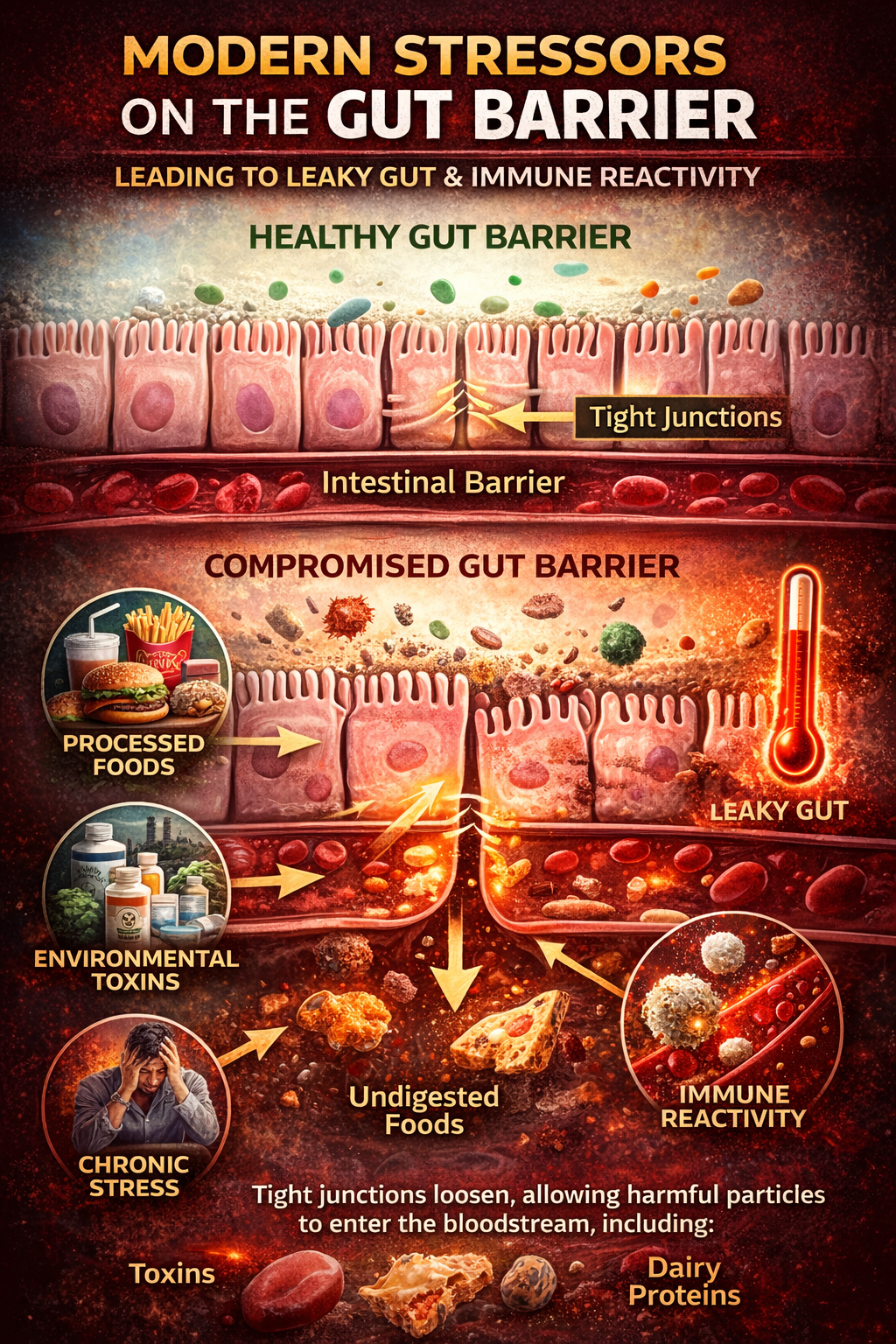
Under sustained stress, however, the integrity of this barrier can be compromised. Tight junctions loosen, and permeability increases. This condition, often referred to as “leaky gut,” creates a pathway for larger, partially digested molecules to enter systemic circulation. Among these molecules are proteins derived from dairy.
This is where the problem begins to take shape. Dairy itself may not be inherently problematic, but in the context of a compromised gut, it becomes a trigger for immune activation.
Dairy Proteins and Immune Activation
While lactose intolerance is widely recognized, it represents only a fraction of dairy-related issues. The more significant concern lies in the body’s response to dairy proteins, particularly casein. These proteins are complex and, in some individuals, resistant to complete digestion.
When casein is not fully broken down, it can form peptide fragments that persist within the digestive tract. In a healthy system, these fragments remain confined to the gut. In a compromised system, they can cross the intestinal barrier and enter the bloodstream.
Once in circulation, these peptides are identified by the immune system as foreign. This triggers the production of antibodies and the release of inflammatory mediators. Unlike an acute allergic reaction, which is immediate and severe, this response is often delayed and subtle. It may not produce obvious symptoms but instead contributes to a background level of inflammation that affects multiple systems over time.
The immune system does not distinguish between frequent and infrequent exposure. If dairy is consumed regularly, the immune response becomes continuous, creating a cycle of inflammation that is difficult to interrupt without removing the trigger.
The Systemic Effects: What Dairy-Driven Inflammation Does to the Body
The consequences of chronic immune activation extend far beyond the digestive system. Inflammation, once initiated, does not remain localized. It circulates, influencing tissues and organs throughout the body.
In the musculoskeletal system, it may manifest as joint stiffness, reduced mobility, or persistent discomfort. In the skin, it can present as acne, eczema, or unexplained irritation, reflecting the body’s attempt to externalize internal imbalance. Neurologically, inflammation can interfere with neurotransmitter function, leading to symptoms such as brain fog, reduced concentration, and mood instability.
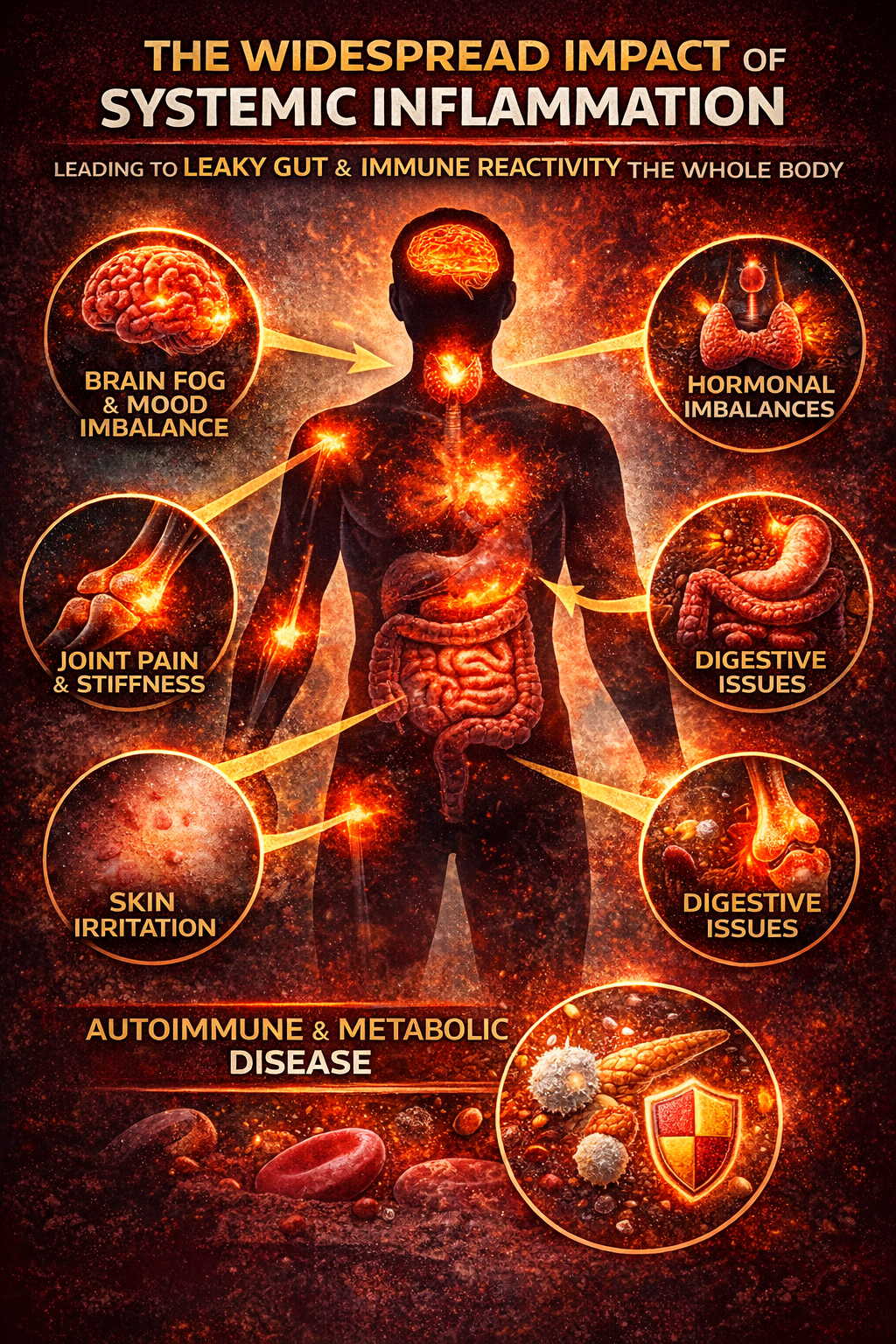
The endocrine system is not immune to these effects. Chronic inflammation can disrupt hormonal signaling, contributing to imbalances that affect metabolism, energy regulation, and reproductive health. Over time, this systemic burden increases the risk of more serious conditions, including autoimmune disorders and metabolic disease.
These effects often develop gradually, making it difficult for individuals to connect them to a specific dietary source. Dairy, consumed daily and culturally normalized, is rarely suspected.
The Role of Growth Factors and Hormonal Compounds
Milk is a biologically active fluid designed to promote rapid growth in a developing mammal. It contains a variety of compounds that support this function, including insulin-like growth factor 1 (IGF-1) and naturally occurring hormones.
In the context of infancy, these compounds are essential. In adulthood, their role is less clear. Elevated IGF-1 levels have been associated in some studies with increased cellular proliferation and reduced apoptosis, processes that, when dysregulated, may contribute to the development of certain diseases.
Modern dairy production further complicates this issue. Cows are often milked during pregnancy, resulting in higher concentrations of estrogenic compounds in the milk supply. While the levels are relatively low, the frequency of consumption raises questions about cumulative exposure and its long-term effects on hormonal balance.
From a functional perspective, these factors are not viewed in isolation but as part of a broader physiological context that includes immune function, metabolic health, and individual sensitivity.
Neurological and Behavioral Implications of Dairy Consumption
One of the more underappreciated aspects of dairy consumption is its potential impact on the brain. During digestion, casein can break down into peptides with opioid-like properties, often referred to as casomorphins. These compounds have the ability to interact with receptors in the nervous system, potentially influencing mood, behavior, and cognitive function.
In some individuals, this interaction may contribute to a sense of dependence on dairy products, as well as symptoms such as mental fatigue and reduced clarity. While the extent of these effects varies, their presence highlights the complexity of dairy’s interaction with human physiology.
The brain and gut are deeply interconnected, and disturbances in one often reflect in the other. When dairy contributes to gut inflammation, it may simultaneously influence neurological function, creating a feedback loop that reinforces both physical and cognitive symptoms.
Identifying the Problem: Why Dairy Sensitivity Is Often Missed
One of the primary challenges in addressing dairy-related inflammation is its subtlety. Unlike acute reactions, which are immediate and unmistakable, chronic responses develop slowly and present in ways that are easily misattributed.
A person may experience fatigue, skin issues, or joint discomfort for years without considering dairy as a potential cause. Standard medical evaluations may not reveal abnormalities, leading to a focus on symptom management rather than root-cause investigation.
This gap in recognition allows the problem to persist. Without a clear understanding of the connection between diet and inflammation, individuals may continue consuming foods that contribute to their symptoms, reinforcing the cycle.
Correcting the Issue: A Functional Approach to Healing
Addressing dairy-related inflammation requires a deliberate and systematic approach. The first step is identification, and the most effective method for this is a structured elimination protocol. By removing all forms of dairy from the diet for a period of approximately thirty days, the individual creates an opportunity for inflammation to subside and for symptoms to stabilize.
Reintroduction then serves as a diagnostic tool. If symptoms return upon reintroducing dairy, the connection becomes clear. This process transforms abstract discomfort into a measurable response, providing a foundation for informed decision-making.
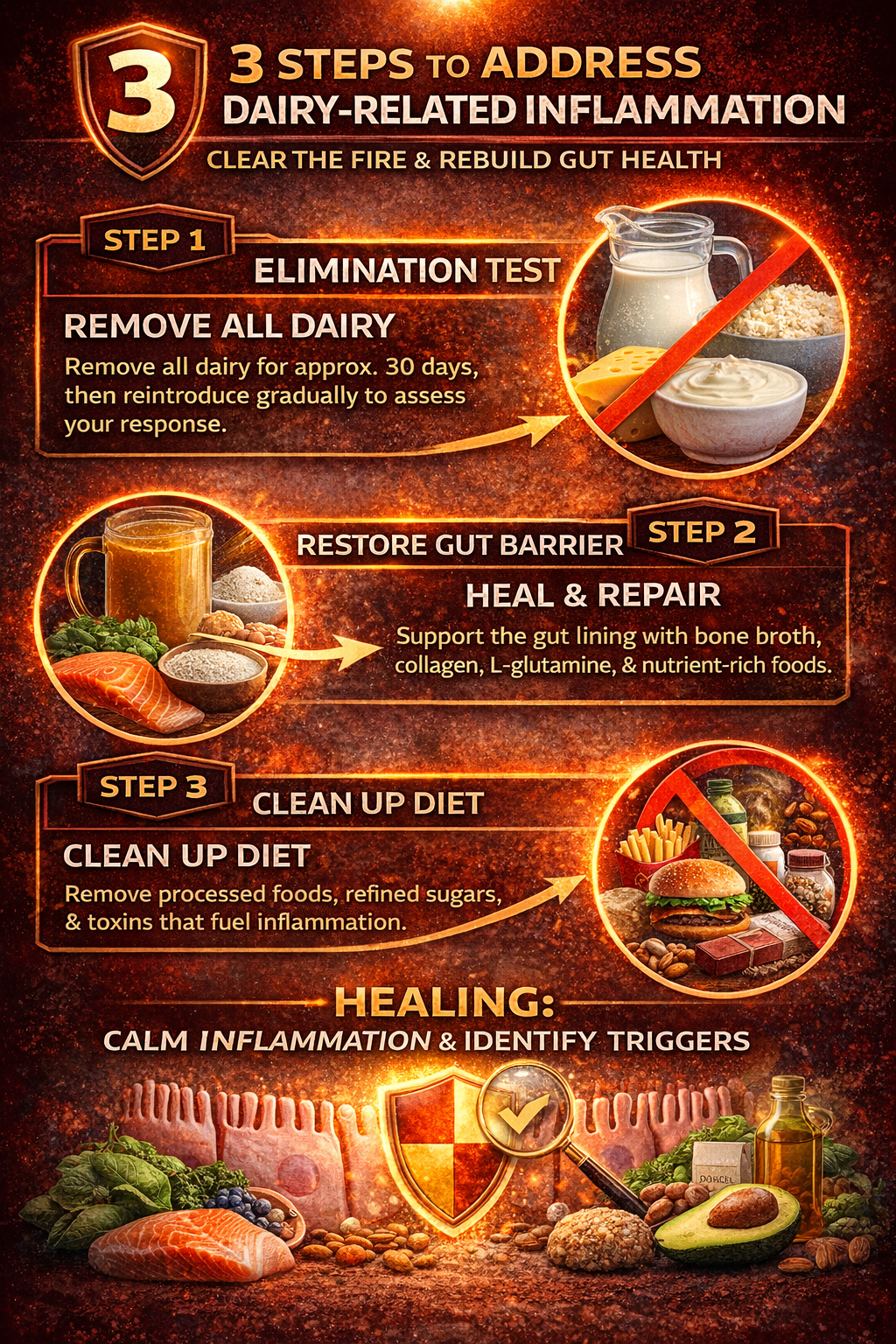
Beyond elimination, attention must be directed toward restoring gut integrity. This involves reducing exposure to inflammatory inputs, increasing the intake of whole, nutrient-dense foods, and supporting the intestinal lining through targeted nutrition. Bone broth, collagen, and specific amino acids can help repair the gut barrier, while a diverse intake of fiber supports a balanced microbiome.
Reducing the overall inflammatory load is equally critical. Dairy is rarely the sole contributor. Processed foods, refined sugars, and environmental toxins all play a role in maintaining a state of chronic inflammation. Addressing these factors collectively enhances the body’s ability to heal.
Practical Actions for Long-Term Resolution
For individuals seeking to protect themselves from the potential inflammatory effects of dairy, several practical steps can be implemented. Removing dairy temporarily to assess its impact provides immediate insight into its role within the body. Supporting digestive health through whole foods and minimizing processed inputs creates a more resilient internal environment.
Exploring alternative nutrient sources ensures that dietary changes do not lead to deficiency. Calcium, protein, and essential fats are widely available in non-dairy foods, making it possible to maintain nutritional adequacy without reliance on milk products.
In cases where dairy is reintroduced, selecting less processed forms and observing the body’s response can help determine tolerance levels. The goal is not rigid restriction, but informed flexibility based on individual physiology.
Reframing the Question
The enduring popularity of dairy reflects its historical significance, but its role in modern health requires reexamination. The question is no longer whether dairy contains valuable nutrients, but whether its overall impact aligns with the needs of the individual consuming it.
Functional medicine does not reject dairy outright, nor does it accept it without question. It recognizes that health is not determined by universal rules, but by the interaction between food and the unique biological landscape of each person.
In this context, the controversy surrounding dairy is not a matter of opinion. It is a reflection of a deeper understanding of how chronic inflammation develops and how it can be addressed at its source.