
The Growing Debate: Trend or True Health Crisis?
Gluten sensitivity has rapidly moved from obscurity into the center of public health discussion, yet the conversation remains deeply divided. On one side, millions of individuals report dramatic improvements in their health after removing gluten from their diets. On the other, conventional medicine continues to frame gluten as a problem only in the presence of Celiac disease, leaving a vast number of symptomatic individuals without validation or guidance. This disconnect has created confusion not only among patients but also among healthcare providers, many of whom are trained to look for clear diagnostic markers rather than subtle patterns of dysfunction.
The core issue is not whether gluten sensitivity exists, but why it appears to be increasing at such a rapid rate. Labeling it as a trend dismisses the lived experiences of countless individuals, while calling it an epidemic without deeper investigation risks oversimplification. The truth lies in understanding that gluten sensitivity is not an isolated phenomenon. It is a reflection of a much larger shift in human health, particularly in the integrity of the digestive system and its relationship with the immune response. What we are seeing is not just a reaction to gluten, but a signal that the body’s ability to tolerate everyday exposures has been compromised.
What Is Gluten and Why Does It Matter?
Gluten is a group of proteins found in wheat, barley, and rye, with gliadin being one of its most biologically active components. These proteins provide structure and elasticity to baked goods, making them a staple in modern diets. However, what makes gluten effective in food production also makes it challenging for the human body to process, especially when digestive function is impaired.
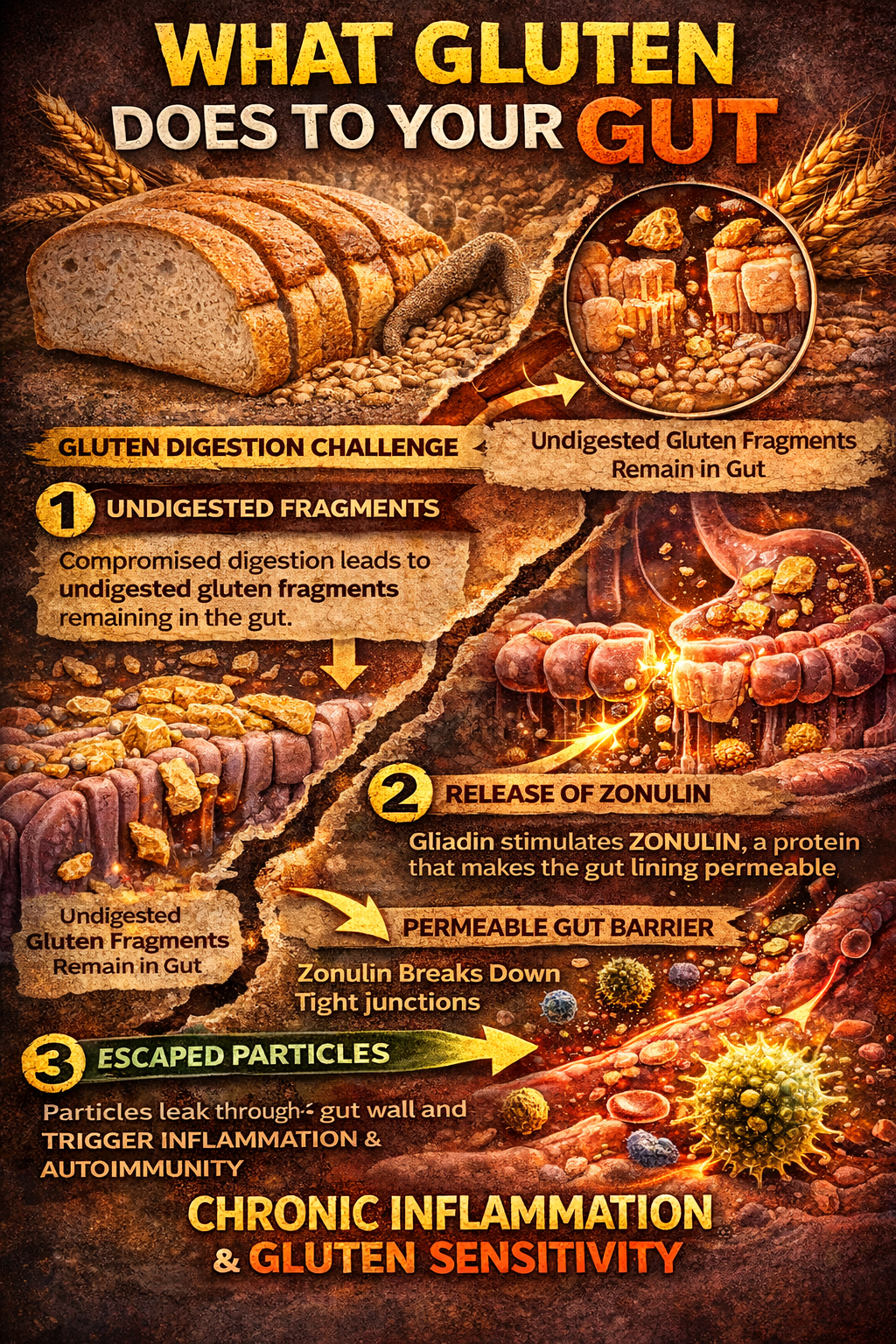
When gluten enters the digestive tract, it must be broken down into smaller peptides for proper absorption. In individuals with compromised digestion, this process is incomplete, leaving behind fragments that can interact with the intestinal lining. Gliadin, in particular, has been shown to stimulate the release of zonulin, a protein that regulates the tight junctions between intestinal cells. When these junctions loosen, the gut barrier becomes permeable, allowing substances to pass into the bloodstream that would normally be contained within the digestive tract.
This process transforms gluten from a simple dietary protein into a trigger for immune activation. The body begins to recognize these escaped particles as threats, initiating an inflammatory response that can extend far beyond the gut itself. This is where gluten sensitivity begins to reveal itself as a systemic issue rather than a localized digestive problem.
The Root Cause: How Modern Living Created a Perfect Storm
The rise in gluten sensitivity cannot be separated from the broader context of modern life. Over the past century, the way food is grown, processed, and consumed has changed dramatically. Wheat has been hybridized to increase yield and improve baking qualities, altering the structure of gluten proteins in ways that make them more difficult to digest. Traditional preparation methods such as fermentation and sprouting, which once helped reduce gluten’s impact, have largely been replaced by industrial processes that prioritize speed and convenience.
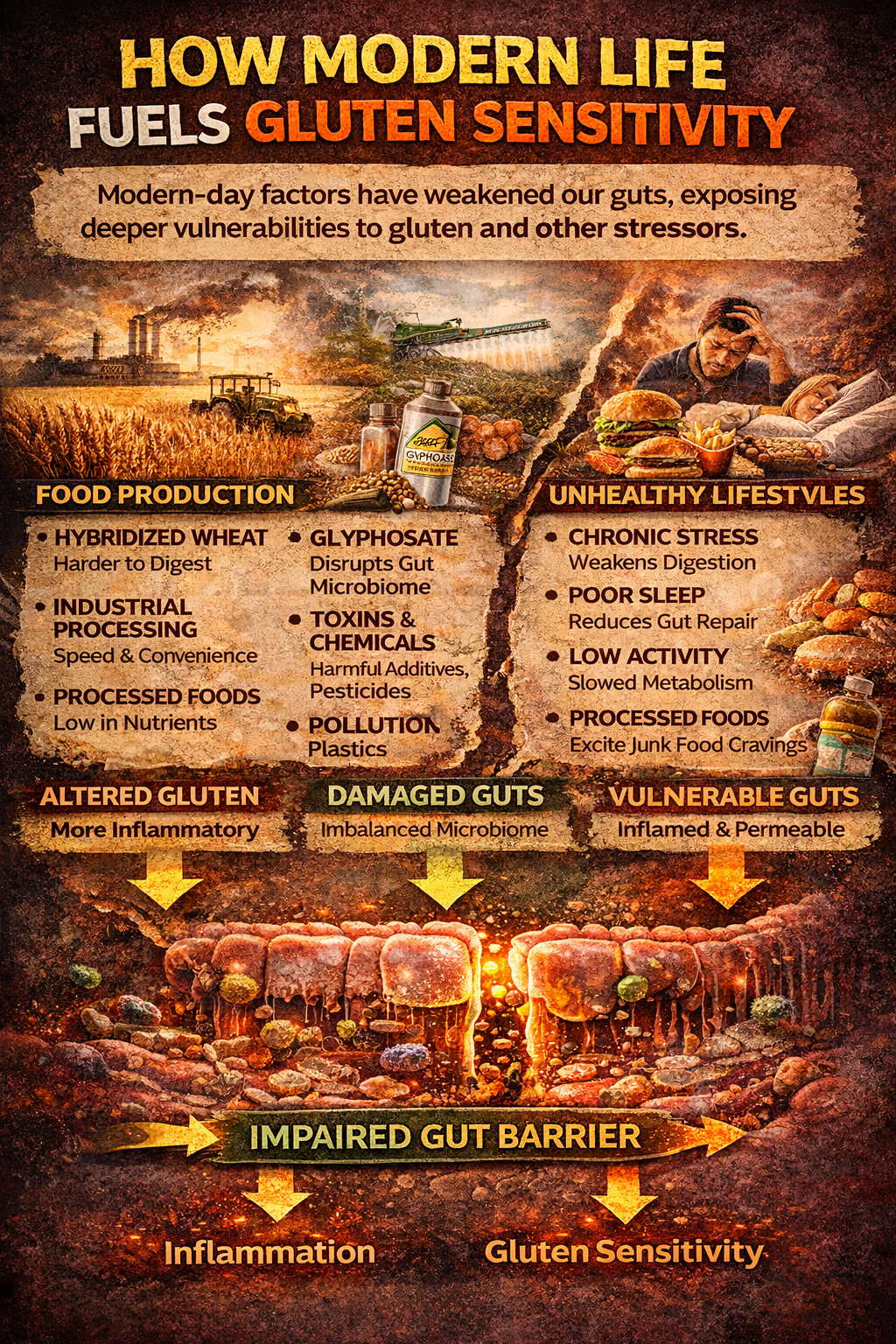
At the same time, the human body has been exposed to an increasing number of environmental stressors. Chemicals such as glyphosate, commonly used in agriculture, have been shown to disrupt the gut microbiome and impair the intestinal barrier. Diets high in processed foods, combined with chronic stress, poor sleep, and reduced physical activity, further weaken digestive function. The microbiome becomes imbalanced, beneficial bacteria decline, and harmful organisms gain a foothold.
This combination of factors creates a situation in which the gut is no longer resilient. Instead of functioning as a robust barrier and regulator, it becomes vulnerable and reactive. In this context, gluten is not the sole cause of the problem but a catalyst that exposes the underlying dysfunction.
What Gluten Sensitivity Is Doing to the Body
When the gut barrier is compromised, the effects of gluten extend far beyond digestion. The immune system, which is heavily concentrated in the gut, becomes activated in response to substances that have crossed into the bloodstream. This leads to chronic inflammation, a state that can affect nearly every system in the body.
Individuals with gluten sensitivity may experience symptoms that seem unrelated at first glance. Fatigue and brain fog are common, reflecting the impact of inflammation on the nervous system. Joint pain and muscle stiffness may arise as inflammatory signals circulate through the body. Skin conditions such as eczema or acne can develop as the body attempts to eliminate toxins through alternative pathways. Hormonal imbalances may occur as inflammation interferes with endocrine signaling.
In some cases, prolonged exposure to gluten in a compromised system can contribute to the development of autoimmune conditions. The immune system, once activated, may begin to target the body’s own tissues, leading to a wide range of chronic diseases. This progression often goes unnoticed in its early stages, as symptoms are subtle and frequently dismissed or treated in isolation.
The Misunderstanding in Conventional Medicine
One of the primary reasons gluten sensitivity remains controversial is the framework through which it is evaluated in conventional medicine. The focus is largely on diagnosing specific diseases, with celiac disease being the most recognized gluten-related condition. While this diagnosis is important, it represents only a small fraction of individuals who may be negatively affected by gluten.
Standard testing methods are designed to detect advanced immune responses, often missing earlier stages of dysfunction. A patient may experience significant symptoms, yet test results appear normal. This leads to the conclusion that gluten is not the problem, when in reality, the testing methods are not capturing the full picture.
Additionally, the compartmentalized nature of healthcare means that symptoms are often treated separately rather than as part of an interconnected system. A patient with digestive issues, neurological symptoms, and skin conditions may see multiple specialists without anyone addressing the common underlying factor. This fragmented approach prevents a deeper understanding of how gluten sensitivity fits into the broader context of health.
The Functional Medicine Perspective: Looking at the Whole System
Functional medicine approaches gluten sensitivity from a fundamentally different angle. Rather than asking whether gluten is inherently harmful, it seeks to understand why the body is reacting to it. This perspective recognizes that a healthy gut should be capable of handling a wide range of foods without triggering inflammation.
From this viewpoint, gluten sensitivity is a symptom of underlying imbalance. Factors such as dysbiosis, nutrient deficiencies, chronic stress, and toxin exposure all contribute to the breakdown of gut integrity. The goal is not simply to remove gluten but to restore the body’s ability to function properly.
This approach requires a comprehensive assessment of the individual, taking into account diet, lifestyle, environment, and biochemical individuality. By addressing these factors, it becomes possible to reduce sensitivity, improve resilience, and support long-term health.
Functional Gut-Healing Roadmap: A Step-by-Step Approach
Healing from gluten sensitivity involves more than dietary restriction. It requires a structured and intentional process aimed at restoring the gut and rebalancing the immune system. The first step is the removal of inflammatory triggers. Eliminating gluten completely for a period of time allows the gut to rest and reduces ongoing immune activation. This phase should be approached with precision, as even small exposures can prolong inflammation.
The next step is repairing the gut lining. The intestinal barrier depends on specific nutrients for regeneration. Amino acids such as L-glutamine provide the building blocks for cellular repair, while minerals like zinc support tissue integrity and immune function. Incorporating these nutrients through whole foods and targeted supplementation can significantly enhance the healing process.
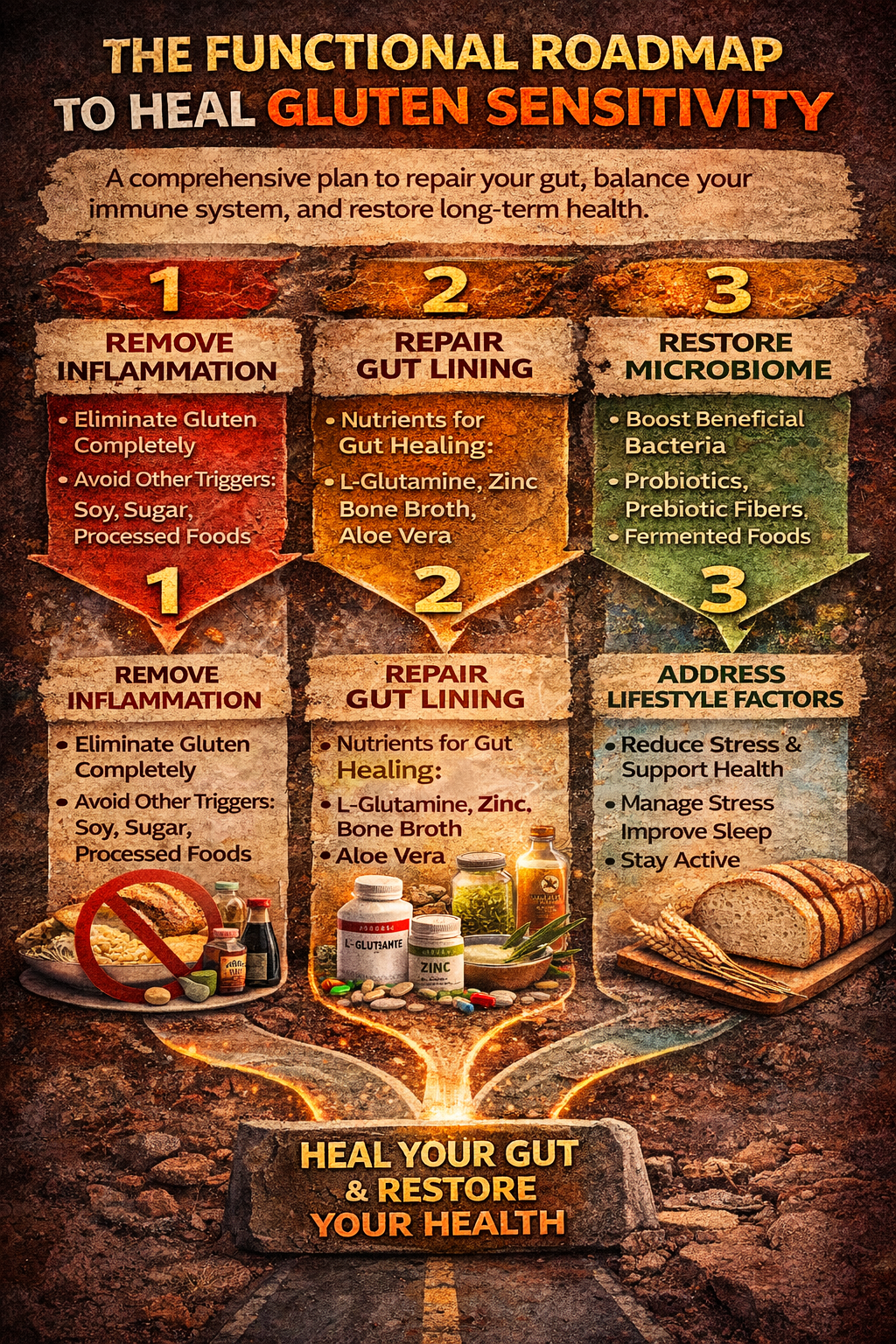
Restoring the microbiome is another critical component. A diverse population of beneficial bacteria helps regulate immune responses and maintain the integrity of the gut barrier. This can be achieved through the inclusion of fermented foods, prebiotic fibers, and, when necessary, probiotic supplementation. The goal is to create an environment in which beneficial organisms can thrive.
Addressing lifestyle factors is equally important. Chronic stress has a direct impact on gut function, altering motility, reducing enzyme production, and increasing permeability. Prioritizing stress management, improving sleep quality, and engaging in regular physical activity are essential for sustaining gut health.
The final step is personalization. Each individual responds differently to dietary and environmental factors. After a period of healing, some may choose to reintroduce gluten in small amounts to assess tolerance, while others may find that long-term avoidance is beneficial. The key is to use the body’s response as a guide rather than adhering to rigid rules.
Practical Actions to Protect and Restore Your Health
Taking control of your health begins with simple, actionable steps that support the body’s natural ability to heal. Transitioning to a diet based on whole, unprocessed foods provides the nutrients necessary for gut repair while reducing exposure to harmful additives. Removing gluten for a trial period allows you to observe how your body responds and gather valuable insight into your individual tolerance.
Supporting digestion through mindful eating practices can have a profound impact. Eating in a relaxed state, chewing thoroughly, and avoiding distractions during meals help optimize digestive function. These habits may seem basic, but they address one of the most overlooked aspects of gut health.
Incorporating nutrient-dense foods such as bone broth can provide essential building blocks for the intestinal lining. Ensuring adequate intake of healthy fats supports cellular repair and reduces inflammation. Hydration also plays a critical role in maintaining digestive efficiency and overall health.
Equally important is addressing the factors that contribute to gut dysfunction. Managing stress through techniques such as deep breathing or regular movement helps regulate the nervous system and improve digestion. Prioritizing sleep allows the body to repair and regenerate, supporting both gut health and immune function.
Conclusion: Reframing the Question and Finding the Solution
The question of whether gluten sensitivity is a real epidemic or a passing trend does not fully capture the complexity of the issue. What is clear is that an increasing number of individuals are reacting to gluten, and this trend reflects deeper changes in human health. The modern environment has created conditions in which the gut is more vulnerable, the immune system is more reactive, and the body is less resilient.
Gluten sensitivity is not simply a problem to be eliminated but a signal to be understood. It highlights the need to look beyond symptoms and address the underlying factors that are driving dysfunction. By focusing on gut health, restoring balance, and making intentional lifestyle changes, it is possible to move beyond confusion and toward true healing.
The path forward is not about fear or restriction but about rebuilding the foundation of health. When the gut is strong and the body is balanced, tolerance improves, inflammation decreases, and resilience is restored. In this light, gluten sensitivity becomes not just a challenge but an opportunity to uncover and address the root causes of modern disease.