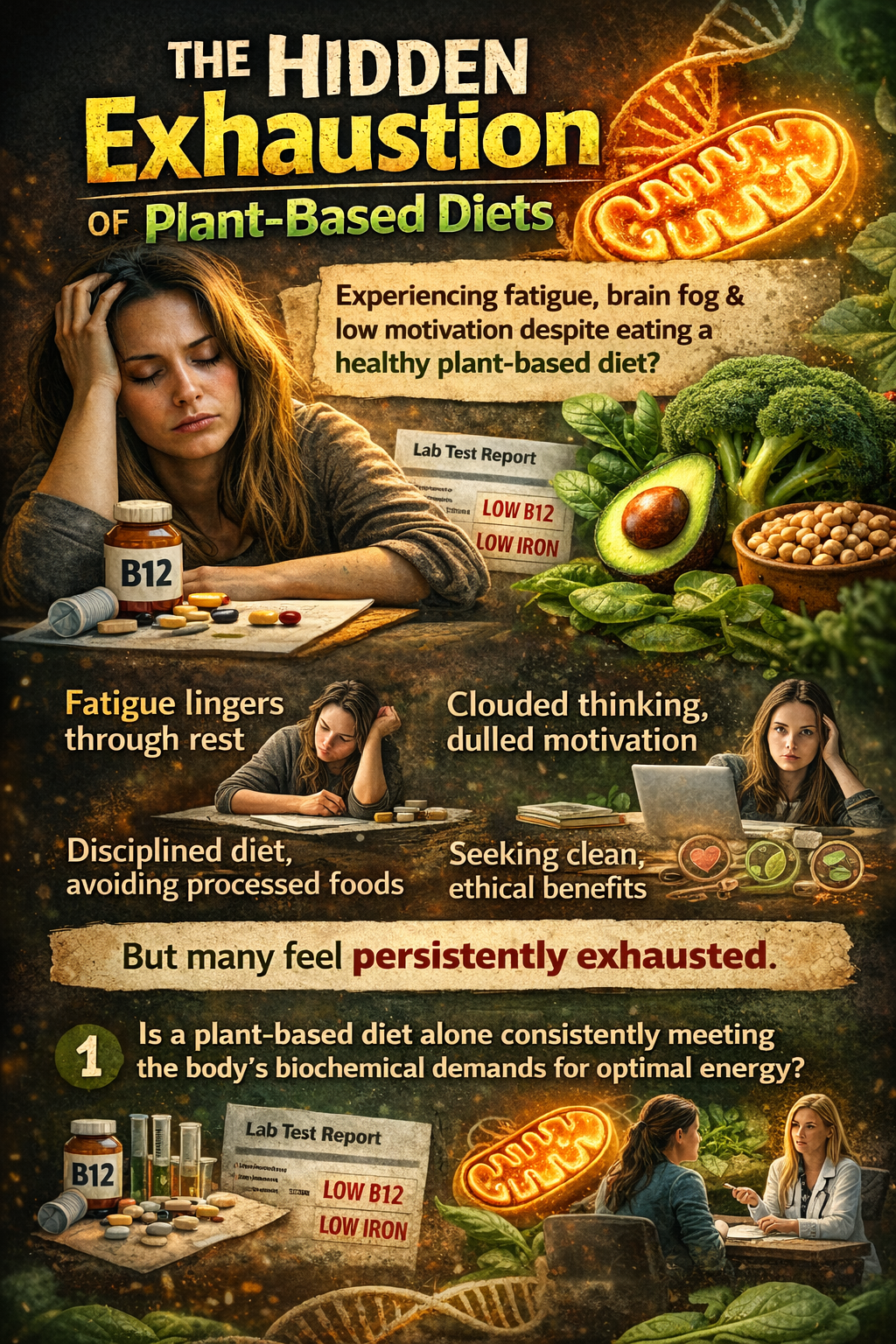
There is a peculiar kind of fatigue that has become increasingly common in modern health culture, and it does not resemble the exhaustion that follows hard work or a lack of sleep. It is deeper than that. It lingers through rest, dulls motivation, clouds thinking, and erodes the vitality people once took for granted. Many who experience it are not living recklessly or neglecting their health. On the contrary, they are often among the most disciplined. They read labels, avoid processed foods, and follow dietary patterns widely promoted as clean, ethical, and health-promoting. Yet despite these efforts, their bodies feel depleted.
Among these individuals, a growing number share a common dietary framework: a strictly plant-based or vegan diet. While this way of eating is frequently associated with longevity, cardiovascular health, and environmental sustainability, a more nuanced and less publicized reality is emerging. When examined through the lens of functional medicine, many vegan diets—especially those adopted without deep nutritional awareness—can quietly erode the very biochemical foundations required for sustained energy.
The issue is not whether plants are beneficial. They are. The issue is whether a diet composed exclusively of plant foods consistently meets the physiological demands of the human body in a way that supports optimal cellular function. This is where the conversation begins to diverge from mainstream nutritional narratives and moves into a more precise, biologically grounded understanding of health.
The Biology of Energy: Why Nutrients Matter More Than Calories
Energy is often discussed in simplistic terms, reduced to calories consumed versus calories expended. This framework, while useful in certain contexts, fails to capture the complexity of human metabolism. The body does not derive energy directly from food in a mechanical sense. Instead, it relies on intricate biochemical processes that convert nutrients into adenosine triphosphate (ATP), the molecule that powers nearly every cellular function.
These processes occur primarily within the mitochondria, microscopic structures that act as the engines of the cell. For mitochondria to function efficiently, they require a continuous supply of specific nutrients, including B vitamins, iron, magnesium, amino acids, and fatty acids. When even one of these components is insufficient, the entire system becomes less efficient. The result is not immediate collapse, but a gradual decline in energy production that manifests as fatigue, reduced resilience, and impaired cognitive function.
From a functional medicine perspective, fatigue is rarely dismissed as a vague or psychological complaint. It is understood as a measurable consequence of disrupted physiology. When individuals following a vegan diet report persistent exhaustion, the question is not whether their experience is valid, but which biochemical pathways are being compromised.
The Illusion of Nutritional Sufficiency
A central claim often associated with vegan diets is that all essential nutrients can be obtained from plant sources if the diet is well planned. This assertion, while technically defensible under certain conditions, overlooks a critical distinction between nutrient presence and nutrient usability. The mere existence of a vitamin or mineral in a food does not guarantee that it will be absorbed, converted, and utilized effectively by the body.
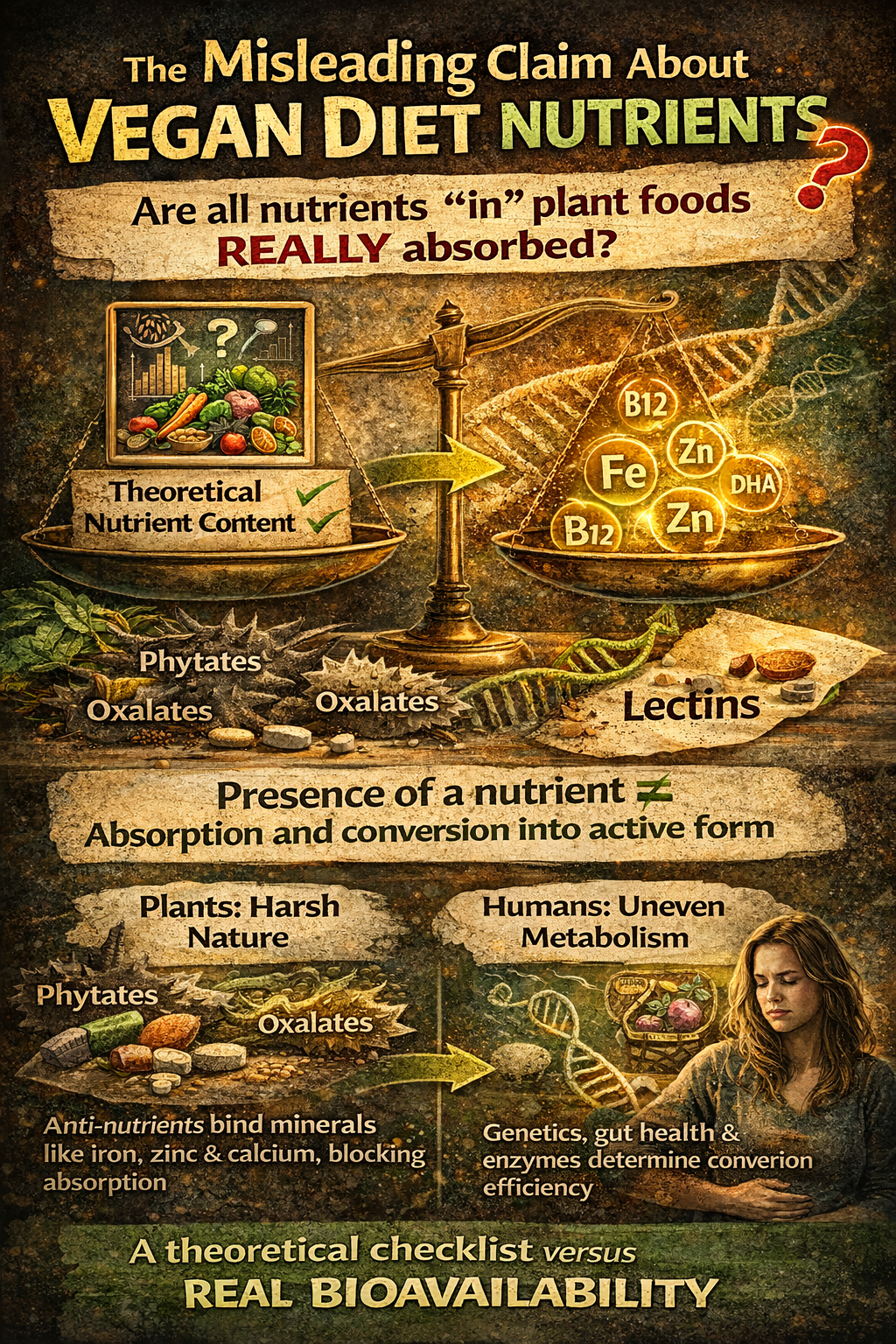
Bioavailability—the proportion of a nutrient that enters circulation and becomes available for cellular use—is a determining factor in nutritional adequacy. Many plant-based foods contain compounds that interfere with absorption, including phytates, oxalates, and lectins. These compounds can bind to minerals such as iron, zinc, and calcium, reducing their availability. In addition, certain nutrients in plants exist in precursor forms that require enzymatic conversion into their active states. The efficiency of these conversions varies widely among individuals and is influenced by genetics, gut health, and overall metabolic status.
This is where mainstream dietary guidance often falls short. It tends to evaluate diets based on theoretical nutrient content rather than functional outcomes. Functional medicine, by contrast, evaluates whether nutrients are actually reaching the cells and supporting physiological processes. This distinction is particularly important when examining the most common deficiencies associated with vegan diets.
Vitamin B12: A Non-Negotiable Requirement
Vitamin B12 occupies a unique position in human nutrition. It is essential for neurological function, red blood cell formation, and DNA synthesis, yet it is not produced by plants in a form that humans can reliably utilize. In natural settings, B12 is synthesized by microorganisms and accumulates in animal tissues. Modern sanitation practices have largely eliminated incidental exposure to these microorganisms, making dietary intake the primary source.
In vegan populations, B12 deficiency is not a theoretical risk but a well-documented reality. Even among those who consume fortified foods or supplements, absorption can be inconsistent. The process requires adequate stomach acid, intrinsic factor produced by the gastric lining, and a healthy small intestine. Disruptions at any point along this pathway can lead to deficiency, even when intake appears sufficient.
The consequences of inadequate B12 extend beyond fatigue. Neurological symptoms, including numbness, tingling, memory impairment, and mood disturbances, can develop insidiously. Because serum B12 levels may remain within normal ranges despite functional deficiency, more sensitive markers such as methylmalonic acid and homocysteine are often required to detect early imbalances.
Iron: Oxygen Transport and Cellular Respiration
Iron plays a central role in energy production by facilitating the transport of oxygen in the blood. Without sufficient iron, hemoglobin cannot effectively deliver oxygen to tissues, impairing mitochondrial function and reducing ATP generation. The form of iron found in plant foods, known as non-heme iron, is significantly less absorbable than the heme iron present in animal products. Furthermore, its absorption is highly sensitive to dietary inhibitors.
Phytates, abundant in grains and legumes, can bind iron and prevent its uptake. While vitamin C can enhance absorption to some extent, this does not fully compensate for the inherent limitations of non-heme iron. Over time, individuals relying exclusively on plant sources may develop depleted iron stores, particularly if they have increased requirements due to menstruation, pregnancy, or athletic activity.
The clinical presentation often includes fatigue, weakness, shortness of breath, and diminished exercise tolerance. Functional assessment of iron status requires more than a single laboratory value. Ferritin, transferrin saturation, and total iron-binding capacity provide a more comprehensive picture of both storage and transport.
Omega-3 Fatty Acids: The Brain’s Structural Foundation
The human brain is composed largely of fat, with omega-3 fatty acids playing a critical structural and functional role. The most biologically active forms, eicosapentaenoic acid (EPA) and docosahexaenoic acid (DHA), are found primarily in marine sources. Plant-based diets provide alpha-linolenic acid (ALA), which must be converted into EPA and DHA through a series of enzymatic steps.
This conversion process is notoriously inefficient. Estimates suggest that only a small fraction of ALA is converted into DHA, with rates influenced by factors such as age, sex, hormonal status, and overall health. As a result, individuals relying solely on plant sources may have suboptimal levels of these critical fatty acids.
Low EPA and DHA levels have been associated with cognitive decline, mood disorders, and increased inflammation. From a functional standpoint, inadequate omega-3 status can contribute to the mental fatigue and emotional instability often reported by those struggling on restrictive diets.
Protein and Amino Acids: Beyond Muscle Maintenance
Protein is frequently discussed in the context of muscle building, but its role extends far beyond physical strength. Amino acids, the building blocks of protein, are required for the synthesis of neurotransmitters, hormones, enzymes, and structural components of tissues. They are also essential for detoxification pathways in the liver.
While many plant foods contain protein, they often lack one or more essential amino acids or provide them in suboptimal ratios. Achieving a complete amino acid profile requires careful combination of different plant sources, a practice that is not consistently followed. Even when combinations are made, total intake may fall short of physiological needs, particularly in individuals with higher metabolic demands.
Inadequate protein intake can manifest as fatigue, poor recovery, weakened immunity, and loss of lean body mass. Functional evaluation emphasizes not only total protein consumption but also the availability of specific amino acids required for critical biochemical processes.
Zinc and Iodine: Small Nutrients with Large Impacts
Zinc is involved in hundreds of enzymatic reactions, many of which are directly related to energy metabolism and immune function. Like iron, its absorption is inhibited by phytates, making deficiency more likely in plant-based diets. Symptoms such as fatigue, impaired wound healing, and hair loss may develop gradually and are often overlooked.
Iodine, on the other hand, is indispensable for thyroid hormone production. The thyroid gland regulates metabolic rate, influencing how efficiently the body converts nutrients into energy. In the absence of adequate iodine, thyroid function may decline, leading to symptoms such as fatigue, weight gain, and cold intolerance. Because many vegans avoid iodized salt and do not consume seafood, iodine intake can be highly variable.
Functional assessment of thyroid health extends beyond measuring thyroid-stimulating hormone (TSH). Evaluating free T3, free T4, and reverse T3 provides a more complete understanding of hormonal activity at the cellular level.
The Gut: The Gatekeeper of Nutrient Absorption
No discussion of nutrient deficiency is complete without addressing the role of the gut. Digestion is not merely the breakdown of food but a complex process that determines which nutrients are absorbed and how effectively they are utilized. Many individuals adopting a vegan diet increase their intake of fiber dramatically, often without considering their digestive capacity.
High-fiber foods, while beneficial in many contexts, can be difficult to process in individuals with compromised gut function. Conditions such as low stomach acid, intestinal permeability, and microbial imbalance can impair digestion and absorption. When this occurs, even a nutrient-rich diet may fail to meet the body’s needs.
Functional medicine places significant emphasis on restoring gut integrity. Supporting gastric acid production, repairing the intestinal lining, and balancing the microbiome are foundational steps in improving nutrient status and, by extension, energy levels.
Functional Fixes: Restoring Energy Through Precision
Addressing fatigue in the context of a vegan diet requires a shift from generalized advice to individualized strategy. The first step is comprehensive assessment. Laboratory testing provides objective data on nutrient status and metabolic function, allowing interventions to be tailored to the individual.
Once deficiencies are identified, targeted supplementation becomes a powerful tool. This is not a matter of indiscriminately adding nutrients but of selecting specific forms that are highly bioavailable and appropriate for the individual’s physiology. For example, methylated forms of B vitamins may be necessary for those with genetic variations affecting methylation pathways.
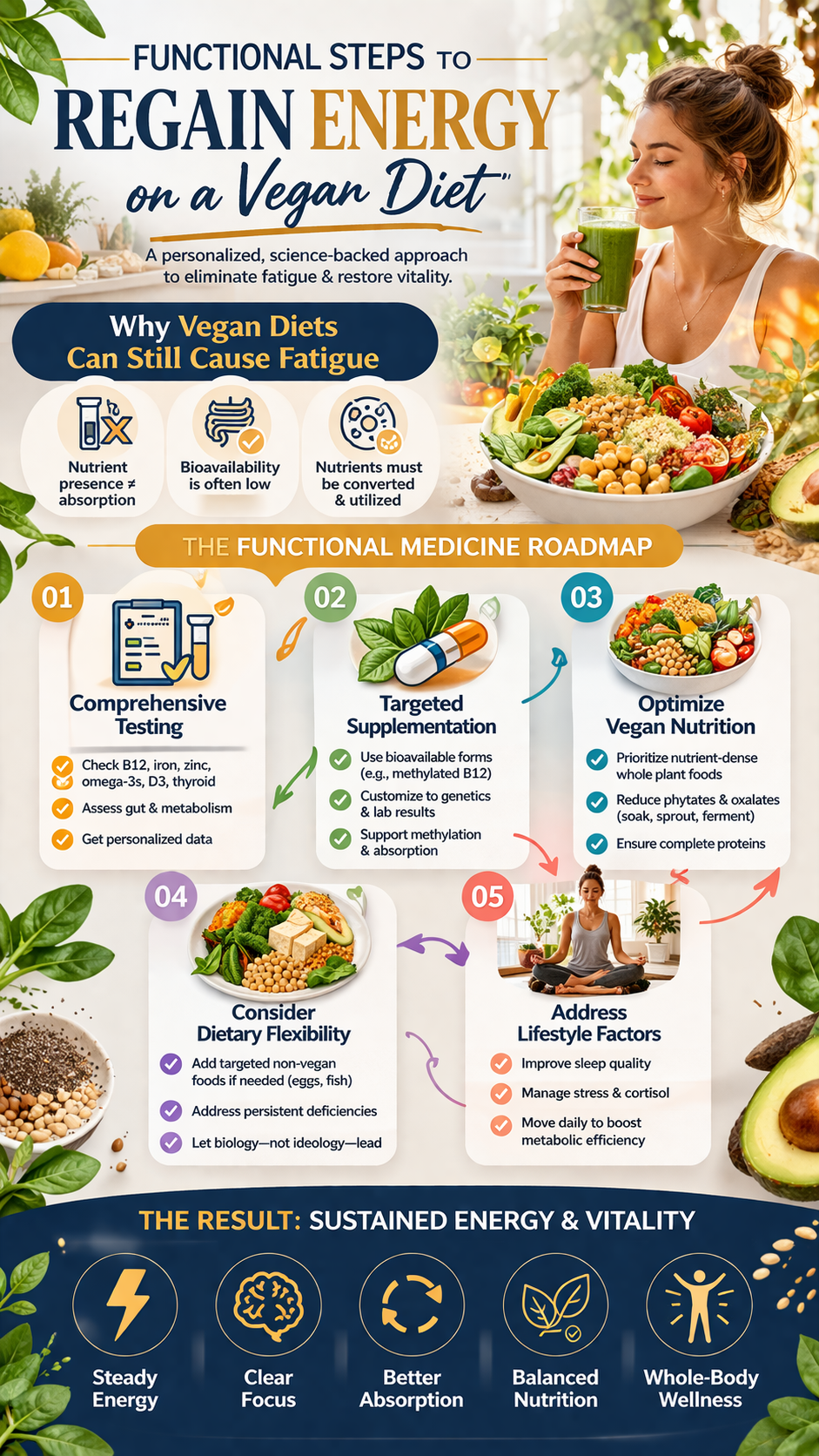
Dietary refinement is equally important. Emphasizing nutrient-dense plant foods, employing preparation techniques that reduce anti-nutrients, and ensuring adequate protein intake can significantly improve outcomes. In some cases, individuals may choose to incorporate specific non-vegan foods to address persistent deficiencies. From a functional perspective, this decision is guided not by ideology but by measurable improvements in health.
Finally, lifestyle factors must be considered. Sleep, stress, and physical activity all influence nutrient requirements and metabolic efficiency. Addressing these elements in conjunction with dietary changes creates a comprehensive approach to restoring energy.
A More Honest Conversation About Health
The discussion surrounding vegan diets is often polarized, framed as a choice between ethical virtue and nutritional adequacy. This binary perspective does little to serve those who are struggling. A more productive approach acknowledges both the benefits and the limitations of plant-based eating, while prioritizing the biological needs of the individual.
Fatigue is not a moral failing, nor is it a sign of insufficient discipline. It is a physiological message that something within the system requires attention. By listening to that message and responding with precision, it is possible to restore energy, clarity, and resilience.
In the end, health is not defined by adherence to a particular dietary label but by the capacity of the body to function optimally. When that capacity is compromised, the solution lies not in defending a belief system but in understanding and supporting the intricate biology that sustains life.