For decades, medicine has framed menopause as a biological decline—a stage where women must endure fatigue, weight gain, mood swings, poor sleep, and a fading sense of vitality. This narrative has become so ingrained that many women never question whether these experiences are truly inevitable or if something deeper is being missed. Instead, clinicians label it “hormonal imbalance” and move quickly toward a pharmaceutical solution.
Yet the reality unfolding today tells a very different story. Women are no longer passively accepting this narrative. They are questioning why their bodies suddenly feel out of control and why the solutions offered often fail to deliver lasting relief. More importantly, they are beginning to understand that menopause is not a disease to be treated, but a transition that reveals underlying dysfunctions that have been building quietly for years.
This growing awareness is fueling a major shift in how menopause is approached. Women are stepping away from conventional hormone replacement therapy and exploring bioidentical hormones alongside functional medicine strategies. They are discovering that when the body is supported at its core, menopause can become a period of renewal rather than decline. Energy can return, clarity can sharpen, and balance can be restored in ways they were never told were possible.
What is emerging is not a trend, but a movement. It is a movement rooted in the understanding that the body is not broken, but instead requires the right environment, inputs, and support to function as it was designed. This shift is changing the conversation around menopause entirely.
The Problem with Conventional Menopause Care
The conventional medical approach to menopause is built on a simplified model that often fails to capture the complexity of the human body. It operates on the assumption that symptoms are caused by a deficiency of hormones, primarily estrogen, and that replacing those hormones will resolve the issue. While this may provide temporary relief for some women, it rarely addresses the deeper imbalances driving the symptoms.
Hormones do not function in isolation. They are part of a highly interconnected system involving the brain, adrenal glands, thyroid, liver, gut, and immune system. When symptoms arise, they are often the result of dysfunction across multiple systems, not just a single hormonal deficiency. However, this interconnectedness is frequently overlooked in conventional care.
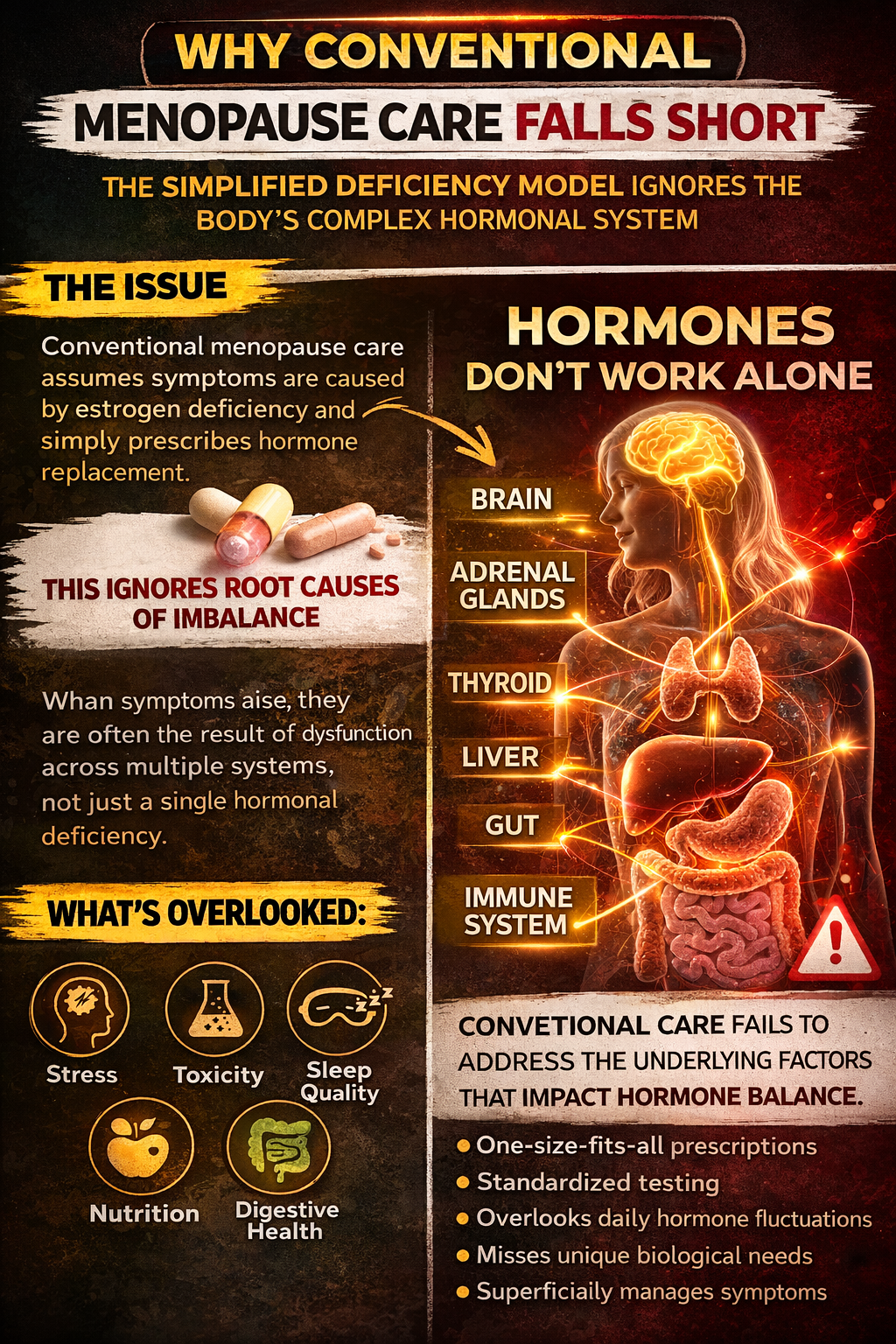
A woman experiencing hot flashes or insomnia may receive a prescription within minutes, yet no one asks about her stress levels, diet, toxin exposure, sleep habits, or digestive health. These factors play a critical role in hormone production, metabolism, and detoxification. Ignoring them is like trying to fix a complex engine problem by replacing one part without inspecting the rest of the system.
Another critical problem is the reliance on standardized treatment protocols that fail to account for individual differences. Women are frequently prescribed similar medications at nearly identical doses, regardless of their unique biology. This one-size-fits-all approach ignores the individuality of each patient and often results in inconsistent outcomes, unwanted side effects, and ongoing frustration.
The reliance on basic blood testing further compounds the problem. Hormones fluctuate throughout the day and exert their effects at the tissue level, yet many women are told they are “normal” based on a single blood draw. This disconnect between lab results and lived experience leaves many women feeling dismissed and misunderstood.
Understanding Synthetic HRT and Its Limitations
Synthetic hormone replacement therapy has been the cornerstone of conventional menopause treatment for years, yet its limitations are rarely discussed in depth. These hormones are not identical to those produced by the human body. Instead, they are chemically modified compounds designed to mimic natural hormones while remaining distinct enough to be patented.
This structural difference has significant implications. Because synthetic hormones are not exact matches, the body may not recognize or process them in the same way. They can bind differently to receptors, trigger unintended biological responses, and place additional strain on detoxification pathways, particularly in the liver.
Over time, this can lead to a cascade of unintended consequences. The body may struggle to break down and eliminate these compounds efficiently, leading to accumulation, inflammation, and hormonal confusion. This is one reason why some women experience side effects that range from mild discomfort to more serious health concerns.
Concerns about long-term risks have also contributed to growing skepticism. Studies examining certain forms of synthetic HRT have linked them to increased risks of breast cancer, cardiovascular disease, and blood clots. While interpretations vary, these findings have prompted many women to reconsider whether this approach truly supports long-term health.
Another critical issue is the way synthetic hormones override the body’s natural regulatory systems. Instead of supporting the endocrine system, they impose an external signal that can suppress the body’s own hormone production and feedback loops. This can create dependency and make it more difficult for the body to regain balance on its own.
Bioidentical Hormones: A More Aligned Approach
Bioidentical hormones offer a different path, one that aligns more closely with the body’s natural design. These hormones are derived from plant sources and are structurally identical to those produced by the human body. This means that when they interact with hormone receptors, they do so in a way that mirrors natural physiology.
This molecular compatibility is essential. When a hormone fits perfectly into its receptor, it produces a predictable and appropriate response. The body recognizes bioidentical hormones as its own, allowing for smoother integration and more balanced outcomes.
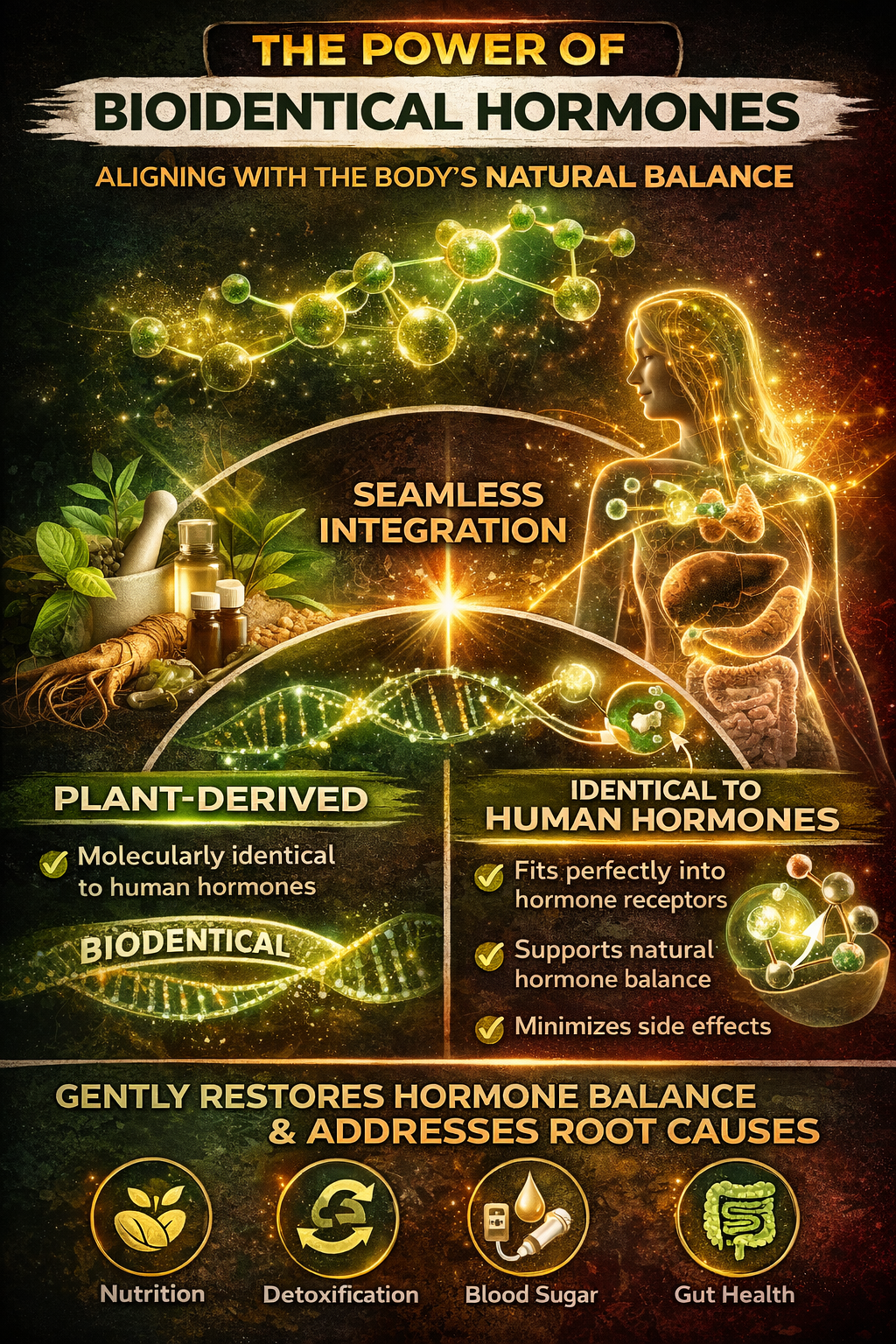
One of the most significant advantages of bioidentical hormone therapy is its ability to be personalized. Rather than relying on standardized dosages, practitioners can tailor formulations to match an individual’s unique needs. This level of customization allows for more precise adjustments and often leads to better symptom resolution.
However, the true power of bioidentical hormones lies in how they are used within a broader functional framework. They are not intended to act as a quick fix, but as part of a comprehensive strategy that addresses the root causes of imbalance. This includes optimizing nutrition, supporting detoxification, stabilizing blood sugar, and improving gut health.
When the internal environment is properly supported, hormones can function as intended. Bioidentical hormones do not force the body into balance. Instead, they support the body in returning to balance naturally.
Breaking Through Common Misconceptions
Despite the growing interest in bioidentical hormones, several misconceptions continue to influence how women approach menopause care. These misunderstandings often prevent them from exploring more effective and individualized solutions.
One of the most pervasive beliefs is that all hormone therapy is inherently dangerous. This perspective is largely based on research involving synthetic hormones but is often generalized to include bioidentical hormones as well. This conflation ignores the critical differences between these two approaches and limits meaningful discussion about safer alternatives.
Another misconception is that menopause symptoms are simply a normal part of aging that must be endured. While these symptoms are common, they are not inevitable. They are signals that something within the body is out of balance. Accepting them as unavoidable discourages women from seeking deeper answers.
There is also a tendency to rely heavily on lab results as the sole indicator of health. When numbers fall within a reference range, symptoms are often dismissed. However, optimal health is not defined by averages. It is defined by how a person feels, functions, and thrives.
Finally, many women are led to believe that hormones exist independently of other systems. In reality, hormones are profoundly influenced by lifestyle factors such as diet, stress, sleep, and environmental exposures. Ignoring these connections results in a fragmented approach that rarely delivers lasting results.
The Functional Medicine Advantage
Functional medicine provides a more comprehensive and integrated approach to menopause. Rather than focusing on isolated symptoms, it seeks to understand the underlying causes of imbalance and address them at their source.
This approach recognizes that hormones are part of a larger system. For example, chronic stress can elevate cortisol levels, which in turn can suppress progesterone and disrupt estrogen balance. Over time, this creates a cascade of symptoms that cannot be resolved by hormone replacement alone.
The liver plays a crucial role in hormone metabolism and detoxification. If liver function is compromised, hormones may not be properly processed or eliminated. This can lead to imbalances such as estrogen dominance, even when production levels are not excessive.
Gut health is another key factor. The microbiome influences how hormones are metabolized and recycled within the body. An unhealthy gut can contribute to inflammation and hormonal dysregulation, further complicating the picture.
Blood sugar stability is equally important. Fluctuations in glucose and insulin can disrupt hormone production and receptor sensitivity. Stabilizing blood sugar often leads to significant improvements in energy, mood, and overall hormonal balance.
By addressing these foundational factors, functional medicine supports the body’s ability to regulate itself. It shifts the focus from managing symptoms to restoring health at a deeper level.
Why Women Are Moving Away from Conventional Care
The shift away from conventional menopause care is being driven by real experiences. Many women have followed traditional recommendations only to find that their symptoms persist or new issues arise.
They are often told their lab results are “normal” even while experiencing fatigue, brain fog, and a deep sense of imbalance. They are given prescriptions without a full explanation of the long-term consequences. Many leave appointments feeling unheard, rushed, and without real answers to what they are going through.
In contrast, those who explore functional approaches often report feeling heard and supported. Their symptoms are taken seriously, and their health is approached as a complex system rather than a collection of isolated issues.
Access to information has also played a significant role. Women are educating themselves, reading research, and connecting with others who have found success outside the conventional model. This growing awareness is empowering them to take control of their health.
There is also a broader shift toward natural and holistic living. As people become more conscious of what they eat and how they live, they are questioning the long-term use of synthetic interventions. Bioidentical hormones offer an option that aligns more closely with this philosophy.
Practical Steps to Restore Hormonal Balance at Home
Restoring hormonal balance begins with creating an internal environment that supports the body’s natural processes. While professional guidance can be beneficial, there are foundational steps that can be implemented immediately.
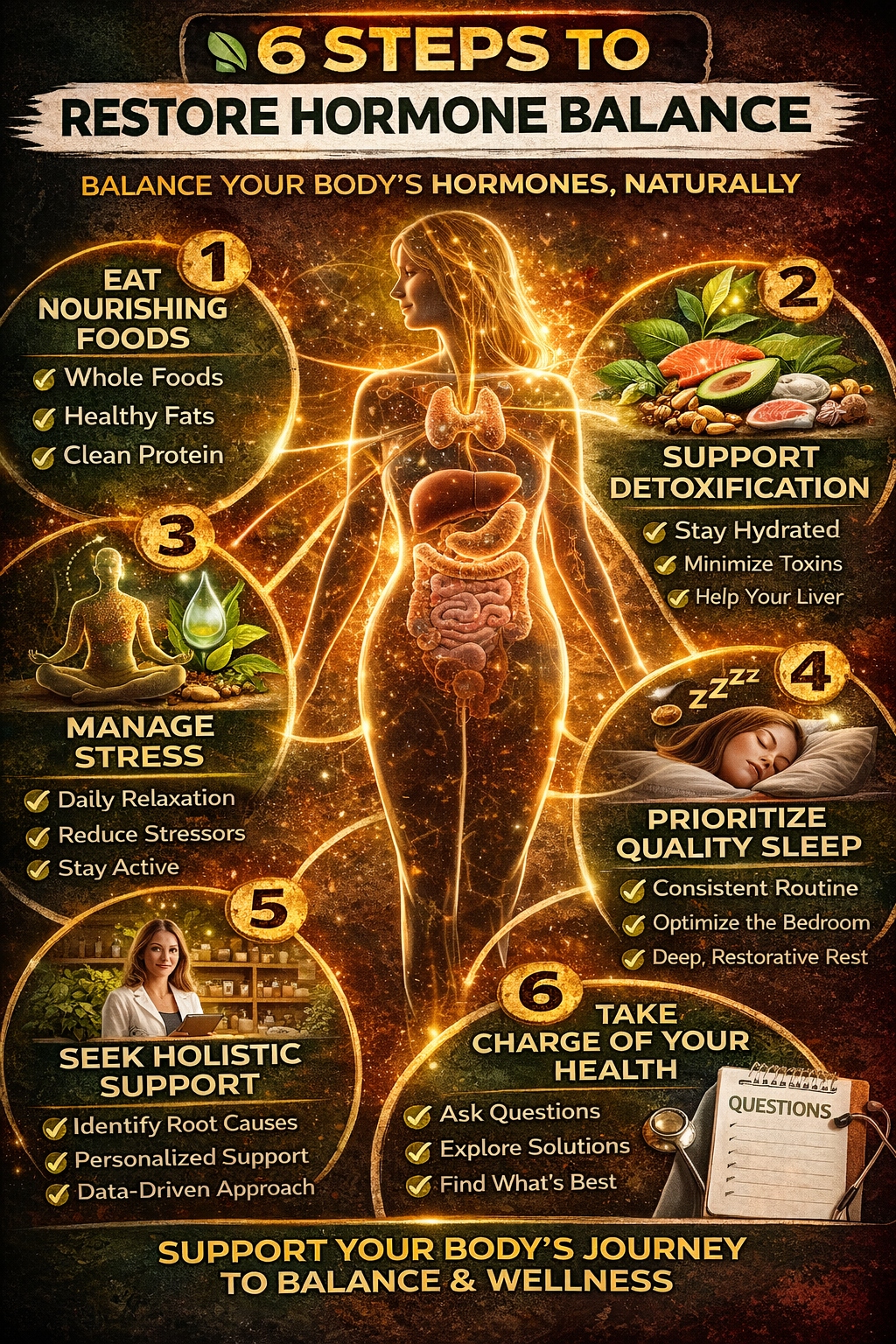
Nutrition plays a central role in hormone health. Hormones are built from nutrients, and without the proper building blocks, the body cannot function optimally. Prioritizing whole foods, healthy fats, and clean proteins provides the foundation for hormone production and stability.
Supporting the liver is essential for proper hormone metabolism. This can be achieved through adequate hydration, nutrient-dense foods, and minimizing exposure to toxins. Simple lifestyle practices such as regular movement and sweating can further enhance detoxification.
Managing stress is critical. Chronic stress disrupts the endocrine system and can lead to widespread imbalance. Incorporating daily practices that promote relaxation and nervous system regulation can have a profound impact.
Sleep is another cornerstone of hormonal health. Deep, restorative sleep allows the body to repair and regulate itself. Creating a consistent sleep routine and optimizing the sleep environment can significantly improve outcomes.
Finally, taking an active role in one’s health journey is essential. This means asking questions, seeking out knowledgeable practitioners, and being willing to explore approaches that go beyond symptom management.
Redefining Menopause
Menopause is not a decline. It is a transition that can be navigated with strength, clarity, and renewed vitality when approached correctly.
The growing interest in bioidentical hormones and functional medicine reflects a deeper shift in how women view their health. It represents a move away from suppression and toward restoration, away from standardization and toward personalization.
This new perspective recognizes that symptoms are not problems to be silenced but messages to be understood. It acknowledges that true healing requires addressing the root causes of imbalance.
As more women embrace this approach, the narrative around menopause is changing. It is no longer about surviving this phase of life, but about thriving through it with confidence and control.