Aluminum: The Metal You Never Knew You Were Carrying
Aluminum is one of the most abundant elements on Earth, yet its presence inside the human body is anything but natural. It does not serve a known biological role in human physiology, and still, it finds its way into our tissues daily. From cookware and food packaging to deodorants, processed foods, and even certain medical interventions, exposure is constant, cumulative, and often invisible. The real concern is not that aluminum exists in our environment, but that modern life has dramatically increased both the quantity and the routes of exposure, placing a burden on the body that it was never designed to handle.
Most people assume that if something is widely used, it must be safe. That assumption has been reinforced by decades of messaging that equates regulation with safety and availability with harmlessness. However, the human body operates on biochemical principles, not policy statements. Just because a substance is permitted does not mean it is beneficial or even neutral. The difference between exposure and toxicity lies in accumulation, detoxification capacity, and individual susceptibility, all of which are rarely discussed in conventional conversations about health.
This article is not about fear. It is about clarity. It is about understanding what aluminum does inside the body, why it accumulates, and how it affects neurological function. More importantly, it is about empowering individuals with practical strategies to reduce exposure and support the body’s natural detoxification systems. The most relevant takeaway for anyone reading is simple: what you are exposed to daily matters, and what your body cannot eliminate will eventually influence how you feel, think, and function.
If there is one central idea to carry forward, it is this: the body is not a passive container. It is a dynamic system constantly responding to its environment. When that environment includes neurotoxic metals like aluminum, the consequences may not be immediate, but they are cumulative and real. Understanding this shifts the conversation from “Is this safe?” to “What is this doing inside me over time?”
Aluminum in Everyday Life: The Invisible Exposure
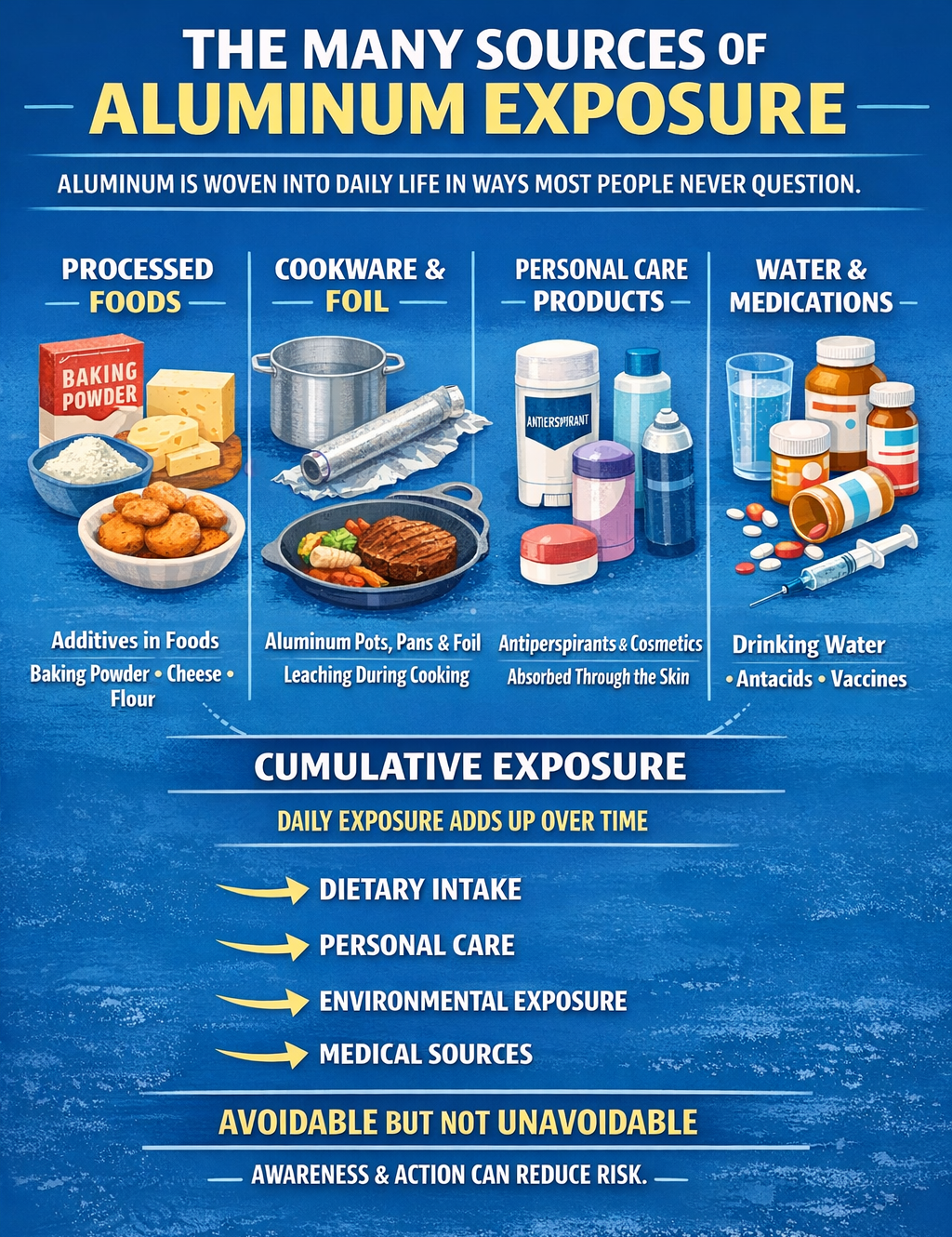
Aluminum exposure is not limited to one source. It is woven into daily life in ways that most people never question. Processed foods often contain aluminum-based additives used as anti-caking agents, stabilizers, or preservatives. Baking powders, certain cheeses, and even some flours can contribute to dietary intake. Aluminum cookware and foil can leach small amounts into food, especially when heat and acidic ingredients are involved. Over time, these small exposures add up.
Personal care products are another major source. Many antiperspirants rely on aluminum compounds to block sweat glands, effectively preventing perspiration. While this may seem like a cosmetic benefit, it also represents a direct route of exposure through the skin. The skin is not an impenetrable barrier; it absorbs substances, especially when applied repeatedly over years. This raises important questions about long-term accumulation that are rarely addressed in mainstream discussions.
Water and environmental exposure also contribute to the total load. Municipal water treatment often uses aluminum-based compounds to clarify water. While the amounts are regulated, the cumulative intake over decades is rarely considered. Add to that the presence of aluminum in certain pharmaceuticals, antacids, and even some vaccines as adjuvants designed to stimulate an immune response, and it becomes clear that exposure is not occasional. It is continuous.
The relevance here is universal. This is not an issue affecting a small subset of people. Every individual living in a modern environment is exposed to aluminum in multiple forms daily. The difference lies in how well the body can handle it. Some individuals may clear it efficiently, while others accumulate it due to genetic, nutritional, or lifestyle factors. Recognizing that exposure is unavoidable but accumulation is not inevitable is the first step toward taking control.
Aluminum and the Brain: Understanding Neurotoxicity
The brain is one of the most sensitive organs in the body, and it is particularly vulnerable to toxic metals. Aluminum has the ability to cross the blood-brain barrier, a protective system designed to shield the brain from harmful substances. Once inside, aluminum can interfere with neuronal function, disrupt signaling pathways, and contribute to oxidative stress. This is not theoretical; it is supported by decades of research examining aluminum’s role in neurodegenerative processes.
One of the key mechanisms of aluminum toxicity is its ability to promote inflammation and oxidative damage. Neurons rely on a delicate balance of electrical and chemical signals. When aluminum accumulates, it can disrupt this balance, leading to impaired communication between brain cells. Over time, this may manifest as brain fog, memory issues, reduced focus, and even mood disturbances. These symptoms are often dismissed as normal aging or stress, but underlying toxic burden is rarely considered.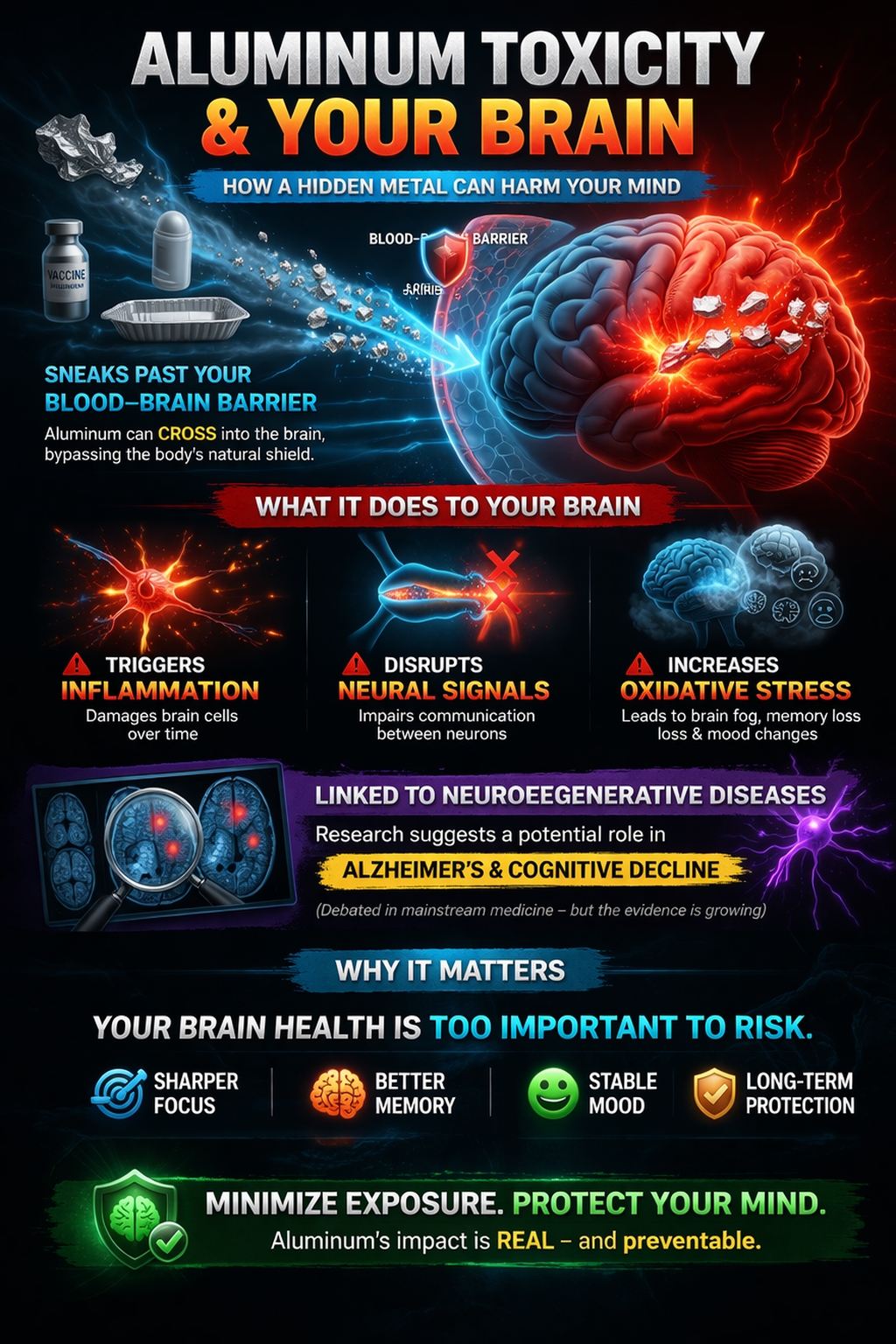
There is also evidence linking aluminum accumulation to conditions such as Alzheimer’s disease, although this remains a topic of debate in mainstream medicine. The conventional stance often emphasizes uncertainty, focusing on the lack of definitive causation. However, from a functional perspective, the question is not whether aluminum is the sole cause of neurological decline, but whether it contributes to the environment in which degeneration occurs. When multiple stressors are present, including toxins, inflammation, and nutrient deficiencies, the brain becomes more vulnerable.
What matters most to the individual is not academic debate, but practical reality. If a substance has the potential to impair brain function, even subtly, it is worth minimizing exposure. Cognitive clarity, memory, and emotional stability are not luxuries; they are foundational to quality of life. Understanding aluminum’s impact on the brain shifts the focus from abstract risk to tangible outcomes that affect daily living.
Vaccines and Aluminum: Context, Controversy, and Clarity
Aluminum salts have been used in certain vaccines as adjuvants, substances that enhance the immune response. The intention is to make vaccines more effective by stimulating the immune system to recognize and respond to antigens. From a conventional standpoint, the amounts used are considered safe, based on studies that focus on acute toxicity and short-term outcomes. However, the conversation often stops there, without fully exploring long-term accumulation or individual variability.
Mainstream medicine tends to approach this topic with a binary mindset: safe or unsafe, pro or anti. This oversimplification ignores the complexity of human biology. Functional medicine takes a different view, recognizing that the impact of any substance depends on dose, frequency, timing, and the individual’s ability to detoxify. What may be tolerated by one person may not be by another, especially in the presence of compromised detox pathways or pre-existing inflammation.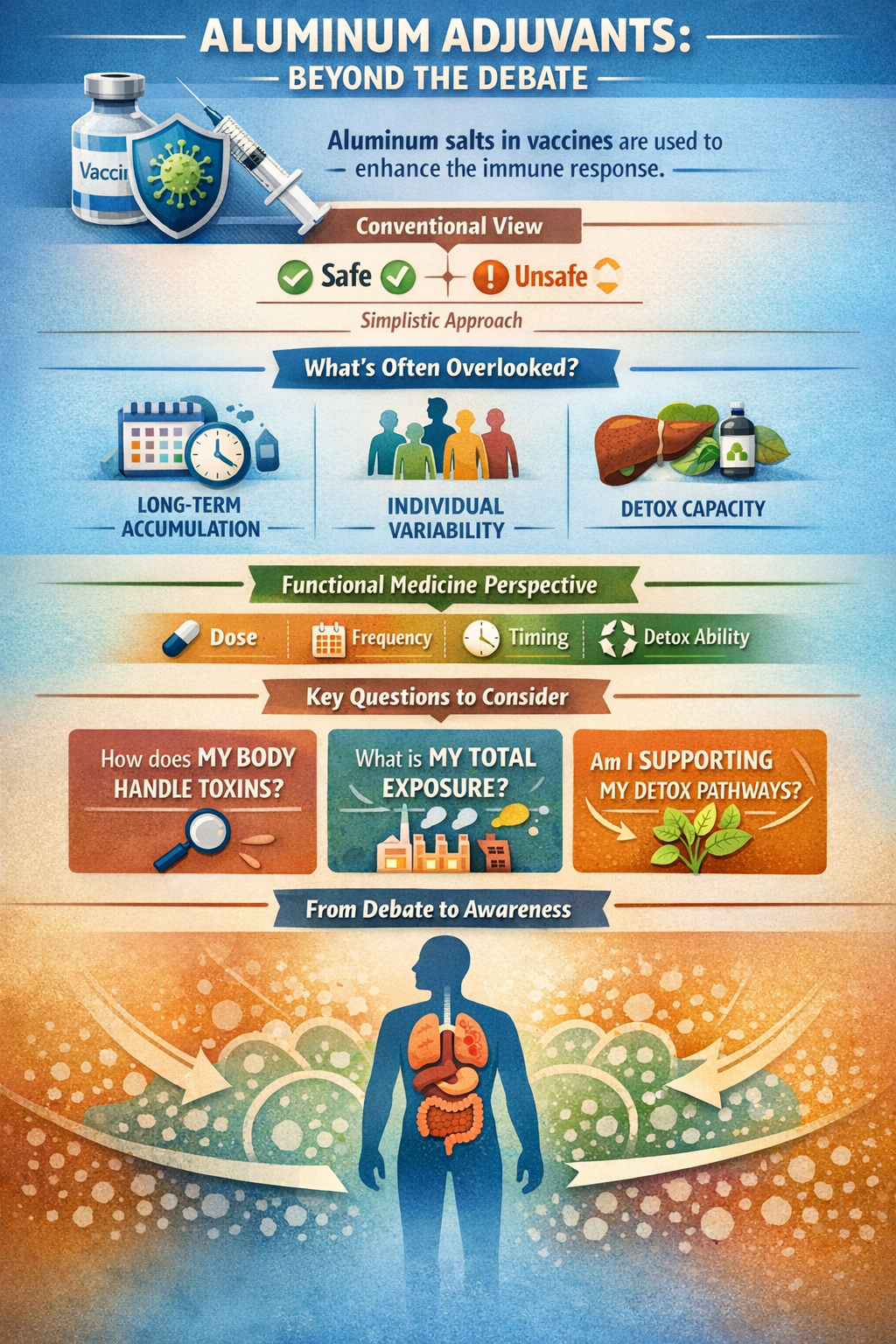
The real issue is not fear, but informed awareness. Aluminum introduced directly into the body bypasses some of the natural barriers that would otherwise limit absorption. This raises legitimate questions about how it is processed and eliminated. While regulatory bodies set guidelines based on population averages, they do not account for outliers, those individuals whose systems are less equipped to handle additional toxic load.
For the reader, the takeaway is not to adopt an extreme position, but to ask better questions. How does my body handle toxins? What is my total exposure from all sources? Am I supporting my detoxification pathways effectively? These questions shift the focus from external debates to internal responsibility, which is where meaningful change begins.
Why the Body Struggles to Eliminate Aluminum
The human body is equipped with detoxification systems, primarily the liver, kidneys, lymphatic system, and gut. These systems are designed to process and eliminate waste, but they are not infallible. Aluminum presents a unique challenge because it can bind tightly to tissues, particularly in the brain and bones, making it difficult to remove once it accumulates.
One of the key issues is that aluminum can mimic or interfere with essential minerals such as magnesium, calcium, and iron. This allows it to integrate into biological processes where it does not belong. When this happens, it can disrupt enzymatic reactions, impair mitochondrial function, and contribute to chronic inflammation. The body may not recognize it as a foreign threat in the same way it would a pathogen, allowing it to persist.
Modern lifestyles further complicate detoxification. Nutrient deficiencies, chronic stress, poor sleep, and a high toxic load from other sources all reduce the body’s ability to eliminate metals effectively. When detox pathways are overwhelmed, aluminum is more likely to accumulate. This is why two people with similar exposures can have very different outcomes.
Understanding this dynamic is critical. It is not enough to reduce exposure; the body must also be supported in its ability to eliminate what has already been absorbed. This dual approach, minimizing intake while enhancing detoxification, is where functional strategies become essential.
Functional Chelation: Supporting the Body’s Natural Detox Pathways
Chelation refers to the process of binding metals so they can be safely removed from the body. Conventional chelation therapy often involves pharmaceutical agents used in clinical settings, typically reserved for cases of heavy metal poisoning. Functional medicine, however, emphasizes gentler, ongoing support using nutrients, foods, and lifestyle strategies that enhance the body’s innate detoxification capacity.
Certain compounds have been shown to assist in binding and removing metals. Silica-rich water, for example, has been studied for its ability to reduce aluminum levels in the body. Foods high in sulfur, such as garlic and onions, support liver detoxification pathways. Antioxidants like vitamin C and glutathione help counteract oxidative stress and facilitate the elimination of toxins.
Fiber plays a crucial role as well. The gut is a major route of excretion, and adequate fiber intake helps bind toxins in the digestive tract, preventing reabsorption. Without sufficient fiber, toxins that are processed by the liver may be reabsorbed into circulation, creating a cycle of recirculation rather than elimination.
The functional approach is not about aggressive intervention but consistent support. It recognizes that detoxification is not a one-time event but an ongoing process. By providing the body with the tools it needs, it becomes more efficient at handling not just aluminum, but a wide range of environmental toxins.
Actionable Steps to Reduce Aluminum Exposure and Support Detoxification
Reducing aluminum exposure begins with awareness and simple changes in daily habits. Switching to aluminum-free cookware, such as stainless steel or cast iron, eliminates a common source of dietary intake. Avoiding processed foods and choosing whole, unprocessed options reduces exposure to aluminum-based additives. Reading labels becomes a powerful tool in minimizing intake.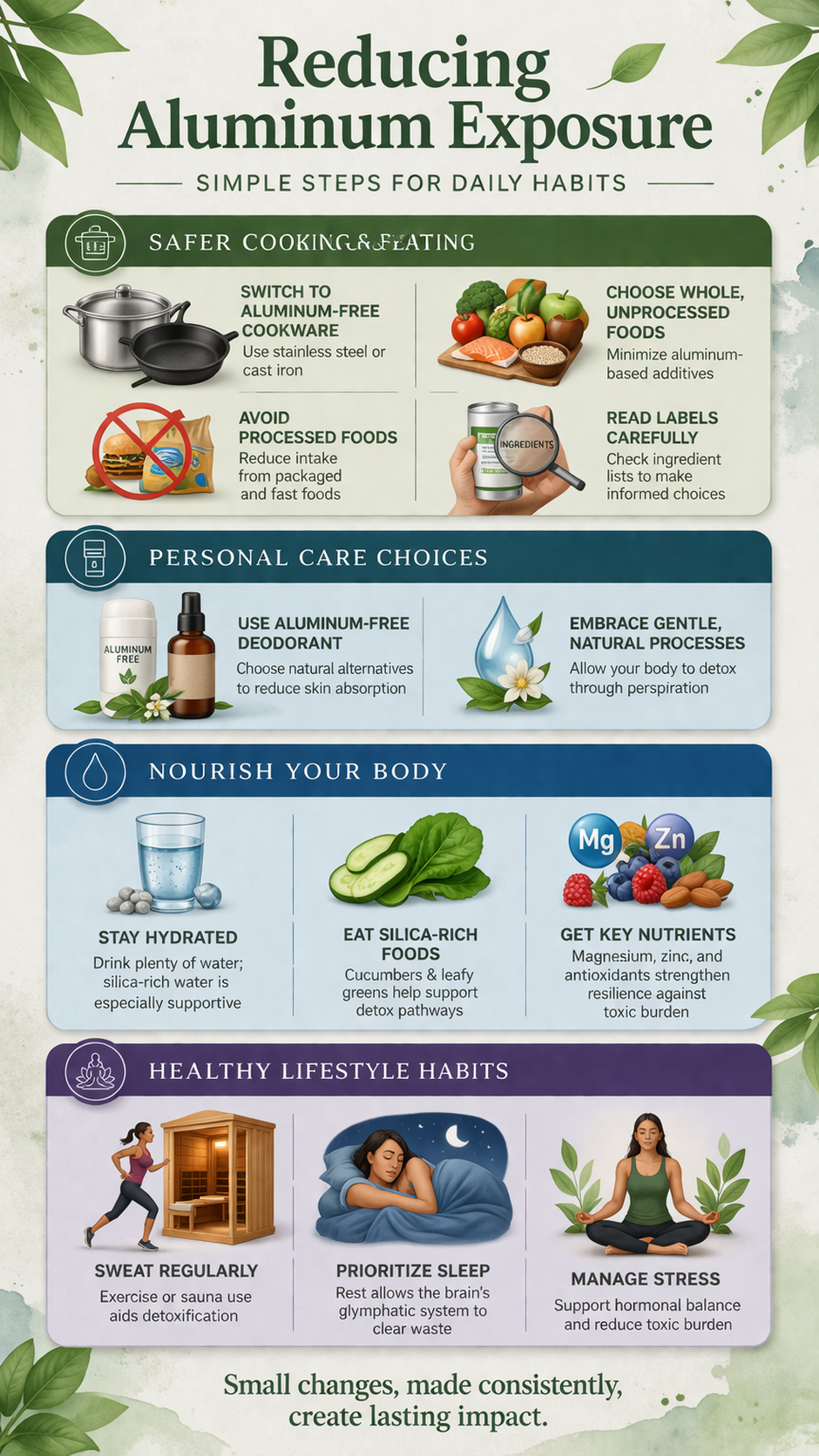
Personal care products are another area where changes can have a significant impact. Choosing aluminum-free deodorants and natural alternatives reduces direct absorption through the skin. While these products may not provide the same level of sweat suppression, they align more closely with the body’s natural processes, allowing detoxification through perspiration.
Supporting the body internally is equally important. Hydration is fundamental, as water is essential for kidney function and toxin elimination. Consuming silica-rich water or incorporating foods like cucumbers and leafy greens can provide additional support. Ensuring adequate intake of key nutrients, including magnesium, zinc, and antioxidants, strengthens the body’s resilience against toxic burden.
Lifestyle factors should not be overlooked. Regular sweating through exercise or sauna use can aid in detoxification. Prioritizing sleep allows the brain’s glymphatic system to clear waste more effectively. Managing stress supports hormonal balance and reduces the overall burden on detox pathways. These are not complex interventions, but their cumulative effect can be profound.
Conclusion: Awareness as the First Step Toward Control
Aluminum is not an abstract concern confined to scientific literature. It is a real, measurable presence in everyday life, with the potential to influence neurological health and overall well-being. The goal is not to eliminate every source, which is neither practical nor necessary, but to reduce the total burden and support the body’s ability to manage what remains.
The contrast between conventional and functional approaches highlights a fundamental difference in perspective. One focuses on thresholds and averages, while the other considers individuality and cumulative effects. Neither approach is entirely complete on its own, but integrating awareness with action creates a more balanced and proactive strategy.
What makes this topic relevant to everyone is its universality. Exposure is not limited to a specific group, and the effects are not confined to extreme cases. Subtle changes in cognition, energy, and mood can all be influenced by toxic burden, often without obvious cause. Recognizing this opens the door to solutions that are both practical and empowering.
Ultimately, the most important shift is from passive acceptance to active participation. Health is not something that happens to you; it is something you influence daily through the choices you make. By understanding aluminum’s role in the body and taking steps to reduce its impact, you move closer to a state of clarity, resilience, and control over your own well-being.